Key takeaways
- Query fan-out is the hidden step where an AI engine rewrites one prompt into several searches, runs them, and merges the results. For shopping prompts, you compete on every sub-search, not just the headline phrase.
- Measured ChatGPT fan-outs are smaller than most blog posts claim. Promptwatch Data shows about 1.8 to 2.2 fan-out queries per response in most periods, not 12 or 20.
- On August 8, 2026, ChatGPT began running site:-scoped searches at scale, so your own domain, internal search and category pages now matter as retrieval surfaces.
- For commercial prompts, product pages, landing pages, listicles and comparisons make up almost 70% of ChatGPT citations. Build those four formats well before anything else.
- Don't make a thin page per sub-query. Cover clusters with focused pages, then measure which sub-queries you appear for.
What query fan-out means for a store
You type "best trail running shoes for beginners" into an AI assistant. The assistant doesn't search that sentence and summarize page one. It rewrites the question into smaller searches, something like "best trail running shoes 2026", "trail vs road running shoes", and reviews of specific models. It fires them in parallel, pulls passages from the results, and writes one answer with citations.
Similarweb's explainer puts the consequence neatly: you're no longer competing for one search query, you're competing across every sub-query the system generates.
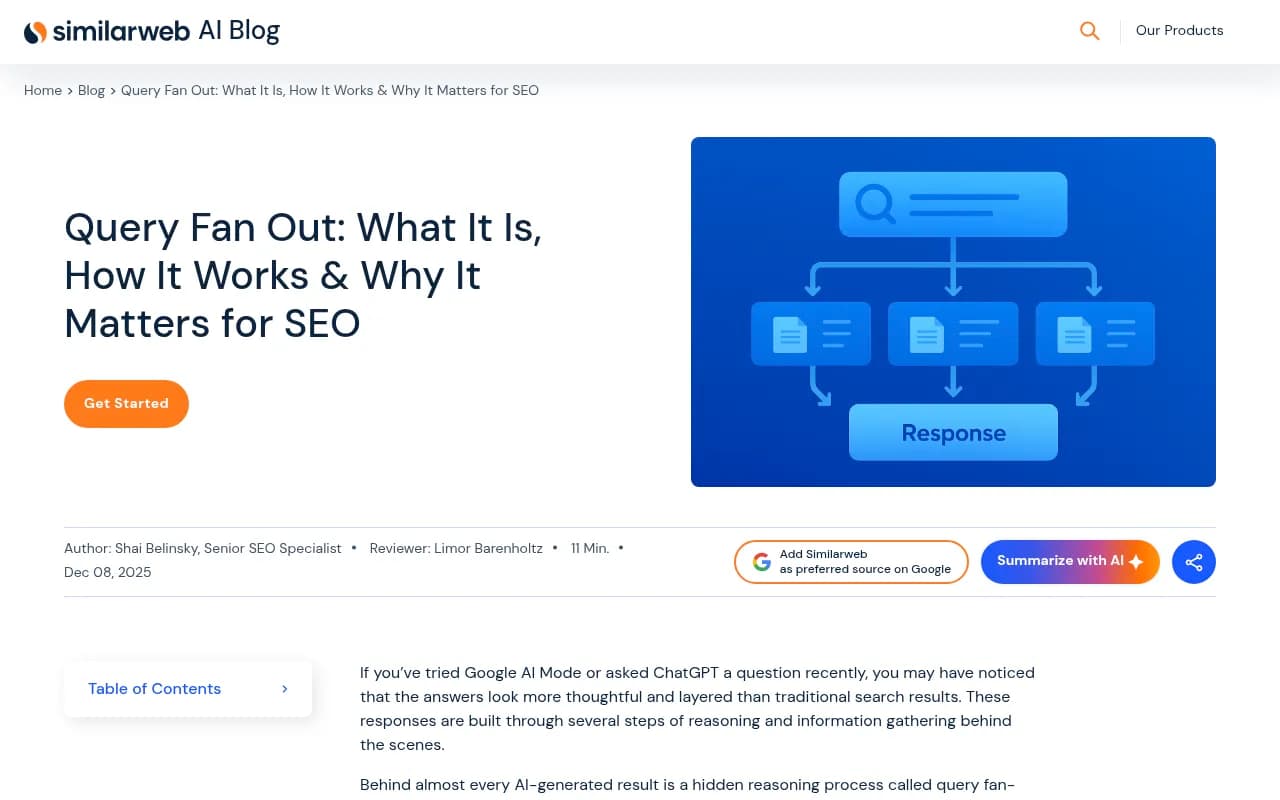
For e-commerce this matters more than for most categories. Shopping prompts are full of modifiers (price, use case, year, brand comparisons), and each modifier becomes its own retrieval path. A brand that only has a product page for the head term can lose the recommendation to whoever answered the sub-question it missed.
How many sub-searches are we really talking about?
This is where I'd be careful. A lot of the content on fan-out says one prompt becomes 5 to 15 queries, or cites figures like 18 to 22 sub-queries for e-commerce with a 61% citation rate. I wouldn't build a plan on those numbers. They conflict with what first-party data shows for ChatGPT, and they likely describe Google's deeper fan-out in AI Mode rather than ChatGPT Search.
Promptwatch Data's ChatGPT query fan-out report tracks the real averages:
- About 2.15 fan-out queries per response in early December 2025, easing to roughly 1.84 by early March 2026.
- After a gap in the data, fan-outs returned in April 2026 at exactly 1.0 per response.
- Average query length fell from about 117 characters in December to the high 80s in February and March, and to about 53 characters (six to eight words) in April.
So the typical ChatGPT sub-query is short and keyword-like, closer to a search box entry than a conversational question. The practical takeaway: the number of sub-searches is smaller than the hype, but each one is a real retrieval event that decides whether you get cited.
The site: operator change
On August 8, 2026, ChatGPT began using the site: operator at scale. Promptwatch Data measured site:-scoped fan-outs jumping from 0.37% to 16.8% of all fan-out queries in a day, roughly 1 in 6, and average fan-outs per response rose from about 1.08 to about 1.83. The site: searches sit on top of the generic ones rather than replacing them.
For a store, that means the model may search inside a specific retailer's domain, or inside review sites, for the same prompt. If your category pages are thin, your internal search is broken, or key products aren't indexed, you lose answers you would previously have won through general search. Any keyword-to-heading mapping built before August 8 is probably stale.
The sub-queries behind a product recommendation
Most shopping fan-outs fall into a handful of patterns. Take a prompt like "best espresso machine under $500":
| Sub-query type | Example | What answers it |
|---|---|---|
| Head term plus year or "best" | best espresso machines 2026 | Listicles, your category page |
| Price angle | espresso machine under 500 dollars | Category page with visible pricing |
| Comparison | Breville Bambino vs Gaggia Classic | Comparison pages, reviews |
| Spec or attribute | espresso machine with built-in grinder | Product pages with clean specs |
| Review check | Gaggia Classic Pro review | Reviews, forums, editorial |
| Domain-scoped | site:reddit.com espresso machine beginners | Third-party pages, your own domain |
Profound's October 2025 research, quoted in the sources I gathered, found that engines add words like "best", "top", "reviews" and the current year to queries during fan-out. That matches what I'd expect: the model is trying to find recent, opinionated, comparison-style content, because that is what a recommendation needs.
Which pages get cited for shopping prompts
Fan-out tells you what gets searched. Citation data tells you what gets picked. Promptwatch's content-type report (Sep 28 to Oct 4, 2026) breaks down ChatGPT citations by format, and for commercial prompts the picture is clear:
| Content type | Share of commercial-prompt citations |
|---|---|
| Product pages | 26.0% |
| Landing pages | 20.6% |
| Listicles | 15.0% |
| Comparisons | 7.9% |
Those four make up almost 70% of commercial citations. Across all prompts, product pages hit 22.4% and landing pages 16.8%. Branded prompts behave a bit differently: reviews reach 5.6% there, more than triple their overall share of 1.7%. In other words, once someone already knows your name, review content matters far more.
Two things I take from this. First, you don't need a huge blog to win shopping prompts. You need excellent product and category pages. Second, editorial formats still carry weight (43% of all citations), so getting into third-party "best of" roundups is not optional. And longevity differs by format: Promptwatch's half-life data shows landing pages and docs staying cited for months while news loses half its pages within about 36 days. Evergreen category pages beat news-style posts for staying power.
Step 1: Collect the fan-outs for your money prompts
Start small. Pick 10 to 20 commercial prompts that map to your best-selling categories, not your whole catalog. For each one, record the sub-queries the engine actually runs.
There are three practical ways to do this:
- Use ChatGPT's own data. Promptwatch's free GEO Inspector Chrome extension shows fan-outs and fetched vs cited sources for a ChatGPT response.
- Use a tracker that records fan-outs per prompt. Promptwatch does this with real-UI tracking, prompt volumes and difficulty scores, so you can rank prompts before investing in pages.

- Use a lighter fan-out lookup. Searchable has a Query Fanout view where you open a prompt and see every recorded sub-query plus the brands named across them. DataWise SEO's Fan-out Queries tool does something similar from a seed keyword.

Run each prompt more than once. Sub-queries shift between runs, and Goodie's writeup makes this point forcefully: treating each synthetic query as a keyword to target is a trap, because many of them won't recur. You're looking for patterns across runs, not one-off strings.
Step 2: Cluster sub-queries and decide page vs section
Once you have a list, group it by intent. For the espresso example you'd end up with clusters like price tiers, comparisons between specific models, features (grinder, milk frothing), and beginner guidance.
Then decide, cluster by cluster:
- Does this deserve its own page? Comparisons between two major products, and distinct price-tier category pages usually do.
- Is it a section on an existing page? Small attribute questions ("does it have a built-in grinder") belong in a product page's spec table or FAQ.
- Is it already answered by a third party? Then your job is getting included there, not duplicating it.
Google's AI optimization guide explicitly advises against creating separate content for every query variation, and I agree. A hundred thin pages targeting hundreds of variants is exactly how you waste a quarter. Promptwatch's recommendation is the same in spirit: build focused pages per intent (comparisons, pricing, alternatives, how-tos) instead of one mega-page, and instead of dozens of near-duplicates.
Step 3: Write product and category pages that match the sub-queries
This is where the work actually happens.
Make headings read like searches
Since fan-out queries average six to eight words, headings that look like search queries match them better than conversational questions. "Best espresso machines under $500 (2026)" beats "Wondering what espresso machine fits a small budget?". Put the entity and category at the front of titles and H2s.
Show price, specs and target buyer
Buying modifiers dominate shopping sub-queries. Pages should show visible pricing, current specs and who the product is for. Promptwatch's advice for commercial prompts is to make product pages easy to compare: clear pricing, specs and target buyer, in structured tables rather than buried in prose.
Add schema where it fits
Product, Offer, Review and FAQ schema help machines read a page cleanly. Conductor's guide recommends structured data as one of its core optimization steps for fan-out coverage. It won't rescue a weak page, but it removes ambiguity on a good one.
Publish your own comparison pages
Comparisons are 7.9% of commercial citations. If you stock two products people compare, a page that compares them honestly, with a table, will get picked up for the "X vs Y" sub-query. Don't hide the other brand's strengths. Models seem to prefer pages that read as balanced.
Treat your own domain as a retrieval surface
Because of the site: shift, check that:
- Category and collection pages have real copy, not just a product grid.
- Pages you want cited are crawlable and indexed.
- Internal search returns sensible results, since a site:-scoped search can behave like someone using it.
- Faceted URLs don't bury your best pages under duplicates.
Step 4: Get into the pages AI already pulls from
A fan-out query often resolves to a roundup or review you don't control. For shopping prompts that's the 15% listicle share and the review pages behind branded prompts. Find which third-party pages get cited for your prompts, then pitch for inclusion, send samples, or earn reviews. Page-level citation tracking in tools like Promptwatch's Page Tracker or Offsite Mentions reports shows which pages are doing the citing, including ones that name you without linking.
Social sources are a mixed bag. Promptwatch Data's social citation report (Sep 28 to Oct 4, 2026) found ChatGPT drew only 0.46% of citations from social platforms while Google AI Overviews drew 12.2%. If your audience uses Google's AI surfaces, community discussions still help. For ChatGPT, don't count on a Reddit strategy; the Reddit drop in ChatGPT citations on August 14, 2026 was sharp, from roughly 4% to 0.5%.
Step 5: Measure fan-out coverage
Three numbers tell you whether this is working:
- The sub-queries your brand appears for, out of the sub-queries recorded per prompt.
- Your share of voice against competitors on those prompts.
- The sources engines cite when you're absent. That list is your to-do list.
Surfer's analysis, cited by MD Marketing Digital, found that ranking for the main query plus at least one sub-query accounted for 51.2% of AI Overview citations, against 19.6% for the main query alone. Whatever the exact figure in your category, the direction is believable: covering a sub-query is a multiplier, not a bonus.
Here's how common tools line up for this specific job:
| Tool | Fan-out data | Good for |
|---|---|---|
| Promptwatch | Fan-outs per prompt, volumes, difficulty, crawler logs, citation and traffic data | Closing the loop from sub-query to published page to AI traffic |
| Searchable | Query Fanout view per prompt, brands named across sub-queries | Quick coverage checks |
| Aiso | Prompt and fan-out tracking | Teams wanting a focused tracker |
| Alhena AI | Visibility tracking built for ecommerce catalogs | Large product catalogs |
| Ranketta | Product-level AI visibility | Tracking individual SKUs |
| Yotpo Discover | Catalog and review-based AI visibility | Brands with deep review data |
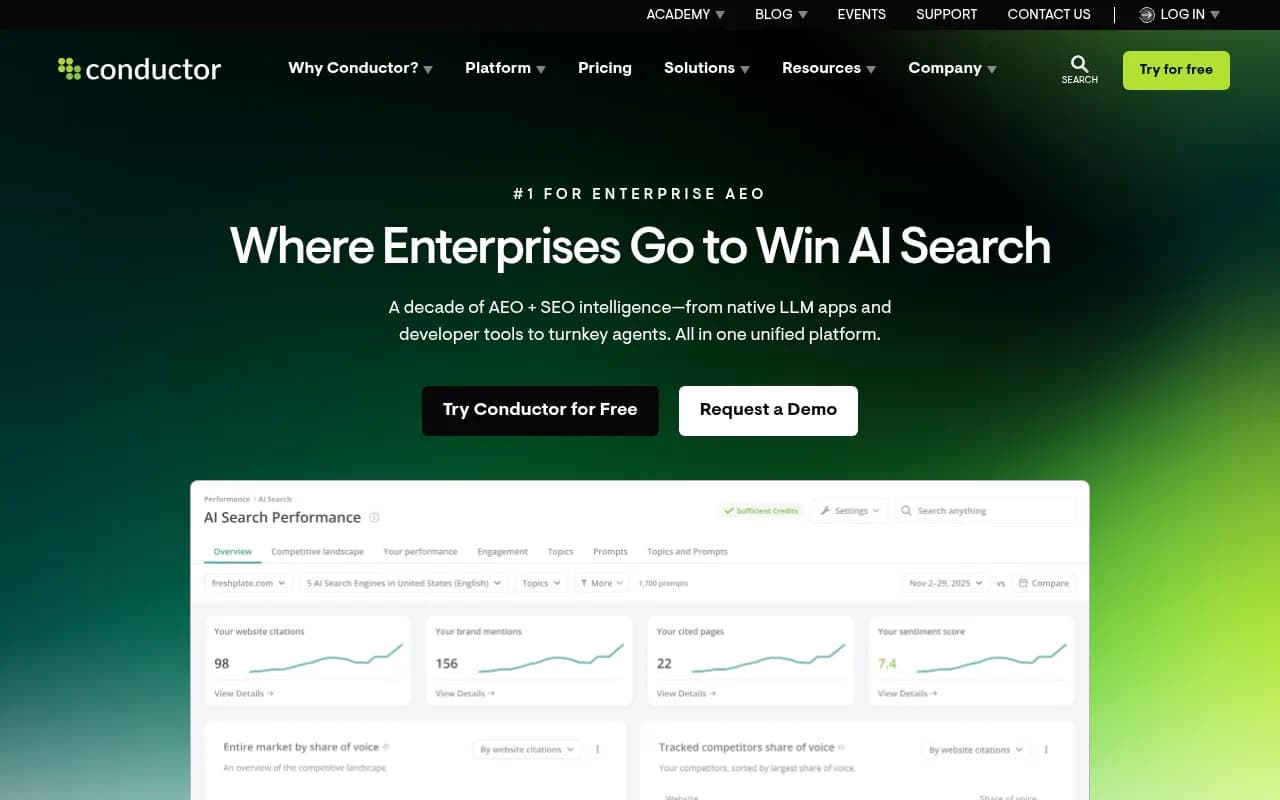
| Conductor | AEO insights inside an organic platform | Enterprise SEO teams |

Yotpo Discover
If you want more options, the GEO software directory lists a long tail of trackers beyond these.
One honest caveat on product-level tools: catalog-focused trackers are good at SKU visibility, but they usually don't show crawler behavior or what AI traffic converts. Promptwatch's IP-verified AI crawler logs and visitor analytics cover that gap, and its Action Board and Content Agent turn found gaps into queued work. That's the part most pure trackers skip.
Step 6: Re-audit when platforms change
Fan-out behavior moves. It went from a 1.0 average in April to 1.83 by August, and a single day in August rewired part of the retrieval path. Promptwatch's own recommendation is to re-audit your keyword-to-heading mapping after major ChatGPT updates and monitor continuously because behavior can change overnight. Put a monthly check on the calendar, and a second one whenever ChatGPT ships a new model.
It's also worth keeping an eye on ChatGPT's wider citation behavior. Promptwatch's citation drop report shows average citations per response fell around the GPT-5.3 rollout on March 4, 2026, which meant fewer slots to win per answer. And nearly half of responses cite 10 or more unique domains, so there's still room if you're in the set.
A simple workflow you can start this week
- Pick 10 commercial prompts tied to your top categories.
- Record fan-outs across several runs and note repeating patterns.
- Cluster them: own page, section, or third-party target.
- Fix the four formats that win commercial citations: product pages, category landing pages, comparisons, and roundup inclusion.
- Check crawlability and indexing for the pages you expect to be fetched, including under site: searches.
- Re-measure coverage and share of voice after four to six weeks.
- Re-audit after any major ChatGPT update.
If you'd rather hand the research and execution to specialists, an agency such as 1001 SEO Media runs this kind of GEO work alongside technical SEO. But the process above is doable in-house with a tracker and a content owner.
What I'd skip
- Pages for every long-tail sub-query. They don't recur and they dilute your site.
- Conversational question headings. Six-to-eight-word keyword-style headings match the actual queries.
- Chasing the "18-22 sub-queries" figure. Use measured numbers instead.
- Ignoring third-party pages. A large part of the shopping answer comes from roundups and reviews you don't own.
Fan-out is less mysterious once you look at it as plain retrieval. A few short searches go out, a handful of page types come back, and the brands with clear pricing, honest comparisons and crawlable pages get named. The work is mostly ordinary good merchandising, aimed at the searches the machine actually runs.