Key takeaways
- Ranketta is a good fit for SKU-level tracking and product-feed merchandising, but its entry price is reported inconsistently (€29 to €79 a month depending on the source), so check ranketta.com/pricing before you decide.
- The real split among alternatives is brand-level monitoring versus product-level tracking versus tools that fix what they find.
- Alhena AI, Peec AI, Profound and Yotpo Discover cover product or catalog tracking. Otterly.AI is the cheap starter option. Promptwatch covers shopping tracking plus crawler logs, content and traffic measurement.
- ChatGPT shopping cards attach to only a low single-digit share of web-search responses, according to Promptwatch Data. Treat it as an early channel and build on fundamentals: clean product data, schema and crawlability.
- No tool can tie an individual order to a specific prompt. Be skeptical of any "revenue by prompt" chart.
Why look beyond Ranketta at all
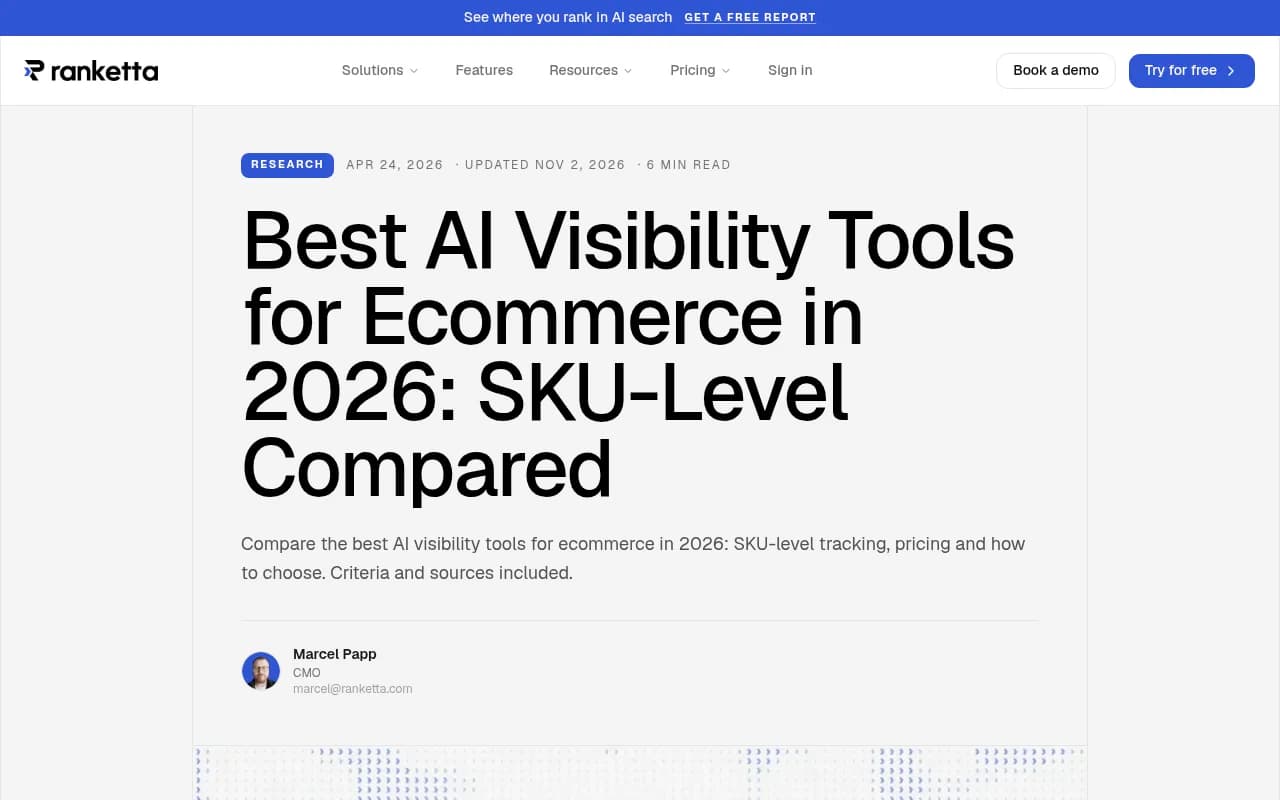
Ranketta is a focused product. It describes SKU-level tracking for stores and D2C brands, an agent that rewrites titles, descriptions and attributes, and an MCP server. For a small catalog team that wants to see which individual products land on an AI shortlist, that is a sensible pitch.
There are reasons to shop around anyway.
First, the pricing picture is muddy. Ranketta's own blog lists €79/mo for Starter (3 models, 50 prompts per model, 5,000 merchandising credits, 1 website). Other comparison sites list €29/mo. I could not reconcile those, so confirm the current plan and what is included before you budget.
Second, one comparison lists Ranketta's AI crawler tracking as limited. If your problem is that AI bots cannot read your product pages, you want logs, not a guess.
Third, much of the comparison content ranking for this topic is written by vendors. Ranketta's claim that only it and Peec AI list SKU-level tracking comes from Ranketta's own blog. Other sources name Profound (Shopping only on Enterprise) and Alhena as product-level trackers too.
What ChatGPT Shopping tracking actually needs to cover
Before comparing tools, be clear on the job. Tracking ChatGPT Shopping is more than counting brand mentions.
- Product-level visibility: which of your products show up in cards or recommendations, and which competitors fill the slots instead.
- Prompt coverage: commercial and transactional prompts your buyers use, not only branded ones.
- Feed and data health: whether your product data reaches ChatGPT at all. Ranketta's own guide notes there are two ChatGPT product feeds, and the Ads Manager one does not get you into organic results during the beta.
- Crawler access: whether AI bots can fetch your product pages.
- Outcome measurement: AI-referred traffic and conversions on your own site.
Promptwatch Data's ChatGPT Shopping usage report is worth reading for context. It measures the share of web-search responses that include product cards or price comparisons. The rate is only a low single-digit percentage across all prompts, moves in steps (it roughly doubled overnight in one late-May window, then fell back), and concentrates on commercial and transactional prompts. The report's page copy mixes dates, so use it for direction and not for an exact figure. The practical read: modest traffic today, but brands that establish product visibility early will be hard to displace.
Ads are the other side of this. In Promptwatch's ChatGPT Ads data (May 20 to Aug 17, 2026), ads appeared in an average of 20.1% of ChatGPT web-search responses, peaking at 43.9% on a single day. If you sell products, you need to see who is bidding on your prompts as well as who is recommended organically.
Ranketta alternatives at a glance
| Tool | Product/SKU-level tracking | Crawler logs | Fixes what it finds | Best for |
|---|---|---|---|---|
| Ranketta | Yes | Limited (per one comparison) | Feed merchandising agent | Small catalog teams |
| Promptwatch | ChatGPT and Alexa shopping results, uploaded catalog | Yes, IP-verified | Content Agent, Action Board | Teams that want tracking plus execution plus traffic proof |
| Peec AI | Yes (SKU visibility, position, win rate) | No | Suggestions | Shopify or Merchant Center stores wanting per-product stats |
| Alhena AI | Yes, product cards and prices | Not documented | Limited | Ecommerce catalog monitoring |
| Profound | Yes, on Enterprise | Not the focus | Conversation explorer | Enterprise retailers |
| Otterly.AI | No | No | No | Cheapest way to start |
| Yotpo Discover | Catalog and reviews focus | Not documented | Catalog and review signals | Brands already on Yotpo |
Pricing changes often. Confirm each vendor's pricing page before committing.
Promptwatch: tracking plus the fix plus the proof
Promptwatch is the option I would put first if your problem is bigger than "where do my SKUs show up". It is an end-to-end AI visibility platform, not just a prompt tracker. For shopping, it tracks product visibility in ChatGPT shopping carousels and Amazon Alexa product results: which products AI recommends, which competitors it picks instead, and how your own uploaded catalog performs. You can filter by model, date range and monitor. Details are on its ChatGPT Shopping feature page.

What makes it different from a shopping-only tracker is everything around that view:
- AI crawler logs are IP-verified, so you can tell whether GPTBot, OAI-SearchBot or ChatGPT-User can actually read your product pages, and where they hit errors. That separates an access problem from a content problem.
- Ads Radar shows which advertisers bid on your prompts, their copy, and their landing pages. It is on Business and agency plans.
- Visitor analytics measure AI-referred traffic and conversions on your own site. ChatGPT stopped sending a referrer on October 8, 2026, so there is a setting that counts visits tagged utm_source=chatgpt.com as ChatGPT traffic.
- The Content Agent plans, writes and publishes pages to WordPress, Webflow or Framer, then Page Tracker shows whether AI cites them. The Action Board turns gaps into a prioritized to-do list.
- Prompts run on real interfaces, not just APIs, in each country and language, which matters because user-facing shopping results can differ from API output.
The honest tradeoff: Promptwatch does not rewrite your product feed attribute by attribute with a confidence score the way Ranketta's merchandising agent describes. If feed-level rewriting is your main bottleneck, that is Ranketta's strength. If your gaps are content, crawler access and proof of traffic, Promptwatch covers more of the loop.
Pricing, per promptwatch.com/pricing: Essential $95/mo, Professional $245/mo, Business $579/mo. ChatGPT Shopping insights and Ads Radar start at Business. There is a 7-day free trial on monthly billing, and a free AI visibility report if you want a no-login look first. Confirm current numbers on the pricing page. For a head-to-head view of the field, see the 2026 GEO platform comparison.
Peec AI: SKU stats from your catalog
Peec AI is the closest like-for-like to Ranketta on tracking. Per Ranketta's comparison, it lists SKU-level visibility, position and win rate per product, with a catalog uploaded from Shopify or Google Merchant Center. That is a clean fit if you want per-product numbers and not much else.

The limits are what you would expect from a tracker. It does not give you crawler logs, content generation or a feed-rewriting agent, so you will need other tools to act on what you learn. Compare it directly on Promptwatch vs Peec if both are on your shortlist.
Alhena AI: product cards and prices in generative answers
Alhena focuses on how specific product cards and prices render inside generative queries, per ChatFeatured's comparison. If your question is "does the card show my price and my image, and is it correct", it is built for that.
It is a narrower product. Check what it says about crawler access and content work before assuming it replaces a broader platform.
Profound: enterprise ChatGPT Shopping depth
Profound tracks ChatGPT Shopping at SKU level and includes retailer attribution for retailers that control checkout, according to GetMint's comparison. The catch is access: Shopping is only on Enterprise with custom pricing, and the trial excludes it. That puts it out of reach for most small and mid-size stores, though it is a serious option for large retailers.

Promptwatch's own comparison notes Profound has no Reddit tracking and no agentic execution. See Promptwatch vs Profound for the detail.
Otterly.AI: the cheap starting point
Otterly.AI is the low-cost option. Am I Cited lists it from $29/mo, with sentiment, citations, 65+ countries, and ChatGPT ads and shopping cards. It does not track SKUs, and its base plan covers four engines with the rest as paid add-ons.

Use it if you are testing whether AI visibility matters for your store at all. Plan to outgrow it once you need product-level views.
Yotpo Discover and other ecommerce-focused picks
Yotpo Discover positions itself around catalogs and reviews, which makes sense if your reviews and UGC already live in Yotpo.
Yotpo Discover
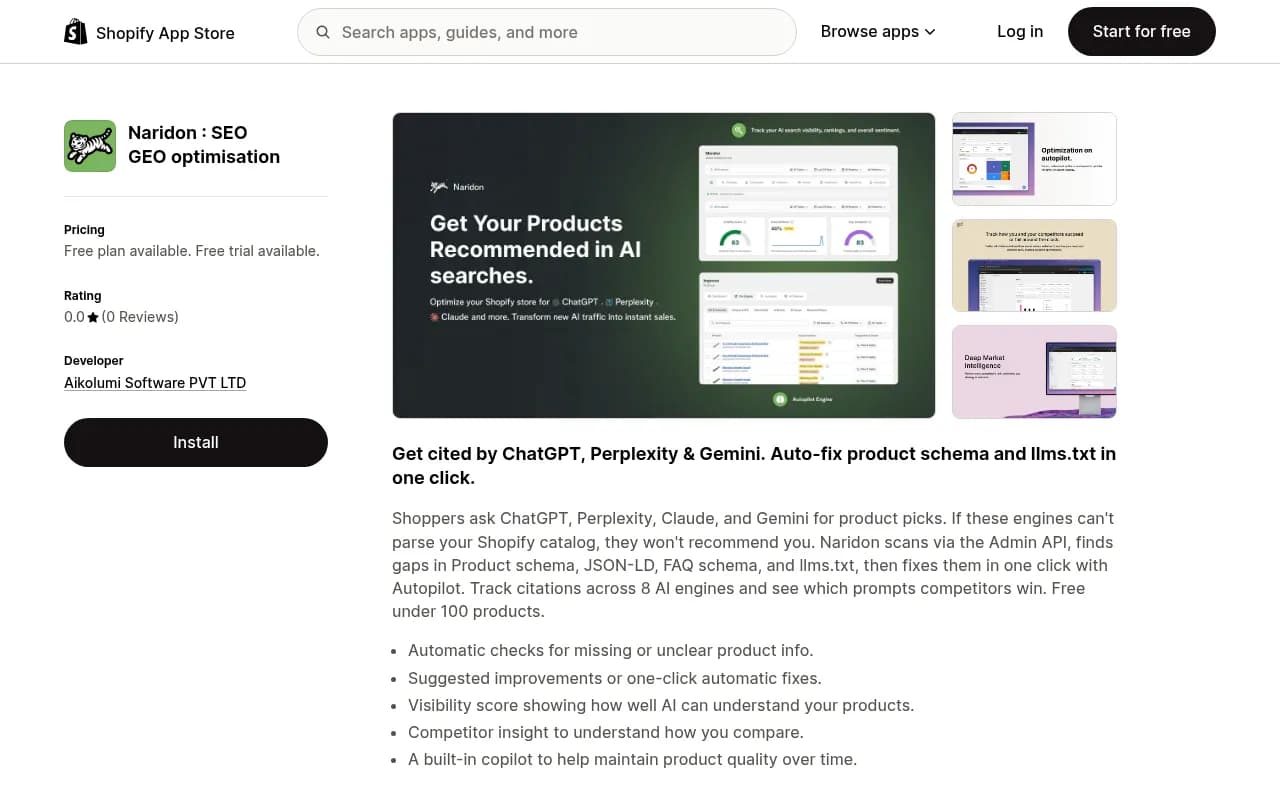
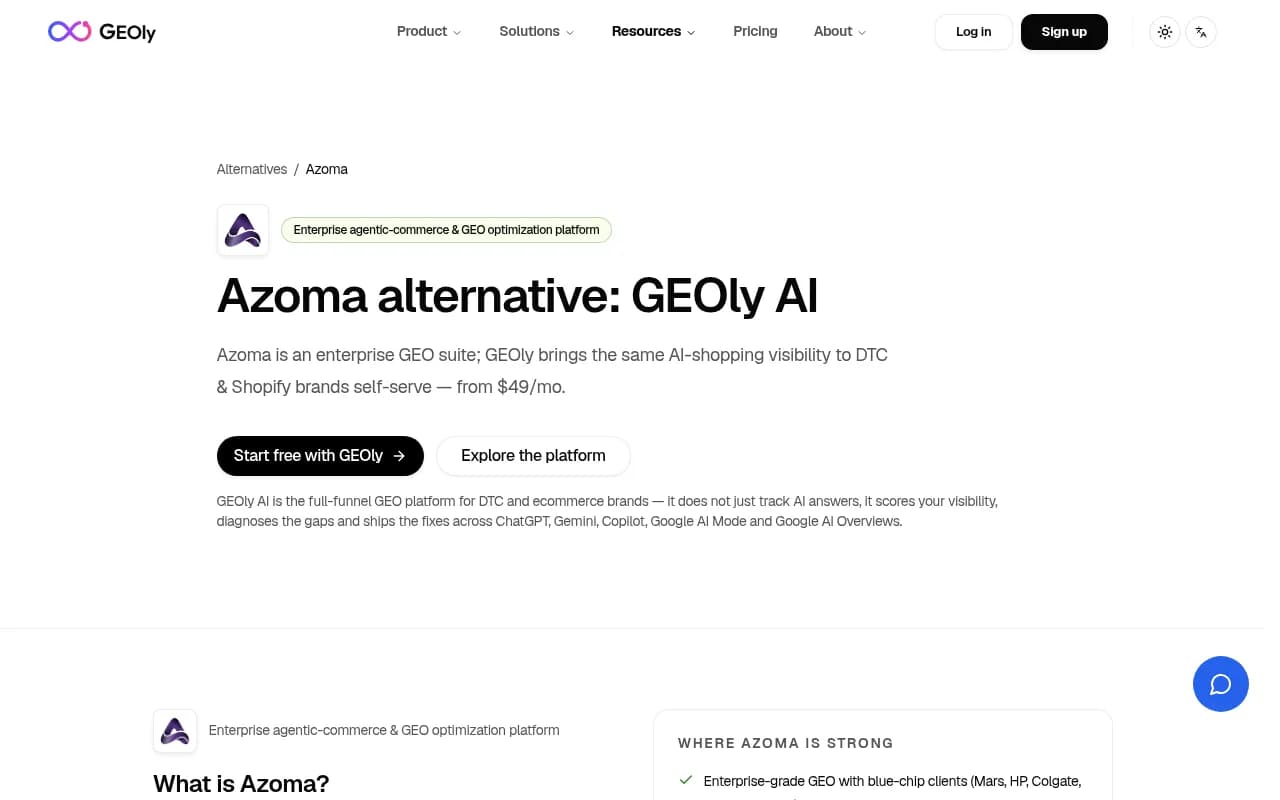
Other ecommerce-flavored tools in the catalog worth a look are Naridon (Shopify-native GEO monitoring), Azoma (agentic-commerce GEO for AI shopping agents) and Bluefish AI (enterprise agentic commerce).

For a broader list of rank trackers and GEO software, the directories at ai-rank-tools.com and bestgeosoftware.com are useful starting points.
Don't forget the Am I Cited angle
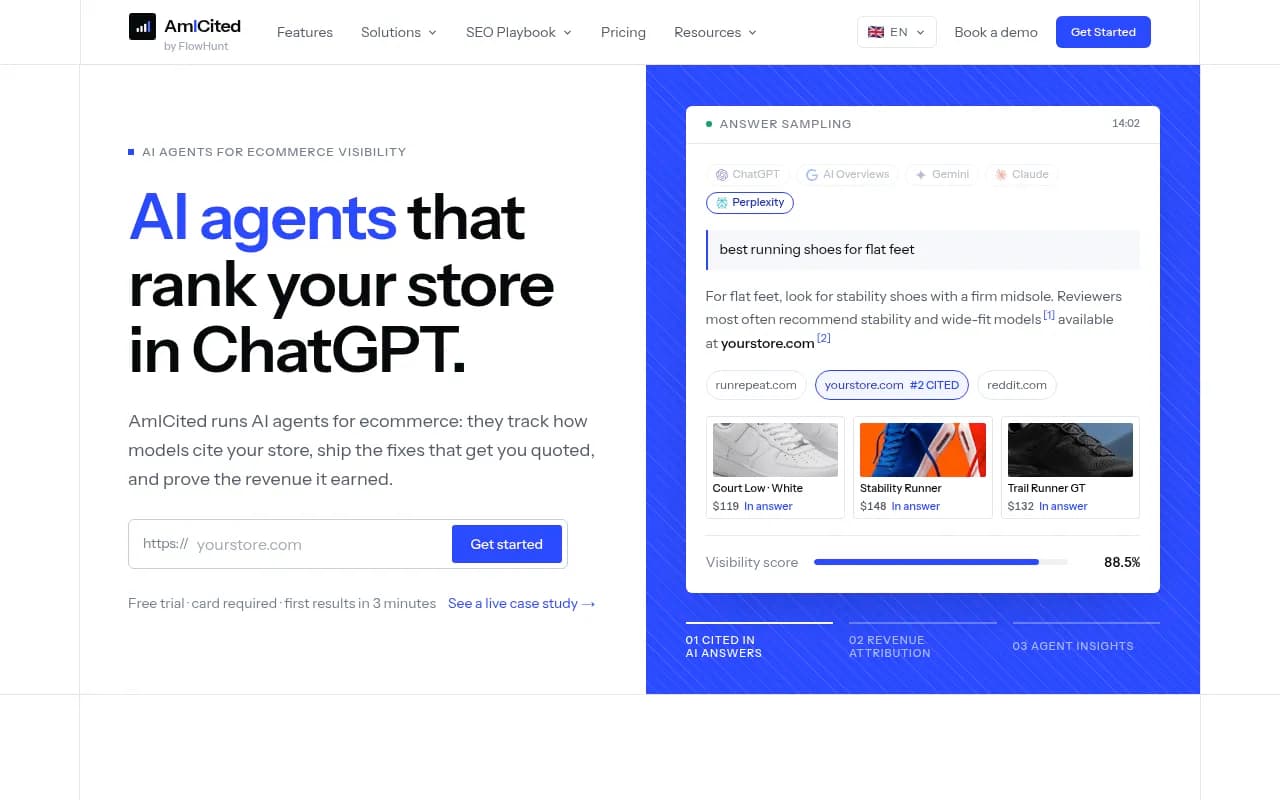
AmI Cited ranks itself first in its own ecommerce roundup and pairs product-level citation tracking with Search Console and Bing data and an order-book view. Take the ranking with a grain of salt, since it is the publisher's own tool, but its warning is fair: no tool can attribute an order to a specific prompt. Treat revenue-by-prompt charts as inference.
How to choose
Pick based on your actual bottleneck, not the longest feature list.
| If your problem is... | Look at |
|---|---|
| Thin product titles, descriptions and attributes | Ranketta |
| Per-product visibility numbers on a budget | Peec AI |
| Incorrect cards or prices in answers | Alhena AI |
| Enterprise retailer with checkout control | Profound |
| AI bots cannot read product pages, or you need to prove traffic | Promptwatch |
| Just testing the waters | Otterly.AI |
If you cannot tell which problem you have, start with a diagnosis. Promptwatch's free AI visibility report scans how ChatGPT, Gemini and Perplexity talk about your brand and checks crawler access, with no login.
A practical test plan
- Export 20 to 30 of your best-selling SKUs and the 10 commercial prompts a buyer would type for them.
- Run the same set through two tools on free trials or the lowest paid plan. Ranketta offers a 7-day trial per GetMint, and Promptwatch offers a 7-day trial on monthly plans.
- Compare what each shows for the same products. Do the shopping cards match what you see by hand in ChatGPT?
- Check crawler access. If bots are blocked or erroring on product pages, no amount of feed work will help.
- Fix the product data first: complete Product schema, accurate price and availability, and a clean merchant feed. Make sure you submit the right ChatGPT feed.
- Measure traffic on your own site for a month before judging the channel.
The bottom line
Ranketta earns its place for SKU tracking and feed merchandising. But SKU tracking is only one slice of the job, and the vendor-written comparisons that dominate search results flatter the vendors that wrote them. Pick the tool that matches where your store is actually stuck, verify pricing yourself, and test on your own catalog. ChatGPT shopping cards are still a small share of responses, so the sensible move is to build the fundamentals now and let the data tell you when to spend more.