Key takeaways
- All three tools go beyond dashboards and produce or ship content. They differ in how much they do for you versus with you.
- Relixir is the most hands-off and the most opaque on price: custom quotes and a demo, with a team that deploys its agent "Rex" for you.
- Addlly AI has the clearest plan structure (query limits, LLM counts, content pieces per month) but no dollar prices in what I could verify.
- Open Forge AI positions itself as a "done with you" growth platform. Its pricing section did not load when I checked, so request a demo to get numbers.
- I found no independent head-to-head test of the three. Treat every result claim as vendor-reported, and judge each tool by whether it produces the page types ChatGPT actually cites.
What GEO content automation actually means
Most GEO tools started as monitors. They ask ChatGPT, Perplexity and Gemini a set of prompts and tell you whether your brand showed up. Useful, but you still have to figure out what to write, write it, and publish it.
Content automation tools try to close that loop. They find the gap, draft or refresh the page, add structure that machines can parse, and in some cases publish it. Relixir, Addlly AI and Open Forge AI all sit in this camp, which is why they get compared. They are not identical products though, and the differences matter more than the marketing pages suggest.
One quick note on the evidence base. I could not find a neutral test pitting these three against each other. What exists is vendor sites, press releases, and comparison pages written by competitors. I flag which is which below.
What should a GEO content tool produce?
Before comparing features, it helps to know what AI engines cite. Promptwatch Data's report on ChatGPT citation share by content type (Sep 28 to Oct 4, 2026) breaks it down:
- Product pages are the most cited type at 22.4% of classified citations.
- Landing pages follow at 16.8%, so roughly 39% of citations go to pages that describe what a company sells.
- Listicles take 13.6%, how-tos 8.7%, documentation 7.5%, comparisons 5.9% and news 5.7%.
- For commercial prompts, product pages (26.0%), landing pages (20.6%), listicles (15.0%) and comparisons (7.9%) add up to almost 70% of citations.
The takeaway for this comparison: a tool that pumps out blog posts is solving the wrong problem. You want one that builds and maintains product pages, landing pages, comparisons and listicles. Freshness matters too. According to Promptwatch's content half-life data, news loses half its cited pages in about 36 days, while landing pages and docs stay cited for months. Keep that in mind when a vendor sells you a refresh cycle.
Relixir: the autonomous employee model
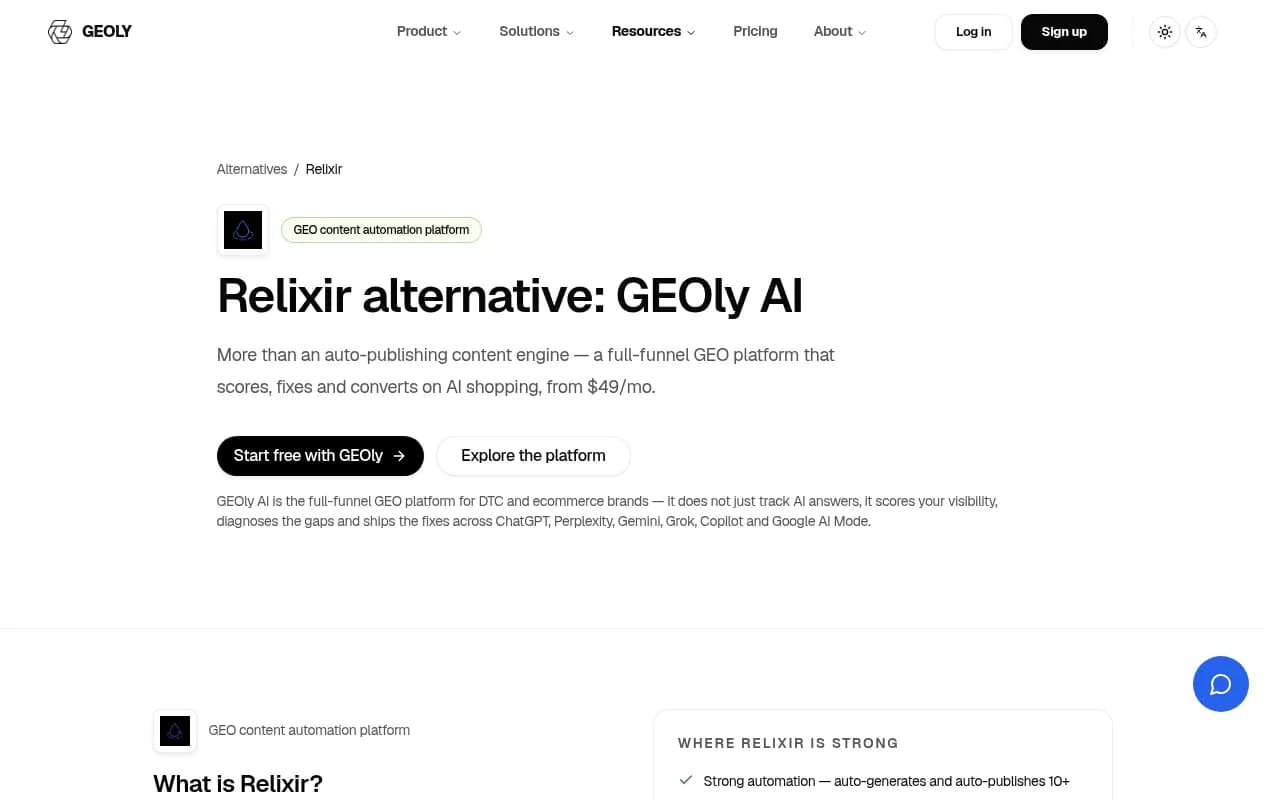
Relixir pitches itself as "Rex, Your Autonomous GEO Employee" and says it is trusted by 400+ B2B teams, with logos like Rippling, Airwallex, Qdrant, HackerRank and Warmly on its site.
What it does
Per its own site, Relixir monitors ChatGPT, Perplexity, Claude and Google AI Overviews. On the content side it lists:
- GEO-oriented content generation with JSON-LD schema, semantic chunking, automated citations and FAQ structures
- CMS-wide refresh on a 30 to 60 day cycle that detects stale content and republishes it
- A research engine for competitor and keyword gaps
- Backlink outreach, Reddit citation identification and PR
- Technical audits
- Integrations with CMS, GA, Search Console, CRM and Slack
- Dashboard metrics for mention rate, citation rate, competitor share of voice, AI traffic and AI-sourced leads
That is the broadest list of the three, and it reaches into off-site work (outreach, Reddit, PR) that the others barely mention.
Pricing
Relixir publishes only "Custom Pricing" and a demo booking. Third-party numbers conflict badly. One competitor, useorion.ai, lists $3,600/mo entry and $5,200/mo mid-tier. Another, Hikoo, lists a $500/mo starter. FlyRank says there are no published tiers. I would treat all of these as unreliable and assume quote-only pricing.
My take
The 30 to 60 day refresh cycle is a sensible default for news-like content, but less necessary for evergreen landing pages. Ask Relixir whether refresh frequency is configurable by page type. Also ask how much of the Reddit work survives the shift in AI citation behavior. Promptwatch Data shows reddit.com's share of ChatGPT citations fell from about 4% to 0.5% on August 14, 2026, so a Reddit-heavy playbook deserves scrutiny for ChatGPT specifically.
Addlly AI: structured plans and consumption pricing
Addlly AI is the most clearly packaged of the three. It describes itself as agent-led GEO content automation for enterprises and brands.
What it does
Every plan starts with a fully managed baseline GEO audit, then moves into an ongoing coverage plan. It also offers a GEO Audit tool and an AI Search Visibility Checker. Stackmatix describes it as full-stack GEO management, covering content creation through visibility tracking and brand mention monitoring, and says it suits content teams that need GEO guardrails inside the writing workflow rather than bolted on later.
Plan structure
- Basic: up to 200 total monthly queries
- Pro: up to 1,000 total queries across 5 LLMs, plus 25 content pieces per month
- Enterprise: 300+ queries per LLM per market, multi-market, custom query and cluster design
- Optional team training for Pro from $1,500 (included in Enterprise)
- Optional fully managed service as a monthly add-on
- Singapore SMEs can use the PSG grant, starting at SGD 292/month
I did not find dollar prices for Basic, Pro or Enterprise. A Skywork summary says G2 shows editions from a free trial up to $20,000, but that is secondary and unverified.
Vendor claims
Addlly's press release claims up to 50% lower content creation costs, including a childcare centre that supposedly saved up to $40,000 in a year. That is vendor-reported, so weigh it accordingly.
My take
The 25 content pieces per month on Pro is a useful concrete number. It lets you do the math: if a piece costs you $300 to $500 to produce today, you can test the cost-savings claim against your own baseline. Few tools in this category give you a unit that simple.
Open Forge AI: growth platform with a services feel
Open Forge AI uses the tagline "Track AI visibility, get the action plan, ship the fixes. All in one platform," and says it is backed by customers, not venture capital.

What it does
llmrefs describes it as closer to a "done with you" growth platform than a pure visibility dashboard. Customer testimonials mention content tools, competitor analysis, citation building and automatically built content. The company also publishes vertical content, for example on AEO for dealership service departments, which suggests some industry specialization.
Evidence
The standout claim is from Quilter AI, which reports a 243.3% increase in ChatGPT-attributable direct traffic in month one and 467.8% by month three. Other named customers include Cobu, Grade Potential, AppViewX, Concept3D and agencies like Helium SEO. These testimonials are curated by the vendor. Percentage gains also depend entirely on the starting baseline, so ask what the absolute numbers were.
Authoritas has a comparison page contrasting Open Forge with its own AI Tracker, which is worth reading with the usual caveat that it is a competitor writing.
Pricing
The site offers a demo request, and the pricing section did not load in my check. Assume you need to talk to sales.
Side-by-side comparison
| Relixir | Addlly AI | Open Forge AI | |
|---|---|---|---|
| Positioning | Autonomous GEO employee | Agent-led GEO content automation | Done-with-you growth platform |
| Engines monitored | ChatGPT, Perplexity, Claude, AI Overviews | Up to 5 LLMs on Pro | Not confirmed in my research |
| Content generation | Yes, with schema, FAQ, citations | Yes, 25 pieces/month on Pro | Yes, per testimonials |
| Automated refresh | 30 to 60 day cycle | Not confirmed | Not confirmed |
| Off-site work | Backlinks, Reddit, PR | Not emphasized | Citation building |
| Published pricing | Custom only | Plan structure, no dollar figures found | Not loaded |
| Service model | Team deploys Rex for you | Optional managed add-on | Done-with-you |
| Evidence | 400+ teams claimed, logos | Press release claims | Customer testimonials |
Where do these sit against the rest of the market?
Context helps. Otterly.AI starts at $29/mo for 15 prompts, Writesonic GEO at $49/mo, and Profound's entry plan is $99/mo with ChatGPT only. Those are mostly monitoring-first or self-serve products. The three tools here are priced and sold more like services, which usually means higher cost and a sales call.
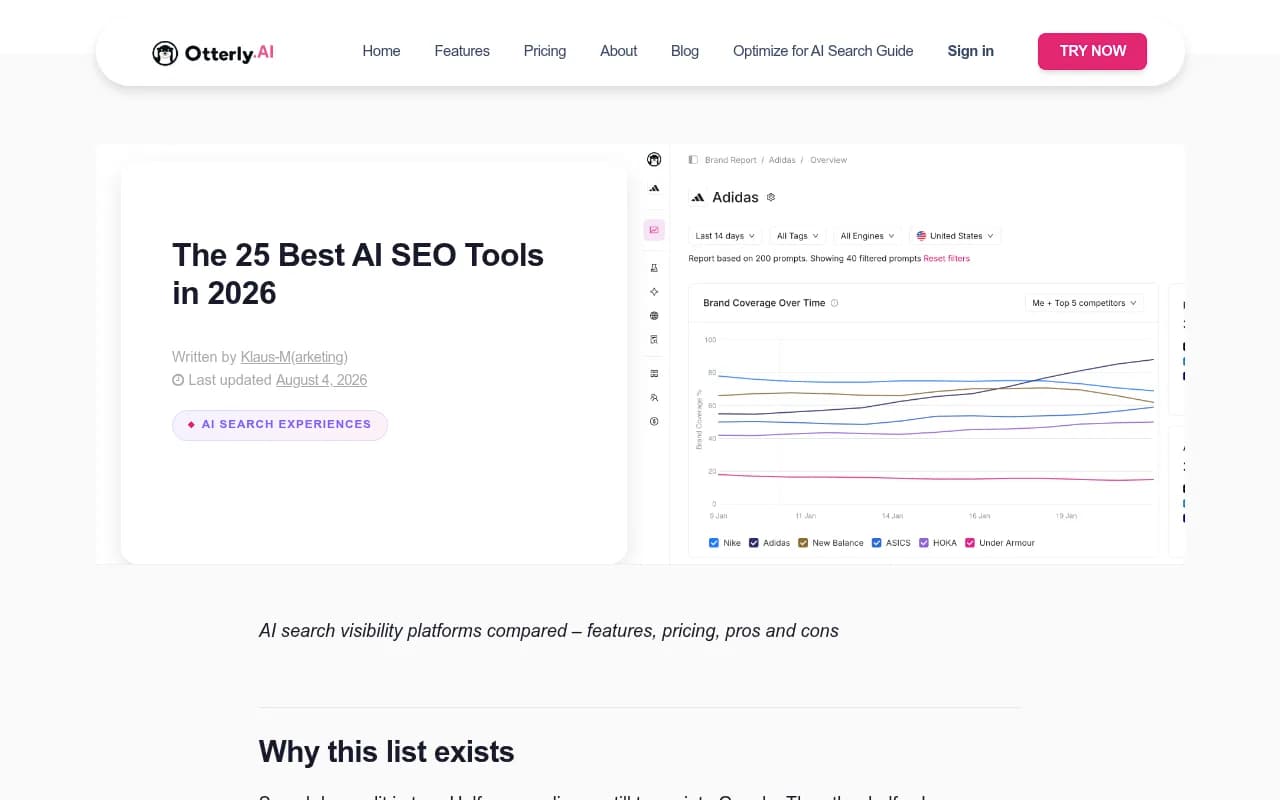
Otterly's roundup is a handy way to benchmark entry prices and engine coverage, though remember it is a vendor writing about its own market.

If your main need is measurement plus a prioritized to-do list rather than a done-for-you service, a platform like Promptwatch is worth a look. It ties prompt tracking to IP-verified AI crawler logs, citation data and a Content Agent that publishes to Webflow, Framer or WordPress, and it publishes pricing starting at $95/mo.

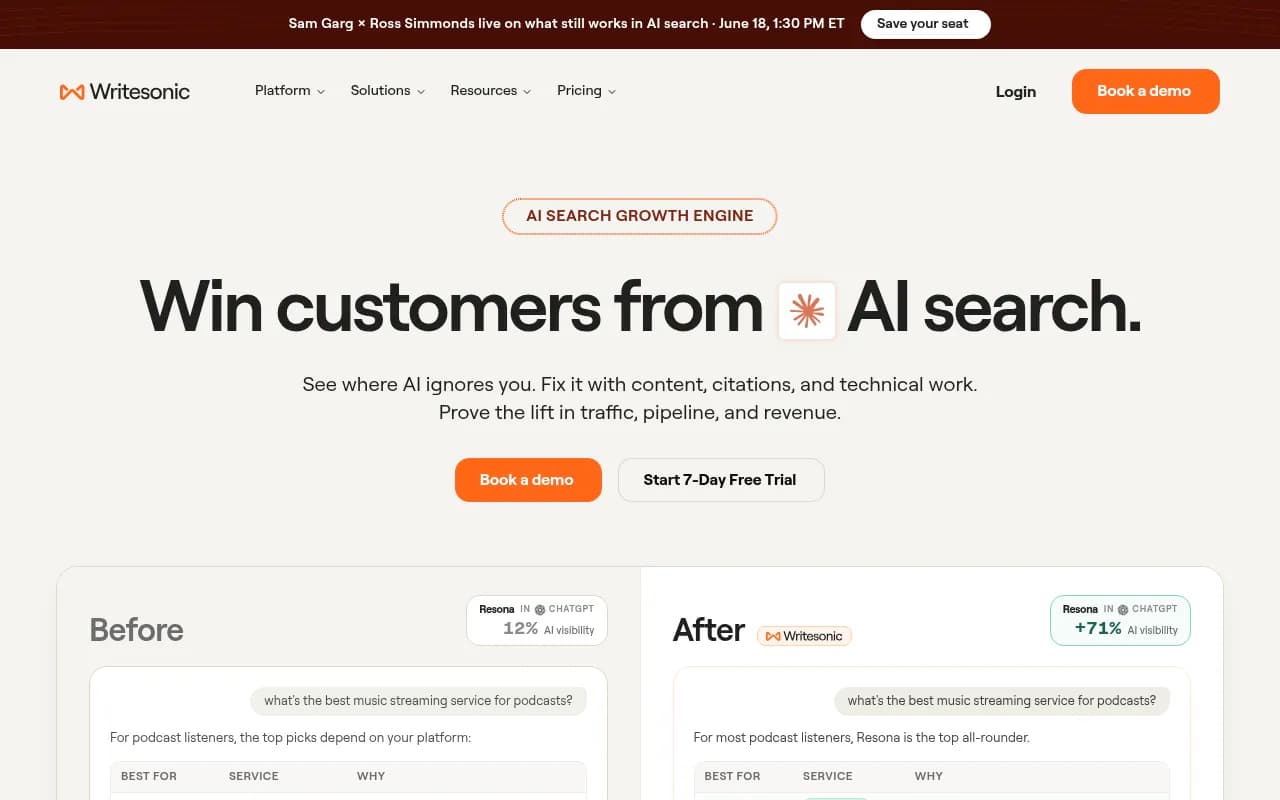
Other content-first options in the catalog include Writesonic GEO for tracking plus writing, and AirOps for content workflows.
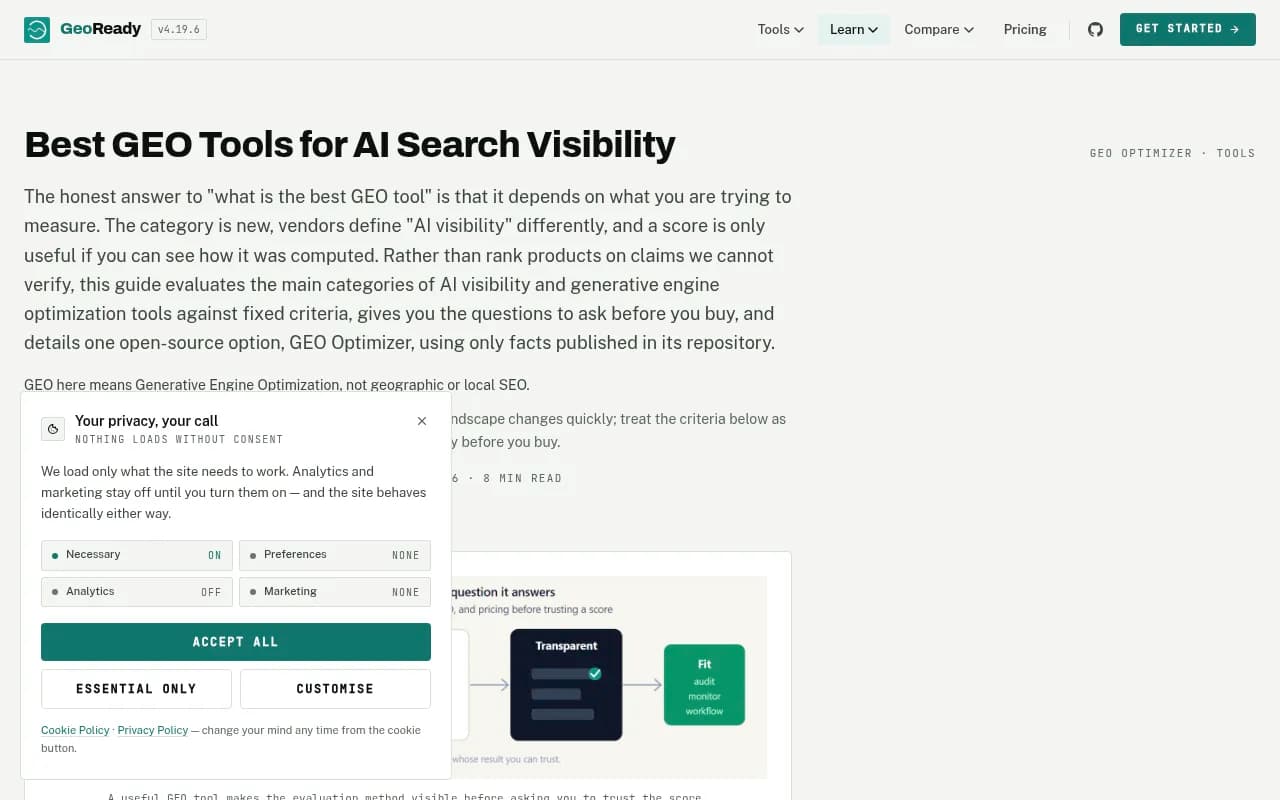
The GeoReady guide above makes a point I agree with: a good GEO tool should show how it scores things before asking you to trust the score. Apply that test to all three vendors here.
How to choose
Pick Relixir if
You are a B2B company with budget, you want an outsourced team handling content, refresh, outreach and PR, and you are comfortable with a quote-based sale. Push hard on pricing, contract terms and what "autonomous" actually means in practice (who reviews content before it goes live).
Pick Addlly AI if
You want a defined unit of output (queries, LLMs, content pieces) and a managed audit up front. It suits content teams that care about GEO guardrails inside the writing workflow. Singapore SMEs get a grant route that lowers the entry cost.
Pick Open Forge AI if
You want a hands-on partner, you are in a vertical where it publishes specific playbooks, and you value a customer-funded vendor. Ask for the absolute traffic numbers behind the Quilter AI percentages.
Questions to ask any of the three
- Which page types do you generate? Product pages, landing pages, comparisons and listicles matter most per the citation data above.
- Do I approve content before publishing, and can I set this per page type?
- How do you attribute AI traffic and leads, and can I see it in my own analytics?
- What is the contract length, and what happens to published content if I cancel?
- Can you show a customer in my industry with absolute numbers, not just percentages?
- Which engines do you track through the real user interface rather than APIs?
If you want to browse beyond these three, the GEO software directory at bestgeosoftware.com lists a wider set of platforms.
Bottom line
These three tools are closer to managed services with software attached than to self-serve apps. That is not a flaw, but it changes how you should buy: get written pricing, run a 60 to 90 day pilot on a handful of product and landing pages, and measure citations and AI-referred traffic yourself. None of the three has independent evidence behind its headline claims yet, so your own pilot is the only test that counts.