Key takeaways
- Searchable starts at $50/mo and covers up to 7 AI models, with monitoring plus some content optimization features built in
- LLM Pulse starts at €49/mo (~$53), covers 5+ AI models, and includes sentiment analysis on Growth and higher plans
- Both tools are genuinely lightweight options for small teams -- neither requires a procurement process or a six-figure budget
- LLM Pulse leans more toward clean analytics and share-of-voice tracking; Searchable leans toward a monitor-plus-create workflow
- If you're already thinking about scaling beyond monitoring into content optimization and full GEO strategy, platforms like Promptwatch offer a more complete action loop
The AI visibility tool market has exploded. There are now more than 40 platforms claiming to track how your brand appears in ChatGPT, Perplexity, Gemini, and the rest. Most of them are aimed at enterprise marketing teams with big budgets and dedicated analysts.
But what if you're a two-person startup, a solo founder, or a small agency with five clients? You need something that works, costs a reasonable amount, and doesn't require a week of onboarding before you see any data.
Searchable and LLM Pulse both sit in that lighter-weight category. They're not trying to be Profound or Semrush. They're trying to be useful, affordable, and fast to set up. This guide looks at what each one actually delivers, where they diverge, and how to decide which fits your situation.
What these tools are trying to solve
Before comparing features, it's worth being clear about the problem.
When someone asks ChatGPT "what's the best email marketing tool for a small business?" or Perplexity "which project management software do agencies use?", the AI generates an answer. Your brand either appears in that answer or it doesn't. Traditional SEO rankings tell you nothing about this. Google Search Console tells you nothing about this.
AI visibility tools run those kinds of prompts automatically, across multiple models, and report back: were you mentioned? How often? In what context? Who else was mentioned?
That's the core job. Both Searchable and LLM Pulse do it. The question is how well, at what price, and with what extras.
LLM Pulse: what it is and who it's for
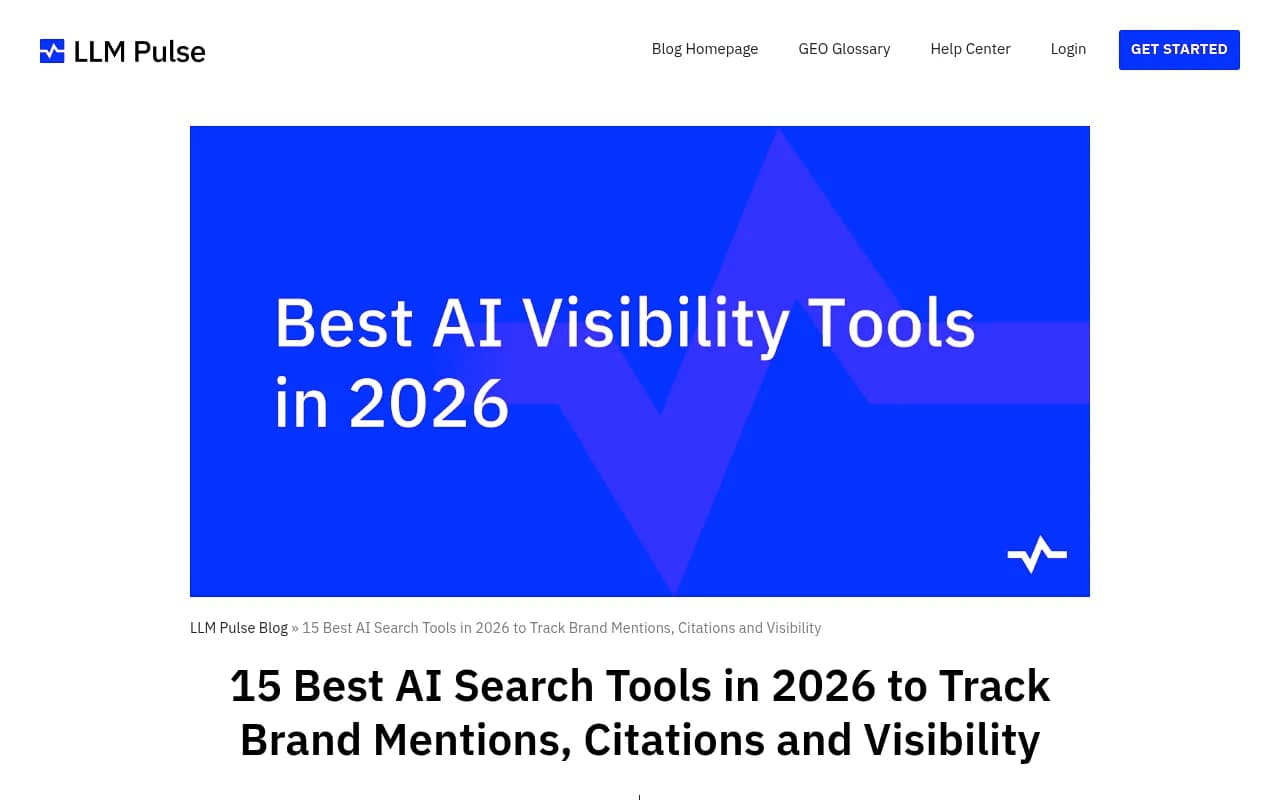
LLM Pulse is purpose-built for AI visibility analytics. It monitors how your brand appears across ChatGPT, Perplexity, Gemini, Google AI Mode, and other models, with share-of-voice tracking and sentiment analysis available on higher plans.
The pricing is transparent and genuinely startup-friendly: the Starter plan runs €49/mo (they also offer USD and GBP billing), and there's a 14-day free trial so you can actually test it before committing. The Growth plan adds sentiment analysis, which matters if you want to know not just whether you're being mentioned but whether the AI is saying good or bad things about you.
What LLM Pulse does well:
- Clean, readable dashboards that don't require a data analyst to interpret
- Share-of-voice metrics that let you see how you stack up against competitors in AI responses
- Transparent, tiered pricing with no "contact sales" gatekeeping at the entry level
- Sentiment analysis on Growth and above, which is a meaningful differentiator at this price point
- Coverage of 5+ AI models including Google AI Mode, which some cheaper tools skip
Where it's more limited:
- The Starter plan is fairly basic -- you're getting monitoring, not optimization
- No content generation or gap analysis built in (you'll need separate tools for that)
- Less suited to teams that want to go from "we found a gap" to "here's the content to fix it" in one platform
LLM Pulse is best described as a solid monitoring tool. It tells you what's happening. What you do with that information is up to you.
Searchable: what it is and who it's for
Searchable starts at $50/mo and tracks up to 7 AI models. The positioning is slightly different from LLM Pulse -- it tries to combine monitoring with some content optimization features, making it closer to a "monitor plus create" workflow in a single tool.
According to the comparison data available, Searchable covers up to 7 models at the entry tier, which is more than most tools at this price point. It also has features aimed at helping teams act on what they find, not just observe it.
What Searchable does well:
- Broader model coverage at the entry price (up to 7 models vs 5+ for LLM Pulse Starter)
- Some content optimization features built into the platform
- Designed for teams that want to move from insight to action without switching tools
Where it's more limited:
- Less publicly documented pricing detail compared to LLM Pulse, which makes it harder to evaluate before signing up
- Sentiment analysis and deeper analytics may require higher tiers
- The "monitor plus create" positioning is ambitious -- whether the content tools are genuinely useful or just checkbox features is worth testing in a trial
Side-by-side comparison
| Feature | LLM Pulse | Searchable |
|---|---|---|
| Starting price | €49/mo (~$53) | $50/mo |
| Free trial | 14 days | Available |
| AI models tracked | 5+ (Starter) | Up to 7 |
| Share of voice | Yes | Yes |
| Sentiment analysis | Growth plan and above | Varies by tier |
| Content optimization | No | Yes (built in) |
| Content generation | No | Partial |
| Competitor tracking | Yes | Yes |
| Google AI Mode | Yes | Yes |
| Pricing transparency | High | Moderate |
| Best for | Clean monitoring and analytics | Monitor + basic content workflow |
Both tools are in the same price range and serve similar audiences. The decision mostly comes down to what you want to do after you see the data.
The monitoring-only problem
Here's something worth thinking about before you choose either tool.
Both Searchable and LLM Pulse are primarily monitoring platforms. They show you where you're invisible in AI search. That's genuinely useful information. But knowing you're not being cited by ChatGPT when someone asks about your category doesn't automatically tell you what to do about it.
The gap between "we're not visible" and "we fixed it" is where most small teams get stuck. You need to know which specific prompts you're missing, what content would close those gaps, and whether your new content is actually getting picked up by AI crawlers. That's a different kind of tool.
Searchable makes some attempt at bridging this with content optimization features, which is a meaningful difference from LLM Pulse. But if you're thinking seriously about a full optimization workflow -- finding gaps, generating content, tracking whether it works -- it's worth knowing that more complete platforms exist.
Promptwatch is one example: it's built around exactly that loop (find gaps, create content, track results), with AI crawler logs, content agents, and page-level citation tracking. It's priced higher than either Searchable or LLM Pulse, but it's a different category of tool.

For a small team that just wants to know "are we showing up in AI search?", Searchable or LLM Pulse will do the job. For a team that wants to actively improve that visibility, the monitoring-only approach has a ceiling.
How to choose between them
The honest answer is that these two tools are close enough that your decision should probably come down to a few specific factors.
Choose LLM Pulse if:
- You want the cleanest, most transparent pricing with no surprises
- Sentiment analysis matters to you and you're willing to pay for a Growth plan
- You want a tool focused purely on analytics without extra features cluttering the interface
- You're a small brand or startup that needs to monitor AI visibility and report on it, but doesn't need content creation built in
Choose Searchable if:
- You want broader model coverage at the entry price point
- You want some content optimization capability in the same tool
- You're a small agency that needs to show clients both what's happening and what you're doing about it
- You prefer a slightly more integrated workflow over a pure analytics dashboard
Consider alternatives if:
- You need more than 7 models tracked
- You want prompt volume data and difficulty scoring to prioritize which gaps to close first
- You need AI crawler logs to understand how AI engines are actually reading your site
- You want content generation grounded in real citation data, not just general AI writing
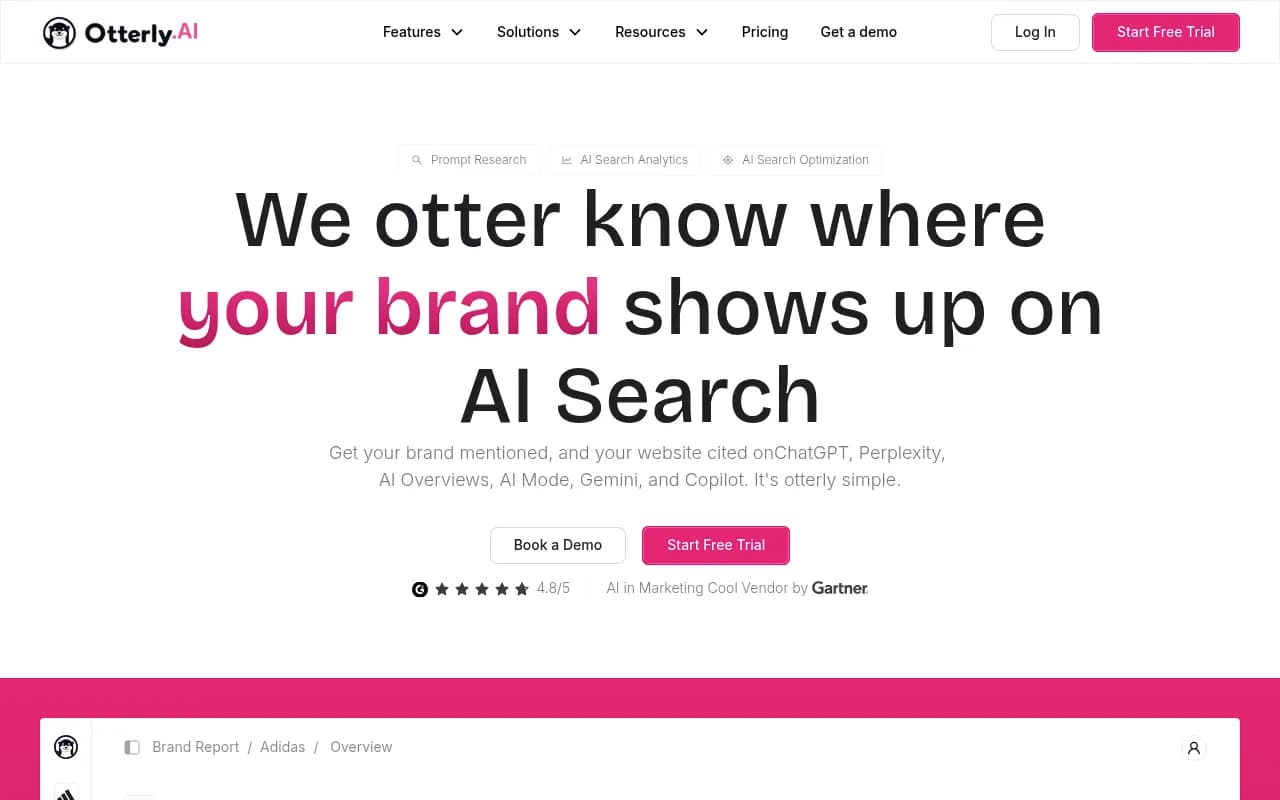
The broader market has a lot of options at different price points. Tools like Otterly.AI sit at an even lower entry price ($29/mo) for basic monitoring.
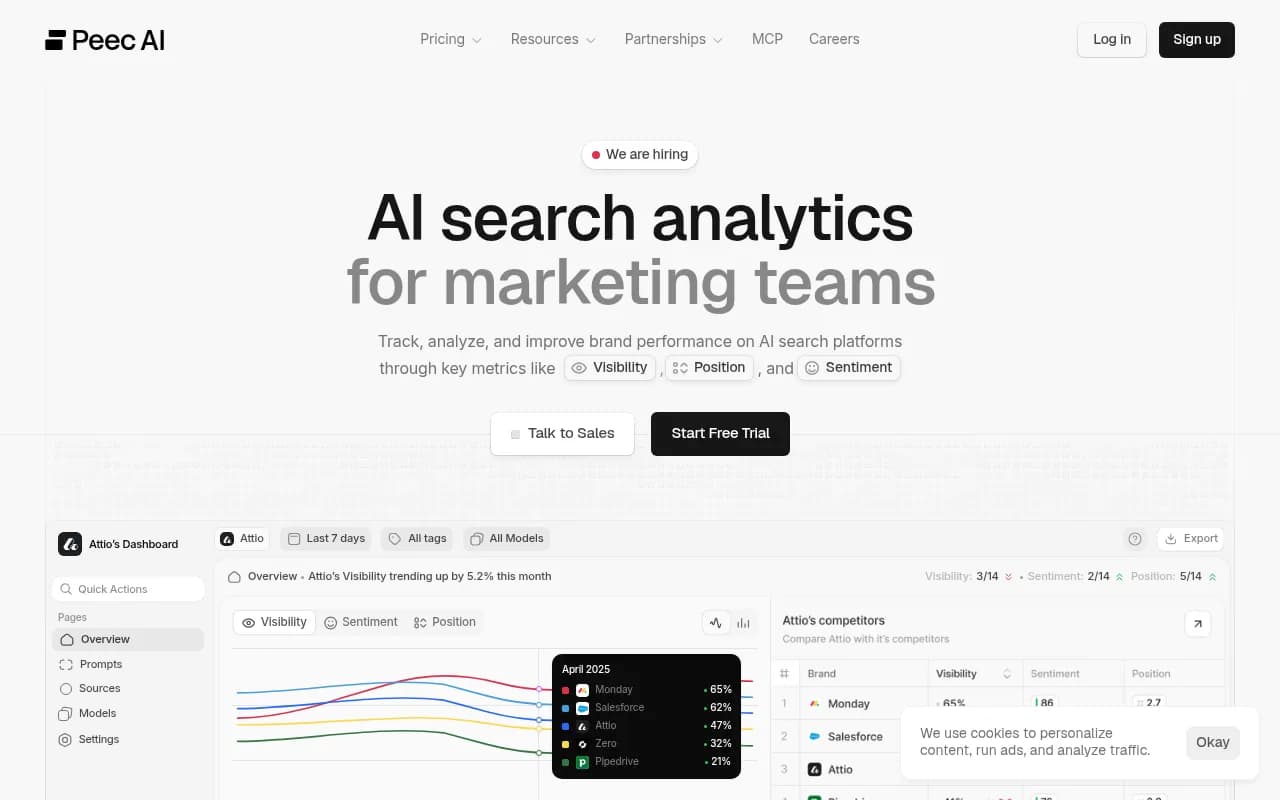
Peec AI offers flexible model selection with a slightly higher starting price.
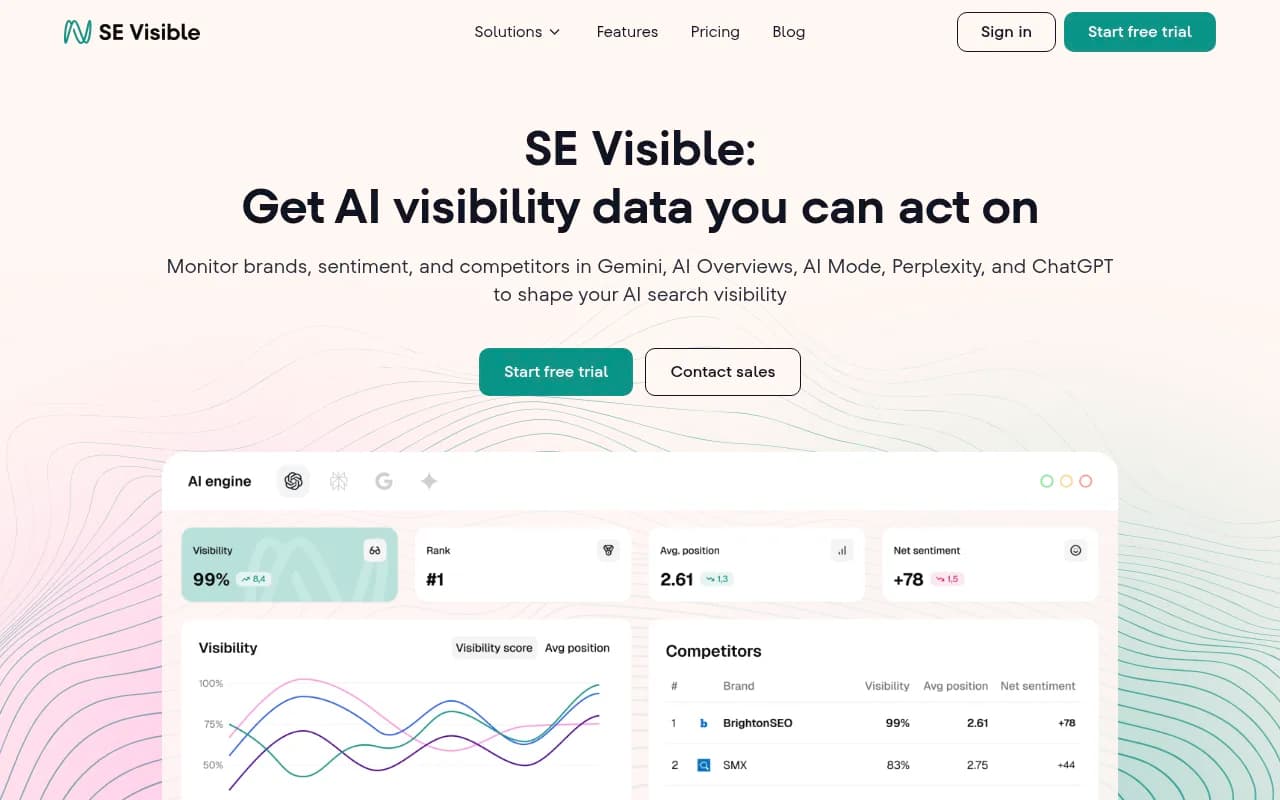
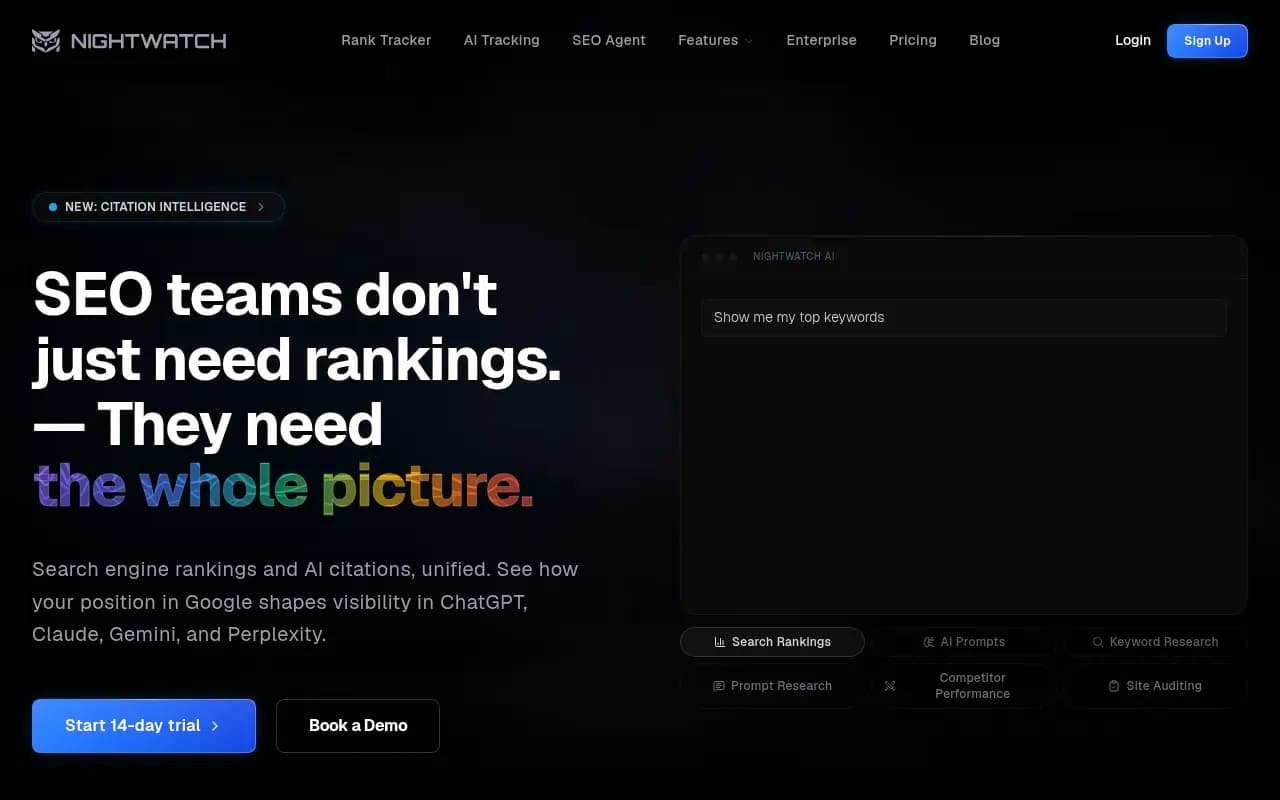
And if you're coming from an SEO background and want AI visibility bolted onto a tool you already use, SE Ranking Visible or Nightwatch are worth a look.
What the market looks like around them
It helps to understand where Searchable and LLM Pulse sit in the broader landscape. The AI visibility tool market roughly splits into three tiers:
Lightweight / startup-friendly (under $100/mo): LLM Pulse, Searchable, Otterly.AI, Peec AI, Nightwatch. These are monitoring-first tools with varying amounts of optimization capability. Good for getting started, limited for scaling.
Mid-market (roughly $100-300/mo): Promptwatch, Profound (Starter), SE Ranking Visible, KIME. More model coverage, more analytics depth, some content tooling. Better for teams that want to actively improve visibility, not just watch it.
Enterprise (custom pricing or $500+/mo): Profound (Enterprise), BrightEdge, Conductor, AthenaHQ. Full-stack platforms for large organizations with complex needs.
Searchable and LLM Pulse are firmly in the first tier. That's not a criticism -- it's just useful context. If your team is just starting to think about AI visibility, starting here is completely reasonable. You can always migrate to a more capable platform once you know what you actually need.
Practical advice for small teams
A few things that tend to matter more than the feature list when you're a small team:
Start with your actual prompts. Don't just let the tool run generic queries. Think about the specific questions your customers ask when they're evaluating tools like yours. "Best [category] for [use case]" queries are usually the most valuable to track.
Track competitors from day one. Both tools support competitor tracking. Use it. Knowing that a competitor is being cited in 60% of relevant AI responses while you're at 12% is more motivating than any abstract visibility score.
Check the model coverage carefully. "5 models" and "7 models" sound similar, but which models matters. Google AI Mode and Google AI Overviews are different products. Perplexity and ChatGPT have very different citation behaviors. Make sure the models you care about are actually included in the tier you're buying.
Use the free trial properly. Both tools offer trials. Don't just poke around the dashboard -- actually run the prompts you care about, look at the competitor data, and see whether the output is something you'd actually use in a report or a meeting.
The bottom line
Searchable and LLM Pulse are both legitimate options for small teams that need AI visibility tracking without a large budget. LLM Pulse has the edge on pricing transparency and sentiment analysis. Searchable has the edge on model coverage at the entry tier and the attempt at a more integrated workflow.
Neither tool will tell you everything you need to know about why you're invisible in AI search or exactly what to do to fix it. For that, you need something with a real optimization layer -- content gap analysis, AI crawler data, and content generation grounded in actual prompt data. But as starting points for understanding your AI search presence, both are worth a trial.
Pick the one whose workflow matches how your team actually operates, test it for two weeks, and go from there.