Key takeaways
- The best AI writing tools for marketing teams in 2026 go beyond draft generation -- they help content perform in both traditional search and AI-powered answer engines.
- Tools like Jasper and Writer are built specifically for marketing workflows, with brand voice controls and team collaboration features that general-purpose chatbots lack.
- SEO-integrated tools (Surfer SEO, Frase, Clearscope) are worth the extra cost if organic visibility is a priority -- they connect writing directly to search data.
- For teams that care about AI search visibility (ChatGPT, Perplexity, Google AI Overviews), content optimization doesn't stop at publishing -- tracking how AI models cite your content is a separate layer entirely.
- Free tools like ChatGPT and Claude are genuinely useful for ideation and first drafts, but they don't replace purpose-built marketing writing platforms.
Marketing teams in 2026 are drowning in content demands. Blog posts, landing pages, email sequences, social copy, product descriptions, ad variations -- the list never shrinks. AI writing tools have become less of a "nice to have" and more of a basic operational requirement.
But here's the problem: the category has exploded. There are dozens of tools claiming to be the best AI writing assistant, and most of them are basically the same wrapper around GPT-4o or Claude 3.5 with a slightly different UI. Picking the wrong one means paying for something that doesn't fit how your team actually works.
This guide cuts through that noise. The eight tools below were chosen based on output quality, team collaboration features, use-case fit for marketing specifically, and how well they support content that performs -- not just content that exists.
What separates a good AI writing tool from a mediocre one
Speed is solved. Every tool on this list can produce a 1,500-word blog post in under two minutes. That's not the differentiator anymore.
What actually matters for marketing teams:
- Does it understand your brand voice, or does every output sound like a generic LinkedIn post?
- Can multiple team members work in it without chaos?
- Does it connect to real search data, or is it just guessing at what topics to cover?
- Does the output need heavy editing before it's usable?
The tools below score well on at least two or three of these. None of them are perfect -- I'll be honest about the tradeoffs.
The 8 best AI writing tools for marketing teams
1. Jasper
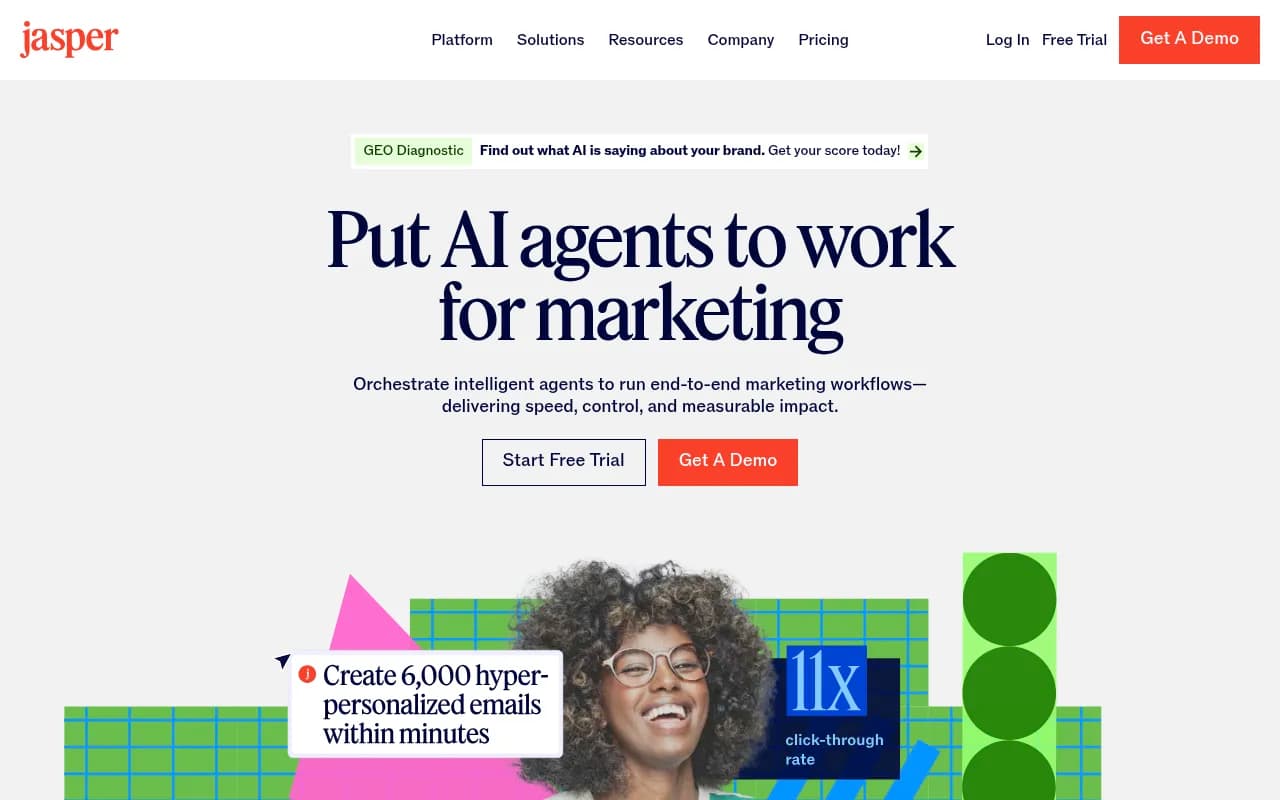
Jasper has been around long enough to have survived the initial AI writing hype cycle, which says something. It's one of the few tools that was built specifically for marketing teams rather than adapted from a general-purpose chatbot.
The core value is brand voice. You can train Jasper on your company's existing content, style guides, and tone guidelines. Once that's set up, outputs actually sound like your brand -- not a generic corporate blog. For teams managing multiple clients or product lines, this is genuinely useful.
Jasper also has a solid template library covering everything from Google Ads copy to long-form blog posts to product descriptions. The campaign workflow feature lets you brief a full campaign and generate multiple assets (email, social, landing page) from a single input.
Where it falls short: the pricing is on the higher end, and the SEO integration (via Surfer) requires an additional subscription. It's best suited for teams that already have a content strategy and need to execute faster, not teams still figuring out what to write about.
Jasper starts at around $49/month for individuals, with team plans available.
2. Writer
Writer is the enterprise option in this category. It's built for larger marketing teams and organizations that need strict brand consistency across dozens of contributors.
The standout feature is its knowledge graph -- you feed it your brand guidelines, product documentation, approved messaging, and compliance rules, and it enforces those across all outputs. For regulated industries (finance, healthcare, legal) or brands with complex style requirements, this is a real differentiator.
Writer also has strong team collaboration features: comments, approval workflows, and version history. It feels more like a content operations platform than a writing assistant, which is either exactly what you need or overkill depending on your team size.
The AI output quality is genuinely good. Writer uses its own LLM (Palmyra) rather than relying entirely on OpenAI, which gives it more control over outputs and better compliance with enterprise data requirements.
Pricing is enterprise-tier -- expect to negotiate a contract rather than sign up with a credit card.

3. Surfer SEO
Surfer isn't purely a writing tool -- it's a content optimization platform that happens to include AI writing. But for marketing teams where organic search traffic matters, that distinction is what makes it worth including here.
The core workflow: you enter a keyword, Surfer analyzes the top-ranking pages for that term, identifies the topics and entities those pages cover, and generates a content brief. The AI writing feature then drafts content that's already structured around what search engines reward for that query.
This is meaningfully different from writing a blog post in Jasper and hoping it ranks. Surfer connects the writing process to real search data from the start.
The content editor scores your draft in real time as you write, showing which topics you've covered and which are missing. It's a bit like having an SEO analyst looking over your shoulder -- useful if you trust the data, slightly annoying if you disagree with its suggestions.
Surfer integrates with Google Docs, WordPress, and Jasper, so it fits into existing workflows without too much friction.

4. Frase
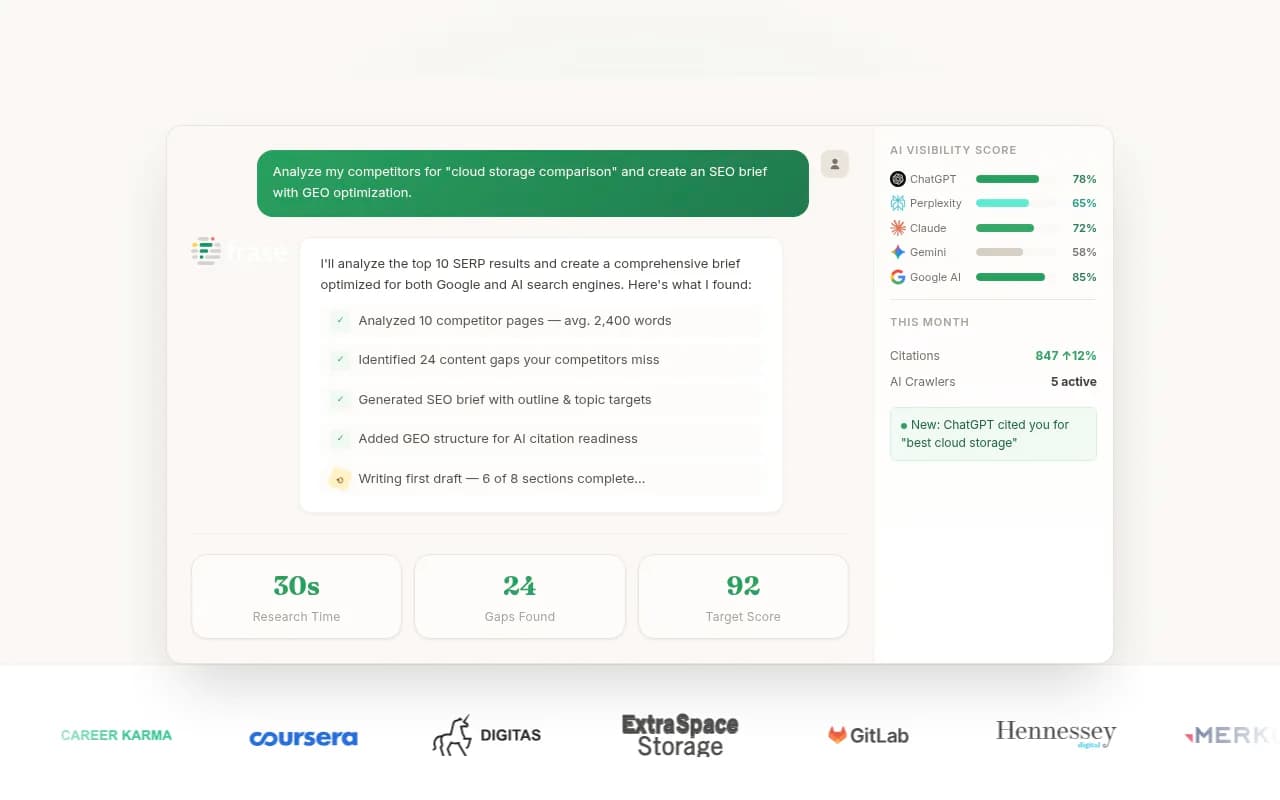
Frase sits in a similar space to Surfer -- SEO-driven content creation -- but with a slightly different emphasis. Where Surfer is strong on content scoring and optimization, Frase is better at research and brief generation.
The research workflow is genuinely impressive. You enter a topic, and Frase pulls together the top search results, extracts key questions people are asking, identifies content gaps, and organizes everything into a brief. For content strategists who spend hours doing this manually, it's a significant time saver.
The AI writing quality is decent but not exceptional -- most teams use Frase for research and briefs, then write or generate the actual content elsewhere. That's a reasonable workflow.
Frase is also more affordable than Surfer, which makes it a better fit for smaller teams or agencies managing high content volumes on tighter budgets.
5. Clearscope
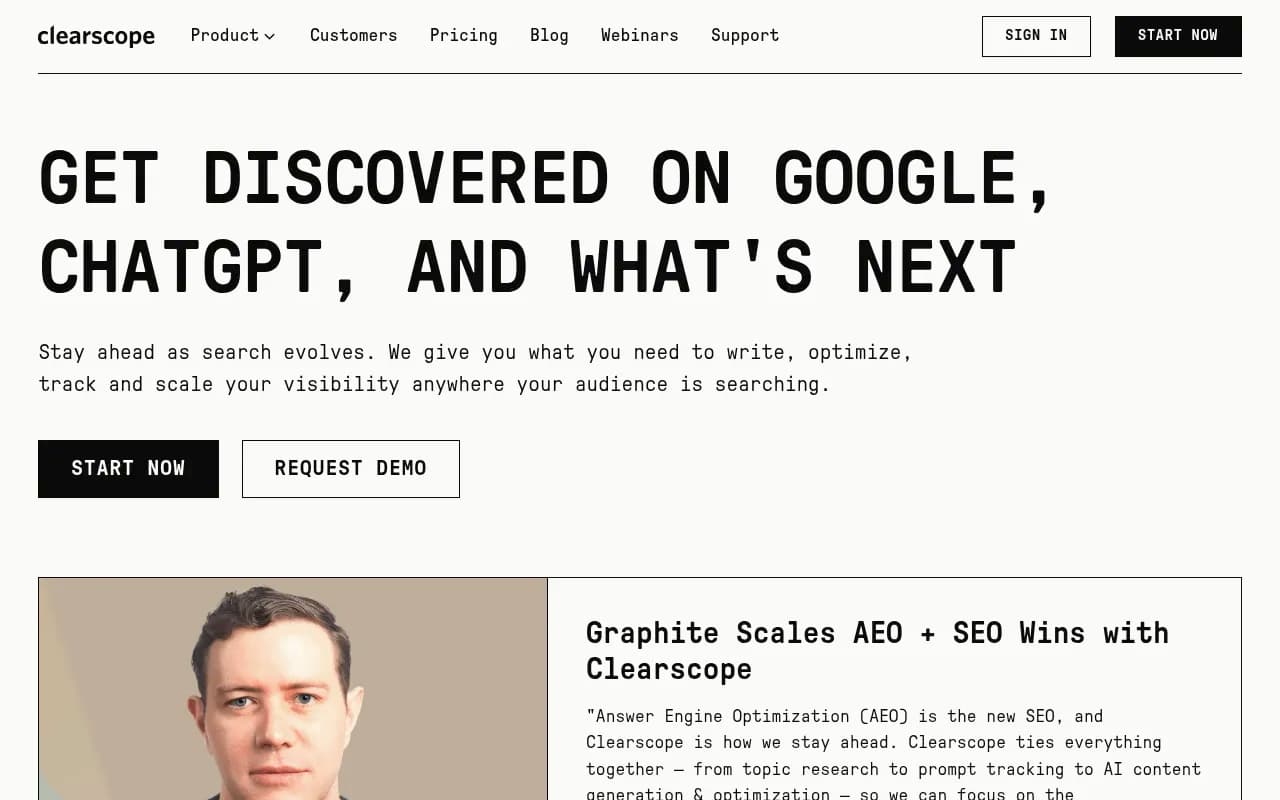
Clearscope takes a more focused approach than Surfer or Frase. It does one thing: helps you optimize content for search visibility by identifying the terms and topics your content needs to cover.
The interface is clean and simple. You paste in your draft (or write directly in the editor), and Clearscope grades it based on how well it covers the relevant semantic topics for your target keyword. No AI generation, no brief templates -- just clear, actionable optimization guidance.
This simplicity is both its strength and its limitation. Teams that already have strong writers and a content strategy will find Clearscope genuinely useful. Teams looking for an all-in-one solution that handles research, writing, and optimization will find it incomplete.
It integrates with Google Docs and WordPress, and the reports are easy to share with writers who don't need to log into the platform.
6. MarketMuse
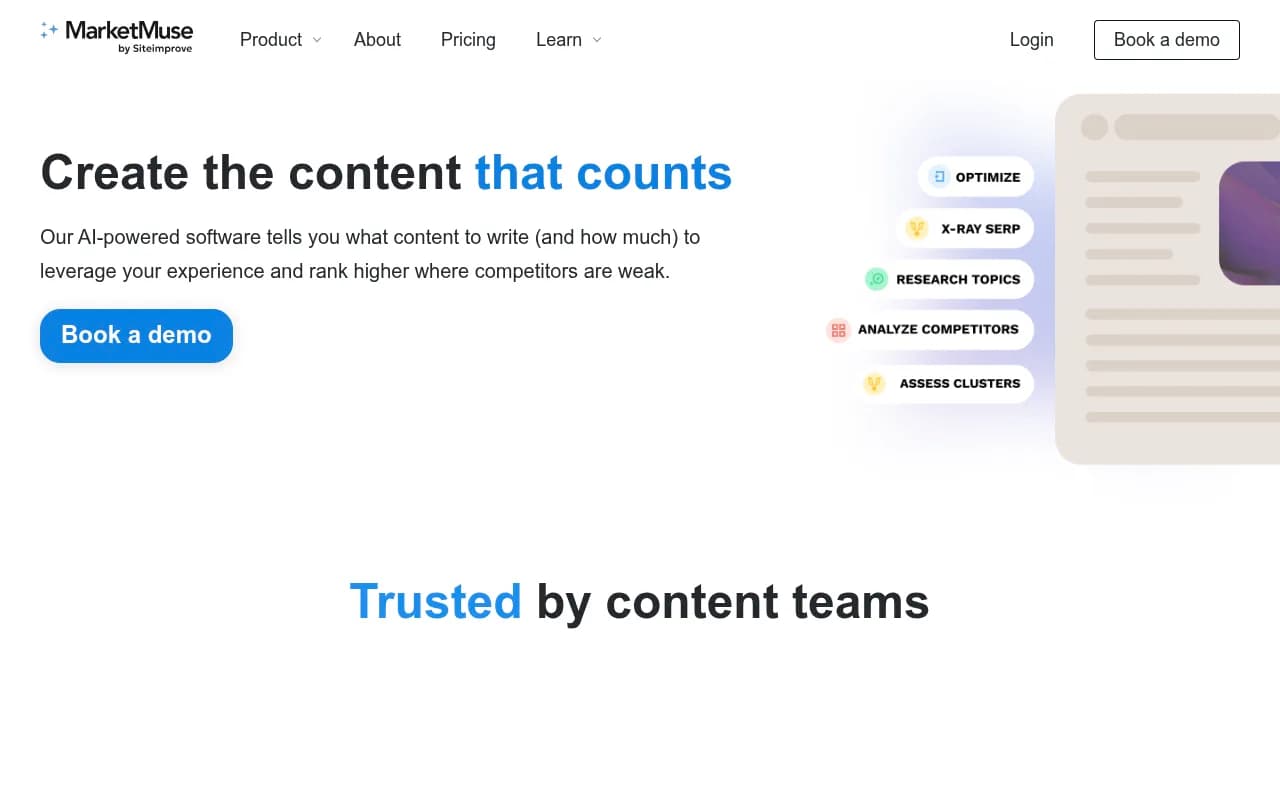
MarketMuse operates at a higher strategic level than most tools on this list. Rather than helping you optimize a single piece of content, it analyzes your entire content library and identifies where you have topical authority and where you have gaps.
For marketing teams managing large content sites (hundreds or thousands of pages), this is valuable. MarketMuse can tell you which topics you're well-positioned to rank for based on your existing content, which topics competitors own that you don't, and which pages need updating versus which ones are performing well.
The AI writing features are solid but secondary to the strategy layer. Most teams use MarketMuse for planning and prioritization, then execute the actual writing in another tool.
It's expensive -- the full platform is enterprise-priced -- but for content-heavy organizations, the ROI case is easy to make.
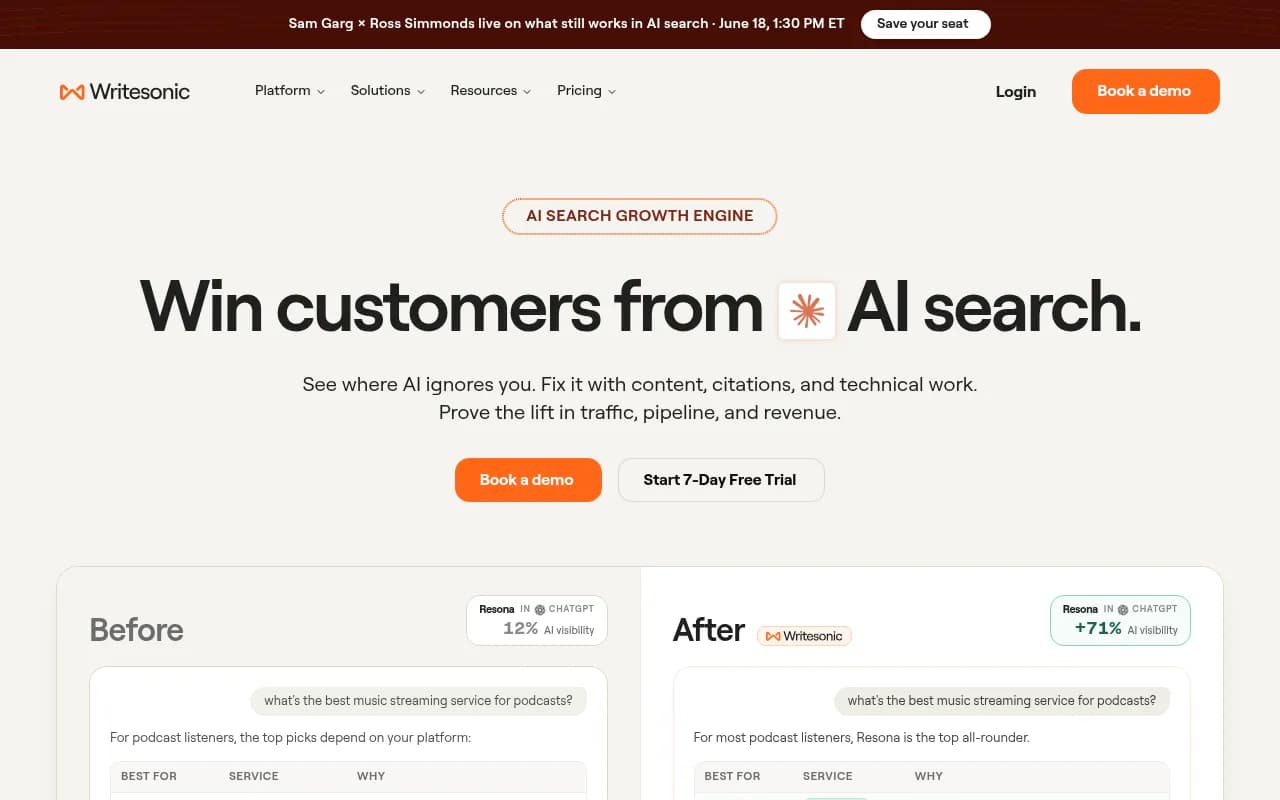
7. Writesonic
Writesonic is the most versatile tool on this list in terms of sheer output variety. It covers blog posts, landing pages, ad copy, product descriptions, email sequences, social media content, and more -- all from a single platform.
The quality is consistently good, and the Chatsonic feature (a ChatGPT-style interface with web access) is useful for research-backed writing. Writesonic also has a built-in AI article writer that can produce long-form content with minimal input.
For smaller marketing teams or solo marketers who need to cover a lot of ground without specialized tools for each use case, Writesonic's breadth is genuinely appealing. The free tier is usable, and paid plans are reasonably priced compared to Jasper or Writer.
The tradeoff is depth. Writesonic doesn't go as deep on brand voice customization as Jasper, or as deep on SEO optimization as Surfer. It's a strong generalist, not a specialist.
8. NeuronWriter
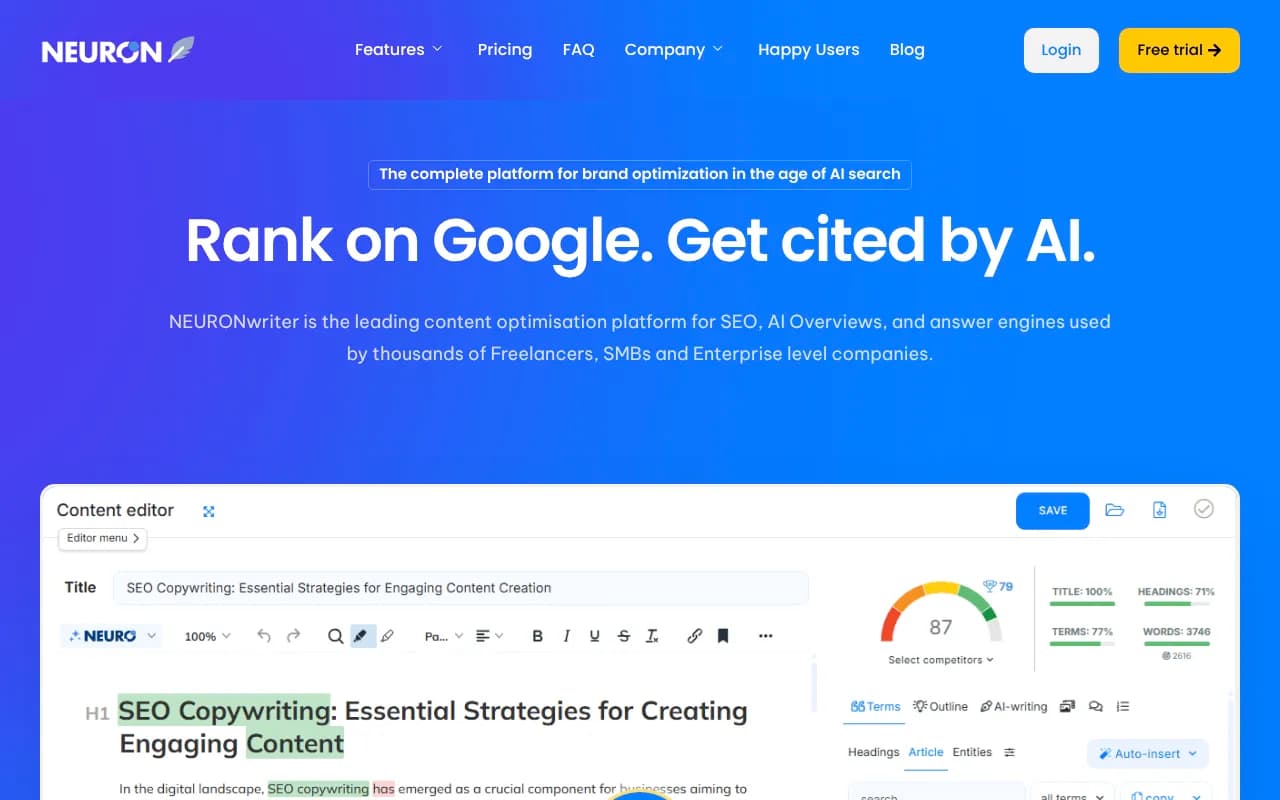
NeuronWriter is worth including because it does something most tools on this list don't: it combines NLP-based content optimization with a genuinely usable AI writing assistant at a price point that smaller teams can afford.
The content optimization approach is similar to Surfer and Clearscope -- analyze top-ranking content, identify semantic terms to include, score your draft. But NeuronWriter's interface is more approachable for writers who aren't SEO specialists, and the pricing is significantly lower (there's a lifetime deal option that's been popular with indie marketers and small agencies).
The AI writing quality is good for first drafts, and the internal linking suggestions are a useful bonus feature for teams managing large content sites.
It's not the most polished tool on this list, but the value-to-price ratio is hard to argue with.
Comparison table
| Tool | Best for | SEO integration | Brand voice controls | Team collaboration | Starting price |
|---|---|---|---|---|---|
| Jasper | Marketing teams, campaign content | Via Surfer add-on | Strong | Good | ~$49/mo |
| Writer | Enterprise, regulated industries | Limited | Very strong | Excellent | Enterprise |
| Surfer SEO | SEO-driven content creation | Native | Limited | Moderate | ~$89/mo |
| Frase | Research and brief generation | Native | Limited | Moderate | ~$15/mo |
| Clearscope | Content optimization | Native | None | Good | ~$170/mo |
| MarketMuse | Content strategy, large sites | Native | Limited | Good | Enterprise |
| Writesonic | Versatile output, small teams | Basic | Moderate | Basic | Free tier available |
| NeuronWriter | Budget-conscious SEO content | Native | Limited | Basic | ~$23/mo |
A note on AI search visibility
Most of these tools are built around traditional SEO -- getting content to rank in Google's blue links. That's still important, but it's no longer the whole picture.
In 2026, a growing share of search happens through AI-powered interfaces: ChatGPT, Perplexity, Google AI Overviews, Claude, Gemini. These systems don't rank pages the way Google does -- they cite sources, summarize content, and recommend brands based on how well your content answers specific questions.
Writing good content is the foundation. But if you want to know whether your content is actually being cited by AI models, which competitors are getting cited instead of you, and what topics you're missing from an AI-search perspective, that requires a different kind of tool.
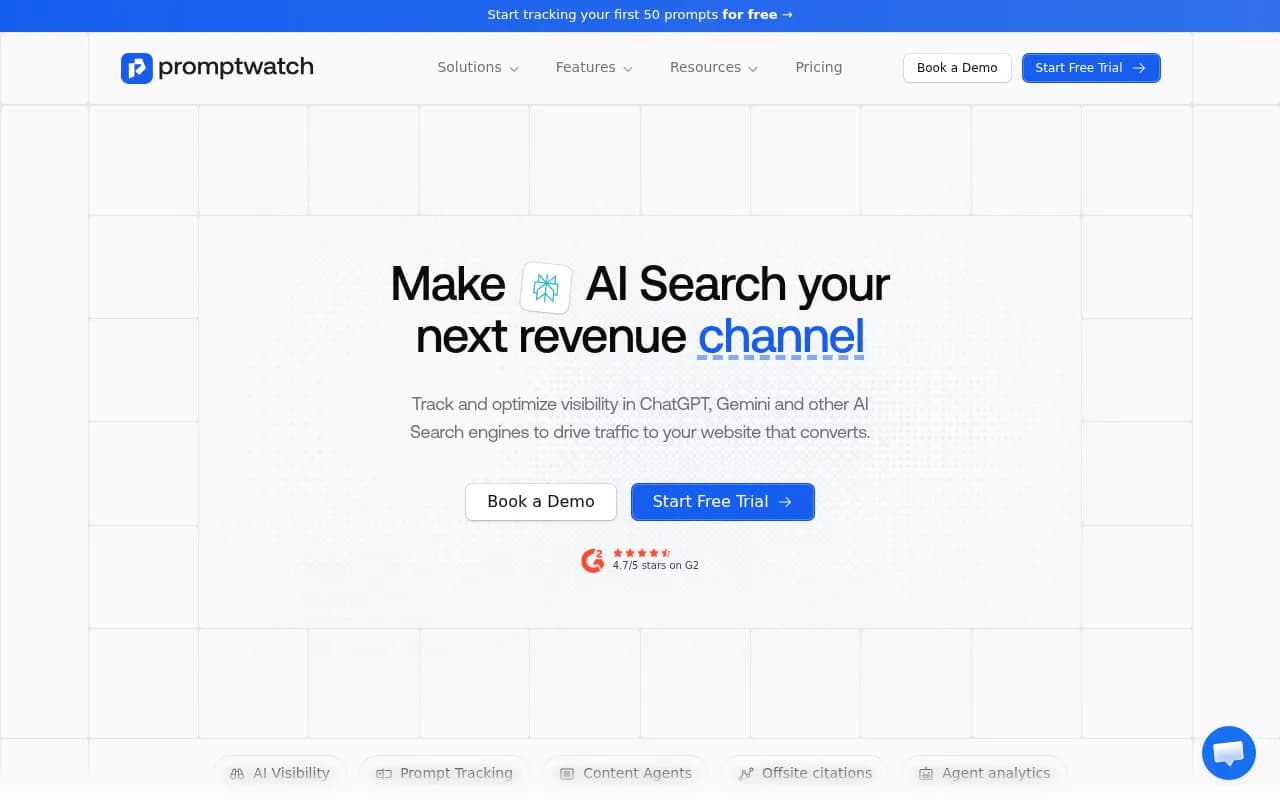
Promptwatch is built specifically for this layer -- tracking which AI models cite your content, identifying the prompts where competitors appear and you don't, and generating content briefs grounded in real prompt data. It's a different category from the writing tools above, but for marketing teams that care about AI search visibility, it's worth knowing about.
How to choose the right tool for your team
A few practical filters:
If SEO traffic is your primary goal, start with Surfer SEO or Frase. Both connect writing directly to search data, which is more valuable than a faster drafting tool.
If brand consistency is your biggest headache, Jasper or Writer are the right choices. The investment in training the tool on your brand pays off quickly when you're managing multiple writers or contributors.
If you're a small team covering a lot of ground, Writesonic's breadth and pricing make it a practical starting point. You can always add a more specialized tool later.
If you're managing a large content site, MarketMuse's strategic layer is worth the cost. Knowing which topics to prioritize is more valuable than writing faster.
If budget is tight, NeuronWriter gives you SEO-integrated content optimization at a fraction of the cost of the enterprise tools.
One thing worth saying clearly: no AI writing tool eliminates the need for human judgment. The best teams use these tools to handle the mechanical parts of content production -- research, structure, first drafts, optimization checks -- while keeping humans in the loop for strategy, accuracy, and anything that requires genuine expertise or original perspective.
The tools that promise to replace writers entirely tend to produce content that reads like it was written by a tool trying to replace writers. That's not what you want representing your brand.
Final thoughts
The AI writing tool market has matured enough that the differences between tools are real and meaningful. Picking based on price alone or on which one has the most impressive demo is a mistake.
Think about where your team's actual bottleneck is. Is it research? Brief generation? First drafts? Optimization? Brand consistency? Each of those problems has a different best-fit tool, and the comparison table above should help you match your situation to the right option.
Start with one tool, integrate it properly into your workflow, and measure whether it's actually improving output quality and speed before adding more. The teams that get the most value from AI writing tools are the ones that use them deliberately, not the ones with the most subscriptions.