Key takeaways
- Prompt volume is a modeled estimate, not raw user data -- so it needs to be treated as a directional signal, not a hard metric
- Used correctly, prompt volume helps you prioritize which topics to target first in AI search, especially when combined with difficulty scores and citation data
- The real mistake isn't using prompt volume -- it's using it alone, without understanding intent, structure, or what AI models actually cite
- Content that wins in AI search is built around answering specific questions clearly, not chasing high-volume prompts the way you'd chase keyword traffic
- Tools like Promptwatch pair prompt volume with difficulty scoring and answer gap analysis, which is what makes the metric actually useful
There's a debate happening in GEO circles right now, and it's getting a little heated. On one side: people saying prompt volume is the new keyword volume and you should build your content calendar around it. On the other: people saying prompt volume is unreliable noise and you should ignore it completely.
Both camps are wrong, and the truth is more useful than either extreme.
Prompt volume matters -- but not in the way most people think. Understanding what it actually is, where it breaks down, and how to use it alongside better signals is the difference between a GEO strategy that compounds over time and one that spins its wheels.
What prompt volume actually is
In traditional SEO, keyword search volume is pulled from real query data. Google processes billions of searches and can tell you, with reasonable accuracy, that "best running shoes" gets searched about 110,000 times per month in the US.
Prompt volume in AI search doesn't work like that. There's no central database of ChatGPT queries or Perplexity searches that platforms can tap into. What GEO tools report as "prompt volume" is a modeled estimate -- built from a mix of signals including web search data, API usage patterns, user research panels, and statistical inference.
That's an important distinction. It means prompt volume figures can vary significantly between tools, can shift as models update, and can't be treated with the same confidence as traditional search volume data.
So yes, the critics are right that prompt volume is imperfect. But "imperfect" doesn't mean "useless."
Why prompt volume still matters for GEO
Think about what prompt volume is actually telling you, even as an estimate: it's a signal that a particular question or topic is being asked of AI systems with some regularity. That's meaningful.
If a prompt like "what's the best project management software for remote teams" has a modeled volume of 8,000 monthly queries versus a prompt like "what's the best project management software for Antarctic research stations" at 40, that directional difference is real and actionable -- even if the exact numbers are fuzzy.
The problem isn't using prompt volume as a signal. The problem is treating it like a precise metric and building your entire strategy around maximizing it, the way old-school SEO treated keyword volume as the primary ranking factor.
Here's what prompt volume is genuinely useful for:
- Prioritizing which topic clusters to tackle first when you have limited content capacity
- Identifying categories of questions that AI models are regularly asked about your industry
- Spotting emerging topics before they show up in traditional keyword tools
- Comparing relative demand between two content ideas when other signals are roughly equal
What it's not useful for: predicting exact traffic, guaranteeing AI citations, or replacing the need to understand what AI models actually want to say in response to those prompts.
The bigger picture: what drives GEO success
Prompt volume is one input into a larger system. The brands winning in AI search in 2026 aren't the ones who found the highest-volume prompts and wrote content targeting them. They're the ones who understood what AI models need to cite a source confidently.
That comes down to a few things that have nothing to do with volume.
Structural clarity
AI models don't crawl content the way Google's spider does. They process language and extract meaning. Content that's structured clearly -- with logical headings, direct answers near the top of sections, and consistent entity references -- is far more likely to be cited than content that buries its point in paragraphs of preamble.
This is why a well-structured 800-word page on a medium-volume prompt will often outperform a sprawling 3,000-word piece targeting a high-volume one. The AI can actually use the shorter piece.
Topical authority and entity consistency
AI models build associations between entities. If your site consistently covers a topic with depth and accuracy, models start to treat your brand as a reliable source for that domain. This is topical authority, and it compounds.
The mistake many teams make is spreading thin across dozens of high-volume prompts instead of going deep on a narrower set of topics where they can genuinely be the best answer. Volume chasing produces breadth. GEO rewards depth.
Answering the actual question
This sounds obvious but it's where most content fails. A lot of content is written to rank for a topic, not to answer a question. AI models are very good at detecting the difference. If your page about "best CRM for small business" spends three paragraphs on the history of CRM software before getting to any recommendations, that's not what the model wants to cite.
The content that gets cited directly answers the question the prompt is asking, then provides supporting context. Not the other way around.
How to use prompt volume correctly in your strategy
The right framework treats prompt volume as a prioritization input, not a strategy driver. Here's how that works in practice.
Step 1: Build your prompt universe from real gaps, not just volume
Start by mapping the prompts your target audience is actually asking AI models -- not just the ones with the highest estimated volume. Answer gap analysis (looking at which prompts competitors are being cited for that you're not) is more valuable than raw volume data here.
If your competitor is getting cited for "how to reduce SaaS churn" and you have no content on that topic, that gap matters regardless of whether the prompt volume is 500 or 5,000.
Promptwatch does this well -- its Answer Gap Analysis shows you the specific prompts where competitors are visible and you're not, which gives you a prioritized list of content opportunities grounded in actual AI citation behavior rather than modeled estimates alone.
Step 2: Layer in volume and difficulty together
Once you have a list of real gaps, use prompt volume and difficulty scores together to prioritize. A high-volume prompt with high difficulty (where established brands dominate citations) might be a worse starting point than a medium-volume prompt with low difficulty where you can realistically win.
This is the same logic as keyword difficulty in traditional SEO, applied to AI search. The goal is to find prompts where you have a realistic path to citation, not just the ones that look impressive on a dashboard.
Step 3: Look at what AI models are actually citing
Before you write a single word, look at the current citations for the prompts you're targeting. What sources are being cited? What format are they in? How long are they? What questions do they answer?
This tells you more about what you need to create than any volume metric. If every citation for a prompt is a comparison table with specific product specs, writing a narrative essay won't get you cited -- regardless of how good it is.
Step 4: Create content engineered for citation, not just coverage
There's a difference between content that covers a topic and content that answers a prompt. The latter is what gets cited.
Practically, this means:
- Put the direct answer in the first paragraph or two, not after extensive background
- Use clear headings that match the language of the prompt
- Include specific data, examples, or recommendations -- vague content rarely gets cited
- Keep entity references consistent (your brand name, product names, competitor names) so AI models can build accurate associations
Step 5: Track which pages are actually being cited
Publish, then watch what happens. Which pages start appearing in AI responses? Which prompts are you winning? Which ones aren't moving despite good content?
Page-level citation tracking tells you whether your content is working -- and if it's not, whether the issue is crawlability, structure, or something else entirely. This feedback loop is what separates teams that improve over time from teams that keep guessing.
The tools that make this practical
Doing all of this manually is genuinely hard. The GEO tooling landscape has matured a lot in 2026, and there are now platforms that handle different parts of this workflow.
For prompt research and gap analysis, a few tools worth knowing:

For content optimization once you know what to write:


For tracking citations and AI visibility after you publish:
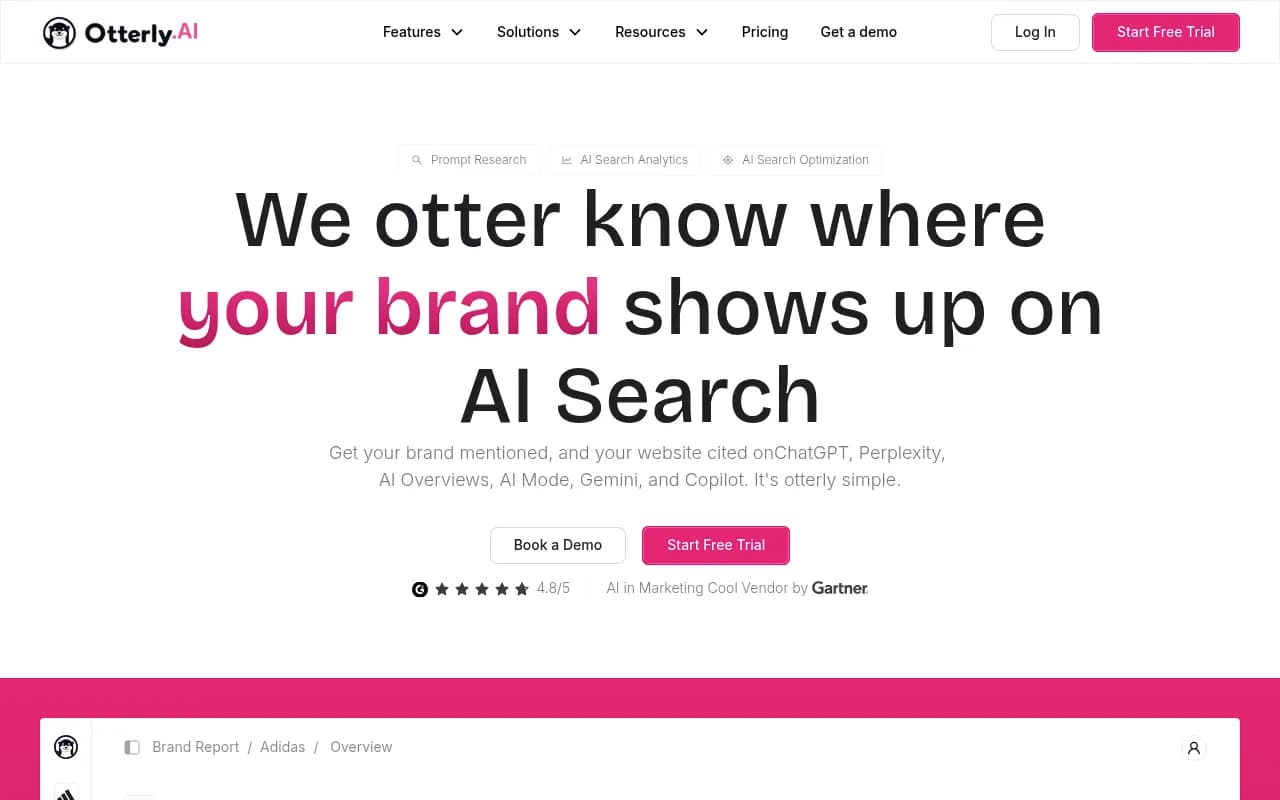

The most complete workflow -- from gap identification through content creation to citation tracking -- comes from platforms that handle the full loop rather than just one piece of it. Promptwatch is the clearest example of this: it connects prompt intelligence (including volume and difficulty) to content gap analysis, content generation, and page-level citation tracking in one system.
A comparison of how different approaches use prompt volume
| Approach | How prompt volume is used | Risk |
|---|---|---|
| Volume-first | Pick highest-volume prompts, write content to target them | Chasing numbers that don't reflect real citation behavior |
| Volume-ignored | Focus only on structure and entity signals, ignore volume entirely | Missing prioritization signal, spreading effort inefficiently |
| Volume-as-input | Use volume + difficulty + gap analysis to prioritize, then optimize for citation | Most accurate picture of where to invest |
| Competitor-gap-first | Find prompts where competitors are cited but you're not, then layer in volume | Strong starting point, especially for newer sites |
The third and fourth approaches aren't mutually exclusive -- the best strategies combine them.
What the "ignore prompt volume" crowd gets right
It's worth being fair to the skeptics. The core concern -- that teams will treat prompt volume the way they treated keyword volume in 2015 and build shallow content farms targeting high-volume prompts -- is legitimate.
That approach failed in traditional SEO when Google got smarter, and it'll fail faster in AI search because the bar for getting cited is higher. AI models don't just need to find your content; they need to trust it enough to put their name on it in a response.
The skeptics are also right that prompt volume data is less reliable than keyword data. The estimates vary between tools, the methodology isn't always transparent, and the numbers can shift significantly as AI models update their behavior.
But the conclusion -- that you should therefore ignore volume entirely and just focus on "quality" -- is too blunt. Quality without prioritization means you're writing excellent content about topics that nobody is asking AI about. That's not a strategy; it's a hope.
The honest summary
Prompt volume is a flawed but useful signal. Use it to prioritize, not to dictate. Combine it with difficulty scores, competitor citation analysis, and a clear understanding of what AI models actually cite in their responses.
The teams winning in AI search in 2026 aren't the ones who found the magic volume threshold. They're the ones who built a systematic process: find the gaps, create content that directly answers the question, and track what actually gets cited. Volume is one input into that process -- an important one, but not the whole story.
If you're building a GEO content strategy from scratch, start with the gaps your competitors are filling that you're not. Then use volume and difficulty to decide which gaps to close first. Then write content that's structured to be cited, not just to rank. Then track whether it's working.
That's the loop. Everything else is noise.