Key takeaways
- Searchable is a monitoring-only tool -- it shows you where you're invisible in AI search but doesn't help you do anything about it
- Promptwatch closes the loop with Answer Gap Analysis, AI content generation, and crawler log data that most competitors don't offer
- Teams switching in 2026 consistently cite the same five gaps: no content action layer, no crawler visibility, no prompt intelligence, no offsite tracking, and no traffic attribution
- Promptwatch tracks 10 AI models including ChatGPT, Perplexity, Claude, Gemini, and Google AI Overviews -- and connects visibility to actual revenue
- A free trial is available, so you can run both tools side by side before committing
There's a version of AI visibility tooling that feels productive but isn't. You log in, you see a dashboard, you watch your brand mention score tick up or down, and then... you close the tab and wonder what to actually do with that information.
That's the experience a lot of teams describe after a few months with monitoring-only platforms. Searchable falls into this category. It's not a bad tool -- it does what it says. But "what it says" is increasingly not enough for teams who need to move fast in AI search.
Promptwatch was built around a different premise: tracking is only useful if it leads somewhere. Here are the five reasons teams are making the switch.
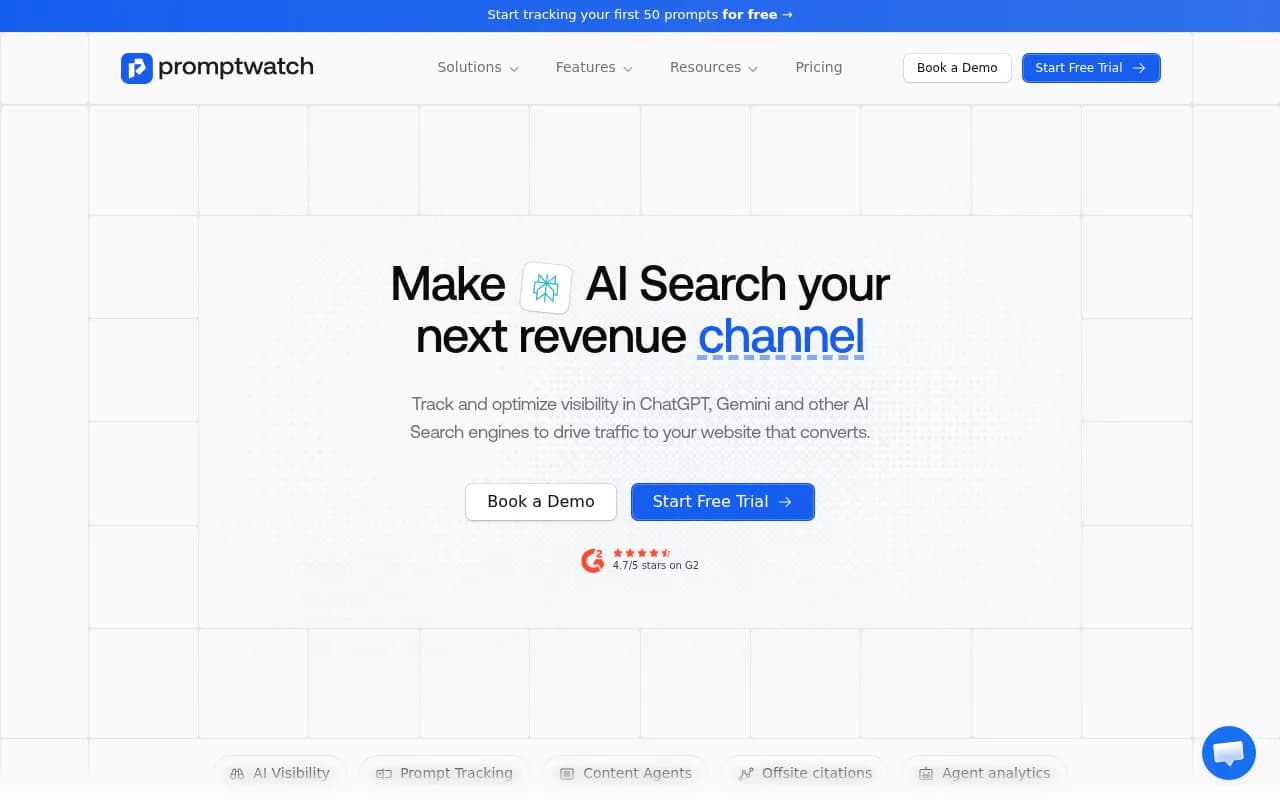
Reason 1: Searchable shows you the gap. Promptwatch helps you close it.
This is the core difference, and it's worth being direct about it.
Searchable tells you which AI prompts your competitors appear in and you don't. That's genuinely useful data. But it stops there. You get a list of gaps and then you're on your own to figure out what content to write, how to structure it, and whether it'll actually move the needle.
Promptwatch's Answer Gap Analysis does the same detection work -- but then the platform hands you a path forward. Content Agents generate articles, listicles, comparisons, and briefs grounded in real prompt data, citation patterns, prompt volumes, and competitor analysis. The output isn't generic SEO filler. It's content built to answer the specific questions AI models are already exposing as gaps on your site.
The difference in practice: with Searchable, a content strategist still has to interpret the data, write a brief, and commission the content. With Promptwatch, that workflow is compressed into a single platform. For lean teams, that's not a minor convenience -- it's a week of work per month.
Reason 2: Crawler logs are a feature most tools don't have
Ask most AI visibility platforms what happens between "AI model crawls your site" and "AI model cites your page" and you'll get a blank stare. That middle layer -- what pages AI crawlers actually read, how often they return, what errors they hit -- is invisible in most tools.
Promptwatch's AI Crawler Logs change that. You get real-time logs of AI crawlers (ChatGPT, Claude, Perplexity, and others) hitting your website: which pages they read, which they skip, what errors they encounter, and when a crawled page eventually becomes a citation. This is the kind of data that lets you fix indexing problems before they cost you visibility.
Searchable doesn't offer this. Neither do most competitors. It's one of the features that comes up most often in reviews from teams who've switched -- because once you've seen it, it's hard to go back to guessing why a page isn't being cited.
Reason 3: Prompt intelligence tells you where to focus
Not all prompts are worth chasing. Some have high volume and low competition. Some are dominated by a single authoritative source that's nearly impossible to displace. Some are already half-won -- your brand appears but not prominently.
Searchable treats prompts as a flat list. Promptwatch assigns volume estimates and difficulty scores to each one, plus query fan-outs that show how a single prompt branches into sub-queries. That means you can prioritize the prompts where you have the best chance of winning, rather than spreading effort evenly across everything.
For teams with limited content budgets, this matters a lot. Spending three weeks creating content for a prompt that's locked up by Wikipedia and two major publications is a waste. Spending those same three weeks on five winnable prompts with real volume is not.
Reason 4: Offsite visibility is half the picture
AI models don't only cite your website. They cite Reddit threads, YouTube videos, listicles on third-party blogs, and brand mentions scattered across the web. If you're only tracking what happens on your own domain, you're missing a significant chunk of what drives your AI visibility.
Searchable focuses on owned-site monitoring. Promptwatch tracks offsite citations too -- which external pages, Reddit discussions, YouTube videos, and third-party domains are driving AI mentions of your brand. There's even a dedicated Reddit and YouTube Insights feature that surfaces discussions directly influencing AI recommendations.
This matters because the fix for low AI visibility isn't always "write more content on your site." Sometimes it's "get mentioned in the right Reddit thread" or "appear in a YouTube video that AI models consistently cite." You can't act on that insight if you can't see it.
Reason 5: Traffic attribution connects visibility to revenue
Visibility scores are satisfying to watch go up. But at some point, someone in a budget meeting is going to ask what AI visibility is actually worth in dollars.
Searchable doesn't answer that question. Promptwatch does, through traffic attribution that connects AI citations to actual website visits and conversions. Page-level tracking shows exactly which pages are being cited, how often, and by which models. Agent analytics shows the timeline from publish to crawl to citation. And the attribution layer ties that back to revenue.
This is what makes Promptwatch an optimization platform rather than a reporting tool. The loop is: find gaps, create content, track results, connect to revenue. Most competitors -- including Searchable -- only cover the first step.
How the two platforms compare
| Feature | Searchable | Promptwatch |
|---|---|---|
| AI model coverage | Limited | 10 models (ChatGPT, Perplexity, Claude, Gemini, Grok, DeepSeek, Copilot, Meta AI, Google AI Overviews, Google AI Mode) |
| Answer gap analysis | Basic | Full gap analysis with content briefs |
| Content generation | No | Yes -- AI Content Agents |
| AI crawler logs | No | Yes -- real-time logs |
| Prompt volume & difficulty | No | Yes |
| Query fan-outs | No | Yes |
| Offsite citation tracking | No | Yes |
| Reddit & YouTube insights | No | Yes |
| ChatGPT Shopping tracking | No | Yes |
| Traffic attribution | No | Yes |
| Multi-language / multi-region | Limited | Yes |
| Pricing (entry) | Varies | $99/mo (Essential, 50 prompts) |
The gap isn't close. Searchable is a monitoring dashboard. Promptwatch is a monitoring dashboard plus an action layer plus attribution. For teams who've outgrown "just tell me the number," that difference is what drives the switch.
What teams actually say about making the switch
Independent reviews in 2026 consistently land in the same place. Brandon Leuangpaseuth, an SEO consultant who has scaled multiple SaaS companies, called Promptwatch "one of the better AI visibility tracking tools I've tested" and specifically highlighted the Answer Gap report, crawler log analysis, visitor analytics, and content optimization suggestions as standout features -- all under one roof.
The "all under one roof" part is key. Teams switching from Searchable aren't necessarily unhappy with Searchable's monitoring data. They're unhappy with the workflow that comes after it: exporting data, briefing a content team, commissioning articles, waiting weeks to see if anything changed. Promptwatch compresses that cycle.
There are honest trade-offs worth naming. Some reviewers note that Promptwatch has more UX rough edges than some competitors, and the 7-day trial is short for a thorough evaluation. Seat limits can also be a friction point for larger agencies. These are real considerations, not dealbreakers, but worth knowing before you sign up.
Who should make the switch now
If you're using Searchable and any of the following are true, the switch is probably overdue:
- Your content team is producing articles without knowing which AI prompts they're targeting
- You've noticed competitors appearing in ChatGPT or Perplexity answers and you don't know why
- You can't tell which pages on your site AI models are actually reading
- You're reporting on AI visibility but can't connect it to traffic or revenue
- You're tracking owned-site mentions but ignoring Reddit, YouTube, and third-party citations
If you're mostly happy with a monitoring dashboard and don't need the action layer, Searchable may still serve you fine. But for teams that want to actually move their AI visibility score -- not just watch it -- Promptwatch is the more complete platform in 2026.
Other tools worth knowing
If you're evaluating the broader landscape before committing, a few other platforms are worth a look depending on your specific needs.
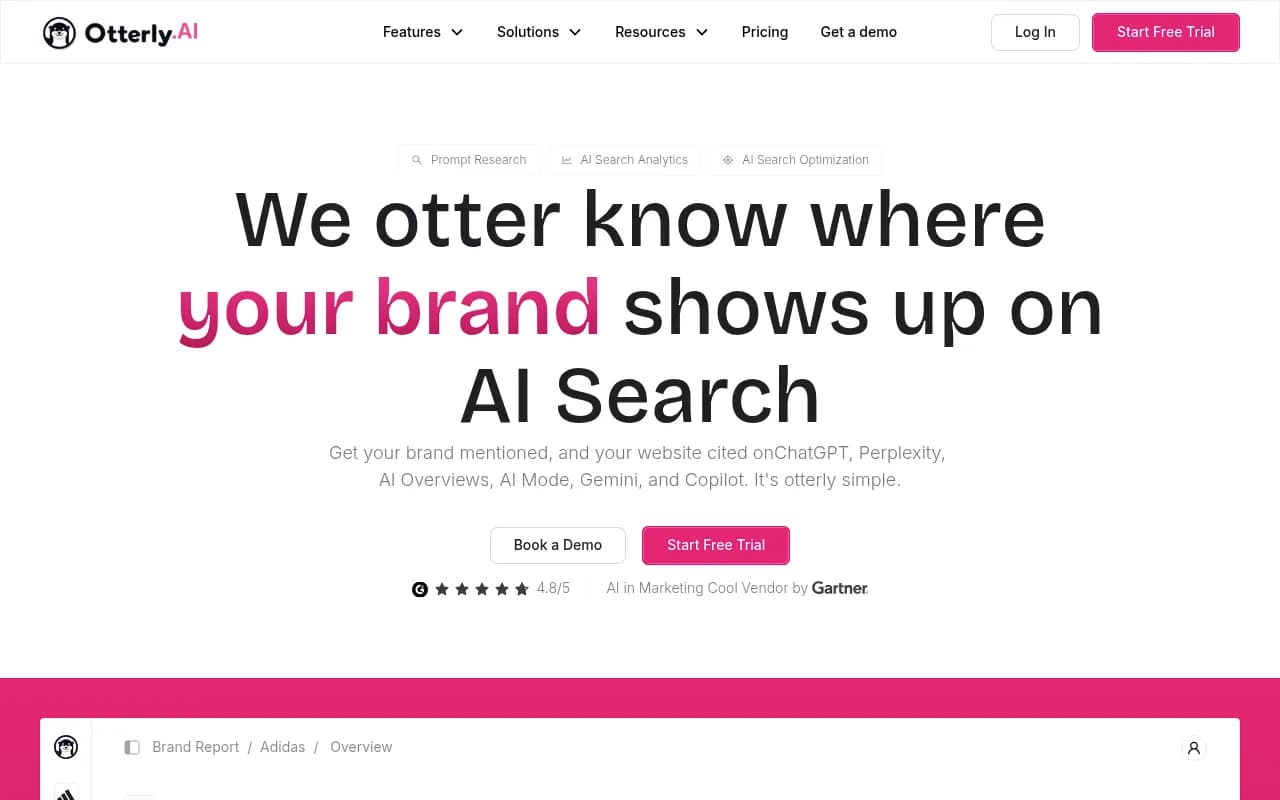
Otterly.AI is one of the more affordable entry points for basic AI brand monitoring:
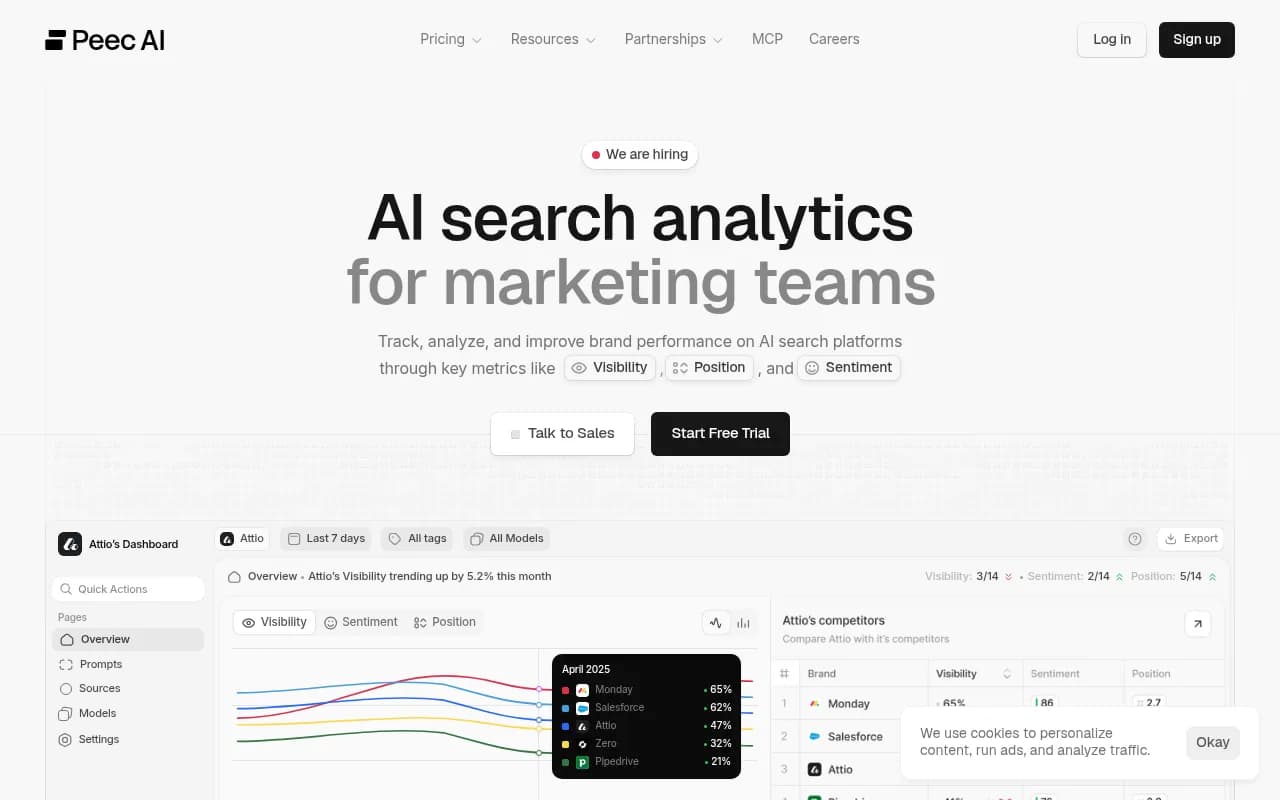
Peec AI offers monitoring with some smart suggestions built in:
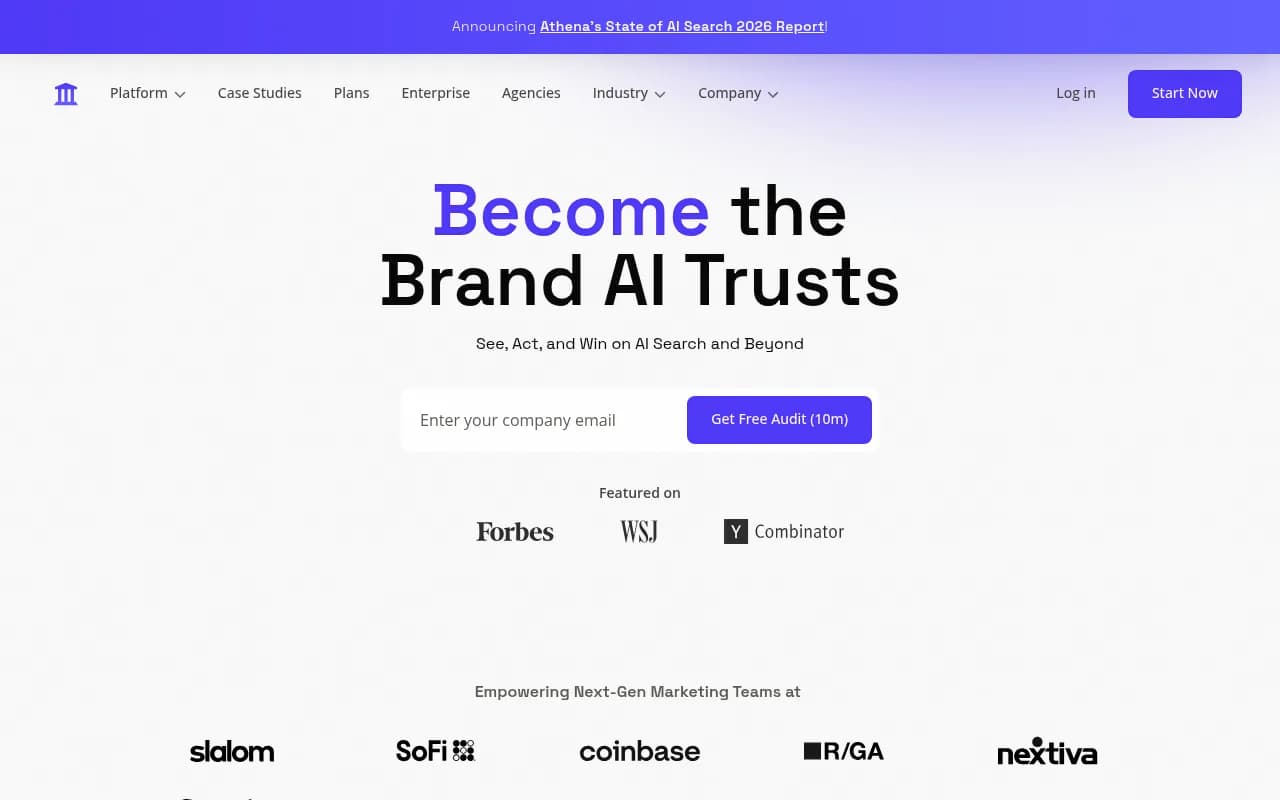
AthenaHQ is a solid monitoring-focused option for teams that don't need content generation:
Profound is worth considering at the enterprise end, though it comes with a higher price point and doesn't include Reddit tracking or ChatGPT Shopping:
Scrunch AI is another agency-oriented option with decent brand monitoring:
None of these close the full loop the way Promptwatch does -- they're monitoring tools with varying levels of sophistication. But if budget or team size is a constraint, they're worth comparing.
The bottom line
The AI search landscape moved fast in 2025 and it's moving faster in 2026. Brands that show up in ChatGPT, Perplexity, and Google AI Overviews are capturing traffic that never touches traditional search results. Brands that don't are invisible to a growing share of their potential customers.
Searchable can tell you which category you're in. Promptwatch can move you from one to the other.
That's why teams are switching.