Key takeaways
- Ranking #3 does not guarantee an AI Overview citation. Ahrefs' February 2026 analysis of 1.9 million citations found only 37% of cited pages also rank in Google's top 10, and 37% don't rank in the top 100 at all.
- AI Overviews are built through query fan-out: Google runs multiple sub-queries and retrieves from those results, not just the head-term SERP you're ranking on. Your page can be invisible to every sub-query.
- Format matters more than position. Promptwatch's citation-type data shows product pages and how-tos now dominate AI Overview citations, while long narrative prose gets crowded out.
- Technical blocks are a real possibility: a
nosnippetdirective kills AI Overview eligibility entirely, and many sites block snippet-bearing content without realizing it. - The fix is not "more SEO." It's restructuring content into extractable, self-contained answer units matched to the sub-queries Google actually fans out to.
You did everything right. The page ranks #3 for a keyword you care about, traffic is steady, Search Console looks healthy. Then you type the query into Google, the AI Overview appears at the top, and there are the citations: a Reddit thread, a YouTube video, two listicles from sites you've never heard of, and maybe one competitor. Not you.
It's maddening, and it's increasingly common. But once you look at how AI Overviews actually get assembled, the gap between "ranks well" and "gets cited" stops being mysterious. It's structural, and most of it is fixable.
Ranking and citing are two different systems
The core misconception is that AI Overviews are a layer on top of regular search results. They're not. Google's own documentation confirms AI Overviews and AI Mode may use "query fan-out" -- issuing multiple related searches across subtopics and data sources -- to gather material, which means the pool of candidate pages is built differently than the classic SERP you're ranking on.
The numbers back this up. Ahrefs analyzed 1.9 million AI Overview citations in February 2026 and found that only 37.1% of cited pages also rank in Google's top 10 for the original query. Another 26.2% rank somewhere between 11 and 100, and 36.7% don't rank in the top 100 at all. Ahrefs attributes part of this shift to Gemini 3, which began powering AI Overviews in January 2026 and leans more heavily on sub-query SERPs than the head query's SERP.
BrightEdge tracked the same phenomenon from the other direction: overlap between AI Overview citations and top organic rankings grew from 32.3% to 54.5% between May 2024 and September 2025. That sounds like convergence, but read it again. Even at peak convergence, nearly half of AI Overview citations came from pages that don't rank at the top.
And your raw citation odds per position are lower than most people assume. Originality.ai's study found a #1 ranking carries roughly a 58% chance of being cited, but by position #10 that drops to around 38%. Position #3 sits somewhere in between. A coin flip, roughly. Not a guarantee.
| Study | What it measured | The uncomfortable number |
|---|---|---|
| Ahrefs (Feb 2026) | 1.9M AI Overview citations vs. rankings | Only 37% of cited pages rank in top 10 |
| Originality.ai | Citation probability by rank | #1 gets cited ~58% of the time; #10 ~38% |
| BrightEdge (2024-25) | Citation/ranking overlap over time | Even at peak, ~45% of citations weren't top-ranked pages |
| Promptwatch Data | Sources per AI Overview answer | ~10 sources cited per response |
That last row deserves a comment. Promptwatch's data on average sources per response shows Google AI Overviews cite around 10 sources per answer, which is more forgiving than ChatGPT's ~5. So this isn't a hopeless game of musical chairs with two seats. There are seats. Your page just isn't being pulled into the room where the music is playing.
Reason 1: Query fan-out means your page competes on queries you've never checked
This is the biggest one, and it's the least understood.
When Google builds an AI Overview for "best CRM for small business," it doesn't just summarize the top 10 results for that phrase. It fans out into sub-queries: "cheap CRM for startups," "CRM for solo founders pricing," "easee CRM vs HubSpot for small teams," and so on. Google's patent on the technique (US11663201B2) describes generating query variants including equivalent queries, follow-ups, generalizations, and clarifications. Your page can rank #3 for the head term and match none of the fan-out sub-queries, which means it's never retrieved as a candidate in the first place.
This is why pages sometimes get cited for queries where they rank poorly, and ignored for queries where they rank well. You optimized for the query the user typed. The AI system is assembling its answer from the queries the user didn't type.
The practical implication: keyword research for AI Overviews isn't about the head term. It's about the sub-question cluster underneath it. If you can't list the eight questions Google's system would plausibly fan out to for your target query, you're optimizing blind.
Reason 2: Your content format is fighting for a shrinking share of citations
Promptwatch's analysis of classified AI Overview citations shows a clear hierarchy of what actually gets cited, and it's not "comprehensive 3,000-word guides."
In July 2026, the breakdown of AI Overview citation types looked like this: listicles at 18%, product pages at 16.3%, how-tos at 15.1%, news articles at 13.5%, videos at 5.9%, and social posts at 5.1%. The notable story of mid-2026 is that product pages overtook listicles as the most cited format in late July -- product page citations nearly doubled from around 9% in January -- while video's share more than doubled from January levels.
What's missing from that list? Long-form narrative prose. The kind of writing where you spend three paragraphs building context before getting to the answer. If your #3-ranking page is a meandering explainer with conversational headings, it's structurally mismatched against listicles, how-tos, and product pages that hand Google pre-digested, extractable chunks.
Silktide's research on AI Overview content patterns found the same thing from the content side: the most consistent pattern in cited content is a keyword-aligned H2 or H3 directly above the cited passage, followed by a short paragraph (typically under 100 words) containing the core assertion, with no promotional framing. High-density, self-contained claims get extracted. Narratives that build toward a point across multiple paragraphs don't, because no single sentence carries the full informational weight.
Reason 3: You buried the answer
This one is embarrassingly common, and I say that as someone who has done it. The introduction has a hook. Then some context. Then a paragraph about why this topic matters. The actual answer to the question arrives somewhere around word 600.
A retrieval system assembling a 10-source answer doesn't have patience for your pacing. If a competitor answers the question in the first 100 words under a heading that mirrors the query, that competitor gets the slot. Search Engine Land's April 2026 analysis put it bluntly: if the intro spends paragraphs on setup before answering, retrieval systems skip the page for cleaner competitors.
A quick self-test. Take your target query, and take the first 150 words of your page. Could someone copy those 150 words into a summary and have it be a correct, complete answer to the query? If not, you've buried it.
Reason 4: A technical block you didn't know about
Google's documentation is oddly specific here: to appear as a supporting link in AI Overviews or AI Mode, a page must be indexed and eligible to show with a snippet in regular Search. There are, in Google's words, "no additional technical requirements." But that snippet-eligibility condition is doing more work than it appears to.
The nosnippet meta tag (or X-Robots-Tag: nosnippet) blocks your page from appearing in AI Overviews entirely. It's the only official opt-out, and it's a blunt one, because it also kills your regular snippet in classic search. Very few sites set this deliberately, but it occasionally shows up in inherited site configurations or CMS defaults, so it's worth ruling out.
The more widespread confusion involves Google-Extended. Many major publishers, including the NYT, CNN, and BBC, block Google-Extended in robots.txt. But Google-Extended only opts a site out of Gemini model training. It has zero effect on AI Overviews, which are part of core Google Search and use standard Googlebot. If someone on your team "blocked the AI crawler" in 2024 as a defensive move, that block does nothing to AI Overviews -- but it's worth verifying what was actually blocked, because some sites also block Googlebot-adjacent crawlers by mistake.
Reason 5: The query doesn't trigger an AI Overview at all
Before you spend a month restructuring a page, check whether the query even produces an AI Overview. Google says AI Overviews appear on roughly 50% of US queries as of early 2026, which means roughly half the time they don't show. Per Semrush data cited by Search Engine Land, informational queries trigger AI Overviews far more often than commercial ones (57% of AI Overviews come from informational intent).
The vertical differences are huge too. BrightEdge's tracking puts healthcare and education above 80% AI Overview prevalence, while e-commerce fell to around 4%. If you're ranking #3 for a transactional keyword in a low-prevalence vertical, there may be no AI Overview to appear in. That's not a content problem, and no amount of restructuring will change it. Pick your battles.
Reason 6: The slots are going to domains Google leans on
Here's the part that stings. Promptwatch's June 2026 citation share data for AI Overviews shows YouTube at 4.16% of all citations, Reddit at 2.72%, and google.com itself at 2.30%. The top three domains hold over 9% of all AI Overview citations, roughly double their combined share in January. And Google's self-citation has grown sixfold in five months -- Google is increasingly citing its own properties, with YouTube plus google.com accounting for roughly 6.5% of every AI Overview citation.
The live domain data tells the same story: Google leans hard on video and community discussion, with LinkedIn, Medium, and Quora picking up smaller but consistent shares. For queries where users want opinions, comparisons, or how-to demonstrations, your text page is competing against YouTube videos and Reddit threads that Google's system has learned to trust for those intent types.
You can't out-write YouTube. But you can recognize when a query's answer format is fundamentally video-shaped or community-shaped, and either create that content type or target adjacent queries where text still wins. Documentation, product pages, and structured how-tos remain strong text-based formats.
Reason 7: Domain authority doesn't transfer to the page
ClickRank's analysis of AI Overview citations found something that surprises a lot of site owners: strong domain authority does not automatically transfer to individual page citations. BrightEdge observed the same pattern in YMYL verticals, where citation decisions skew toward pages with visible expertise signals -- named authors, cited sources, credentials on the page itself.
Your #3 page might be riding domain-level strength. Classic search rewards that. AI Overviews, faced with generating a claim it has to stand behind, prefers a page that can prove its own credibility: an author with real credentials, references to primary data, a visible publish or update date, and content that reads like it was written by someone who knows the subject rather than assembled from the top five competing articles.
How to diagnose your specific gap
Start with the basics before assuming anything. Trigger the AI Overview for your target query from a clean, logged-out browser session, and record which sources get cited. Do this for the query cluster, not just the head term, because fan-out means the cited pages often rank for sub-queries. Then check whether the cited pages rank in the top 10 for your head term at all. If many of them don't, your problem is fan-out retrieval, not content quality.
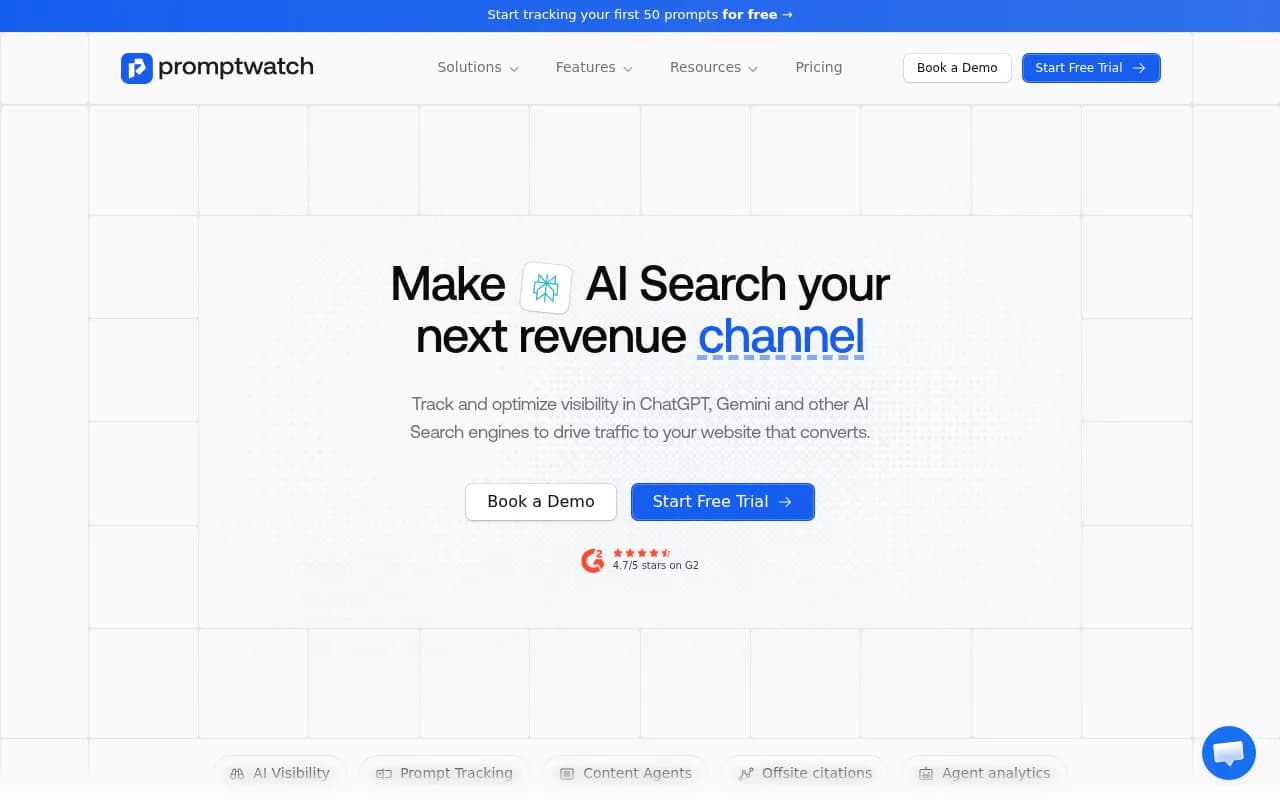
Doing this manually across dozens of queries gets tedious fast, and the landscape shifts month to month, so a tracking tool pays for itself quickly. Promptwatch tracks AI Overview and AI Mode citations alongside ChatGPT, Perplexity, and the other engines, and its query fan-out data shows you the sub-queries your content needs to cover. Its crawler logs also answer the "why" question directly: whether Google's AI crawlers are even reading your pages, and what they hit when they do.
If you want to compare options, the GEO software directory at bestgeosoftware.com covers the full category. A few alternatives worth knowing:
- Knowatoa focuses specifically on AI Overviews and brand mention tracking, which fits if Google is your only concern.

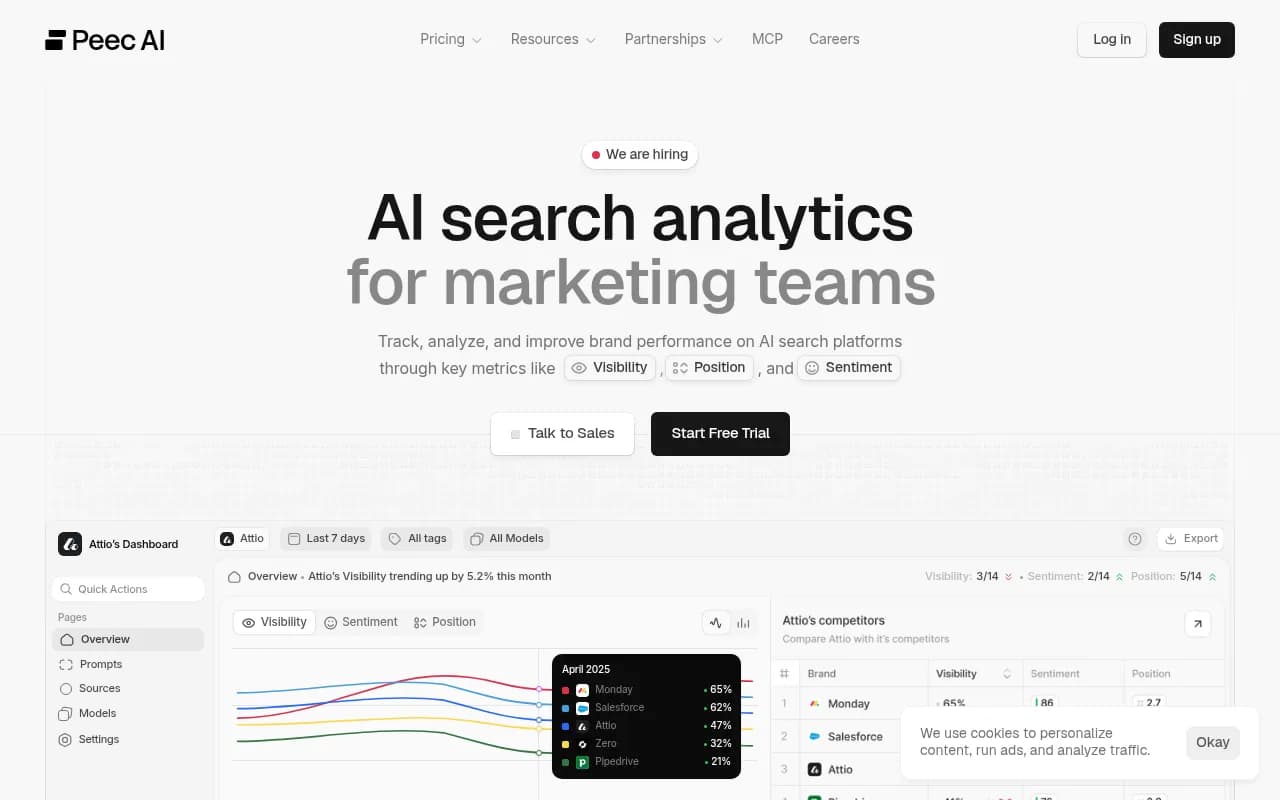
- Peec AI offers AI visibility tracking with optimization suggestions at a lower price point for smaller teams.
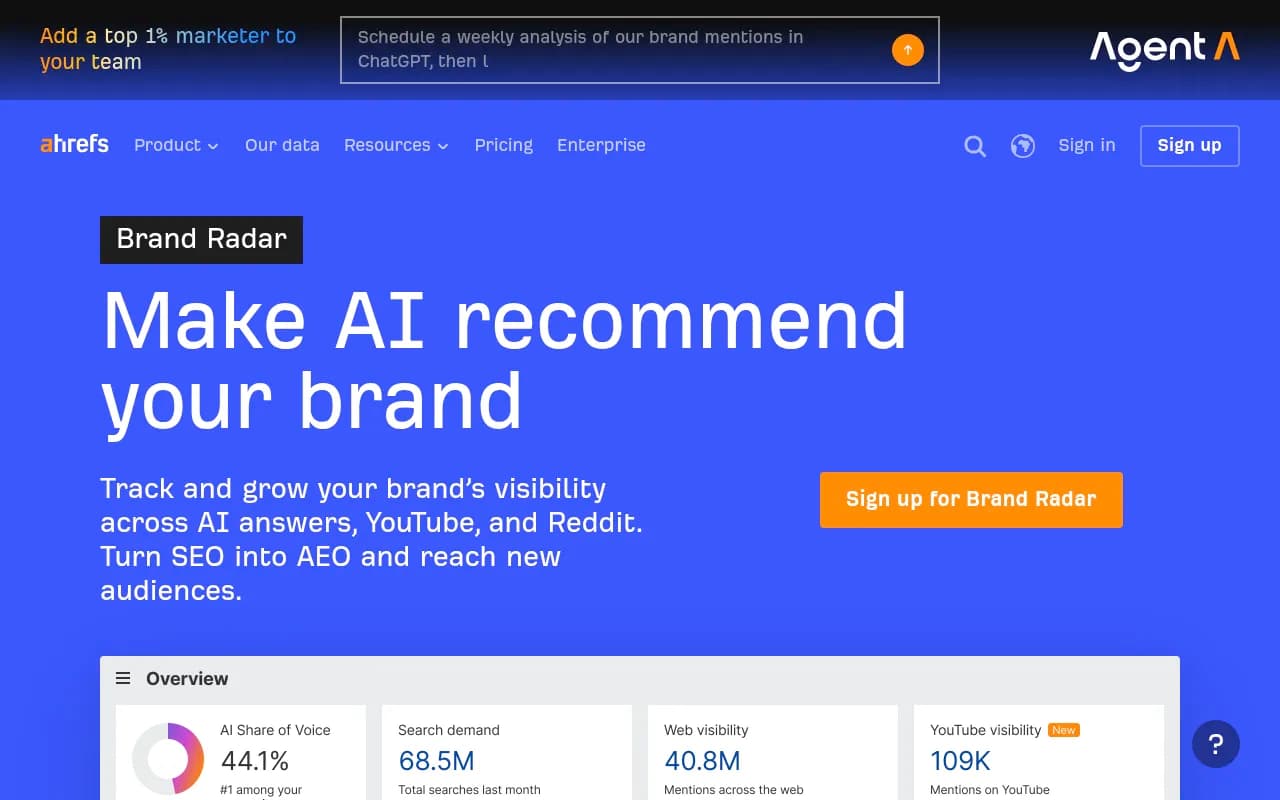
- Ahrefs Brand Radar is the natural choice if you already live inside Ahrefs, since it pairs citation tracking with the ranking data you already have.
How to actually fix it
Once you know which failure mode is yours, the fixes are concrete.
Map the fan-out. List the sub-queries Google would plausibly run for your head term. Look at the "People also ask" box, related searches, and the sub-headings inside AI Overviews for that query. Then check whether your page answers each sub-question in a self-contained section. If a section only makes sense after reading the previous 800 words, it's invisible to retrieval.
Restructure, don't rewrite. You don't need to throw away your page. You need to convert it from narrative into answer units: a keyword-aligned H2 or H3, followed immediately by a short paragraph (under 100 words) that fully answers the heading's implied question. Supporting detail goes below the answer, not before it.
Match the citation format. If the top-cited content for your query cluster is listicles, build a genuine list. If it's how-tos, structure a step-by-step. Promptwatch's citation-type data shows product pages surging in mid-2026, so if you have product or offering pages, make sure they carry extractable specs and answers rather than pure marketing copy.
Make credibility visible on the page. Named author, credentials, cited sources, publish date, updated date. Structured data identifying the content type helps. Backlinks alone don't buy citations; structurally legible authority signals do more work than raw link count.
Verify the technical gate. Confirm the page is indexed, snippet-eligible, and not carrying nosnippet. Check what your robots.txt actually blocks. Google-Extended blocks don't matter for AI Overviews, but accidental Googlebot restrictions do.
Watch for the two-surface problem. Getting cited is only half the story. AI Overviews increasingly absorb the click, and 43% of them point back to Google's own properties, per Search Engine Journal's reporting. The pages that still earn visits are the ones cited for sub-questions where users need depth. Track actual traffic from AI surfaces, not just mentions -- most trackers stop at "was my brand named," which is a vanity metric if nothing follows from it.
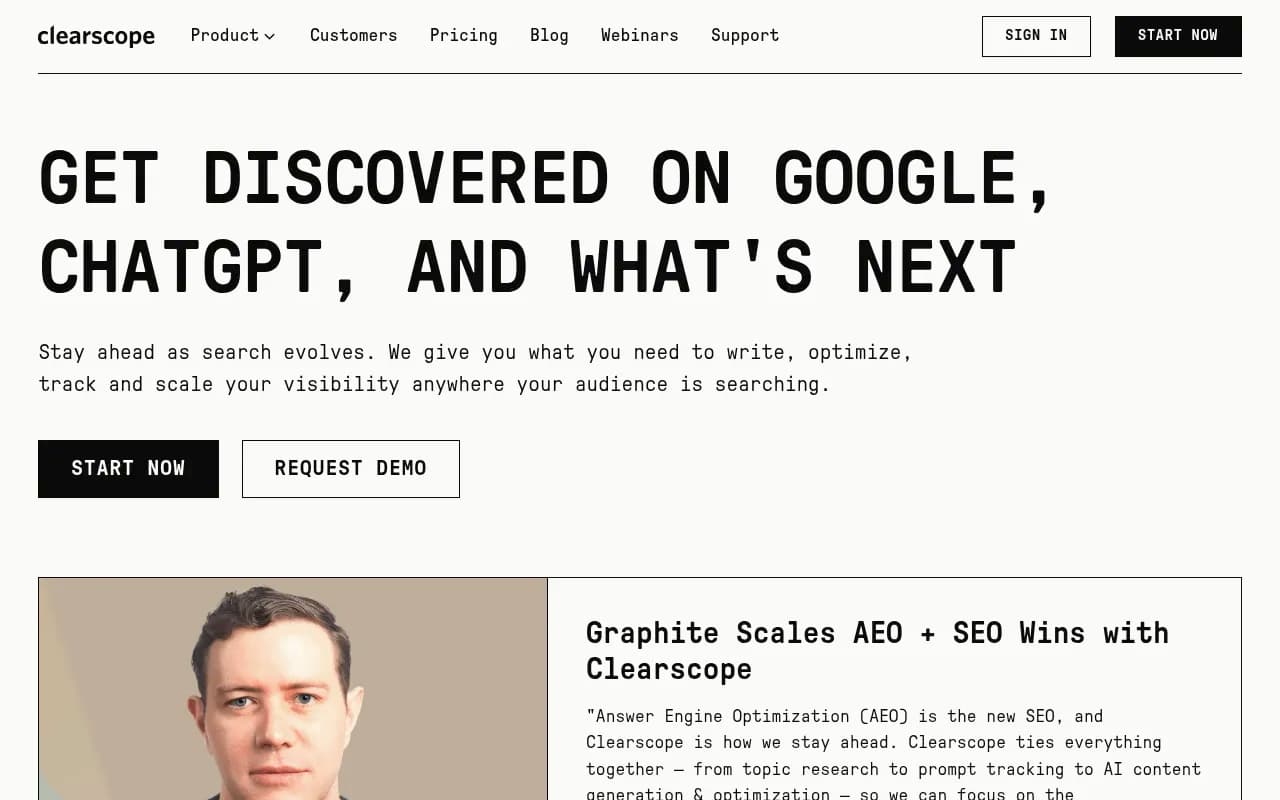
For content restructuring at scale, tools like Clearscope or Surfer SEO can help optimize the rewritten sections against what currently ranks and gets cited.
If you'd rather hand this off
The honest caveat: this is now a second discipline sitting next to SEO, with its own retrieval mechanics, its own content formats, and its own measurement. Plenty of teams do it in-house. But if your team is already stretched thin on classic SEO, an agency that specializes in AI search optimization can run the diagnosis and restructuring as a dedicated workstream. 1001 SEO Media, which publishes this site, handles exactly this kind of GEO work, from AI visibility audits through content restructuring and measurement.
The bottom line
Your page ranks #3 because Google's ranking system thinks it's a good result. It doesn't get cited because Google's answer-assembly system, working from a different candidate pool built by fan-out, extracting self-contained answer units, and leaning on formats it has learned to trust, never selected it. Two systems, two rulebooks.
The gap is real but it's not random. Map the sub-queries, restructure into extractable answer units, match the formats that actually get cited, and verify the technical gate. Then track citations over time, because the mix shifts month to month -- listicles gave up their lead to product pages in July 2026, and nobody quoted that stat in January. The sites that win in AI Overviews over the next year will be the ones watching the data instead of assuming last year's playbook still holds.