WordLift Review 2026
AI-powered SEO tool that automates content tagging, schema markup, and keyword research for publishers.

Key takeaways
- WordLift has quietly evolved from a WordPress schema plugin into a full "AI Discovery Platform" that builds knowledge graphs, automates structured data, and now pitches itself squarely at AI search visibility across ChatGPT, Perplexity, and Google's AI Overviews.
- Pricing starts at €160/month (Agent plan) and jumps to €799–879/month for Business+ with a dedicated project manager, which puts it firmly in enterprise and agency territory. Small publishers need not apply.
- The knowledge graph and schema automation are genuinely differentiated. Reviewers consistently praise the semantic SEO depth and the responsive support team. Few competitors do entity-based SEO this well.
- As an AI visibility tool, it's monitoring-and-structure focused. It lacks the AI crawler logs, visitor analytics from AI platforms, Reddit/YouTube citation tracking, and ChatGPT Shopping tracking that Promptwatch offers, and its AI visibility audit is a lead-gen funnel into a sales call rather than a self-serve dashboard.
- Trustpilot sits at 2.6/5 while G2 shows 4.7 and Capterra 4.8. That split is worth investigating before you commit to an annual contract.
What WordLift actually does
WordLift started life as a WordPress plugin that automated schema markup and entity tagging for publishers. That's still the core, but the company has repositioned itself aggressively. The homepage now leads with "The AI Discovery Platform for Brands" and a free AI visibility audit, which tells you where they think the market is going.
The product works in three layers. First, it analyzes your content and builds a knowledge graph: entities, relationships, and structured data that turn a flat content site into something machines can actually reason about. Second, it uses that graph to automate schema markup, internal linking, and content optimization. Third, the newer WordLift Agent layer (launched April 2024, upgraded to GPT-5 with a 400K token context window in September 2025) handles conversational SEO research, content creation, and an "Agentic AI Audit" that checks whether your pages are ready for AI-driven search experiences.
That last part is the interesting bit. WordLift's bet is that structured data and entity clarity are what get you cited by AI assistants, and there's real logic to that. If a language model can't parse what your product or article is about, it can't recommend you.
The knowledge graph is the real product
After spending time with the platform, my honest take is that the schema and tagging features are table stakes. The knowledge graph builder is what you're actually paying for. It ingests your existing content, extracts entities, and lets you connect them in ways that compound: related articles, product-to-category relationships, author authority signals. For a publisher with thousands of articles or an e-commerce site with a deep catalog, this is legitimately valuable work that would take a human team months.
The December 2025 Agent update added query fan-out analysis directly into the chat interface, which was previously only available via a Google Colab notebook. That's a smart move, since understanding how AI expands a prompt into sub-queries is becoming a core GEO skill.
Pricing and plans
WordLift offers three tiers, with annual billing saving about 20%:
- Agent at €160/month: self-serve access to AI content creation, SEO research, content optimization, and rank tracking. No dedicated account manager.
- Business+ at €799–879/month (or $1,100 billed monthly): everything in Agent plus a dedicated project manager, strategy sessions, schema markup and data integration tools, 2,500 URLs and 5KG knowledge graph usage, and monthly Smart Credits for Q&A generation, internal linking, and Agent interactions.
- Enterprise: custom pricing with bespoke knowledge graph integrations, full API access, and dedicated onboarding.
A 14-day free trial is available on the WordPress plugin side. Note that some third-party listings still show a €999/month starting price, which appears to be stale data from an older tier structure.
Here's my problem with this pricing: there's a massive gap between €160 and €799. If you're a mid-size publisher who wants the schema integration tools but doesn't need a project manager, you're stuck. The Smart Credits system also adds usage-based anxiety to what is already an expensive subscription.
Strengths
- Semantic SEO depth. The entity-based approach is genuinely differentiated. Most SEO tools optimize pages; WordLift optimizes the relationships between them.
- Strong support. Across G2 and Capterra reviews, customers consistently call out the support team as responsive and knowledgeable, even when resolving tricky plugin compatibility issues.
- Credible partnerships. Microsoft ISV, Google for Startups, NVIDIA Inception, and a Databricks partnership announced in June 2026. This is a real company with real engineering investment, not a wrapper around an LLM API.
- Active development. The GitHub org shows 61 public repositories with regular updates, including a Python SDK and an Apache-2.0 licensed AI audit tool.
- Enterprise track record. Case studies include EssilorLuxottica, SalzburgerLand Tourism, and WindowsReport (0 to 2 million monthly visitors). The Hurree testimonial cites 181% impression growth in three months.
Limitations
- The price wall. Multiple G2 reviewers flag cost as a barrier, particularly for smaller companies. One Brazil-based reviewer noted that EUR pricing makes it prohibitively expensive outside Europe and the US.
- UI friction. A recurring Capterra complaint: the interface is hard to use, content recommendations lack customization flexibility, and initial setup can require days of Slack support to resolve configuration issues.
- The Trustpilot problem. 2.6/5 on Trustpilot versus 4.7 on G2 and 4.8 on Capterra is a significant split. The small review counts everywhere (41 on G2, 23 on Capterra) mean a handful of unhappy customers moves the needle dramatically.
- Unclear value proposition for stakeholders. One agency reviewer said they needed better education material to sell clients on the value. Semantic SEO is hard to explain to a CMO who wants to know why this costs €800 a month.
- As an AI visibility tool, it's partial. WordLift's AI audit checks structured data, entities, internal links, and crawler accessibility on your pages. That's the supply side. What it doesn't give you is the demand side: which prompts real users are asking, how often you're cited across ChatGPT, Claude, Gemini, Perplexity, Grok, and AI Overviews, what your citation share of voice looks like versus competitors, or how much actual traffic and revenue AI platforms drive to your site.
How it compares
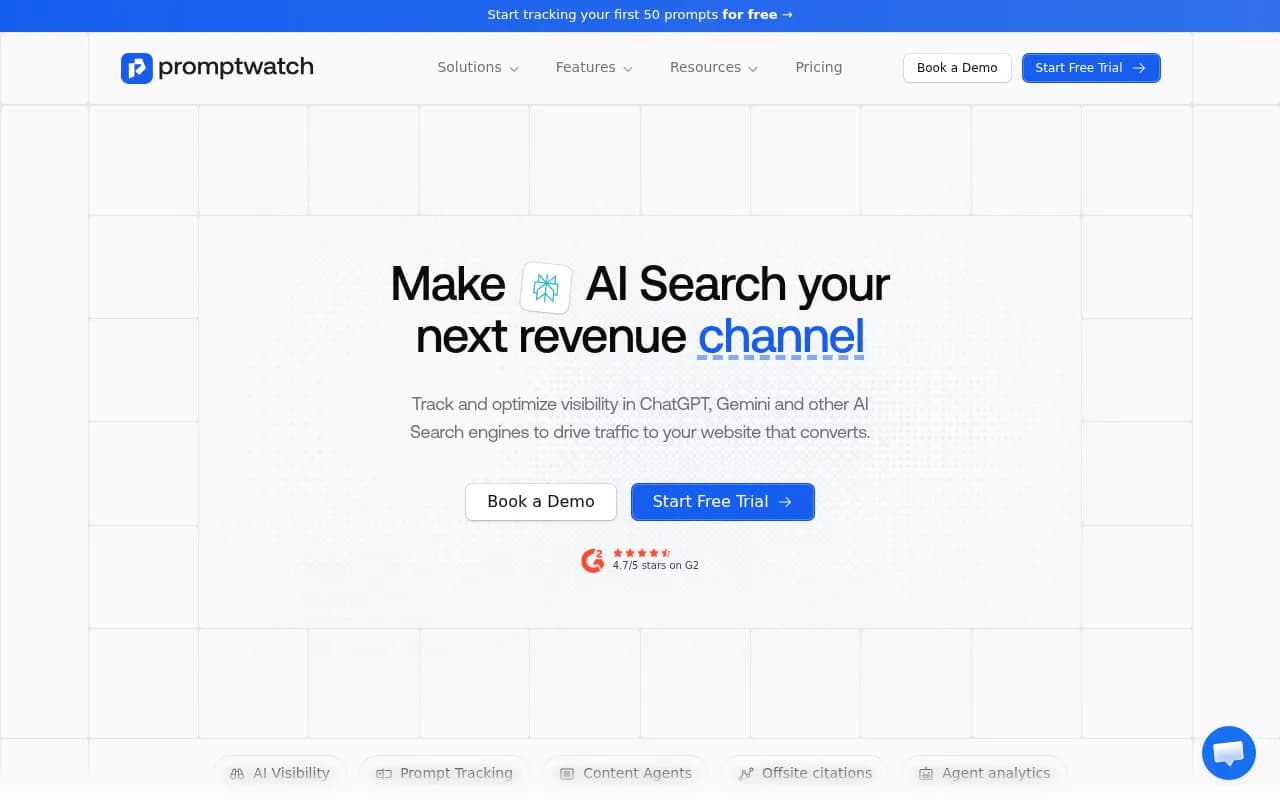
WordLift occupies unusual territory. It's not a traditional SEO suite like Semrush or Ahrefs, and it's not a pure AI visibility tracker either. Its closest conceptual neighbor in the AI search space is Promptwatch, but the overlap is narrower than the marketing suggests. Promptwatch monitors actual AI model responses across 10+ platforms, tracks citations and share of voice, logs AI crawler behavior on your site, attributes real visitor traffic from AI sources, and then closes the loop with automated content generation and unified action prioritization. WordLift builds the structured foundation that makes your content legible to those same AI systems.
If I'm being fair to both: WordLift is stronger on the structured data and knowledge graph side, particularly for WordPress-heavy publishers. Promptwatch is stronger on measurement, competitive intelligence, and the actual mechanics of getting cited in AI answers. A reasonable stack for a serious enterprise SEO team might use both, but if you have to pick one and your goal is specifically AI search visibility, the measurement layer matters more than the markup layer.
Who should use WordLift
- Publishers and media companies with large content archives that need entity tagging and schema automation at scale.
- E-commerce teams with deep product catalogs who want structured data that feeds AI shopping experiences. The GS1 Italy Digital Link partnership is relevant here.
- Enterprise SEO teams that have budget for a dedicated project manager and want a strategic partner, not just software.
- Agencies managing content-heavy client sites who can bill the cost through.
Who should skip it: small businesses, solo bloggers, and anyone who needs to prove AI search ROI on a limited budget. The entry price and the complexity both work against you.
The bottom line
WordLift is a serious tool for a specific kind of buyer. If you run a content-heavy site and believe, correctly I think, that structured data and entity relationships determine whether AI assistants can understand and recommend your content, WordLift is one of the few platforms that does this work properly. The knowledge graph builder alone justifies the price for large publishers.
But the repositioning toward "AI Discovery" oversells what the platform actually measures. You get your house in order for AI search; you don't get a clear picture of whether it worked. For that measurement layer, which prompts you're winning, which competitors are eating your share of voice, and how much traffic AI platforms actually send, Promptwatch covers the full visibility stack from monitoring through automated optimization. Use WordLift if your problem is structure. Use Promptwatch if your problem is visibility. A lot of teams will find they need both, but only one of them tells you whether any of it is working.
Tags:
Frequently asked questions
What is WordLift?
Who is WordLift for?
How does WordLift use AI for schema markup?
Does WordLift help with keyword research?
How much does WordLift cost?
Is WordLift free to use?
What is content tagging in WordLift?
How does WordLift build a knowledge graph?
What are the main features of WordLift?
How is WordLift different from other SEO schema tools?
Does WordLift integrate with WordPress?
Can WordLift improve my website's SEO rankings?
Similar and alternative tools to WordLift