Key takeaways
- Goodie AI is a monitoring tool -- it shows you where you're invisible in AI search but doesn't help you fix it
- The best alternatives in 2026 combine visibility tracking with content optimization and gap analysis
- Most platforms on this list cover ChatGPT, Perplexity, Gemini, and Google AI Overviews at minimum
- Pricing ranges from free tiers to enterprise contracts; the right fit depends on your team size and how many sites you manage
- If you want a full action loop (find gaps, create content, track results), only a handful of platforms deliver all three
Goodie AI does one thing reasonably well: it tells you when AI search engines mention your brand and when they don't. For a lot of teams, that was enough in 2024. In 2026, it's not. Knowing you're invisible is the easy part. The hard part is doing something about it.
That's the gap most people feel when they start looking for Goodie AI alternatives. They don't just want another dashboard. They want a platform that helps them close the gap -- finding which prompts competitors are winning, generating content that fills those gaps, and tracking whether any of it actually worked.
This guide covers 10 platforms worth considering, with honest notes on what each one does well and where it falls short.
Why Goodie AI leaves teams wanting more
Goodie AI's core value proposition is brand monitoring in AI-generated responses. You set up your brand name, it checks whether ChatGPT or Perplexity mentions you, and you get a report. That's useful context, but it's a starting point, not a strategy.
The platforms that are pulling ahead in 2026 treat AI visibility as an optimization problem, not a reporting problem. They ask: what content is missing from your site that would make AI models cite you? Which prompts are your competitors winning? What should you publish next week to close the gap?
If Goodie AI's monitoring-only approach is what's frustrating you, the tools below are worth a close look.
The 10 best Goodie AI alternatives in 2026
1. Promptwatch
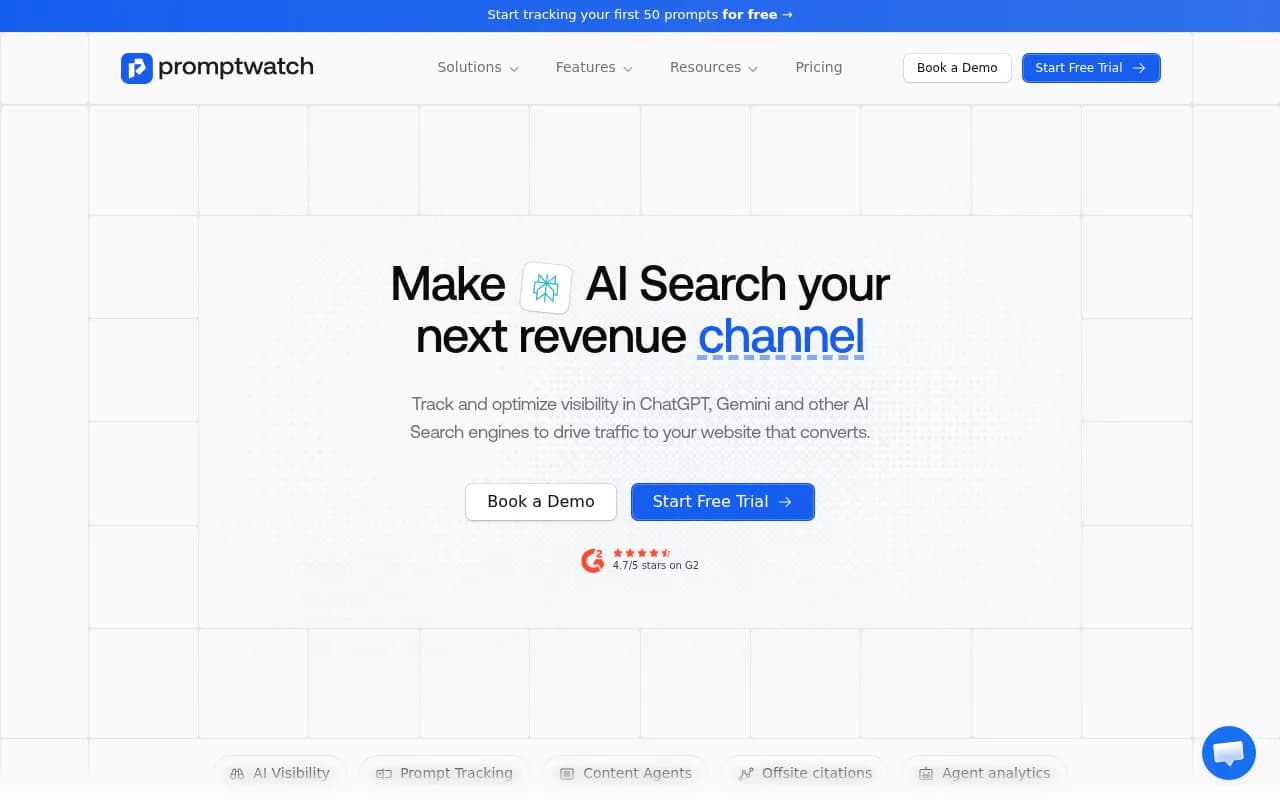
Promptwatch is the most complete option on this list if you want to move from tracking to actually improving your AI visibility. It monitors 10 AI models (ChatGPT, Perplexity, Claude, Gemini, Google AI Overviews, Grok, DeepSeek, Copilot, Meta AI, and Mistral), which is broader coverage than most competitors.
What separates it from Goodie AI and most other tools is the action loop. Answer Gap Analysis shows you exactly which prompts competitors rank for that you don't -- not as a vague category but as specific questions and topics your site isn't answering. Content Agents then generate articles, listicles, and briefs grounded in that prompt data. And page-level tracking shows you when those new pages get crawled by AI agents and start generating citations.
The AI Crawler Logs feature is genuinely rare. You can see in real time which AI crawlers are hitting your site, which pages they're reading, and whether those pages are moving from "crawled" to "cited." Most monitoring tools have no visibility into this at all.
Pricing starts at $99/month for one site and 50 prompts. The Professional plan ($249/month) adds crawler logs, multi-location tracking, and 15 content articles per month.
2. Profound
Profound targets enterprise teams and does it well. The platform has strong analytics for tracking brand mentions across AI search engines, with good segmentation by model, region, and prompt type. It's one of the more polished monitoring experiences available.
The limitation is that Profound stays mostly on the monitoring side. It gives you excellent data about where you stand but relatively limited tools for acting on that data. For large teams with dedicated content operations who just need reliable tracking, that's fine. For teams that need the full loop, it's a gap.
3. Otterly.AI
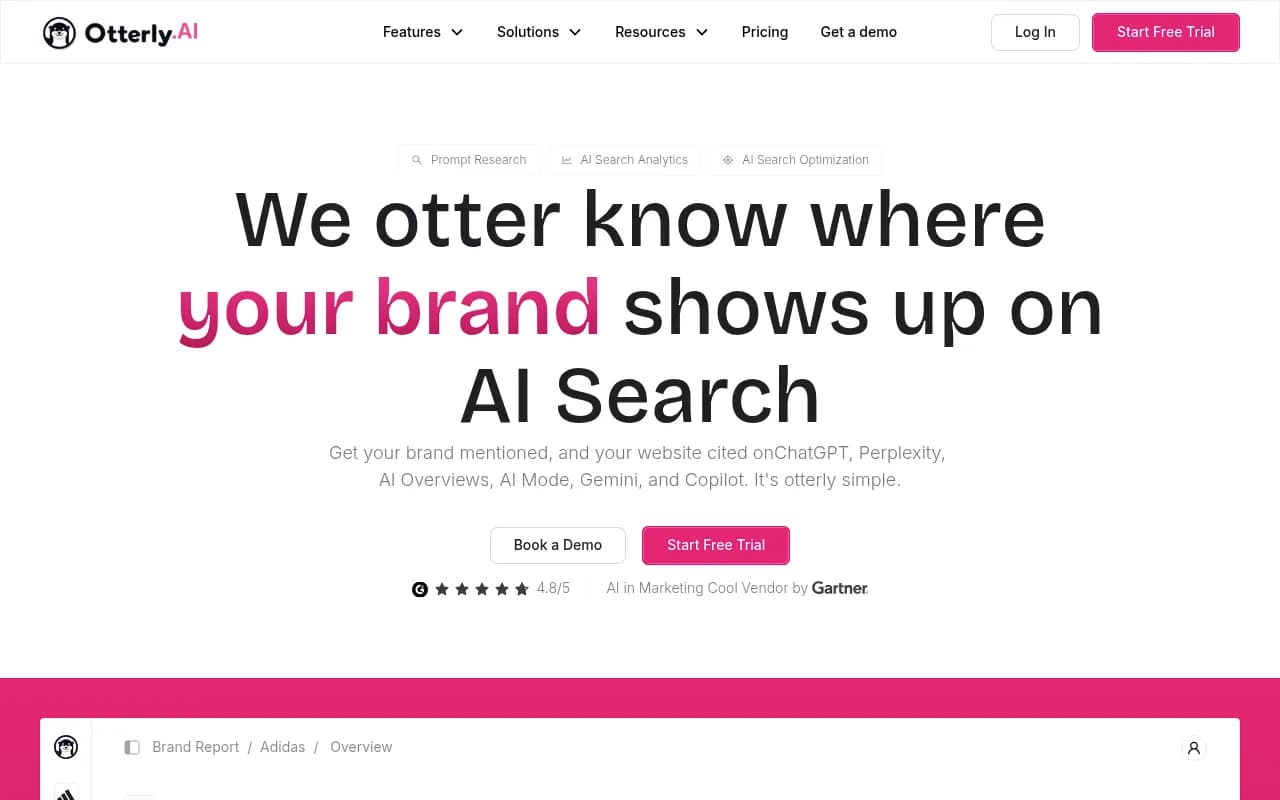
Otterly.AI is the budget-friendly entry point for AI visibility monitoring. It covers the major AI search engines and gives you brand mention tracking without a steep learning curve. Setup is fast, the interface is clean, and the pricing is accessible for smaller teams.
The honest caveat: Otterly.AI is monitoring only. There's no content generation, no gap analysis, no crawler logs. It's a good fit if you're just getting started and want to understand your baseline AI visibility before investing in a more complete platform.
4. Peec AI
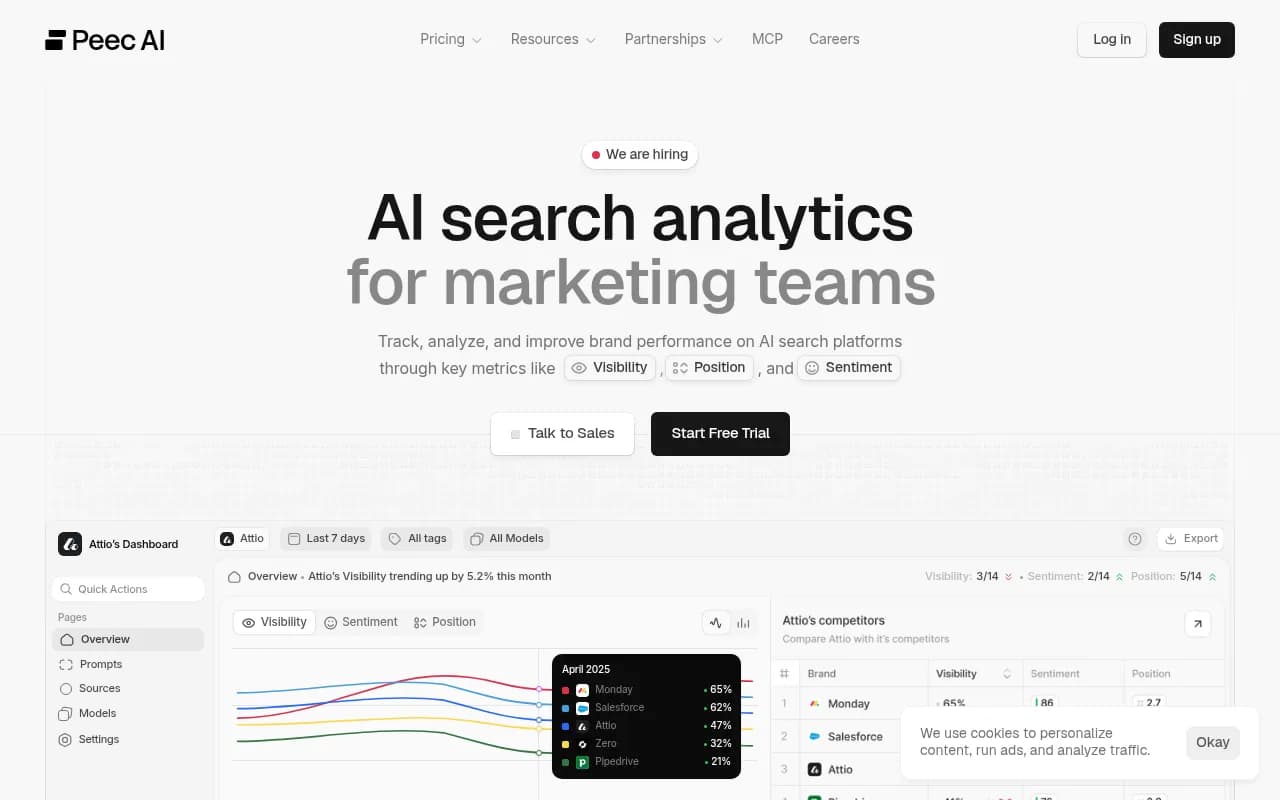
Peec AI has built a solid reputation particularly among European teams, partly because of its multi-language and multi-region support. If you're tracking AI visibility across several markets or languages, Peec handles that better than most tools at its price point.
It also includes some smart suggestions for improving visibility, which puts it a step above pure monitoring. The content optimization features are lighter than what you'd get from Promptwatch or Search Atlas, but they exist, which matters.
5. Ahrefs Brand Radar
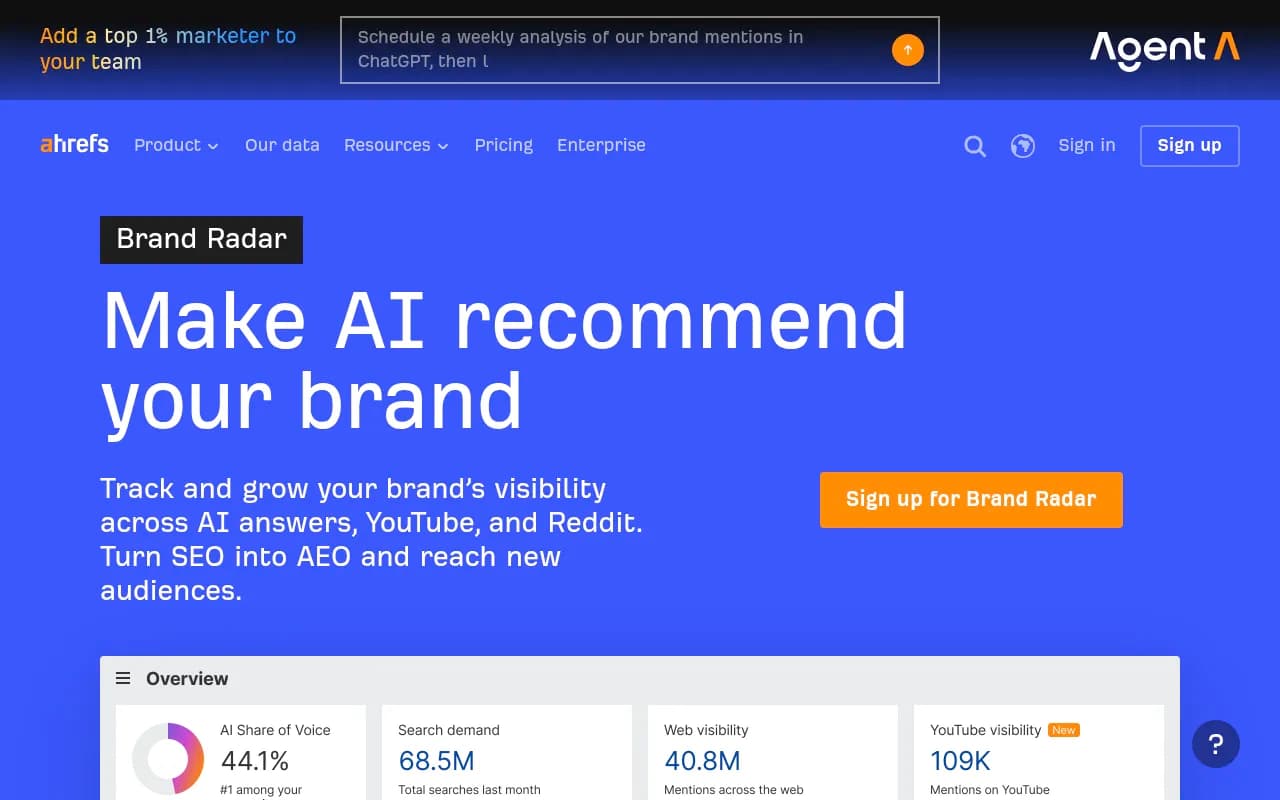
If your team already lives inside Ahrefs, Brand Radar is the path of least resistance for adding AI visibility tracking. It integrates with the broader Ahrefs toolset, so you can cross-reference AI mentions with your existing backlink and keyword data.
The limitations are real, though. Brand Radar uses fixed prompts rather than letting you define your own, and there's no AI traffic attribution to connect visibility to actual site traffic or revenue. It's a useful addition to an existing Ahrefs workflow, not a standalone GEO platform.
6. Semrush AI Visibility Toolkit
Semrush has been adding AI visibility features to its existing platform, and for teams already paying for Semrush, it's worth exploring. The advantage is consolidation -- you're not adding another tool to your stack.
The same caveat applies as with Ahrefs: Semrush's AI features use fixed prompts, which limits how precisely you can track the specific questions your audience is actually asking. It's a solid complement to traditional SEO work, less suited as your primary GEO platform.
7. Search Atlas
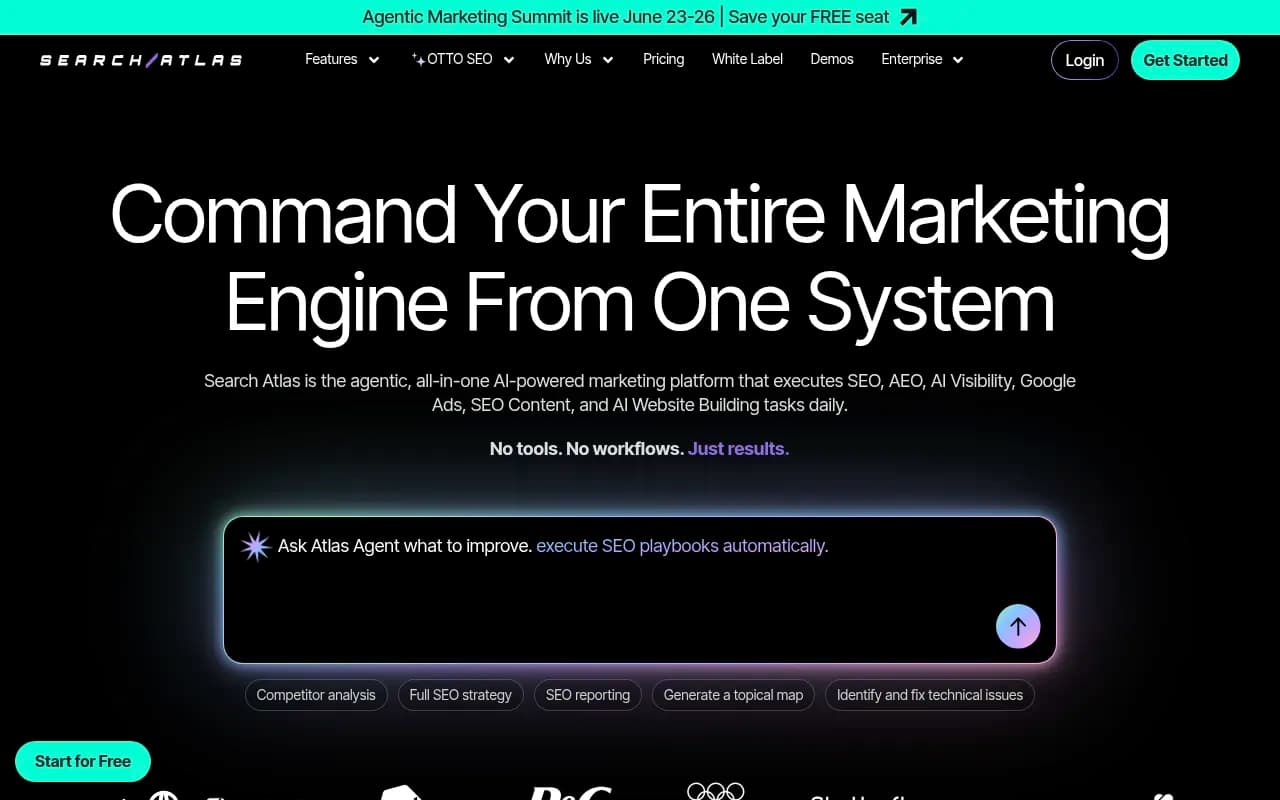
Search Atlas takes an all-in-one approach that combines traditional SEO with AI search optimization. It has content creation tools, keyword research, and AI visibility tracking in one platform. For teams that want to manage both traditional and AI search from a single dashboard, it's worth evaluating.
The AI-specific features are less mature than dedicated GEO platforms, but Search Atlas is developing quickly and the breadth of the toolset is genuinely useful.
8. AthenaHQ
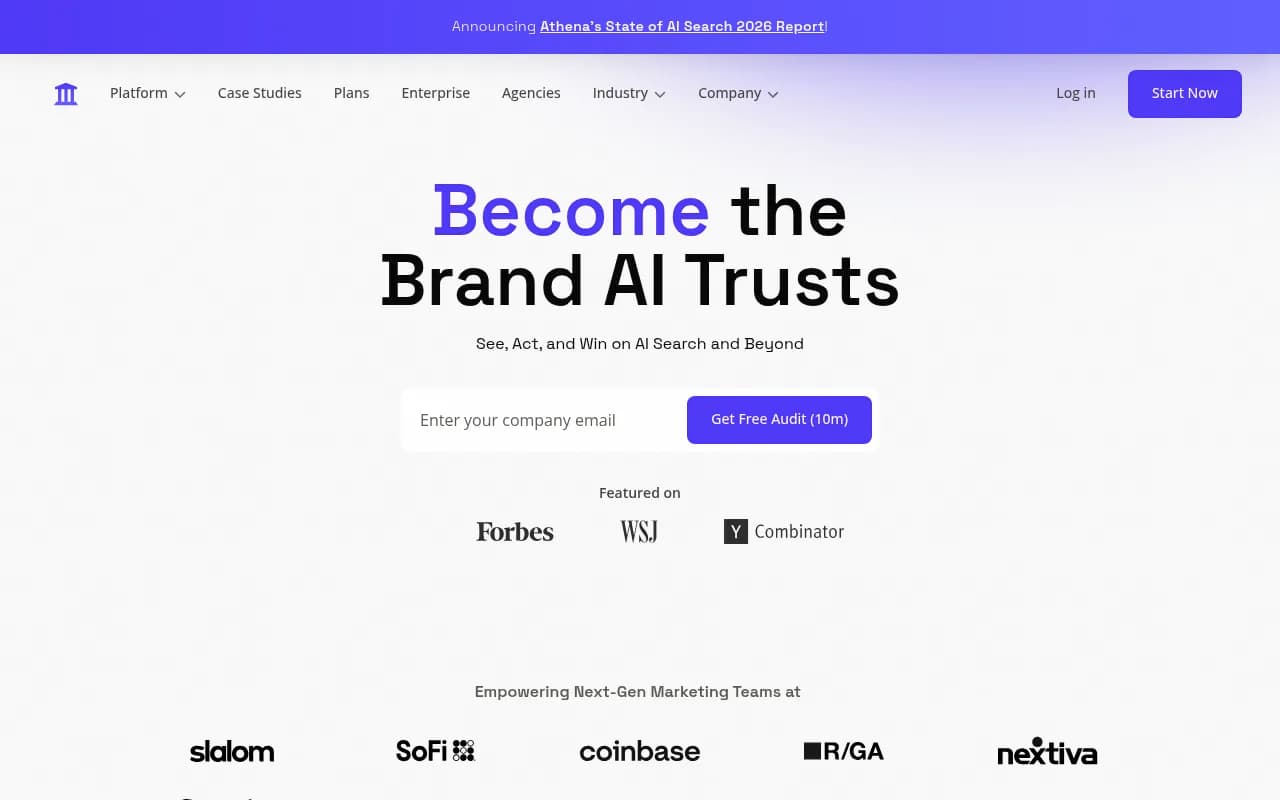
AthenaHQ focuses specifically on AI search visibility monitoring and has a clean, focused interface. It tracks brand mentions across major AI models and gives you competitive benchmarking to see how you stack up against competitors in AI-generated responses.
Like several others on this list, AthenaHQ is primarily a monitoring platform. Content optimization and generation aren't part of the core offering, so you'd need to pair it with a separate content tool if you want to act on what you find.
9. Writesonic GEO
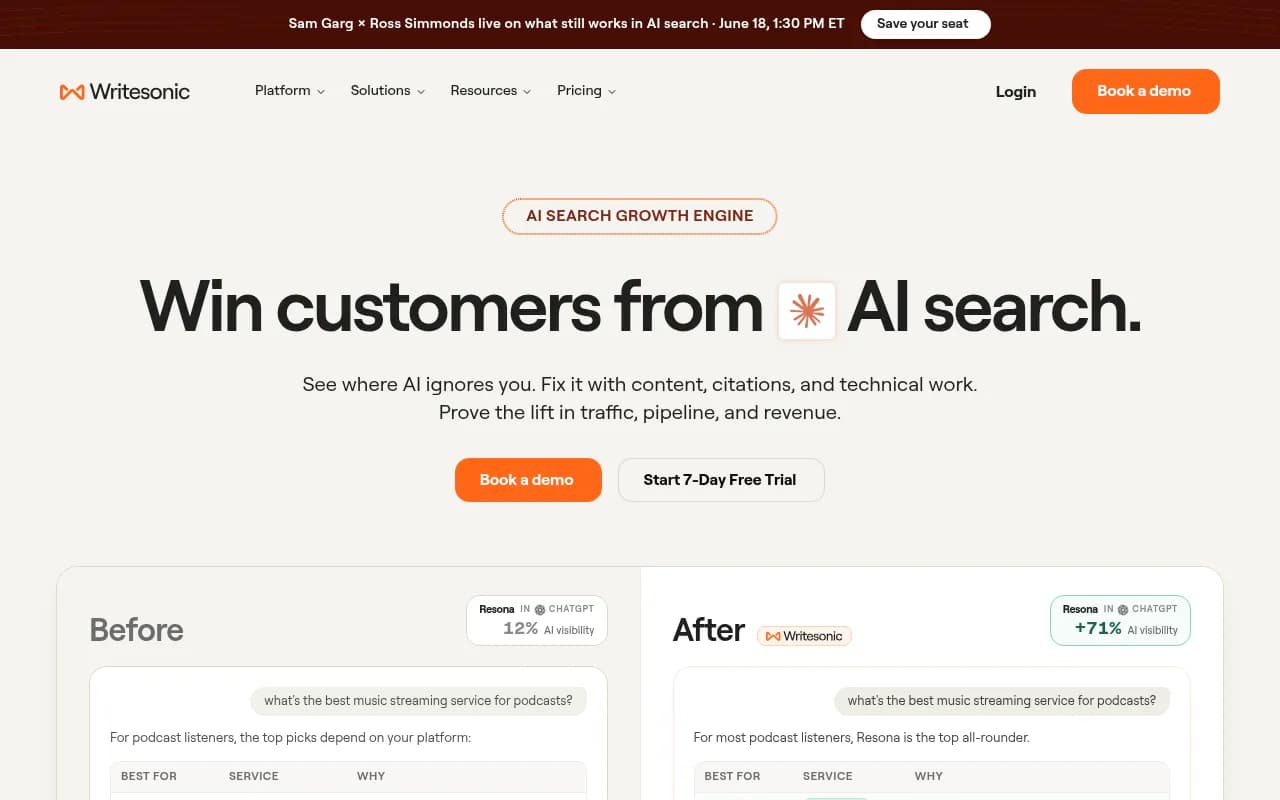
Writesonic has expanded beyond its content generation roots to include GEO-specific features. The platform lets you monitor AI search visibility and then immediately use Writesonic's writing tools to create content targeting the gaps you find. The integration between monitoring and content creation is tighter than most.
It's not as deep on the analytics side as Profound or Promptwatch, but if content production speed is your priority and you want monitoring baked into the same tool you write in, Writesonic GEO is a reasonable option.
10. Scrunch AI
Scrunch AI is built for brands and agencies that need to monitor AI search visibility across multiple clients or properties. The multi-brand management features are well thought out, and the reporting is clean enough to share with clients directly.
The platform covers the major AI search engines and gives you competitive visibility data. Like most agency-oriented tools, it's stronger on reporting than on content optimization, but it handles the monitoring side competently.
How these platforms compare
Here's a side-by-side view of the most important dimensions:
| Platform | AI models covered | Content generation | Gap analysis | Crawler logs | Best for | Starting price |
|---|---|---|---|---|---|---|
| Promptwatch | 10 | Yes (Content Agents) | Yes (Answer Gap) | Yes | Full optimization loop | $99/mo |
| Profound | 6+ | No | Limited | No | Enterprise monitoring | Custom |
| Otterly.AI | 5+ | No | No | No | Budget monitoring | Free tier |
| Peec AI | 5+ | Limited | Limited | No | European/multi-language teams | ~$49/mo |
| Ahrefs Brand Radar | 4+ | No | No | No | Existing Ahrefs users | Included in Ahrefs |
| Semrush AI Toolkit | 4+ | No | No | No | Existing Semrush users | Included in Semrush |
| Search Atlas | 6+ | Yes | Partial | No | All-in-one SEO + AI | $99/mo |
| AthenaHQ | 5+ | No | No | No | Focused monitoring | Custom |
| Writesonic GEO | 5+ | Yes | Partial | No | Content-first teams | $49/mo |
| Scrunch AI | 5+ | No | No | No | Agencies | Custom |
What to look for when choosing a Goodie AI alternative
Monitoring vs. optimization
The most important question to ask any platform: does it help you fix problems or just show you what they are? Monitoring tells you your AI visibility score. Optimization tells you what to publish next, generates the content, and tracks whether it worked. Most platforms do the first. Few do the second.
Prompt flexibility
Fixed prompts are a real limitation. If a platform only tracks a preset list of questions, you're not tracking the actual queries your customers are using. Look for platforms that let you define your own prompts, ideally with volume estimates so you can prioritize the ones that matter most.
Model coverage
In 2026, AI search is fragmented across ChatGPT, Perplexity, Gemini, Google AI Overviews, Claude, Grok, and others. A platform that only monitors two or three models is giving you an incomplete picture. The more models covered, the more reliable your visibility data.
Crawler and traffic data
Some platforms can show you when AI crawlers visit your site, which pages they read, and whether those visits translate into citations. This is genuinely useful for diagnosing why certain pages aren't getting cited. It's also rare -- most tools don't have it.
Multi-site and multi-region support
If you manage more than one brand or operate in multiple markets, check how the platform handles multiple sites and languages before committing. Some tools charge per site at rates that add up fast.
The monitoring trap
There's a pattern worth naming. A lot of teams buy a monitoring tool, spend a few weeks looking at their AI visibility scores, and then... don't know what to do next. The data is interesting but not actionable. They know they're invisible for certain prompts but have no clear path to fixing it.
This is the monitoring trap, and it's the main reason teams end up switching platforms after six months. The fix is to choose a platform that closes the loop from data to action. That means gap analysis that tells you specifically what content to create, content tools that help you create it, and tracking that shows you whether it worked.
A few platforms on this list do this well. Most don't. Be honest about which category you need before you sign up for a trial.
Which platform should you choose?
If you want the most complete platform and the monitoring-to-optimization loop matters to you, Promptwatch is the strongest option. It covers the most AI models, has the only real crawler log feature in this comparison, and the Content Agents + Answer Gap Analysis combination is genuinely differentiated.
If you're on a tight budget and just need to understand your baseline, Otterly.AI gets you started without a big commitment.
If your team already pays for Ahrefs or Semrush, start with their built-in AI features before adding another tool -- just go in knowing the limitations.
If you're an agency managing multiple clients, Scrunch AI's multi-brand reporting is worth a look.
And if content production speed is the priority and you want monitoring and writing in one place, Writesonic GEO is the most integrated option at that price point.
The right answer depends on what you're actually trying to do. Tracking your visibility is step one. Improving it is the whole game.