Key takeaways
- Most AI visibility tools were built for one in-house brand. Agency use needs isolated client workspaces, pitch workflows for prospects, branded reporting and pricing that does not explode per client.
- The biggest gap in the category is the jump from monitoring to action. A dashboard that says a client appears in 12% of answers is useful, but the agency that can also fix it keeps the retainer.
- Nearly every agency roundup online is written by a vendor that ranks itself first. Treat those lists as input, not verdicts, and run your own two-week trial with two real clients.
- Pricing models differ a lot: flat agency tiers with unlimited projects, per-client instances, and credit-based plans. Model your real client count before you compare sticker prices.
- Promptwatch, Profound, Gauge, Peec AI, Otterly.AI, Scrunch and AthenaHQ are the names that come up most for agency work, and they split into very different camps.
A note on how this guide was built
The original title promised that we tested multi-client workflows. I want to be straight about what that means here. This guide is built from published vendor documentation, the agency roundups from Profound, Cognizo, Gauge and Zapier, and Promptwatch's own research data. I did not run a controlled bake-off across every platform, and I will not pretend I did. Where a fact comes from a vendor's own page, I say so.
That matters because the research landscape is skewed. Profound's roundup lists 18 tools and puts Profound first. Gauge's roundup of seven puts Gauge first. Cognizo's piece concludes that only one platform combines pitch environments, a marketplace and attribution, and guess whose platform that is. The most independent source I found was Zapier's 2026 roundup by Maddy Osman, who says she researched nearly 50 tools, and it does not include Profound, Gauge or AthenaHQ at all.
So use the framework below to run your own test. It will tell you more than any ranking.
What actually changes when you run AI visibility for many clients
Tracking one brand is a dashboard problem. Tracking fifteen is an operations problem. Here is what breaks first.
Client separation
Each client needs its own prompts, topics, competitors, countries and languages. If one client's competitor set bleeds into another's, your reports become unusable. Look for isolated workspaces or projects, role-based access, and the ability to give a client a viewer seat without exposing the rest of your roster.
Pitching prospects
The best new-business move in 2026 is showing a prospect a real AI visibility audit before they sign. A few platforms have pitch environments for this. Gauge's is a free one-time run of 100 prompts across all models for a prospect, according to Gauge's own page. Promptwatch agency plans include pitch projects, and agencies can create them through the API and MCP too.
Data quality
Answers from the real ChatGPT or Gemini interface can differ from API outputs, and LLM outputs are non-deterministic, so the same prompt can return different answers between runs. Zapier flags this as a pitfall and notes that ZipTie mimics real user behavior rather than leaning only on APIs. Gauge says it uses front-end scraping of logged-out sessions. Promptwatch monitors the real interfaces of ChatGPT, Google AI Overviews, Google AI Mode, Gemini, Perplexity, Copilot, Meta AI and Alexa, per country and language. Ask every vendor how its data is collected.
Reporting
Clients want a PDF in their inbox and a number they can explain to their CMO. Check for scheduled, white-label reports, Looker Studio connectors and CSV exports.
Execution
This is where most tools stop. If the platform only reports, your team still needs a separate workflow to write, publish and verify content. Platforms that include content generation and CMS publishing save hours per client per week, but check whether that is available on the plan you can afford.
Quick comparison for agency use
| Tool | Agency angle | Content execution | Pricing model (verify before buying) | Best for |
|---|---|---|---|---|
| Promptwatch | Agency plans with unlimited projects, prompts and seats, plus pitch projects | Agent Chat, Action Board and content gap analysis on agency plans; Content Agent on Business and Enterprise | Kick-off $199/mo, Growth $399/mo, Scale $799/mo | Agencies that want monitoring, crawler logs and traffic attribution in one place |
| Profound | Agency Mode with client workspaces and pitch environments | Content creation included, per its own materials | Check vendor | Larger agencies selling AEO as a scaled service |
| Gauge | Agency Mode with per-client instances and a free pitch run | Webflow, Framer, GitHub and Sanity integrations | Growth $599/mo, Agency Mode $300/mo per active client (per Gauge) | Agencies that want per-client billing they can pass through |
| Peec AI | Dedicated agency pricing page, credit-based tiers | Mostly monitoring and suggestions | Check vendor | Agencies that want clean tracking and smart prompt suggestions |
| Otterly.AI | Affordable entry point | Briefs and recommendations, no in-platform generation per Profound's table | Check vendor | Solo marketers and small agencies |
| Scrunch | Referral commission and prospecting licenses | Agent-ready pages for crawlers | Check vendor | Agencies that care about partner economics |
| AthenaHQ | Partner program referring leads | Action Center for next steps | Check vendor | Agencies wanting inbound referrals |
Pricing for everything except Promptwatch and Gauge is unverified here. I did not scrape those vendors' pricing pages, so confirm every number on the vendor's site.
The platforms, one by one
Promptwatch
Promptwatch is the platform 1001 SEO Media uses for its own GEO work, and I'll flag that bias up front. Here is the factual case for agencies.
Agency plans start at $199/mo (Kick-off), then $399/mo (Growth) and $799/mo (Scale), and all three include unlimited projects, prompts and team seats, all AI models, Agent Chat, Brand Narrative, crawler logs, visitor analytics, site audits, custom reports, and MCP and API access. Scale adds tracking every 12, 6 or 1 hours, local GEO/SEO targeting at exact coordinates, Fact Check and an audit log. The practical effect: adding a twelfth client does not change your bill.
What I find useful in a multi-client setup is the loop. The Action Board gives each client a prioritized to-do list, Agent Chat answers questions over live data and can build dashboards or PDF reports, IP-verified crawler logs tell you whether AI bots can even read a client's pages, and visitor analytics show whether any of it sends traffic. That last part is what you need when a client asks for proof.
The limits are real. Agency plans do not include the Content Agent, AEO articles, the Knowledge Base or ChatGPT Shopping. Agencies that need automated content, a white-label dashboard and client portal, or SSO go to Enterprise. Brand plans (Business at $579/mo) include the Content Agent, but they cap projects at five. Check the full details at promptwatch.com/pricing and the agency solutions page.

Monks is a public example: it uses the Answer Gap Report and Visibility Score to build content roadmaps for enterprise clients, described in the Monks case study. For a head-to-head view, see Promptwatch vs Profound.
Profound
Profound is the most agency-marketed name in the space. Its own roundup claims 1.9 billion real user prompts behind its data and describes an Agency Mode with client workspaces and pitch environments. It also pitches content creation and crawler-to-conversion attribution in the same product. Profound is aimed at enterprises and bigger agencies, and by its own admission it is overkill for teams that only want a lightweight visibility score. Treat the 1.9 billion figure as a vendor claim.

Gauge
Gauge is the only vendor in my research notes that publishes agency pricing in public: Agency Mode at $300/mo per active client instance, Growth at $599/mo with 600 prompts per day across ChatGPT, Google AI Mode and Copilot, and Enterprise custom, which adds AI Overviews, Gemini, Perplexity, Claude and Grok. That per-client model is easy to resell but gets expensive past a handful of clients. Gauge's case-study numbers, such as Standard Metrics moving from 9% to 24% in two weeks, are self-reported. Its roundup ranks Gauge number one, so weigh that accordingly.

Peec AI
Peec AI has a dedicated agency pricing page with tiered, credit-based plans, and Gauge's roundup describes it as trusted by 2,000+ teams with location-based tracking. Zapier picks it for smart suggestions. I could not verify its agency tier details, so ask for a quote against your client count. Credit models can be fine for small rosters and awkward for large ones, because heavy clients eat the pool.

Otterly.AI
Otterly is the budget pick. Zapier chose it for affordability, and Profound's table says it suits solo marketers and small agencies while lacking real prompt-volume data and in-platform content generation. If you manage three small clients and just need to show a visibility trend, that can be enough.

Scrunch and AthenaHQ
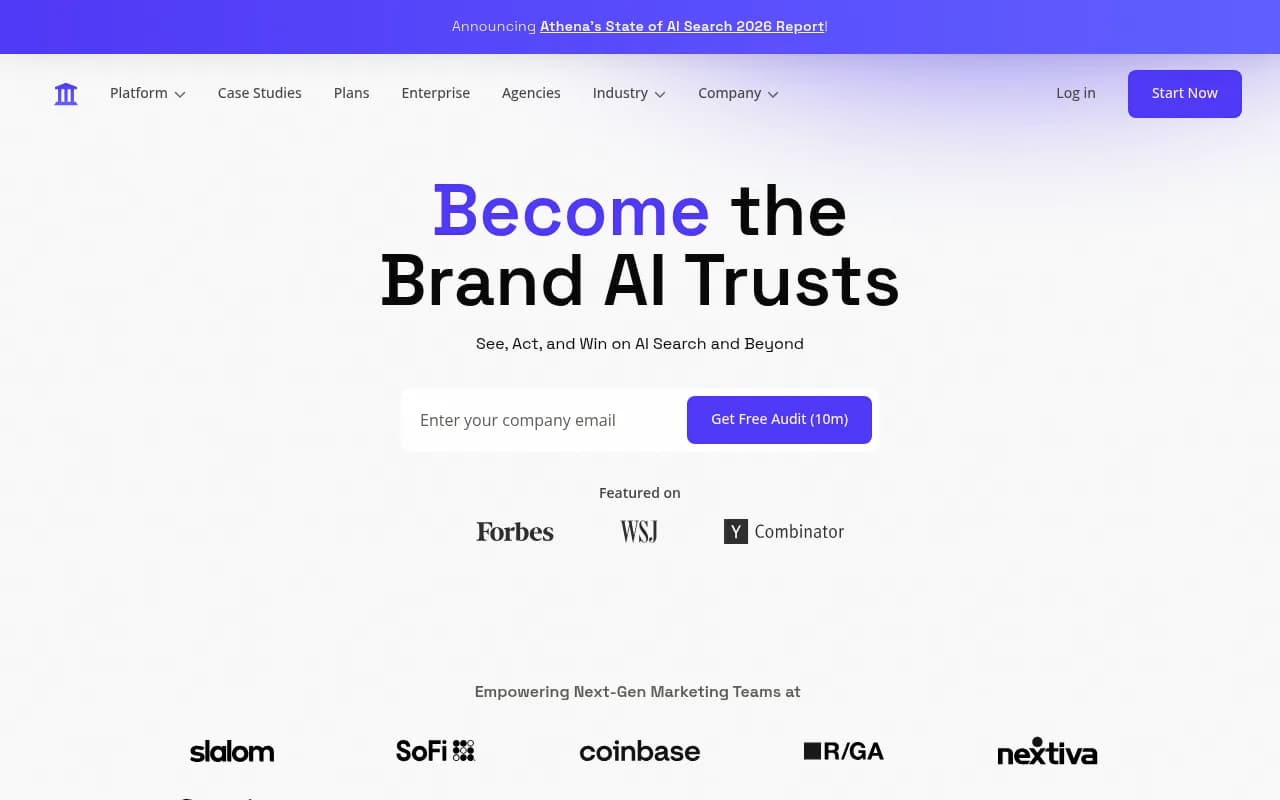
Scrunch has a differentiated approach: agent-ready pages served to AI crawlers, plus a partner program with referral commissions, prospecting licenses and co-marketing funds. AthenaHQ's Action Center turns visibility data into next steps, and its partner program refers qualified leads. Profound's table criticizes both, saying Scrunch has no content generation and AthenaHQ relies on an undisclosed prompt-volume model, but that is a competitor's view.

Search Party and ZipTie
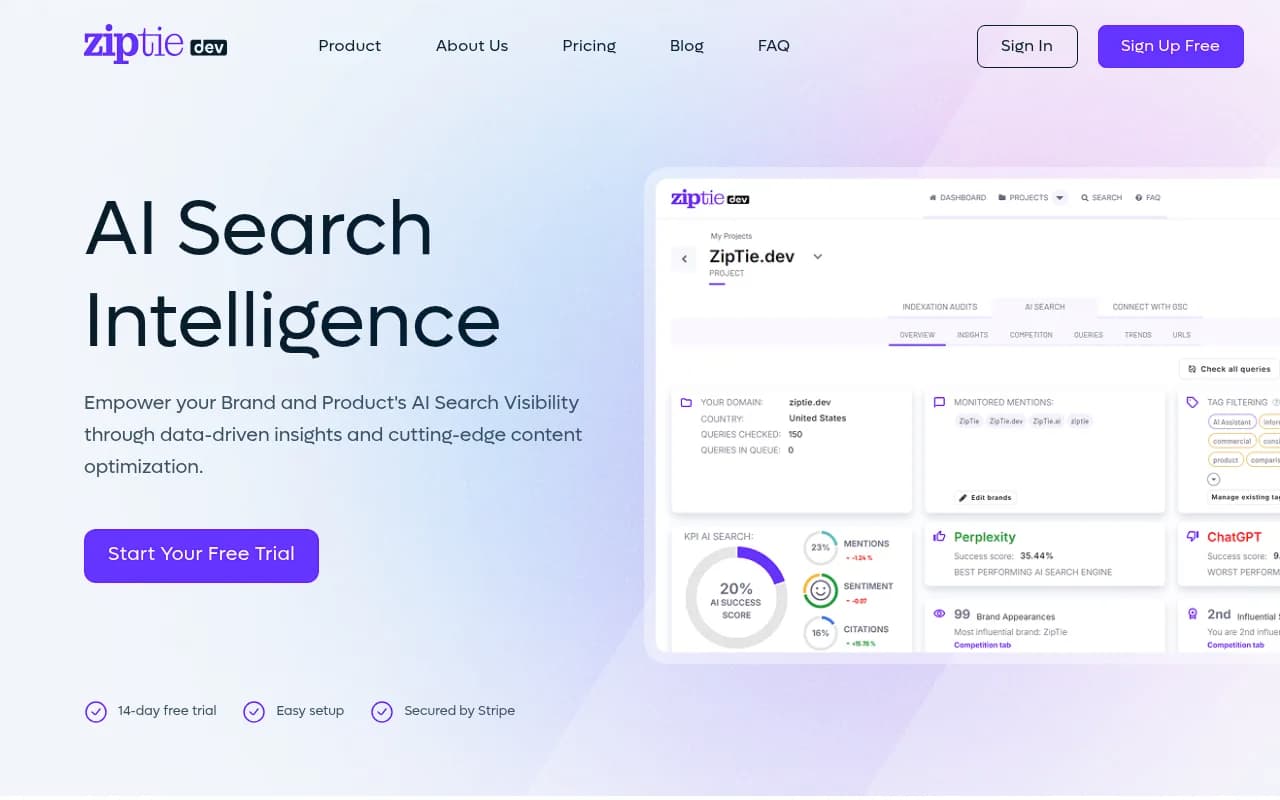
Search Party is described in our catalog as agency-focused, and ZipTie is Zapier's pick for deep analysis and reporting. Neither has the track record in my notes to say more, so put them on your trial list if your priorities are agency workflow or reporting depth.
Semrush and Ahrefs add-ons
If your agency already lives inside Semrush or Ahrefs, their AI modules are convenient. Zapier lists both. They tend to work from fixed prompt sets and shallower AI-specific data than dedicated platforms, so I would use them as a complement for stakeholders who already log in there.

For a wider look at the category, the GEO software directory at bestgeosoftware.com lists far more options than I can cover here.
The pricing math most roundups skip
Take a roster of 10 clients and compare models.
- Per-client instance pricing, like Gauge's $300/mo model, means roughly $3,000/mo for ten active clients on that line item alone.
- Flat agency tiers, like Promptwatch's $399/mo Growth plan, have unlimited projects and are limited by responses (25,000 per month) and credits instead. Check that your ten clients fit inside that volume.
- Credit-based plans depend on how heavily you track each client.
The right comparison is cost per tracked response at your real prompt count, not the headline price. Write down your clients, prompts per client, number of countries and refresh frequency, then ask each vendor for a number.
What the data says about where to spend client effort
The platform matters less than the strategy you run through it. Promptwatch Data gives agencies three useful anchors.
First, engines cite different things. In Promptwatch's November 2026 social citation report (Oct 11 to Nov 9, 2026), social platforms earned 13.16% of Google AI Overviews citations versus 0.64% of ChatGPT's. YouTube alone was 6.71% of AI Overviews citations. For clients who care about Google, video is a lever. For ChatGPT, do not lean on social posts.
Second, small clients are not shut out. In the domain rank distribution report (Nov 3 to Nov 16, 2026), the median cited domain was DR 57 in ChatGPT and Perplexity, DR 61-90 domains held 41.2% of ChatGPT citations, and DR 1-30 domains still held roughly 11% to 12% in every engine. PR and guest content aimed at DR 61-90 sites is a realistic ChatGPT and Perplexity play.
Third, Perplexity is the steadiest engine for testing changes. The average sources per response report is dated September 2025, so the figures may be stale, but it found Perplexity's source count very stable while Copilot swung from under 2 to nearly 17 within weeks. Judge Copilot on monthly trends, not weekly snapshots, and tell clients that before the first report lands.
Run your own two-week trial
Here is the test I would run before signing an annual agency contract.
- Pick two real clients with different profiles, say a local business and a SaaS brand.
- Set up identical prompt sets in each candidate tool, 30 to 50 prompts per client, in the right country and language.
- Check how long onboarding a client takes, and whether workspaces are really isolated.
- Run a pitch audit for a prospect. Time it.
- Compare answers against what you see in the live ChatGPT or Gemini interface for five prompts.
- Export a white-label report and send it to a colleague who knows nothing about the tool. Can they read it?
- Ask the support team a hard question on a Friday afternoon and see how fast the answer arrives.
- Check whether the tool can show if AI crawlers can read your client's site at all. Without crawler data you cannot tell an access problem from a content problem.
Two weeks is enough to expose the real friction, and it costs less than a wrong annual commitment. Most platforms offer a trial. Promptwatch has a 7-day free trial on monthly billing for Kick-off, Growth and Scale, plus a free AI visibility report you can run on a prospect without a login.
Which one should you pick
- Many clients, tight budget, and you want data plus action: Promptwatch Growth or Scale, or Peec AI if tracking alone is enough.
- Enterprise clients and a large AEO practice: Profound, with a hard look at the contract.
- Few clients, you want per-client billing you can resell: Gauge.
- Solo or very small agency: Otterly.AI.
- Partner referrals matter to your pipeline: Scrunch or AthenaHQ.
None of these answers is permanent. The category changes monthly, and vendors keep adding agency features. Rerun the trial each year.
Finally, if you are an agency owner reading this because you would rather hire a team than build the practice, 1001 SEO Media runs GEO and AI search programs for brands and publishes this site. That is a plain disclosure, not a pitch for this guide's picks.