Key takeaways
- Treat every language-and-country pair as its own market. A German prompt from Germany and an English prompt from the UK can return different sources, different local competitors and different recommendations.
- Most GEO tools can track many countries. Fewer let you set language and location per prompt, track at city level, and show you which sources drive each answer.
- Local businesses need two layers: AI visibility tracking (who gets mentioned) and local listings hygiene (reviews, citations, Google Business Profile). Few tools do both well.
- Tracking alone is not enough. Pick a platform that tells you what to fix, or pair a tracker with a content workflow.
- Pricing and language coverage change often. Verify both on vendor pages before you commit. I could not confirm current pricing for most tools below.
Why Europe and the UK need their own GEO approach
GEO tooling was built English-first and US-first. Europe breaks that assumption fast. A restaurant group in Amsterdam, a dental chain across Germany and Austria, or a UK estate agent with branches in Manchester and Leeds all face the same problem: AI assistants answer differently depending on where the user is and which language they type in.
The assistant may retrieve different publishers, recommend local competitors, describe the category differently, or leave a brand out entirely. That is the core point made in a multi-language GEO platform comparison from MaxAEO: a good multilingual platform doesn't just translate one prompt list. It treats each language-region pair as a measurement market.
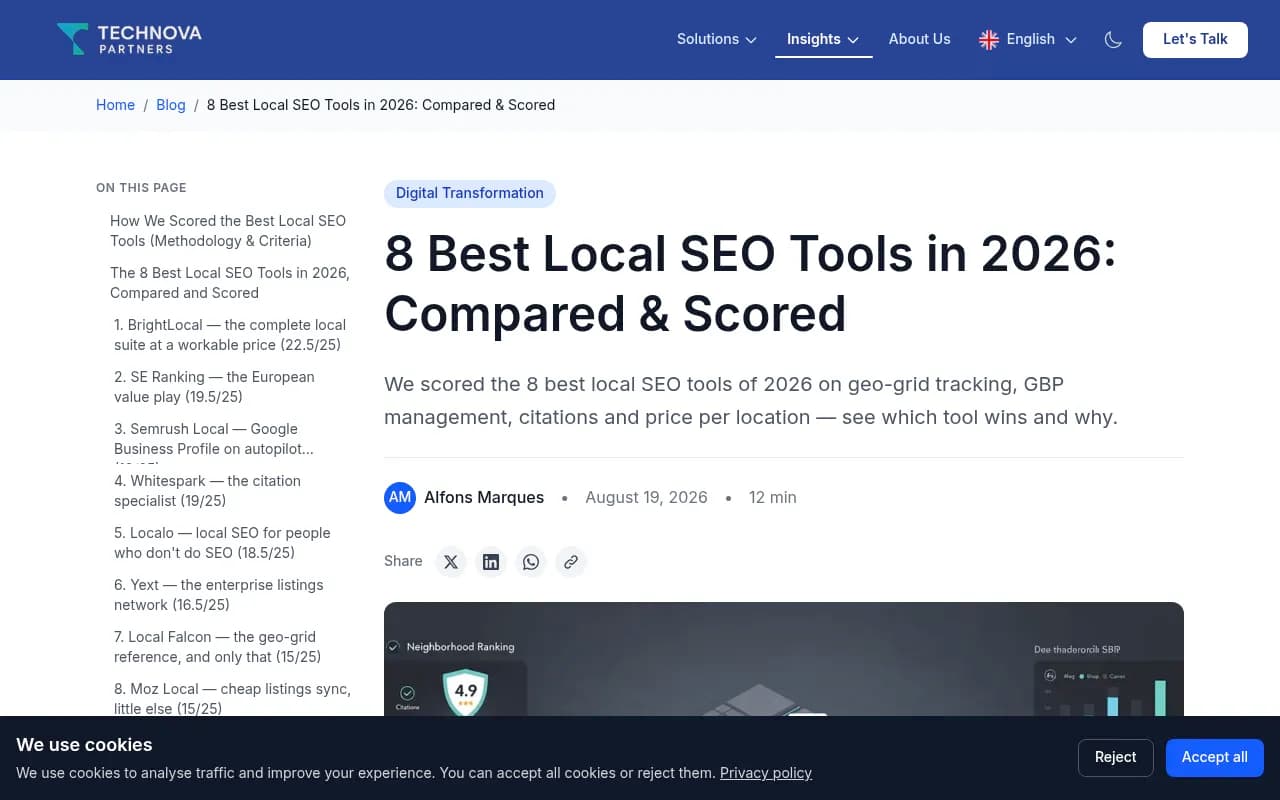
The local angle matters more than it did a year ago. Technova, citing BrightLocal's Local Consumer Review Survey 2026, reports that the share of consumers using ChatGPT and other AI assistants to find local businesses rose from 6% to 45% in a year, while Google as the place to evaluate local companies fell from 83% to 71%. I haven't checked that against BrightLocal's original, so confirm the numbers before quoting them. Even if the exact figures shift, the direction is hard to ignore.
What multi-language, multi-country tracking actually requires
Before comparing tools, get the checklist straight. These are the capabilities that separate a useful European setup from a dashboard that looks good in a demo.
Language and country set separately
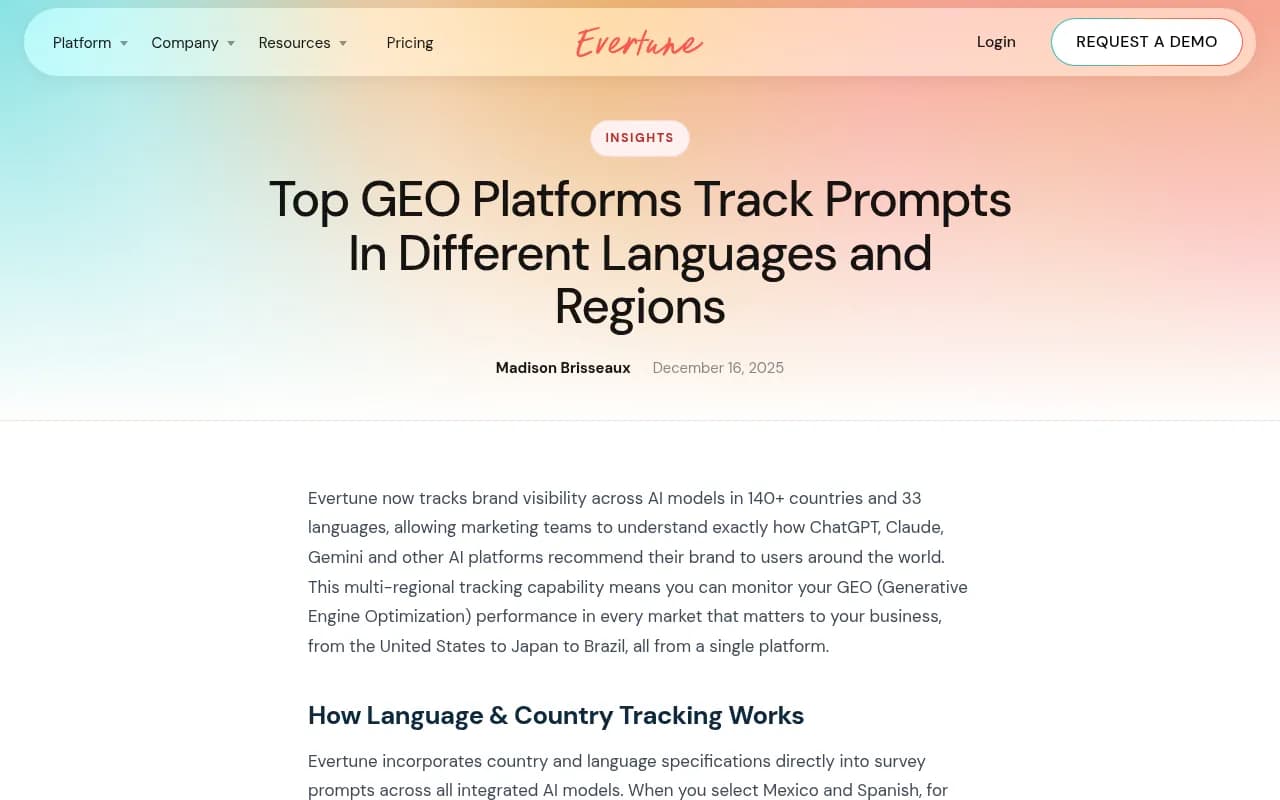
A user in Belgium might search in Dutch, French or English. A user in Switzerland might use German, French or Italian. If a tool only offers a country selector, you lose that nuance. Evertune, for example, builds country and language specifications directly into its prompts and says it supports 140+ countries and 33 languages, including Dutch, Polish, Czech, Danish, Finnish and Romanian. That is the kind of explicit pairing you want to see.
Real interface data, not only API calls
What a user sees in ChatGPT or Google AI Overviews can differ from what an API returns, and location signals matter more for local queries. Ask each vendor whether results come from the consumer interface or the API, and from which country the query is run.
City-level tracking
Country-level data is fine for a national brand. A plumber in Bristol or a clinic in Lyon needs city or region granularity. This is rarer, and often sits on higher tiers.
Source and citation visibility
For local queries, the sources matter as much as the mention. If AI answers for "best dentist in Utrecht" lean on a local directory and a review site, those are where you need presence. Promptwatch Data's travel citation report for ChatGPT (Sep 28 to Oct 4, 2026) shows the pattern in one vertical: booking and search sites take the largest share, and UK and EU review sites such as Which? and Trustpilot appear among the cited domains. The report doesn't split results by country or language, so treat it as a hint about source types, not proof of regional behaviour.
Competitor tracking per market
Your main rival in France may not exist in the UK. Make sure competitor sets can differ per market.
Data handling
EU customers often ask about GDPR and data residency. I did not research vendor-by-vendor data policies for this guide, so ask each vendor directly during a trial.
Platforms worth shortlisting
The table below summarises the tools most relevant to European and UK local businesses. Language and country claims come from vendor or comparison pages and should be confirmed in a trial.
| Tool | Strength for Europe/UK | Local fit | Watch out for |
|---|---|---|---|
| Promptwatch | Real-UI tracking per country and language, country tracking on every paid plan, state/city tracking from Business, crawler logs, content workflows | Strong for multi-location brands and agencies that want to act on gaps | Higher tiers needed for city-level tracking |
| Evertune | Country and language set within trackers, 33 languages | Enterprise, multi-market brands | Enterprise-oriented |
| Peec AI | Focused prompt-level visibility and sentiment | Small teams wanting clean reporting | Mostly monitoring |
| Otterly.AI | Accessible multi-country monitoring, audits | Budget-conscious SMBs | Lighter on execution |
| Semrush | Keyword and domain data next to AI tracking | Teams already in the Semrush ecosystem | AI tracking is an add-on to an SEO suite |
| SE Ranking | Euro pricing, multi-language interface, European city tracking | Value pick for SEO plus local | AI features newer than core SEO |
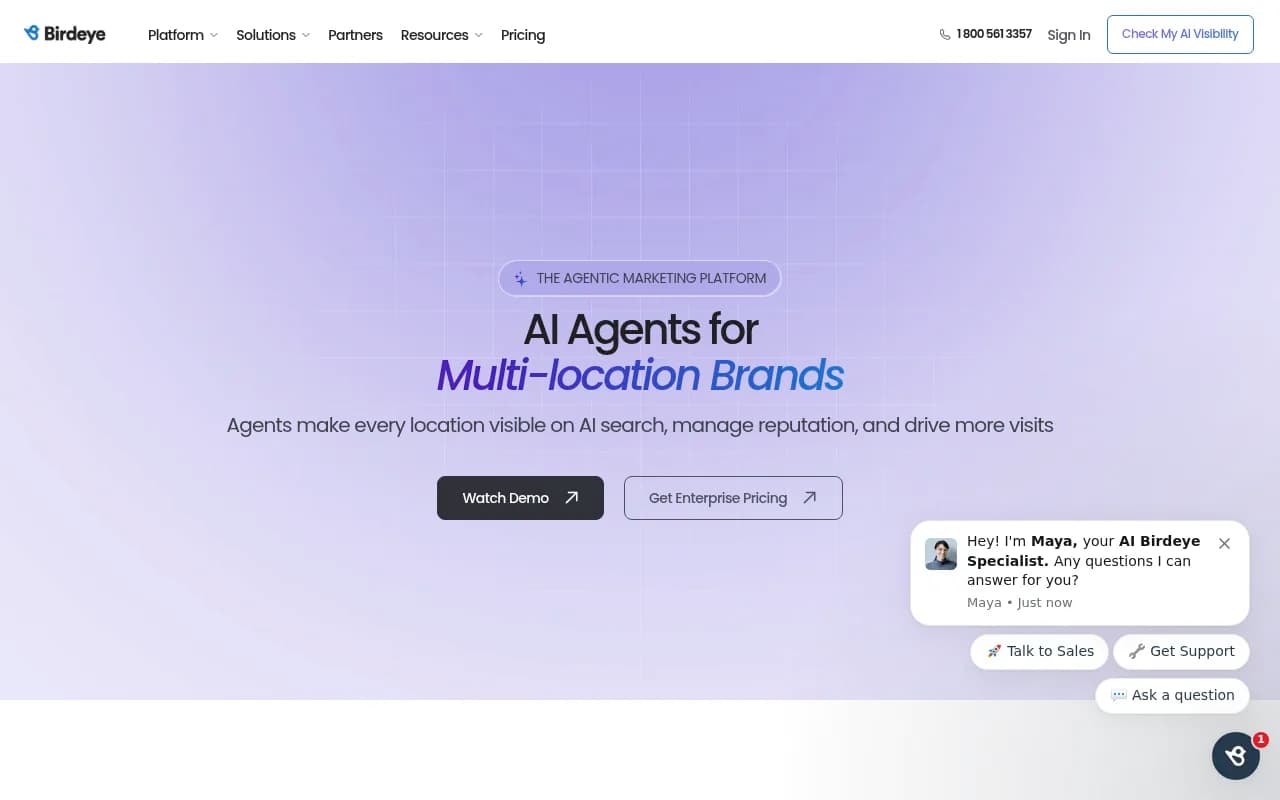
| Birdeye Search AI | Location-level AI visibility | Multi-location retail and services | Less depth on prompt research |
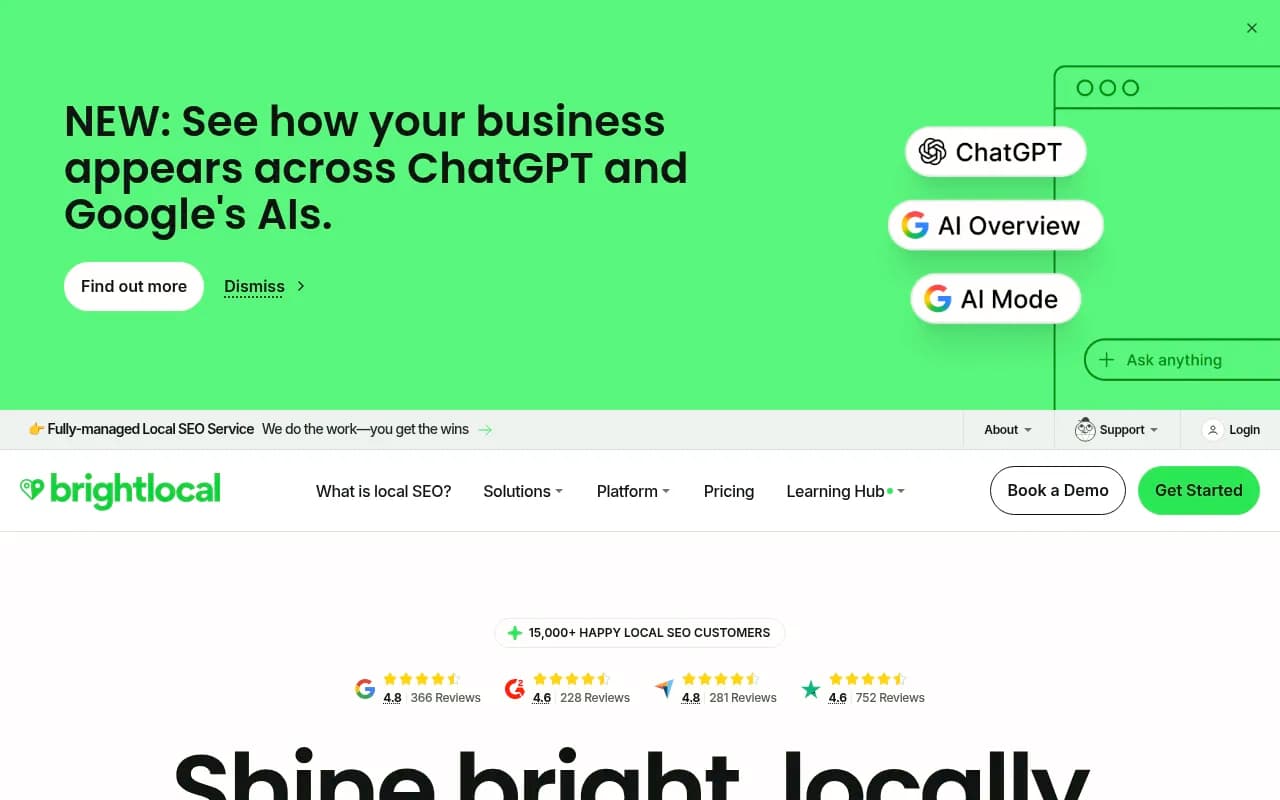
| BrightLocal | Local rankings, listings, reviews, now with AI visibility | Listings and review management | AI tracking is secondary |
Promptwatch
Promptwatch is the platform I would start with if you want to do something with the data rather than just watch it. It monitors the real interfaces of ChatGPT, Google AI Overviews, Google AI Mode, Gemini, Perplexity and Copilot, per country and language. Country tracking is included on every paid plan, and state and city tracking arrives on Business. That covers the "which markets are we invisible in" question, and the Action Board and Content Agent help close the gaps with localised content. IP-verified crawler logs also show whether AI bots can actually read your location pages. Check promptwatch.com/pricing for current plans.

The 1,001-brand question for agencies is white-label reporting across clients and countries. Promptwatch's agency plans cover unlimited projects, which suits a UK agency running accounts in several EU markets.
Evertune
Evertune is the most explicit about language and country combinations, with 33 languages listed. It suits enterprises measuring brand perception across many markets. If you run five or six European markets and need formal reporting, it deserves a demo.

Peec AI and Otterly.AI
Both are lighter products. Peec AI keeps analytics, source tracking and reporting focused, and it is a European-built tool, which some buyers care about. Otterly.AI offers multi-country monitoring, audits and optimisation recommendations at an accessible level. Either works for a small business watching two or three markets, though neither goes as far on execution.


Semrush and SE Ranking
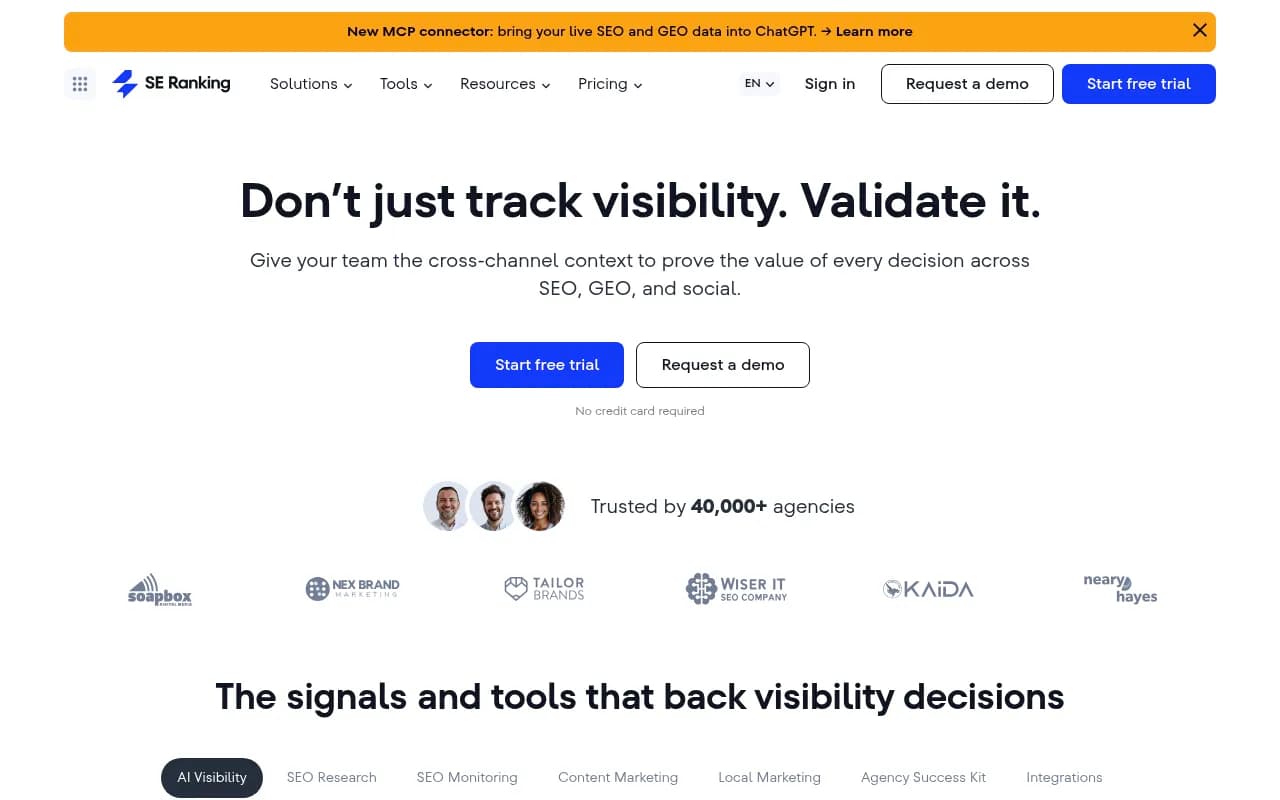
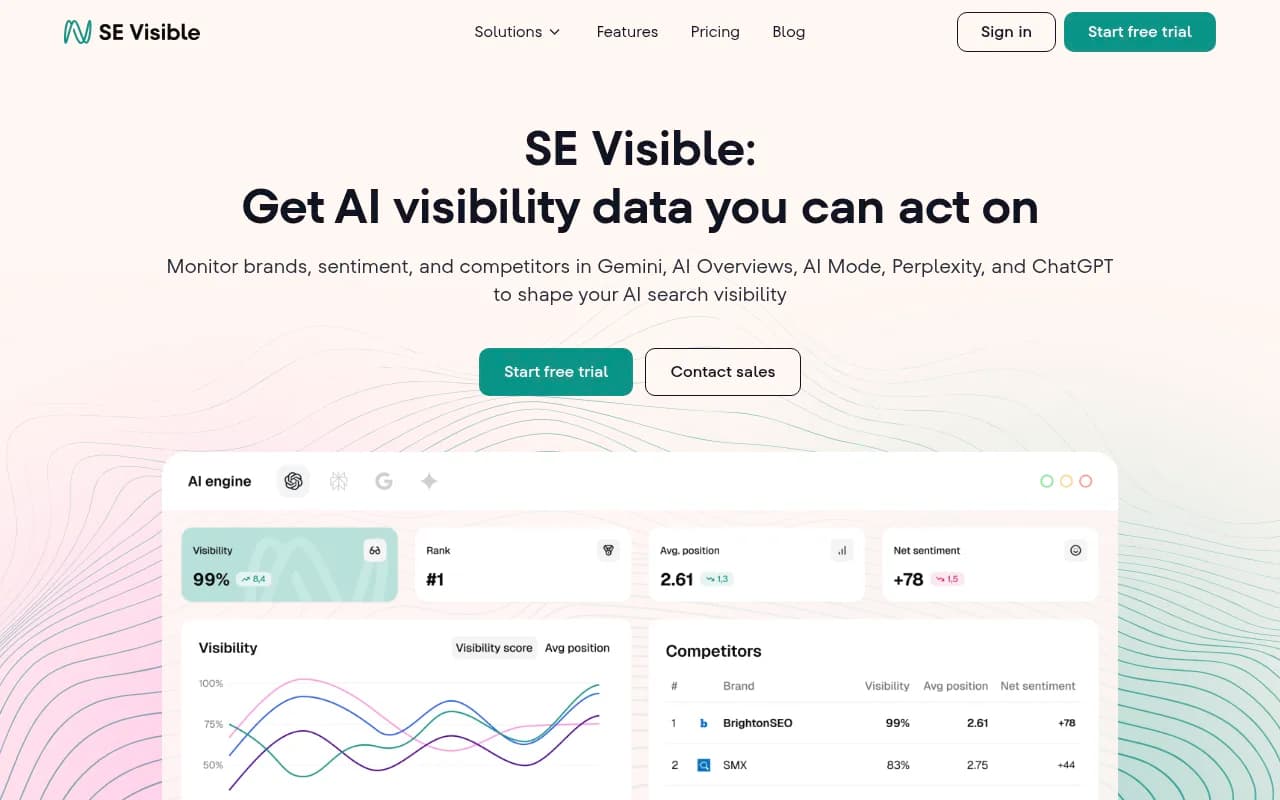
If you already pay for an SEO suite, adding AI tracking there avoids another subscription. Technova scores SE Ranking 19.5/25 as a European value option: euro pricing, a multi-language interface including Spanish, French, German and Italian, and tracking for any European city. SE Ranking also has a dedicated AI visibility product.
Birdeye Search AI and BrightLocal
These come from the local side. Birdeye Search AI focuses on location-level visibility, and BrightLocal adds AI visibility to its long-standing local rankings, listings and reviews. For a business with ten or fifty storefronts, this is where reviews and listing accuracy get managed, and it is worth pairing with a dedicated GEO platform.
Other tools to look at
Trackerly.ai advertises daily multi-LLM tracking in 20+ languages, Qwairy and LLM Pulse are monitoring-focused options, and Profound targets large enterprises. For multi-location review and listing management, Chatmeter, SOCi, Yext and Reputation.com cover that side. If you want to browse further, the GEO software directory at bestgeosoftware.com lists many more.


Which setup fits which business
Single-location business in one country
You need very little. A cheap tracker with 30 to 50 prompts, set to your city and language, plus a clean Google Business Profile. Otterly.AI, Peec AI or an entry tier of a broader platform will do. Spend the saved budget on reviews.
Multi-location business across several European countries
This is where language-and-country pairs multiply quickly. Ten locations in three countries with two languages each means your prompt set is a matrix, not a list. Pick a platform with per-prompt language and location, city-level tracking, and a way to prioritise which markets to fix first. Promptwatch, Evertune and Birdeye Search AI are the natural shortlist, depending on whether you lean toward content action, enterprise measurement or review management.
UK agency serving EU clients
Look for unlimited projects, client portals and white-label reports. Agency plans from Promptwatch, and tools like Search Party, are built around that workflow. Also confirm that each client can have a different language and country configuration.
Business already deep in an SEO suite
Start with the AI add-on from Semrush or SE Ranking, and judge whether it gives you per-prompt language control. If not, bolt on a dedicated tracker.
How to build a multi-language prompt set
A workable approach is to build the set in layers.
- Start with real local queries in each language. Don't translate English prompts word for word. Ask native speakers how customers actually phrase things: "zahnarzt notdienst münchen" reads differently from "emergency dentist Munich".
- Add the intent types: discovery ("best X in city"), comparison ("X vs Y"), and branded ("is brand reliable").
- Tag by market, language and location so you can slice reports later.
- Keep prompts short and keyword-like. Promptwatch Data's ChatGPT query fanout report found average fanout query length fell from about 117 characters in December 2025 to roughly 53 characters once fanouts returned in April 2026. The report doesn't say which language those queries were in, so don't assume the same applies to non-English, but short entity-first headings on local pages are a safe bet.
- Check the site: operator behaviour. Per Promptwatch Data, ChatGPT started using site: queries at scale on August 8, 2026, jumping from about 0.4% to about 17% of fanouts. If your domain structure separates countries (/de/, /fr/), clean architecture makes these queries easier to satisfy.
What to fix once you see the data
Tracking shows the gap. These are the usual fixes for local and international sites.
- Hreflang and clear language versions. Google's documentation on managing multi-regional and multilingual sites is still the reference for URL structure and language targeting, and AI systems that retrieve through search inherit the same signals.
- Real local pages per location, in the local language, with address, services, opening hours and reviews on the page.
- Consistent business data across directories and listings. Yext, BrightLocal and Synup-style tools handle this at scale.
- Presence on the third-party sites AI cites in each country. These differ by market, so use your citation reports per country rather than assuming one list.
- Crawler access. Check that AI bots aren't blocked by robots.txt or a CDN rule. Crawler logs make this visible.
What to ask vendors before you buy
| Question | Why it matters |
|---|---|
| Can I set language and country separately per prompt? | Needed for bilingual markets like Belgium or Switzerland |
| Is data from the real UI or the API? | Local and shopping answers often differ |
| Is there city-level tracking, and on which plan? | Core for local businesses |
| How are prompts and responses priced? | Multi-market setups burn through response limits fast |
| Which EU/UK data policies apply? | GDPR and procurement requirements |
| Does it show sources and help fix gaps? | Tracking alone doesn't improve visibility |
Limits of this guide
I could not verify current pricing for Peec AI, Otterly.AI, Evertune, Profound, Semrush, SE Ranking or Promptwatch, so check each vendor's pricing page. I also did not test GDPR or data-residency terms, local-language prompt behaviour in depth, or how Google Business Profile surfaces in AI Mode across Europe. Promptwatch Data has no report specifically on European or UK local GEO, so the citation data cited here is context, not proof of regional patterns.
If you want a broader view of the category, the AI rank tracking directory at ai-rank-tools.com is a handy next stop. For most European local businesses, the practical path is simple: pick two or three tools, run a 7 to 14 day trial with the same 30 prompts in two languages, and keep the one that shows you the clearest next action.