Key takeaways
- AI Mode and AI Overviews overlap in only about 10.7% of cited URLs (SE Ranking's study of 10,000 US keywords), so tracking one tells you almost nothing about the other.
- Google cites itself heavily in AI Mode: google.com held 7.31% of all AI Mode citations in June 2026, mostly Maps and Business Profile links, according to Promptwatch's AI Mode citation share data.
- AI Mode answers are volatile. The same query run three times in one day matched sources only 9.2% of the time in SE Ranking's testing, which means one-off audits are close to useless and continuous tracking is the baseline requirement.
- Promptwatch is the strongest end-to-end option because it pairs real-UI AI Mode monitoring with crawler logs and an execution layer; Peec AI is the best budget pick; Profound leads for enterprise.
- Before paying anyone, verify the tool actually triggers real AI Mode responses. Some platforms quietly pass off AI Overviews data (or classic rankings) as AI Mode tracking.
Google AI Mode stopped being an experiment a while ago. It rolled out US-only in May 2025, reached 180 countries within months, and by Google's I/O 2026 announcements it had crossed a billion monthly users, with Google saying AI Overviews and AI Mode are merging into a single AI search experience. Whether that merge takes six months or two years, the direction is obvious: the conversational answer is becoming the search result.
The problem is that a traditional rank tracker cannot measure any of this. AI Mode doesn't return ten links. It returns a generated narrative with a panel of sources, and those sources shift with location, language, device, and even the time of day you run the query. So this guide is about the GEO platforms that track AI Mode specifically, what the citation data actually looks like, and how to pick one without wasting three months on the wrong tool.
One disclosure before we start: this site is published by 1001 SEO Media, which also builds Promptwatch. I've tried to be as honest about Promptwatch's weak spots as everyone else's, and the data referenced throughout comes from Promptwatch's own published research plus independent studies.
Why AI Mode needs its own tracking
AI Mode is not AI Overviews
This is the single most common mistake teams make. They buy a tool that says it tracks "Google AI surfaces," assume that covers AI Mode, and never check.
SE Ranking's study of 10,000 US keywords found that AI Mode and AI Overviews share only 10.7% of URLs and 16% of domains. The overlap between AI Mode and the classic organic top 10 is barely better: about 14% at the URL level. In other words, ranking well in Google tells you roughly nothing about whether AI Mode cites you, and being visible in AI Overviews tells you roughly nothing about AI Mode either.
The volatility numbers are worse. Run the identical query three times on the same day and AI Mode matched its own sources only 9.2% of the time. So even a correct snapshot ages out within hours. Any tool that samples AI Mode monthly, or worse, once, is selling you a photo of a river.
Google cites itself, a lot
Here's the part most guides underplay. In June 2026, google.com alone captured 7.31% of all Google AI Mode citations, per Promptwatch's AI Mode citation share report, and that share jumped 72% month over month, up from 4.24% in May's data. Add YouTube at 2.88% and Reddit at 2.52%, and Google-owned or Google-adjacent surfaces dominate the mix.
SE Ranking's independent research found the same thing from a different angle: 97.9% of Google's own links in AI Mode answers point to Google Maps business profiles.
Two practical consequences. First, your Google Business Profile, Maps presence, Merchant Center, and YouTube channel are AI Mode ranking factors in a way your meta descriptions are not. Second, no independent website cleared 1% of AI Mode citation share in June 2026, which means the open-web opportunity lives in the long tail, across thousands of niche prompts rather than a handful of head terms. Your tracker needs to handle volume and prompt-level granularity, not just a fixed top-20 list.
For context on how citation-hungry each engine is: AI Overviews and Perplexity both hover near 10 sources per answer while ChatGPT averages around 5, per Promptwatch's sources-per-response data. AI Mode sits in the double-digit camp at roughly 12.6 links per answer, per SE Ranking's count. That's a lot of citation real estate per query, but it's spread thin across a volatile, personalized response.
What an AI Mode tracker actually needs to do
Before the tool list, the requirements. A platform that tracks AI Mode properly in 2026 should:
- Trigger real AI Mode responses, not AI Overviews, not classic SERPs, and not API outputs that differ from what users actually see
- Run prompts from configurable locations, because AI Mode answers vary by country, state, and city
- Refresh on a schedule measured in days, not quarters, given the 9.2% same-day consistency figure
- Track citations at the URL level, sentiment, and competitor share of voice, not just "mentioned / not mentioned"
- Ideally connect visibility to actual traffic, because a citation with zero clicks is a vanity metric
That last point is where the category splits. Most GEO platforms are trackers: they tell you where you're invisible and stop there. A handful, Promptwatch chief among them, go further and help you fix the problem with content generation and publishing. Whether you need that depends on whether your team has the capacity to act on a backlog, a question worth answering honestly before you compare a single feature grid.
The best GEO platforms for Google AI Mode in 2026
1. Peec AI — the cleanest budget option
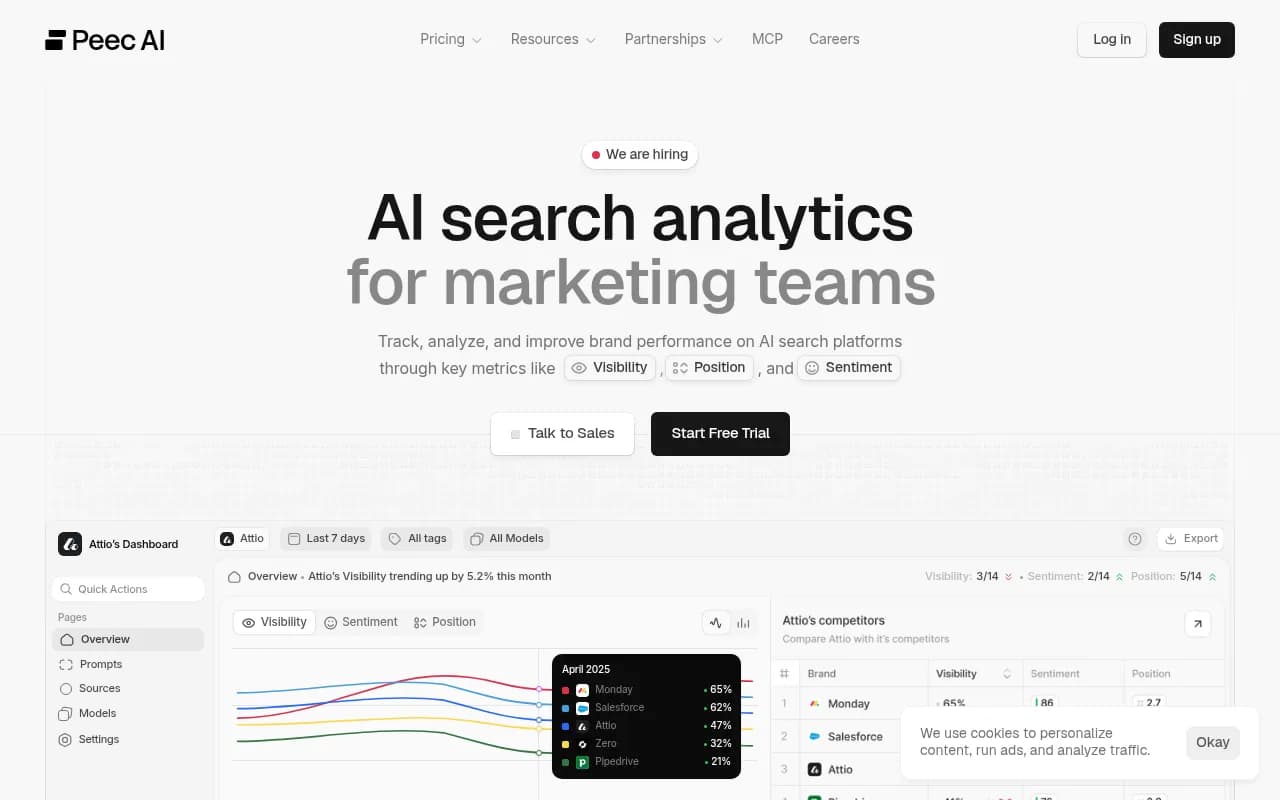
Peec AI simulates real browser sessions against the actual user interfaces of AI Mode and five other engines, which matters because what a user sees in AI Mode can differ from what an API returns. You get visibility percentages, position tracking, sentiment, and support for 115+ languages, from about $95 a month with a 14-day trial. Agencies get unlimited seats, which is rare at this price.
The catch: lower tiers only include three of six engines, and adding engines beyond your allotment costs extra, so AI Mode plus your other must-haves can push the real bill past the sticker price. Pricing also shifts between billing cycles and is reported inconsistently across review sites, so verify on peec.ai before you budget. There's no content generation or execution layer, but the tracking data itself is clean.
2. Promptwatch — the only one here that goes from tracking to fixing
Promptwatch monitors the real UI of Google AI Mode (alongside AI Overviews, ChatGPT, Claude, Gemini, Perplexity, Grok, and others) rather than relying on APIs, and it layers on things no one else in this list matches: AI crawler logs showing when Google's AI agents hit your pages and what errors they find, visitor analytics tying AI Mode visibility to actual traffic and conversions, and prompt-level volumes and difficulty scores. Its citation-share research is the same dataset cited earlier in this guide.
The execution layer is what separates it. Content gap analysis against actual AI Mode responses, automated Content Agents that write and publish GEO-optimized content to Webflow, Framer, or WordPress, and a prioritized action list derived from your visibility, citation, and crawler data. If your AI Mode problem is "we're invisible and nobody has time to fix it," this is the shortest path. Pricing starts at $95/month with AI Mode tracking on all paid plans, and the Professional tier at $245/month adds state- and city-level tracking, which, given how local AI Mode answers are, is where I'd start for anything with a regional footprint.
Honest limits: the free plan only covers ChatGPT, so you can't kick the tires on AI Mode without paying, and if you only want a lightweight prompt tracker, you'd be buying more platform than you need.

3. Profound — the enterprise default
Profound tracks AI Mode alongside ten-plus platforms and brings real consumer panel data, 15M+ daily prompts, query fan-out analysis, and SOC 2 Type II plus HIPAA compliance. For Fortune 500 procurement processes and regulated industries, those compliance badges and the panel data are often the deciding factor, and nothing else here matches them.
The cost of that is literal: plans start at $499/month, there's no free trial, and you'll likely go through a sales process. Query fanout analysis is genuinely useful for AI Mode specifically, since fan-out queries are core to how it retrieves sources, but if you're a 20-person SaaS company, this is more tool than you need.
4. Scrunch AI — best for agencies bridging SEO and AI search
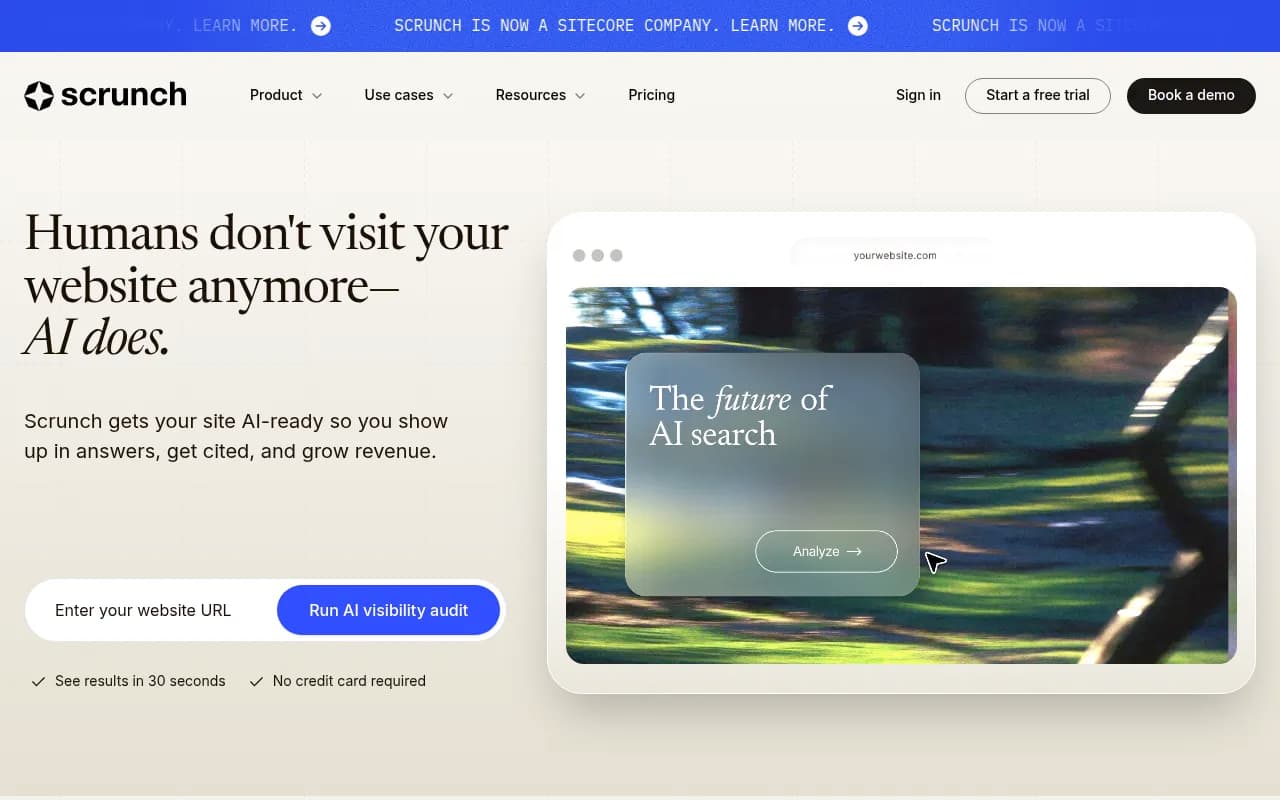
Scrunch tracks AI Mode among nine platforms and refreshes daily. Its differentiator is GA4 integration, so you can connect AI visibility data to what users actually did on your site afterward, plus an Agent Experience Platform aimed at feeding AI-optimized content into the surfaces that cite you. With $26M in funding and 500+ brands, it's a safe middle-market pick at $250/month.
It leans monitoring-heavy, and the content side is less mature than dedicated content platforms. For agencies managing multi-client portfolios coming from traditional SEO, the GA4 bridge is the practical selling point.
5. Otterly.AI — the cheapest way to start
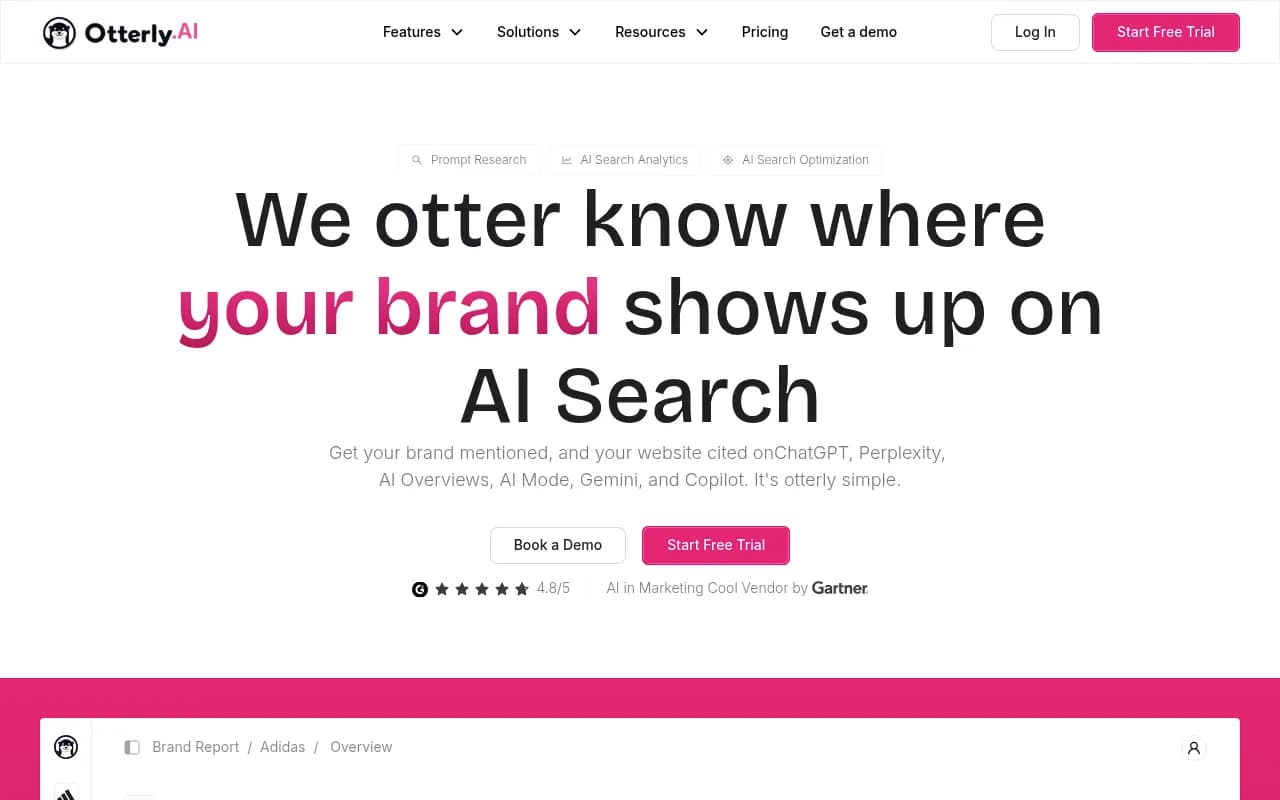
At $29/month, Otterly is the lowest-commitment entry into AI Mode tracking, with a GEO Audit across 25+ factors and solid multi-country support. The caution: AI Mode coverage depends on your plan tier, and on lower plans Google AI Mode and Gemini sit behind paid add-ons, so the advertised price and the price for what you actually came for can differ. There's a 14-day trial, and for a solo marketer or small team wanting a baseline before committing, it does the job. Just don't expect visitor analytics, crawler logs, or content tooling.
6. Semrush AI Visibility Toolkit — best if you already live in Semrush
Semrush added AI Mode to its AI visibility scoring alongside ChatGPT, Perplexity, Gemini, and AI Overviews, with 261M+ analyzed prompts, daily updates, and a 0-100 visibility score across 15 regions. At $99/month standalone per domain (or bundled into Semrush One from $199/month), it's the path of least resistance if your team already works there, and the Site Audit checks for AI crawler accessibility are a nice touch.
The limitation is inherited from the whole traditional-SEO-suite approach: fixed prompt sets, shallow AI-specific depth, no crawler logs, and no AI traffic attribution. Fine as a workflow convenience, thin as your only AI Mode intelligence.
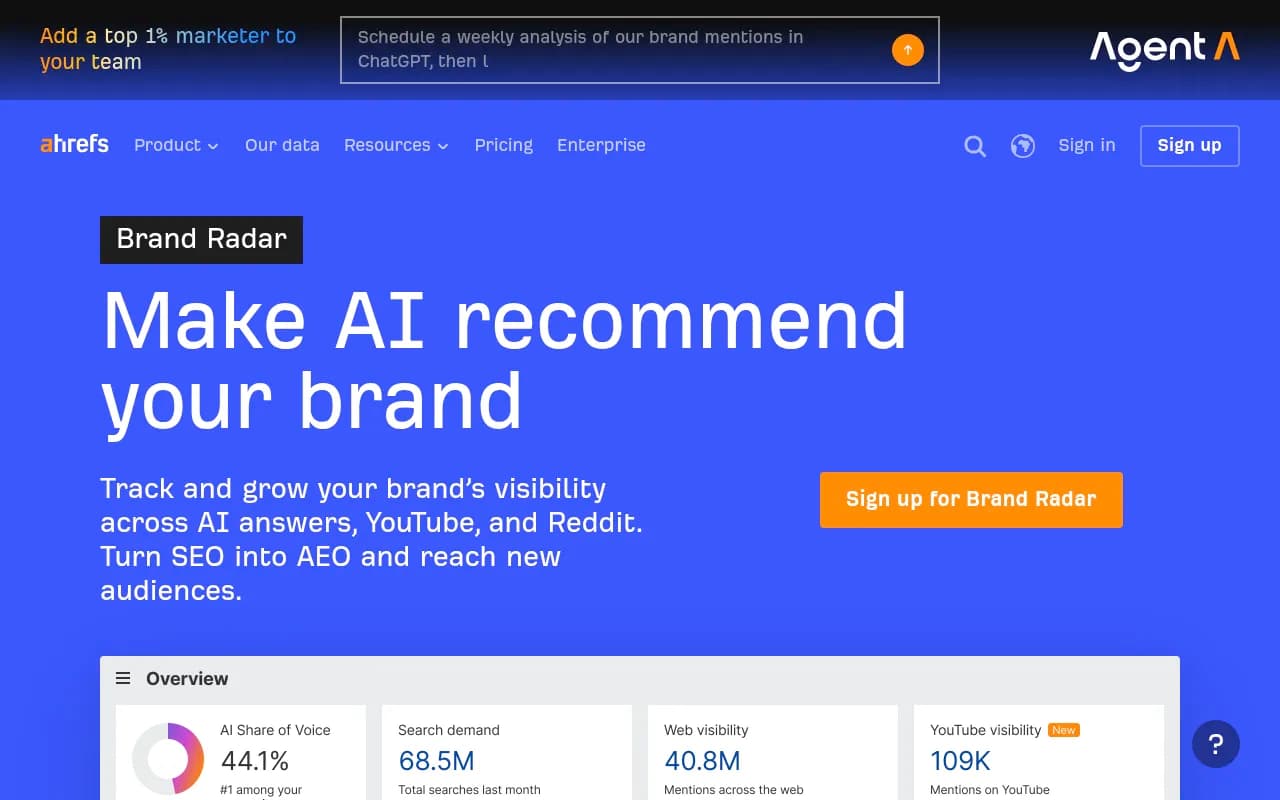
7. Ahrefs Brand Radar — powerful, expensive, best for Ahrefs loyalists
Brand Radar tracks AI Mode among six platforms with a 243M+ prompt database and standout YouTube and Reddit visibility tracking, which matters given both channels' citation weight in AI Mode. The pricing structure is the story: $199/month per AI platform or $699/month for all platforms on top of a base Ahrefs plan, landing around $828/month all-in, with no free trial. If your company already pays for Ahrefs and cares deeply about AI Overviews and video visibility, it's defensible. For everyone else, it's hard to justify on AI Mode tracking alone.
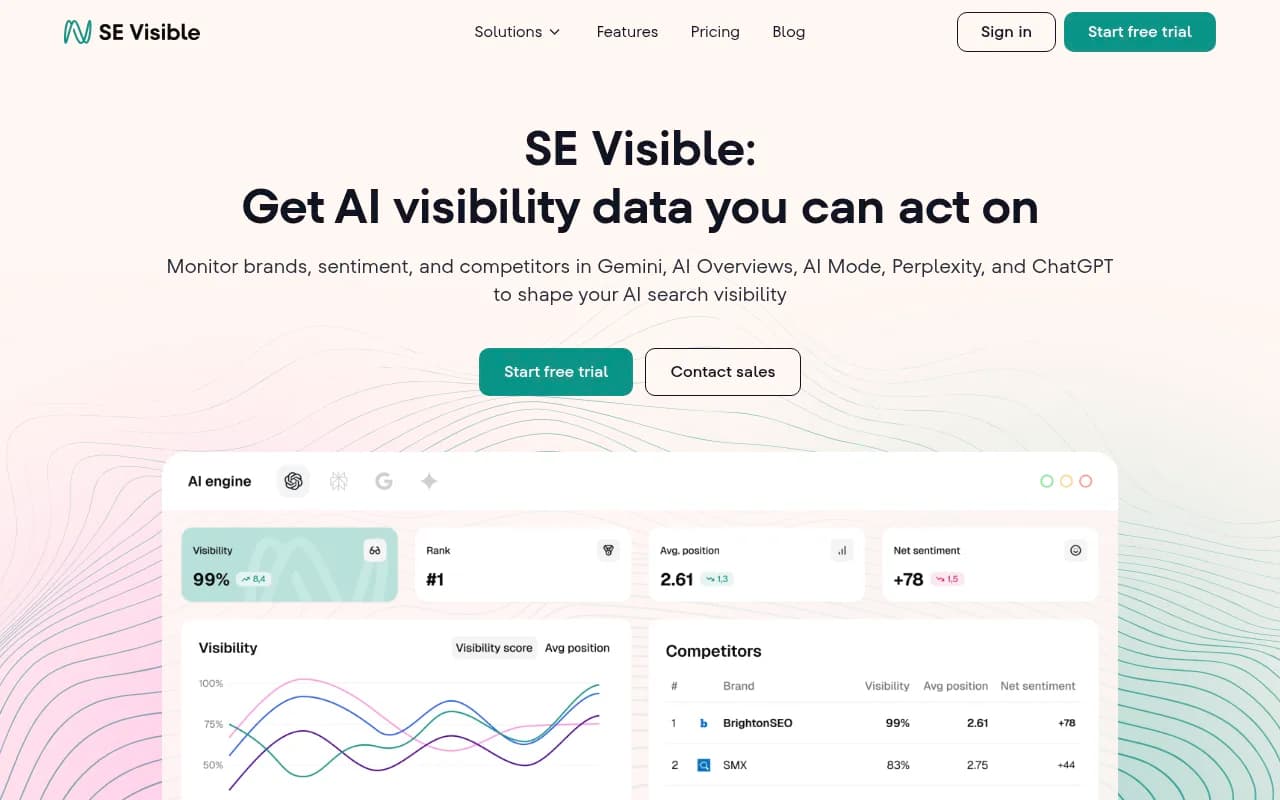
8. SE Ranking — AI Mode tracking bolted onto classic rank tracking
SE Ranking's AI tracker covers AI Mode with URL-level citation mapping and daily updates, integrated with its traditional rank tracking workflow. That integration is the point: watch your classic rankings and AI Mode citations side by side, which given the 14% overlap between them is more instructive than either alone. The catch is that AI Mode tracking is an add-on requiring a base SE Ranking subscription, so realistic total cost lands around $129+/month. No free trial on the add-on, and no built-in action layer.
Worth a quick look
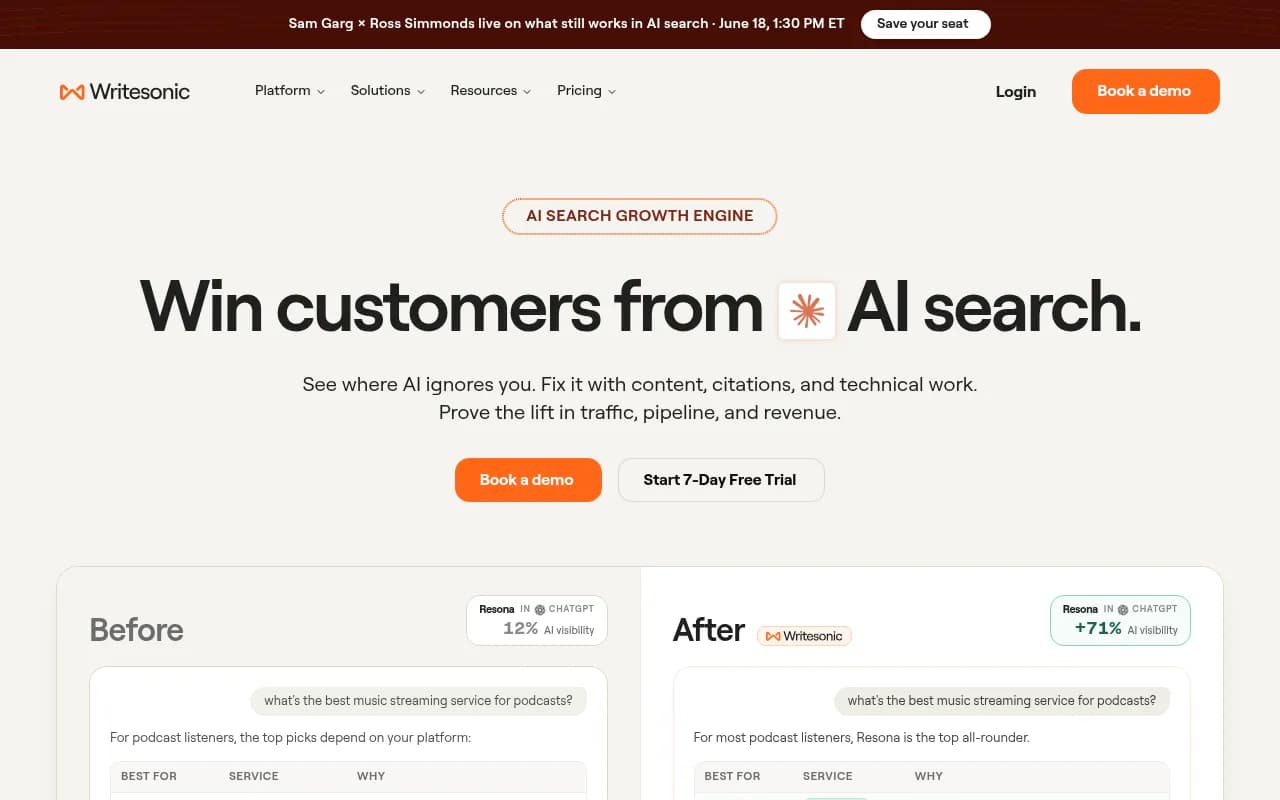
Writesonic GEO starts at $49/month with AI Mode in the base plan plus content generation, making it the cheapest combined track-and-create option, though the tracking is lighter than dedicated platforms. AirOps takes the content side further with autonomous optimization agents across eight platforms including AI Mode, and its free Solo plan is a low-risk way to test the workflow-first approach. And if you want a broader survey beyond this list, the GEO software directory at bestgeosoftware.com and the AI rank tracker directory at ai-rank-tools.com both maintain current categories for exactly this niche.
Comparison table
| Tool | AI Mode in base plan | Also tracks | Execution layer | Starting price | Best for |
|---|---|---|---|---|---|
| Peec AI | Yes (engine allotment applies) | ChatGPT, AI Overviews, Perplexity, Gemini, Claude | No | ~$95/mo | Clean UI-based tracking on a budget |
| Promptwatch | Yes, all paid plans | 10+ engines incl. AI Overviews, ChatGPT, Claude, Grok, DeepSeek | Yes: content agents, CMS publishing, unified actions | $95/mo | Teams that want tracking and fixing in one place |
| Profound | Yes | 10+ platforms, consumer panel data | Partial (agent analytics) | $499/mo | Enterprise, regulated industries |
| Scrunch AI | Yes | 8 other platforms | Partial (AXP) | $250/mo | Agencies, GA4 integration |
| Otterly.AI | Add-on on lower tiers | ChatGPT, AI Overviews, Perplexity, Copilot, Gemini | No | $29/mo (+ add-ons) | Cheapest baseline |
| Semrush AI Toolkit | Yes | ChatGPT, Perplexity, Gemini, AI Overviews | No | $99/mo/domain | Existing Semrush users |
| Ahrefs Brand Radar | Yes (bundle pricing) | 5 other platforms, YouTube/Reddit depth | No | ~$828/mo all-in | Ahrefs loyalists, video visibility |
| SE Ranking | Add-on, base plan required | ChatGPT, Perplexity, Gemini, AI Overviews, classic SERPs | No | ~$129/mo total | Bundled with traditional rank tracking |
| Writesonic GEO | Yes | ChatGPT, Perplexity, Gemini | Yes (content generation) | $49/mo | Cheapest track-plus-create option |
How to verify a tool is actually tracking AI Mode
This category has a labeling problem. AI Overviews data sometimes gets sold as AI Mode tracking, and some tools quietly fall back to classic SERP positions when they can't trigger AI Mode responses. Before you commit to an annual plan:
- Run the same 20 prompts across two or three countries in each candidate tool. If citations don't differ by country, the geo-targeting isn't real.
- Compare raw outputs. If Tool A shows 15 of 20 prompts citing you and Tool B shows 8, Tool B is probably missing genuine AI Mode responses rather than reporting more conservative truth.
- Ask the vendor directly whether tracking runs against the live AI Mode UI or an API, and how often. Daily refresh should be the floor.
- Check whether AI Mode is in the base plan or an add-on. Several tools on this list advertise low entry prices that don't include what you came for.
A tool that fails basic checks like these is likely mislabeling AI Overviews data as AI Mode, and you'd be optimizing for the wrong surface entirely.
How to choose
Match the tool to your situation, not the feature grid:
- No dedicated content team, visibility problems nobody has time to fix: Promptwatch, because the agents do the planning, writing, and publishing rather than handing you a report.
- Data-fluent team, mid-market budget, multilingual markets: Peec AI.
- Fortune 500, procurement, compliance requirements: Profound.
- Agency with GA4-centric reporting: Scrunch AI.
- Just want to know if this matters yet: Otterly.AI at $29/month, then graduate.
- Already paying for Semrush or Ahrefs: use what's included before buying anything new.
Whatever you pick, treat AI Mode tracking as continuous monitoring, not a quarterly audit. Between Google's own properties eating a growing share of citations, the pending AI Overviews merge, and answer volatility that invalidates snapshots within a day, the teams that win here will be the ones watching the surface weekly and shipping fixes against it, not the ones with the prettiest one-time visibility report.