Key takeaways
- A lot of GEO tools publish a headline price that quietly explodes once you add Claude, Gemini, or Google AI Mode coverage. Otterly.AI's $29/mo plan can reach $638/mo in a realistic multi-engine setup.
- Profound pulled its public brand pricing entirely in September 2026. If a vendor won't show you a number, budget for a sales call and a markup.
- Credit-based billing (AthenaHQ, Rankscale, Peec AI's agency tiers) is the single biggest source of surprise invoices in this category, because usage spikes without warning.
- Flat, published tiers with no top-ups (Ahrefs's prompt packages, ZipTie's calculator, Promptwatch's response-based plans) are the safest bet if you need to forecast spend.
- Ahrefs Brand Radar looks cheap until you realize it's an add-on: base plan plus $199/mo per AI index, or $699/mo for the full bundle, on top of a $129/mo Ahrefs subscription.
Why GEO pricing got so messy
I've spent a chunk of this year reading pricing pages for AI visibility tools, and the pattern is consistent: whoever writes these pages wants you to see a small number first. Then you scroll. Then you find the credits, the per-engine surcharges, the "contact sales" button hiding where a price should be.
Part of this is structural. Every time you ask a GEO tool to check whether your brand shows up in ChatGPT, Gemini, Perplexity, and Google AI Overviews, that's four separate API calls or UI simulations, not one search query. Vendors have to meter something. The honest ones meter it in a way you can predict. The less honest ones meter it in a way that keeps you guessing until the invoice arrives.
This matters more in GEO than in traditional rank tracking because the stakes are higher and the space is newer. Google AI Overviews cite roughly ten sources per answer, Perplexity cites almost exactly ten every time, but ChatGPT only cites about five sources per web-search response, according to Promptwatch's data on average sources per response. That scarcity is why ChatGPT citations get contested so hard, and why vendors know brands will pay almost anything to get visibility there. Scarcity plus desperation is a bad combination for pricing transparency.

What "transparent pricing" actually means for a GEO tool
Before ranking anything, it's worth being specific about what we're screening for, because "transparent" gets thrown around loosely in this market. I used four criteria:
- Every tier has a dollar (or euro) figure on the public pricing page, not just the entry tier.
- Overage costs, if they exist, are published in advance rather than negotiated after you've already blown through your quota.
- Multi-engine coverage (ChatGPT, Gemini, Claude, Perplexity, Google AI Mode) is either included or priced as a clearly stated add-on, not bundled into vague "custom" language.
- No credit system that lets usage spike unpredictably without a hard ceiling.
A tool can fail one of these and still be reasonably honest. It's when a vendor fails two or three that you end up with an invoice that doesn't match what you thought you signed up for.
The tools that actually tell you what you'll pay
Ahrefs (core plans, not Brand Radar)
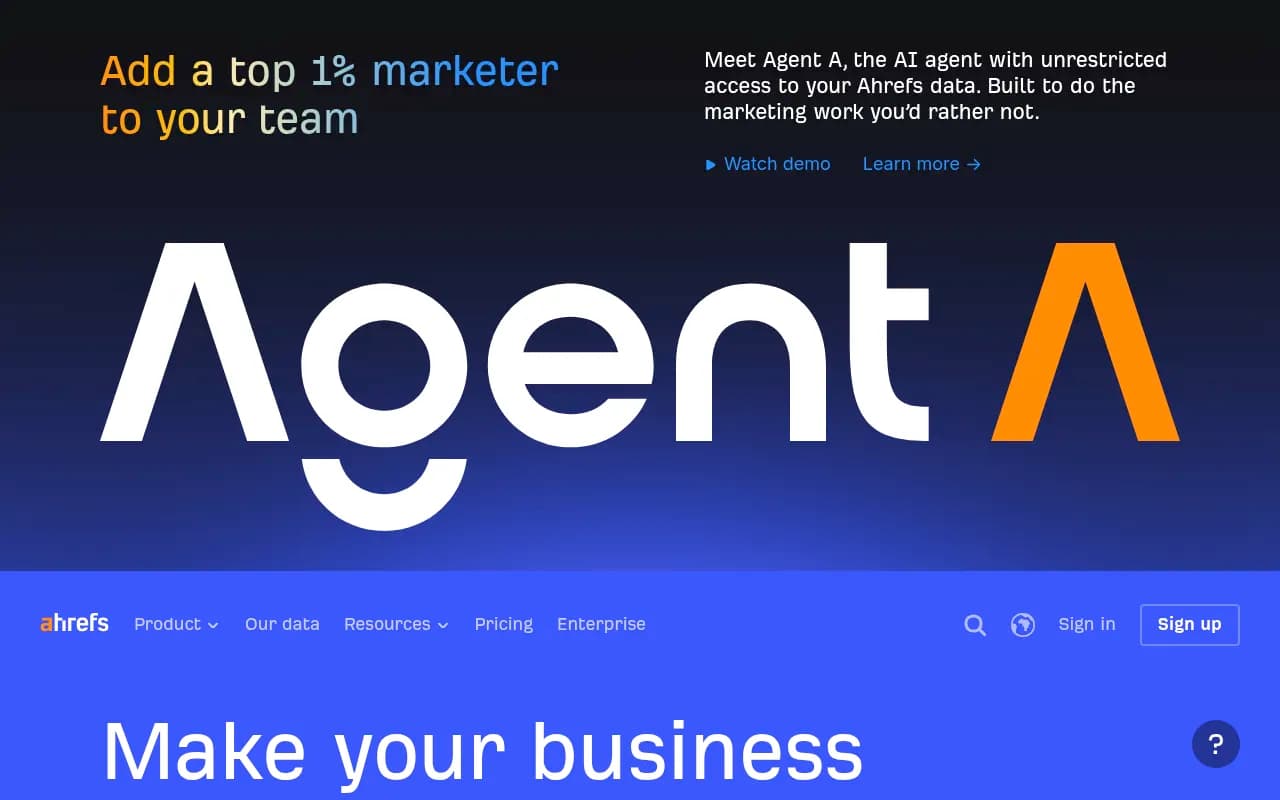
Ahrefs states outright in its FAQ that it never runs discounts and has no contracts or setup fees. The useful part for GEO buyers is the custom prompt packages: a $50/mo add-on gets you 2,500 extra checks with a published overage rate of $0.020 per check once you exceed it. The $100 and $250 packages scale the same way, with the per-check rate dropping as you commit to more volume. You know the ceiling before you hit it.
ZipTie
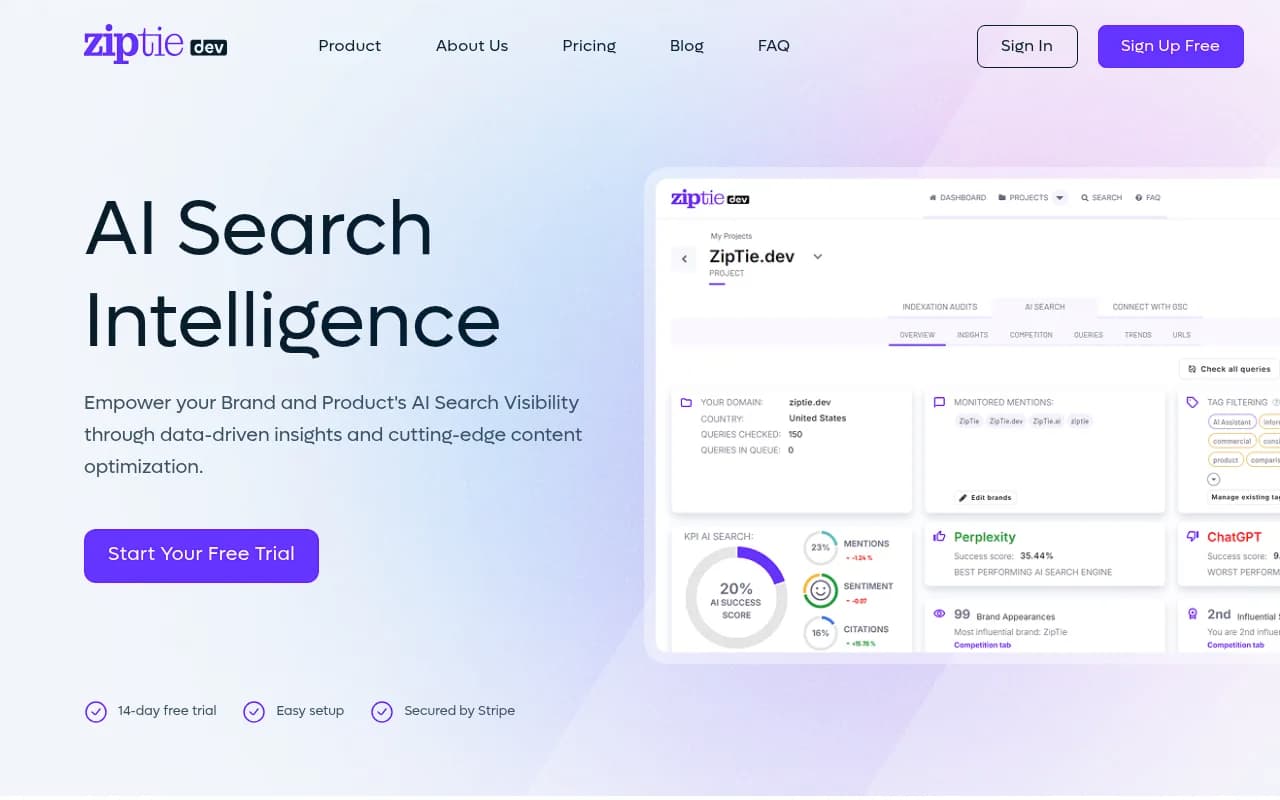
ZipTie's pricing page is refreshingly blunt: "There are no credit packs, top-ups, or overage charges to buy. If you need more room, you change the plan." Billing runs on a straightforward per-prompt, per-engine calculator, roughly a cent per check. Seats, projects, and tracked competitors are unlimited with no per-user fee, which matters if you're running this across a marketing team rather than one analyst's login.
Otterly.AI
Otterly publishes its full ladder: Lite at $29/mo, Standard at $189/mo, Premium at $489/mo, with prompts and GEO audits itemized at each tier. Extra prompts are sold in explicit 100-packs at $99/mo, and engine add-ons are priced line by line, Google AI Mode and Gemini run $9 to $149/mo depending on your base tier, Claude runs $29 to $439/mo. Everything is on the page. The catch, and it's a real one, is that a fully loaded multi-engine setup on the Premium plan can land north of $600/mo. That's not hidden, exactly, but it does mean the $29 headline price is close to meaningless for anyone doing serious multi-model tracking.

Promptwatch
Promptwatch's pricing runs on flat monthly tiers measured in prompts and responses rather than a credit system that can spike unpredictably. Essential starts at $95/mo for 50 prompts and 6,000 responses across every major model Promptwatch tracks, ChatGPT, Gemini, Claude, Perplexity, Grok, DeepSeek, Copilot, and Google's AI Overviews and AI Mode, with no per-engine surcharge layered on top. Professional runs $245/mo with 150 prompts and 18,000 responses, and Business is $579/mo for 350 prompts and 42,000 responses. Agency plans start at $199/mo with unlimited projects and prompts, which avoids the per-client-workspace markup that trips up a lot of agency buyers on other platforms.
What matters here isn't just that the numbers are published, it's that multi-model coverage isn't an upsell. You're not paying extra to add Claude after you've already committed to ChatGPT tracking. The platform also goes past pure monitoring into actually doing something about low visibility, crawler logs that show why AI bots aren't citing you, content gap analysis, and automated content generation that publishes straight to your CMS, which most of the tools on this list don't attempt at all.
AthenaHQ (with a caveat)
AthenaHQ's free Essential tier is genuinely free, 300 credits a month across five models, no credit card required. The paid Starter tier is published at $295/mo. But one reviewer flagged a marketing claim of a "17% annual discount down to $95/mo effective" as misleading, the real effective price lands closer to $245/mo. That's the kind of thing that makes a vendor's own marketing page less trustworthy than its actual billing terms, so read the fine print before you sign an annual contract based on the discount banner.

The tools where the sticker price is a trap
Profound
As of late September 2026, Profound pulled its self-serve brand pricing entirely. The public page now shows only a free 7-day trial and a fully custom enterprise quote, no dollar figure for brands at all. For months before that, the pricing bounced around, unpriced until June 10, priced at $99 Starter and $399 Growth the next day, then pulled again in mid-September. A lot of comparison articles still quote those old numbers because they haven't been updated. If you're evaluating Profound right now, assume you'll be on a sales call, and assume the quote won't match whatever number you read in a blog post from earlier this year.

Ahrefs Brand Radar
This is the add-on version of Ahrefs, and it's a different animal from the core plans above. You need a base Ahrefs subscription starting at $129/mo, then $199/mo per individual AI index you want tracked, or $699/mo for all six platforms bundled. Full coverage realistically runs $828/mo minimum, and it's priced per domain, so an agency tracking ten client sites could be looking at $8,000+/mo. It's currently free during beta, but Ahrefs has signaled this becomes a paid add-on, so budget for it now rather than being surprised later.

Rankscale
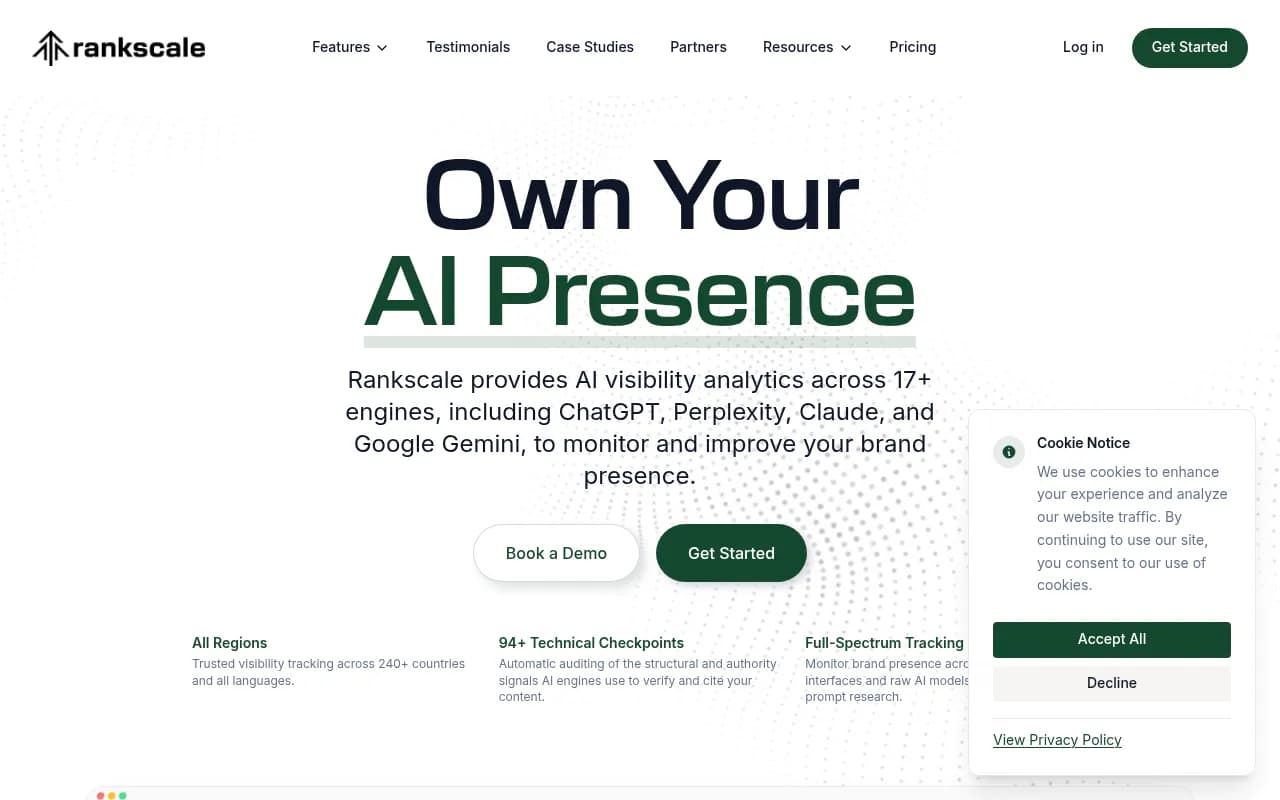
Rankscale runs on a credit system where each engine query burns a fraction of a credit, and reviewers consistently flag the same problem: heavy users top up constantly, and the total monthly cost becomes hard to predict even though the base tiers ($20 to $780/mo) are published.
Semrush AI Visibility Toolkit
Semrush charges $99/mo per domain with no free trial, and that base tier only includes 25 prompts and 10 CSV exports a day. Extra domains are another $99 each, extra prompts cost $60 per 50-prompt block. It adds up fast if you're tracking more than one property.
Side-by-side comparison
| Tool | Entry price | Multi-engine cost | Billing model | Transparency verdict |
|---|---|---|---|---|
| Promptwatch | $95/mo | Included, all major models | Flat tier, prompts/responses | Published, no per-engine upsell |
| Ahrefs (core) | Add-on from $50/mo | Published per-check overage | Prepaid packages | Fully published |
| ZipTie | ~$0.01/check | Usage-based, no top-ups | Pay-per-check calculator | Fully published |
| Otterly.AI | $29/mo | $9-$439/mo per engine | Tiers plus add-ons | Published, but headline price misleading |
| AthenaHQ | Free or $295/mo | Add-on credits | Credit-based | Published tiers, marketing claims need checking |
| Rankscale | $20/mo | Credit top-ups | Fractional credits | Published tiers, unpredictable overages |
| Profound | No public brand price | N/A | Custom quote | Not transparent |
| Ahrefs Brand Radar | $129 + $199-$699/mo | Per AI index | Add-on to base plan | Published but layered, expensive at scale |
| Semrush AI Visibility | $99/mo per domain | $60 per 50 prompts | Per-domain tiers | Published but narrow default quota |
What to ask before you sign anything
A few questions cut through most of the marketing noise fast. Ask the vendor directly: what happens if I go over my prompt or credit allowance this month, is there a hard stop or an automatic overage charge? Is every engine I need (ChatGPT, Gemini, Claude, Perplexity, Google AI Mode) included in the quoted price, or is each one a separate line item? If I'm an agency, does adding a tenth client multiply my cost by ten, or is there an unlimited-seat option?
If the answer to any of those requires a follow-up email instead of a line on the pricing page, that's your answer about how transparent the tool really is.
The bigger pricing context
Across the self-serve GEO market, monthly costs for DIY tools typically land somewhere between $10 and $1,000, depending on scope. Agency-run GEO programs run from roughly $1,500 to $50,000 a month, and full enterprise engagements, the kind BrightEdge and similar platforms sell without any public pricing at all, routinely start at $25,000/month. If you're a solo marketer or small team evaluating a $95 or $245 monthly tier, you're nowhere near that enterprise budget, which is exactly why the tools in this guide matter: paying $95/mo for Promptwatch's Essential plan or a few hundred dollars for Ahrefs prompt packages gets you real multi-model coverage without the custom-quote runaround.
One warning that applies regardless of which tool you pick: a dashboard that tells you you're invisible in ChatGPT doesn't fix anything by itself. The actual work, content that earns citations, schema that helps crawlers parse your pages, outreach that gets you mentioned on pages AI already trusts, is a separate budget line from the monitoring subscription. Plenty of brands buy the measurement tool and then never fund the content work that would move the needle. If you want a wider view of what's out there before committing, the GEO software directory at bestgeosoftware.com and the AI rank tracking comparisons at ai-rank-tools.com are both worth a browse.
And if what you actually need is someone to do the content and technical work rather than just measure it, that's a different conversation. 1001 SEO Media runs GEO and AI-search optimization programs that pair visibility data with actual content production and technical fixes, rather than leaving you with a dashboard and a to-do list you have to execute yourself.