Key takeaways
- Google has two AI surfaces, AI Overviews and AI Mode. They use different retrieval and often name different brands for the same question, so a tool that merges them into one number hides problems.
- Several tools gate AI Mode behind higher plans or add-ons. Check the plan picker, not the marketing page, before you buy.
- Prices below come from vendor pages and third-party roundups published in October and November 2026. Verify them before purchasing, because several change often.
- Tracking is only half the job. If you also want to fix gaps (content, crawler access, traffic attribution), pick a platform that goes beyond dashboards.
- Compare runs inside one tool. The same 10 prompts return different numbers in different trackers, so switching tools mid-project breaks your trend line.
Why Google needs its own tracking
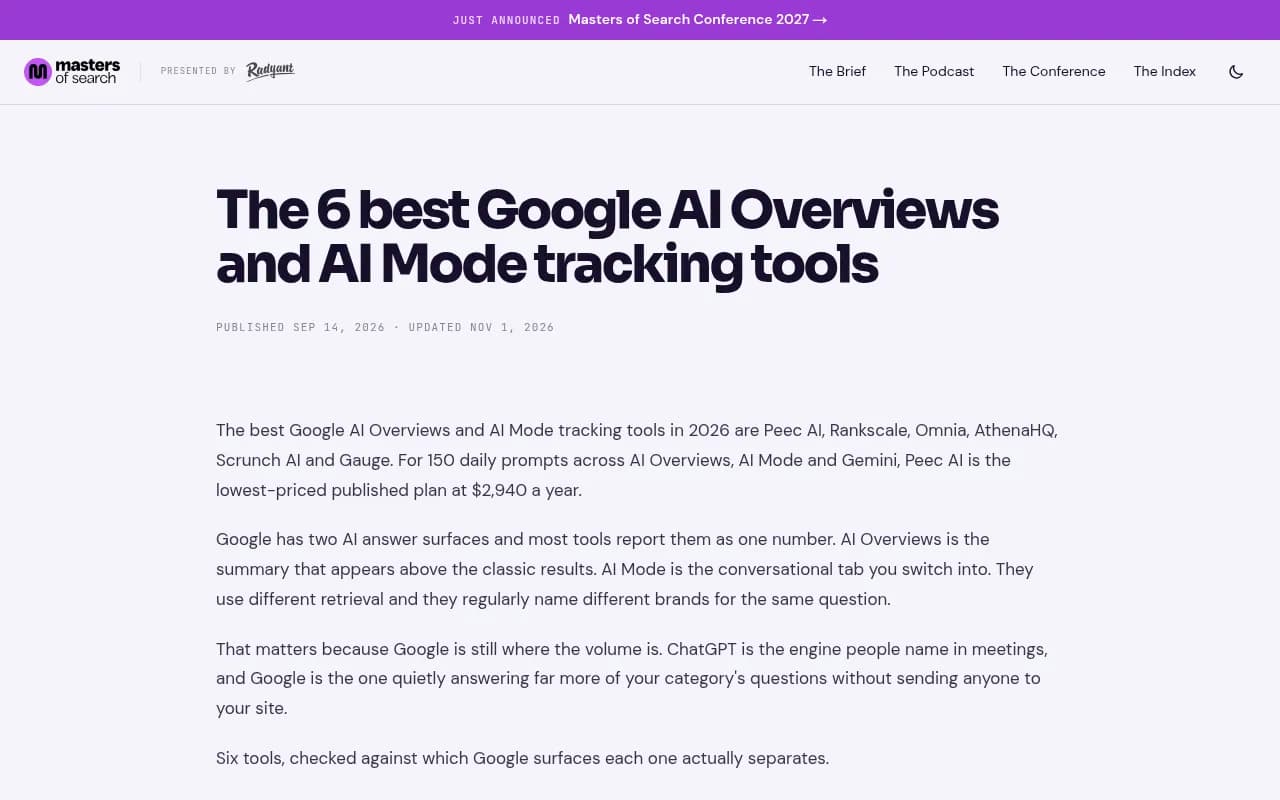
It is tempting to treat Google as one more engine on a list next to ChatGPT and Perplexity. That is a mistake. AI Overviews is the summary that sits above classic results. AI Mode is the conversational tab people switch into. Masters of Search points out that they use different retrieval and regularly name different brands for the same query.
The citation mix differs too. In Promptwatch Data's Google AI Mode citation share report (May 31 to Jun 26, 2026), google.com alone made up 7.31% of AI Mode citations, more than YouTube (2.88%) and Reddit (2.52%) combined. No independent website in that list cleared 1%. In AI Overviews the format picture is different: Promptwatch's July 2026 citation type data shows listicles averaged 18.0%, product pages 16.3% and how-tos 15.1%, with product pages becoming the most cited format every day from July 28.
So what should a tracker do? At minimum it should:
- Report AI Overviews and AI Mode as separate engines.
- Store the full answer and the cited sources, not just a yes/no mention flag.
- Let you set country and language, since AI Overviews are region-specific.
- Run on a schedule you control, because Google answers shift from day to day.
Quick comparison
| Tool | AI Mode | AI Overviews | Entry price (published) | Best for |
|---|---|---|---|---|
| Promptwatch | Yes, real UI collection | Yes, region-specific | Essential $95/mo, Professional $245/mo, Business $579/mo | Teams that want to track and fix |
| SE Visible | Every plan, separate engine | Every plan | From $71/mo billed annually ($89 monthly) | Daily checks at a published price |
| Peec AI | Choose from 3 models | Yes | $95/mo (50 prompts) | In-house teams that pick their models |
| Rankscale | Yes | Yes | Pro $99/mo; one roundup lists $17/mo billed yearly | Tight budgets |
| ZipTie | Yes | Yes (also stores top 10 organic) | 7-day trial, 25 daily prompts | Content strategists |
| Ahrefs Brand Radar | Yes | Yes | Paid Ahrefs plans; custom prompt packs from $50/mo | Existing Ahrefs users |
| Semrush AI Visibility | Yes | Yes | $99/mo per domain (25 prompts) | Existing Semrush users |
| LLM Pulse | Base plan | Yes | EUR 49/mo (50 prompts, weekly) | Small teams |
| Otterly.AI | $9/mo add-on on Lite | Yes | $29/mo (15 prompts) | Adding engines one at a time |
| Scrunch AI | Enterprise only | Core plan | Core $250/mo (125 prompts) | Large brand teams |
| Profound | Enterprise | Yes | Free 7-day plan lists 3 engines without AI Mode | Large marketing teams |
Promptwatch: track Google surfaces and act on what you find
Promptwatch monitors the real interfaces of Google AI Overviews and Google AI Mode, in each country and language you choose, rather than relying on API outputs that can differ from what users see. Monitors are panels of prompts with a fixed location, so markets never mix. Prompts run daily on every plan, and Business adds 12, 6 or 1-hour runs plus state and city tracking. For local queries you can pin a monitor to exact coordinates so AI Overviews and AI Mode answer as if asked from that spot.

What sets it apart from pure trackers is what happens after the data lands. Citation data shows which of your pages get cited and where they sit in the source list. IP-verified AI crawler logs show whether bots can read a page at all, which separates an access problem from a content problem. The Action Board turns gaps into a prioritized to-do list, and on Business the Content Agent writes and publishes pages to WordPress, Webflow or Framer. Visitor analytics then show whether those pages send traffic.
Pricing is Essential at $95/mo (50 prompts), Professional at $245/mo (150 prompts) and Business at $579/mo (350 prompts). Agencies have Kick-off at $199/mo, Growth at $399/mo and Scale at $799/mo. Confirm current numbers at promptwatch.com/pricing. There is a 7-day free trial on monthly billing, and a free AI visibility report if you only want a first look. For head-to-head detail, see Promptwatch vs Peec and Promptwatch vs Profound.
Honest caveat: if all you want is a cheap weekly mention check on a handful of prompts, Promptwatch is more platform than you need.
Peec AI
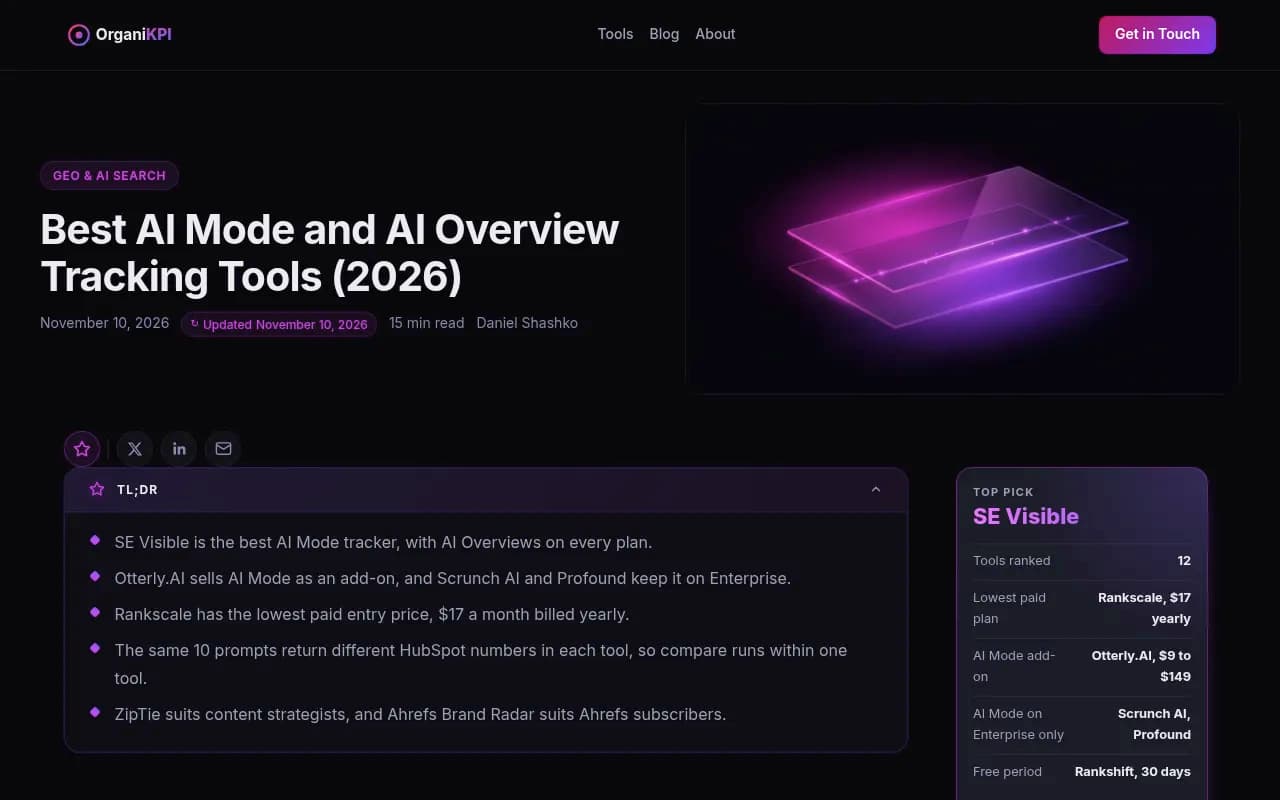
Peec AI tracks Google as three separate surfaces: AI Overviews, AI Mode and the Gemini interface. That separation is the main reason it tops the Masters of Search shortlist, because you can see which surface is failing. The Starter plan is $95/mo for 50 prompts and Pro is $245/mo for 150 prompts. In Masters of Search's pricing exercise, 150 daily prompts across all three Google surfaces cost $2,940 a year on Peec, the lowest published plan for that workload.

It is a clean monitoring tool. It does not give you crawler logs or content generation, so you will pair it with other tools for the fixing side.
SE Visible
SE Ranking's SE Visible tracks AI Mode and AI Overviews as separate engines on Basic, Core and Agency, next to ChatGPT, Gemini and Copilot. Organikpi's test with HubSpot on 10 CRM prompts showed 53% visibility and average position 2.8 in AI Mode, against 19% visibility and position 2 in AI Overviews. Same brand, same prompts, very different picture. That one example is the best argument for separate tracking I have seen.
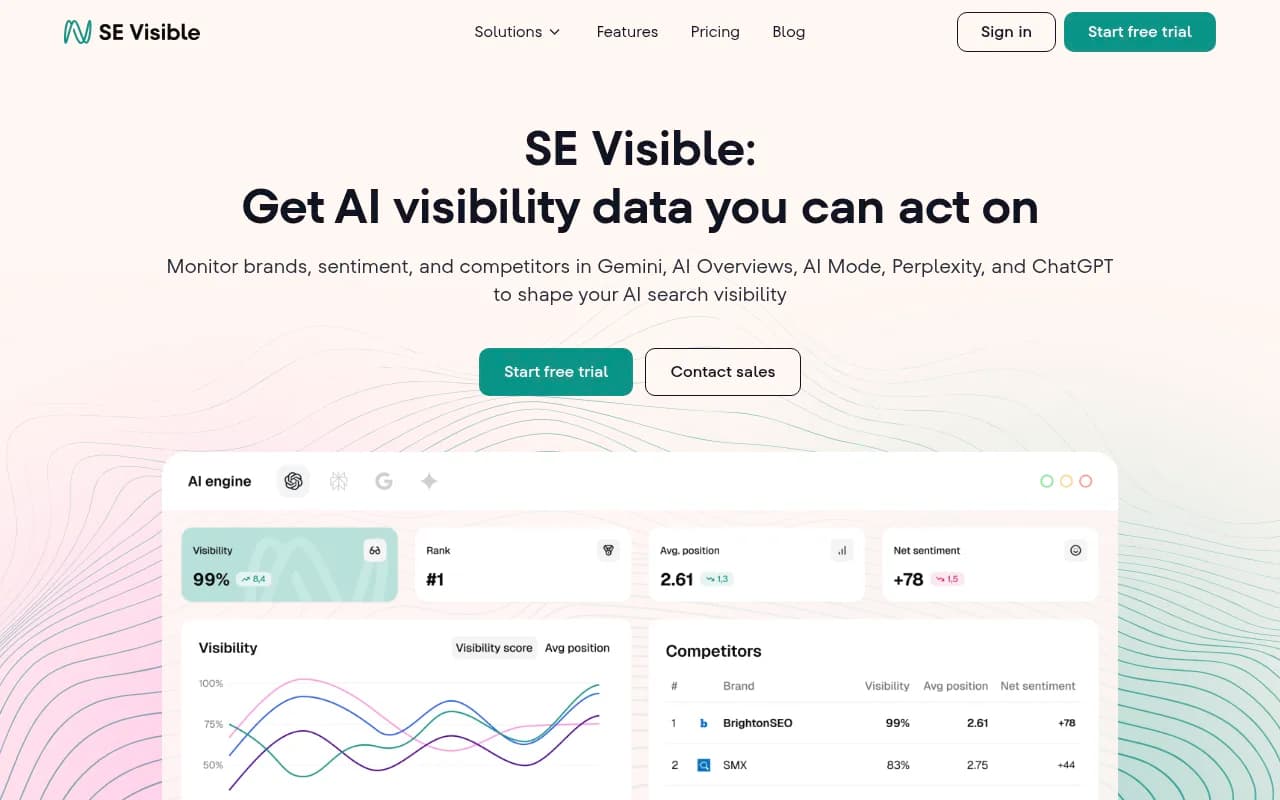
It starts at $71/mo billed annually and checks daily. Agency plans include 1,000 prompts.
Rankscale
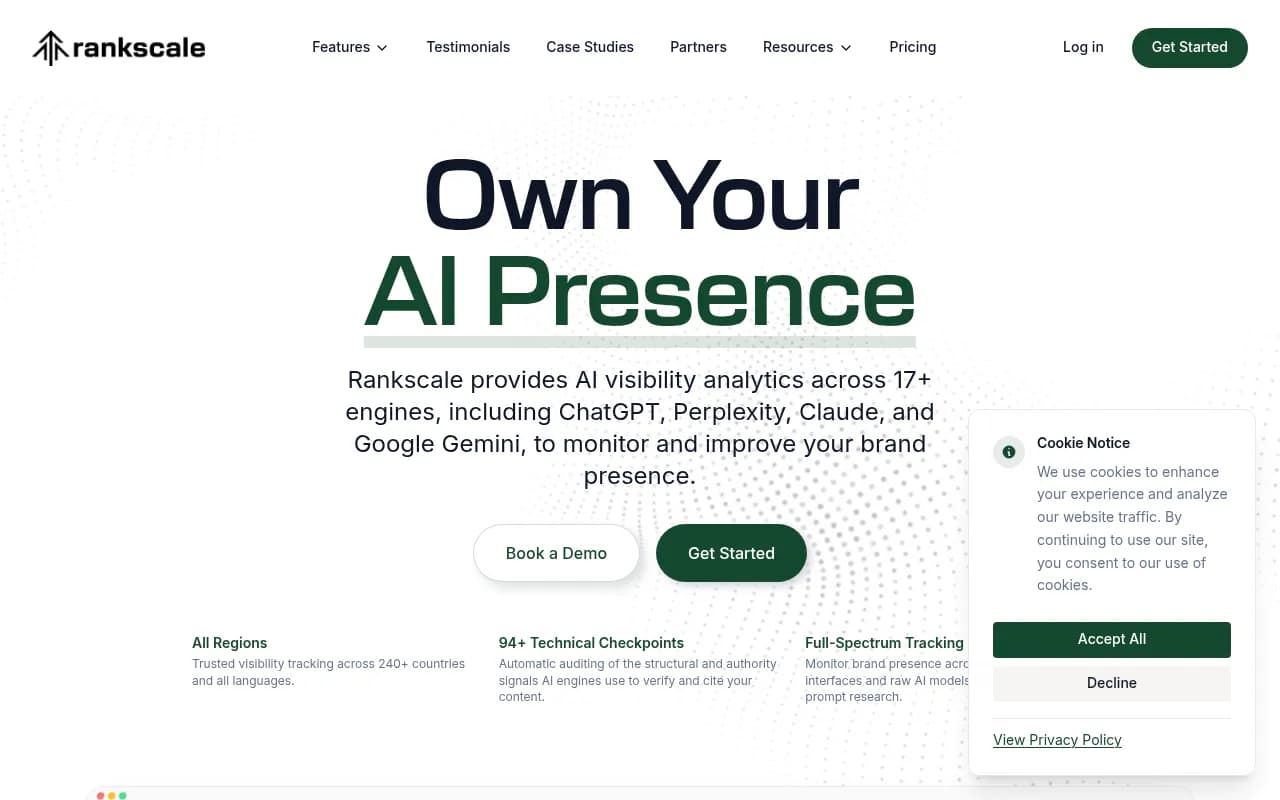
Rankscale is the budget option. Masters of Search lists Pro at $99/mo, Pro+ at $229 and Growth at $385. Organikpi cites a $17/mo entry price billed yearly, so the plan structure has clearly moved around. Check the live page. Budget plans usually cover one or two Google surfaces, so confirm both are included before committing.
ZipTie
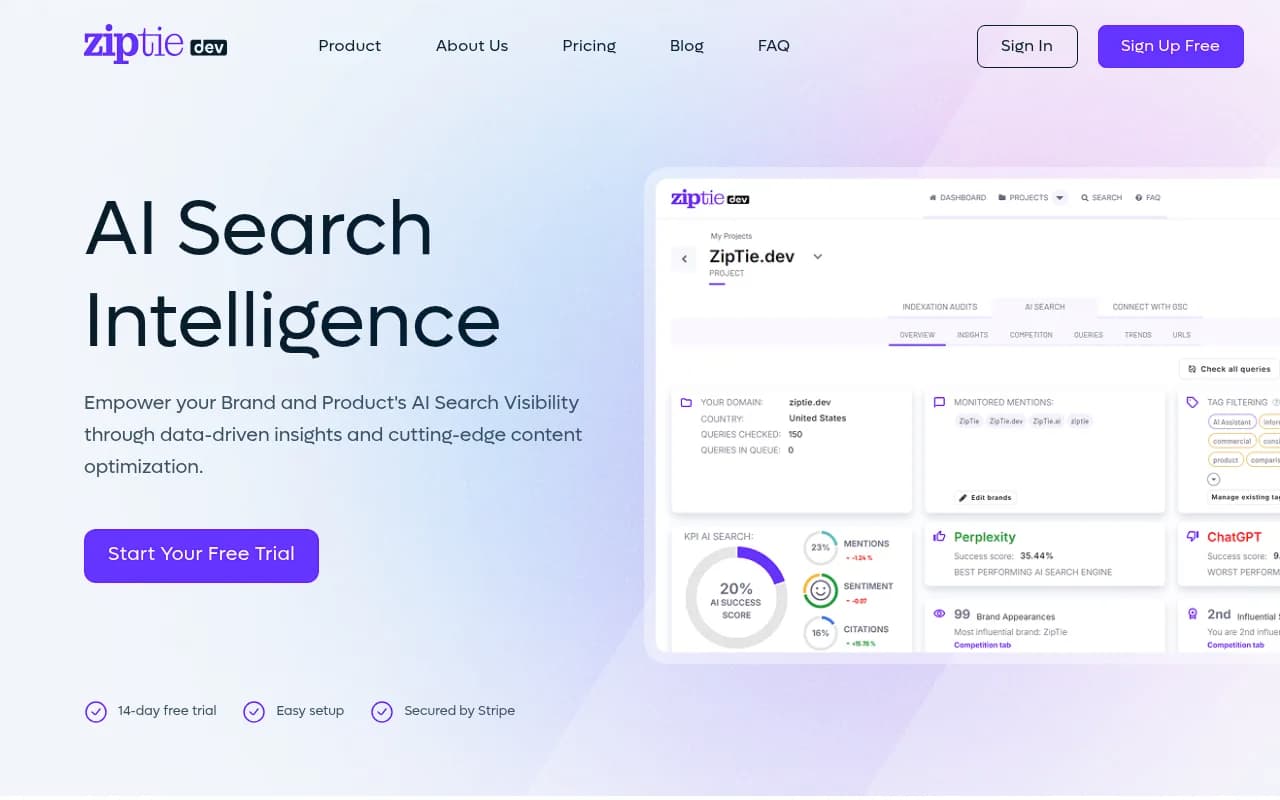
ZipTie runs each prompt on each engine and stores the full answer with numbered sources. AI Overviews checks also capture the top 10 organic results, which is handy when you want to know whether you rank classically but get skipped by the AI summary. It offers 7 days free with 25 daily prompts across ChatGPT, AI Overviews and AI Mode, no card required. Content strategists who like reading the actual stored answer will enjoy it.
Ahrefs Brand Radar and Semrush AI Visibility
If you already live in one of these suites, the add-on route is reasonable. Ahrefs Brand Radar has prompt-based indexes for ChatGPT, Perplexity, Gemini, Copilot, AI Overviews and AI Mode, plus search-query-based indexes that follow keywords triggering AI answers in Google. Lite ($129/month) includes 5 tracked prompts (150 checks a month), and custom prompt packages start at $50 a month for 2,500 checks.

Semrush's AI Visibility Toolkit starts at $99 a month per domain for 25 prompts, and its Prompt Tracking covers Google AI Mode, ChatGPT Search and Gemini with a Sources report of every cited URL. Twenty-five prompts goes quickly, so it suits a narrow first test.
Both are fine if you value one login. The tradeoff is fixed prompt sets and shallower AI-specific data than dedicated platforms.
LLM Pulse and Otterly.AI
LLM Pulse runs saved prompts on a recurring schedule across ChatGPT, Perplexity, Gemini, AI Mode and AI Overviews. At EUR 49/mo for 50 prompts tracked weekly, AI Mode comes in the base plan, which is unusual at that price. Weekly tracking is the catch if you need daily movement.

Otterly.AI is the pay-as-you-add option: $29/mo for 15 prompts, with AI Mode as a $9/mo add-on on Lite. Cheap, but the add-ons stack up.

Scrunch AI, Profound, AthenaHQ, Omnia and Gauge
The enterprise-leaning group has the most plan gating. Organikpi's November 2026 screenshot shows Scrunch AI's platform picker with Google AI Mode greyed out as not available on the plan. Core is $250/mo for 125 prompts on ChatGPT, Perplexity, Google AIO and Copilot, and AI Mode sits on Enterprise. Profound's free 7-day plan runs 50 prompts daily on ChatGPT, Gemini and AI Overviews only.


AthenaHQ has a free Essential tier (300 credits) so you can see your data first, with Starter at $295/mo. Omnia, based in Madrid, starts at EUR 79/mo for 25 prompts and lets you trial both Google surfaces. Gauge starts at $599/mo and also drafts fixes.

I would treat these as a second round of shortlisting. They make sense once you know you need enterprise features, not as a first purchase.
How to choose
Run through these questions before you sign up for anything.
- Does the plan you can afford include both AI Mode and AI Overviews as separate engines? Open the platform picker during the trial.
- How is the data collected? Real interface capture and parsed answer pages can differ from API calls.
- Can you export the stored answers and cited URLs? You will need them to see what to fix.
- How many prompts do you actually need? Price your real workload. Masters of Search used 150 daily prompts across three Google surfaces (13,500 answers a month) precisely because entry prices are not comparable.
- Do you need execution? A tracker tells you that AI Mode skipped you. It will not write the page, check bot access or measure the traffic.
On that last point, the research is consistent: AI Mode leans heavily on Google-owned properties. Promptwatch Data's advice from its June report is to optimize Business Profiles, Maps, Merchant Center and YouTube, and to publish tightly scoped pages that answer one question each. A tool should help you see that gap, not just the score.
Practical setup tips
- Start with 20 to 30 prompts that mirror how buyers actually ask, grouped by topic. Add more only after you have a baseline.
- Track the same prompts on both Google surfaces for at least four weeks before drawing conclusions.
- Read the stored answers weekly. Scores hide the interesting stuff, like which competitor keeps replacing you.
- Stay with one tool for trend lines. Organikpi found the same 10 prompts return different HubSpot numbers in each tool, so cross-tool comparisons mislead.
- Check crawler access early. If bots cannot read your pages, no amount of content work will help.
For wider lists, the GEO software directory at bestgeosoftware.com and the AI rank tracking directory cover more options than fit here.
Which one should you pick?
Pick Peec AI or SE Visible if you want straightforward, separate tracking of both Google surfaces with transparent pricing. Pick Rankscale or Otterly.AI if budget is the hard limit. Pick ZipTie if you like reading answers and sources prompt by prompt. Stay in Ahrefs or Semrush if one login matters more than depth. Pick Promptwatch if you want the same Google coverage plus crawler logs, citation tracing, content creation and traffic attribution in one loop, so tracking leads to published pages and measurable results.
Whatever you choose, confirm current plan limits on the vendor's own pricing page. In this category, a greyed-out engine on your plan is common, and it is easier to find out during a trial than after an annual payment.