Key takeaways
- Social listening tools and AI answer trackers answer different questions. One reads public posts. The other samples what ChatGPT, Gemini, Perplexity and AI Overviews actually tell buyers.
- Social platforms are a small slice of what feeds AI answers. In Promptwatch Data's Oct 11 to Nov 9, 2026 window, they were 0.64% of ChatGPT citations and 13.16% of Google AI Overviews citations.
- Reputation in AI answers is about claims, not just mentions. You need to see what AI says about your pricing, features and support, and which page it learned that from.
- Most teams need a stack: a social listening tool, a review tool if you have many locations, and one AI visibility platform. Pick the AI one based on whether you want a dashboard or want the fixing done.
- Start with a free baseline, then run a fixed set of prompts on a schedule so you can compare periods honestly.
Why social listening stops short
I have watched brand teams get a clean sentiment report from their listening tool and then find out a prospect was told something wrong about them by ChatGPT the same week. Both things were true. The listening tool just couldn't see the second one.
Tools like Brandwatch, Mention, Sprout Social and Brand24 crawl public conversations: posts, forums, news, reviews. That is useful. But an AI answer is a private, generated response assembled from a mix of sources, and nobody posts it publicly. A mention count or a survey score does not prove an AI engine mentions or cites your brand. One of the vendor guides in our research puts it plainly: social listening tracks public conversations, which is different from repeatedly sampling AI-generated answers.
There is also a sourcing gap. Promptwatch Data's social citations report covers Oct 11 to Nov 9, 2026 and found social platforms make up:
- 13.16% of Google AI Overviews citations (YouTube alone is 6.71%)
- 1.94% of Perplexity citations
- 0.64% of ChatGPT citations
That makes AI Overviews about 20 times as social-heavy as ChatGPT. One caveat from the report itself: it compares a 30-day window with the earlier 7-day October window, so the trend numbers are not like for like. Still, the direction is clear. If you only watch social, you are watching a small part of what shapes ChatGPT answers, where your own pages, listicles, guides and comparisons matter far more.
The four jobs people mix up
Before buying anything, decide which question you are asking. The tools below split into four jobs.
| Job | Question it answers | Typical tools |
|---|---|---|
| Social and web listening | What are people saying about us publicly? | Brandwatch, Mention, Brand24, Sprout Social |
| Survey brand tracking | What do people who never post think of us? | GWI, YouGov BrandIndex, Qualtrics, Morning Consult |
| Review and local reputation | What do customers say on review sites and listings, location by location? | Reputation.com, Birdeye, Chatmeter, BrightLocal |
| AI answer tracking | What do ChatGPT, Gemini, Perplexity and AI Overviews say about us, and why? | Promptwatch, Profound, Peec AI, Otterly.AI, Ahrefs Brand Radar |
The fourth row is the one that is new, and the one most shortlists skip. Brand24 is worth a mention as a hybrid: it is a social listening tool that also monitors what chatbots say about a brand, so it is a reasonable bridge if you are not ready to buy a separate platform.
What good AI reputation tracking looks like
A lot of tools in this category stop at a visibility score. That tells you if you were named. It does not tell you if the answer was flattering, accurate, or sourced from a page you control. When I evaluate these tools I look for six things.
- Real interface data. User-facing answers and citations can differ from API outputs, so tools that capture the actual ChatGPT or AI Overviews UI give you what buyers really see.
- Claim-level analysis. Not just sentiment, but the specific statements AI makes: "affordable for small teams", "mobile app lacks features".
- Source tracing. Which of your pages, which Reddit threads, which YouTube videos and third-party pages AI cites.
- Consistent sampling. Same prompts, same models, same countries, repeated on a schedule. Otherwise you are comparing noise.
- Competitor context. Reputation is relative. A neutral sentiment score means little until you see the competitor's.
- A path to fixing it. Monitoring that ends at a chart leaves the actual work to you.
The average-sources numbers are worth knowing too. According to Promptwatch Data on average sources per response, ChatGPT cites about 5 sources per web-search answer, while Google AI Overviews and Perplexity cite about 10. The same page makes a point I agree with: check how a brand is cited and which claim is attached to it, not only whether it is cited.
Tools worth shortlisting for AI answer reputation
Promptwatch
Promptwatch is the one I would start with if reputation is the goal rather than a side effect. Its Brand Narrative feature pulls the individual claims AI makes about you and competitors out of every tracked response, groups repeated ones, shows which models say each, and files them under themes like Pricing, Features, Support or Reputation with a 0-100 score per theme. Fact Check (Business, Agency Scale and Enterprise plans) lets you mark a claim inaccurate and then finds the pages on your own site that state it or its opposite, so you know where AI is learning the wrong thing.

It tracks the real interfaces of ChatGPT, Google AI Overviews, Google AI Mode, Gemini, Perplexity, Copilot, Meta AI and Alexa, in the countries and languages you pick. The part that separates it from monitoring-only tools is what happens next: the Action Board prioritizes fixes, the Content Agent can write and publish pages to WordPress, Webflow or Framer, and crawler logs plus visitor analytics show whether the fix got read, cited and clicked. Pricing starts at $95/mo (Essential), with Business at $579/mo adding Fact Check and faster-than-daily tracking. Confirm current numbers at promptwatch.com/pricing. There is a 7-day free trial, and a free AI visibility report if you want a baseline first. If you are weighing it against specific rivals, the Promptwatch vs Profound and Promptwatch vs Peec pages lay out the differences.
Profound
Profound is an enterprise-focused AI visibility and analytics platform with strong monitoring. It is a serious option for large brands. The tradeoffs, compared with Promptwatch, are a higher price point and less on the execution side.

Peec AI and Otterly.AI
Both are lighter prompt trackers. They are good at answering "were we mentioned, and where?" at a modest price. If you are a small team that mostly wants a number to watch, they are fine. Expect to do the diagnosis and the fixing elsewhere, and expect no crawler logs or AI traffic attribution.


Ahrefs Brand Radar and Semrush
If you already live in an SEO suite, these are the path of least resistance. Gumloop's roundup notes Brand Radar covers ChatGPT, Perplexity, Gemini and AI Overviews against a database of 150M+ queries. The tradeoff is the usual one for suites: broader coverage of the market, shallower AI-specific data, and less control over your own prompt set.

Brand24
The pick from DemandSage's social listening review, mostly because it monitors what ChatGPT, Claude, Gemini and Perplexity say about your brand next to traditional social and web monitoring. Not a Brand24 page in our catalog, so check its site directly. It suits teams that want one tool, not two.
Smaller and specialist trackers
A crowd of newer tools covers AI mention tracking. A few I would look at depending on your situation:
- Brandlight for enterprise teams that want an AI visibility operating system.
- Waikay if brand perception specifically, not just visibility, is the question.
- LLM Pulse for AI search visibility with a reputation angle.
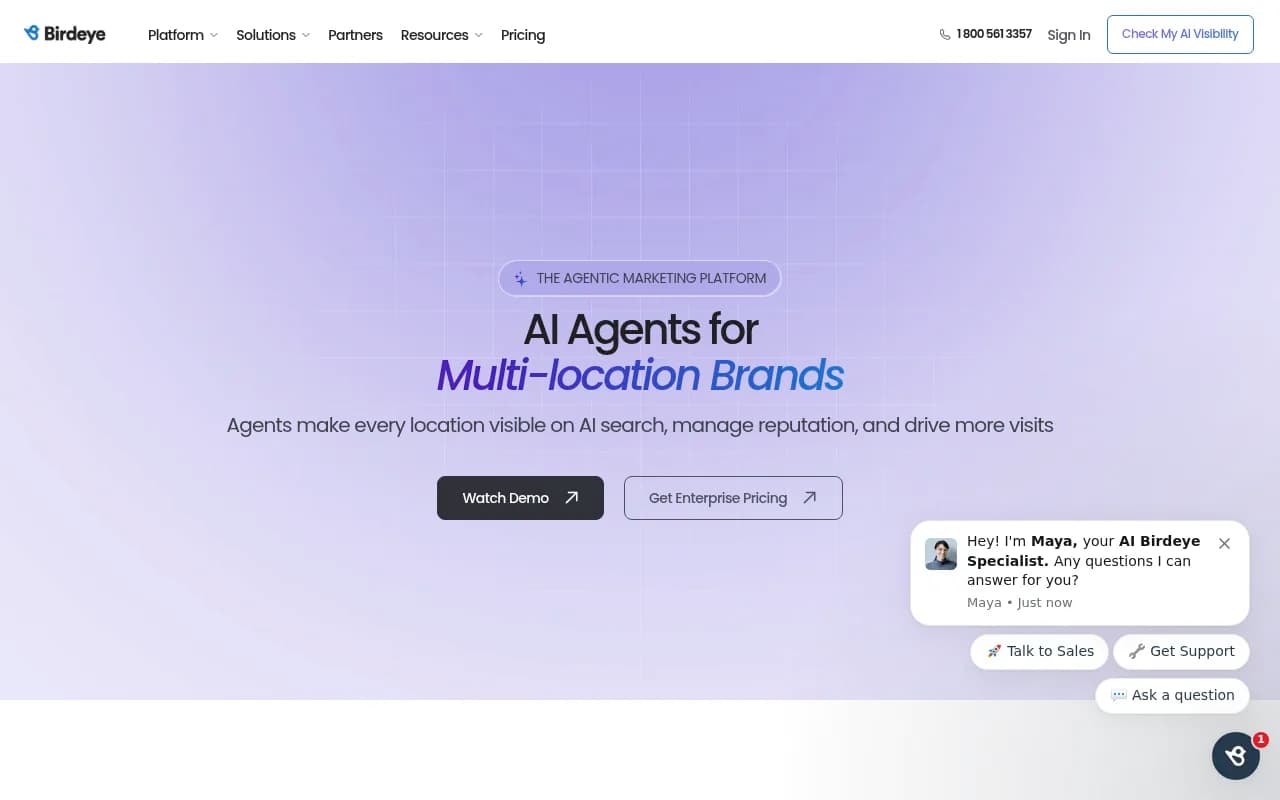
- Birdeye Search AI for local, location-level tracking.
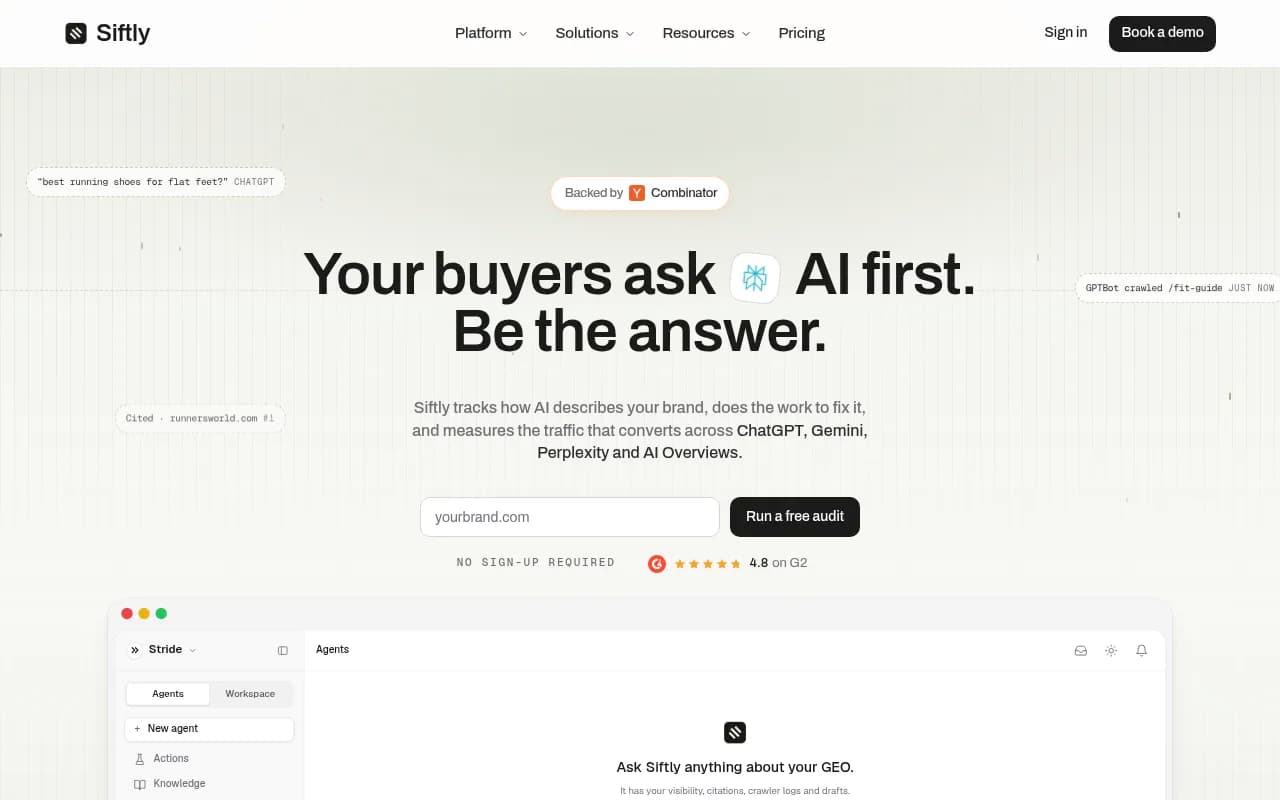
- Siftly for daily automated queries across ChatGPT, AI Overviews, Gemini, Perplexity and Claude, with citations and mentions tracked separately.


If you want to browse the wider field, the GEO software directory at bestgeosoftware.com is a decent place to compare options side by side.
The tools you keep alongside them
An AI tracker does not replace the rest of your reputation stack. Three categories still earn their place.
Review and local reputation
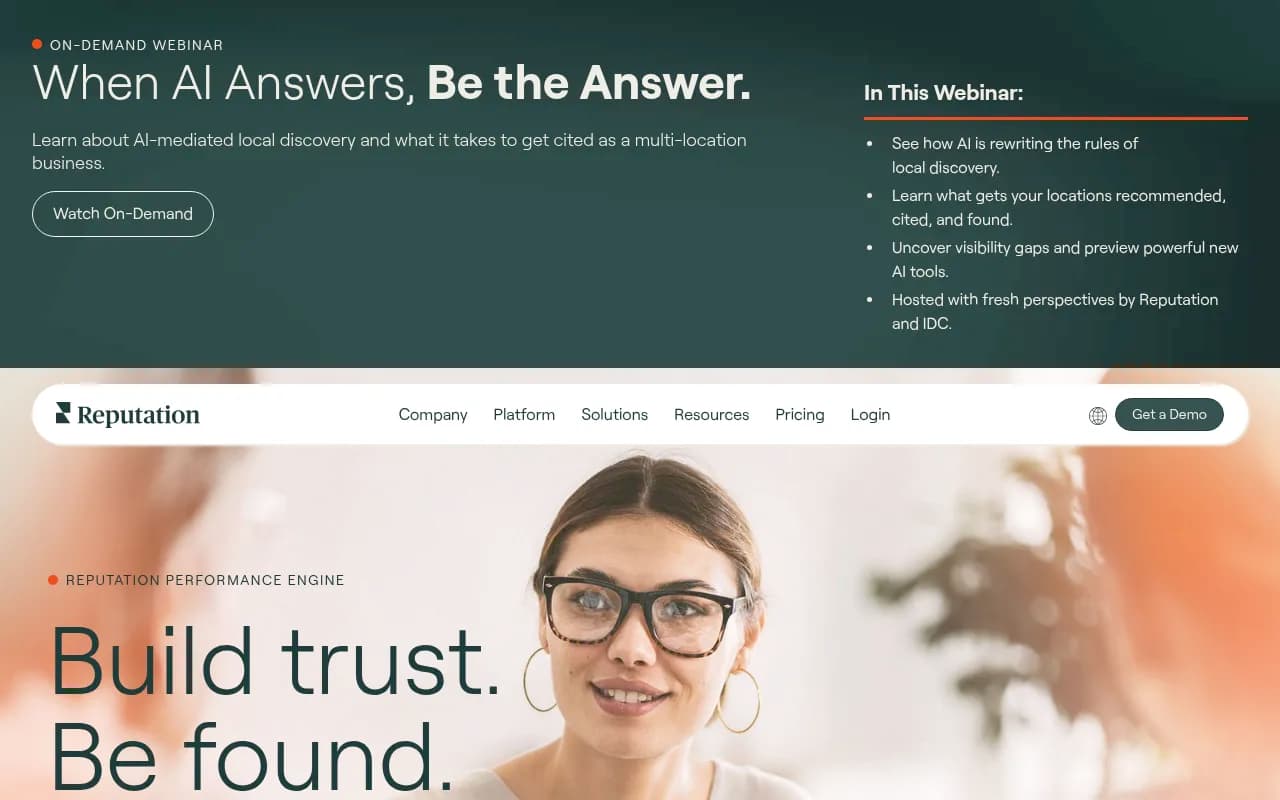
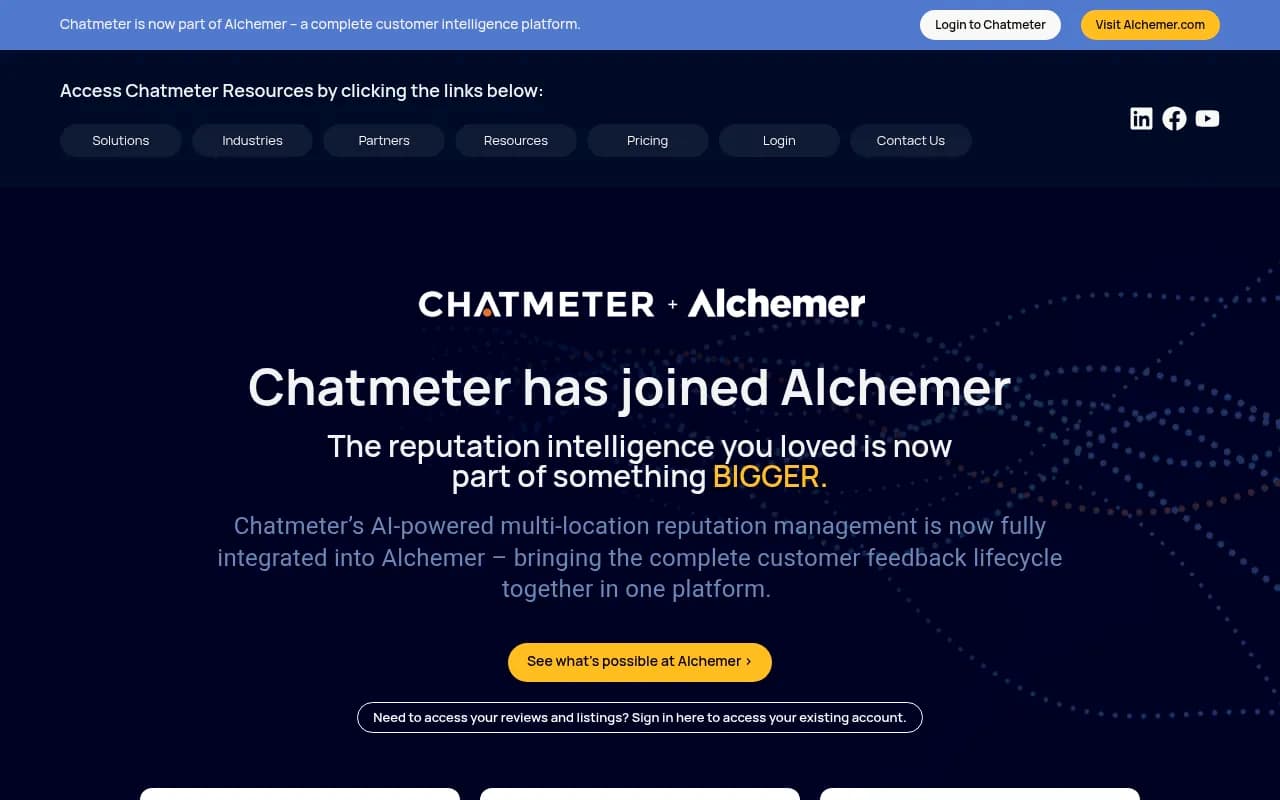
If you run many locations, review response is its own job. Reputation.com is built for review response at multi-location scale and publishes rare per-location pricing, though it gets expensive past roughly 200 sites and requires annual billing. Chatmeter and BrightLocal cover similar ground, and BrightLocal has added AI visibility checks.
The two worlds do connect. Review sites are cited heavily in some categories, so a stream of unanswered one-star reviews can end up inside an AI answer.
Survey-based brand tracking
Social listening only hears people who post. GWI makes the point well: survey trackers ask representative samples, so they tell you what the quiet majority thinks. Use them for awareness and perception trends. They won't tell you whether an AI engine recommends you.
The screenshot above is from GWI's comparison of survey and listening trackers, a useful reference for the non-AI half of your stack.
Social and web listening
Keep Brandwatch, Meltwater, Mention or Brand24 for crisis detection and campaign monitoring. Gumloop's roundup also points out you can build lightweight mention alerts with workflow automation, which is a cheap way to cover the basics.
Comparison table
| Tool | Watches | AI answer tracking | Goes beyond monitoring | Best for |
|---|---|---|---|---|
| Promptwatch | Real AI interfaces, citations, claims, crawlers, traffic | Yes, across ChatGPT, AI Overviews, AI Mode, Gemini, Perplexity, Copilot and more | Yes: Action Board, Content Agent, Fact Check | Teams that want to fix what AI says |
| Profound | AI visibility and analytics | Yes | Limited | Large enterprises |
| Peec AI | Prompt-level mentions | Yes | Smart suggestions | Small teams on a budget |
| Otterly.AI | AI brand mentions | Yes | No | Affordable monitoring |
| Ahrefs Brand Radar | AI mentions plus SEO data | Yes | No | Existing Ahrefs users |
| Brand24 | Social, web, plus chatbot answers | Partial | No | One-tool hybrid |
| Brandwatch | Social and web conversations | No | No | Enterprise listening |
| Reputation.com | Reviews and listings | No | Review responses | Multi-location brands |
| GWI | Survey brand perception | No | No | Awareness and equity tracking |
How to set this up without fooling yourself
Build a prompt set that reflects buyers
Include branded prompts ("is X any good"), competitor comparisons ("X vs Y"), and category prompts ("best tool for Z"). Add personas if your buyers differ. Then keep the set fixed. The Dageno guide in our research says the same thing: keep the selected models and prompt sample consistent when comparing periods.
Check claims, not just sentiment
Read the actual sentences. A response can be positive and still wrong about your pricing. Log each inaccurate claim and trace it to a source page. That source is either your own site, an outdated review, or a third-party article.
Look at sources by platform
What you fix depends on where the model looks. Promptwatch Data's November report advises prioritizing YouTube for AI Overviews and Reddit and LinkedIn for Perplexity, and calls social posts a weak route into ChatGPT. For ChatGPT, Promptwatch's content type data shows product pages are the most cited type at 22.4% (Sep 28 to Oct 4, 2026), followed by landing pages and listicles. So for ChatGPT, your own product and landing pages are probably your best reputation lever.
Remember that fixes decay
Content does not stay cited forever. Promptwatch's content half-life study tracked pages ChatGPT cited on July 6, 2026 for 90 days: landing pages and docs lasted longest, while news lost half its pages within 36 days. Re-check corrected claims every few weeks.
Rule out a crawl problem
If AI says something stale, it may simply not be able to read your updated page. Crawler logs tell you whether AI bots reach it. If you want to test access quickly, the free Agentic Readiness Check shows which AI crawlers can read your site.
Which setup fits which team
| Your situation | Suggested stack |
|---|---|
| Solo marketer or small business | Brand24 or Mention, plus Otterly.AI or Peec AI, and the free Promptwatch visibility report as a baseline |
| Mid-size B2B or SaaS team | Social listening tool plus Promptwatch for claims, sources and content fixes |
| Multi-location retailer or service brand | Reputation.com or Chatmeter for reviews, plus an AI tracker with local targeting such as Promptwatch's Business plan |
| Enterprise with existing Brandwatch or Qualtrics | Keep them, add a dedicated AI visibility platform rather than waiting for the listening vendor to catch up |
| Agency | A platform with unlimited projects and client reporting. Promptwatch has agency plans starting at $199/mo (Kick-off) |
Frequently asked questions
Can social listening tools track what ChatGPT says about my brand?
Mostly no. They read public posts. A few, such as Brand24, have added chatbot monitoring, but a dedicated AI visibility platform samples answers more systematically and traces the sources behind them.
How often should I check AI answers?
Daily tracking is the baseline on most serious platforms. Faster cadences (every 12, 6 or 1 hours) matter during a launch or a PR issue. Weekly is fine for stable brands as long as the prompt set is consistent.
What should I do if AI states something false about us?
Find the source first. Update or publish an accurate page on your own site, fix the third-party source if you can, and make sure AI crawlers can read the correction. Then re-track the same prompts.
Do I still need a survey tracker?
If brand equity matters to your board, yes. Surveys measure the people who never post and never ask a chatbot. AI tracking measures what the chatbot says. They are complementary.
Where to start this week
Run a free baseline, write 20 to 30 prompts your buyers really ask, and read the responses by hand once. You will probably spot at least one claim you did not expect. Then pick one AI visibility platform, keep your listening tool for crisis alerts, and review claims monthly. If you want more tools to compare, the AI rank tracking directory at ai-rank-tools.com is another good pointer.