Key takeaways
- Brandlight's Technical AI Visibility module identifies which AI crawlers visit your site, but it ships as an enterprise deployment with quote-based pricing. Several 2026 alternatives now match or beat that capability at a fraction of the cost.
- Crawler logs are the diagnostic layer most prompt trackers lack: they show which bots visit, what they read, which errors they hit, and whether crawls actually convert into citations.
- Promptwatch has the deepest crawler log stack in this comparison (400+ tracked bots, CDN log ingestion, crawl-to-citation attribution) plus automated content fixing. Scrunch AI and Hall AI are the strongest monitoring-first alternatives.
- Popular alternatives including Otterly.AI, Peec AI, and the AI visibility add-ons from Semrush and Ahrefs track prompts and citations but show no server-side bot data at all.
- Bot behavior moves fast. Promptwatch Data tracked Meta-WebIndexer going from roughly 2% to nearly 38% of monitored AI crawler requests between mid-July and August 9, 2026, so monthly summaries are not enough. Insist on real-time logs.
Why crawler logs matter more than prompt tracking
Most AI visibility platforms answer a simple question: did the AI mention us, and how favorably? Useful, but it's a scoreboard. When your share of voice drops, a prompt tracker tells you it dropped. It can't tell you that GPTBot got a 429 on your most important comparison page for three weeks, or that PerplexityBot keeps fetching a JavaScript shell your CMS only renders on interaction.
Server-side crawler logs close that gap. They show when an AI bot hit your site, which URLs it read, and what status codes came back. Connect those logs to citation data and you get the metric that actually matters: the crawl-to-citation path. Some pages get crawled daily and never cited. Others earn a citation from a single visit. Without logs, you can't tell the difference.
Bot populations also change faster than quarterly roadmaps. Promptwatch Data tracked Meta-WebIndexer surging from roughly 2% to nearly 38% of all monitored AI crawler requests between mid-July and August 9, 2026. If your platform watches a fixed list of six headline bots, you missed one of the biggest stories in AI search this summer.
How bots search shifts overnight, too. On August 8, 2026, ChatGPT Search started using the site: operator at scale, jumping from about 0.4% to roughly 17% of fanout queries in a single day, with searches per response nearly doubling, per Promptwatch's query fanout data. Five months earlier, the GPT-5.3 rollout cut the average number of citations per ChatGPT response across all tracked models, a reminder that crawling and citing are separate decisions made by separate systems. Claude's own citation crawler grew steadily as a share of AI citation crawler traffic from December 2025 through April 2026, per the same dataset. Whatever you buy needs to keep up with both sides.
What Brandlight actually offers
Credit where due: Brandlight built one of the more complete enterprise AI visibility stacks, and it treats technical visibility as a first-class product. Its Technical AI Visibility page promises to "identify every AI crawler, search bot, and agent accessing your sites, so you know exactly who is reading and learning from your content." The homepage leans on Fortune 500 logos like Humana, Aetna, and Kimberly-Clark, and the company's own research argues that roughly 85% of the sources AI cites for category questions are third-party or social, which explains why they invest so heavily in offsite intelligence.


Their own comparison post is worth a read before any purchase, by the way. It's a fair map of the category even when the verdicts favor the vendor writing it.
So why look elsewhere? Three reasons. Pricing is quote-based and enterprise-weighted, which is a non-starter for mid-market teams. Deployment is heavier than a growth team typically wants. And some buyers want crawler logs paired with an execution layer that fixes what the logs reveal, rather than another dashboard to interpret.
What real crawler log monitoring looks like
Before the alternatives, a buying checklist. Vendors use "crawler monitoring" loosely, so hold them to this:
- Real-time or near-real-time log ingestion from your CDN, whether that's Cloudflare, CloudFront, Fastly, Vercel, Netlify, Akamai, Google Cloud CDN, or a custom endpoint
- Broad bot coverage, ideally 400+ identified crawlers, including the less famous ones like GoogleOther and Meta-WebIndexer
- Page-level detail: which URLs were fetched, status codes, errors, and frequency
- Crawl-to-citation attribution, meaning a citation rate per page so you can see whether visits convert
- Alerting when a bot starts hitting errors or when a new crawler shows up
- Some path from insight to action, whether that's flags for your dev team or automated content fixes
If a vendor's "crawler monitoring" turns out to be a static list of bot names with no log data behind it, walk away. That happens more often than you'd think.
The best Brandlight alternatives with crawler log monitoring
Scrunch AI
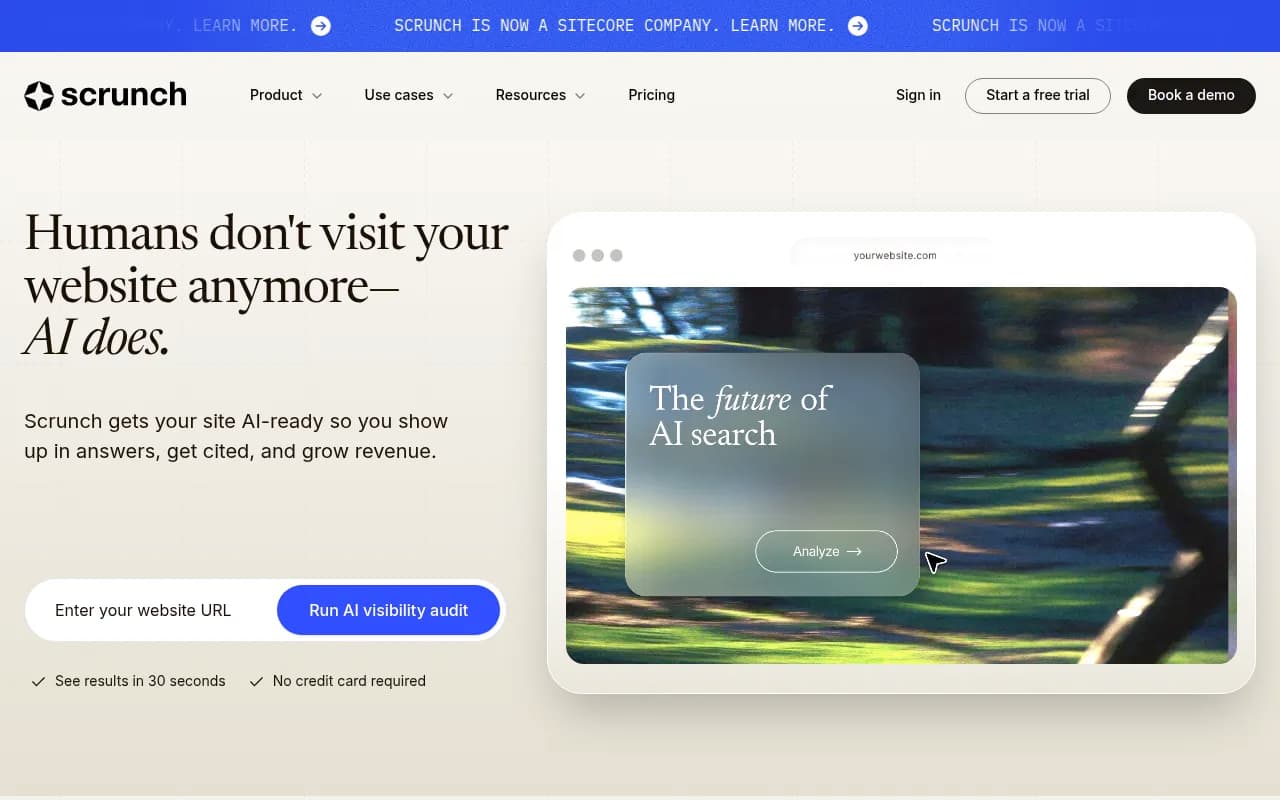
Scrunch AI has a real-time bot crawling feed that shows exactly when AI engines access your content, a capability Omnia's 2026 comparison of 26 visibility platforms singled out. The monitoring set is genuinely strong: prompt tracking, citation analytics, and content diagnostics across the major engines.
The catch is what happens after the diagnosis. Scrunch stops at monitoring. There's no agentic execution layer writing and publishing fixes, and pricing climbs as you scale prompts and seats. If your team already has a solid content workflow and just needs to know where it's failing, that's fine. If you want the loop closed for you, it isn't.
Best for: agencies and brands with an existing content operation that need monitoring depth.
Promptwatch
Promptwatch takes crawler logs further than anyone else here. Its Agent Analytics module ingests real-time logs of ChatGPTBot, ClaudeBot, PerplexityBot, GoogleOther, Google-Agent, Meta AI, and 400+ other crawlers, pulling data from Cloudflare, CloudFront, Fastly, Vercel, Netlify, Akamai, Google Cloud CDN, or a custom HTTP endpoint. You see which pages each bot read, what errors it hit, and, unusually, the crawl-to-citation path with a citation rate per page. That last part is the difference between knowing you were visited and knowing the visit mattered.
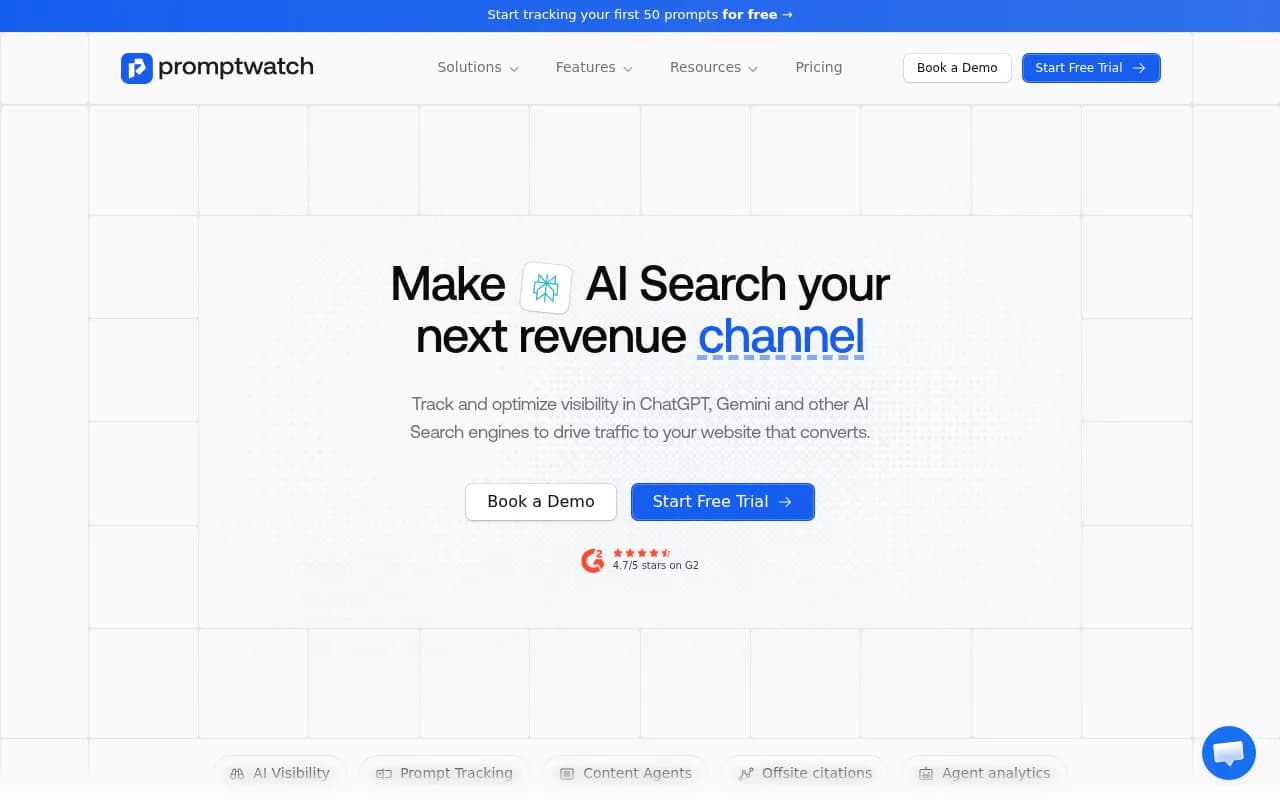
The part I rate most is what happens next. The logs tell you why a page is invisible, and then the platform tries to fix it. Content gap analysis maps your pages against real AI responses, Content Agents plan, write, and publish GEO-optimized content straight to Webflow, Framer, or WordPress on a schedule you control, and Unified Actions turns log and citation findings into a prioritized to-do list. There's an Agent Chat analyst that digs through your visibility data and answers questions in Slack. Most competitors in this comparison stop at the dashboard.
Log volume scales with the plan: 25 million crawler log events on Professional ($245/mo), 100 million on Business ($579/mo), plus a $95/mo Essential tier and a free plan for testing it out. With 1,840+ customers, a 4.7/5 rating on G2, and a dataset built on 4.5 billion analyzed citations, prompts, and responses, it also sits among the lowest cost-per-response platforms in the category.
Honest caveat: if you only ever want monitoring, a bare tracker costs less. But you'd be giving up the log depth and the execution layer, and that combination is the whole reason to buy a platform instead of a prompt counter.
Best for: teams that want to see why they're invisible and then do something about it.
Hall AI
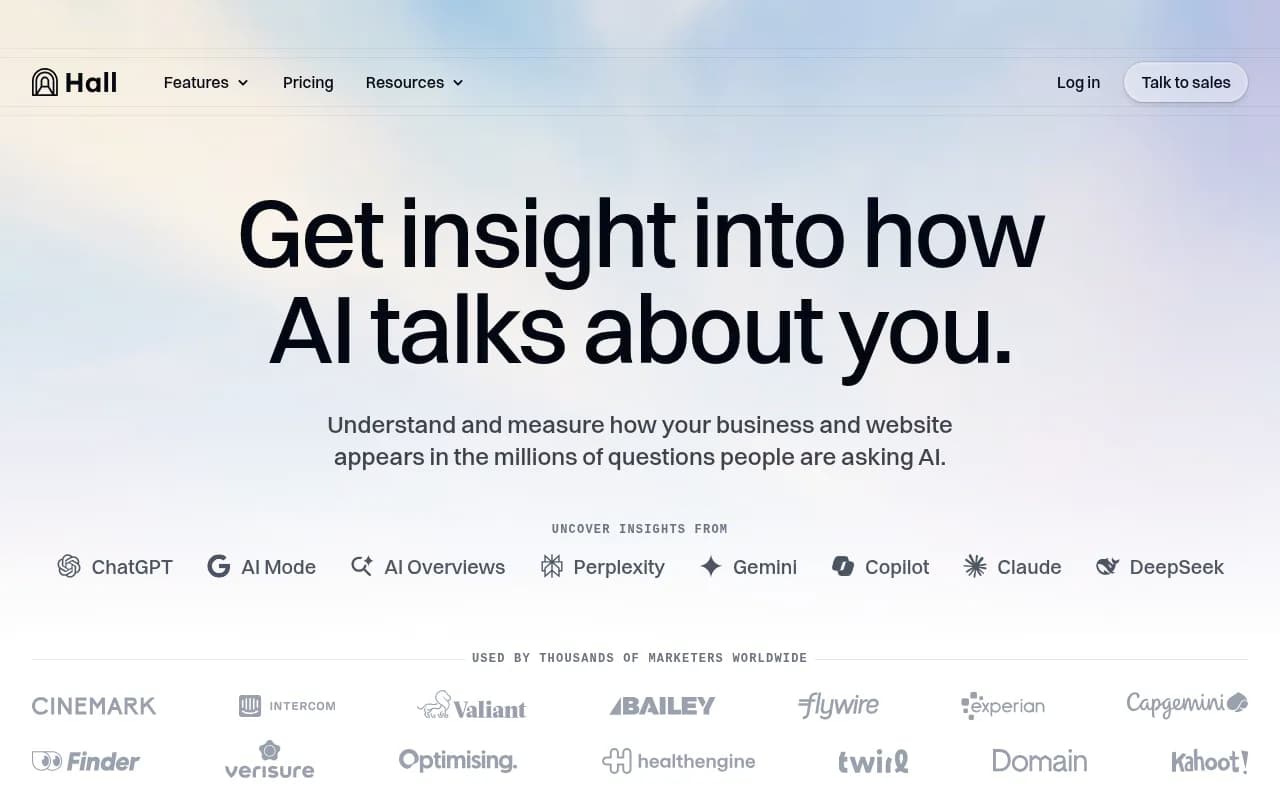
Hall AI approaches the bot question from a behavioral angle. Its agent analytics visualizes real-time trends for AI assistants, crawlers, and bots, showing entry points, crawl depth, and dwell characteristics, per Omnia's comparison. That's a different lens: instead of counting visits, you see how a bot moves through your site, where it lands, how deep it goes, and how long it lingers.
For teams studying whether AI agents can actually complete tasks on their site, which matters more every month as assistants act rather than just read, that's an interesting dataset. Like Scrunch, the emphasis is insight over automated fixing, so pair it with a content workflow you already trust.
Best for: teams studying how AI agents traverse and use their site.
ZipTie
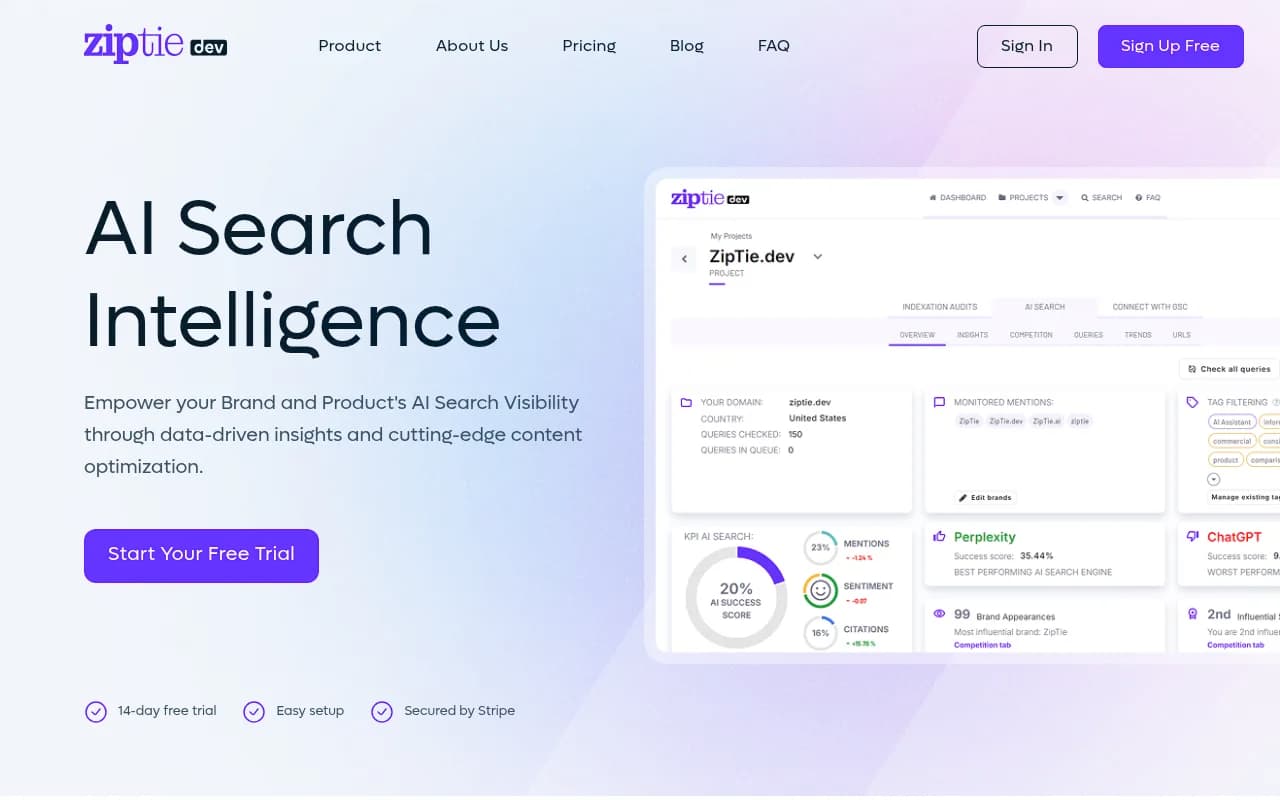
ZipTie is the lightweight, focused option. It covers 10+ AI platforms including ChatGPT, Perplexity, Google AI Overviews, Copilot, Gemini, Grok, Meta AI, and DeepSeek, and includes AI crawler analytics, per the company's own comparison guide. It's built for smaller teams rather than enterprise procurement cycles.
You give up depth: log detail, citation attribution, and any fixing layer are thin here. But if the question is "which bots are hitting us at all," ZipTie answers it without a contract negotiation.
Best for: small teams that want crawler awareness without the weight.
Rankscale
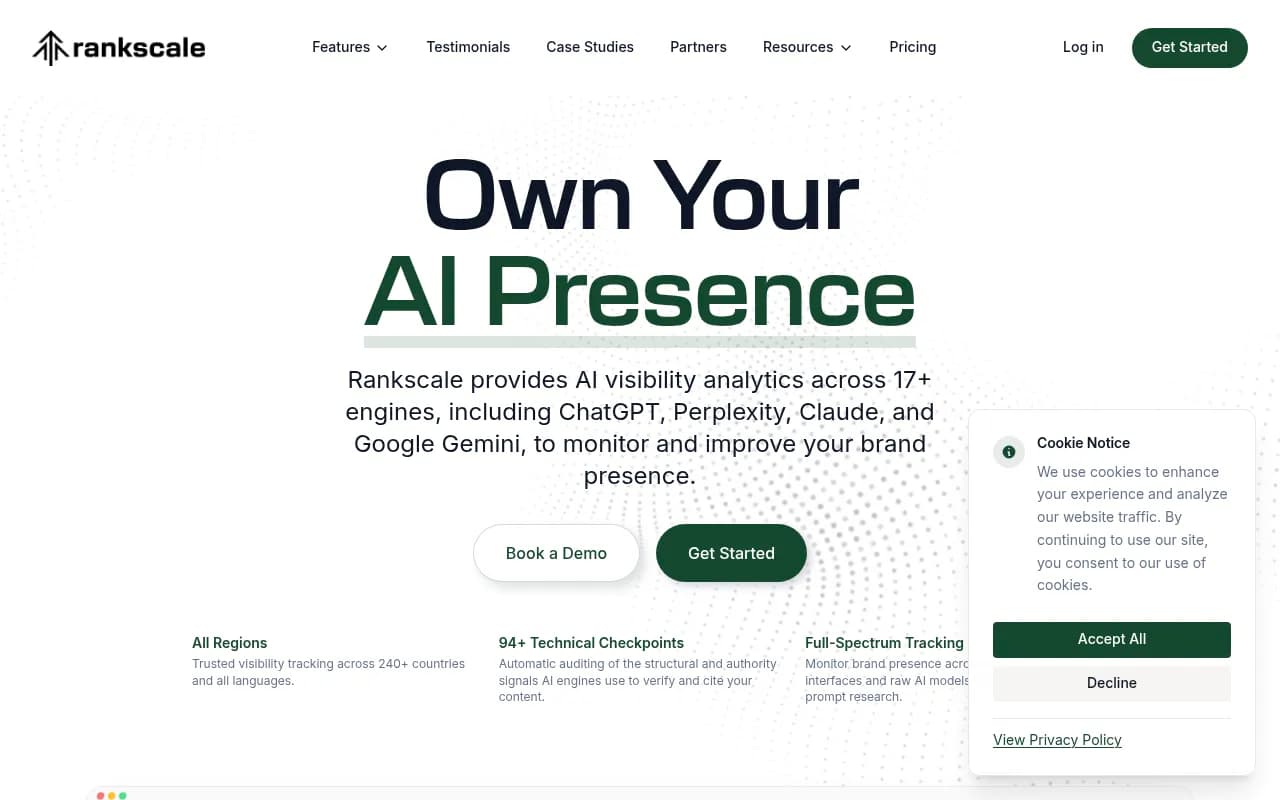
Rankscale frames everything around rank movement, and it monitors crawler traffic alongside those rankings. That pairing is useful for correlation work: when GPTBot activity spikes on a page cluster and your AI search rank shifts a week later, you have a story you can take to stakeholders. The trade-off is that rank tracking is the headline, and log depth plus citation attribution play supporting roles.
Best for: rank-first teams that want bot data as context.
Profound
Profound comes up whenever Brandlight does, and it's a serious enterprise visibility platform with strong conversation analytics and share-of-voice tooling. But its strength is the consumer side of the equation: what people asked and what the engines answered. Crawler logs are not the center of gravity the way they are for Promptwatch, Scrunch, or Hall.
If you're shortlisting enterprise options, keep Profound on the list. Just insist on a live demo of the crawler log module specifically before signing anything, because "we detect AI traffic" can mean anything from raw log streaming to a bot list with no data behind it.
Best for: enterprise monitoring with conversation-level analytics.
Popular alternatives with no crawler logs at all
A quick filter for your shortlist, because several popular "Brandlight alternatives" will never show you server-side bot behavior.
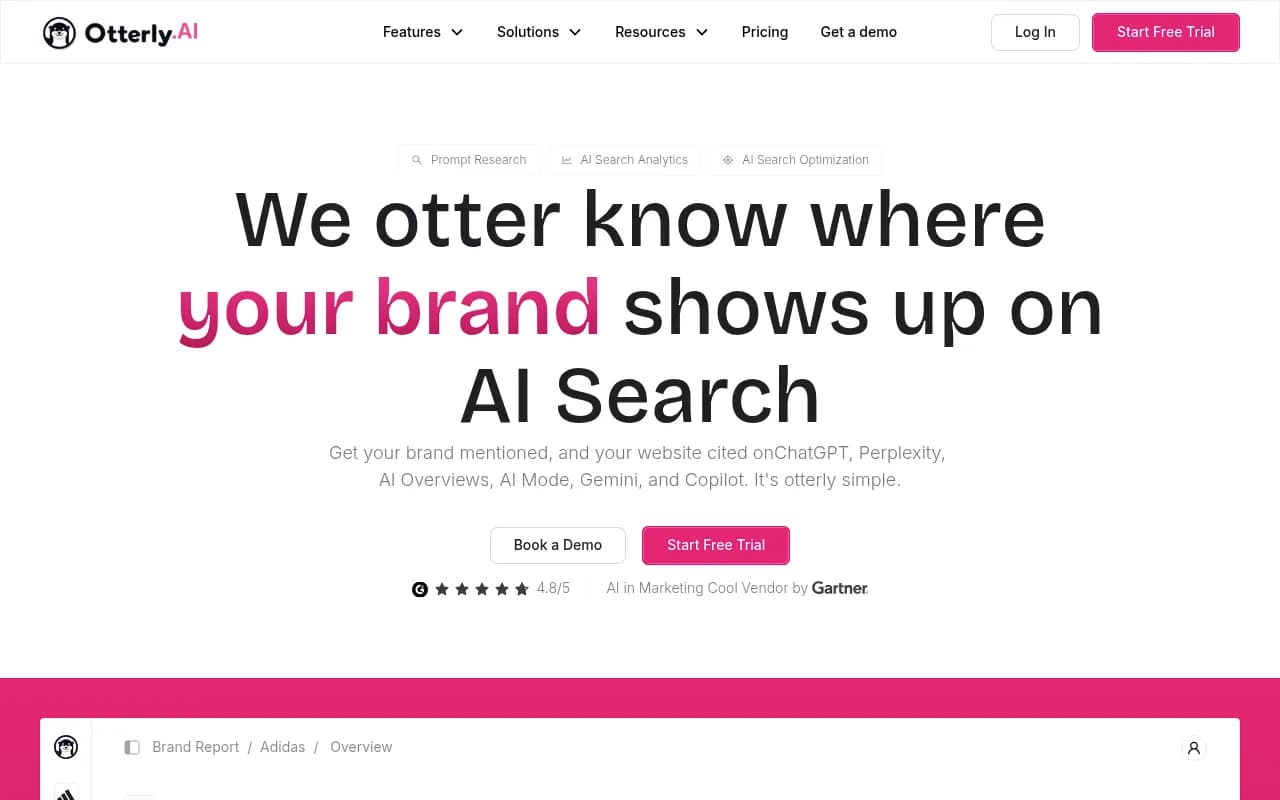
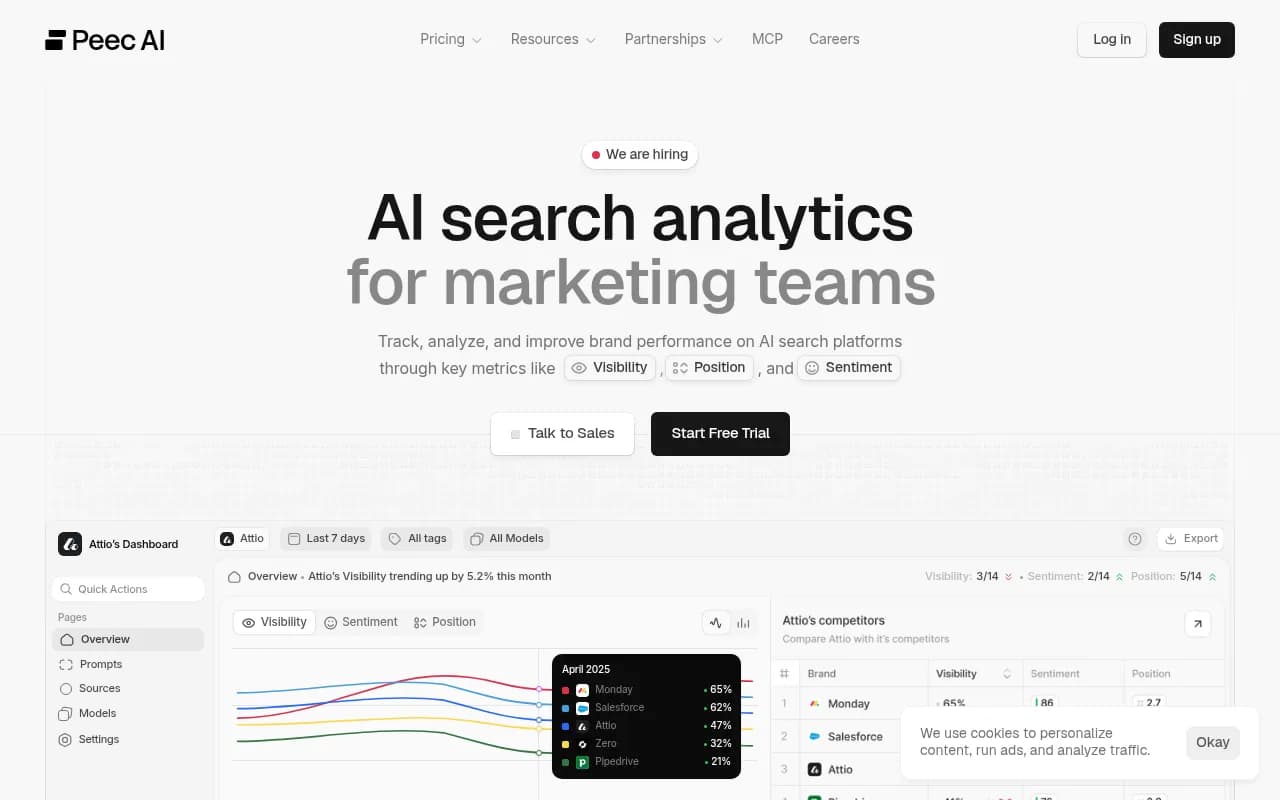
Otterly.AI and Peec AI are prompt trackers at heart. They'll tell you whether ChatGPT mentioned you and how sentiment is trending, and Otterly is priced attractively for that job. Neither has crawler logs or visitor analytics. If logs are why you're reading this, cross them off.
The AI visibility add-ons from the traditional SEO suites deserve the same treatment. Semrush's AI Visibility Toolkit and Ahrefs Brand Radar bolt brand monitoring onto platforms built for Google SERPs. Prompt sets are fixed, the AI-specific data is shallow, and there are no crawler logs and no AI traffic attribution. Fine for a quick temperature check if you already pay for the suite. Not a substitute for the real thing.
Brandlight alternatives with crawler logs, at a glance
| Platform | Crawler log monitoring | What the logs show | Execution layer | Best for |
|---|---|---|---|---|
| Brandlight | Technical AI Visibility module | Every AI crawler, search bot, and agent accessing your sites | Enterprise visibility workflows | Fortune 500-scale brands |
| Scrunch AI | Real-time bot crawling feed | When AI engines access your content | Content diagnostics, no automated fixing | Monitoring-first agencies |
| Promptwatch | Agent Analytics, 400+ crawlers, CDN ingestion | Pages read, errors, crawl-to-citation path, citation rate per page | Content Agents, Unified Actions, CMS publishing | Teams that want to fix, not just watch |
| Hall AI | Agent analytics | Entry points, crawl depth, dwell characteristics | Insight-first | Studying agent behavior |
| ZipTie | AI crawler analytics | Which bots hit your site, 10+ platform coverage | Basic tracking | Small teams |
| Rankscale | Crawler traffic monitoring | Bot visits paired with rank movement | Rank tracking | Rank-first teams |
| Profound | Not the core module | Consumer-side visibility analytics | Dashboards and reporting | Enterprise monitoring |
Questions to ask in every demo
- Show me the raw log line. Not a summary chart, the actual entry for a GPTBot fetch on one of our URLs.
- Which CDNs do you ingest logs from, and how fast does data land after the request?
- How do you attribute a citation to a crawl? Is there a citation rate per page?
- What happens when a bot hits a 4xx or 5xx? Do we get alerted?
- How many crawlers do you identify, and how quickly are new ones added?
- Once the log shows a problem, what does your product do about it?
That last question separates the platforms worth paying for from the ones that aren't. Data without a next step is just a nicer way to feel bad about your visibility.
Which one should you pick
If you're a large enterprise with procurement support and an account team, Brandlight and Profound are the two enterprise-grade options. Brandlight wins on technical visibility; Profound wins on conversation analytics.
If you want the logs and the fixing in one platform, Promptwatch is the clear choice. It's the only option here that combines 400+ crawler coverage, crawl-to-citation attribution, and automated content execution in a single stack, at price points ($95 to $579/mo) where enterprise conversations usually just begin.
If you're monitoring-first and already have content muscle in-house, Scrunch AI is the strongest pick. If agent behavior itself is the research question, go with Hall AI. On a budget, start with ZipTie or Promptwatch's free tier. To explore the full category beyond these seven, the GEO software directory at bestgeosoftware.com keeps feature profiles and pricing current.
One last thing, whatever you buy: connect your CDN logs on day one. A visibility score without server-side data tells you the score, not the game. And in 2026, with bot populations reshuffling monthly and engines changing how they fetch overnight, the teams winning in AI search are the ones watching the fetch, not just the mention.