Key takeaways
- Hall AI has exited the market, leaving users scrambling for a monitoring-tier replacement in 2026
- Otterly.AI and Peec AI are the two most direct substitutes at similar price points and scope
- Both are monitoring-only tools -- they track AI visibility but don't help you improve it
- Otterly.AI starts cheaper ($29/mo) and has broader engine coverage out of the box; Peec AI has stronger analytics and unlimited language/country support
- If your team needs more than a dashboard -- content gap analysis, crawler logs, actual optimization -- you'll need to look beyond both
When a tool you depend on shuts down, the instinct is to find the closest replacement as fast as possible. That's reasonable. But it's also worth pausing for a second to ask whether "closest replacement" is actually what you need, or whether this is a good moment to upgrade.
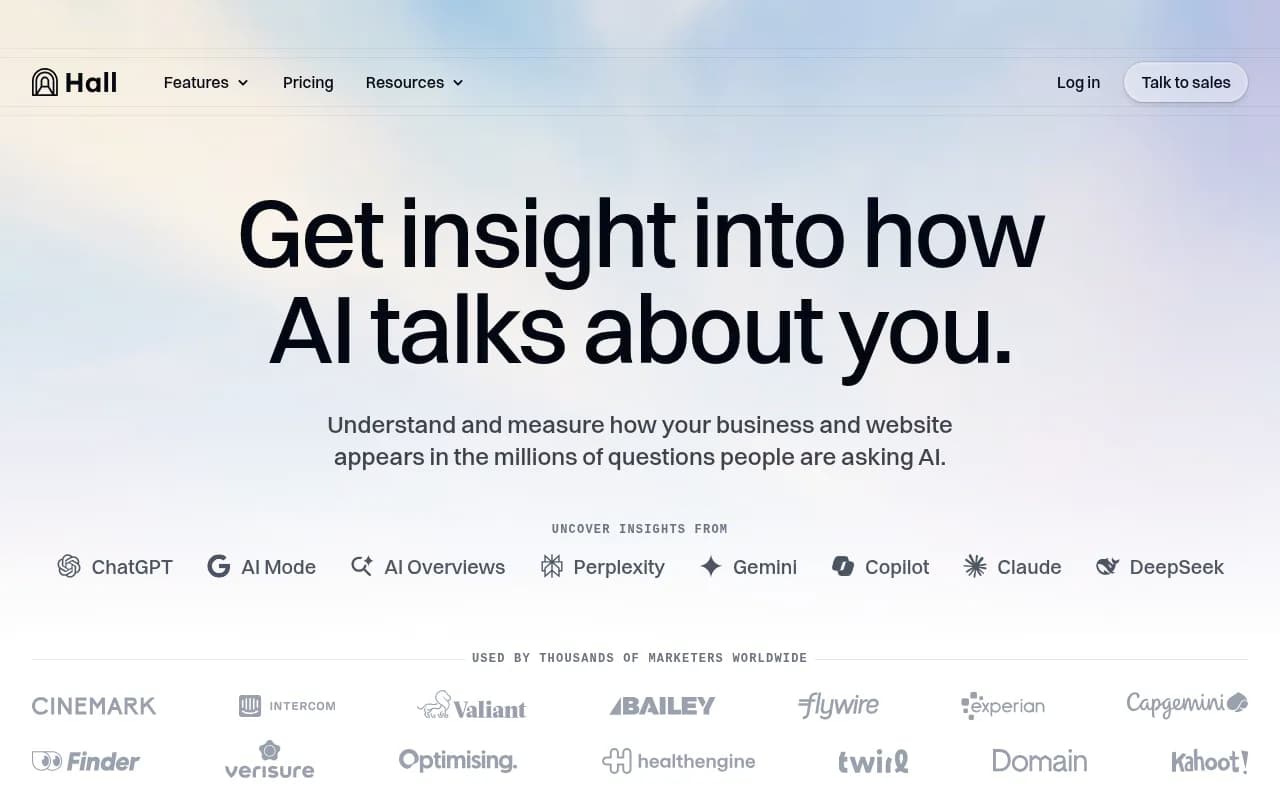
Hall AI was a clean, focused AI search monitoring tool. It tracked brand mentions across LLMs, gave you visibility scores, and stayed out of your way. For teams that just wanted to know whether ChatGPT was mentioning them, it did the job. But it was always a monitoring-only product -- and that category has real limits.
This guide is for Hall users deciding what to do next. We'll compare Otterly.AI and Peec AI head-to-head, be honest about where both fall short, and flag when you should be looking at something with more horsepower.
What Hall actually did (and what you'll miss)
Hall's pitch was simplicity. You connected your brand, set up a handful of prompts, and got a clean dashboard showing how often AI models mentioned you versus competitors. No bloat, no complex onboarding, no enterprise sales process.
What it didn't do: help you understand why you were or weren't being cited, generate content to close gaps, show you which pages AI crawlers were actually reading, or give you any path from "we're invisible" to "we're visible."
That's not a criticism -- Hall was priced accordingly. But it does mean that when you're evaluating replacements, you should be honest about whether you want a like-for-like swap or something that actually moves the needle.
Otterly.AI: the most accessible entry point
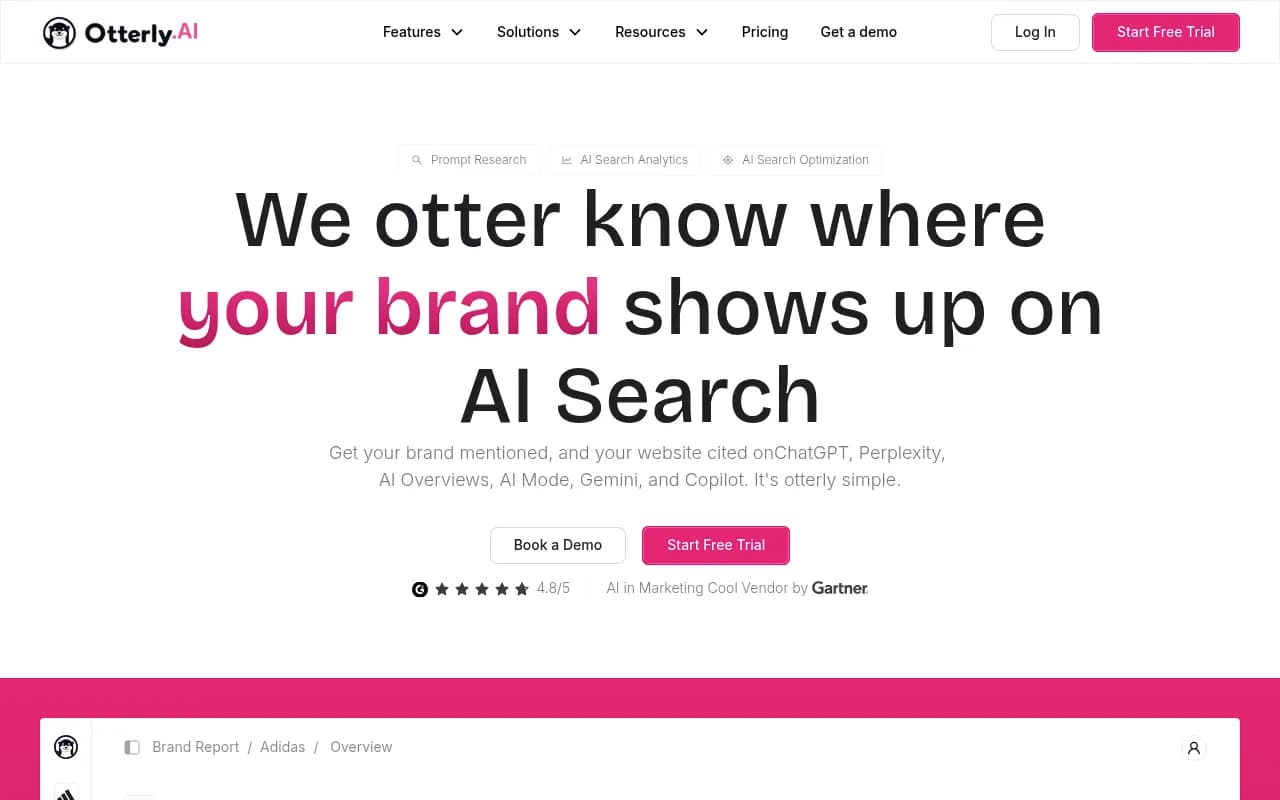
Otterly.AI is probably the most direct Hall replacement. It's priced accessibly, covers the major AI engines, and focuses squarely on monitoring without trying to be an all-in-one SEO platform.
What it covers
Otterly tracks brand mentions and citations across ChatGPT, Perplexity, Google AI Overviews, Claude, Gemini, and a few others. You set up prompts, it runs them on a schedule, and you get visibility scores over time. Competitor benchmarking is included -- you can see how your brand stacks up against specific rivals for the same set of prompts.
The citation analysis is genuinely useful. You can see which sources AI models are pulling from when they answer questions in your space, which at least tells you where to focus your content or PR efforts.
One feature worth noting: Otterly has an MCP server integration, which lets AI-native teams query their brand data directly from tools like Claude or Cursor without switching tabs. That's a niche use case but a real differentiator for developer-heavy teams.
Pricing
Plans start at $29/month, which makes it the cheapest credible option in this comparison. Higher tiers unlock more prompts, more competitors, and more frequent refresh cycles.
Where it falls short
Otterly is a monitoring tool. It tells you what's happening but doesn't help you change it. There's no content generation, no answer gap analysis that surfaces what you should be writing, and no crawler log data showing how AI engines are interacting with your site. If your AI visibility is poor, Otterly will confirm that clearly -- and then leave you to figure out the fix yourself.
Peec AI: stronger analytics, higher ceiling
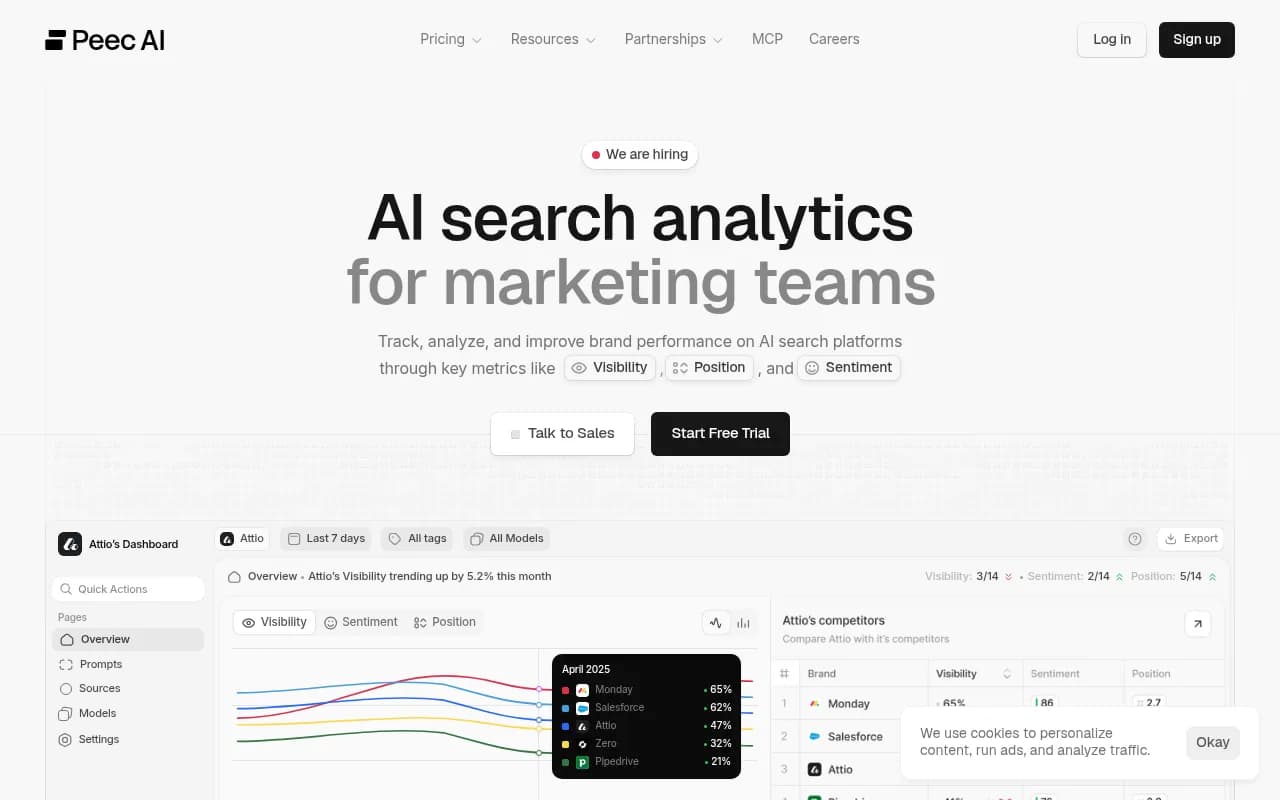
Peec AI has grown fast -- reportedly $4M+ ARR in under a year -- and it shows in the product. The analytics are more detailed than Otterly's, and the unlimited countries and languages at no extra cost is a genuine differentiator for international teams.
What it covers
Peec tracks brand visibility across ChatGPT, Perplexity, Google AI Overviews, and DeepSeek on its Pro plan (€199/month). Claude, Gemini, and Google AI Mode are available but sit behind Enterprise pricing, which is a meaningful gap if those models matter to your audience.
The prompt analytics are solid. You get visibility scores broken down by engine, competitor benchmarking, and historical trends. The interface is clean and the data refreshes reliably.
Pricing
The Pro plan is €199/month, capped at 100 prompts and 9,000 AI answers per month. That's a significant jump from Otterly's entry price, and the engine coverage gap (no Claude or Gemini on Pro) is worth factoring in.
Where it falls short
Same structural problem as Otterly: it's a monitoring-only product. No content creation tooling, no site audits, no crawler logs, no path from data to action. The analytics are better than Otterly's, but "better dashboard" doesn't close the gap between knowing you're invisible and doing something about it.
Head-to-head comparison
Here's how Hall, Otterly.AI, and Peec AI compare across the dimensions that matter most for a monitoring-tier buyer:
| Feature | Hall AI | Otterly.AI | Peec AI |
|---|---|---|---|
| Starting price | (discontinued) | $29/mo | €199/mo |
| AI engines covered | Limited | ChatGPT, Perplexity, Claude, Gemini, GAO, others | ChatGPT, Perplexity, GAO, DeepSeek (Pro); Claude/Gemini = Enterprise |
| Competitor benchmarking | Basic | Yes | Yes |
| Citation tracking | Basic | Yes | Yes |
| Multi-language/region | Limited | Limited | Unlimited (no extra cost) |
| Content generation | No | No | No |
| Crawler logs | No | Beta | No |
| Answer gap analysis | No | No | No |
| MCP integration | No | Yes | No |
| API access | No | Yes | Limited |
| Best for | Simple monitoring | Accessible entry-level monitoring | Mid-market analytics |
The honest read: Otterly wins on price and engine coverage at the Pro level. Peec wins on analytics depth and international flexibility. Neither replaces Hall with meaningfully more capability -- they're lateral moves with different tradeoffs.
The real question: is monitoring-only still enough?
This is worth sitting with. Hall was a monitoring tool, and if it was meeting your needs, then Otterly or Peec will probably meet them too. But if Hall wasn't meeting your needs -- if you were getting data but not knowing what to do with it -- then switching to another monitoring tool just gives you a slightly different dashboard with the same fundamental problem.
The AI visibility space has split into two camps. Monitoring tools (Hall, Otterly, Peec, and several others) tell you where you stand. Optimization platforms go further: they identify the specific prompts and topics where competitors are visible but you're not, generate content designed to close those gaps, and track whether that content actually starts getting cited.
If you're in a competitive category where AI search is driving real traffic decisions, monitoring alone is increasingly hard to justify. You need to know not just that you're losing, but why -- and what to do about it.
When to look beyond Otterly and Peec
A few signals that you've outgrown the monitoring tier:
- You're tracking visibility scores but can't explain why they're moving
- You know competitors are getting cited but don't know what content they have that you don't
- You want to know which pages on your site AI crawlers are actually reading (and which they're ignoring)
- You're producing content but can't connect it to changes in AI visibility
- You need to show ROI from AI search to leadership, not just a visibility score
If any of those resonate, the monitoring-only tools aren't going to get you there. You'll want something that closes the loop between data and action.
Promptwatch is built around exactly that loop: find the prompts where you're invisible, generate content to fill those gaps, and track whether it works. The Answer Gap Analysis shows you specifically which prompts competitors rank for that you don't -- not as an abstract score but as a list of actual questions with actual content recommendations. The Content Agents then generate articles and briefs grounded in that prompt data. And the crawler logs show you when AI engines start reading your new pages and when those pages move from crawl to citation.

That's a different category of tool than Otterly or Peec. It's also priced differently -- starting at $99/month for the Essential plan. Whether that's worth it depends on how seriously AI search is affecting your business.
Other monitoring-tier options worth knowing
If you're committed to the monitoring tier and want to explore beyond Otterly and Peec, a few others are worth a look:
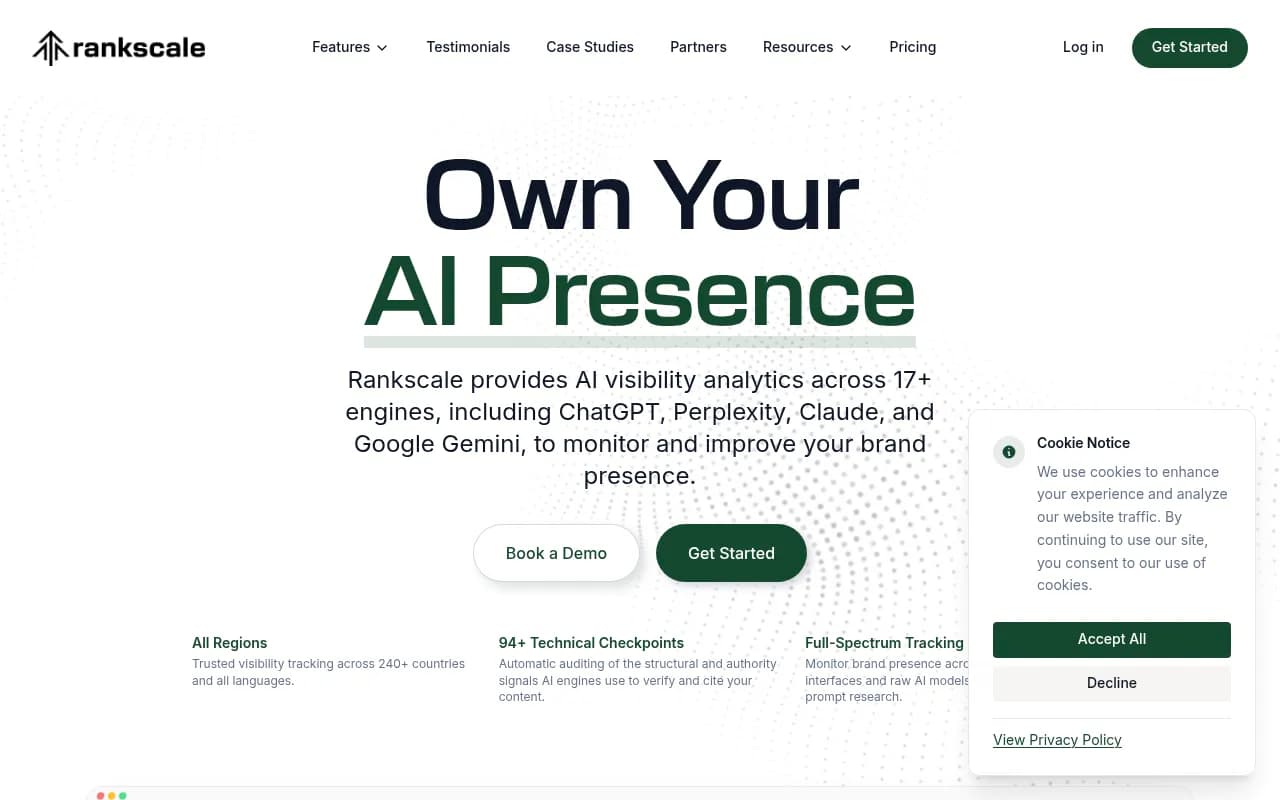
Rankscale is one of the budget challengers with broad engine coverage and unlimited seats -- worth checking if cost is the primary constraint.
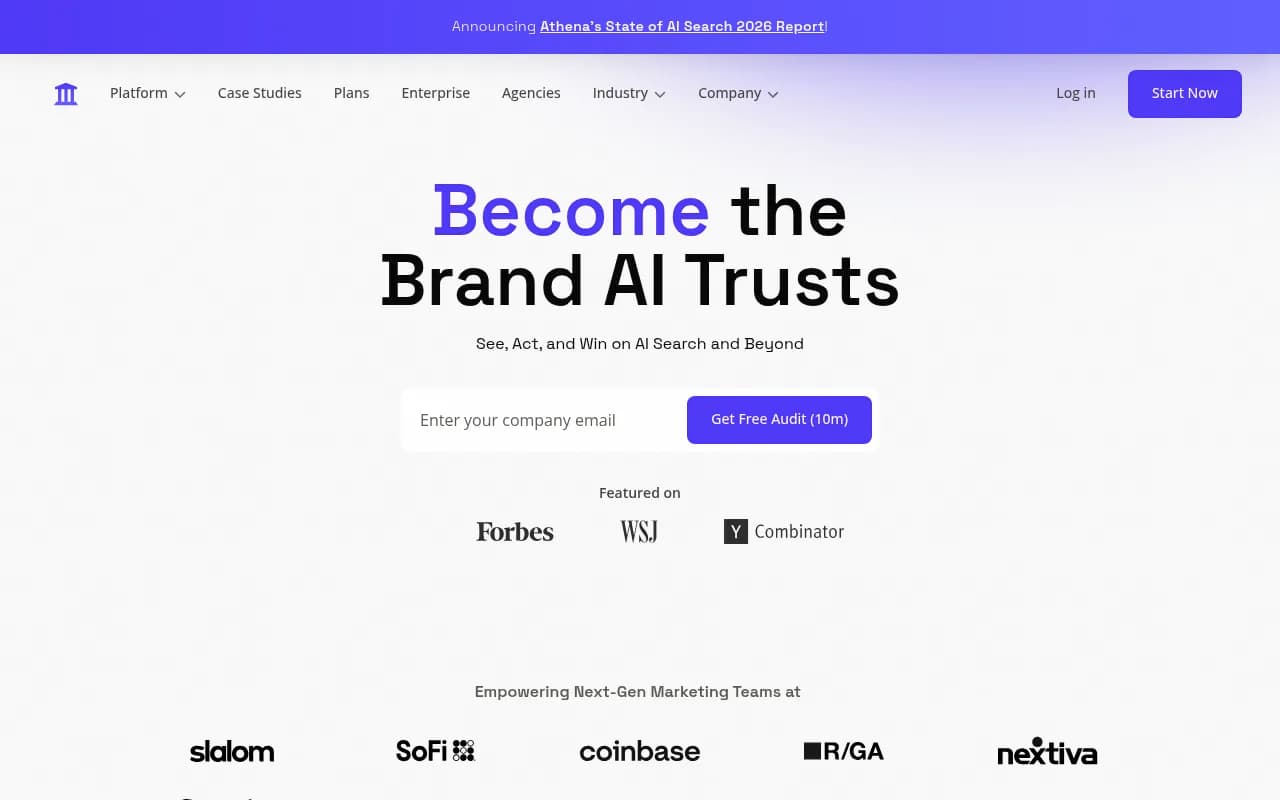
AthenaHQ sits slightly above the pure monitoring tier with some technical SEO focus, though it's still primarily a tracking product without content generation.
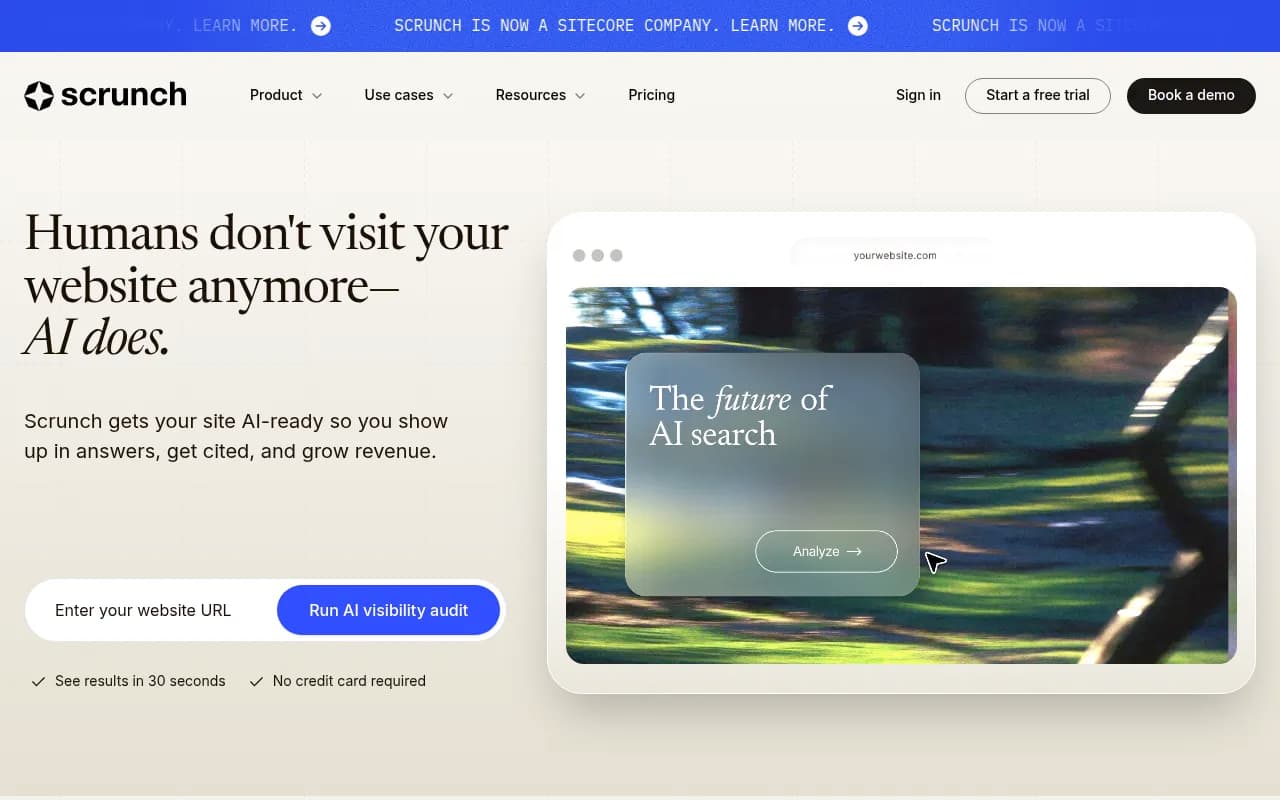
Scrunch AI is interesting because it combines monitoring with some content generation capability -- not as deep as a full optimization platform, but more than a pure tracker.
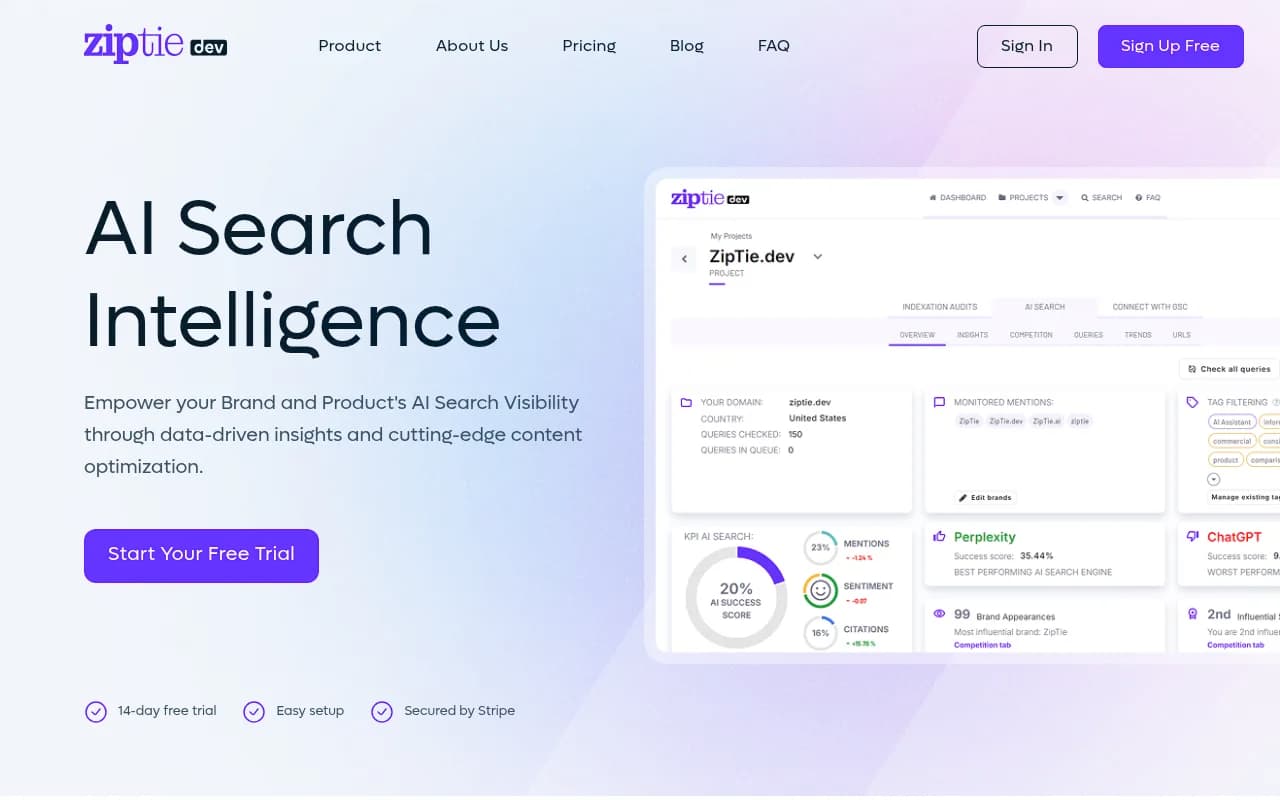
ZipTie is a focused, lightweight option if you want something even simpler than Otterly.
How to decide
Here's a simple decision tree:
- If you want the cheapest credible replacement for Hall with solid engine coverage: Otterly.AI
- If you need strong analytics and your audience is international: Peec AI
- If you need Claude and Gemini coverage without Enterprise pricing: Otterly.AI (Peec locks these behind Enterprise)
- If you're a developer-heavy team that wants to query brand data from AI tools directly: Otterly.AI (MCP integration)
- If monitoring alone isn't enough and you need to actually improve your AI visibility: Promptwatch (or Scrunch if budget is tighter)
The monitoring-only tools are fine for what they are. They're not fine if what you actually need is to move the needle.
Bottom line
Hall refugees have two solid options in the monitoring tier: Otterly.AI if you want accessible pricing and broad engine coverage, Peec AI if you want deeper analytics and international flexibility. Both are honest, functional products that will tell you where you stand in AI search.
What they won't do is help you change where you stand. If that's the gap you're trying to close, the monitoring tier isn't the right category -- and this might be the right moment to make that jump.