Key takeaways
- The currency of LLMs is mentions across training data and crawlable web content -- not links like traditional SEO
- Non-branded queries ("best CRM for startups") are where most AI-driven discovery actually happens, and most brands ignore them completely
- Getting cited requires being present in the sources AI models trust: authoritative content, third-party mentions, Reddit, YouTube, and review sites
- You need to close content gaps -- the specific questions AI models are already answering for competitors but not for you
- Tracking your progress requires running structured prompts regularly, not just checking once and hoping
Why non-branded queries are the real prize
Most brands, when they first think about AI visibility, start by typing their own name into ChatGPT. That's understandable. But it's also the wrong place to focus.
When someone types "best project management tool for remote teams" or "what CRM should a 10-person startup use" into ChatGPT, they're not looking for your brand specifically -- they're looking for a recommendation. And if ChatGPT doesn't mention you in that answer, you simply don't exist to that person. They'll buy from whoever does get mentioned.
This is the non-branded query problem, and it's where most of the AI-driven discovery actually happens. Rand Fishkin at SparkToro put it well in a breakdown of how LLMs generate answers: the currency of large language models isn't links, it's mentions -- specifically, words that appear frequently near other words across training data. If your brand name doesn't appear alongside the problem you solve in enough places across the web, the model won't associate you with that problem.
That changes the entire game. Traditional SEO rewarded you for getting links. GEO (Generative Engine Optimization) rewards you for getting mentioned -- in the right context, on the right types of sources, repeatedly.
How ChatGPT decides what to recommend
Before you can influence the answer, you need to understand how it's constructed.
ChatGPT and other LLMs pull from two sources when generating recommendations:
- Training data -- the massive corpus of web content the model was trained on. This is relatively static and changes only when the model is retrained.
- Live retrieval (via browsing/search) -- when ChatGPT searches the web in real time to supplement its answer. This is increasingly common, especially for product recommendations and "best of" queries.
For non-branded queries, both matter. Your brand needs to appear in training data (which means being mentioned across authoritative sources over time) and in live search results (which means your own content and third-party mentions need to be crawlable and relevant right now).
The practical implication: there's no single lever to pull. You need a multi-channel presence that builds over months, not a one-time optimization.
Step 1: Find out where you're invisible
You can't fix what you don't know is broken. Start by running a structured audit.
Pick 15-20 non-branded prompts that represent how your ideal customers would describe their problem to ChatGPT. Think:
- "What's the best [your category] for [your ICP]?"
- "How do I solve [problem your product addresses]?"
- "What tools do [your target persona] use for [job to be done]?"
Run each prompt in ChatGPT (and ideally Perplexity and Google AI Overviews too -- they behave differently). Note which brands get mentioned, which sources get cited, and whether you appear at all.
This gives you your baseline. You'll probably find that a handful of competitors show up consistently while you're absent, or that you appear for some queries but not others.
Doing this manually is fine for a one-time audit, but it gets tedious fast. Platforms like Promptwatch automate this -- tracking which prompts your competitors rank for but you don't, and surfacing the specific content gaps behind each one.
Step 2: Understand why competitors are getting cited
When a competitor shows up in an AI answer and you don't, there's usually a traceable reason. Either:
- They have a piece of content that directly answers the query in a clear, structured way
- They're mentioned in third-party sources that AI models trust (review sites, industry publications, Reddit threads)
- They've been around longer and accumulated more mentions over time
Look at the sources ChatGPT cites when it recommends a competitor. If it's citing a G2 review page, a TechCrunch article, or a specific Reddit thread, that tells you where you need to build presence.
The HubSpot team ran this experiment for product recommendation queries and found that the brands appearing most often in ChatGPT's answers weren't necessarily the biggest brands -- they were the ones with the most consistent presence across review sites, comparison articles, and community discussions. That's actionable.
Step 3: Create content that answers the exact questions AI models are citing
This is where most brands go wrong. They create content for humans browsing Google, not for AI models synthesizing answers.
Content that gets cited in AI answers tends to share a few characteristics:
- It directly and completely answers a specific question, without burying the answer in preamble
- It uses clear structure (headers, lists, definitions) that makes it easy to extract
- It covers the topic with enough depth that it's the authoritative source, not just another take
- It's written in a way that would make sense quoted out of context
A Reddit commenter in r/SEO described it well: "Write very detailed, no-fluff, technical-documentation-style posts." That's not a bad heuristic. Think less "engaging blog post" and more "the page you'd want to land on if you needed the definitive answer."
Practically, this means:
- Write dedicated pages for each non-branded query you're targeting
- Include a clear, direct answer in the first paragraph (don't make the model hunt for it)
- Use FAQ sections that mirror how people actually phrase questions to AI
- Cover comparisons, use cases, and "best for" angles -- these are exactly the queries AI gets asked
For content creation at scale, tools like Clearscope help you optimize individual pieces against real search data.
If you want content that's specifically engineered around AI prompt data rather than traditional search, Promptwatch's Content Agents generate articles grounded in actual citation data and answer gap analysis -- which is a different input than keyword volume.
Step 4: Build third-party mentions in the right places
Your own website is only part of the picture. AI models heavily weight third-party sources, and for good reason -- they're harder to game and more likely to reflect genuine quality signals.
The sources that matter most for non-branded query visibility:
Review and comparison sites. G2, Capterra, Trustpilot, Product Hunt, and category-specific review sites are heavily crawled and frequently cited. Make sure your profiles are complete, your reviews are recent, and you're listed in the right categories.
Industry publications and blogs. Getting mentioned in a roundup article ("10 best tools for X") on a respected industry site is one of the most direct paths to AI citation. These articles are exactly the kind of content LLMs pull from when generating recommendations.
Reddit. This one surprises people, but Reddit threads show up in AI citations constantly. Authentic mentions in relevant subreddits -- where real users recommend your product in context -- carry real weight. You can't fake this, but you can participate genuinely in communities where your product is relevant.
YouTube. Review videos and tutorials on YouTube are increasingly cited by AI models. If there are no YouTube videos reviewing your product, that's a gap worth addressing -- either by creating your own or by working with creators in your space.
Tools like Respona can help you build the outreach workflows to get mentioned in more of these third-party sources.
Step 5: Make your content easy for AI crawlers to find and read
Even great content won't get cited if AI crawlers can't access it properly. This is a technical layer that most GEO guides skip over.
A few things to check:
- Your robots.txt isn't blocking AI crawlers (GPTBot, ClaudeBot, PerplexityBot, etc.)
- Your key pages load quickly and aren't hidden behind JavaScript that crawlers can't render
- Your site structure makes it clear what each page is about (clean URLs, descriptive titles, schema markup where relevant)
- You're not accidentally noindexing pages you want AI models to find
Beyond basic crawlability, structured data (schema markup) helps AI models understand the context of your content. FAQ schema, HowTo schema, and Product schema all give models cleaner signals about what your content covers.
If you want visibility into which AI crawlers are actually hitting your site, which pages they're reading, and whether they're encountering errors, Promptwatch's crawler log feature shows exactly this -- down to the specific bot and timestamp.
Step 6: Track your progress with structured prompt monitoring
Running your audit once isn't enough. AI model behavior changes as models are updated, as new content gets indexed, and as competitors publish new material. You need to track your visibility over time.
The manual approach: run your 15-20 target prompts every two weeks, log the results in a spreadsheet, and track whether your mention rate is improving. It's tedious but it works.
The automated approach: use a platform that runs prompts on a schedule and tracks your mention rate, citation rate, and share of voice against competitors.
Several tools in this space handle prompt monitoring:
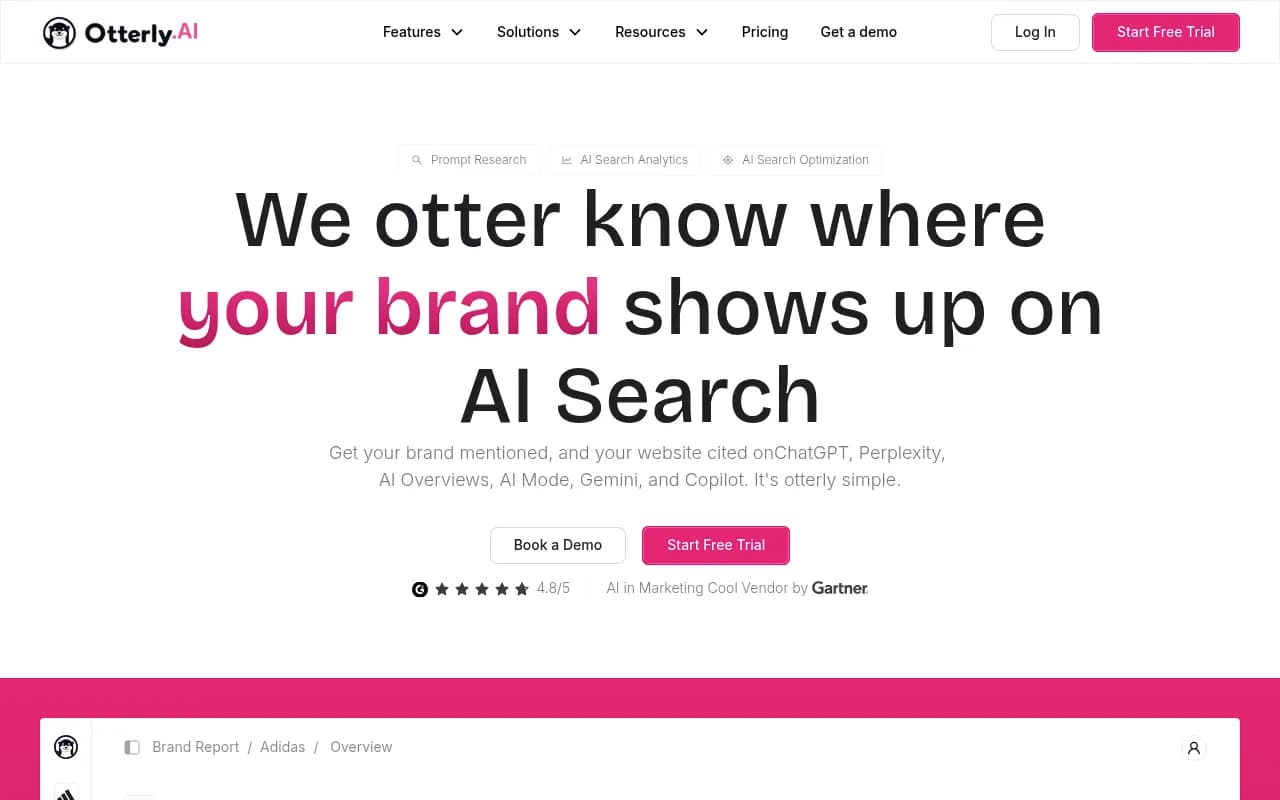
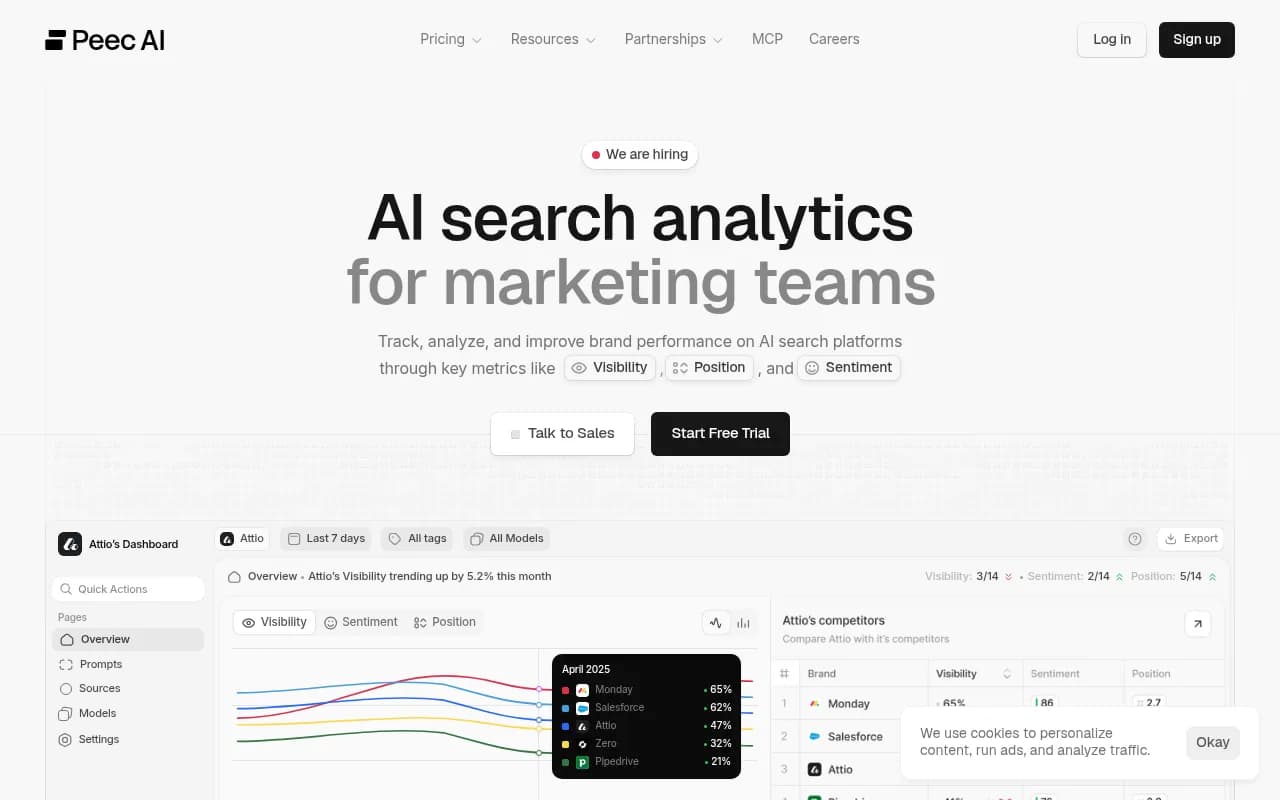
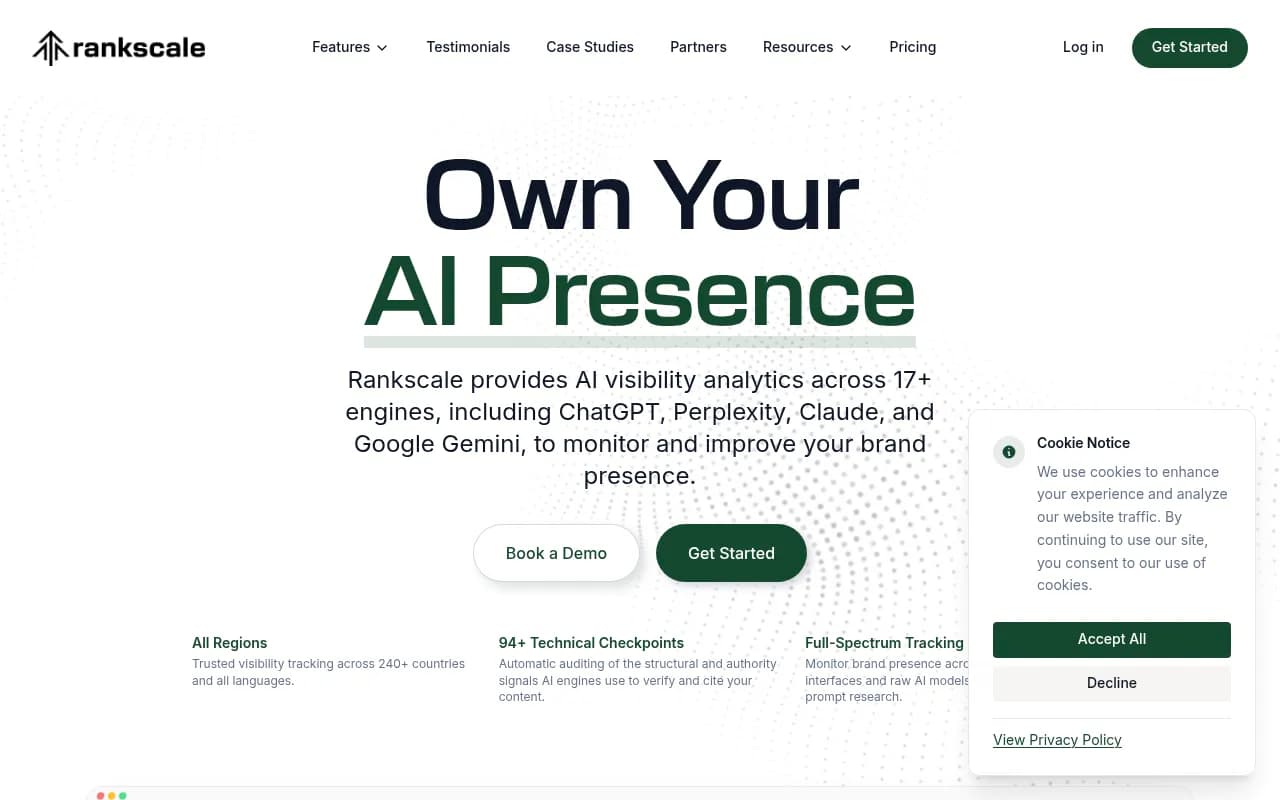
Most of these are monitoring-only -- they show you where you stand but don't help you do anything about it. If you want to close the loop from tracking to action, Promptwatch is the only platform that combines prompt monitoring, answer gap analysis, and content generation in one workflow.
Comparison: AI visibility tools for non-branded query tracking
| Tool | Prompt monitoring | Answer gap analysis | Content generation | Crawler logs | Best for |
|---|---|---|---|---|---|
| Promptwatch | Yes | Yes | Yes | Yes | Full GEO workflow |
| Otterly.AI | Yes | Limited | No | No | Budget monitoring |
| Peec AI | Yes | Basic | No | No | Small teams |
| AthenaHQ | Yes | No | No | No | Enterprise monitoring |
| Rankscale | Yes | No | No | No | Rank tracking |
| Profound | Yes | Yes | No | No | Enterprise analytics |
| Semrush AI Visibility | Yes | No | No | No | Traditional SEO teams |
What actually moves the needle (and what doesn't)
A few things worth being honest about:
What works:
- Publishing content that directly answers the specific non-branded queries you're targeting
- Getting mentioned in third-party sources that AI models already cite in your category
- Building a consistent presence on Reddit and in industry publications over time
- Making sure your technical setup doesn't block AI crawlers
What doesn't work (or works much less than people claim):
- Stuffing your content with keywords the way you would for Google
- Submitting your sitemap and hoping for the best
- One-time PR hits without sustained mention-building
- Optimizing only your homepage
The timeline is also worth being realistic about. Getting into training data takes time -- models are retrained periodically, not continuously. Live retrieval is faster, but even there, you're competing with established sources. Expect a 3-6 month runway before you see meaningful movement in non-branded query visibility.
A practical 90-day plan
Month 1: Audit and gap identification
- Run your 15-20 target prompts across ChatGPT, Perplexity, and Google AI Overviews
- Document which competitors appear and which sources get cited
- Identify your top 5 content gaps -- the queries where competitors are visible and you're not
Month 2: Content and presence building
- Publish dedicated pages targeting each of your top 5 content gaps
- Audit your profiles on G2, Capterra, and relevant review sites -- update and complete them
- Identify 3-5 Reddit communities where your product is relevant and start participating genuinely
Month 3: Measure and iterate
- Re-run your target prompts and compare against your baseline
- Look at which new content is getting crawled by AI bots
- Double down on the content types and channels that are showing early traction
This isn't a one-time project. The brands that win in AI search are the ones that treat it as an ongoing channel, not a campaign.
The bottom line
Getting your brand into ChatGPT's answers for non-branded queries is fundamentally about being the most credible, most-mentioned answer to the questions your customers are already asking AI. That means creating content that directly answers those questions, building presence in the third-party sources AI models trust, and tracking your visibility systematically enough to know what's working.
The brands that figure this out now will have a real advantage. Most of your competitors are still optimizing for Google. The window to build AI visibility before it gets crowded is narrower than it was a year ago -- but it's still open.