Key takeaways
- New brands face a "cold start" problem: AI engines prefer sources with existing third-party validation, so you need a structured plan to build those signals from scratch.
- Third-party sources drive roughly 85% of brand mentions in commercial AI queries, meaning off-site presence matters as much as your own content.
- The 90-day plan breaks into three phases: foundation (days 1-30), momentum (days 31-60), and scale (days 61-90).
- Tracking your progress from day one is non-negotiable -- you can't optimize what you can't measure.
- Early movers have a real advantage: AI recommendation algorithms are still maturing, so brands that build the right signals now will be harder to displace later.
Getting cited in ChatGPT is not magic. It's not about gaming an algorithm or finding some secret prompt structure. It's about giving AI models enough evidence to trust your brand when a user asks a relevant question. For new brands, that means building that evidence from nothing -- which is genuinely hard but very doable with the right sequence of actions.
This guide lays out a month-by-month plan based on what actually works in 2026. Not theory. Concrete steps.
Why new brands struggle with AI visibility
Here's the problem in plain terms. ChatGPT, Perplexity, and Google AI Overviews don't just pull from your website. They synthesize information from across the web: review sites, Reddit threads, YouTube videos, news articles, backlinks, and community discussions. When a user asks "what's the best UV blocker for sensitive skin?", the AI looks for brands that appear consistently across multiple independent sources.
New brands have none of that. No reviews. No Reddit mentions. No backlinks from authoritative sites. So the AI either ignores you entirely or, worse, hallucinates something inaccurate about you.
AirOps analyzed 21,311 brand mentions across GPT-5, Claude, and Perplexity in late 2025. Third-party sources generated 85% of brand mentions for commercial queries. Your own website content accounted for the rest. That ratio tells you everything about where to focus your energy.
The good news: AI search is still young. The recommendation layers haven't hardened the way Google's PageRank did over two decades. A brand that builds the right signals in 2026 can establish a position that would have taken years in traditional SEO.
Before you start: set your baseline
You can't measure progress without a starting point. Before doing anything else, spend a day or two running your brand through the major AI engines manually.
Ask ChatGPT, Perplexity, Claude, and Gemini questions your target customers would actually ask. "What are the best [your category] tools for [your use case]?" See if you appear. See who does appear. Note the exact phrasing of questions that surface competitors.
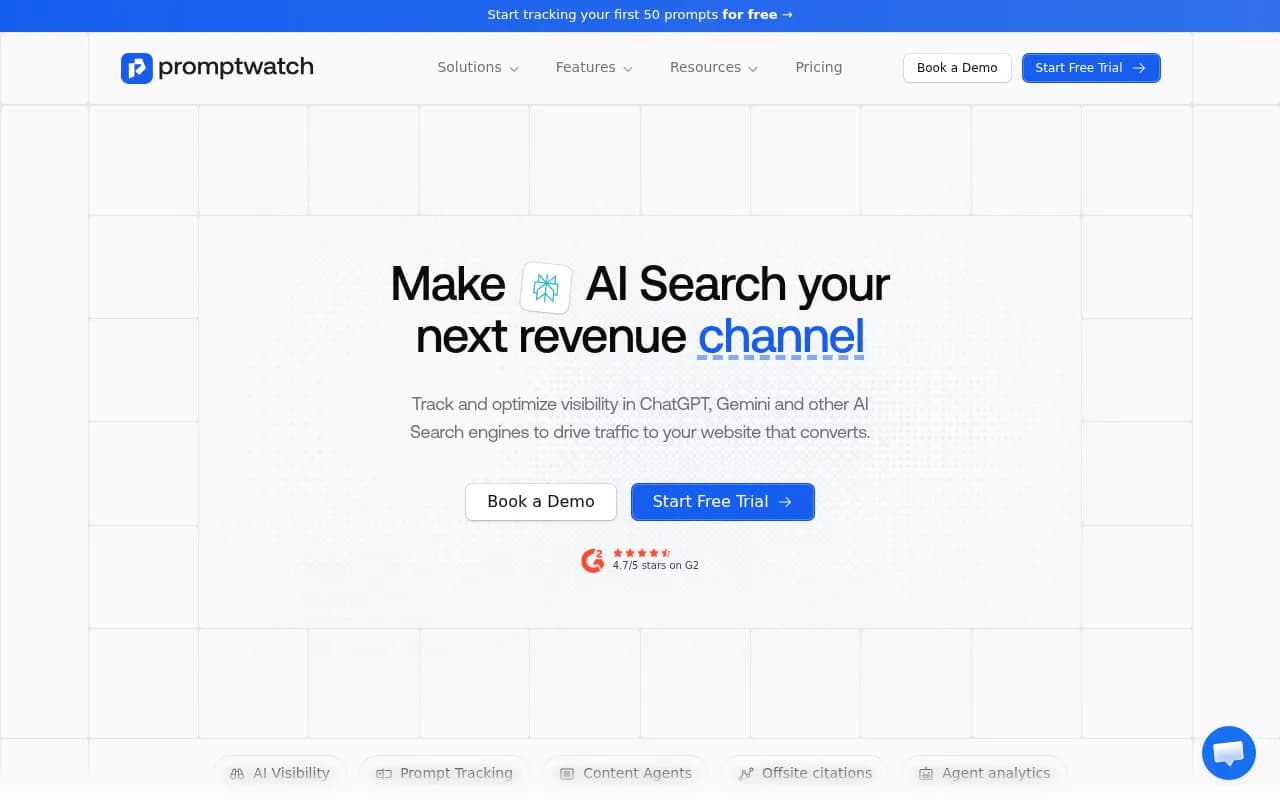
This baseline audit does two things: it tells you where you stand, and it shows you which prompts are worth targeting. For ongoing tracking, Promptwatch can automate this across 10+ AI models and show you exactly which prompts competitors rank for that you don't.
Month 1 (days 1-30): build the foundation
The first month is about one thing: making your brand legible to AI models. AI engines need to understand who you are, what you do, and why you're credible before they'll recommend you. Right now, you're a ghost.
Week 1-2: entity clarity
AI models build a mental model of your brand from structured and unstructured data across the web. If that data is inconsistent or thin, they won't recommend you confidently.
Start with the basics:
- Claim and fully complete your Google Business Profile, even if you're not a local business. This creates a structured entity signal.
- Set up a Wikipedia-style presence where possible (Wikidata, Crunchbase, LinkedIn company page). These are sources AI models actively reference.
- Make sure your website's "About" page clearly states: what you do, who you serve, where you're based, and what makes you different. Write it like you're explaining to someone who has never heard of you -- because the AI hasn't.
- Add structured data markup (Schema.org Organization schema at minimum) to your homepage. This helps AI crawlers parse your identity accurately.
- Ensure your NAP (name, address, phone) is consistent everywhere it appears online. Inconsistencies confuse entity resolution.
This isn't glamorous work, but it's the foundation everything else sits on.
Week 3-4: foundational content
Publish 3-5 pieces of content that answer the specific questions your target customers ask AI engines. Not blog posts optimized for Google keywords -- answers to real conversational queries.
The format matters. AI models prefer content that:
- Directly answers a question in the first paragraph
- Uses clear headings that mirror how someone would phrase a question
- Includes specific facts, numbers, and named entities (not vague claims)
- Has a clear author with credentials or a byline
Think about the "what is X", "how does X work", "best X for Y" queries in your category. Write one piece per query. Keep them focused and factual.
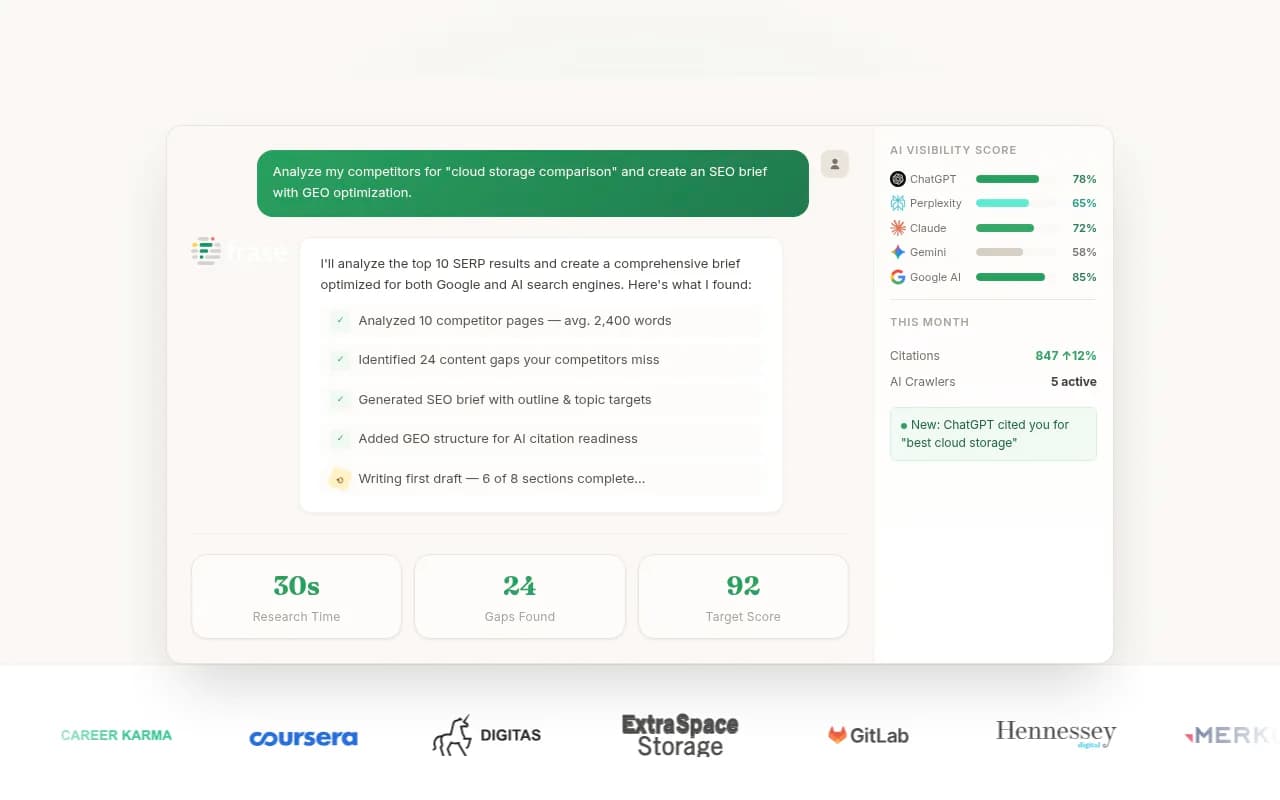
For content creation at this stage, tools like Frase can help you structure content around the questions AI models are already answering in your category.
Also start engaging on Reddit. Find the subreddits where your target customers ask questions. Don't promote yourself -- just answer questions helpfully. Reddit is one of the most heavily cited sources in AI responses, and early community presence pays dividends fast.
Month 2 (days 31-60): build momentum
By day 31, you have a clean entity, some foundational content, and a few Reddit interactions. Now you scale the signals that matter most: third-party mentions and backlinks.
Content at scale
Increase your publishing cadence to 2-3 pieces per week. At this stage, diversify your formats:
- Comparison posts ("X vs Y" style) tend to get cited heavily because they answer high-intent queries
- Listicles ("best tools for X") appear frequently in AI responses because they're easy to parse
- How-to guides with specific step-by-step instructions get cited when users ask procedural questions
Every piece should target a specific prompt you identified in your baseline audit. Don't write content for its own sake -- write content that fills a gap you've confirmed AI models are currently answering without you.
Clearscope is useful here for making sure your content covers the topics and entities that authoritative sources in your category include.

Reddit and community depth
Month 2 is when Reddit engagement should intensify. Move from occasional answers to consistent participation. Aim for 3-5 substantive contributions per week across relevant subreddits. The goal isn't to mention your brand -- it's to become a recognized voice in the community. When your brand does come up naturally, that mention carries weight.
Also look at Quora. It's less culturally dominant than Reddit but still heavily indexed by AI models, especially for "how to" and "what is" queries.
Backlink outreach
Start building relationships with sites that AI models already cite in your category. You can identify these by looking at the sources cited in AI responses to your target prompts. Reach out for:
- Guest post opportunities on industry blogs
- Product or service mentions in roundup posts
- Interviews or expert quotes in relevant publications
Respona can help manage outreach at scale without making it feel spammy.
PR and earned media
This is where a lot of new brands underinvest. A single mention in a credible industry publication can do more for your AI visibility than 20 blog posts on your own site. AI models weight third-party editorial mentions heavily.
Pitch journalists and editors with a specific angle tied to a trend or data point. "We analyzed X and found Y" is a much easier pitch than "we launched a product." If you have any proprietary data or a genuinely novel perspective, use it.
Month 3 (days 61-90): scale what's working
By now you have a pattern of what's generating traction. Some content pieces are getting backlinks. Some Reddit threads are driving traffic. Some outreach is converting. Month 3 is about doubling down on those channels, not starting new experiments.
Identify your traction channels
Look at your analytics. Which content pieces are earning backlinks? Which Reddit threads are driving referral traffic? Which queries are you starting to appear in when you run manual AI checks?
Put 70% of your effort into amplifying what's already working. If comparison posts are getting cited, write more comparison posts. If a particular subreddit is driving engagement, go deeper there.
Build expert credentials
AI models increasingly weight author expertise when deciding what to cite. If your content is attributed to a named author, that author should have a visible web presence: a LinkedIn profile, bylines on other publications, maybe a few quoted expert opinions in industry articles.
This isn't about personal branding for its own sake. It's about giving AI models a signal that the person behind the content knows what they're talking about.
Expand to YouTube and video
YouTube is cited more often in AI responses than most brands realize. A 10-minute video answering a specific question in your category can generate citations in Perplexity and Google AI Overviews. You don't need production value -- you need clarity and specificity.
Transcripts matter too. Make sure your video descriptions and transcripts include the exact language your target customers use when prompting AI engines.
Track your progress formally
By day 60, manual checking isn't enough. You need systematic tracking to see whether your efforts are moving the needle. Which prompts are you now appearing in? Which AI models are citing you? Which pages are getting crawled?
Promptwatch's page-level tracking shows exactly which pages are being cited, how often, and by which models. The crawler logs show when AI engines visit your site and whether they're encountering errors. This is the feedback loop that tells you whether month 3 is working.
The full 90-day plan at a glance
| Phase | Days | Focus areas | Key outputs |
|---|---|---|---|
| Foundation | 1-30 | Entity setup, structured data, foundational content, Reddit start | Clean entity, 3-5 content pieces, community presence |
| Momentum | 31-60 | Content at scale, backlink outreach, PR, Reddit depth | 20+ content pieces, first backlinks, media mentions |
| Scale | 61-90 | Double down on traction, expert credentials, YouTube, tracking | Measurable citation growth, identified winning channels |
What AI models actually look for when deciding to cite you
It's worth being explicit about the signals that drive citation decisions, because a lot of 90-day plans treat this as a black box.
AI models don't have a single ranking algorithm like Google's PageRank. They synthesize patterns from training data and real-time retrieval. But the signals that consistently correlate with citation include:
- Consistency of entity signals: your brand name, description, and category appear consistently across your site, social profiles, and third-party mentions
- Third-party validation: reviews, backlinks, and editorial mentions from sources the AI already trusts
- Content specificity: vague content gets ignored; specific, factual, well-structured content gets cited
- Recency: AI models with retrieval capabilities (like Perplexity) weight recent content more heavily
- Community presence: Reddit and Quora discussions that mention your brand signal real-world relevance
None of these are shortcuts. They're all things that take time to build -- which is exactly why starting now, with a structured plan, matters.
Tools to support your 90-day execution
You don't need a large stack to execute this plan. But a few tools make the work significantly more efficient.
For tracking AI citations across models:
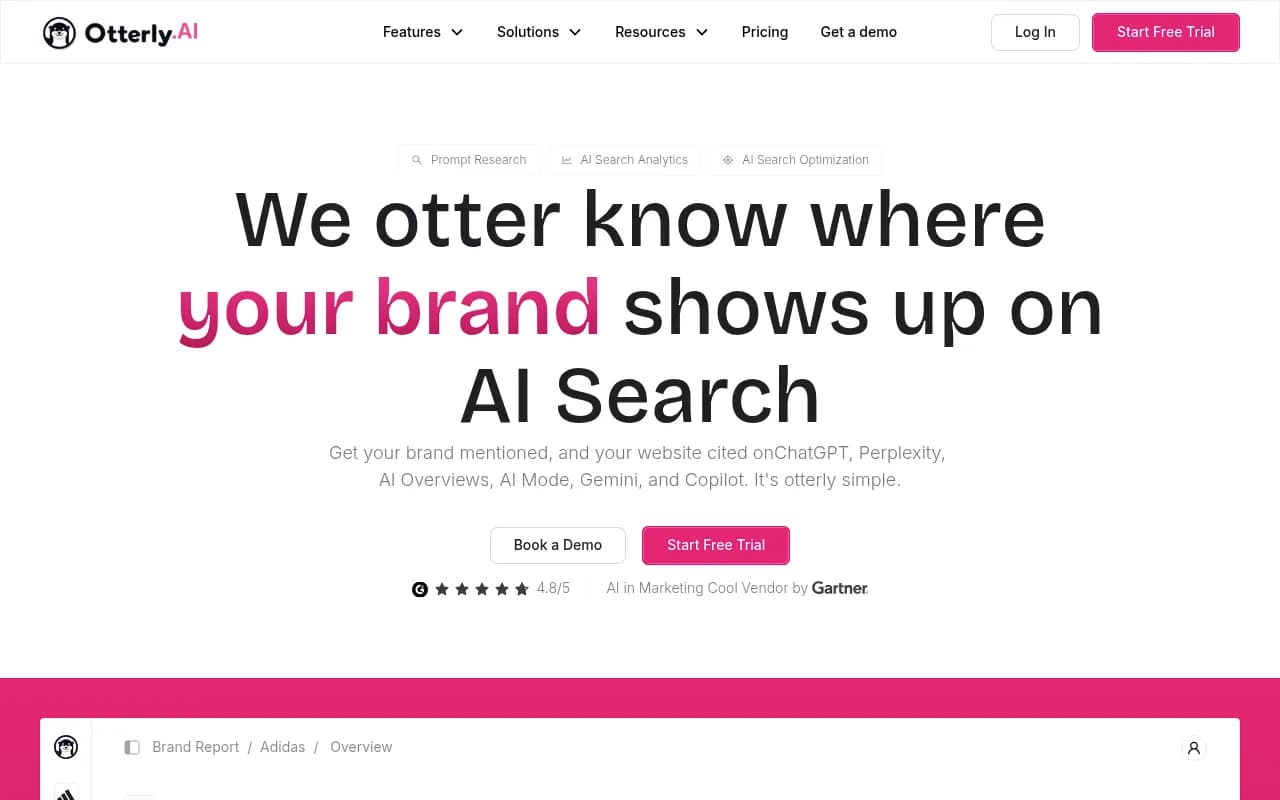
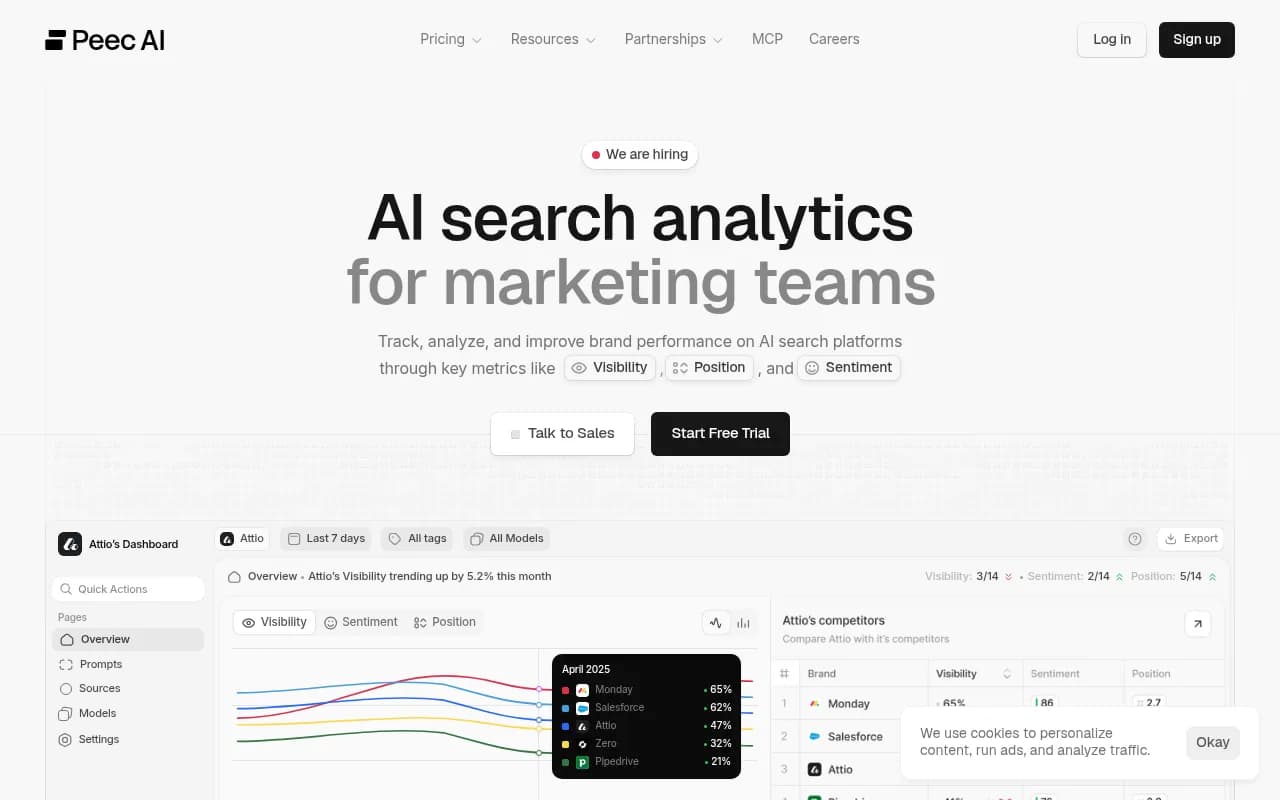
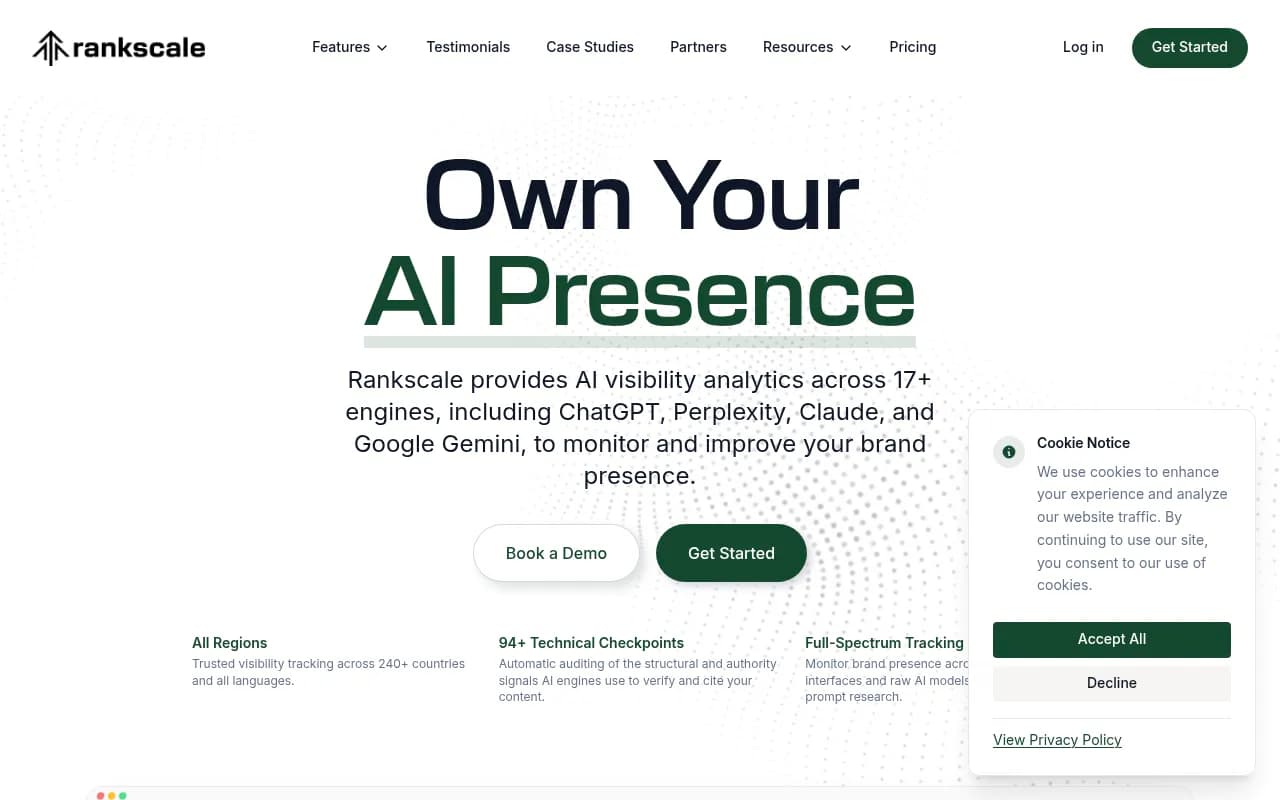
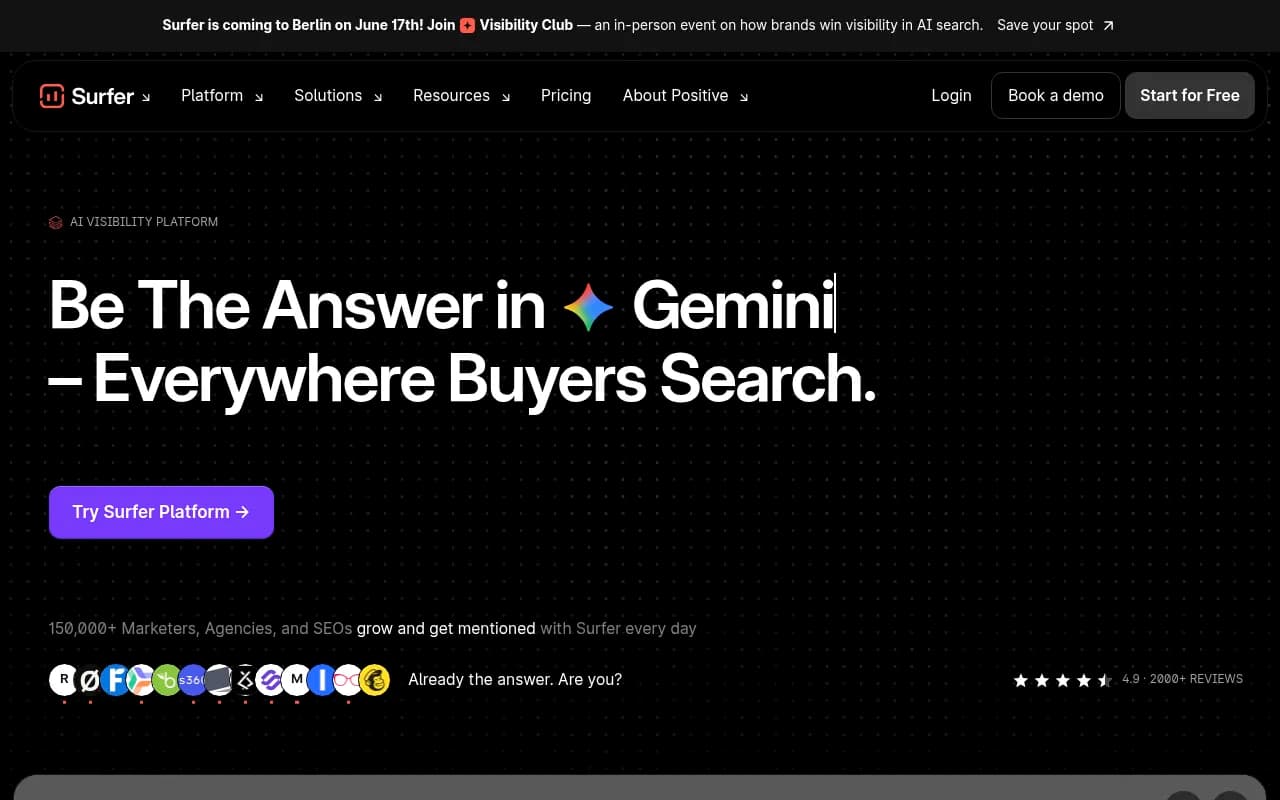
For content creation and optimization:
For link building and outreach:
For comprehensive AI visibility tracking with content gap analysis and crawler logs, Promptwatch is the most complete option -- it covers monitoring, gap analysis, and content generation in one place, which matters when you're a small team trying to move fast.
A realistic expectation check
Ninety days is enough to go from zero citations to appearing in AI responses for some prompts. It's not enough to dominate your category. UV Blocker's 38,000-click result came after six months, not three. The 90-day plan gets you to the point where AI models know you exist and have enough evidence to cite you for specific queries.
What you should realistically expect by day 90:
- Your brand appears in AI responses for at least some of your target prompts
- You have a measurable baseline to track improvement from
- You've identified which channels and content types are generating the most traction
- You have a backlink profile that's starting to register with AI retrieval systems
What you shouldn't expect: overnight dominance, citations for every prompt you care about, or results without consistent execution. The brands that win in AI search are the ones that treat it as a compounding investment, not a one-time campaign.
The 90-day plan gives you the foundation. What you build on top of it is up to you.