Key takeaways
- ChatGPT cites content that is structured, authoritative, and widely referenced -- not just content that ranks on Google
- Building a brand knowledge base means creating a consistent, crawlable body of content that AI models can extract facts from and attribute to you
- Entity recognition (being a "known thing" across the web) is the foundation -- without it, content alone won't move the needle
- Off-site mentions in credible third-party sources multiply the effect of your on-site content
- Tracking which prompts surface your brand -- and which don't -- is how you find the gaps worth fixing
There's a specific frustration that's become common in 2026: a brand publishes good content, ranks reasonably well on Google, and still gets zero mentions when someone asks ChatGPT to recommend tools or services in their category. A competitor with a smaller site gets named every time.
What's going on? The answer is that ChatGPT doesn't rank pages -- it synthesizes information from sources it considers credible and well-structured. If your brand isn't part of that synthesis, it's not a traffic problem. It's a knowledge problem. You haven't given AI models enough structured, corroborated information to confidently cite you.
This guide walks through how to fix that.
How ChatGPT actually decides what to cite
Before building anything, it helps to understand the mechanics. ChatGPT draws on two separate pools of information:
The first is its training data -- the massive corpus of web content it was trained on. This includes Wikipedia, major publications, forums, documentation, blog posts, and anything else that was publicly accessible and crawlable at training time. If your brand appeared in that data in a meaningful way, you have some baseline recognition.
The second is real-time retrieval. When ChatGPT Search is active (the default in most paid and free tiers now), it fetches live web content to supplement its training. This is where your current content strategy matters most -- because it's where you can actually influence results today.
What both pools have in common: they favor content that is specific, well-structured, and corroborated by other sources. Vague brand copy doesn't get cited. Neither does thin content that says a lot without committing to any particular fact.
The practical implication: your brand knowledge base needs to give AI models something concrete to work with. Definitions, comparisons, statistics, named methodologies, clear answers to specific questions. That's the raw material of a citation.
Step 1: Build your entity foundation
"Entity" is the technical term for a named thing that AI models and search engines recognize as real and distinct. Google has an entity graph. ChatGPT has something similar baked into its training. If your brand isn't recognized as an entity -- a company with a clear identity, category, location, and set of attributes -- you're starting from a significant disadvantage.
What entity recognition actually requires
Entity recognition isn't something you apply for. It emerges from consistency. When your brand name, category, founding date, location, and key people appear in the same way across your website, your Wikipedia page (if you have one), Wikidata, Crunchbase, LinkedIn, press coverage, and third-party directories, AI models can confidently attribute information to you.
The gaps that hurt most:
- Your website says you're a "marketing automation platform" but Crunchbase calls you a "SaaS company" and LinkedIn says "software" -- the inconsistency creates ambiguity
- Your brand name is generic enough that it gets confused with other entities (a real problem for brands with common names)
- You have no presence on any third-party reference source -- no Crunchbase, no G2 profile, no press mentions, no Wikipedia article
Fix these first. They're not glamorous, but they're load-bearing.
Schema markup: the shortcut to entity clarity
Adding structured data to your website is one of the fastest ways to tell AI crawlers exactly what your brand is. At minimum, implement:
Organizationschema with your official name, URL, logo, founding date, and descriptionWebSiteschema with aSearchActionif you have site searchPersonschema for key founders or executives who are public figuresProductorServiceschema for your core offerings
This doesn't guarantee citations, but it removes ambiguity. When a crawler hits your homepage and sees a clean Organization schema, it knows what it's looking at.
Step 2: Structure your content for extraction
The most common mistake brands make is writing content for humans to read linearly. That's fine for blog engagement, but AI models don't read linearly. They extract. They pull specific facts, definitions, and answers out of your content and reassemble them into responses.
Content that gets extracted and cited tends to share a few structural characteristics.
Write in answer-first format
Every piece of content should answer its core question in the first two to three sentences. Don't build to the answer -- lead with it. This is sometimes called the "inverted pyramid" structure, borrowed from journalism.
If you're writing a page about "what is [your product category]", the first sentence should define it. Not "In today's fast-moving digital environment..." -- just the definition. AI models will pull that definition and attribute it to your page.
Use explicit headers that mirror real questions
Headers like "How does X work?" and "What's the difference between X and Y?" match the conversational queries users type into ChatGPT. When your headers mirror those queries, your content becomes more likely to surface as a relevant source.
Avoid clever or vague headers ("The magic behind our platform") in favor of descriptive ones ("How our attribution model works").
Include named facts and statistics
Specific numbers get cited. "Brands using structured content see 3x more AI citations than those using unstructured copy" is more citable than "structured content performs better." If you have original research or proprietary data, publish it with clear attribution to your brand. That data becomes a citation magnet.
Create definitive reference pages
Pick the five to ten topics where you want to be the authoritative source. Build long, comprehensive pages on each -- not thin overviews, but the kind of pages that answer every reasonable follow-up question. These are sometimes called "pillar pages" in traditional SEO, but the goal here is slightly different: you want a page that AI models treat as the reference document for that topic.
Step 3: Publish content that answers the prompts your buyers actually use
This is where most brands have a genuine gap. They publish content based on keyword research, which tells them what people search on Google. But the prompts people use in ChatGPT are different -- more conversational, more specific, often more comparative ("what's the best X for Y use case?").
You need to know which prompts are relevant to your category, which ones your competitors are getting cited for, and which ones you're missing entirely.
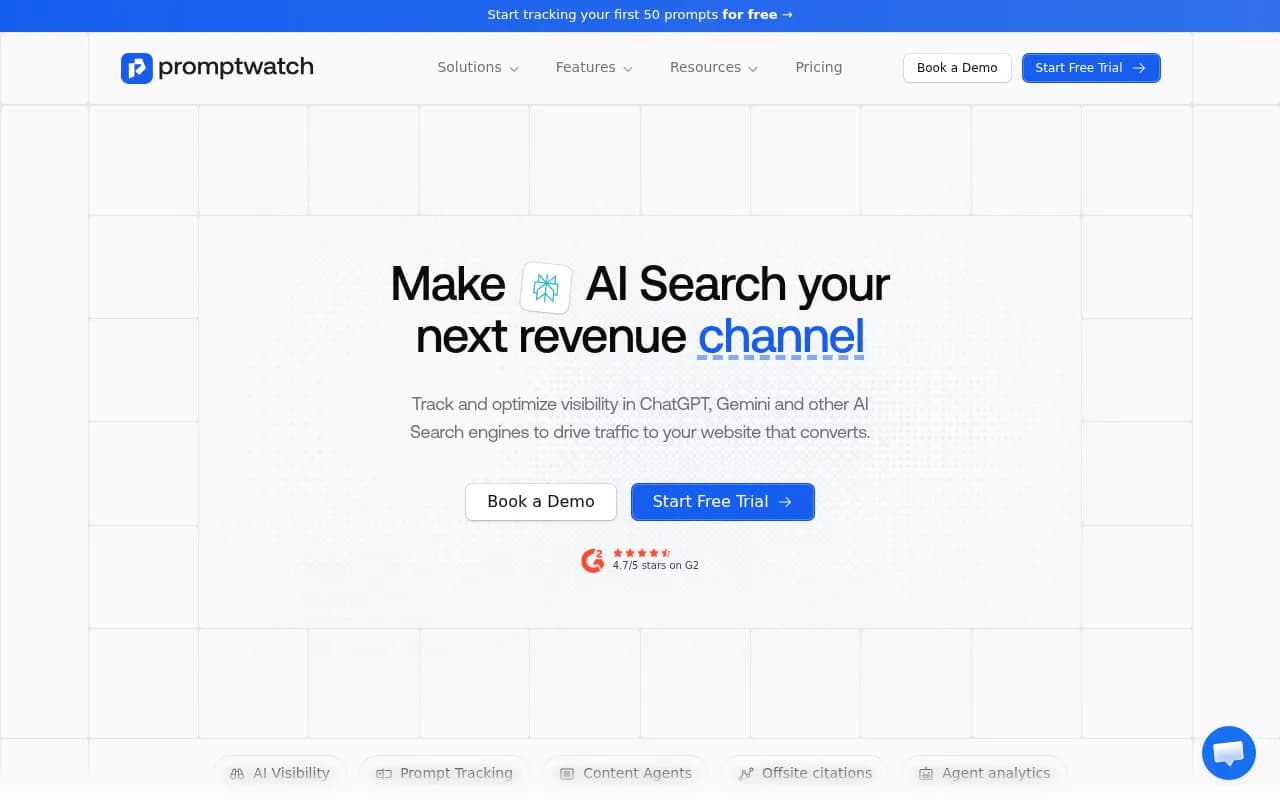
Tools like Promptwatch are built specifically for this -- they track which prompts surface your brand across ChatGPT, Perplexity, Gemini, and other AI engines, and show you the gaps where competitors appear but you don't.
Once you know the gaps, you can create content that directly addresses those prompts. A page that answers "what's the best [your category] tool for [specific use case]" -- with your brand positioned as a credible option -- is more likely to get cited than a generic product page.
Content formats that AI models cite most
Based on what tends to surface in AI responses:
| Content format | Why it gets cited | Best for |
|---|---|---|
| Comparison pages | Structured, factual, answers "X vs Y" prompts | Category-level visibility |
| Original research / data | Unique, citable statistics | Building authority |
| Definitive guides | Comprehensive, answer-first | Broad topic coverage |
| Listicles with criteria | Matches "best X for Y" prompts | Purchase-intent queries |
| FAQ pages with schema | Directly matches conversational queries | Long-tail prompt coverage |
| Case studies with metrics | Specific, credible, named outcomes | Trust signals |
The common thread: specificity. Vague content doesn't get cited. Content with named facts, clear structure, and a definitive point of view does.
Step 4: Earn off-site mentions that corroborate your brand
Your own website is one signal. But AI models weight third-party corroboration heavily -- because anyone can say anything on their own site. When credible external sources mention your brand in the same context, it reinforces the entity signal and increases the likelihood of citation.
The sources that matter most:
Industry publications and roundups
Getting mentioned in a "best tools for X" article on a credible industry site is worth more than most on-site content. These roundups are exactly the kind of content ChatGPT pulls from when answering "what are the best X tools?" queries. Identify the top five to ten publications in your category and build relationships with their writers.
Reddit and community forums
This is underrated. ChatGPT cites Reddit threads regularly, especially for product recommendations and comparisons. Real user discussions in relevant subreddits -- where your brand gets mentioned positively and accurately -- feed directly into AI responses. You can't manufacture this, but you can participate authentically and make sure your brand is visible in the communities where your buyers hang out.
G2, Capterra, and review platforms
Review platforms are heavily cited by AI models for software and service recommendations. A strong G2 profile with detailed reviews that use your key terminology is a legitimate citation source. Make sure your profile is complete, your category is correct, and your description matches how you describe yourself on your own site.
Press coverage with specific claims
A press mention that says "Company X raised $10M" or "Company X's platform processes 4.5 billion data points" gives AI models specific, attributable facts. Generic press releases don't have the same effect. Pitch stories with concrete data points.
YouTube and video content
AI models increasingly surface YouTube content in responses. A well-structured video with a clear transcript -- especially one that answers a specific question -- can become a citation source. The transcript is what gets indexed, so make sure it's clean and keyword-rich.
Step 5: Make your content technically accessible
None of the above matters if AI crawlers can't access your content. This is more common a problem than it sounds.
Check your robots.txt and crawl settings
Some brands accidentally block AI crawlers in their robots.txt. GPTBot (OpenAI's crawler), ClaudeBot, PerplexityBot, and Google's various crawlers all have specific user-agent strings. Make sure none of them are blocked unless you have a specific reason.
Fix crawl errors and page speed
Slow pages and crawl errors reduce the likelihood that AI crawlers will successfully index your content. A page that returns a 500 error or takes eight seconds to load might get skipped. Standard technical SEO hygiene applies here.
Use clean, parseable HTML
AI crawlers struggle with content buried in JavaScript that requires client-side rendering. If your key content -- product descriptions, comparison tables, FAQs -- lives inside React components that don't server-render, crawlers may not see it. Audit your most important pages to confirm the content is in the raw HTML.
Implement a clear internal linking structure
Internal links help crawlers understand the relationship between your pages and the relative importance of each. Your most important reference pages should be linked from multiple places on your site.
Step 6: Track what's working and iterate
Building a brand knowledge base is not a one-time project. AI models update their training data, new competitors publish content, and the prompts your buyers use evolve. You need a feedback loop.
At minimum, track:
- Which prompts in your category surface your brand vs. competitors
- Which of your pages are being cited, and by which AI models
- How your citation rate changes after publishing new content
- Which off-site sources are driving AI mentions
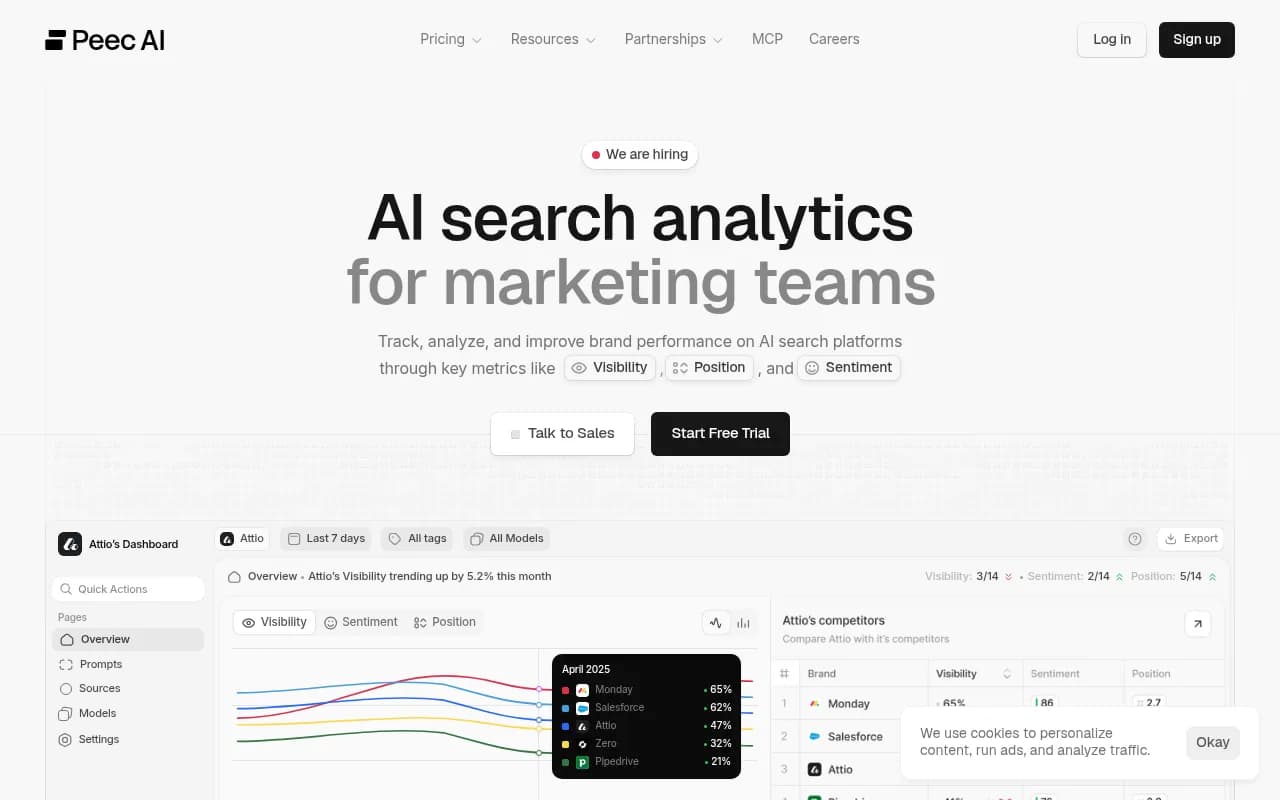
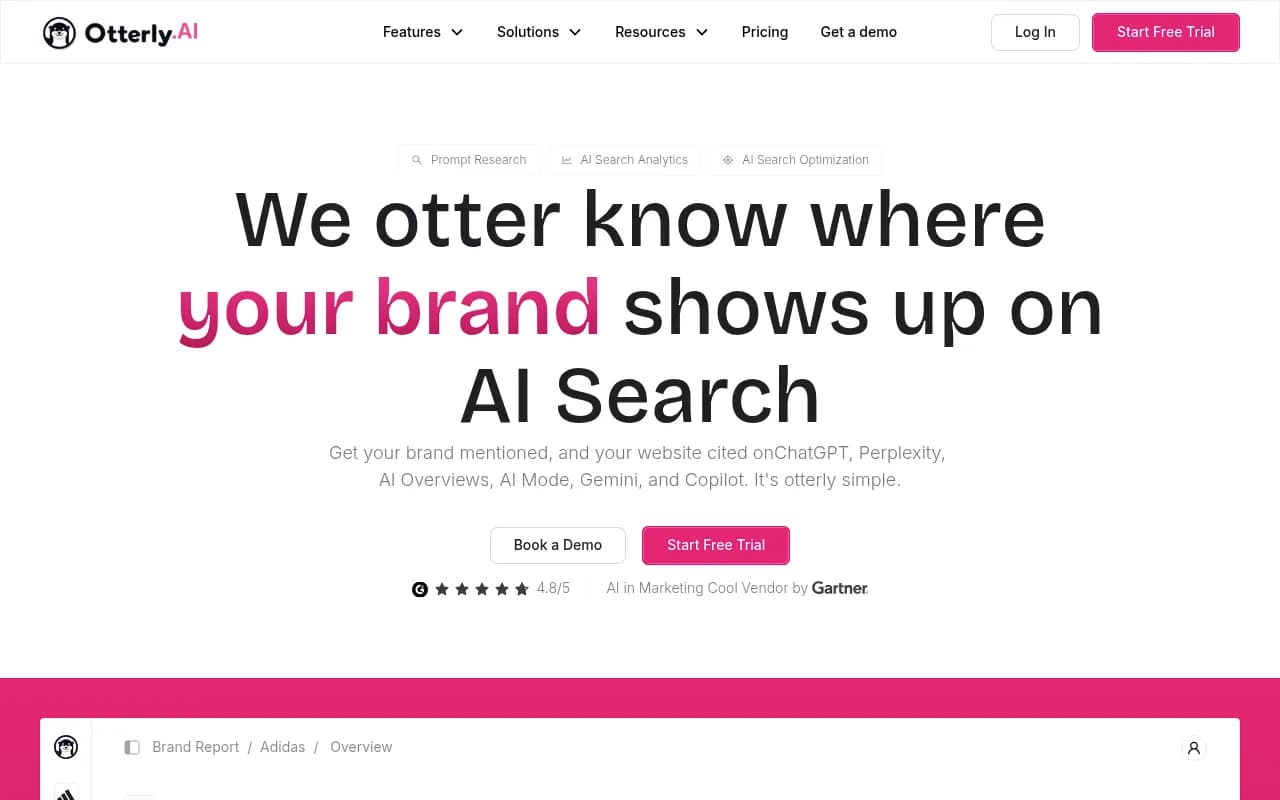
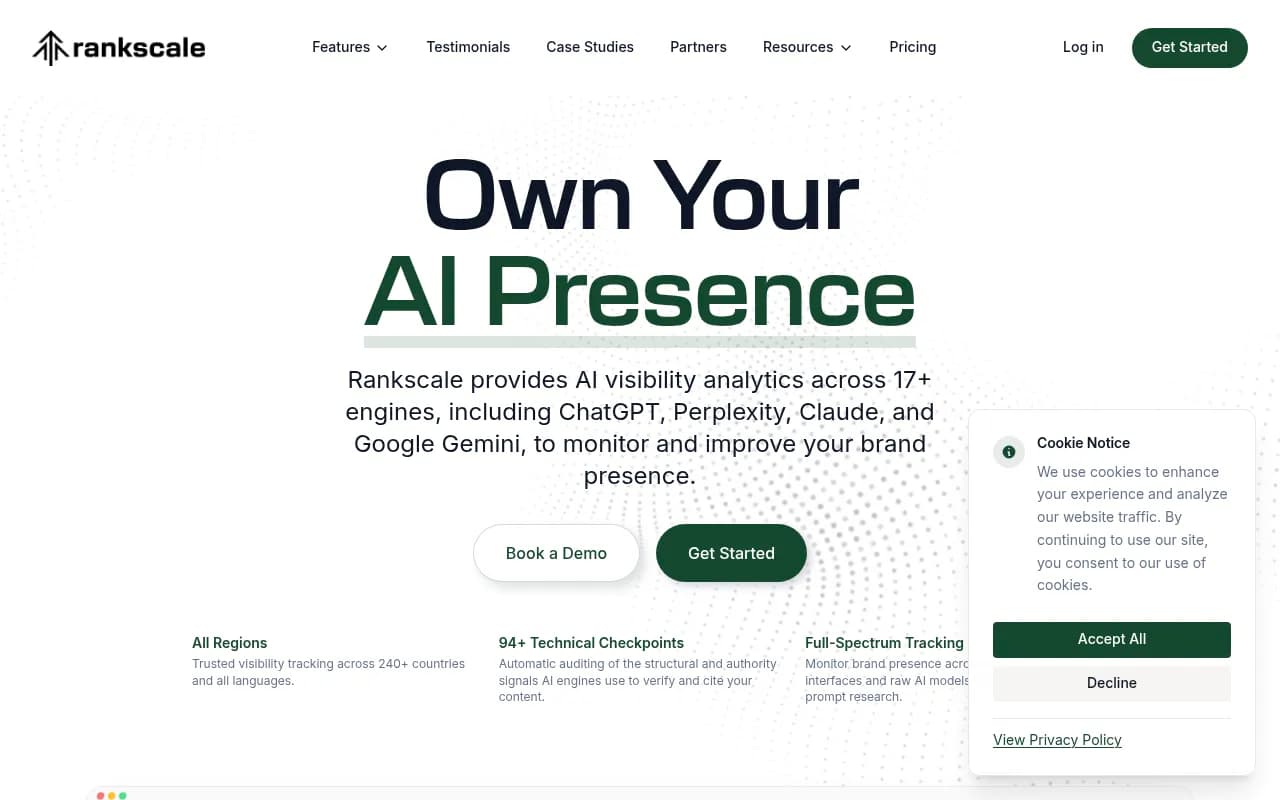
This is where dedicated GEO platforms earn their keep. Manually querying ChatGPT for dozens of prompts every week doesn't scale. Tools built for this purpose automate the tracking and surface the gaps automatically.
For teams that want to go deeper -- including crawler log analysis to see exactly when AI bots visit your pages and when those visits convert to citations -- Promptwatch's Professional and Business tiers cover this end-to-end.
Putting it together: what a brand knowledge base actually looks like
Concretely, a brand knowledge base that ChatGPT trusts and cites has these components:
On your website:
- A clean
Organizationschema on your homepage - A dedicated "About" or "Company" page with consistent entity information
- Five to ten comprehensive pillar pages on your core topics, structured for extraction
- Comparison pages covering your brand vs. key competitors
- An FAQ section with schema markup
- Original data or research with clear attribution
- Case studies with specific, named metrics
Off your website:
- A complete, accurate Crunchbase profile
- A G2 or Capterra profile with detailed reviews
- Mentions in at least three to five credible industry publications
- Active presence in relevant Reddit communities
- Press coverage with specific, citable facts
Technically:
- No AI crawlers blocked in robots.txt
- Server-side rendering for key content
- Fast page load times
- Clean internal linking structure
This isn't a checklist you complete once. It's an ongoing content and distribution strategy with AI citation as the target metric.
Tools worth knowing
A few tools that can help at different stages of this process:
For content optimization and structure:
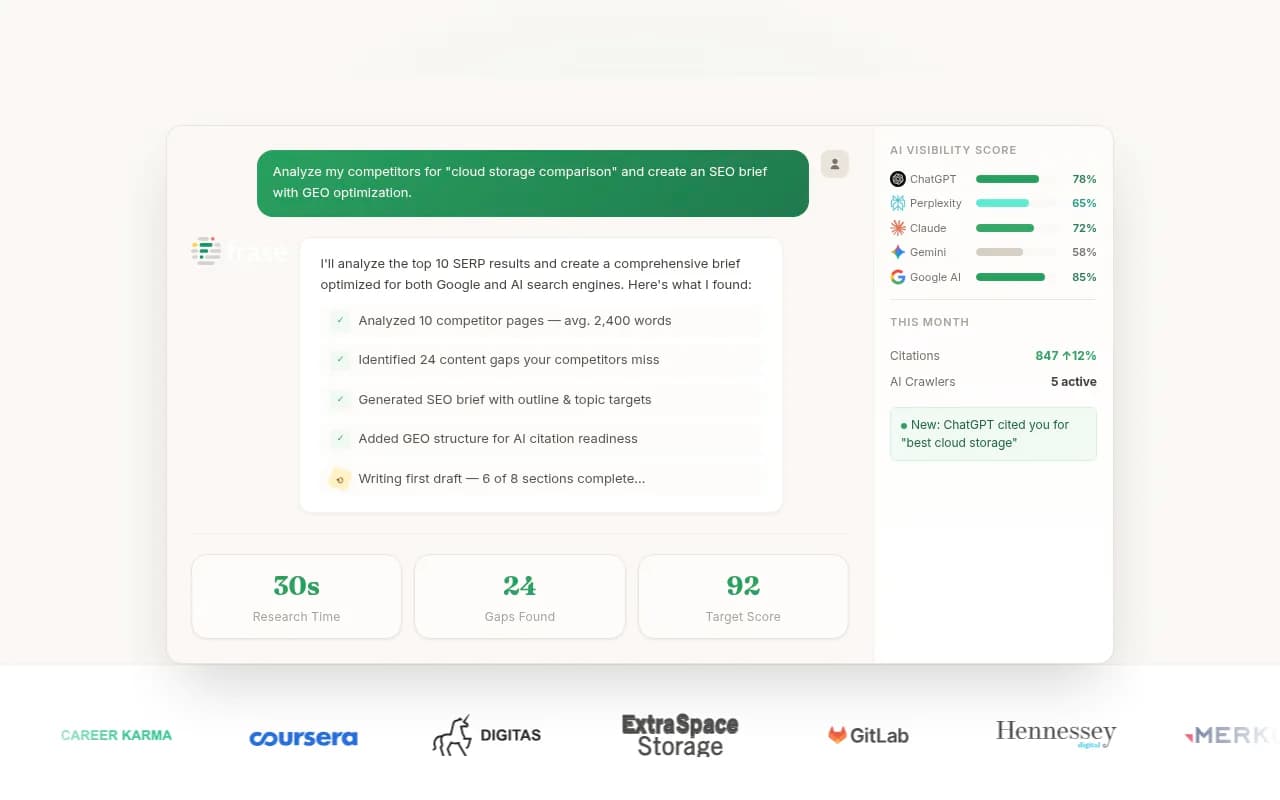
For AI visibility tracking and gap analysis:
For link building and off-site mention outreach:
The honest reality
Most brands that struggle with AI visibility have the same underlying problem: their content is written for impressions, not for extraction. It's designed to sound good, not to be parsed. Fixing that requires a genuine shift in how you think about content -- less "what will resonate with our audience" and more "what specific fact or answer can AI models pull from this page and attribute to us?"
That's a harder brief to write to. But it's the one that matters now.
The brands that figure this out early will build a compounding advantage. Every piece of well-structured, well-corroborated content makes the next citation more likely. The knowledge base grows, the entity signal strengthens, and AI models become more confident citing you -- which drives more traffic, which generates more data, which informs better content.
Start with the entity foundation. Fix the technical access issues. Then build the content systematically, starting with the prompts where your competitors are visible and you're not. That's the gap worth closing first.