Key takeaways
- ChatGPT uses two separate systems to surface brands: parametric knowledge from training data and live retrieval via web search -- you need to clear both gates
- Blocking AI crawlers in your robots.txt or via Cloudflare is the single most common (and fixable) reason brands disappear from AI answers
- Weak entity signals -- no Wikipedia page, inconsistent brand descriptions, missing structured data -- make it hard for AI models to confidently recommend you
- Third-party mentions on authoritative sites matter more than your own homepage for AI visibility
- Tracking your AI visibility with a dedicated tool is the only way to know if your fixes are actually working
You could be ranking #1 on Google for your main keyword, pulling in thousands of organic visitors a month, and still be completely invisible when someone opens ChatGPT and asks "what's the best tool for [the exact problem you solve]?"
That's not a hypothetical. It's happening to most brands right now.
According to research cited by ALLMO, nearly 75% of B2B buyers now use AI tools for research. They're not Googling product categories anymore -- they're asking ChatGPT, Perplexity, Claude, or Gemini for recommendations. And if your brand isn't in the answer, you don't exist in that conversation.
The gap between "ranking on Google" and "appearing in AI answers" is real, it's growing, and most brands haven't started closing it yet. That's actually good news if you move now.
Here's what's going wrong and how to fix it.
How ChatGPT actually decides which brands to mention
Before you can fix the problem, you need to understand how it works.
ChatGPT doesn't rank pages like Google does. It combines two distinct systems. The first is parametric knowledge -- information baked into the model during training, with a knowledge cutoff. The second is live retrieval, where ChatGPT searches the web (leaning heavily on Bing) and synthesizes results in real time when browsing is enabled.
To appear in AI answers, you need to clear two gates:
- AI crawlers must be able to access and read your site
- Your brand must appear consistently in the sources AI models trust -- Wikipedia, Wikidata, reputable directories, industry publications, and high-authority web pages
One without the other leaves you invisible. A perfectly crawlable site with no third-party mentions won't get recommended. And a brand with great press coverage but a crawler-blocked website won't show up in live retrieval either.
The internal ranking heuristics are proprietary and change constantly. But the levers you actually control -- crawl access, structured data, and corroboration across independent sources -- are stable and actionable.
Step 1: Stop blocking AI crawlers
This is the most common technical problem, and it's often invisible to the people who need to fix it.
OpenAI operates two distinct bots: OAI-SearchBot (for ChatGPT Search visibility) and GPTBot (for training data inclusion). To appear in search-driven AI answers, you need to allow OAI-SearchBot. These are separate decisions -- you can block training inclusion while still allowing search retrieval.
Check your robots.txt file right now. If you see a blanket Disallow: / for all bots, or a specific block on GPTBot that's accidentally catching OAI-SearchBot, that's your first fix.
There's a second culprit that's caught a lot of brands off guard: Cloudflare. In 2025, Cloudflare rolled out default blocking of known AI crawlers for many configurations. If you're running Cloudflare (or Fastly, or another CDN/WAF), check whether AI crawlers are being blocked at the infrastructure level -- not just in your robots.txt. Your developers may have enabled this without realizing the downstream effect on AI visibility.
Other things to check:
- JavaScript-heavy pages that require rendering to show content (AI crawlers often can't execute JS)
- Login walls or paywalls blocking key pages
- Noindex tags on pages you actually want AI models to read
Step 2: Define your brand as a clear entity
AI models think in entities. An entity is a clearly defined thing -- a company, a product, a person -- with consistent attributes that appear across multiple sources.
If your brand isn't defined as a clear entity, AI models can't confidently recommend you. They'll mention competitors whose entity signals are stronger, even if your product is better.
What "clear entity" means in practice:
- Your website has a consistent, machine-readable description of what your brand is, what problem it solves, and who it serves
- That description matches what appears on your Crunchbase profile, your G2/Capterra listing, your LinkedIn company page, and anywhere else your brand is mentioned
- You have
Organizationschema markup on your homepage with your name, description, URL, logo, and founding date - Ideally, you have a Wikipedia or Wikidata entry (more on this below)
The mistake most brands make is writing their homepage copy for humans and forgetting that AI models need explicit, structured signals. "We help teams move faster" tells a human something. It tells an AI model almost nothing about what category you're in or what problem you solve.
Write one canonical brand description -- two or three sentences, specific about your category and use case -- and make sure it appears consistently everywhere your brand is mentioned online.
Step 3: Get on Wikipedia and Wikidata (or find the equivalent)
Wikipedia is one of the most trusted sources for AI models. If your brand has a Wikipedia page, that page's content often becomes the basis for how AI models describe you. If you don't have one, you're missing a significant entity signal.
Getting a Wikipedia page isn't straightforward -- it requires demonstrating "notability" through coverage in independent, reliable sources. But if your brand has been covered in industry publications, that coverage is the foundation you need.
Wikidata is more accessible. It's a structured knowledge base that feeds into Wikipedia and many AI systems. Creating a Wikidata entry for your brand (with your official name, website, founding date, industry, and key people) is something you can do without needing to meet Wikipedia's notability threshold.
Beyond Wikipedia: make sure your brand appears in relevant industry directories, comparison sites, and knowledge aggregators. For B2B SaaS, that means G2, Capterra, and Product Hunt at minimum. For local businesses, Google Business Profile and industry-specific directories matter more.
Step 4: Build third-party mentions on sources AI models trust
Your own website is the weakest signal for AI visibility. AI models are trained to be skeptical of self-reported claims -- of course your homepage says you're great. What matters is what independent sources say about you.
The sources that carry the most weight:
- Industry publications and trade press (a mention in a "best tools for X" roundup on a respected industry site is worth more than 10 blog posts on your own site)
- Comparison and review sites (G2, Capterra, Trustpilot, Product Hunt)
- Reddit discussions (this one surprises people, but AI models actively cite Reddit threads)
- YouTube videos from credible creators in your space
- Academic or research citations if relevant to your industry
The goal is corroboration. When multiple independent sources describe your brand in consistent terms, AI models gain confidence that you're a real, established player in your category.
Practically, this means:
- Pitching yourself for inclusion in "best of" roundups and comparison articles
- Encouraging genuine reviews on G2 and Capterra
- Participating (authentically) in relevant Reddit communities
- Getting covered in industry newsletters and publications
This is essentially digital PR, but with AI visibility as the explicit goal rather than just traffic or brand awareness.
Step 5: Create content that answers the exact questions AI models are responding to
Most brand content is written to rank for keywords. That's not the same as being cited in AI answers.
AI models are answering questions. They're looking for content that directly, clearly, and authoritatively addresses specific questions -- not content that's optimized around keyword density.
The questions you need to answer are the ones your potential customers are actually asking AI tools. Things like:
- "What's the best [category] tool for [specific use case]?"
- "How does [your brand] compare to [competitor]?"
- "What are the pros and cons of [your approach]?"
- "Who uses [your product] and what results do they get?"
If your site doesn't have clear, direct answers to these questions, AI models will pull answers from sources that do -- and those sources will get the citation, not you.
The content format matters too. FAQ pages, comparison pages, and "how it works" explainers tend to get cited more than long-form narrative blog posts. Structure your content so AI models can extract specific answers easily.
Finding the exact gaps -- which questions competitors are getting cited for that you're missing -- is where a tool like Promptwatch becomes genuinely useful. Its Answer Gap Analysis shows you the specific prompts where competitors are visible and you're not, so you're not guessing about what to write.

Step 6: Fix your structured data
Structured data (schema markup) is one of the clearest signals you can send to AI systems about what your brand is and what your content covers.
At minimum, you should have:
Organizationschema on your homepage: name, URL, logo, description, founding date, social profilesWebPageorArticleschema on content pages with accurate descriptionsFAQPageschema on pages that answer common questionsProductschema if you're selling a productBreadcrumbListschema for site structure
This isn't magic -- structured data alone won't get you cited. But it removes ambiguity. When AI models are deciding between two similar sources, the one with clear structured data is easier to process and more likely to be used.
Use Google's Rich Results Test to check your existing structured data. Fix errors before adding new markup.
Step 7: Track your AI visibility and iterate
This is where most brands stop short. They make changes, then have no idea whether those changes actually improved their AI visibility.
The problem is that AI visibility isn't visible in Google Analytics. You can't see ChatGPT referrals the same way you see organic search traffic. Without dedicated tracking, you're flying blind.
What you need to track:
- Which AI models are mentioning your brand and in response to which prompts
- Which of your pages are being cited (and which aren't)
- How your visibility compares to competitors across different AI platforms
- Whether AI crawlers are actually reaching your site and which pages they're reading
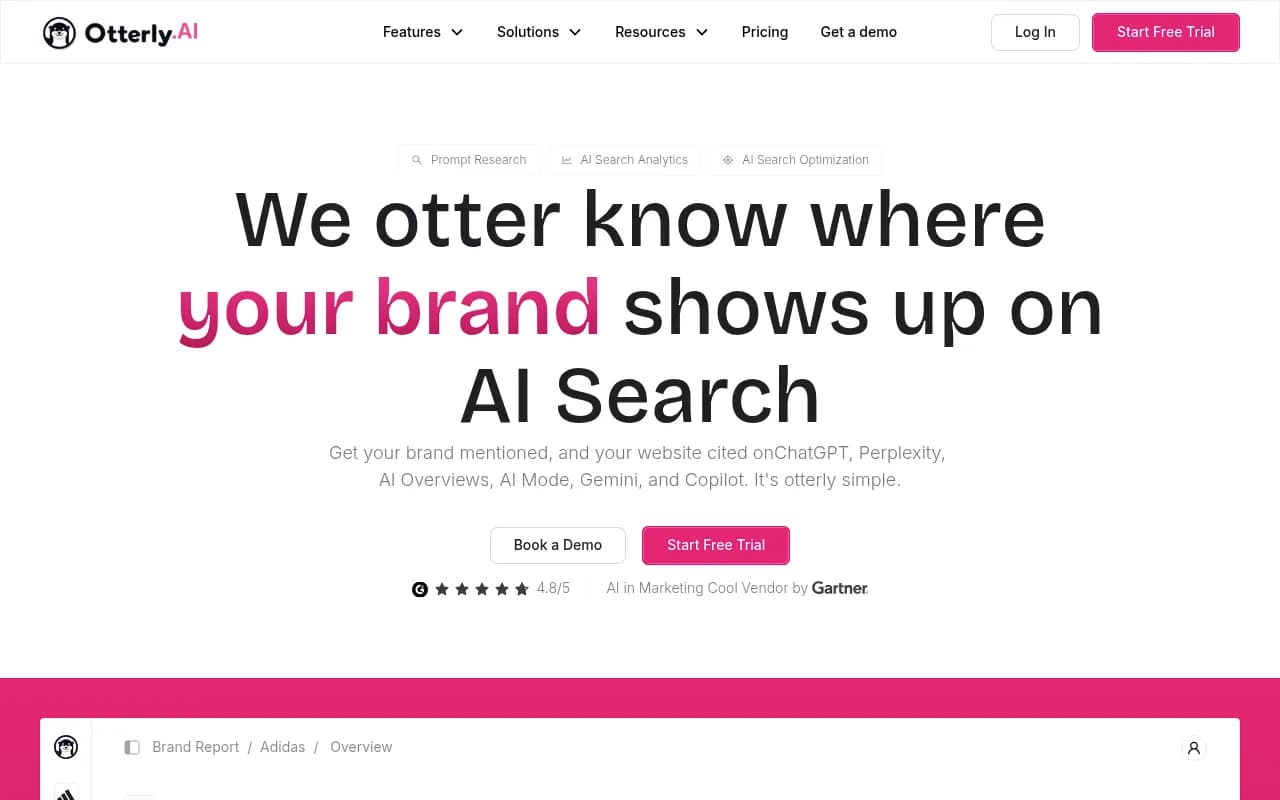
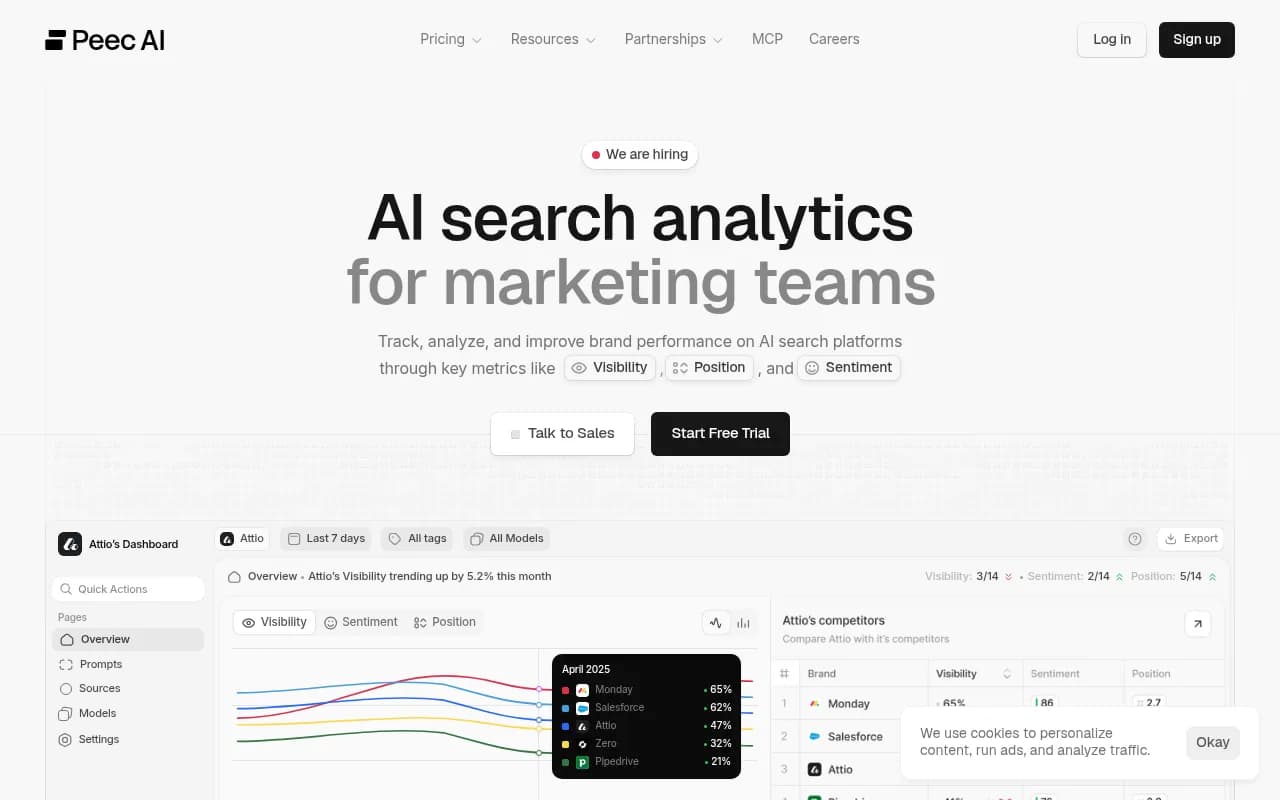
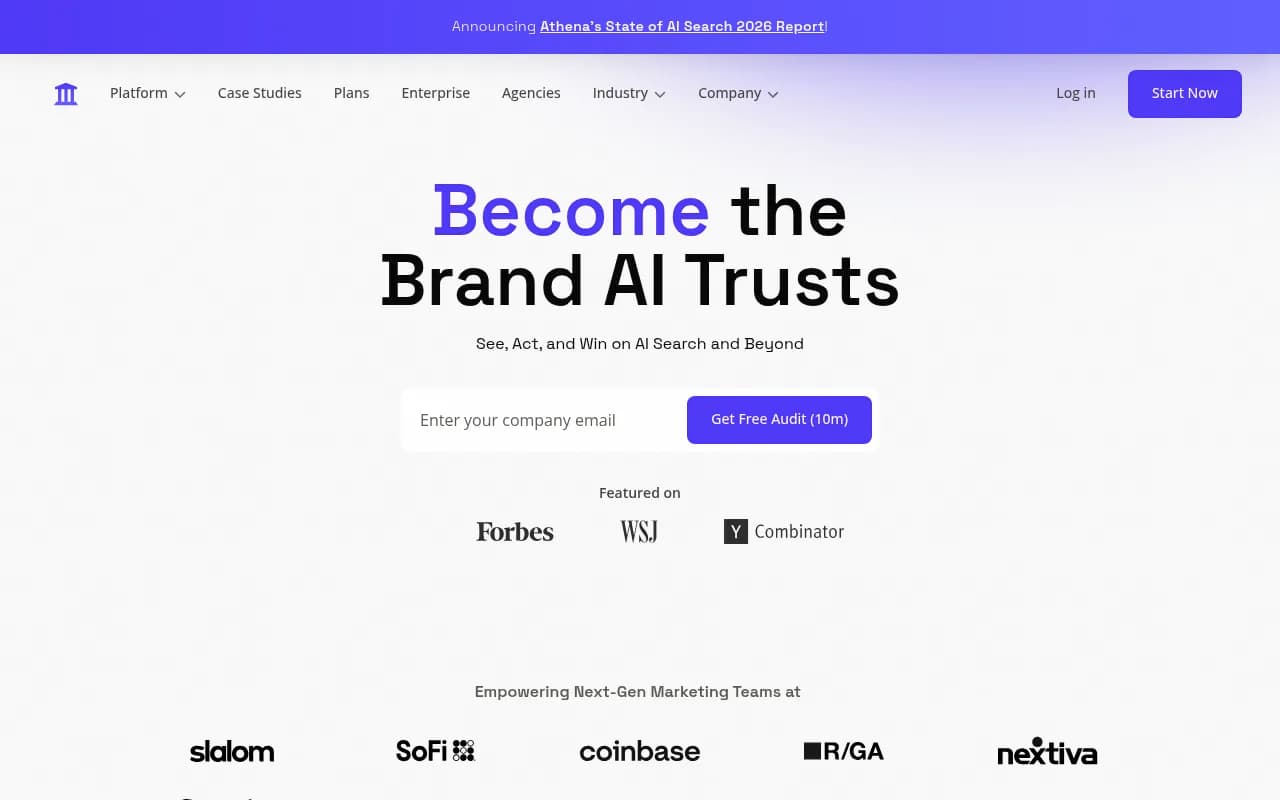
Several tools have emerged to help with this. For monitoring across multiple AI models, options like Otterly.AI, Peec AI, and AthenaHQ give you visibility dashboards.
If you want to go beyond monitoring and actually act on what you find -- generating content to fill gaps, tracking which pages move from crawl to citation, and connecting AI visibility to actual traffic -- Promptwatch covers the full loop.
For tracking AI-driven clicks and traffic specifically, LLMclicks.ai is worth a look.
The tools worth knowing about in 2026
The GEO tool landscape has grown fast. Here's a quick comparison of the main options by use case:
| Tool | Best for | AI models tracked | Content generation | Crawler logs |
|---|---|---|---|---|
| Promptwatch | Full optimization loop (track + fix + measure) | 10+ | Yes (AI Content Agents) | Yes |
| Otterly.AI | Affordable monitoring | Multiple | No | No |
| Peec AI | Monitoring with suggestions | Multiple | No | No |
| AthenaHQ | Enterprise monitoring | Multiple | No | No |
| Search Party | Agency reporting | Multiple | No | No |
| Ahrefs Brand Radar | Brand tracking alongside SEO | Multiple | No | No |
| Semrush AI Visibility | Combined SEO + AI monitoring | Multiple | No | No |
| LLMclicks.ai | AI traffic attribution | Multiple | No | No |
The core difference between the monitoring-only tools and Promptwatch is what happens after you see the data. Most tools show you that you're invisible for a prompt and leave you to figure out what to do. Promptwatch shows you the gap and helps you create the content to close it.
A realistic timeline
You won't fix AI visibility in a week. Here's what a reasonable timeline looks like:
Week 1-2: Technical fixes. Unblock AI crawlers, add structured data, audit your robots.txt and CDN settings. These changes can take effect relatively quickly once AI crawlers re-index your site.
Month 1: Entity work. Consistent brand descriptions across all profiles, Wikidata entry, G2/Capterra listings updated.
Month 2-3: Content and third-party mentions. New FAQ and comparison content on your site, outreach for inclusion in industry roundups, review generation campaigns.
Ongoing: Tracking and iteration. Monitor which prompts you're appearing for, which competitors are beating you, and where the next gaps are.
The brands that start this now have a meaningful head start. Most competitors are still focused entirely on traditional SEO. The window to build AI visibility before the space gets crowded is closing -- but it's still open.
What this means for your existing SEO
One thing worth saying clearly: this doesn't replace traditional SEO. Google still drives enormous traffic, and ranking on Google is still valuable. The content you create for AI visibility -- clear, direct, question-answering content with good structured data -- also tends to perform well in traditional search.
The bigger risk is treating AI search as something you'll get to eventually. The brands that show up consistently in AI answers are building a compounding advantage. Every citation is a data point that reinforces their authority. The longer you wait, the more ground you're giving up.
Start with the technical fixes this week. They're free, they're fast, and they remove the biggest blockers. Then work through entity signals and content systematically. Track everything so you know what's working.
Your brand exists. It just needs to exist in the right places for AI models to know about it.