Key takeaways
- Competitor citation data shows you exactly which prompts, topics, and content formats are earning AI mentions for other brands -- and which ones you're missing.
- The most citable content types in 2026 are comparison pages, definitive guides, FAQ clusters, and data-backed original research.
- A GEO content calendar is built around citation gaps, not keyword volume -- the planning logic is fundamentally different from traditional SEO.
- Freshness matters more than most teams expect: research from Amsive in 2026 found 50% of AI citations come from content less than 13 weeks old.
- Tools that combine citation monitoring with content generation (rather than just tracking) let you close gaps faster instead of just watching competitors win.
Why your current content calendar isn't built for AI search
Most content calendars start with a keyword list. You sort by search volume, filter by difficulty, assign writers, and publish. That process made sense when Google was the only game in town.
AI search works differently. When someone asks ChatGPT "what's the best project management tool for a remote team of 15?" there's no keyword match happening. The model synthesizes an answer from sources it trusts, and it cites those sources. The question for your content team isn't "do we rank for this keyword?" -- it's "are we being cited when this question gets asked?"
That shift changes everything about how you plan content. Instead of starting with keyword data, you start with citation data. And the most useful citation data isn't your own -- it's your competitors'.
Here's the core insight: if a competitor is getting cited for a prompt you're not, that's not just a gap. It's a blueprint. You can see exactly what content they published, what format it takes, how it's structured, and what questions it answers. Then you can build something better.
That's what this guide is about.
Step 1: Map which prompts your competitors are winning
Before you can reverse-engineer anything, you need to know where competitors are showing up in AI responses and you aren't.
Start by building a list of the prompts that matter to your category. Think conversationally -- these aren't keywords, they're questions your customers actually ask AI tools. Things like:
- "What's the best [category] tool for [use case]?"
- "How does [Competitor A] compare to [Competitor B]?"
- "What are the alternatives to [market leader]?"
- "Which [product type] is best for [specific need]?"
Then run those prompts across multiple AI models -- ChatGPT, Perplexity, Claude, Gemini -- and record who gets cited and who doesn't. This is tedious to do manually at scale, which is why most teams use a monitoring platform to automate it.
Promptwatch has an Answer Gap Analysis feature built specifically for this: it shows you which prompts competitors are visible for that you're not, down to the specific content they're citing. That's the starting point for your calendar.
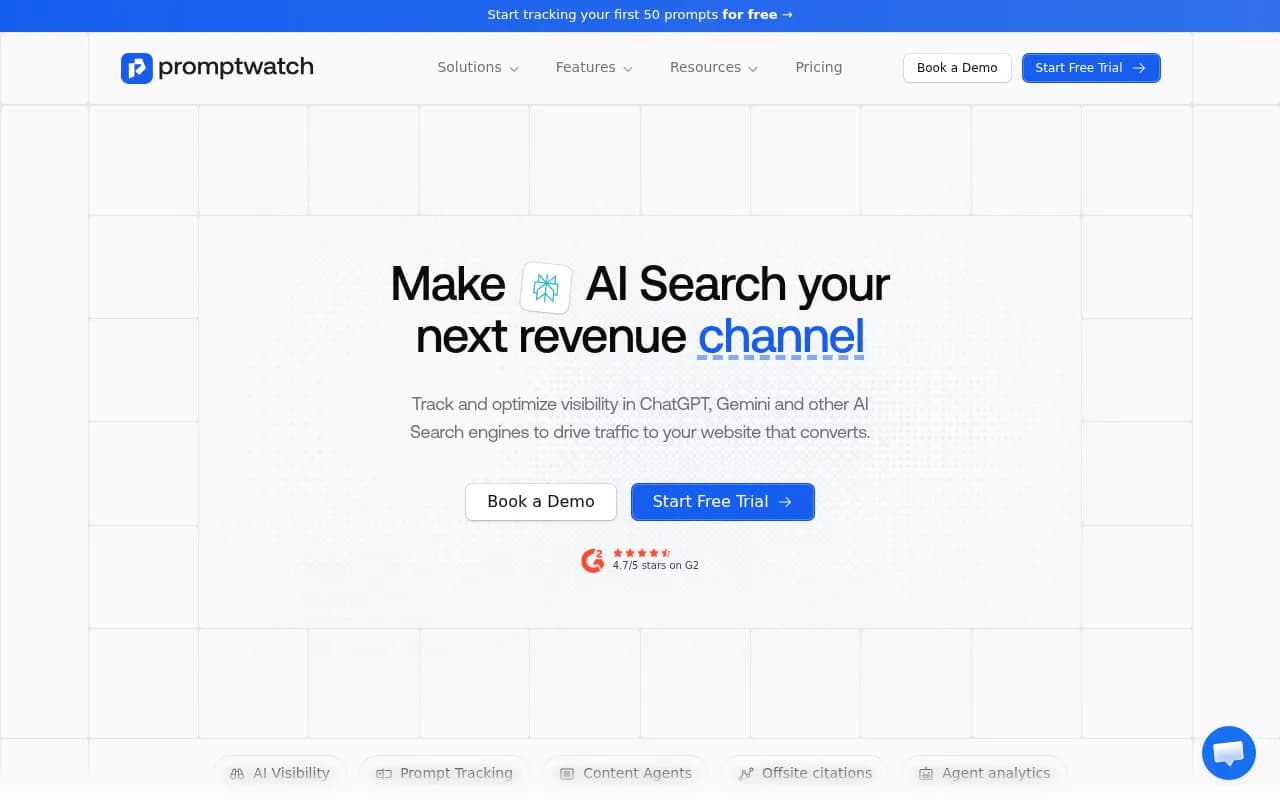
The output of this step is a list of "gap prompts" -- questions where competitors appear and you don't. Prioritize them by prompt volume (how often real users ask this) and by how achievable they look based on the content that's currently winning.
Step 2: Audit the content that's actually earning citations
Once you know which prompts your competitors are winning, go look at what's being cited. This is the reverse-engineering part.
For each gap prompt, pull up the AI responses and find the source pages. Then analyze them:
- What content type is it? (Comparison, guide, FAQ, listicle, data report?)
- How long is it, roughly?
- What structure does it use? (Headers, tables, numbered lists?)
- What specific questions does it answer?
- How recent is it?
- Is it hosted on the competitor's own domain, or on a third-party site like Reddit, G2, or a review platform?
You're looking for patterns. If every citation for "best [category] tool for enterprise" is pointing to long-form comparison pages with feature tables, that tells you something. If citations for "how to [do specific task]" are going to step-by-step guides with screenshots, that tells you something else.

The Foglift research above is worth noting: AI citations heavily favor depth over volume. One authoritative comparison page can earn more AI mentions than 20 thin posts. That's a direct implication for how you allocate writing resources.
Also check whether the citation is coming from your competitor's own site or from third-party sources. If ChatGPT is citing a G2 review page or a Reddit thread that mentions your competitor favorably, that's an offsite citation -- and it means your strategy needs to include third-party placements, not just your own content.
Step 3: Classify your gaps by content type
Not all citation gaps are the same. Some require you to create new content. Some require you to update existing content. Some require you to earn placements on external sites. Knowing the difference shapes your calendar.
Here's a simple classification:
| Gap type | What it means | Calendar action |
|---|---|---|
| Missing content type | You have no page targeting this prompt | Create new content |
| Stale content | You have a page but it's outdated | Schedule a refresh |
| Thin coverage | You have a page but it lacks depth | Expand and restructure |
| Offsite gap | Citations come from third-party sources | Pursue placements, PR, or community content |
| Entity gap | AI models don't associate your brand with this topic | Build a cluster of related pages |
Most teams find a mix of all five when they do this audit. The important thing is to not treat them all the same -- a stale page needs a different fix than a missing page, and an offsite gap needs a different fix than both.
Step 4: Understand the freshness problem
This one catches teams off guard. The Amsive 2026 research found that 50% of AI citations come from content less than 13 weeks old. AirOps measured a greater than 3x citation penalty for content past three months stale.
That's a very different rhythm from traditional SEO, where a well-ranked page can hold its position for years with minimal updates. In AI search, content decays faster. Your calendar needs to account for this.
Practically, this means two things:
- New content you publish has a window -- roughly the first three months -- where it's most likely to earn citations. Plan your promotion and distribution to coincide with that window.
- Existing content that's earning citations needs to be refreshed before it crosses the three-month threshold. Build a refresh cadence into your calendar, not just a publish cadence.
A good rule of thumb: for any page that's actively being cited in AI responses, schedule a review every 10-12 weeks. Update the data, examples, and any competitor information. Even small updates can reset the freshness signal.
Step 5: Build the content calendar structure
Now you have everything you need to build the calendar. Here's how to structure it.
Monthly planning cycle
Each month, your planning process should follow this sequence:
- Pull your latest citation gap data (which prompts are competitors winning that you're not?)
- Check which of your existing cited pages are approaching the 13-week mark
- Identify any new competitor content that's earning citations
- Prioritize new content vs. refreshes based on gap size and prompt volume
- Assign content types based on what's working for the winning pages
Content type mix
Based on what AI models actually cite, your monthly calendar should include a mix of these content types:
Comparison pages are the highest-citation-rate content type. "Product A vs Product B" queries are extremely common in AI search, and models actively look for structured comparison content to cite. Aim for one or two per month, and update existing ones quarterly.
Definitive guides build what's sometimes called entity authority -- the association between your brand and a topic. These are long, comprehensive, well-structured. Not generic "ultimate guides" but genuinely the deepest treatment of a specific topic in your space. One or two per month, with regular refreshes.
FAQ and Q&A content maps directly to how AI models process queries. If you have a page that explicitly answers "How does [your product] handle [specific scenario]?" in a structured way, it's much easier for a model to cite than a page that buries the answer in a paragraph.
Data and original research earns citations because AI models prefer primary sources. If you publish original data -- even a small survey or an analysis of your own platform data -- that becomes a citable source that competitors can't replicate.
Alternative and listicle pages ("Best alternatives to [competitor]", "Top 10 tools for [use case]") are heavily cited for category-level queries. These also have the benefit of capturing traffic from users who are already considering your competitor.
A sample monthly calendar structure
| Week | Content type | Priority basis |
|---|---|---|
| Week 1 | New comparison page | Top citation gap prompt |
| Week 1 | Refresh existing guide | Approaching 13-week mark |
| Week 2 | Definitive guide (new) | Entity gap identified in audit |
| Week 2 | FAQ cluster | Multiple related prompts with no coverage |
| Week 3 | Alternative/listicle page | Competitor winning high-volume prompt |
| Week 3 | Refresh comparison page | Stale, competitor updated their page |
| Week 4 | Original data piece | Offsite citation gap (build a primary source) |
| Week 4 | Review and plan next month | Pull new citation gap data |
This isn't a rigid template -- adjust based on your team size and what the gap data is actually showing. The point is that every item on the calendar traces back to a specific citation gap, not a keyword volume number.
Step 6: Write content that's structured to be cited
Getting the topics right is half the battle. The other half is writing content that AI models can actually extract and cite.
A few structural principles that consistently show up in cited content:
Answer the question directly at the top. AI models often pull the first clear, direct answer they find. If your page buries the answer in paragraph three, you're making it harder to cite. Lead with the answer, then support it.
Use headers that mirror the prompt. If you're targeting "How does [your product] compare to [competitor] for enterprise teams?", have a header that says exactly that. Models use headers to navigate content.
Include comparison tables. Structured data in table format is extremely citation-friendly. It's easy for a model to extract and present. Any comparison or feature page should have at least one table.
Cite your sources. Content that cites external data is more trustworthy to AI models. Link to the studies, reports, and data you reference.
Keep paragraphs short. Long dense paragraphs are harder for models to parse and extract from. Short paragraphs and bullet points are more citable.
Step 7: Track what's working and iterate
The calendar is a living document. Every month, you should be able to answer:
- Which new pages we published are now earning citations?
- Which refreshes improved our citation rate?
- Which competitor gaps have we closed?
- Which new gaps have opened up (competitors published new content)?
This is where page-level citation tracking matters. You want to see not just whether your overall visibility is improving, but which specific pages are being cited, by which AI models, and for which prompts.

The feedback loop is what separates a GEO content calendar from a guess. If you publish a comparison page and it starts earning citations within six weeks, you know that format works for that prompt type. If it doesn't, you can investigate -- is the content thin? Is a competitor's page just much stronger? Is the prompt being answered from an offsite source you haven't addressed?
Tools that support this workflow
A few tools worth knowing about for different parts of this process:
For citation gap analysis and content generation in one platform, Promptwatch covers the full loop: find gaps, generate content, track results. It's the only platform in the 2026 GEO landscape rated as a leader across all categories, largely because it doesn't stop at monitoring.
For content optimization once you know what to write, Clearscope and Surfer SEO help you make sure the content is thorough enough to compete.
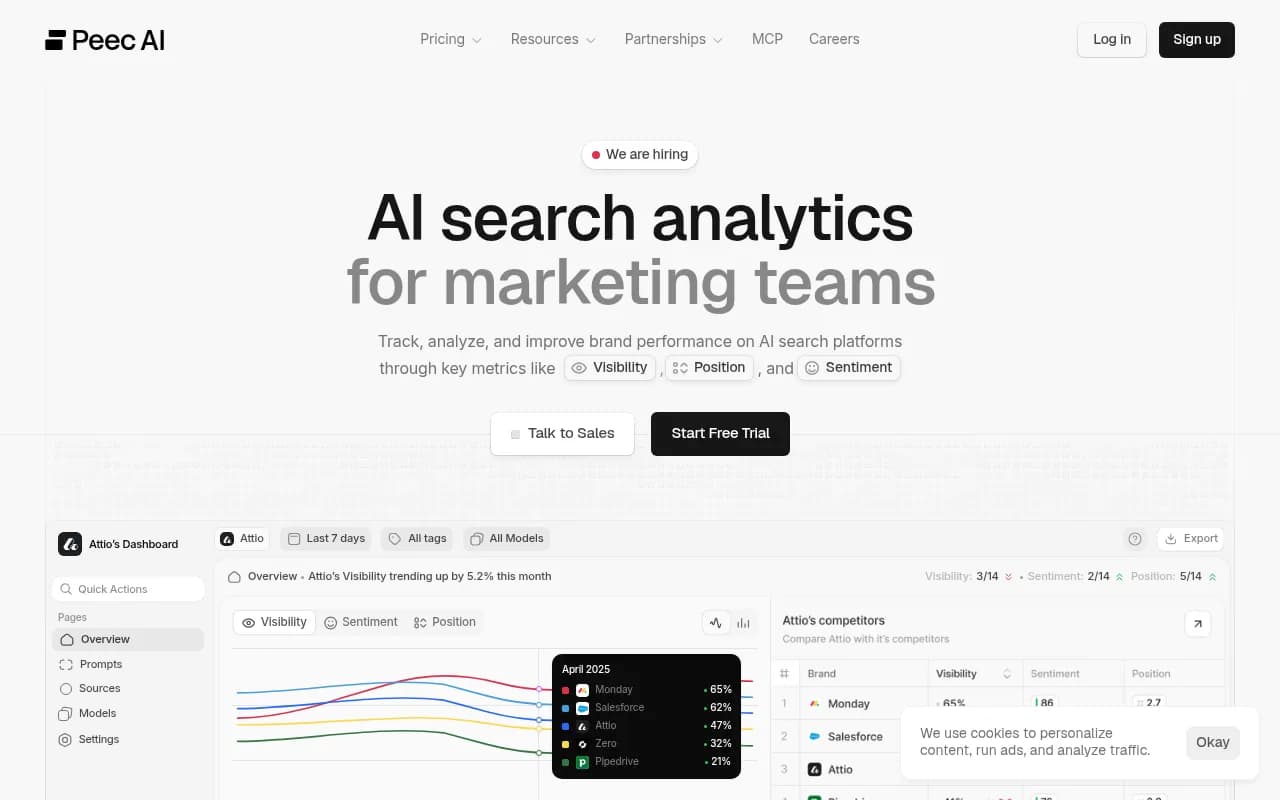
For tracking AI citations at scale, Otterly.AI and Peec AI are lighter-weight options if you're just starting out with monitoring.
For content briefs and AI-assisted writing, AirOps has built workflows specifically for GEO content production.
For enterprise teams that need deeper analytics, Profound and BrightEdge both offer robust monitoring with stronger reporting layers.
Common mistakes to avoid
Building the calendar around keyword volume instead of prompt data. High search volume doesn't predict AI citation frequency. A prompt that gets asked 500 times a month in ChatGPT might have near-zero traditional search volume.
Treating all AI models the same. ChatGPT, Perplexity, and Google AI Overviews cite different sources and favor different content types. A page that earns citations in Perplexity might not appear in ChatGPT responses at all. Track by model, not just overall.
Ignoring offsite citations. If your competitor is winning because a G2 review page or a well-trafficked Reddit thread mentions them favorably, publishing more content on your own site won't fix that. You need a strategy for third-party placements too.
Publishing and forgetting. The 13-week freshness window is real. A page that earns citations in month one can drop out of AI responses by month four if it's not updated. Build refresh cycles into your calendar from day one.
Chasing every gap at once. You'll find more gaps than you can fill. Prioritize by prompt volume and by how achievable the gap looks -- a prompt where the winning content is thin and outdated is a much better target than one where a competitor has a genuinely excellent, recently updated page.
Putting it together
The core idea here is simple: your competitors are already running the experiment. They've published content, AI models have decided whether to cite it, and that data is sitting there waiting to be read.
Competitor citation data tells you what's working, what format it takes, and how fresh it needs to be. Your job is to use that data to build a calendar that fills the gaps systematically -- not by guessing what might rank, but by looking at what's already earning citations and doing it better.
That's a fundamentally different planning process than traditional SEO content calendars. It's also a more defensible one. When your content calendar is built on real citation data rather than keyword estimates, every piece you publish has a clear reason to exist and a clear metric to measure it against.
Start with the gaps. Build the content. Track the citations. Repeat monthly.