Key takeaways
- Jasper is the fastest path to on-brand marketing copy, but it has no meaningful GEO capabilities built in.
- Writer wins on enterprise governance and compliance, but it's monitoring-light and GEO is not its focus.
- AirOps is a pipeline builder, not a writing tool -- it's the most flexible option for teams running programmatic content at scale, with some SEO hooks built in.
- None of the three platforms give you a complete GEO loop: tracking AI visibility, finding content gaps, and generating content to fill them. For that, you need a dedicated layer on top.
- If GEO is a real priority, not just a checkbox, treat these tools as content production engines and pair them with a platform that actually tracks and optimizes AI search visibility.
The question most teams aren't asking clearly enough
Most comparisons of Jasper, Writer, and AirOps frame the decision as "which one writes better?" That's the wrong question.
The more useful question in 2026 is: which of these tools helps your team show up when someone asks ChatGPT, Perplexity, or Google AI Overviews a question your product should be answering?
That's Generative Engine Optimization -- GEO -- and it's now a real part of how content teams need to think. AI search engines don't rank pages the way Google does. They pull from sources they've crawled, cited, and deemed authoritative. If your content isn't structured to answer specific prompts, you won't appear, regardless of how well-written it is.
So: Jasper, Writer, and AirOps. All three are legitimate platforms. All three have real use cases. But they were built with different problems in mind, and GEO wasn't the primary design constraint for any of them.
Here's what each one actually does well, where each one falls short, and what to do if AI search visibility is genuinely on your roadmap.
Jasper: fast, template-driven, brand-consistent

Jasper has been around long enough to have gone through a full identity crisis and come out the other side. It started as a GPT-3 wrapper with templates, evolved into a "marketing AI platform," and now serves over 100,000 businesses including enterprise clients like Wayfair and SentinelOne.
What Jasper does well is speed. If you need a landing page draft, a batch of ad variations, or a blog intro that matches your brand voice, Jasper gets you there faster than almost anything else. The template library (80+ marketing-focused apps) is genuinely useful, and the brand voice feature -- where you train the system on your existing content -- works well enough that a junior writer can produce something that sounds like your company.
Jasper's Pro plan starts at $59/month billed annually ($69/month billed monthly), with Business pricing available on request.
Where Jasper falls short for GEO-focused teams:
Jasper is a content generation tool. It doesn't track where your brand appears in AI responses. It doesn't identify which prompts your competitors are winning that you're not. It doesn't tell you which pages are being cited by ChatGPT or Perplexity. You can use Jasper to write content that might eventually get cited -- but you're flying blind on whether that's actually happening.
One Reddit reviewer in r/DigitalMarketing put it plainly: Jasper is "best for long-form content and creative writing" and "good for content marketing teams, blog writers, and brands needing" consistent output. That's accurate. It's not a GEO platform.
Writer: governance-first, GEO-light

Writer positions itself as "the enterprise AI platform for agentic work." That framing tells you a lot about who it's for. Writer is built on proprietary Palmyra LLMs trained on formal and business writing, and its core value proposition is control: style guide enforcement, terminology management, compliance checking, and audit trails.
For regulated industries -- financial services, healthcare, legal -- Writer's governance story is genuinely differentiated. SOC 2 Type II, HIPAA, GDPR compliance, plus 100+ pre-built AI agents across marketing and operations functions. If your content team operates under legal review requirements or strict brand governance, Writer addresses problems that Jasper doesn't even acknowledge.
Writer no longer publishes a flat Starter price publicly. Enterprise deals reportedly range from $180 to $468 per user per month based on user reports, so confirm current pricing directly with Writer.
Where Writer falls short for GEO-focused teams:
Writer is a governance layer, not an optimization engine. It ensures your content sounds like your brand and meets compliance requirements. It does not tell you which AI models are citing your content, which prompts you're missing, or how your AI search visibility compares to competitors. The template library is also lighter than Jasper's (roughly 50+ vs. 200+ in some competitors), so teams that rely on fast template-driven generation will feel friction.
If you're in an enterprise with strict brand and legal requirements, Writer is a serious option. If GEO is your primary concern, it's not the right tool.
AirOps: pipeline builder, not a writing tool
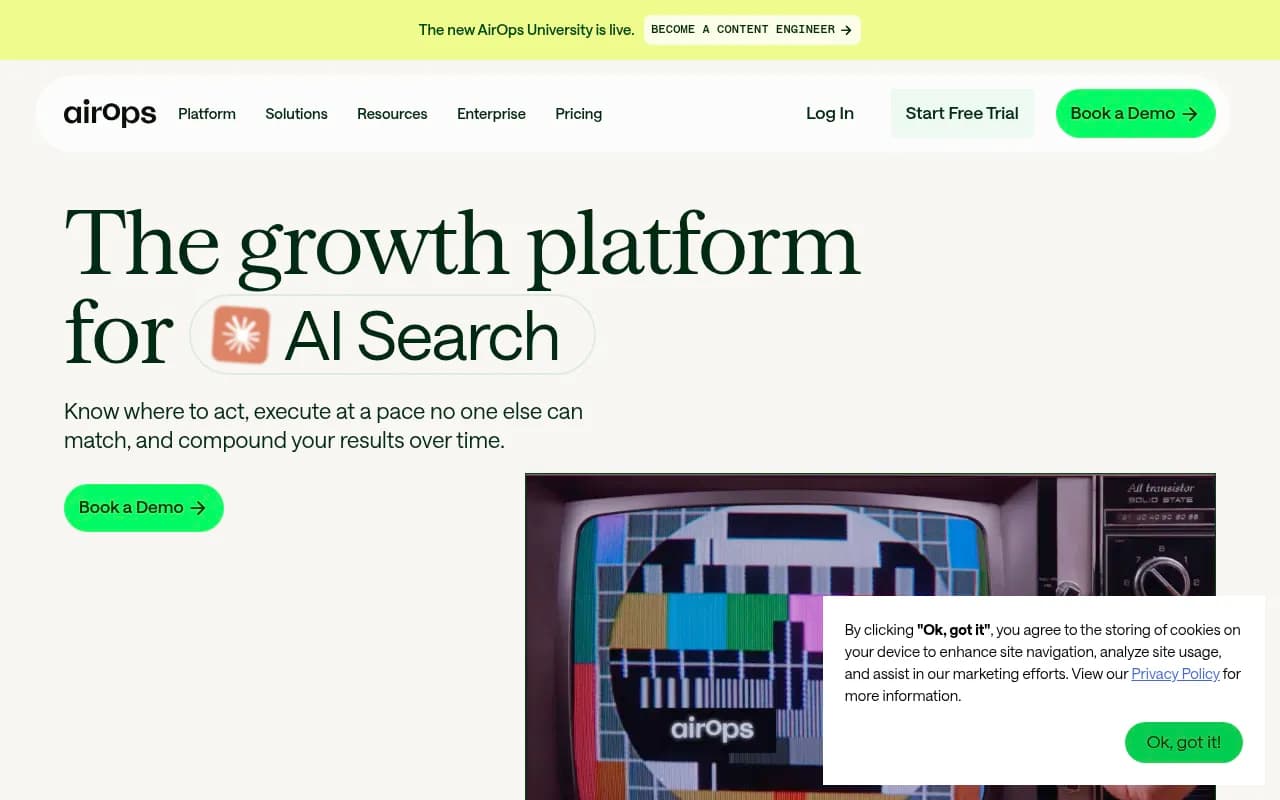
AirOps is the most misunderstood of the three. It's not really an "AI writer" in the way Jasper is. It's a no-code platform for building multi-step AI pipelines -- you chain LLM calls, web data pulls, and tool integrations into repeatable workflows. Think of it as the scaffolding around content production, not the content production itself.
That distinction matters. AirOps lets you build a workflow that does research, drafts, fact-checks, and formats -- then runs that workflow on hundreds of pieces. It integrates with CMS platforms like Webflow and Shopify. It supports custom knowledge bases and brand voice training. It's the right tool for ops-heavy teams that want to automate the brief-to-publish loop without writing code.
AirOps pricing starts free, with paid plans from around $200/month and up.
Where AirOps falls short for GEO-focused teams:
AirOps has SEO hooks built in -- it can pull search data into workflows and optimize content for keywords. But it's not a GEO monitoring platform. It doesn't track AI citations, show you which prompts competitors are winning, or give you visibility scores across ChatGPT, Perplexity, and Google AI Overviews. You can build GEO-adjacent workflows in AirOps, but you'd be doing it manually, without the underlying data infrastructure that a dedicated GEO platform provides.
The AirOps team's own positioning is honest about this: "teams pick AirOps for content engineering, AEO visibility, and scaled workflows." The AEO visibility piece is real but limited compared to purpose-built tracking tools.
Head-to-head comparison
| Jasper | Writer | AirOps | |
|---|---|---|---|
| Best for | Fast marketing copy, brand voice | Enterprise governance, compliance | Programmatic pipelines, content ops automation |
| Starting price | $59/mo (annual) | Custom (enterprise) | Free / ~$200/mo+ |
| Brand voice | Yes, strong | Yes, very strong | Yes, trainable |
| Template library | 80+ marketing templates | 50+ templates | Custom workflows |
| Team collaboration | Approvals, limited workflow | Strong governance + audit trails | Full pipeline control |
| CMS publishing | Limited | No | Yes (Webflow, Shopify, etc.) |
| SEO features | Basic | Limited | Built into workflows |
| GEO / AI visibility tracking | None | None | Limited (SEO-adjacent) |
| AI citation monitoring | No | No | No |
| Content gap analysis for AI | No | No | No |
| Best fit for GEO teams | No | No | Partial |
The pattern is clear. All three platforms help you produce content. None of them close the GEO loop.
What "GEO" actually requires -- and why these tools don't fully deliver it
GEO isn't just about writing content that might get cited by AI models. It's a cycle:
- Find which prompts AI models are answering without citing you (and which ones competitors are winning)
- Create content specifically designed to fill those gaps
- Track whether AI models start citing your new content -- and connect that to actual traffic
Jasper helps with step 2 if you already know what to write. Writer helps with step 2 if you need governance around it. AirOps helps with step 2 at scale and can pull in some external data to inform step 1.
But step 1 (finding the gaps) and step 3 (tracking results) require a dedicated AI visibility layer. That's where platforms like Promptwatch come in -- tracking your brand across ChatGPT, Perplexity, Google AI Overviews, Claude, Gemini, and more, identifying which prompts you're missing, and showing you which pages are actually being cited.
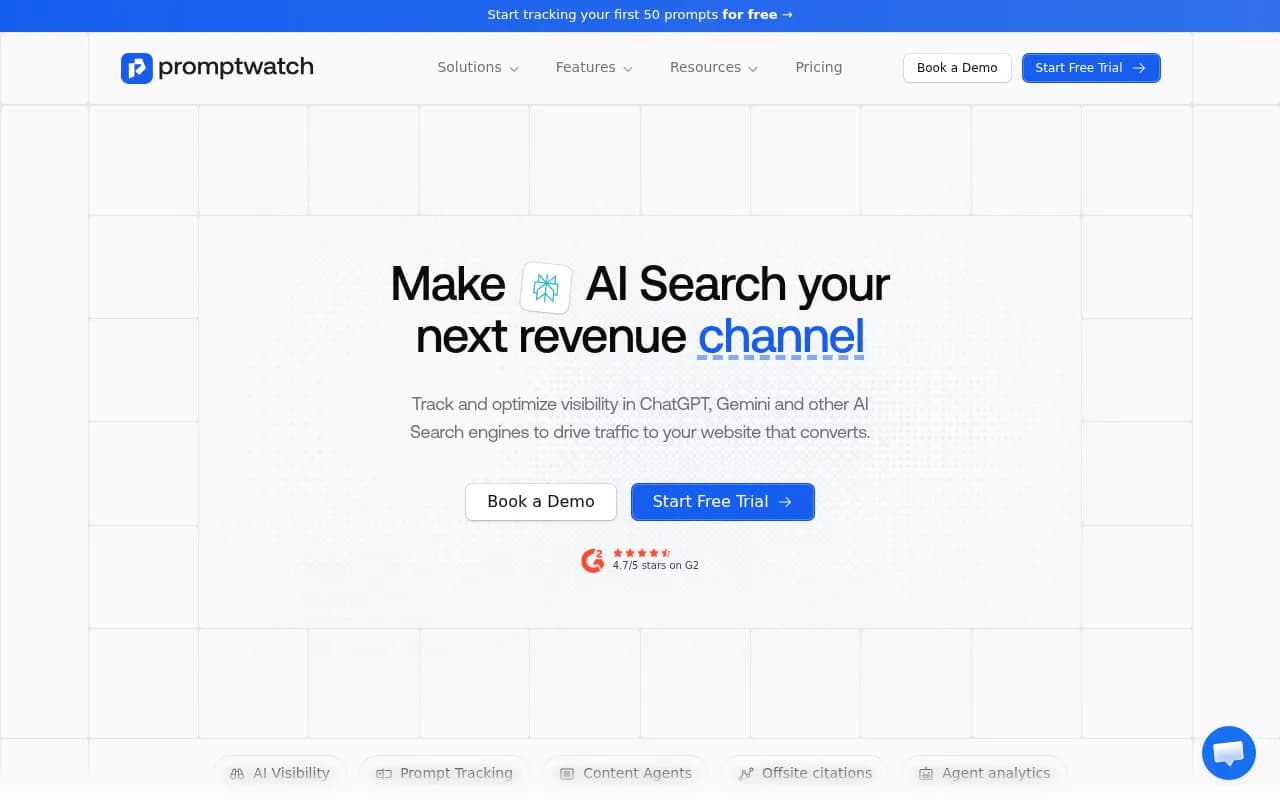
The teams getting the most out of Jasper, Writer, or AirOps in a GEO context are the ones who've paired them with a tracking layer. The writing tool handles production. The GEO platform handles intelligence and measurement.
Which tool should you actually choose?
The honest answer depends on where your bottleneck is.
Choose Jasper if: your team needs to produce marketing copy faster, you want brand voice consistency across multiple writers, and GEO is not yet a primary concern. It's the most accessible of the three and the fastest to get value from.
Choose Writer if: you're in a regulated industry, you have strict brand governance requirements, and you need AI content capabilities that can survive a legal or compliance review. The price point means it's really an enterprise decision.
Choose AirOps if: you have a content ops team (or a technical marketer) who wants to build repeatable, automated pipelines. You're producing content at scale, you need CMS integration, and you want full control over every step of the workflow. Solo creators will find it overkill.
And if GEO is genuinely on your roadmap: use whichever of the three fits your production needs, then add a dedicated AI visibility platform to handle tracking, gap analysis, and citation monitoring. Trying to get GEO intelligence out of a content generation tool is like trying to get SEO rank tracking out of Google Docs. The tools aren't built for it.
A note on the GEO tool landscape
For teams actively working on AI search visibility, a few platforms are worth knowing about beyond the three we've covered here.
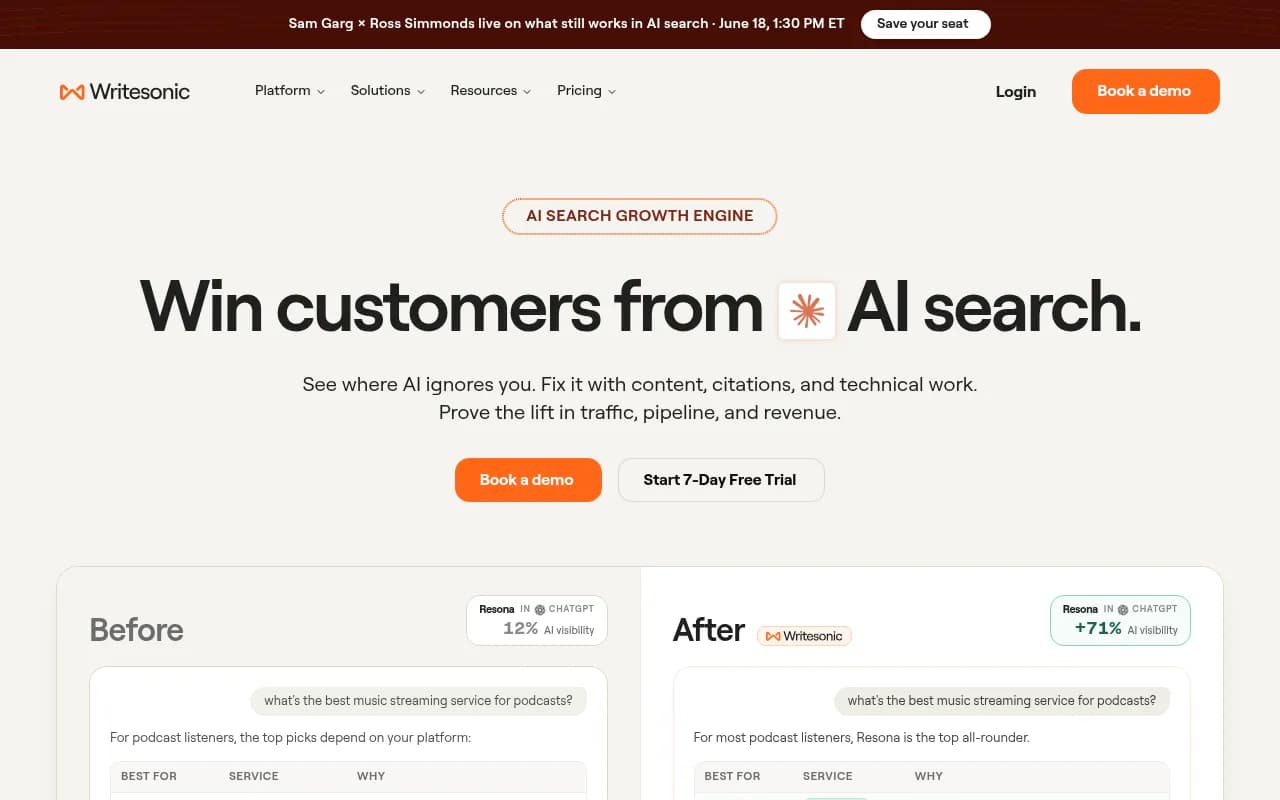
Writesonic has made a significant bet on GEO, with AI search visibility tracking across ChatGPT, Perplexity, Claude, and Google AI Overviews built into its platform. The GEO features are locked behind its Professional tier ($249/month), which is a real jump from the base plan.
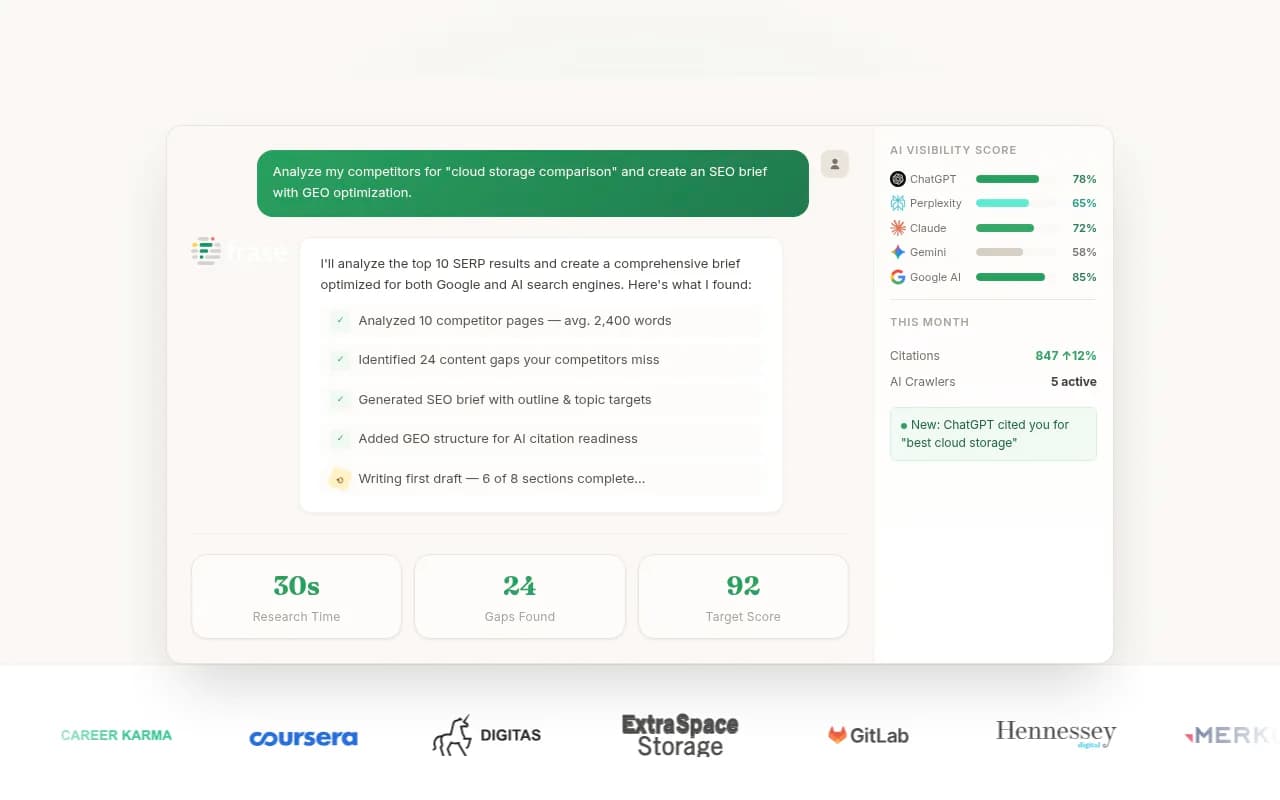
Frase is strong on content research and briefing, with some GEO-adjacent features for content optimization.
Surfer SEO has been building toward AI search optimization and pairs well with GEO monitoring platforms when you want optimization and citation tracking handled separately.

But for teams that want a complete picture -- which AI models cite you, which prompts you're missing, how your visibility compares to competitors, and what content to create next -- a purpose-built GEO platform is the right starting point, not an add-on.
The bottom line
Jasper, Writer, and AirOps are all real tools solving real problems. The comparison between them is genuinely useful if you're trying to decide how to produce content more efficiently. But none of them were built to answer the question that matters most in 2026: "Is AI search sending traffic to my competitors instead of me, and what do I do about it?"
That question needs a different kind of answer.
If you're evaluating content platforms specifically because you want to improve your AI search visibility, start with the visibility problem first. Understand where you stand across the AI models your customers use. Then choose a content production tool that fits your team's workflow and budget. The order matters.
Producing more content faster is only valuable if it's the right content -- content that fills the specific gaps AI models are already exposing.