Key takeaways
- Nimt.ai and Dageno AI are both newer, lighter-weight AI visibility tools aimed at brands getting started with GEO tracking in 2026
- Dageno AI leans toward product visibility and e-commerce use cases; Nimt.ai focuses more on brand mention monitoring across LLMs
- Neither tool offers the full action loop (monitor → diagnose → fix) that more mature platforms provide
- If you need content generation, crawler logs, or deep prompt intelligence on top of monitoring, you'll likely outgrow both tools quickly
- For teams that need a complete GEO platform, Promptwatch covers the full cycle from gap analysis to content creation to traffic attribution
The AI visibility tool market has exploded. In early 2024 there were maybe a handful of platforms tracking brand mentions in LLMs. By mid-2026, there are dozens, and new ones keep appearing every few months. Nimt.ai and Dageno AI are two of the more recent entrants, and they're worth comparing because they're targeting slightly different problems despite operating in the same general space.
This guide is for teams who've heard of both and want a straight answer on what each one actually does, where they fall short, and whether either is the right fit for their situation.
What is Nimt.ai?
Nimt.ai is an AI search visibility and brand monitoring tool. Its core pitch is straightforward: track how often your brand appears in responses from AI models like ChatGPT, Perplexity, and Gemini, and see how that compares to competitors.
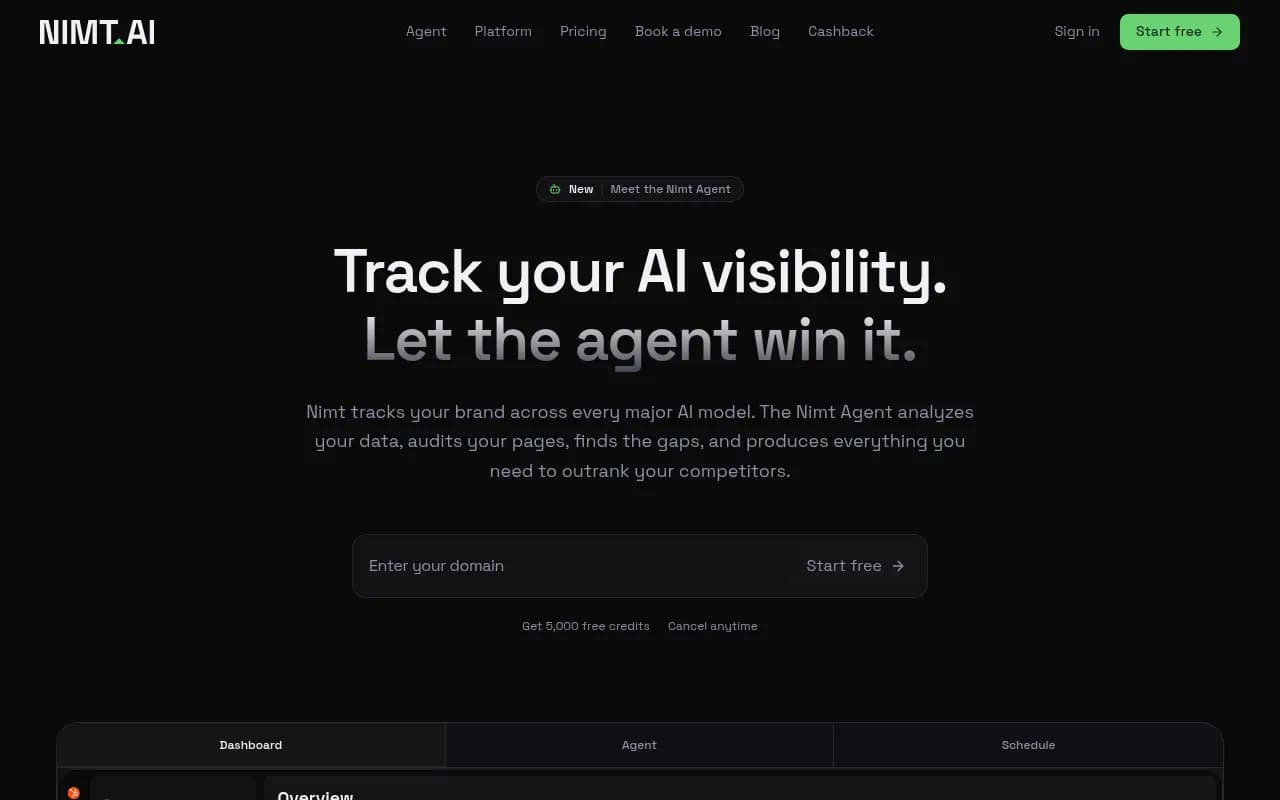
The tool is aimed at marketing teams and SEOs who want to get a handle on their LLM presence without committing to an enterprise-level platform. It's relatively lightweight by design, which is both its appeal and its limitation.
Key things Nimt.ai does:
- Monitors brand mentions across multiple AI models
- Tracks share of voice against named competitors
- Shows which prompts trigger mentions and which don't
- Provides basic sentiment context around how the brand is described
What it doesn't do (at least not in any meaningful depth): it doesn't help you create content to close visibility gaps, doesn't offer crawler log data, and doesn't connect AI visibility to actual website traffic or revenue.
What is Dageno AI?
Dageno AI takes a slightly different angle. While it also tracks AI visibility, its focus is more explicitly on product visibility, making it more relevant to e-commerce brands and retailers who want to know whether their products are being recommended by AI assistants.
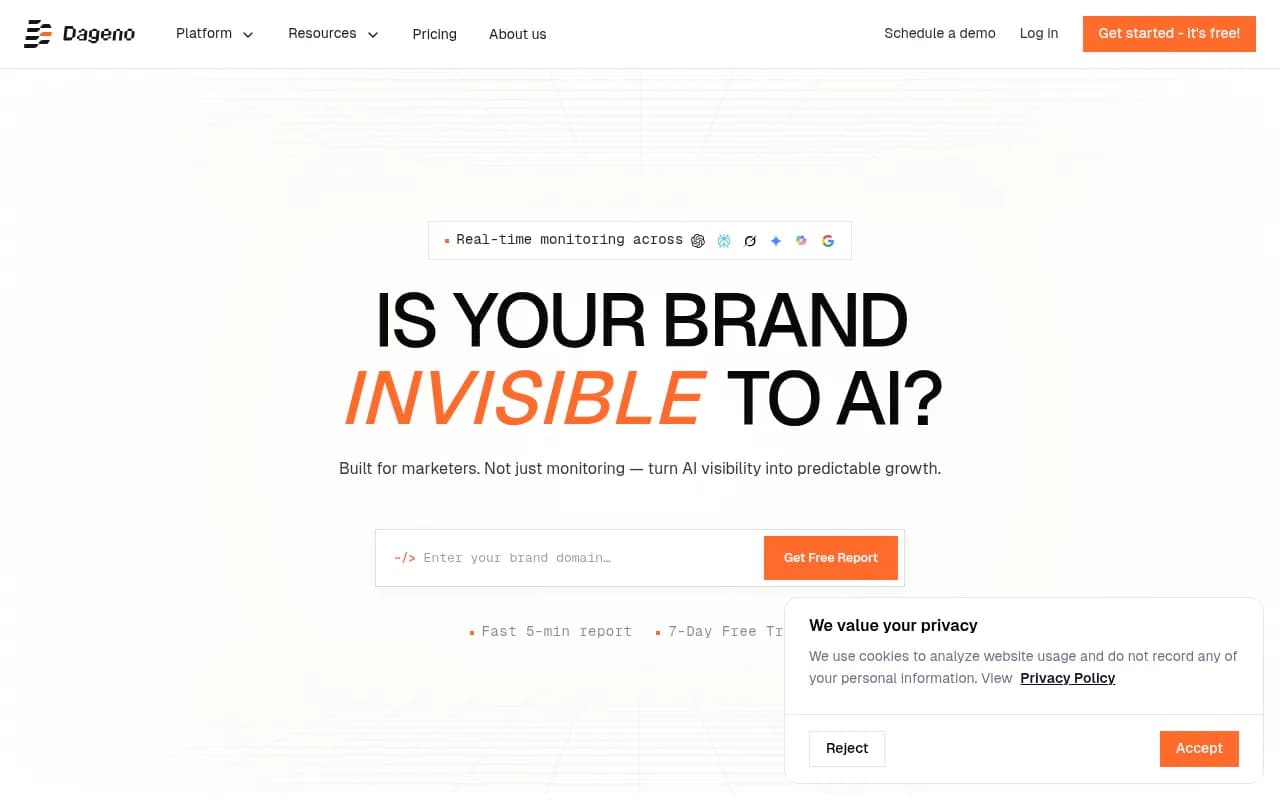
Dageno AI's own blog positions it as a tool for "optimizing product visibility" in AI search, which signals its target audience clearly. If you're a brand that sells physical or digital products and you want to know whether ChatGPT is recommending you when someone asks "what's the best [product category]," Dageno AI is built with that use case in mind.
Key things Dageno AI does:
- Tracks product-level mentions in AI-generated responses
- Monitors brand visibility across AI search engines
- Offers optimization suggestions tied to product listings and descriptions
- Focuses on the buyer journey within AI interfaces
The limitation is similar to Nimt.ai: it's primarily a monitoring and suggestion tool. The depth of content creation, crawler intelligence, and attribution analytics that more mature platforms offer isn't really there yet.
Head-to-head comparison
Here's how the two tools stack up across the dimensions that matter most for an AI visibility program:
| Feature | Nimt.ai | Dageno AI |
|---|---|---|
| Primary use case | Brand mention monitoring | Product visibility optimization |
| AI models tracked | Multiple LLMs | Multiple LLMs |
| Competitor tracking | Yes | Yes |
| Prompt/query tracking | Basic | Basic |
| Content gap analysis | Limited | Limited |
| Content generation | No | No |
| Crawler log data | No | No |
| Traffic attribution | No | No |
| E-commerce focus | No | Yes |
| ChatGPT Shopping tracking | No | Partial |
| Reddit/YouTube insights | No | No |
| Best for | SMBs, brand marketers | E-commerce, product brands |
| Pricing | Entry-level | Entry-level |
The honest summary: both tools are monitoring dashboards. They'll tell you where you stand. They won't tell you how to fix it in any systematic way, and they won't help you execute the fix.
Where they're similar
The overlap between Nimt.ai and Dageno AI is actually pretty large. Both tools:
- Track brand mentions across AI models
- Show share-of-voice data against competitors
- Are priced for smaller teams and individual brands rather than agencies or enterprises
- Are newer entrants without the track record of platforms like Profound or Peec AI
- Lack the deeper infrastructure (crawler logs, attribution, content agents) of more established GEO platforms
If your only goal is to answer "is my brand showing up in ChatGPT responses?", either tool will get you there. The choice between them comes down to whether your visibility problem is primarily about brand recognition (Nimt.ai) or product recommendations (Dageno AI).
Where they diverge
The real difference is in the use case framing. Nimt.ai thinks about visibility the way a brand marketer does: am I being mentioned, how often, and what's the sentiment? Dageno AI thinks about it the way a product manager or e-commerce director does: are my products being recommended, and what can I change in my product content to improve that?
This matters because the optimization levers are different. A brand marketer trying to improve LLM mentions needs to think about content strategy, PR, and authority signals. A product team trying to improve AI recommendations needs to think about product descriptions, structured data, and how AI models evaluate product quality signals.
Neither tool fully solves either problem, but they're at least pointed in the right direction for their respective audiences.
How they compare to the broader market
To put Nimt.ai and Dageno AI in context, it helps to see where they sit relative to the tools that have been in this space longer.
The market broadly splits into three tiers right now:
Monitoring-only tools (where Nimt.ai and Dageno AI sit): Track mentions, show share of voice, maybe offer some suggestions. Good for getting started. Limited for teams that need to act on the data.
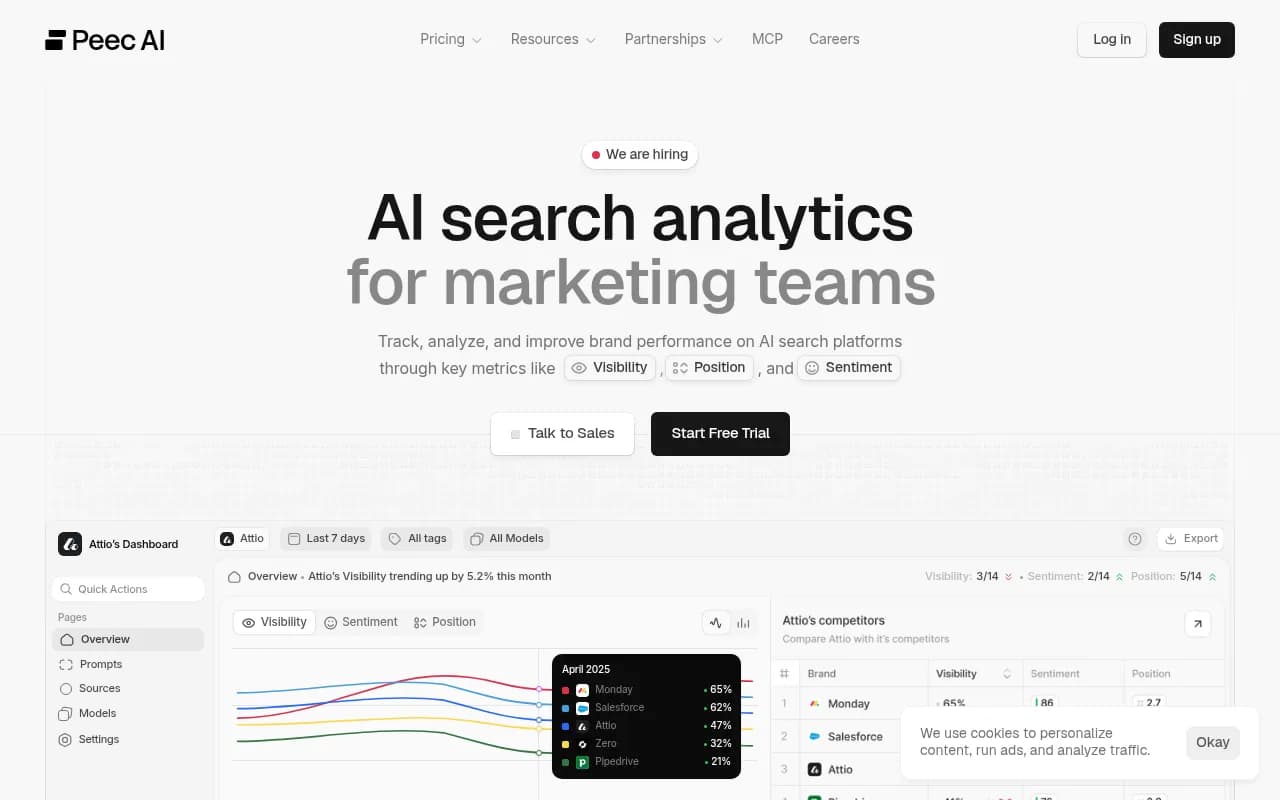
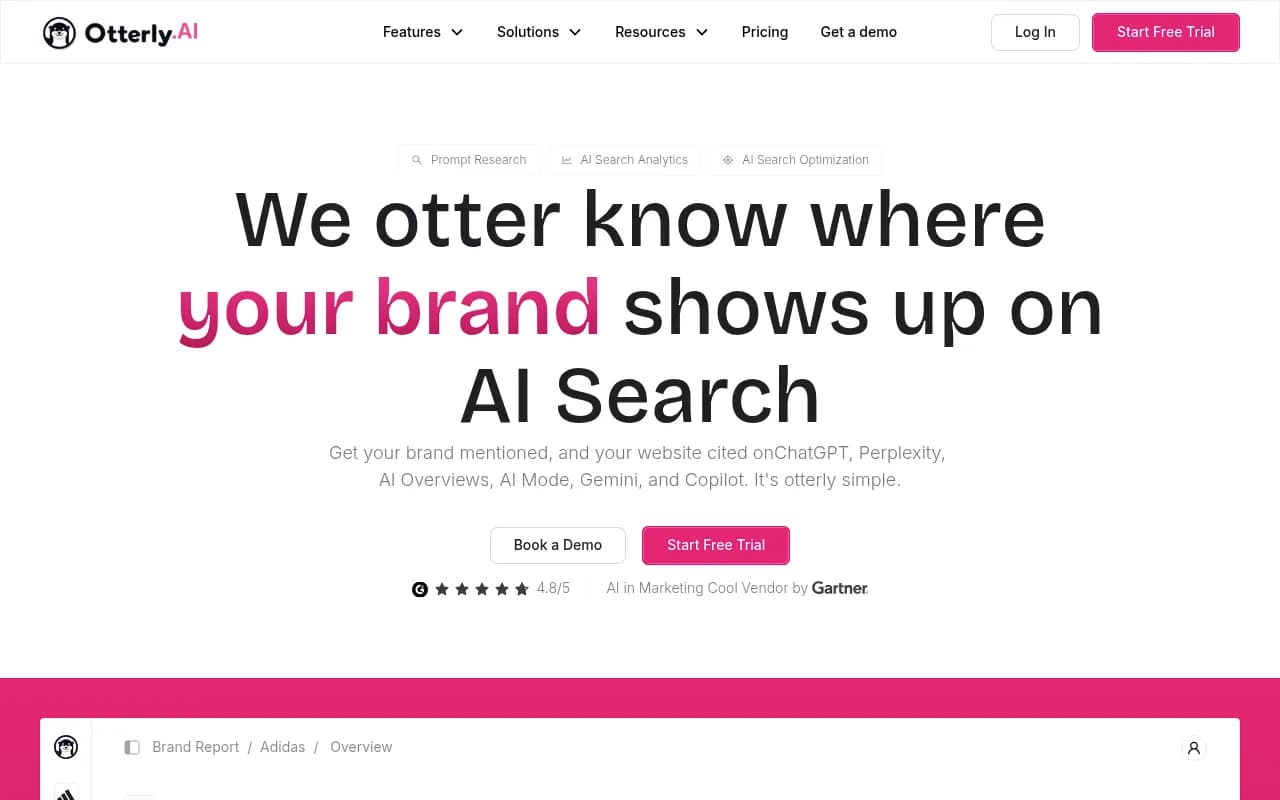
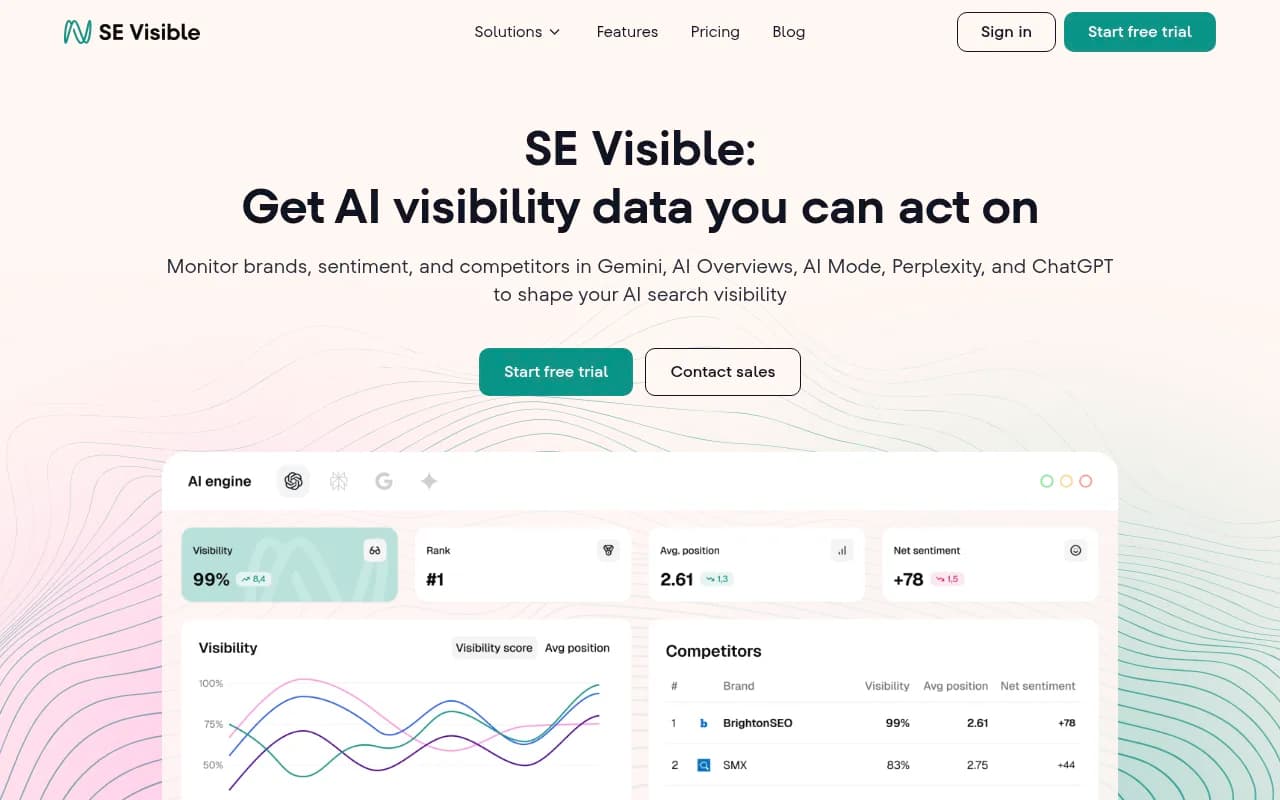
Monitoring + optimization tools: Platforms like Peec AI, Otterly.AI, and SE Ranking Visible that go a bit further with content recommendations and multi-model tracking.
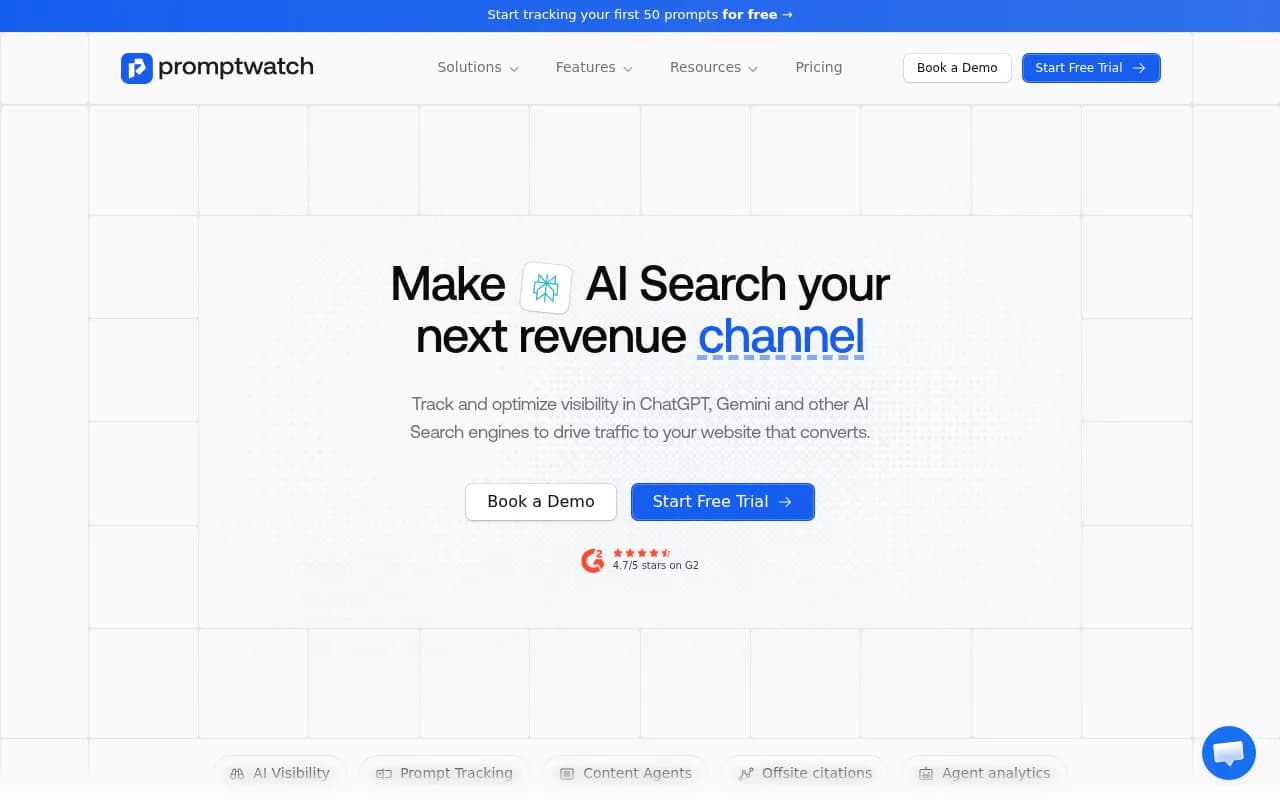
Full-cycle GEO platforms: Tools that close the loop between finding gaps and fixing them. This is where Promptwatch sits, with its Answer Gap Analysis, Content Agents, crawler logs, and traffic attribution all working together.
Most teams start with a monitoring-only tool and then realize they need more. That's not a criticism of Nimt.ai or Dageno AI specifically -- it's just how the category works. The question is whether you want to go through that transition or start with something more complete.
What the broader market looks like in 2026
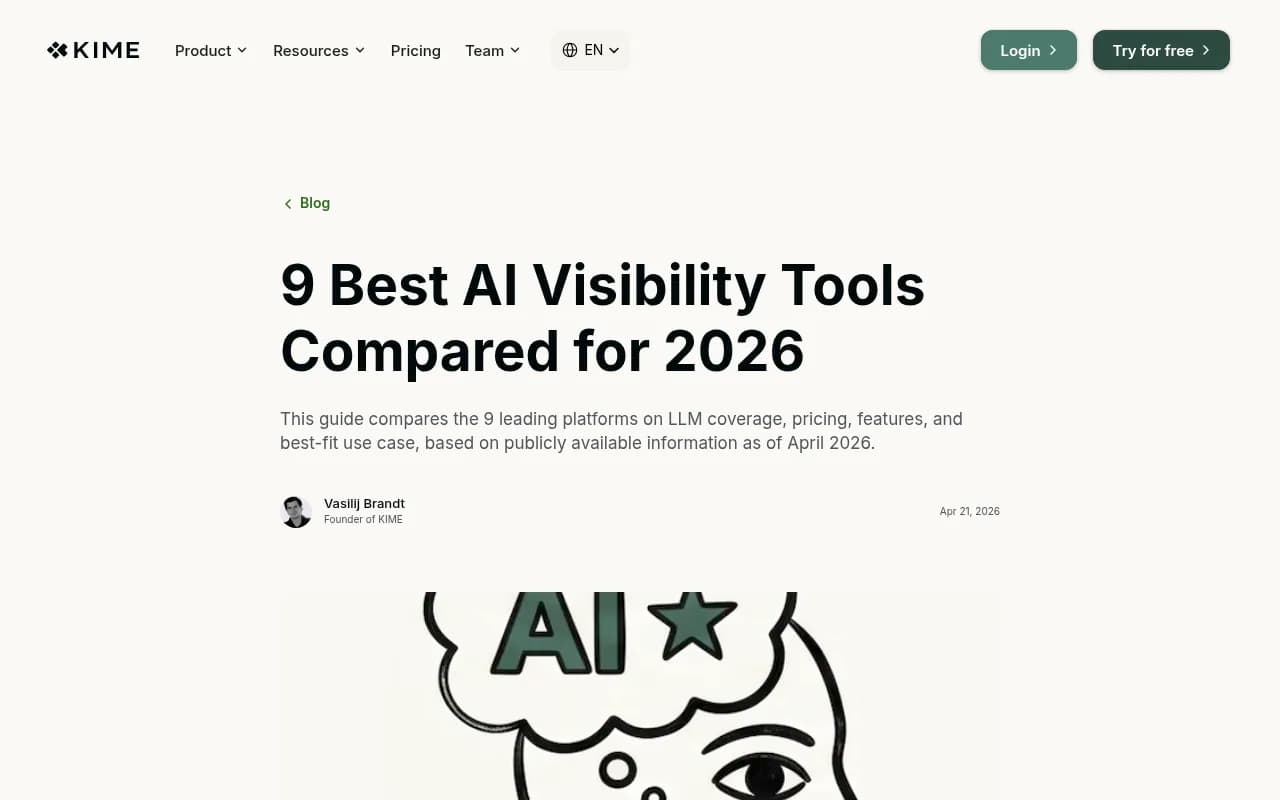
The AI visibility tool space has matured fast. According to KIME's April 2026 comparison, ChatGPT now accounts for roughly 20% of global search traffic, and AI-referred visits convert at 3x to 9x the rate of traditional Google organic traffic. That's why so many tools have entered this space.
The platforms that have pulled ahead are the ones that don't just show you data but help you do something with it. Frase.io's 2026 roundup makes the same point: "the biggest differentiator is whether a tool stops at telling you where you are invisible, or actually helps you fix it."
Nimt.ai and Dageno AI are at the beginning of that spectrum. They're not bad tools -- they're just early-stage tools in a market that's moving quickly toward action-oriented platforms.
Other tools worth knowing about in this space:
Who should use Nimt.ai?
Nimt.ai makes sense if:
- You're a small brand or startup that's just getting started with AI visibility tracking
- Your primary goal is understanding whether you're being mentioned at all, not yet optimizing how
- You want a lightweight, affordable way to monitor LLM mentions without a big setup process
- Your team is brand-focused rather than product-focused
It's probably not the right fit if you're managing multiple brands, need agency-level reporting, or want to connect AI visibility data to revenue metrics.
Who should use Dageno AI?
Dageno AI makes sense if:
- You're an e-commerce brand or retailer that wants to track product-level AI recommendations
- You're specifically interested in how AI models describe and recommend your products versus competitors
- You want optimization suggestions tied to product content rather than editorial content
It's less useful for service businesses, B2B companies, or anyone whose "product" is a service or expertise rather than a physical or digital item.
The gap both tools leave open
Here's the honest problem with both tools: they tell you what's happening but not what to do about it in any systematic way.
If you find out that ChatGPT mentions your competitor three times more often than you for a key product category prompt, what do you do next? You need to know:
- Which specific content gaps are causing that difference
- What topics and angles AI models are pulling from when they cite your competitor
- What content you need to create (or update) to close those gaps
- Whether AI crawlers are even finding your existing content
- Whether the new content you publish actually gets picked up and cited
Neither Nimt.ai nor Dageno AI answers those questions in depth. That's the gap that more complete platforms are built to fill.
Promptwatch's approach to this is worth understanding: it runs Answer Gap Analysis to show you exactly which prompts competitors are visible for that you're not, then uses Content Agents to generate articles and briefs grounded in that real prompt data, and then tracks whether those pages get crawled and cited. The whole cycle is connected.
That's a different category of tool than what Nimt.ai and Dageno AI offer today. Whether you need that level of depth depends on how seriously you're treating AI visibility as a growth channel.
Making the choice
If you're choosing between Nimt.ai and Dageno AI specifically:
- Go with Nimt.ai if you're a brand marketer who wants to track LLM mentions and share of voice across models
- Go with Dageno AI if you're an e-commerce or product-focused team that wants to track AI product recommendations
If you're choosing between these two and the broader market, be honest about whether monitoring alone is enough. For teams that are serious about GEO as a channel, the monitoring-only tools tend to become frustrating quickly because they show you problems without helping you solve them.
The platforms that have built the full loop -- find gaps, create content, track results -- are where the market is heading. Nimt.ai and Dageno AI are worth watching as they develop, but right now they're starting points, not complete solutions.