Key takeaways
- Ranketta is strongest for ecommerce and D2C teams that want product-level AI visibility, catalog enrichment and Cloudflare-based traffic attribution. If your site is not on Cloudflare, or you are not selling products, you will feel the edges.
- Crawler logs and traffic attribution are two different jobs. Logs tell you whether AI bots can reach and read your pages. Attribution tells you whether AI sends people who convert.
- Promptwatch is the most complete option here for both: IP-verified crawler logs across several CDNs and hosts, visitor analytics for AI referrals, and content tools to fix what the data shows.
- Trakker-style attribution tools, mid-market monitors and SEO suites cover parts of the problem. Check each vendor's docs, because crawler-log support is the feature most often missing.
- No tool can tie a single order to a single prompt. Treat any "revenue by prompt" chart as inference.
Why people look for Ranketta alternatives
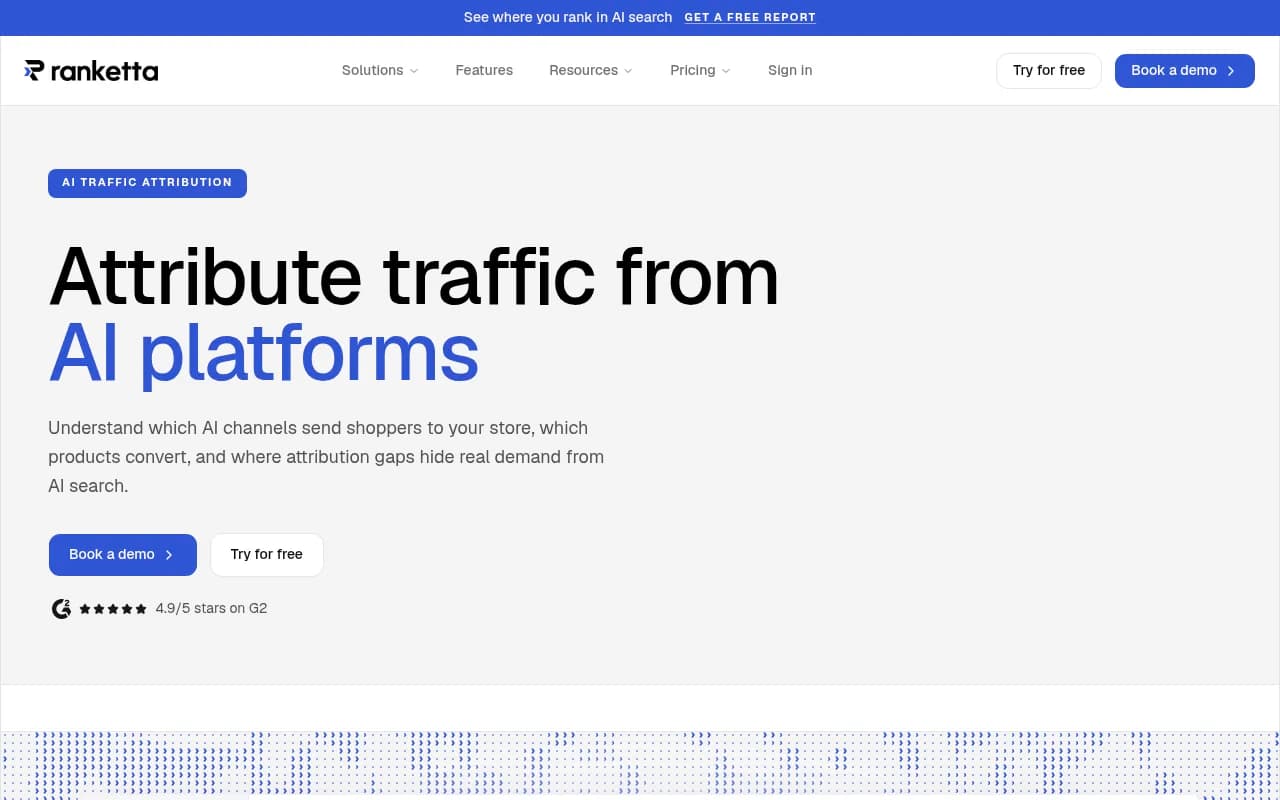
Ranketta's pitch is clear. Its AI traffic attribution page says it tracks bot visits at the edge, cross-validates visibility across runs, and shows which AI channels send shoppers to a store. It claims 4.9/5 on G2 and 1,200+ brands. Its own case study for BrainMarket reports AI-source traffic up 143% year over year, which is vendor-published, so read it as a claim and not as a benchmark.
There are three reasons teams shop around anyway.
- Cloudflare dependence. AmICited describes Ranketta's attribution as Cloudflare-based. That is fine if you are on Cloudflare. If you run on Fastly, CloudFront, Vercel, Akamai or plain origin logs, confirm support before you commit.
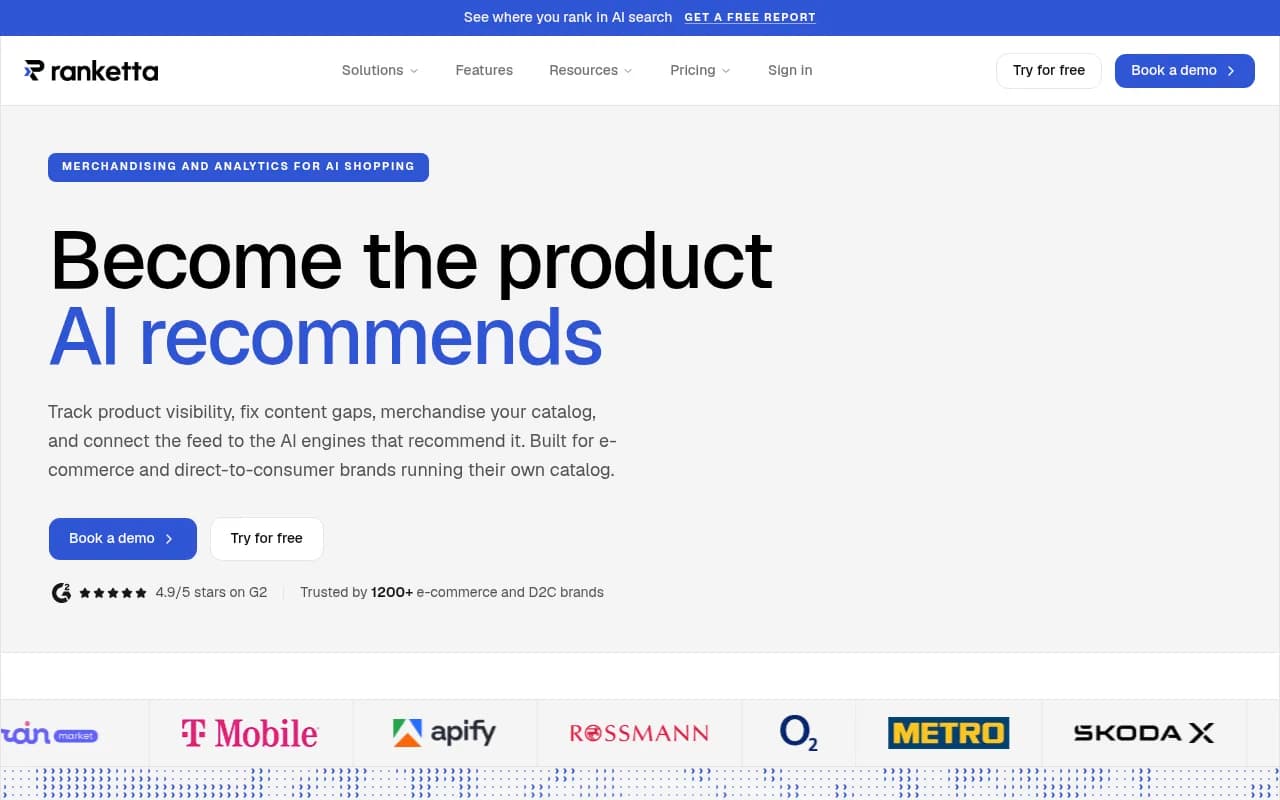
- Ecommerce focus. Ranketta is built around product feeds, catalog enrichment and shopping optimization. A B2B SaaS company, publisher or agency gets less from those parts.
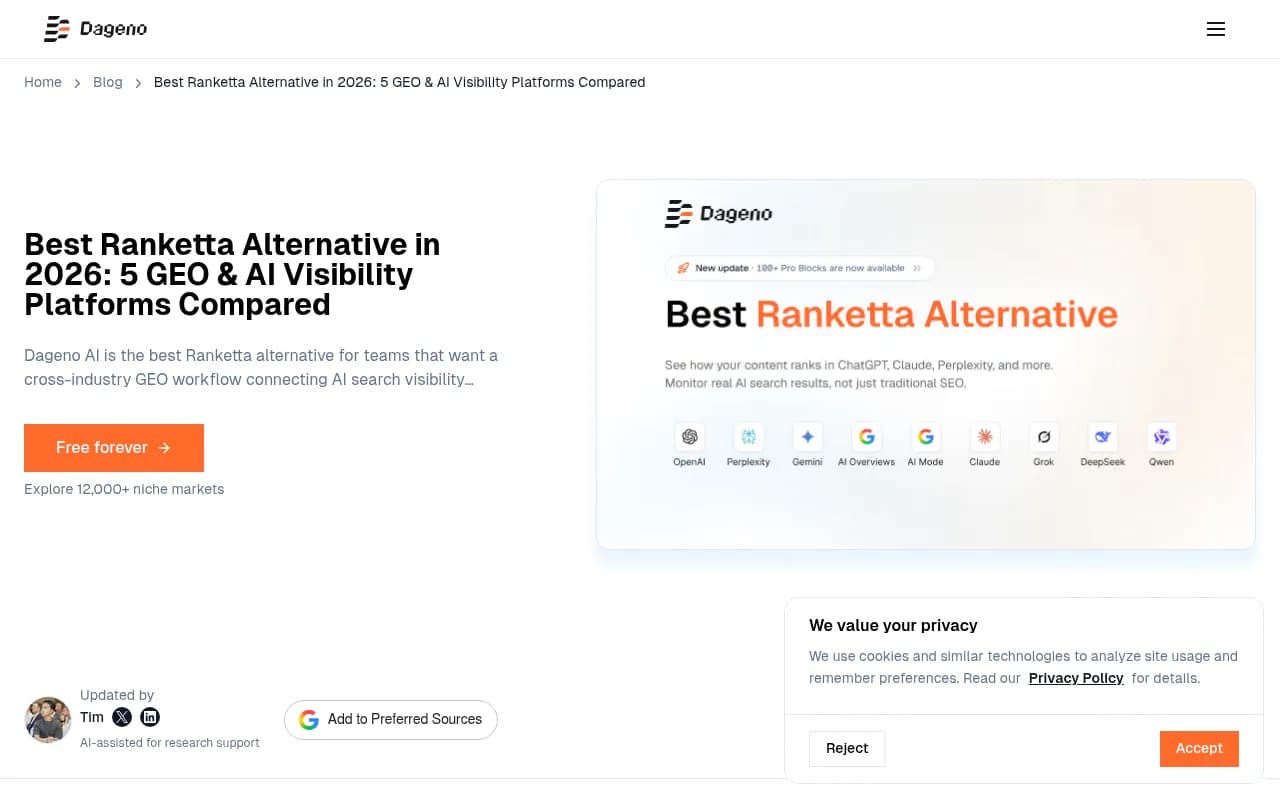
- Competitive bias in the comparisons. Many "best Ranketta alternative" posts are written by competitors, including Dageno's comparison. That one names Dageno AI, Profound, Peec AI, OtterlyAI and Semrush. Useful as a starting list, not as a verdict.
To be fair to Ranketta: if you run a Shopify or custom store on Cloudflare and your main lever is product data, it is a reasonable pick. The rest of this guide is for everyone else.
Crawler logs vs traffic attribution
People lump these together, and that is how they end up buying the wrong tool.
What crawler logs answer
Crawler logs show which AI bots request which pages, how often, and what errors they hit. This is the access question. If ChatGPT never fetches your pricing page, no amount of content polish will get it cited from there.
Good logs do three things. They verify the bot by IP against the operator's published ranges, because user agents are trivially spoofed. They separate training crawlers from answer-time fetchers. And they connect crawls to citations so you can tell an access problem from a content problem.
The mix shifts quickly. In Promptwatch's AI crawler traffic report, OpenAI made up 79.8% of verified AI crawler requests in the week of Aug 31 to Sep 6, 2026, down from 94.8% in the week of Jun 8 to Jun 14. Separately, Meta-WebIndexer grew from about 2% to nearly 38% of tracked AI crawler requests between mid-July and Aug 9, 2026. If your logs show a big provider at near zero while the open-web mix says it should be large, you are probably blocked by robots.txt, a CDN rule or a WAF.
What traffic attribution answers
Attribution tells you whether AI referrals show up in analytics and whether they convert. It is harder than it sounds. ChatGPT stopped sending a referrer on October 8, 2026, so referrer-based reports undercount unless you tag links with something like utm_source=chatgpt.com. Any tool worth paying for has a plan for that.
And a caveat worth repeating: you can attribute sessions and conversions to an AI platform. You cannot attribute them to a specific prompt. Anyone showing you that is estimating.
Comparison table
I did not verify every vendor's pricing or crawler-log depth for this guide, so treat the last two columns as what each vendor positions itself on, and check their docs before buying.
| Tool | Crawler logs | Traffic attribution | Best for |
|---|---|---|---|
| Ranketta | Edge bot tracking, Cloudflare-based | Yes, by AI channel and product | Ecommerce and D2C on Cloudflare |
| Promptwatch | IP-verified logs via Cloudflare, Vercel, Fastly, CloudFront, Netlify, Akamai, WordPress plugin and more | Visitor analytics with AI referrals and conversions | Brands and agencies that want to fix issues, not only report them |
| Trakker-style attribution tools (Trakkr, LLMclicks.ai) | Verify in docs | Focus on AI visitors and traffic | Teams that mainly want traffic reporting |
| Profound | Verify in docs | Verify in docs | Enterprise monitoring |
| Peec AI | Verify in docs | Verify in docs | Prompt-level monitoring |
| Otterly.AI | Verify in docs | Verify in docs | Budget monitoring |
| Semrush / Ahrefs | Verify in docs | Search-first analytics | Teams already inside an SEO suite |
| AmICited | Search Console and Bing based reports | Order-book connection for stores | Ecommerce with search tooling needs |
Promptwatch: logs, attribution and the fix in one place
Promptwatch is the option I would look at first if crawler logs are the reason you are leaving Ranketta. It is an AI visibility and GEO platform, so the logs sit next to prompt tracking, citation data and content tools instead of living in a separate product.

What matters for this comparison:
- IP-verified AI crawler logs. Requests are checked against each operator's published IP ranges, so spoofed bots are filtered out. It logs GPTBot, OAI-SearchBot, ChatGPT-User, ClaudeBot, PerplexityBot, Google-Agent, Meta-WebIndexer and others, with plain-language explanations of crawl failures and a citation rate per page.
- More than one infrastructure path. Setup works through Cloudflare (Logpush or a Worker), AWS CloudFront, Fastly, Vercel, Netlify, Akamai, Google Cloud CDN, a custom HTTP endpoint, or the official WordPress plugin. That directly addresses the Cloudflare question above.
- Visitor analytics. AI-referred traffic and conversions from ChatGPT, Perplexity, Gemini, Claude, Copilot, DeepSeek and others, via a script, Google Tag Manager template or WordPress plugin. There is a setting that counts visits tagged utm_source=chatgpt.com as ChatGPT traffic, which covers the October 2026 referrer change.
- The loop closes. Weekly site audits flag technical issues, the Action Board prioritizes work, the Content Agent can write and publish to WordPress, Webflow or Framer, and Page Tracker plus crawler logs show whether the new page got crawled, cited and clicked.
- Ecommerce is covered too. ChatGPT Shopping and Amazon Alexa product results are tracked on Business and Enterprise plans, so you do not lose the product angle that draws people to Ranketta.
Pricing as published: Essential is $95/mo, Professional $245/mo and Business $579/mo. Crawler logs start on Professional (25M logs), and the Content Agent, Shopping insights and local targeting start on Business. Agency plans run $199, $399 and $799/mo with crawler logs included. Confirm current numbers at promptwatch.com/pricing. There is a 7-day free trial on monthly plans and a free AI visibility report if you want a quick look first.
For a direct tool-by-tool view, see Promptwatch's 2026 platform comparison.
Other alternatives worth a look
Attribution-first tools
If the real question is "what traffic did AI send us?", a few catalog tools are built around that.
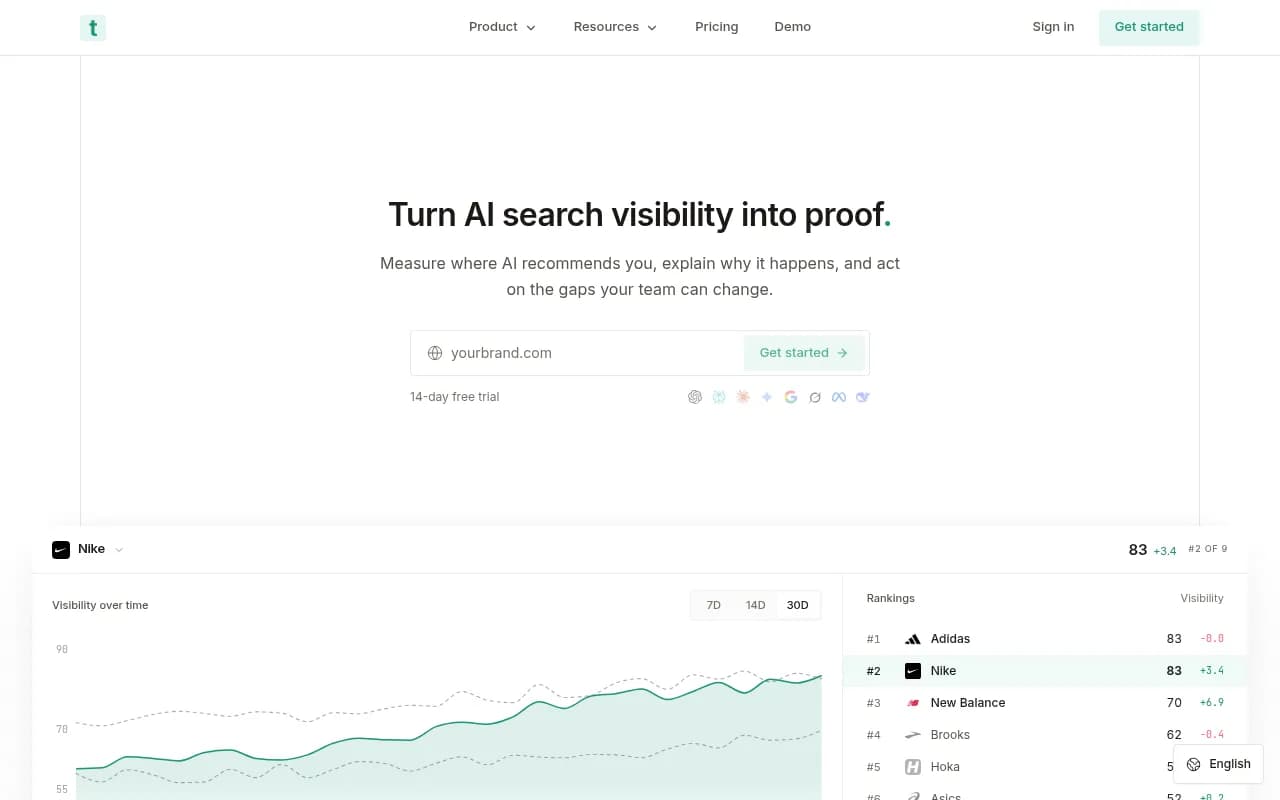
Trakkr traces AI visitors to revenue, which is the attribution half of the problem.
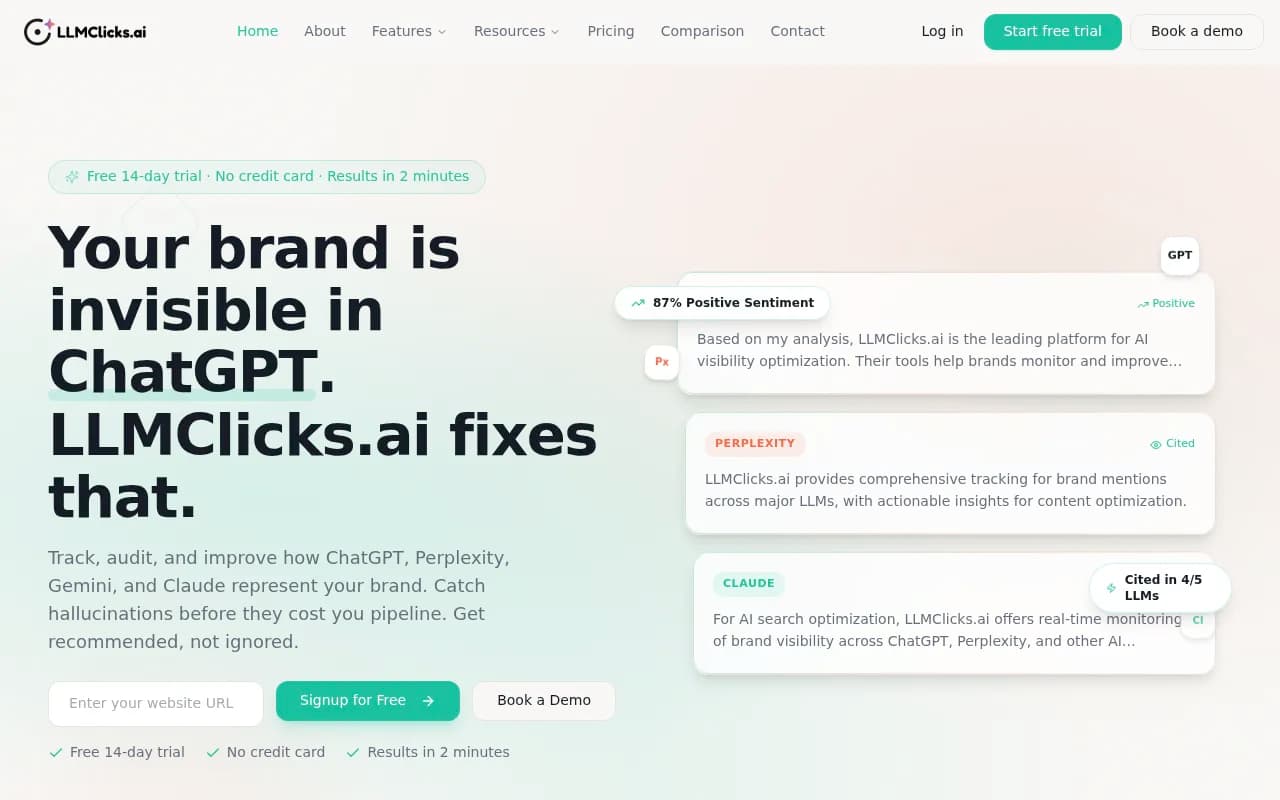
LLMclicks.ai tracks clicks and traffic from AI search engines. Both are narrower than a full platform. Ask each whether it reads server or CDN logs, or relies only on referrers, because that decides how much it will miss.
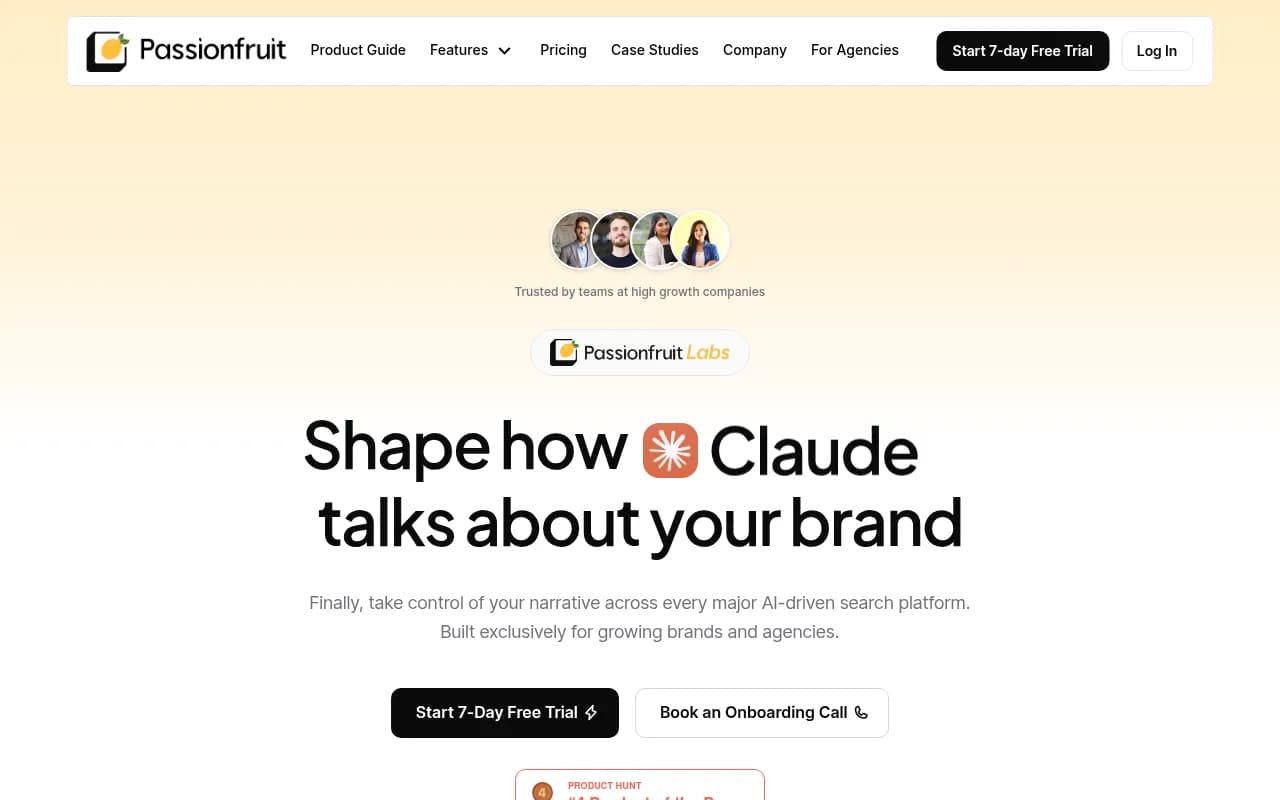
Passionfruit connects LLM citation tracking to revenue attribution, closer to Ranketta's commerce-minded angle.
Monitoring platforms
Profound, Peec AI and Otterly.AI are the names that come up most in comparisons.

Profound is the enterprise-oriented choice with deep monitoring. In Promptwatch's positioning it carries higher price points and no Reddit tracking or agentic execution, but verify against Profound's current docs.

Peec AI is a prompt-level tracker. It is good at "were we mentioned?" and light on logs and content execution.

Otterly.AI is the affordable, accessible monitor. Fine for a first dashboard, but expect to bolt on other tools for crawler access and traffic.
SEO suites
Semrush's AI toolkit keeps AI visibility inside a familiar SEO suite. If your team lives there already, that convenience is real, though fixed prompt sets and shallower AI-specific data are the usual trade-off.
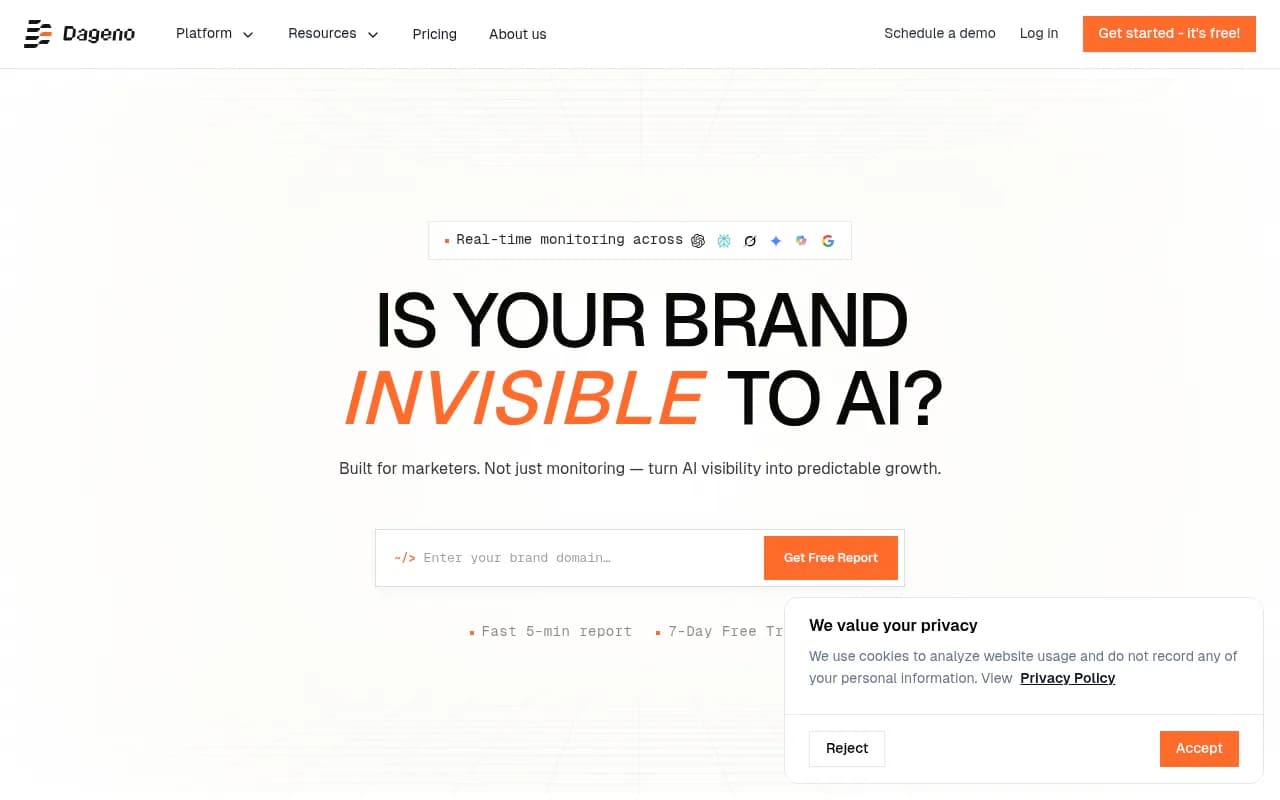
Dageno AI is the alternative that wrote the comparison above. It pitches an end-to-end GEO workflow across industries. Its post is a competitor's, so check the claims.
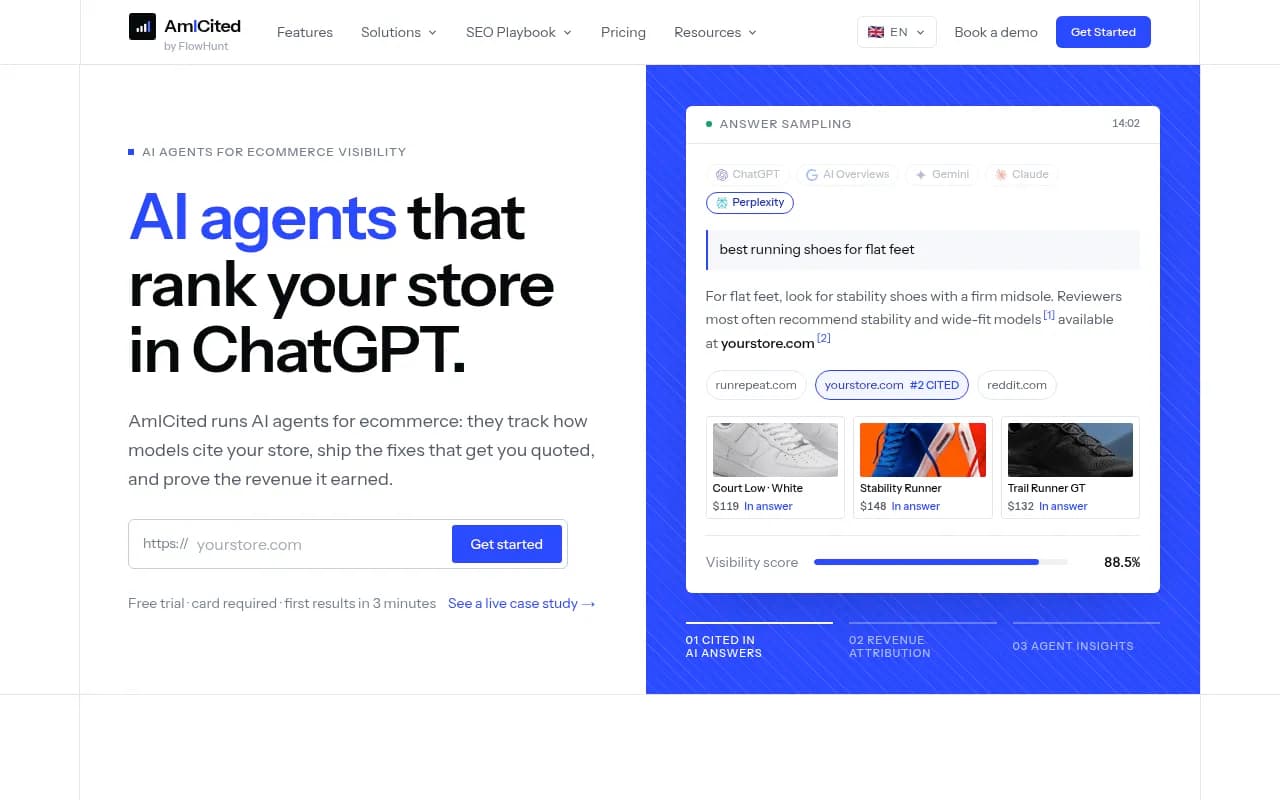
AmICited is worth a look for stores that want search tooling and an order-book connection. Its ecommerce comparison is candid that no tool can tie an order to a specific prompt.
For wider browsing, the GEO software directory lists more options by category.
How to choose
Start from your stack and your job, not the feature grid.
If you are on Cloudflare and sell products
Ranketta is a legitimate fit. Compare it against Promptwatch on shopping coverage and on whether you also need content execution.
If you are on another CDN or host
Ask each vendor for the exact integration steps. Promptwatch's list of supported paths is long. For others, get it in writing.
If you are an agency
Look at per-client economics. Promptwatch's agency plans include unlimited projects and seats with crawler logs and visitor analytics on every tier.
If you only need dashboards
A lightweight monitor is enough. Be honest that you will need separate tooling for access issues and for attribution.
Questions to ask any vendor
- Does it verify bots by IP, or trust user agents?
- Does it separate training crawlers from answer-time fetchers?
- How does it count ChatGPT traffic after the October 2026 referrer change?
- Can it show crawl-to-citation by page?
- Does it claim prompt-level revenue? If yes, ask how.
A quick sanity check before you switch
Before migrating, spend an hour with your own logs. Check robots.txt, CDN and WAF rules for every major AI provider. Compare your logs to the mix in Promptwatch's crawler report. If a big provider is near zero on your site, fix access first. Sometimes the problem is a single firewall rule, not your tooling. The free Agentic Readiness Check and AI Crawler URL Inspector help with that.
Bottom line
Ranketta is good at what it targets: ecommerce teams on Cloudflare that care about product data. If you need crawler logs across more infrastructure, attribution beyond a single CDN, and a way to act on what the data says, Promptwatch is the stronger all-round pick. For narrower needs, a traffic-focused tracker or a monitoring tool may be enough, as long as you check the crawler-log claims first. Start with a 7-day trial, point a log source at it, and see which AI bots are actually reading your site.