Key takeaways
- Ahrefs is still the pick for backlink depth, but its Lite plan tracks only 5 AI prompts and extra seats add up fast.
- Semrush is the most complete suite, and AI prompt tracking is now built into plans from Starter ($199/month) up.
- SE Ranking gives the most keywords and seats per dollar (2,000 daily-tracked keywords on Core at $129/month), but AI search and white-label reporting are paid add-ons.
- Search Atlas is the odd one out: it applies on-page fixes for you with OTTO SEO, but the $99 Starter plan has no AI tracking at all. You need Growth ($199/month).
- None of these is a dedicated AI visibility platform. If AI search is your main goal, pair or replace them with a specialist.
What you are actually choosing between
These four tools get lumped together as "AI SEO suites," but they started in very different places. Ahrefs and Semrush are mature research platforms that bolted AI visibility onto the side. SE Ranking is the value play that did the same thing for less money. Search Atlas is newer and leans on automation: it wants to do the work, not just report on it.
That difference matters more than any feature checklist. Before looking at prices, decide whether you need a research tool (find keywords, spy on competitors, audit links) or an execution tool (ship the fixes). Most teams need the first and assume they want the second.
Prices below come from the vendors' pages and recent roundups, and they change often. Confirm on each pricing page before you buy. Semrush in particular restructured its tiers, so older comparison posts quote plans that no longer exist.
The quick comparison
| Ahrefs | Semrush | SE Ranking | Search Atlas | |
|---|---|---|---|---|
| Entry price | $129/month (Lite) | $139/month (SEO plan) | $129/month (Core) | $99/month (Starter) |
| Tracked keywords on entry plan | 750 | 500 | 2,000, updated daily | 2,000 |
| AI search tracking | 5 prompts on Lite; Brand Radar AI from $199/month extra | 50 daily prompts from Starter ($199/month) | 100 daily prompts per one source; AI Search add-on from $89/month per another | None on Starter; ChatGPT, Gemini, AI Mode on Growth ($199/month) |
| Extra seats | $40-$80/month each | From $45/month each | From $16/month each | 1 seat on Starter, 3 on Growth |
| Trial | Free tier, no trial | 7 days | 14 days | 7 days |
| Best for | Backlink-heavy work | All-in-one marketing | Value per seat | Automated on-page fixes |
Note the SE Ranking AI row. Sources disagree: one review says Core includes 100 daily prompts, while another says AI prompt tracking needs a separate add-on at $89 to $345/month. Check the current plan page before assuming AI tracking is included.
Ahrefs
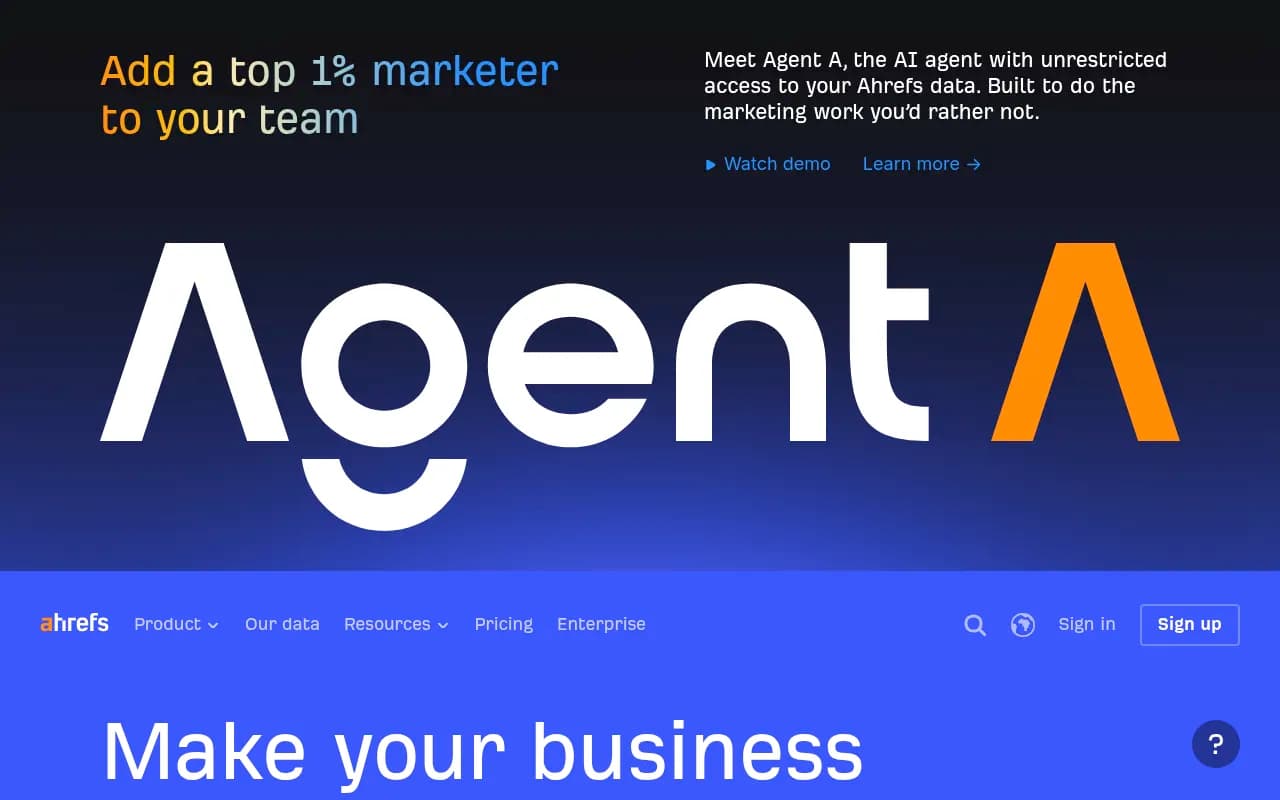
Ask a room of SEO people what they use and most say Ahrefs. The reason is simple: the backlink data and site audits are the most trusted of the group. Reddit threads on r/bigseo keep landing on the same verdict, that Ahrefs feels the most solid for link data and audits.
The weak spots are cost and AI. Lite is $129/month for one user, extra users are $40 each up to three people, and Standard at $249/month charges $60 per extra seat. A three-person content team on Standard pays $369/month. Lite also tracks only 750 keywords and five AI prompts. Serious AI tracking means Ahrefs Brand Radar, which starts at $199/month on top of your plan.

One bright spot: Ahrefs includes 100,000 monthly credits for its MCP connector, which lets you query data from an LLM like Claude. Arboreal Marketing rated that more generous than Semrush's 50,000.
Worth paying for if you do link building, digital PR, or backlink audits. Probably not if your main need is content planning or AI reporting.
Semrush
Semrush covers the most ground: keyword research, Keyword Gap, content planning, paid search data, and now AI visibility. The Keyword Gap tool is a good example of why people stay. Compare your site against up to four competitors and you get a ready-made topic shortlist.
The plan structure changed. The old Pro, Guru and Business tiers are replaced by SEO ($139), Starter ($199), Pro+ ($299) and Advanced ($549). AI prompt tracking is included from Starter up, with 50 daily prompts on Starter, 100 on Pro+ and 200 on Advanced. It is absent from the entry SEO plan.
That creates a pricing trap. If you are on the $139 plan and bolt on the $99 AI Visibility Toolkit, you pay $238. Starter at $199 includes the prompts natively, so stacking the add-on is the more expensive route.
Two more things to know. Adobe completed its acquisition of Semrush on April 28, 2026 for $1.9 billion. Semrush says no immediate changes to features, pricing or billing, but if you plan to commit annually, ask your account rep about the roadmap. And local SEO is priced per location, which scales badly for multi-site businesses.
Worth paying for if you want one vendor for SEO, content and AI visibility and have the budget.
SE Ranking
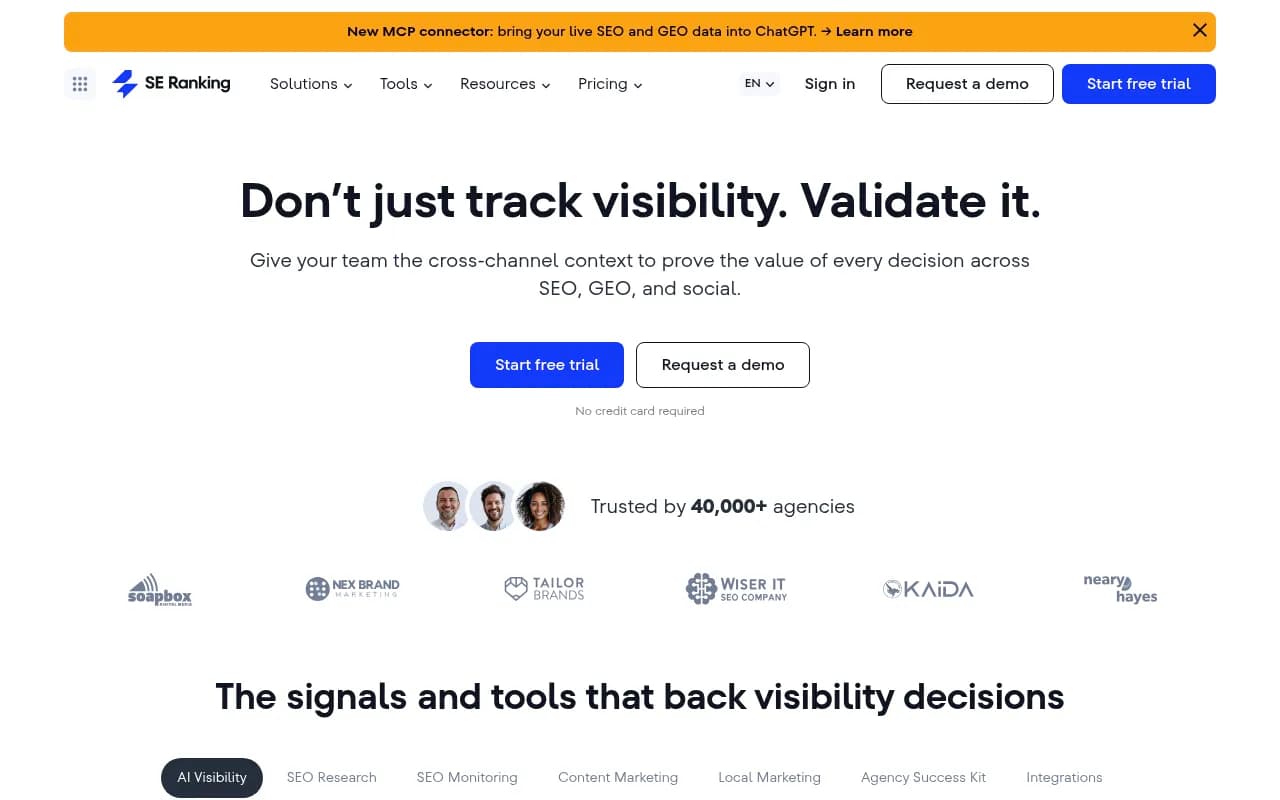
SE Ranking is the value pick, and the numbers show why. Core gives you 2,000 keywords tracked daily, roughly four times Semrush's entry allowance, plus 10 projects and manager seats from $16/month. Arboreal Marketing, an agency that has used it for three years, says it beat both rivals on cost and on its Claude MCP integration.
Daily rank tracking is the real edge. When a page drops, you see it the next day rather than at a weekly update.
Be careful with the sticker price, though. AI search tracking and white-label reporting are paid modules, and white-label requires the annual-only Agency Pack. DashThis estimates a realistic agency setup (Core plus AI Search plus Agency Pack) lands near $240/month, which erases much of the advantage over Semrush. The backlink index is also thinner than Ahrefs, and the main account allows only one login session at a time.
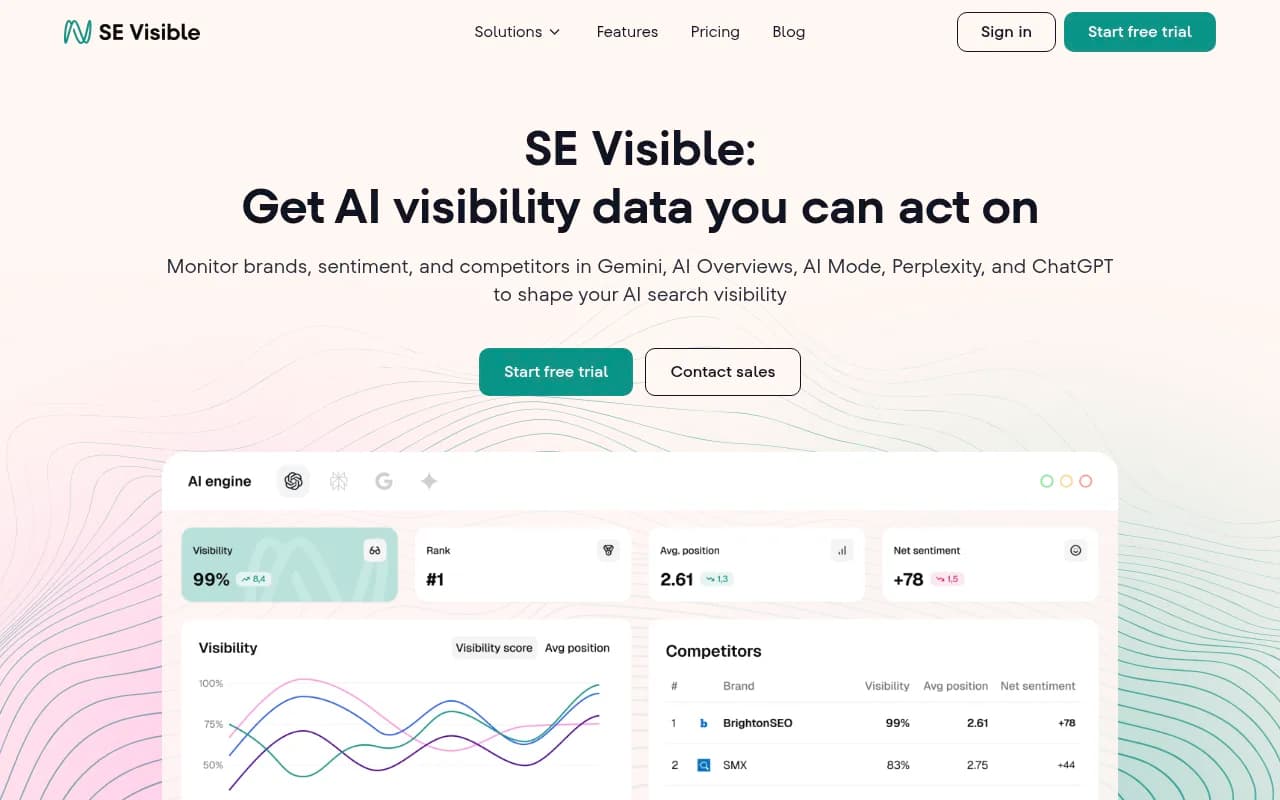
SE Ranking also sells a standalone AI tracker, SE Ranking Visible, if that is all you need.
One more trap: keyword volumes differ between tools. One reviewer found "ahrefs alternatives" at 590 US searches a month in SE Ranking but 9,900 in Semrush. Neither is necessarily wrong, but your content plan will look different depending on which you trust. Check your key terms in both during the trial.
Worth paying for if you want high tracking volume and client reporting, and link building is not your core service.
Search Atlas
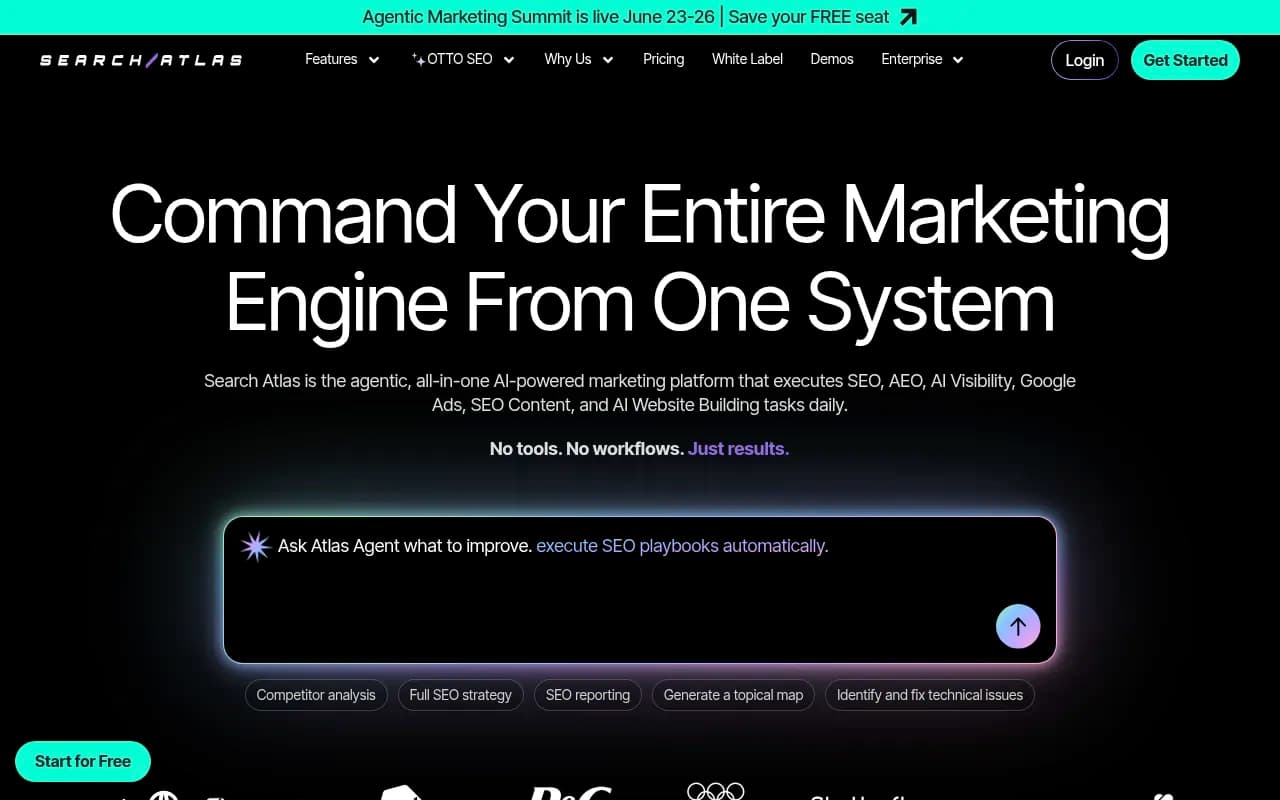
Search Atlas is the most execution-focused of the four. OTTO SEO finds on-page and technical issues and can deploy the fixes: schema, meta tags, internal links, alt text and broken links. For teams with a backlog of recommendations nobody has time to ship, that is a real difference. Content Genius handles AI writing, and it publishes to WordPress, Shopify, Webflow and other CMSs.
Here is the 2026 pricing from its official page (monthly billing):
| Plan | Price | Credits | AI visibility | Notable limits |
|---|---|---|---|---|
| Starter | $99/month | 50,000 | None (0 LLM projects, 0 queries) | 1 project, 1 seat, 2,000 keywords |
| Growth | $199/month | 120,000 | ChatGPT, Gemini, AI Mode; 2 projects, 100 queries | 3 seats, 3,500 keywords |
| Pro | $399/month | 400,000 | 6 platforms (adds Copilot, Perplexity, Claude); white-label | 5 seats, 6,000 keywords |
| Agency | From $999/month | 1M+ | 250 LLM queries | 10 seats, client portals |
The catches are worth reading twice. Every action draws from one shared credit pool, so heavy content generation can exhaust credits. DashThis also notes four separate credit types that make real monthly cost hard to predict, and that white-label reporting jumps you to Agency pricing. Automation without review is risky too: letting it push unchecked changes on a large site can break things as fast as it fixes them.
On AI tracking, Growth's 100 queries are comparable to SE Ranking's 100 prompts, but Growth costs $199 against Core's $129. I could not verify whether those counts are daily, monthly or per project, so do not compare them one to one.
Worth paying for if you are a small team that wants routine on-page work handled, and you accept a learning curve and some oversight.
AI visibility: how much do these tools really give you?
This is where the comparison gets uncomfortable. Prompt allowances look generous on paper, but 50 or 100 prompts is a sample, not a picture of how AI answers treat your brand.
The engines also behave differently. According to Promptwatch Data, ChatGPT cites about 5 sources per web-search answer, Google AI Overviews about 10, and Perplexity almost exactly 10. Because the engines cite so differently, a tool that blends them into one score can mislead you. Measure each separately.
It also helps to know what gets cited. In Promptwatch's content type data, product pages were the most cited content type in ChatGPT at 22.4% of citations (Sep 28 to Oct 4, 2026). Rankings alone will not tell you that.
What these suites mostly do is monitoring. They show whether you are mentioned. They do not typically show IP-verified AI crawler logs, what traffic AI actually sends, or write and publish the fix. If AI search is a priority rather than a side feature, a dedicated platform like Promptwatch covers that loop, from crawler logs and citation analytics to a Content Agent that publishes to your CMS and tracks whether pages get cited.

For a wider look at the category, the GEO software directory lists many specialists.
Seat and team cost for three people
Seats quietly decide many of these decisions. Using the figures above for a three-person team on October 2026 pricing:
| Tool | Plan | Approx. monthly cost for 3 users |
|---|---|---|
| Ahrefs | Standard | $369 |
| Semrush | Starter plus 2 extra seats | About $289 |
| SE Ranking | Core plus 2 manager seats | About $161 |
| Search Atlas | Growth (3 seats included) | $199 |
These are rough estimates from published seat prices. Semrush seats start at $45 each, and SE Ranking's from $16. Confirm exact plan seat allowances before buying, since included seats differ by tier.
So which one should you pay for?
My honest take: there is no winner, but there are clear fits.
- Pick Ahrefs if backlinks and link building drive your work, and you can live with thin AI tracking.
- Pick Semrush if you want one account for SEO, content, paid search and AI visibility, and you can afford it. Go straight to Starter, not SEO plus add-on.
- Pick SE Ranking if budget and tracking volume matter most. Model the add-ons first.
- Pick Search Atlas if your bottleneck is shipping on-page fixes, not finding them. Budget for Growth, not Starter, if you want AI tracking.
- Add a specialist if AI search is a revenue channel for you. The suites above are good at SEO and decent at monitoring AI.
A workable trial plan: run the same keyword and competitor research in Semrush and SE Ranking for a week, since both give you free trial time. Check volumes, tracking freshness and how the AI prompt allowance behaves with your real prompts. If you only monitor your own site, try Google Search Console plus Ahrefs' free plan for a month before paying for anything.
Finally, export your tracked keywords, top pages and backlink lists before any renewal date so you keep your history if you switch. For more tools in this space, browse the software directory at surferstack.com.