Key takeaways
- Searchable is a niche AI visibility monitoring tool that covers the basics: brand mention tracking across a handful of LLMs and simple share-of-voice reporting.
- After 60 days of real use, the biggest limitation is clear: it shows you data but doesn't help you act on it. There's no content generation, no answer gap analysis, and no crawler log access.
- It works reasonably well for small teams who just want a lightweight dashboard and aren't ready to invest in a full GEO platform.
- For brands that actually want to improve their AI visibility (not just watch it), the monitoring-only approach runs out of usefulness fast.
- Several alternatives in 2026 offer more complete workflows, including tools that close the loop from gap detection to content creation to citation tracking.
What is Searchable?
Searchable is an AI search visibility tool that tracks how brands appear in responses from large language models like ChatGPT, Perplexity, and Google's AI Overviews. The pitch is simple: set up your brand, define some prompts, and watch a dashboard fill in with data about whether you're being mentioned, how often, and against which competitors.
That's the theory. After 60 days of actually using it across two different brand accounts, one in B2B SaaS and one in e-commerce, the picture is more complicated.
How we tested it
The test wasn't a quick click-around. We ran Searchable on two live accounts over 60 consecutive days, tracking:
- Brand mention frequency across ChatGPT, Perplexity, and Google AI Overviews
- Share-of-voice against five named competitors per account
- Prompt coverage (how many prompts we could track at each pricing tier)
- Data freshness and how often results updated
- Whether the tool surfaced actionable recommendations or just raw numbers
- Support responsiveness when things broke or data looked wrong
We also compared outputs against what we were seeing manually in the actual AI interfaces, which matters more than people realize. API outputs and real user-facing answers can differ significantly.
What Searchable does well
The setup is genuinely fast
To give credit where it's due: onboarding is quick. You enter your brand name, a few competitor names, and a list of prompts you care about. Within a few hours, you start seeing data. No complex integrations, no waiting for a sales call. For a small team that just wants to get started, this is a real advantage.
The share-of-voice dashboard is readable
The core dashboard shows which brands are appearing in AI responses for your tracked prompts, and it presents this as a simple percentage. It's not the most sophisticated visualization, but it's clear enough that a non-technical stakeholder can look at it and understand what's happening. That has value.
Competitor tracking is functional
You can see when a competitor gets cited in a response where you don't appear. Over 60 days, this gave us a decent high-level picture of which competitors were consistently winning certain prompt categories. That's useful context, even if the tool doesn't tell you what to do about it.
Where Searchable falls short
This is the harder part of the review, and it's worth being direct.
It's a monitoring dashboard, not an optimization tool
After about two weeks, we hit the ceiling. The data was coming in, the charts were updating, and we could see that competitors were appearing more often than us for a cluster of prompts around "best [category] software for mid-market teams." But Searchable had nothing to say about why, and nothing to suggest we do next.
There's no answer gap analysis. No content brief generation. No way to see which specific pages on your site are being cited (or not cited). No crawler logs to understand how AI engines are discovering your content. You're looking at outcomes with no path to changing them.
That's a fundamental limitation. Knowing you're losing isn't the same as knowing how to win.
Prompt volume data is absent
One thing that became frustrating quickly: Searchable doesn't tell you how often real users are actually asking the prompts you're tracking. So you might be spending time optimizing for a prompt that almost nobody types, while ignoring high-volume questions where you're invisible. There's no difficulty scoring, no volume estimate, nothing to help you prioritize.
The LLM coverage is limited
During our test period, Searchable tracked ChatGPT, Perplexity, and Google AI Overviews. That's a reasonable starting set, but it misses Claude, Gemini, Grok, Meta AI, DeepSeek, Copilot, and Mistral. For brands whose customers use a mix of AI tools, this is a real gap. AI search behavior varies meaningfully between models, and you can't optimize what you can't see.
Data freshness was inconsistent
On several occasions, the dashboard showed data that was 48 to 72 hours stale without any indication that there was a delay. We only noticed because we were manually checking the same prompts in the actual interfaces. For a tool whose core job is to track what AI models are saying right now, this is a problem.
No Reddit, YouTube, or offsite citation tracking
A significant portion of AI citations come from third-party sources: Reddit threads, YouTube videos, review sites, industry publications. Searchable doesn't surface any of this. So if a Reddit thread is the reason your competitor keeps getting cited and you don't, you'd have no idea.
Support was slow
We submitted three support tickets over the 60 days. Average response time was around four business days. One ticket about a data discrepancy was closed without a resolution explanation. For a paid tool, that's not great.
Searchable pricing (2026)
Searchable's pricing sits in the mid-range for AI visibility tools. Based on our testing, the entry tier limits you to a small number of tracked prompts and one brand, which runs out of room quickly for any serious use case. The higher tiers unlock more prompts and competitor slots but don't add the missing capabilities (content generation, crawler logs, etc.) -- they just give you more of the same monitoring.
We're not publishing exact figures here because SaaS pricing changes frequently, but the value-per-dollar question is worth asking: if the tool only monitors and doesn't help you act, how much monitoring is enough?
How Searchable compares to alternatives in 2026
The AI visibility space has grown fast. Here's an honest comparison of Searchable against the tools we'd actually recommend depending on your situation.
| Tool | LLMs covered | Content generation | Crawler logs | Prompt volume data | Reddit/YouTube tracking | Best for |
|---|---|---|---|---|---|---|
| Searchable | 3 | No | No | No | No | Basic monitoring |
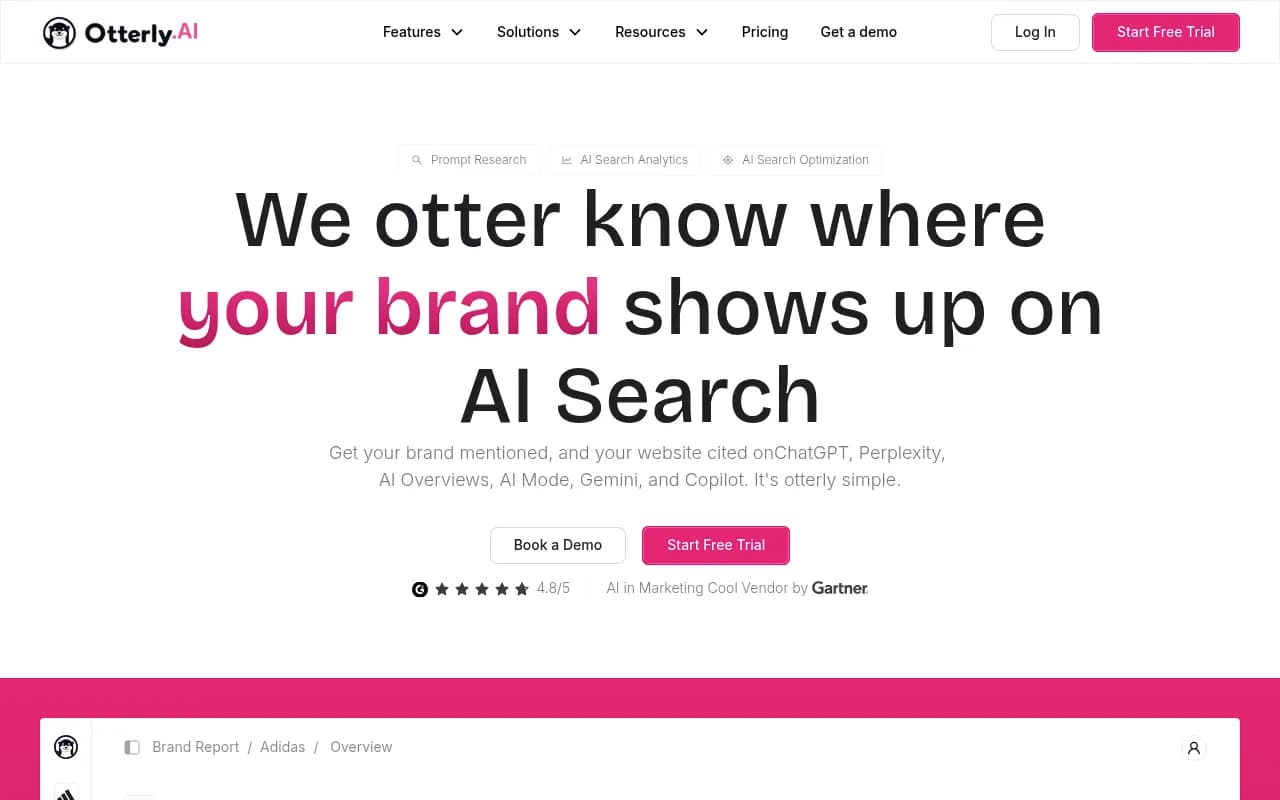
| Otterly.AI | 5+ | No | No | No | No | Lightweight monitoring |
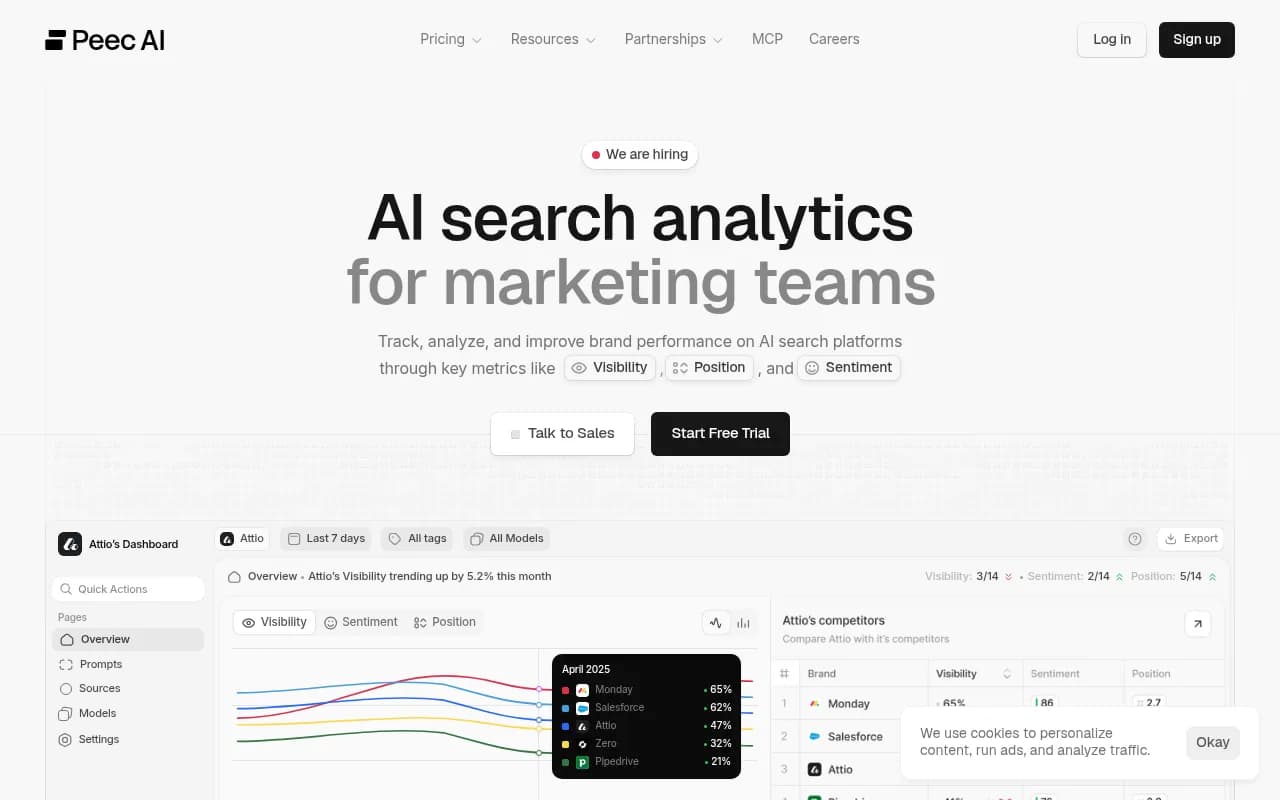
| Peec AI | 5+ | No | No | Limited | No | Small teams |
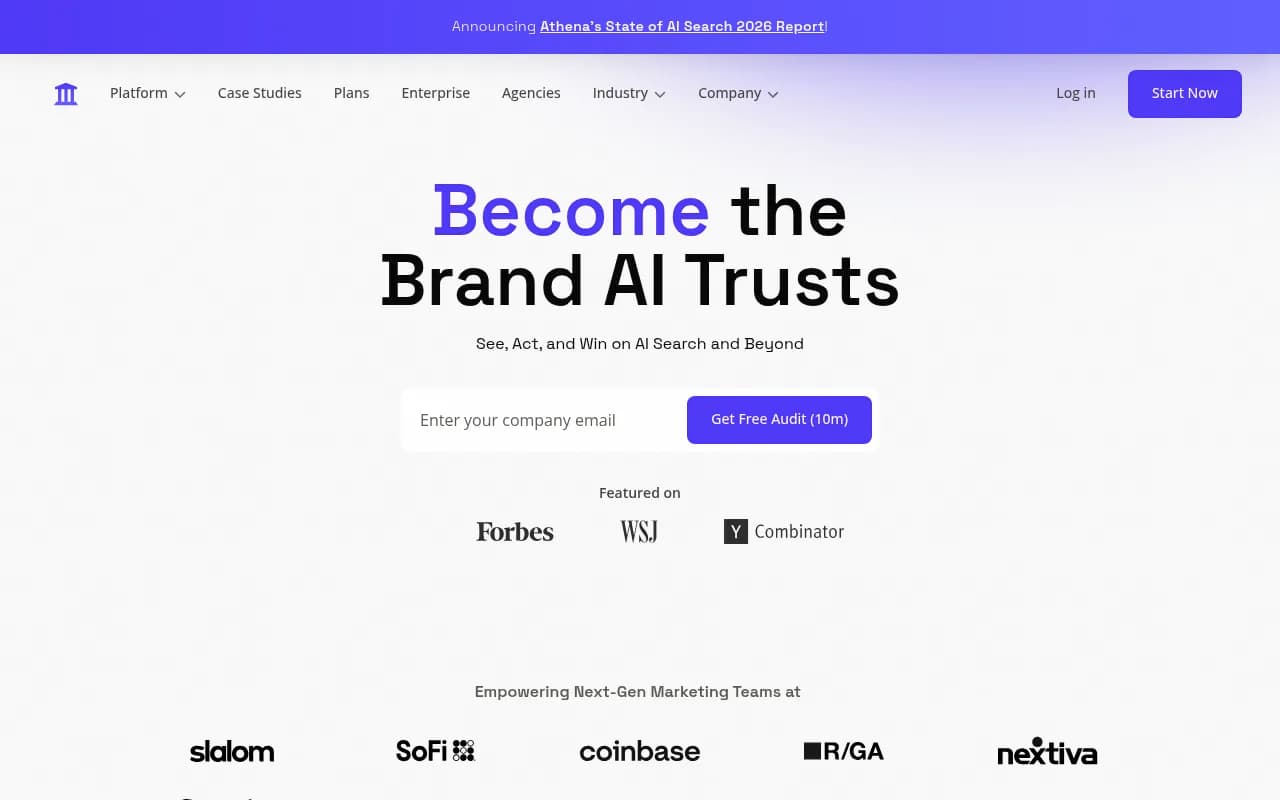
| AthenaHQ | 6+ | No | No | No | No | Monitoring-focused brands |
| Scrunch AI | 6+ | No | No | No | No | Agencies (monitoring) |
| Profound | 8+ | No | No | Yes | No | Enterprise monitoring |
| Promptwatch | 10+ | Yes | Yes | Yes | Yes | Full GEO optimization |
Promptwatch is the outlier here because it's built around a different premise entirely. Most tools in this table, including Searchable, show you data. Promptwatch shows you data and then helps you do something about it: answer gap analysis identifies which prompts competitors rank for that you don't, content agents generate articles and briefs grounded in that gap data, and page-level tracking shows you when new content starts getting cited. It's a different category of tool.

That said, not everyone needs the full loop. If you're a small brand just starting to understand AI visibility, a monitoring-only tool might be the right first step.
Who Searchable is actually right for
After 60 days, here's our honest take on the right audience for Searchable:
- Teams that are completely new to AI visibility and want a simple, low-commitment way to start tracking mentions
- Brands with a very small number of competitors and a narrow prompt set, where the limited coverage doesn't matter much
- Companies where the primary goal is reporting to leadership ("are we appearing in AI results?") rather than actively improving visibility
If any of the following are true, Searchable will probably frustrate you within a month:
- You want to understand why competitors are appearing and you're not
- You need to track more than three AI platforms
- You want content recommendations or briefs based on gap data
- You need to understand which pages on your site are being crawled and cited by AI engines
- You have a serious budget and want ROI beyond a dashboard
Alternatives worth considering
For teams that want more LLM coverage without complexity
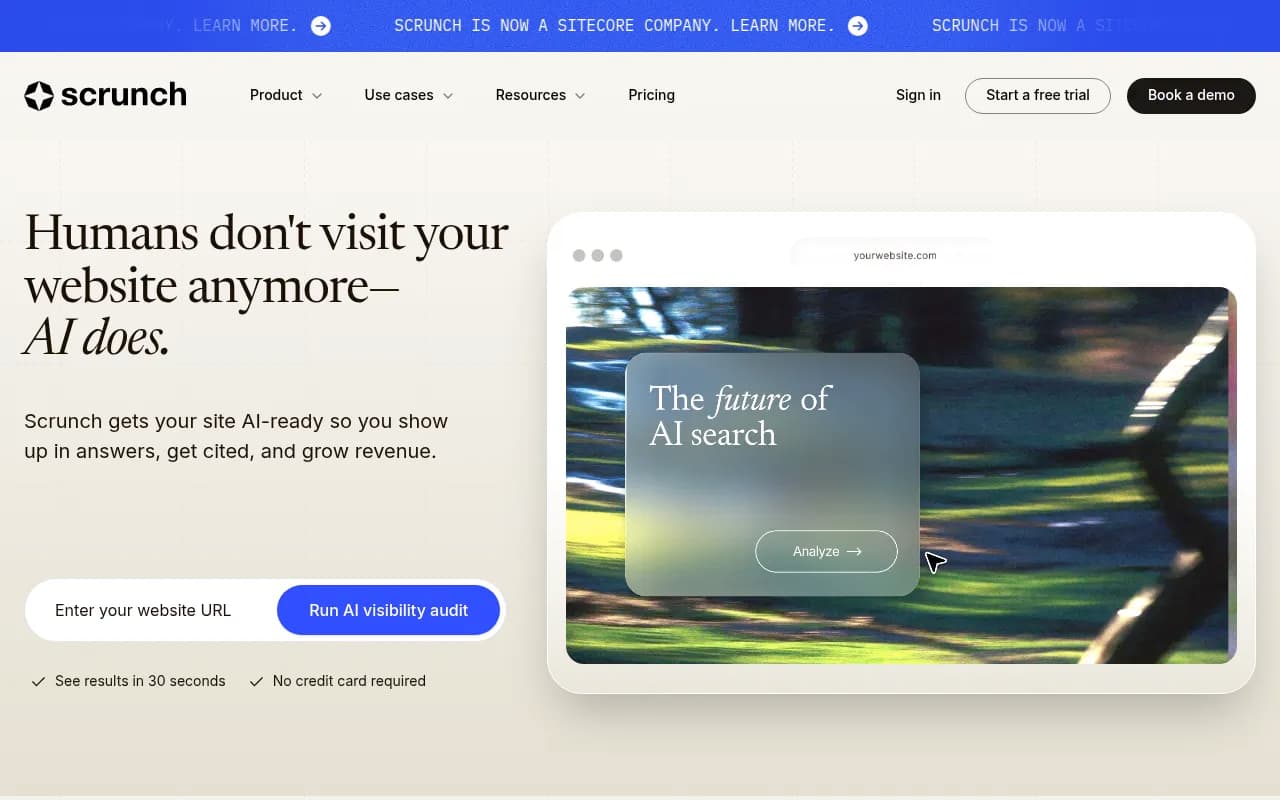
Scrunch AI covers more models than Searchable and has cleaner reporting for agencies managing multiple brands. Still monitoring-only, but the breadth is better.
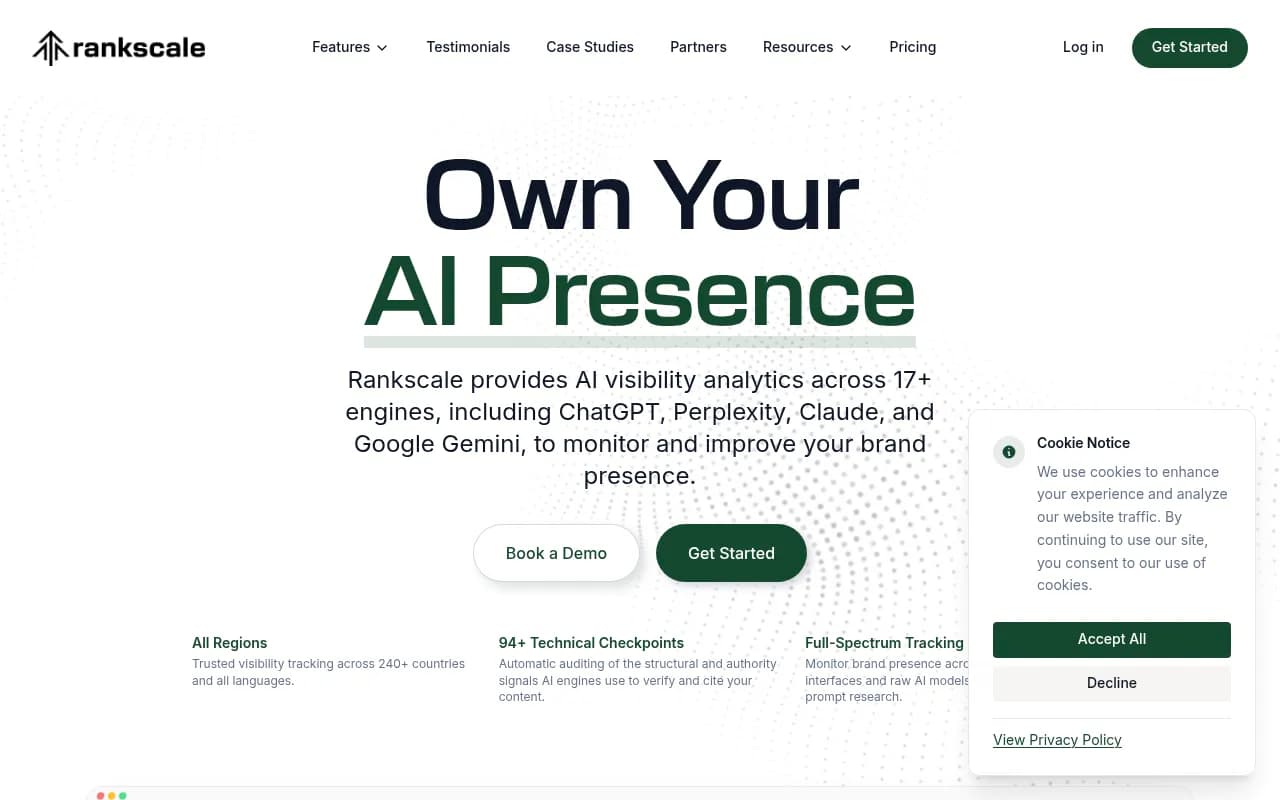
Rankscale is worth a look if prompt tracking depth matters more to you than content features.
For teams that want to move from monitoring to optimization
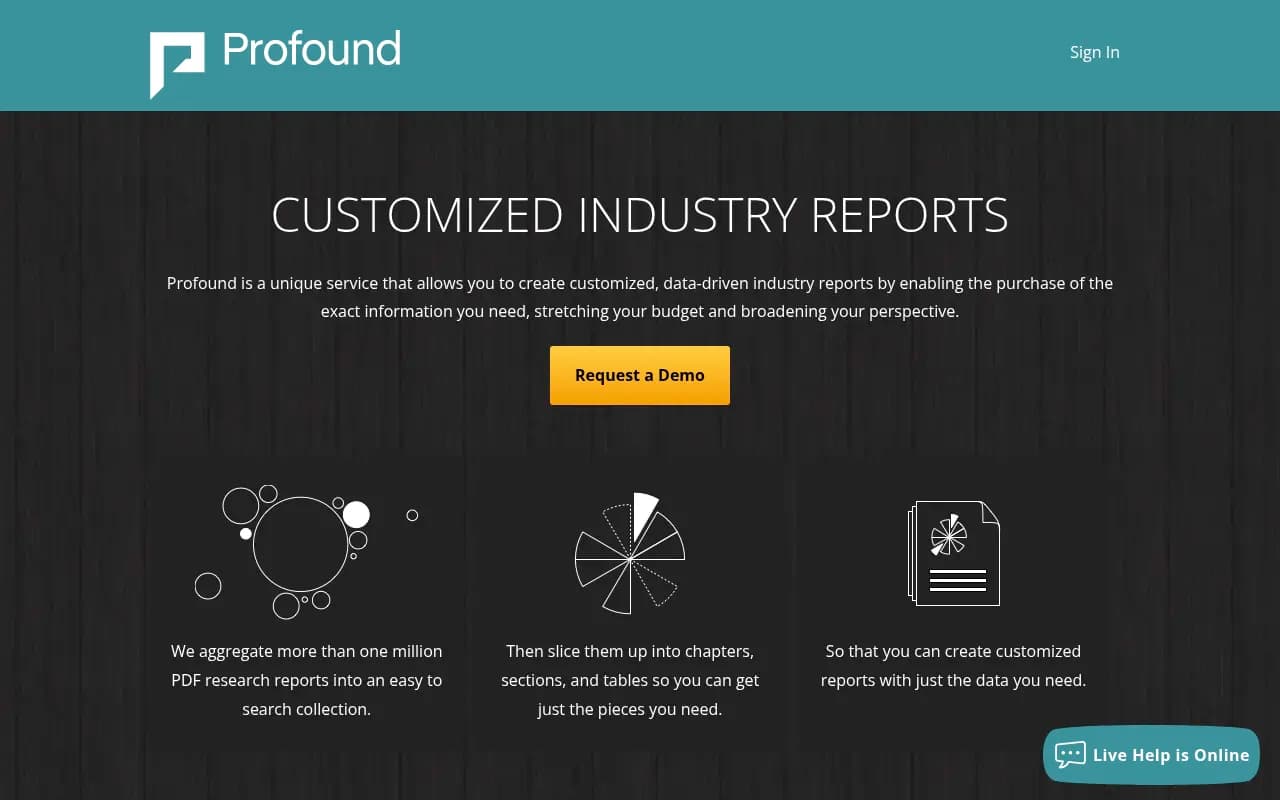
Profound has strong enterprise-grade monitoring with better prompt data than Searchable, though it's priced accordingly and still doesn't generate content.
Search Party is agency-oriented and handles multi-client reporting well, though it lacks prompt volume metrics and content gap analysis.
If you're at the point where you want to actually improve your AI visibility rather than just watch it, Promptwatch is the most complete option in the market right now. The combination of crawler logs, answer gap analysis, and AI content generation in one platform is something no other tool in this space currently offers end-to-end.
The bottom line
Searchable does what it says: it monitors your brand in AI search results. The dashboard is clean, setup is fast, and for a first look at AI visibility, it's not a bad starting point.
But 60 days in, the ceiling is obvious. There's no path from "I see the problem" to "I fixed the problem." No content tools, no crawler data, no prompt intelligence, limited LLM coverage, and support that could be a lot better. For a category that's moving as fast as GEO and AI search optimization, a monitoring-only tool starts feeling like a rearview mirror when what you actually need is a steering wheel.
If you're evaluating AI visibility tools in 2026, be honest with yourself about what you actually need. Tracking your visibility is step one. Improving it is the whole game.