Key takeaways
- No single suite wins for everyone. Ahrefs wins on backlink and competitor data, Semrush on breadth, SE Ranking on value per dollar, and Search Atlas on automation.
- AI visibility tracking is now bundled or sold as an add-on in all four, but the packaging is confusing. Compare the total monthly bill, not the headline plan price.
- SE Ranking's entry plan tracks 2,000 keywords daily at $129/month. Ahrefs Lite at the same price tracks 750, updated weekly by default.
- Search Atlas starts at $99/month, but the Starter plan reportedly includes zero LLM visibility queries. You need Growth at $199 for that.
- If AI answers are your main concern, a dedicated tracker may beat any of these suites' bolt-on modules.
How I approached this comparison
I did not run all four tools side by side on one site. This guide pulls together pricing snapshots, third-party reviews, agency write-ups and community threads, and I flag where a source has a stake (several do). Pricing changes often. Confirm every number on the vendor's pricing page before you buy, because I could not verify the Ahrefs, SE Ranking and Search Atlas pages directly.
The shorthand you see on Reddit's r/bigseo holds up reasonably well: Semrush for the enterprise-style suite, Ahrefs for backlinks, SE Ranking for value. Search Atlas is the newer name that people keep asking about, usually in the context of automation. Let's see how that plays out in practice.
Quick comparison table
| Semrush | Ahrefs | SE Ranking | Search Atlas | |
|---|---|---|---|---|
| Entry paid plan | $139/mo (SEO) | $129/mo (Lite), $29 Starter | $129/mo (Core) | $99/mo (Starter) |
| AI-ready plan | Starter $199/mo | Lite/Standard basic prompts, Brand Radar extra | Core includes 100 daily AI prompts | Growth $199/mo |
| Free trial | 7 days | None on paid plans | 14 days, no card | 7 days |
| Best known for | Breadth, marketing suite | Backlink index, competitor research | Value, daily rank tracking, white-label | OTTO automation, AI-assisted workflows |
| Main weakness | Cost climbs fast, busy interface | Cost grows with seats and add-ons | Thinner backlink index | Vendor-authored comparisons, newer track record |
Semrush
Semrush overhauled its packaging. The old Pro, Guru and Business tiers are gone, replaced by SEO ($139/month), Starter ($199), Pro+ ($299) and Advanced ($549). Annual billing brings those down to roughly $117, $165, $248 and $456 a month, about 17% off. There is also a free plan and custom Enterprise pricing.
The part that trips people up is the AI side. The AI Visibility Toolkit is sold as an add-on at $99/month per domain with 25 tracked prompts. Add it to the $139 SEO plan and you pay $238. Starter at $199 includes AI prompt tracking natively, so it is about $39 cheaper and the better deal for most buyers. Pro+ gets 100 prompts a day and Advanced 200.
Other gotchas: local SEO is priced per location (from $30/month per location on annual billing), and the interface is busy. One agency review also complained about Semrush pushing upgrade ads across its pages, and about defaulting to US results when you work in another market. Small annoyances, but they add up when you live in the tool all day.
Semrush's MCP connector comes with 50,000 credits per month, against 100,000 for Ahrefs, according to Arboreal Marketing. That agency is a SE Ranking affiliate, so weigh it accordingly.
Pick Semrush if you sell SEO plus PPC, want one login for research, content, audits and AI visibility, and have budget to grow into it.
Ahrefs
Ahrefs is still the reference point for backlink data. Third-party reviews put its index at 35 trillion backlink records against SE Ranking's 2.9 trillion, and its keyword database is far larger too (28.7 billion filtered keywords versus 3.2 billion for SE Ranking in Europe). If competitor research and link building shape your plan, that gap matters.
Pricing: Starter $29, Lite $129, Standard $249, Advanced $449, Enterprise $1,499. Annual billing saves up to 17%. There is no free trial on paid plans, though Ahrefs Free covers your own verified sites. Lite includes 1,000 credits per user per month, while Standard and Advanced are unlimited.
Every paid plan includes basic prompt tracking: 5 prompts on Lite, 10 on Standard, 20 on Advanced. For serious AI research you want Brand Radar.

Brand Radar pricing is reported inconsistently across sources: custom-prompt tracking from $50/month, an index tier at $199/month, and all-platform access at $699/month including 2,500 custom checks. The $50 plan is not the same as index access, so check the Ahrefs site and be sure which product you are buying. One reviewer notes the index covers more than 449 million prompts across seven AI platforms, which makes it a strong market research tool rather than just a monitor for your own prompts.
The cost problem is seats. Extra users run $40 to $80 a month, so a three-person team tracking 2,000 keywords lands around $369 on Standard, versus about $161 on SE Ranking Core with extra seats. Ahrefs also now has agentic products under a platform called Letaido, which hosts Agent A as a separate $99/month subscription.
Pick Ahrefs if links, competitor top pages and keyword intelligence drive your content plan, or if you want API and MCP access to build workflows on SEO data.
SE Ranking
SE Ranking is the value play, and the numbers back that up. Core is $129/month ($103.20 annual) with 2,000 keywords tracked daily. Growth is $279 ($223.20 annual). Enterprise is custom. The trial runs 14 days with no credit card. Extra manager seats are $16/month each, and the Agency Pack with white-label reports and client seats is $69/month on annual billing.
Rank tracking is the clearest win. SE Ranking monitors Bing, Yahoo and YouTube as well as Google, and tracks more than 35 SERP features against 19 listed on Ahrefs' Rank Tracker page, according to one reviewer. Weekly data is fine for a quarterly review. It is much less useful when you refreshed 20 pages on Monday and someone asks on Thursday whether they moved.
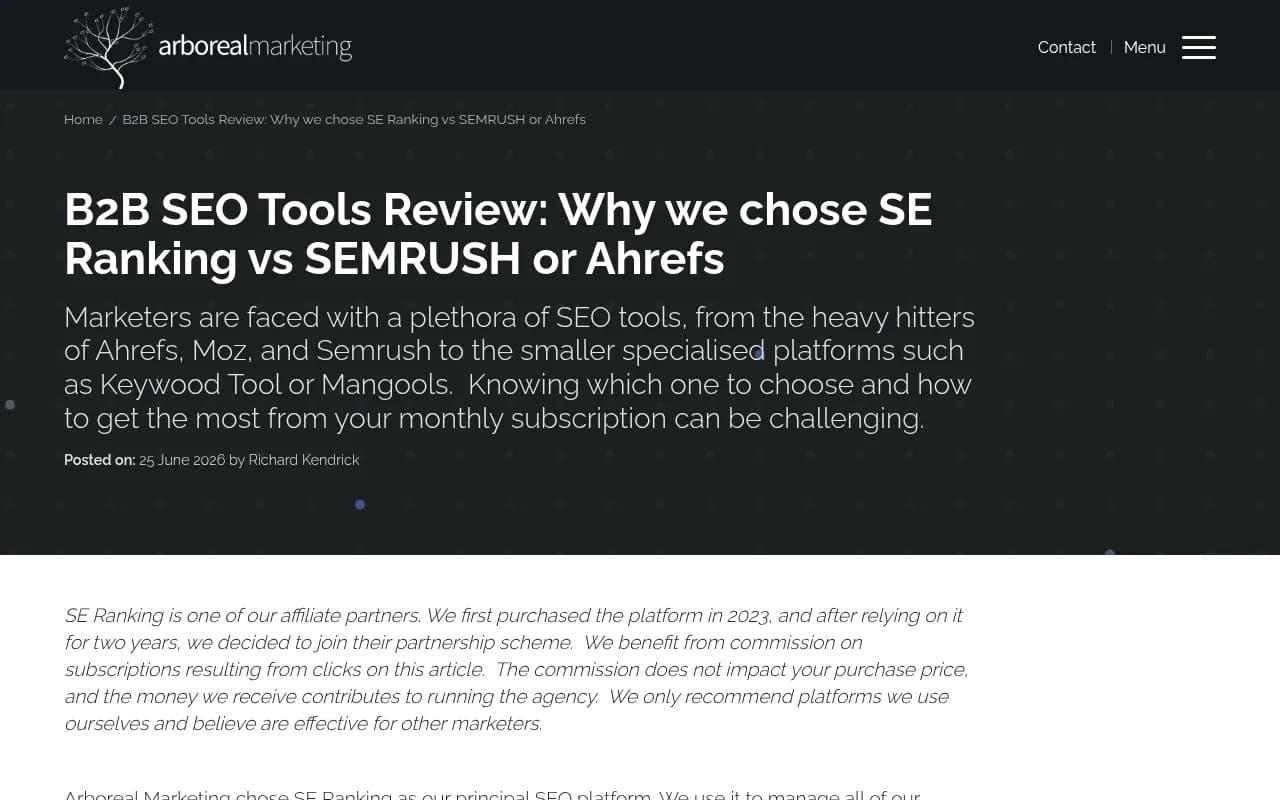
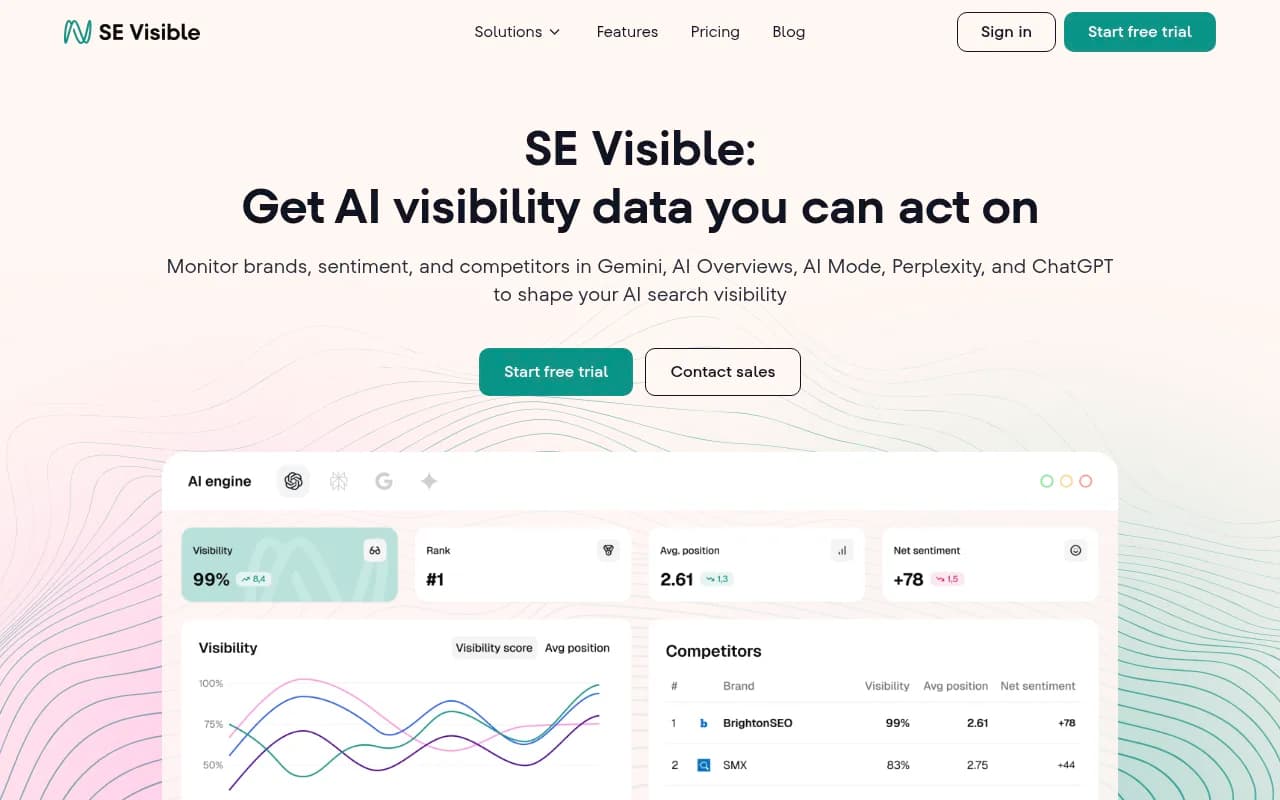
On AI, Core now includes 100 daily AI prompts across five platforms. The AI Search add-on is $89/month ($71.20 annual) for more. There is also a standalone product, SE Visible, at $99/month for 200 daily prompts across five engines.
The pitfall: Core plus the AI Search add-on plus the Agency Pack lands near $240/month, which erases much of the headline advantage. It is still cheaper than comparable Ahrefs setups (one comparison puts a three-user team with AI tracking and content tools at about $250 on SE Ranking versus $667 on Ahrefs), but know what you are signing up for.
The agency that wrote the review we drew on rates SE Ranking's Claude MCP integration highly, saying it can run a full project analysis rather than just pulling research data. Their advice applies to any vendor: check the credit cost per call before committing.
The limits are real. The backlink index is thinner than Ahrefs'. The keyword database is slightly smaller, and Semrush and Ahrefs win on non-English markets, so test all three if you operate across territories.
Pick SE Ranking if you are a small team or agency that reports on rankings often, wants white-label output and does not want to pay $199 for AI tracking.
Search Atlas
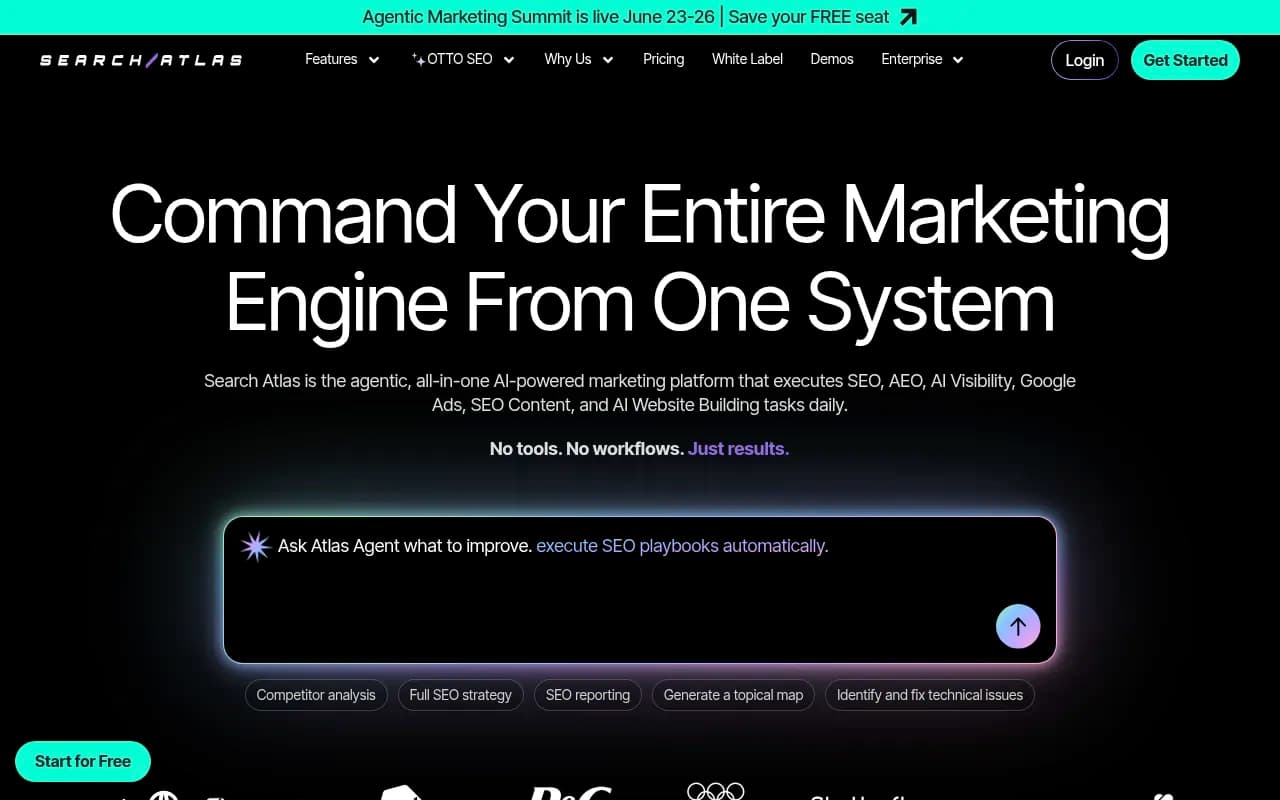
Search Atlas is the most AI-forward of the four. Its reputation rests on OTTO SEO, an automation layer that applies fixes directly to a site, plus Atlas Agent and Content Genius, which are included on every plan.
Pricing: Starter $99, Growth $199, Pro $399, Agency from $999 monthly. Annual billing brings those to $79, $159, $319 and from $999. The trial is 7 days with full access. LLM Visibility is on Growth (up to 2 projects), Pro (up to 4) and Agency (unlimited).
The catch is the Starter tier, which lists zero LLM visibility queries. Growth at $199 includes 100 prompts, and I could not confirm how often they refresh. Also note that the most-cited Search Atlas comparisons are vendor-authored. Treat any table where Search Atlas beats Ahrefs as marketing until you test it yourself. One Quora answer put it well: neither OTTO nor Semrush is objectively better for everyone.
Pick Search Atlas if you want automated on-page suggestions and workflow help from a platform built around AI, and you are comfortable with a younger product.
Pricing side by side
The headline price rarely matches what you pay. Here is a rough monthly picture for a team that wants AI tracking.
| Setup | Semrush | Ahrefs | SE Ranking | Search Atlas |
|---|---|---|---|---|
| Cheapest usable SEO plan | $139 | $129 (Lite) | $129 | $99 |
| With meaningful AI prompt tracking | $199 (Starter) | $129 plus Brand Radar ($50 to $199) | $129 (100 prompts included) | $199 (Growth) |
| Heavier AI tracking | Pro+ $299 or add-on $99 | Brand Radar index $199+ | AI Search add-on $89 | Pro $399 |
| Extra seats | Plan-dependent | $40 to $80 | $16 | Check pricing page |
A reminder from Rankability's October 2026 snapshot: price comparisons that look like cuts often compare different packages, such as Semrush's old $745 figure against today's $99, or Ahrefs' $699 against $50. Make sure the thing you are pricing matches the thing you need.
AI visibility: what these suites actually measure
All four now claim some form of AI search tracking, and it is worth being clear about what that buys you. The data from Promptwatch's average sources per response report shows why tracking each engine separately matters: ChatGPT cites about 5 sources per web-search answer, while Google AI Overviews and Perplexity cite about 10. Fewer slots means fierce competition for each citation, and the engines behave differently enough that a single blended score hides problems.
I could not find independent, hands-on accuracy tests of the AI-visibility data in any of these four tools. That is a real gap. Prompt volumes and refresh rates differ, and so does whether data comes from real interfaces or APIs. If you treat the AI module as a rough directional signal, you will be fine. If you plan to report it to a client as gospel, test it against a dedicated tracker first.
That is where a specialist can make sense. Tools like Promptwatch track the real interfaces of ChatGPT, AI Overviews, Gemini and Perplexity, and add crawler logs and traffic attribution that none of the four suites above offer in the same form.

If you want to explore the wider field, the GEO software directory at bestgeosoftware.com lists dedicated options.
Which suite wins by use case
| If you are... | Choose | Why |
|---|---|---|
| A link builder or digital PR team | Ahrefs | Largest backlink index, strongest competitor research |
| A full-service shop selling SEO and PPC | Semrush | Broadest marketing toolset |
| A small content team or agency watching budget | SE Ranking | Daily tracking, cheap seats, white-label |
| A lean team wanting automation | Search Atlas | OTTO and agent workflows from $99 |
| Mostly worried about ChatGPT and AI Overviews | A dedicated tracker plus any suite | Better AI data than add-on modules |
Combining tools
One pairing that comes up in reviews: a single Ahrefs Lite seat for competitor research plus SE Ranking Core with two extra seats for tracking and team access runs from about $290/month, which is still less than Ahrefs Standard with three users at $369. Not elegant, but cheaper and arguably better than any single tool.
Questions to ask before you buy
- What is my all-in monthly cost once AI prompts, seats and local locations are added?
- How often does the AI data refresh, and from which interfaces?
- How many credits does each MCP call cost, and does the connector do full project analysis or only research pulls?
- Does annual billing lock me in before the vendor roadmap settles? Semrush says there are no immediate changes to features or pricing but suggests raising the long-term roadmap with an account rep.
- Do I need a free trial? Ahrefs has none on paid plans, so you commit blind.
My verdict
If I had to pick one for a small team in 2026, I would start with SE Ranking, because the daily tracking, low seat prices and bundled AI prompts are hard to beat. I would add Ahrefs the moment link research became a bottleneck. Semrush is the choice when you need a single marketing platform and have the budget. Search Atlas deserves a trial if automation is the draw, but verify its claims independently, since so much of the head-to-head material comes from Search Atlas itself.
Whoever you choose, treat the AI visibility module as the weakest part of the stack for now, and check the current pricing pages before you pay.
If you would rather hand the decision and the work to specialists, an agency like 1001 SEO Media runs this kind of tooling for clients as part of technical SEO and GEO engagements.