Key Takeaways
- Surfer's own study found a 0.28 Spearman correlation between Content Score and Google rankings. That is weak to moderate, vendor-run, and not proof of causation.
- An independent 20-keyword test, quoted secondhand, found no positive correlation for Surfer (rho = -0.102). The sample is small, so treat it as a warning, not a verdict.
- I found no independent study of Clearscope, Frase or MarketMuse scores against rankings. MarketMuse describes its own score as subtopic coverage, which is not a quality measure.
- The tools differ more in workflow than in what the score means. Pick on pricing, seats, and whether you need briefs, editing, or site-wide planning.
- Use scores as a checklist for gaps, not a target. In AI search, the formats that earn citations are not always the ones that match a SERP.
The short answer
Do content scores predict rankings? Weakly at best, and nobody has shown they cause them.
Every tool in this comparison does roughly the same thing. It pulls the pages that already rank for a keyword, extracts the terms, headings and length they share, and grades your draft on how closely it matches. That is a measure of similarity. It is not a measure of whether your page deserves to rank.
Google has said as much. Its guidance on helpful, reliable, people-first content warns against content made mainly to gain rankings, and Google says it has no preferred word count. So a tool that nudges you toward a target word count is optimizing for a proxy.
That does not make the tools useless. A checklist of subtopics you forgot is genuinely handy. The mistake is treating the number as a forecast.
What the evidence says
Surfer's own study
Surfer published a study with 10,000 queries, the top 100 results for each, and about 1,000,000 SERP entries. It reports a 0.28 Spearman correlation between Content Score and ranking position. Surfer compares that with a 0.17 average correlation for backlinks from Ahrefs' 2024 study, and recommends a score of 70 to 85 for most content to avoid bloat and forced keywords.
Two caveats. It is vendor research, so read it the way you would read any company's study of its own product. And 0.28 is weak to moderate. Pages that rank well tend to have more links, stronger brands and more traffic, and they also tend to cover topics thoroughly. A score can correlate with ranking simply because both reflect the same underlying page quality.
The independent test
A 20-keyword run by ToolVerdict (strict URL match, Google US top 10, 2026-08-24) put Surfer's content score versus live top-10 correlation at rho = -0.102. After a truncated-URL rescue it was -0.044. I only have this secondhand, via a US Tech Automations roundup, and that company sells its own workflow product. Twenty keywords is also a small sample.
Still, there is a nuance worth noting. Surfer's study looked across 10,000 queries. The small test looked at who already sits in the top 10, where everyone has presumably optimized. Within a pack of well-optimized pages, the score has little left to discriminate. That would fit both results.
The other claim you will see
Surfer's marketing comparison with Clearscope cites an Originality.ai study with Surfer at 26% correlation and Clearscope at 17.5%. That article is written by Surfer's CMO, so weigh it accordingly. It is the closest thing to a head-to-head, and I could not verify the primary study.
What is missing
I found no independent, peer-reviewed study of Clearscope, Frase or MarketMuse scores against rankings. Anyone telling you one of them predicts rankings better than the others is either quoting a vendor or guessing.
The four tools compared
| Tool | What the score measures | Core strength | Pricing signal |
|---|---|---|---|
| Surfer SEO | Match to SERP terms, headings, length (real-time) | Live editor, topical maps, audits, AI search tracking | Standard $99/mo billed yearly; AI Search Analytics $82/mo yearly |
| Clearscope | Letter grade against topic report | Simple editor, unlimited users, trial | Conflicting: $129 to $170/mo Essentials, so check the official page |
| Frase | Brief and optimization score | Research, writing and publishing in one place | $49, $129, $299/mo; $39/mo yearly entry |
| MarketMuse | Subtopic coverage from its topic model | Site inventory, planning, briefs | Demo-gated per Frase's claim; old listings are stale |
Pricing is the messiest part of this research. Sources disagree and many are stale, so confirm on each vendor's page before buying.
Surfer SEO
Surfer SEO is the score-led option. Enter a keyword, get guidelines for terms, a word range and heading counts, then watch the Content Score rise as you write. It clusters related terms, so "running shoes" and "shoes for runners" count as one topic. It has also added a Topical Map, Content Audit, an AI writing assistant, and AI visibility tracking across ChatGPT, Perplexity, Google AI Overviews and Gemini.
It is the most polished editor of the four and the only one with a published (if vendor-run) correlation study. That is both a point in its favor and a reason for caution.
Clearscope
Clearscope gives a letter grade against a topic report and a list of terms, with competitor URLs alongside. Coursiv notes unlimited users on every plan and a 14-day free trial. Editorial teams tend to like it because the interface stays out of the way.

Its price is higher than the others at the entry level, and I could not pin the figure down: sources print $129 and $170 for Essentials.
Frase
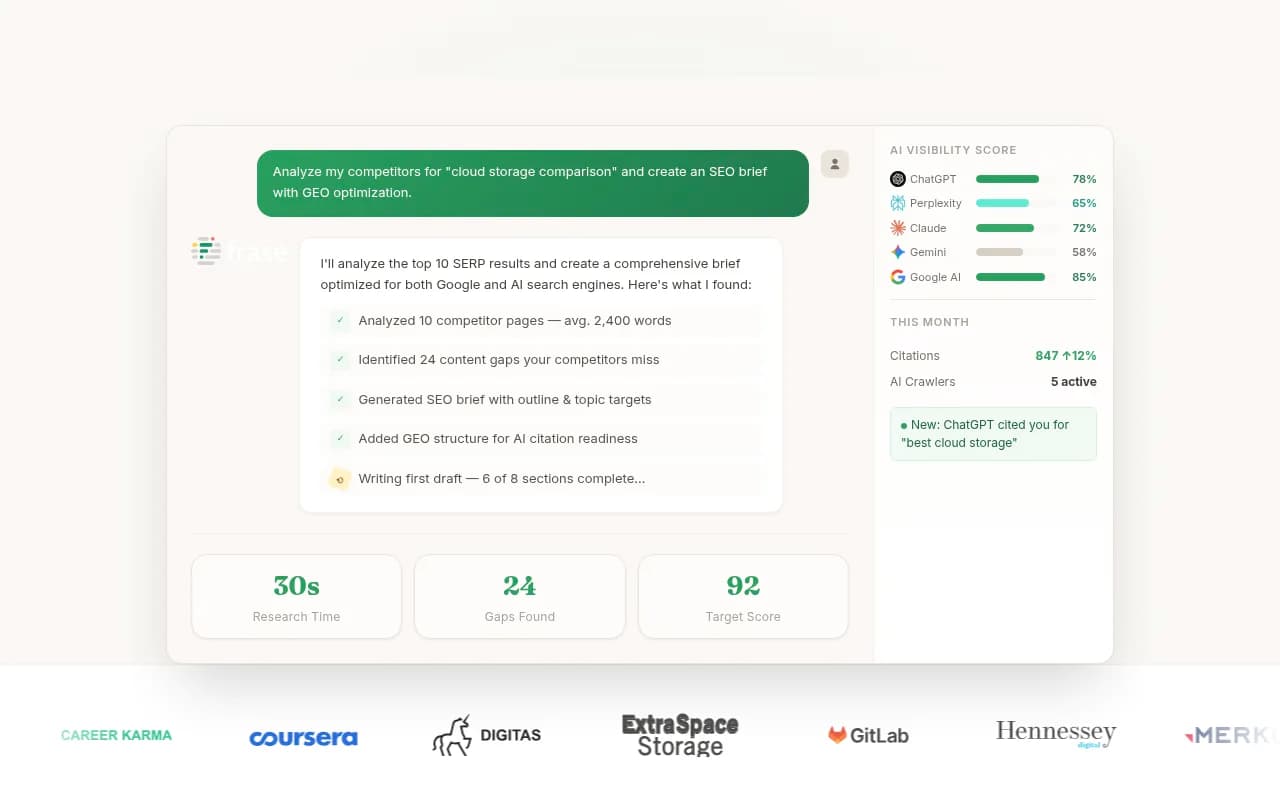
Frase bundles research, brief building, drafting, optimization and publishing. It is the cheapest credible option here, and Frase states plainly that no tool ranks you inside a trial, which is more honesty than most vendors manage. Frase says AI visibility is included at every tier.
MarketMuse
MarketMuse works at a different level. It is about topic modeling, site inventory and planning many pages at once, so it suits teams deciding what to write before they worry about how to score it. Its own description of Content Score is subtopic coverage from its topic model. That is coverage, not quality, which is a fair thing for a vendor to admit.
One comparison site gave MarketMuse a 661 to 653 edge over Surfer, aimed at enterprise topic authority. I would not lean on a proprietary index like that, but the page-level versus site-level distinction is real.
Which should you pick
| If you need | Look at |
|---|---|
| A live editor and a score for page-level work | Surfer SEO |
| A simple grader for an editorial team with many users | Clearscope |
| The cheapest all-in-one research and drafting loop | Frase |
| Site-wide planning and content inventory | MarketMuse |
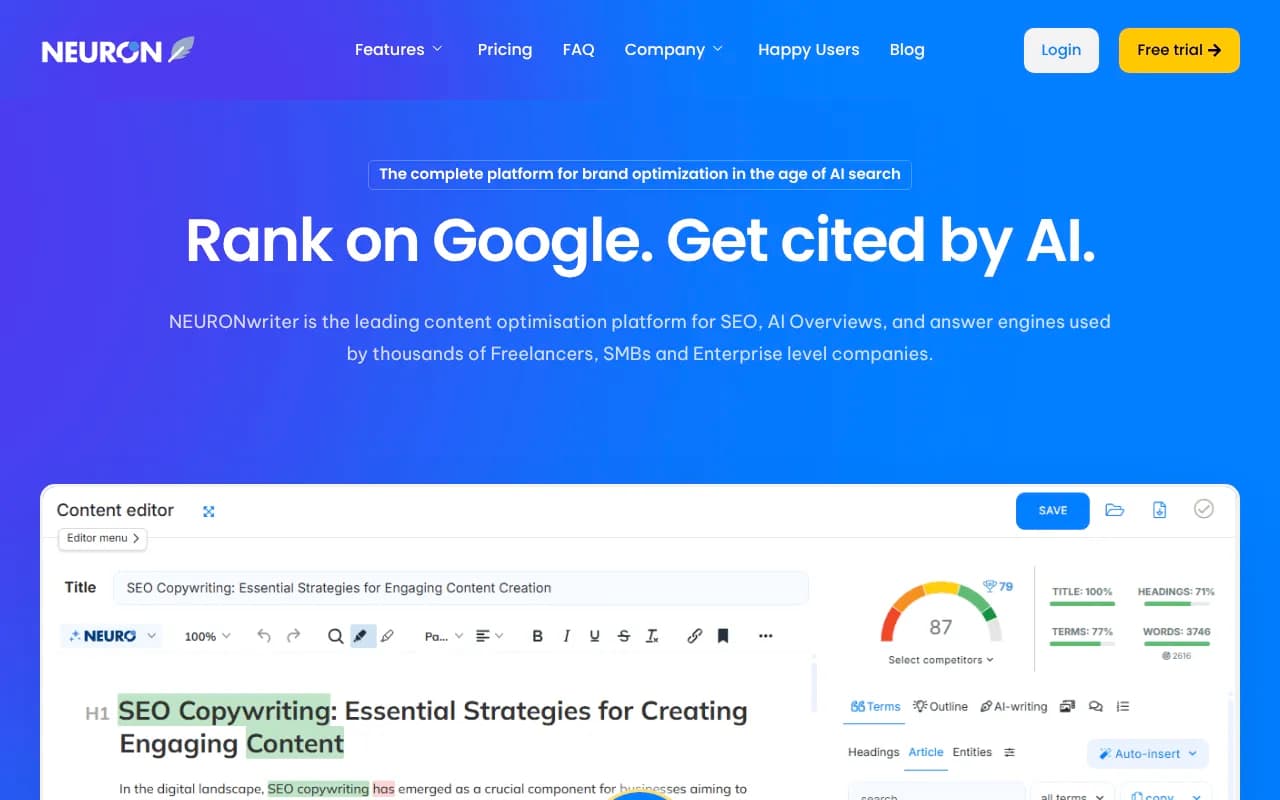
| The lowest entry price | NeuronWriter |
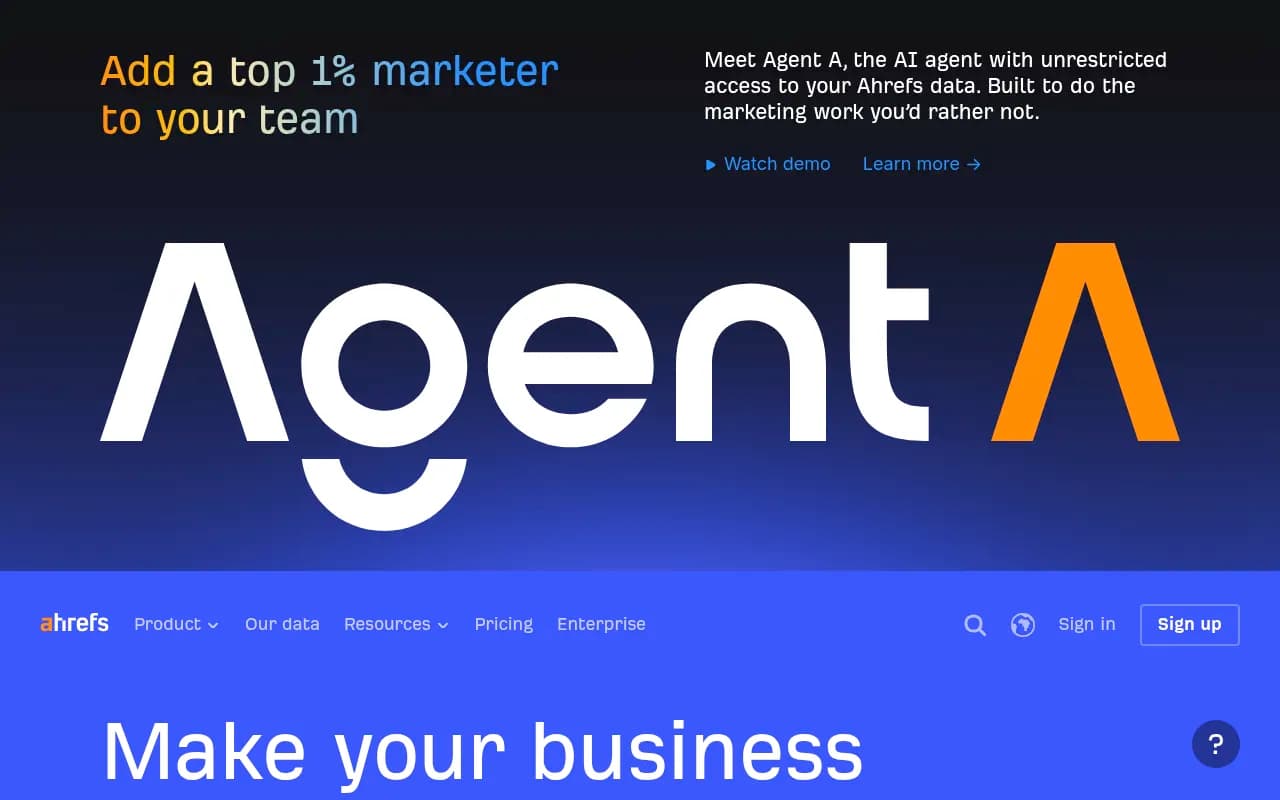
If you already pay for an SEO suite, check its content tools before adding another subscription. Semrush and Ahrefs both have add-ons, though neither is a drop-in replacement.
More options live in the software directory at surferstack.com.
How to use a score without being fooled by it
Here is the workflow I would use, given everything above.
- Use the term and heading list to find gaps. If every ranking page covers a subtopic you skipped, that deserves a look.
- Stop at a reasonable score. Surfer itself suggests 70 to 85. Chasing 100 invites stuffing.
- Add what the SERP does not have. A score rewards sameness, so your original data, screenshots and first-hand experience are what make a page worth ranking.
- Do not copy word counts. Google says it has no preferred length.
- Measure the result. Compare scored pages against rankings and traffic on your own site over a few months. Your data beats a vendor study.
- Fail the draft if the unique fact is missing, whatever the number says. For SaaS comparison pages especially, 40 near-duplicate URLs chasing a 90 are optimizing a proxy.
Be wary of the vendor claims too. Surfer says its content is "2x more likely to hit Top 10 in 30 days" and "25% more likely" to be cited by AI. I could not verify either.
The AI search wrinkle
Every one of these vendors now sells AI visibility features, so the question changes. Does a high SERP-match score help you get cited by ChatGPT?
The evidence I have says the formats differ. In Promptwatch Data's report on ChatGPT citations by content type (Sep 28 to Oct 4, 2026), product pages took 22.4% of classified citations and landing pages 16.8%. Listicles took 13.6%, how-tos 8.7%, comparisons 5.9% and news 5.7%. For commercial prompts, product pages rose to 26.0%. That is a report about citations, not Google rankings, so it says nothing about whether scores predict rankings. It does suggest that a blog post tuned to resemble other blog posts is not the format ChatGPT cites most.
Longevity matters too. Promptwatch's content half-life study found news pages lose half their citations in about 36 days, while landing pages and docs hold theirs far longer.
If you want to measure rather than guess, an AI visibility platform like Promptwatch can show which of your pages actually get cited and crawled by AI systems. Content scorers cannot tell you that.

The GEO software directory at bestgeosoftware.com lists more options if you want to compare.
Verdict
Content scores are a checklist with a number attached. The best evidence for a link to rankings is a vendor study showing 0.28, the best independent evidence is a small test showing roughly nothing, and for three of the four tools there is no evidence either way.
Buy on workflow. Surfer for a live editor, Clearscope for a clean grader and unlimited seats, Frase for price and an all-in-one loop, MarketMuse for planning at site level. Then judge any of them by the traffic on your own pages, not by the green circle.