Key takeaways
- 73% of B2B buyers now start vendor research in AI chat interfaces, not search engines -- meaning GEO is no longer optional for SaaS companies
- Most GEO tools only monitor where you appear; very few help you close the gap with content creation or optimization workflows
- Buying committee dynamics (multiple stakeholders, longer sales cycles) require tools that support multi-seat reporting and prompt segmentation by persona
- The monitoring-vs-optimization split is the most important thing to evaluate before signing up for anything
- Promptwatch is the only platform in this list rated as a "Leader" across all GEO categories, combining monitoring, content gap analysis, and AI content generation in one workflow
Why buying committees change the GEO equation
A single-seat SaaS buyer Googling "best project management tool" is one thing. A buying committee of five people -- a VP of Marketing, a Head of Growth, a RevOps lead, an IT security manager, and a CFO -- each asking different questions across different AI engines is something else entirely.
That's the reality for most B2B SaaS companies in 2026. G2 research found that 51% of B2B software buyers now start vendor research with AI chatbots. The ABM Agency puts that number closer to 73% for enterprise buyers. Either way, the direction is clear: your buyers are forming shortlists in ChatGPT before they ever open your website.
The problem with most GEO tools is that they were built for single-user monitoring. They track whether your brand name appears in AI answers. That's useful, but it misses the buying committee reality: different stakeholders ask different prompts, weight different criteria, and use different AI engines. A VP of Marketing might ask Perplexity for "best B2B attribution tools." The CFO might ask ChatGPT for "ROI of marketing analytics software." If you're only tracking one prompt set, you're blind to half the committee.
The tools below were evaluated specifically against buying committee fit: whether they support multi-prompt tracking across personas, multi-seat workflows, and -- critically -- whether they help you do something about the gaps they find.
The monitoring-vs-optimization split
Before getting into specific tools, this distinction matters more than any feature comparison.
A monitoring tool tells you where you appear and where you don't. That's valuable data. But if your team doesn't have the capacity to translate that data into content, outreach, and optimization work, you'll spend months watching a mention rate that never moves.
An optimization platform closes the loop: it finds the gaps, helps you create content to fill them, and tracks whether that content actually gets cited. That cycle -- find gaps, generate content, track results -- is what separates tools worth paying for from dashboards you'll stop checking after month two.
Keep that split in mind as you read through each tool below.
The 8 best GEO tools for B2B SaaS buying committees
1. Promptwatch
Promptwatch is the most complete GEO platform available for B2B SaaS teams in 2026. It's the only tool in this list rated as a "Leader" across all categories in a 2026 comparison of 12 GEO platforms -- and the reason is simple: it doesn't stop at monitoring.
The core workflow is built around three steps. First, Answer Gap Analysis shows you exactly which prompts your competitors are visible for that you're not -- including the specific content your site is missing. Second, Content Agents generate articles, listicles, comparisons, and briefs grounded in real prompt data, citation data, and competitor analysis. Third, page-level tracking shows which pages are being cited, how often, and by which AI models, so you can see the timeline from publish to crawl to citation.
For buying committee targeting specifically, Promptwatch's prompt segmentation by persona is genuinely useful. You can track different prompt sets for different stakeholder types -- the security buyer, the budget holder, the end user -- across 10 AI engines simultaneously (ChatGPT, Perplexity, Claude, Gemini, Grok, DeepSeek, Copilot, Meta AI, Mistral, and Google AI Overviews).
The AI Crawler Logs feature is something most competitors don't offer at all: real-time logs of when AI crawlers hit your site, which pages they read, errors they encounter, and when pages move from crawled to cited. For SaaS teams trying to understand why a page isn't getting cited despite good content, this is the diagnostic layer that actually answers the question.
Pricing starts at $99/month for the Essential plan (1 site, 50 prompts, 5 articles). Professional is $249/month (2 sites, 150 prompts, 15 articles, crawler logs). Business is $579/month (5 sites, 350 prompts, 30 articles). Agency and enterprise pricing is available on request.

2. Profound
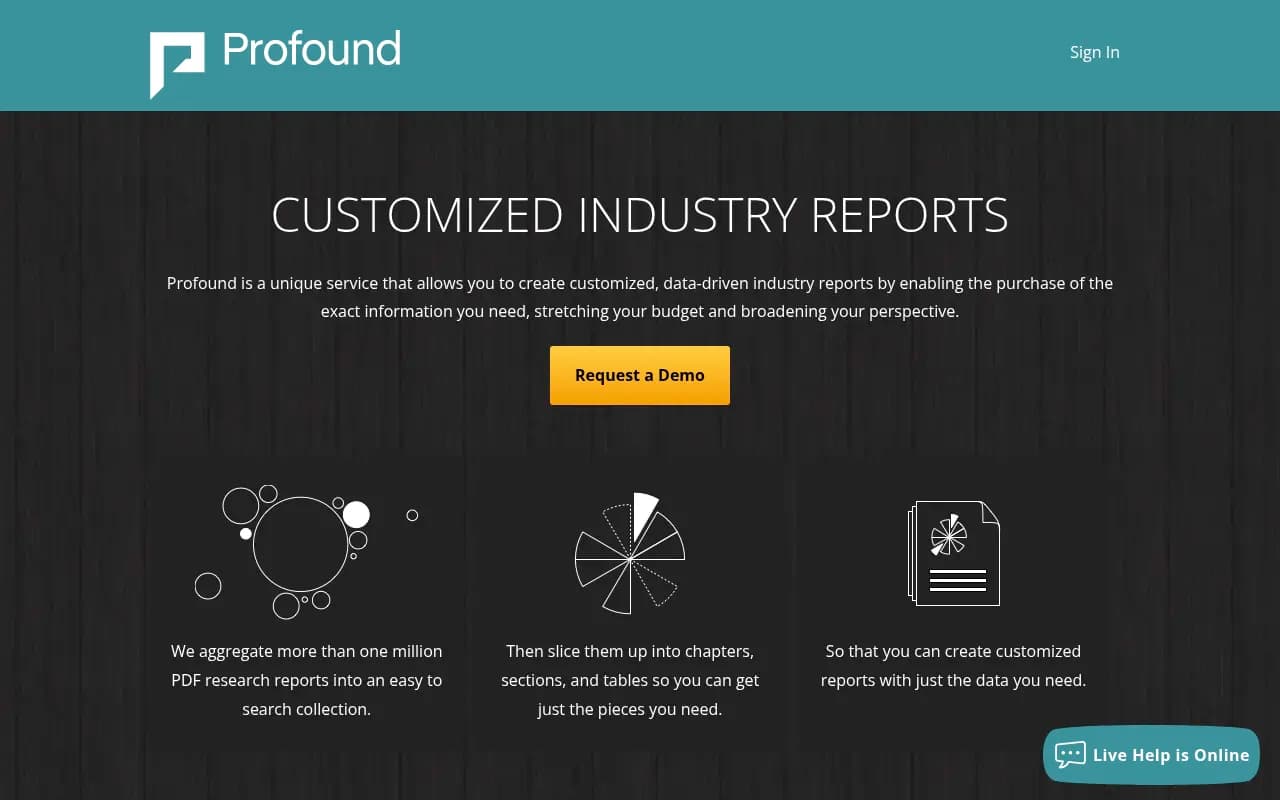
Profound is the strongest monitoring tool for enterprise B2B SaaS teams that need SOC 2-compliant AI visibility data and prompt-volume analytics at scale.
What separates Profound from most tools in this category is the depth of its prompt intelligence. Most GEO tools tell you whether your brand appeared in an AI answer. Profound tells you how many actual conversations are happening around a given prompt category -- which is a meaningfully different signal when you're trying to prioritize which content gaps to close first.
For buying committee use cases, Profound's data depth works well when you have a dedicated analyst who can translate the output into a content or PR strategy. It's not a tool that tells you what to write. It's a tool that tells you, with unusual precision, where the demand is.
The ceiling: it's monitoring-only. There's no content generation, no gap-to-brief workflow, and no path from data to execution built into the platform. At enterprise price points, you're paying for data quality and compliance, not for help acting on it.
Best for: Enterprise B2B SaaS teams above $10M ARR with a defined GEO budget and an analyst or agency to act on the data.
3. AthenaHQ
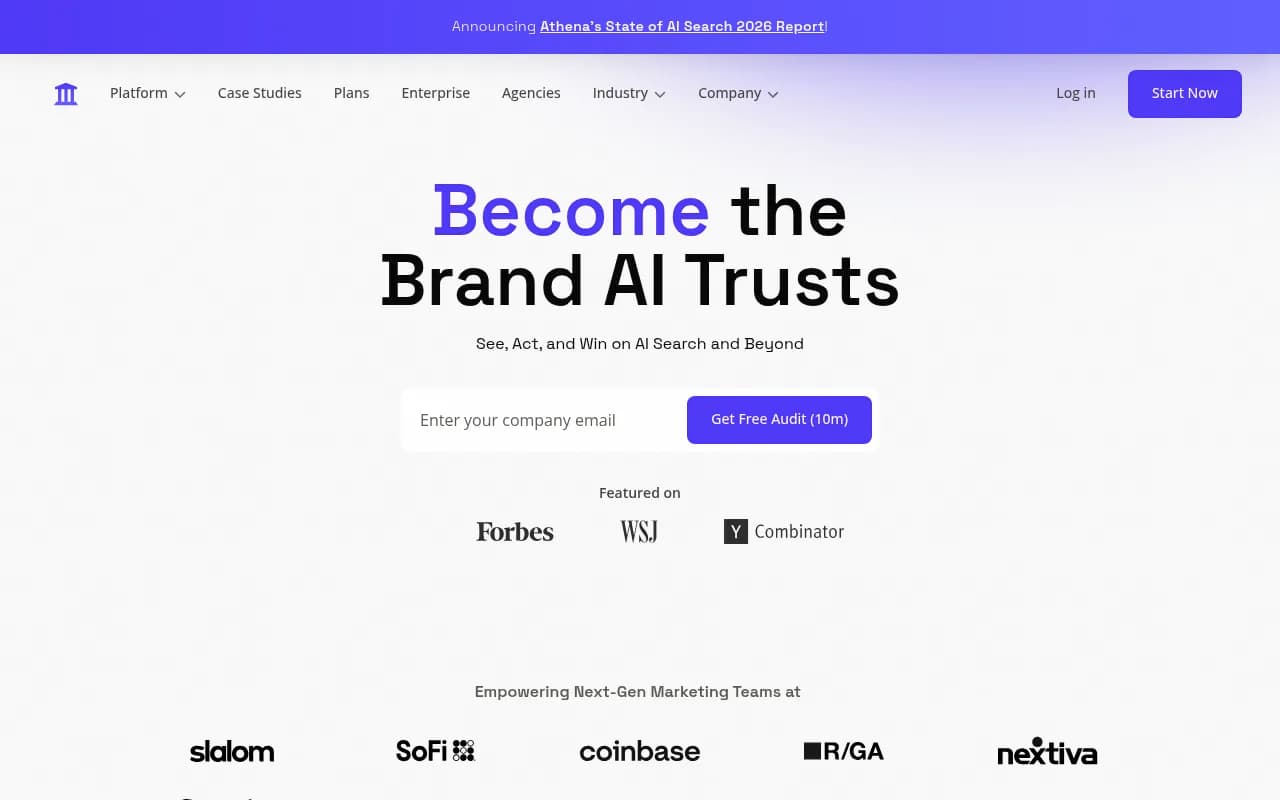
AthenaHQ is technically sophisticated and worth evaluating for any B2B SaaS company that wants deep AI search intelligence without needing content generation built in.
The platform's ACE engine (available on enterprise tiers) goes beyond surface-level mention tracking into structured analysis of how AI models reason about your category. For SaaS companies in competitive markets where the nuance of how AI frames a category matters, that's a real differentiator.
The practical limitations: credit-based pricing makes costs unpredictable for large audit projects, and the ACE engine is enterprise-only, which means the highest-value feature is locked behind the highest price point. There's no standard free trial -- the entry point is a discounted first month at $95.
For buying committee use cases, AthenaHQ works well when you have a clear research agenda and the team to execute on what it surfaces. It's not a tool for teams that need the platform to guide them toward next steps.
4. Peec AI
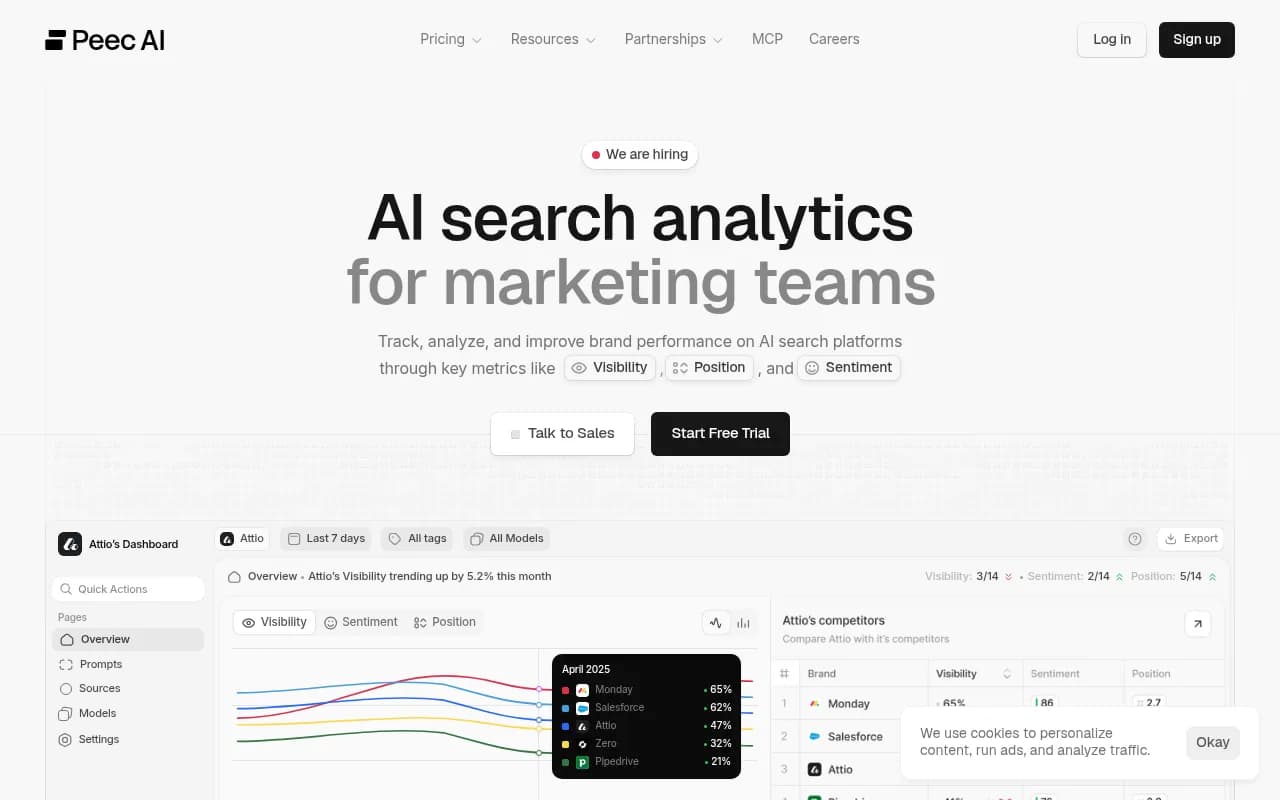
Peec AI is the strongest monitoring tool in this category for accuracy and multilingual depth. If your buying committee includes stakeholders who aren't English-speaking -- common for European SaaS companies or US companies selling into EMEA -- Peec AI is the only tool in this list built for that reality.
The multilingual tracking is genuinely differentiated. Most GEO tools are English-first with limited language support bolted on. Peec AI tracks AI responses across languages with the same depth it applies to English, which matters when a German procurement manager is asking Gemini a question in German.
The limitation is the same as most tools in this tier: it's monitoring-focused. You get accurate, multilingual data about where you appear. What you do with that data is your problem.
5. Otterly.AI
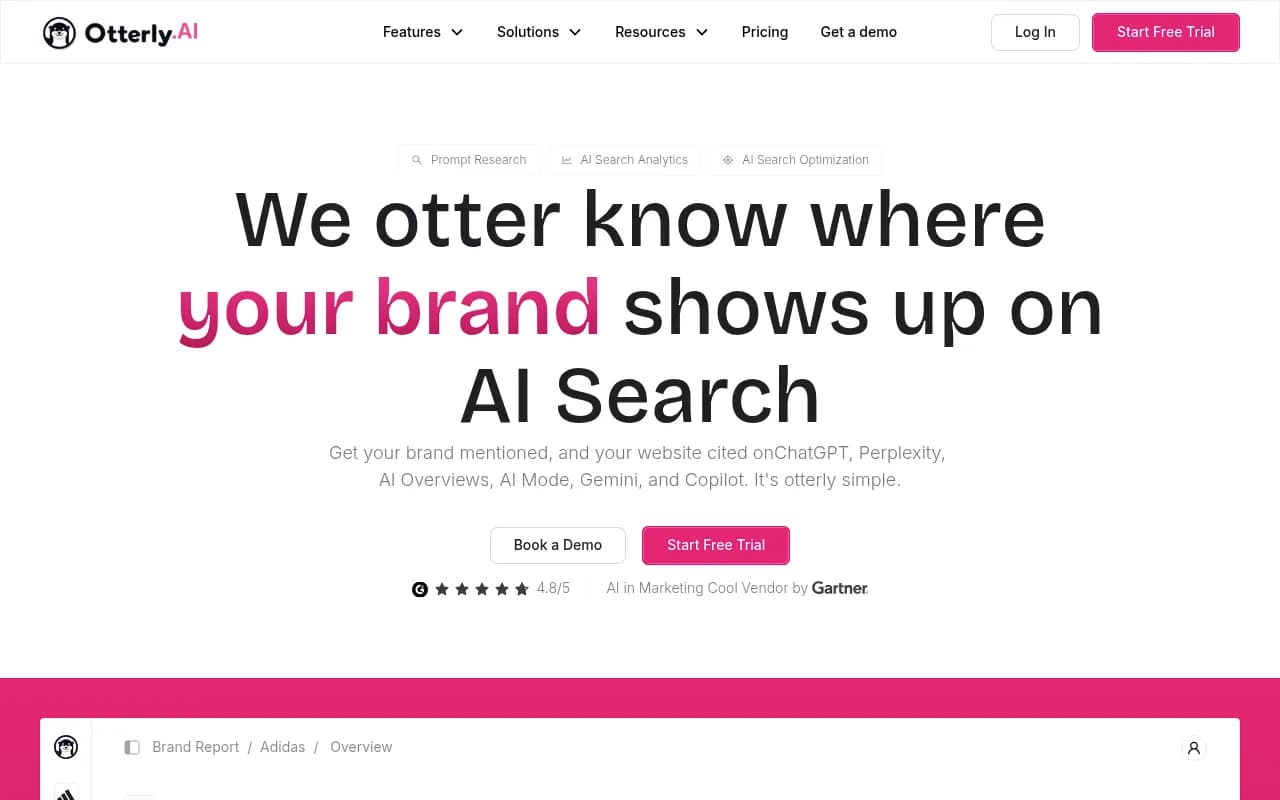
Otterly is a useful entry point for smaller SaaS teams that want structured GEO monitoring without committing to enterprise pricing.
The most useful feature isn't mention tracking -- it's URL citation tracking. When ChatGPT names your brand but links to a competitor's comparison page instead of your site, Otterly surfaces that. Most tools at this price point don't. For SaaS companies where third-party comparison pages and G2 listings are often what AI models cite instead of your own site, that distinction matters.
What Otterly doesn't do is tell you what to write next. There's no content workflow, no gap analysis, no traffic attribution. It's a diagnostic tool. How much value you get from it depends entirely on whether your team has the capacity to act on a diagnosis independently.
For buying committee use cases, Otterly works best when you're in the early stages of GEO -- trying to understand the scope of the problem before committing to a full optimization platform.
6. Ahrefs Brand Radar
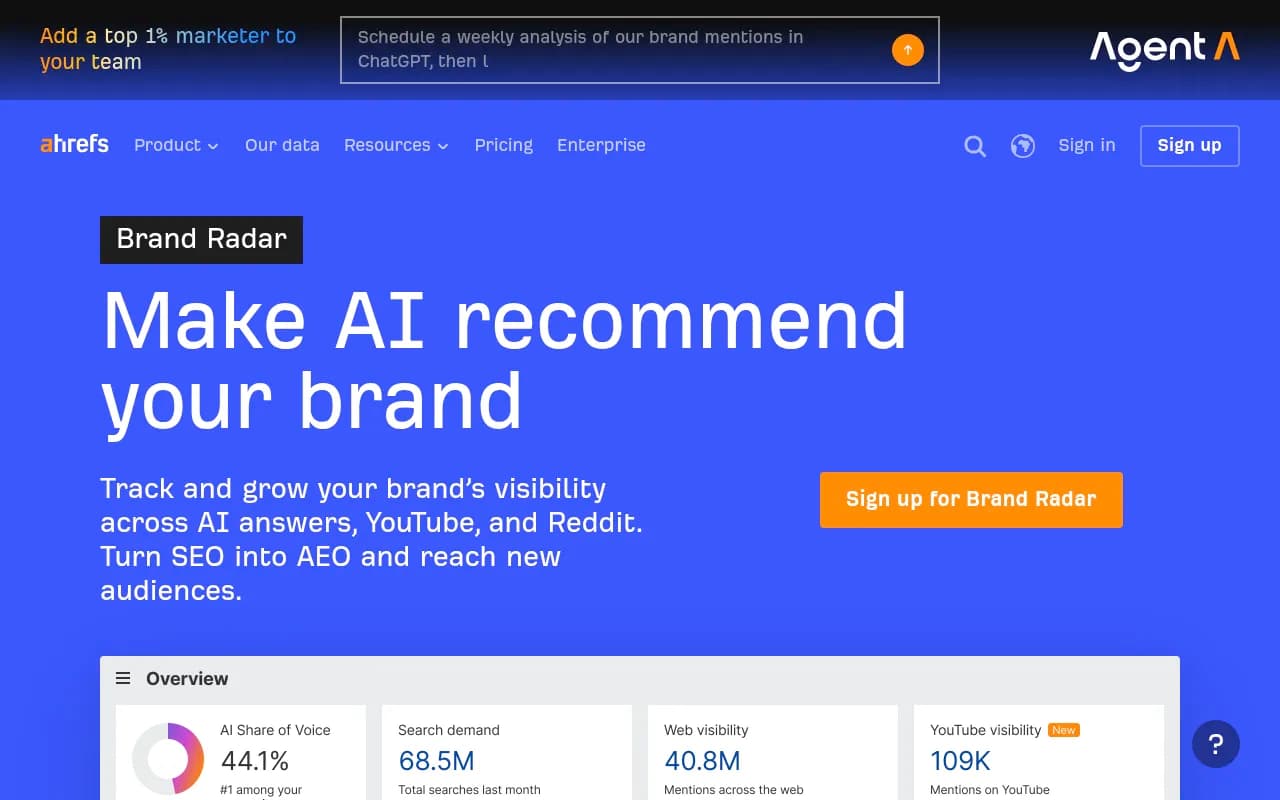
Brand Radar's headline number is its dataset: over 200 million AI search queries, one of the larger prompt bases in the category. For teams already running client reporting inside Ahrefs, adding AI visibility data to the same workspace is a low-friction upgrade.
The ceiling is absolute. Brand Radar is monitoring-only, with no content recommendations, no gap analysis, and no path from data to execution. It also requires an active Ahrefs subscription on top of the add-on cost, which makes total spend significant for teams buying in specifically for GEO rather than for Ahrefs' core SEO features.
For buying committee use cases, Brand Radar is most useful when your SEO team is already Ahrefs-native and you want AI visibility layered into existing reporting workflows rather than a separate platform.
7. Semrush AI Visibility Toolkit
Semrush's AI Visibility Toolkit follows a similar logic to Brand Radar: if your team already lives in Semrush, adding AI visibility data to that workspace reduces tool sprawl.
The limitation worth knowing: Semrush uses fixed prompt sets rather than custom prompts, which means you're tracking AI visibility for prompts Semrush has decided are relevant rather than the specific questions your buying committee is actually asking. For SaaS companies in niche verticals or with specialized buyer personas, that's a meaningful constraint.
It's a reasonable starting point for teams that want AI visibility data without adding a new platform. It's not a replacement for a purpose-built GEO tool if buying committee prompt coverage matters.
8. Search Party
Search Party is agency-oriented and works well for SaaS companies that are managing GEO through an external agency rather than an in-house team.
The platform is built around multi-client reporting and agency workflows, which makes it a reasonable fit when your GEO program is outsourced. The limitations for in-house teams: prompt metrics are limited compared to purpose-built platforms, and there's no content gap analysis built in.
For buying committee use cases, Search Party's multi-client architecture can actually be useful for SaaS companies with multiple product lines or regional markets, where you want separate tracking environments without separate platform subscriptions.
How these tools compare
| Tool | Monitoring | Content generation | Buying committee fit | Crawler logs | Multilingual | Starting price |
|---|---|---|---|---|---|---|
| Promptwatch | Yes | Yes | Strong | Yes | Yes | $99/mo |
| Profound | Yes | No | Strong (enterprise) | No | Limited | Custom |
| AthenaHQ | Yes | No | Moderate | No | No | ~$95/mo |
| Peec AI | Yes | No | Strong (multilingual) | No | Yes | Not disclosed |
| Otterly.AI | Yes | No | Basic | No | No | ~$99/mo |
| Ahrefs Brand Radar | Yes | No | Basic | No | No | Add-on to Ahrefs |
| Semrush AI Toolkit | Yes | No | Basic | No | Limited | Add-on to Semrush |
| Search Party | Yes | No | Moderate (agency) | No | No | Not disclosed |
How to choose based on your situation
The right tool depends less on feature lists and more on where your team is in the GEO maturity curve.
If you're just starting to understand the problem, Otterly.AI or Ahrefs Brand Radar (if you're already an Ahrefs customer) give you a low-cost way to see where you stand. You'll get data. You'll need to figure out what to do with it yourself.
If you're past the diagnosis stage and need to actually move your visibility numbers, you need a platform with an optimization loop built in. Promptwatch is the clearest option here -- the combination of Answer Gap Analysis, Content Agents, and page-level citation tracking means the platform guides you from data to action rather than leaving you to figure out the next step.
If you're enterprise with a dedicated analyst and compliance requirements, Profound is worth evaluating. The data quality and SOC 2 compliance matter at that scale, and you presumably have the team to translate the output into a content strategy.
If your buying committee is multilingual, Peec AI is the only tool in this list that takes that seriously.
One thing worth noting about buying committee dynamics specifically: the prompts your VP of Marketing asks are different from the prompts your CFO asks, which are different from the prompts your IT buyer asks. Any tool you choose should support custom prompt sets that map to those different personas -- not just a fixed library of generic category prompts. Promptwatch's prompt segmentation and Profound's prompt-volume analytics both handle this reasonably well. Most of the others don't.
The research behind this guide
The data point that keeps coming up across multiple sources: 73% of enterprise B2B buyers now start vendor research in AI chat interfaces (ABM Agency, 2026). That's not a trend to prepare for. It's the current state.
What's less discussed is the buying committee implication. When five people with different roles are each asking different AI engines different questions, the SaaS company that appears in the most of those answers wins the shortlist before a single sales call happens. GEO tools are how you track and improve that coverage -- but only if you pick one that helps you act on what it finds, not just watch it.

The monitoring-only tools in this list have real value. But if you're a SaaS company trying to move pipeline numbers, the gap between knowing you're invisible and doing something about it is where most GEO programs stall. The tools that close that gap -- Promptwatch most completely -- are the ones worth prioritizing.