Key takeaways
- Scrunch AI is a solid AI visibility monitor, but agencies hit three recurring walls: no volume discount on the agency tier ($500/mo Agency Core), a confusing prompt credit system that causes overages across multiple engines, and reporting that often requires manual exports for client-ready deliverables.
- The biggest pricing trap in this category isn't the sticker price — it's per-client or per-engine add-ons. Profound bills $399/mo per client workspace, Ahrefs Brand Radar charges per domain and per AI index, and Otterly's $29/mo entry plan can balloon past $600/mo once you add Claude, Gemini, and AI Mode.
- Monitoring and optimization are different products. Most Scrunch alternatives stop at dashboards. A smaller group — Promptwatch, Rankability, AirOps — close the loop with content gap analysis, automated content generation, or CMS publishing.
- Flat, predictable agency pricing exists. Peec AI's agency tiers ($245–$795/mo) include unlimited team seats, Rankability's Team plan ($399/mo) includes 10 brand workspaces and unlimited seats, and Promptwatch's agency plans ($199–$799/mo) include unlimited projects and prompts.
- Citation patterns reshuffle fast. Reddit's ChatGPT citation share dropped roughly 40% in a single month (May to June 2026), then collapsed further in August. Whatever tool you pick, don't let clients over-invest in one platform's current favorite source.
Why agencies are moving off Scrunch AI
Scrunch AI was one of the first tools to take AI visibility seriously, and its multi-engine coverage (ChatGPT, Claude, Gemini, Perplexity, Google AI Mode, Google AI Overviews, Meta AI, plus newer engines like DeepSeek and Grok) is still competitive. The data isn't the problem. The problem is what happens after the data.
The frustrations agencies report are consistent:
- No volume economics. Agency Core runs $500/mo, priced identically to stacking brand plans. Running Scrunch for five clients means paying roughly five times list price unless you negotiate custom Enterprise terms.
- A confusing prompt credit system. Credits get consumed quickly when you track across multiple engines, and agencies report unexpected overages.
- Reporting that needs assembly. Built-in visualization is thin enough that many teams export to Excel or a BI tool before anything goes in front of a client.
- Insights that stop short. The "Insights" feature is still maturing, so the diagnosis-to-prescription gap — which pages to change, which sources to pursue — falls on your in-house AEO expertise.
There's also a structural issue worth naming: Scrunch doesn't share prompt volume data, and its prompt trend feature is basic. For an agency trying to prioritize which of 40 client prompts deserves this month's sprint, that's a real gap.
None of this makes Scrunch a bad tool. It makes it a monitoring tool being asked to do an optimization job. That's the lens for everything below.
What an agency actually needs from an AI visibility platform
Before the tool list, the buying criteria. After working through how these platforms bill and what they surface, here's what matters most at multi-client scale:
- Flat, predictable multi-client pricing. Per-workspace, per-domain, or per-engine add-ons are the silent budget killers. Ask every vendor for a written quote at your actual client count, not their entry tier.
- White-label reporting and client portals. If you can't put the dashboard in front of a client with your logo on it, you're rebuilding reports by hand every month.
- Unlimited or generous seats. Per-seat pricing punishes agencies exactly when they hire.
- A diagnostic layer. Visibility scores are the start of the conversation, not the end. The tool should tell you why a client is invisible — crawl issues, content gaps, missing source coverage — and what to do about it.
- Execution, or at least a bridge to it. Content briefs, gap analysis, or automated publishing that turns the audit into shipped work.
One more thing that should shape your recommendations to clients: the citation landscape moves fast. Per Promptwatch Data, Reddit was the single most-cited domain on ChatGPT Search in June 2026 at 3.71% of citations — but that was down from 6.11% in May, and Reddit's share collapsed further in August. Any tool (or agency) selling a permanent "Reddit strategy" is selling last month's weather.
The best Scrunch AI alternatives for agencies in 2026
Promptwatch — best for end-to-end monitoring and optimization
Promptwatch is the alternative that most directly answers the "dashboard delivers bad news without a prescription" complaint. It's an AI search visibility and GEO platform used by 1,840+ brands and agencies, and the difference from most Scrunch alternatives is that it doesn't stop at tracking.
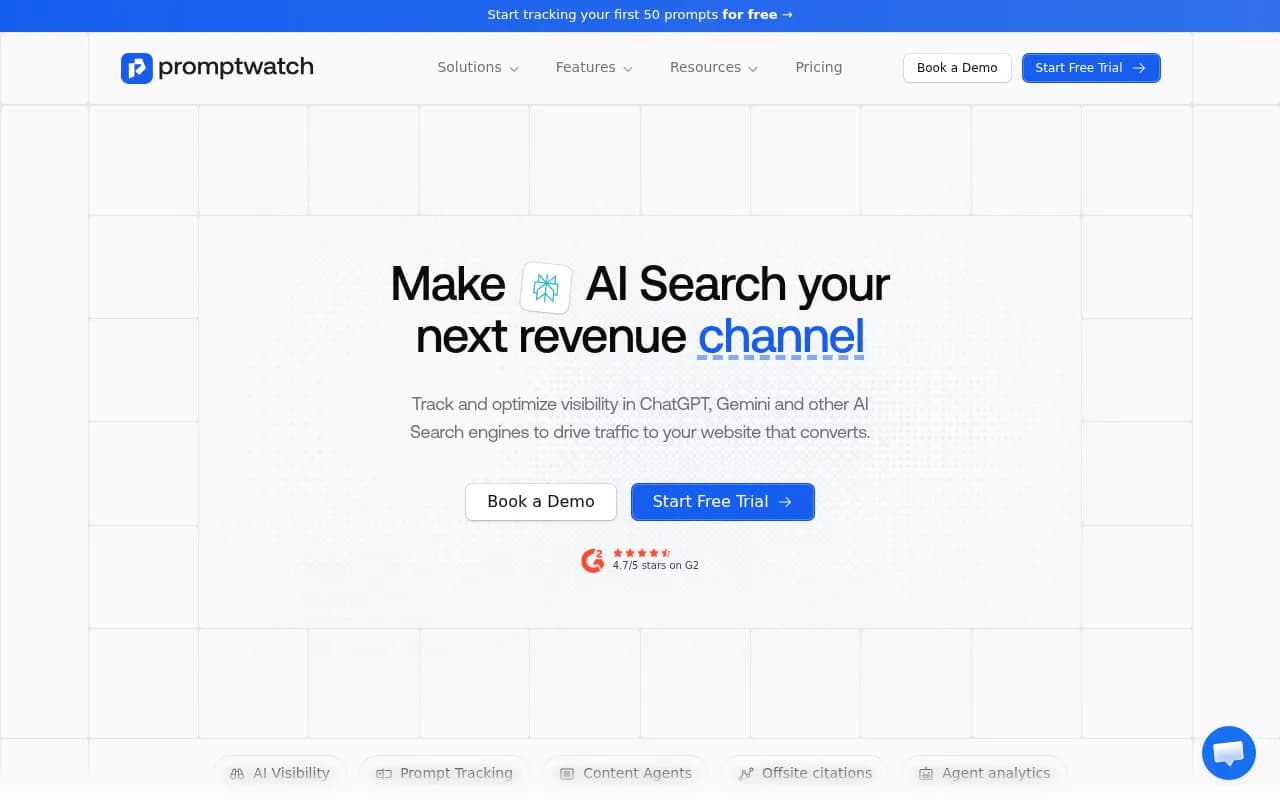
The monitoring side covers ChatGPT, Claude, Gemini, Perplexity, Grok, DeepSeek, Copilot, Mistral, Meta Llama, Google AI Overviews, and Google AI Mode, with prompt volumes and difficulty scores, citation trends, and competitor share-of-voice heatmaps. The diagnostic side is where it earns its keep for agencies: AI crawler logs show when bots like ChatGPTBot and ClaudeBot actually visit a client's pages, what they read, and whether they hit errors — which turns "your visibility dropped" into "GPTBot got 404s on your three most important comparison pages." Visitor analytics then tie AI traffic to actual conversions, so client reports show revenue, not just mentions.
The execution layer is what separates it from monitoring-only tools. Content gap analysis maps client content against actual AI responses, Content Agents plan and publish GEO-optimized articles directly to WordPress, Webflow, or Framer, and Unified Actions generates a prioritized GEO to-do list per client. Reddit and YouTube citation tracking and a ChatGPT Shopping/Ads Radar round out coverage most competitors skip entirely.
Agency pricing is flat: Kick-off at $199/mo, Growth at $399/mo, and Scale at $799/mo, all with unlimited projects, unlimited prompts, and 10 seats. White-label dashboards and a client portal are built in. If your agency wants one platform that monitors, explains, and fixes — this is the one to shortlist first.
Peec AI — best for affordable, seat-friendly agency tiers
Peec AI is the value pick for agencies that need solid visibility tracking and professional client reporting without enterprise pricing.
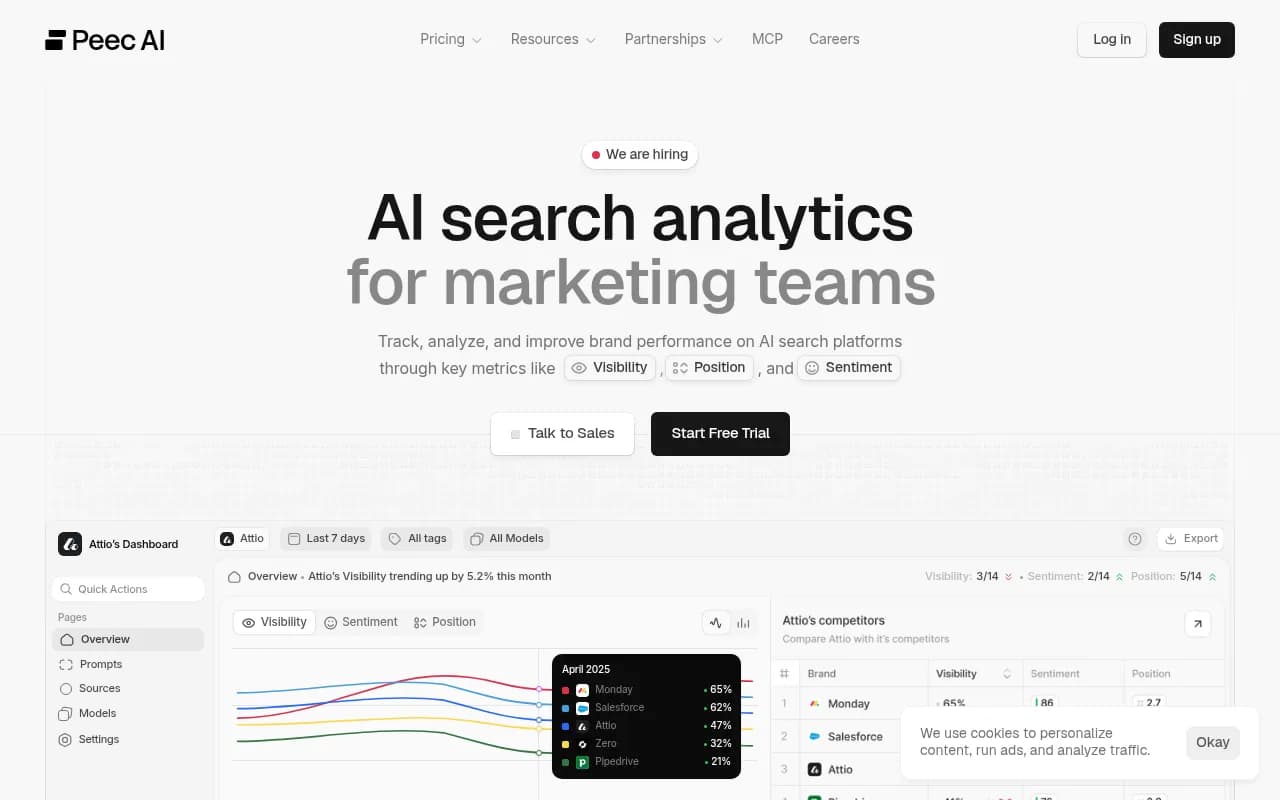
The agency plans are the draw: Essential at $245/mo (up to 3 client projects), Growth at $495/mo (up to 10 projects), and Scale at $795/mo (up to 25 projects), all with unlimited team seats — a genuine differentiator in a category where per-seat fees are common. Credits map to daily prompt capacity (roughly 111 prompts/day at Essential, 722 at Scale).
Two caveats. Standard plans let you pick only 3 of 6 engines, with extra engines costing €25–115/mo depending on tier — do the math for clients that need full coverage. And Peec is primarily a tracking and reporting tool; it won't write or publish content for you. For agencies with their own content team, that's fine. For teams wanting execution bundled in, look elsewhere on this list.
Rankability — best for integrated SEO + GEO delivery
Rankability's AI Analyzer embeds AI visibility tracking inside a broader SEO platform, which matters if your agency is tired of exporting CSVs between tools.
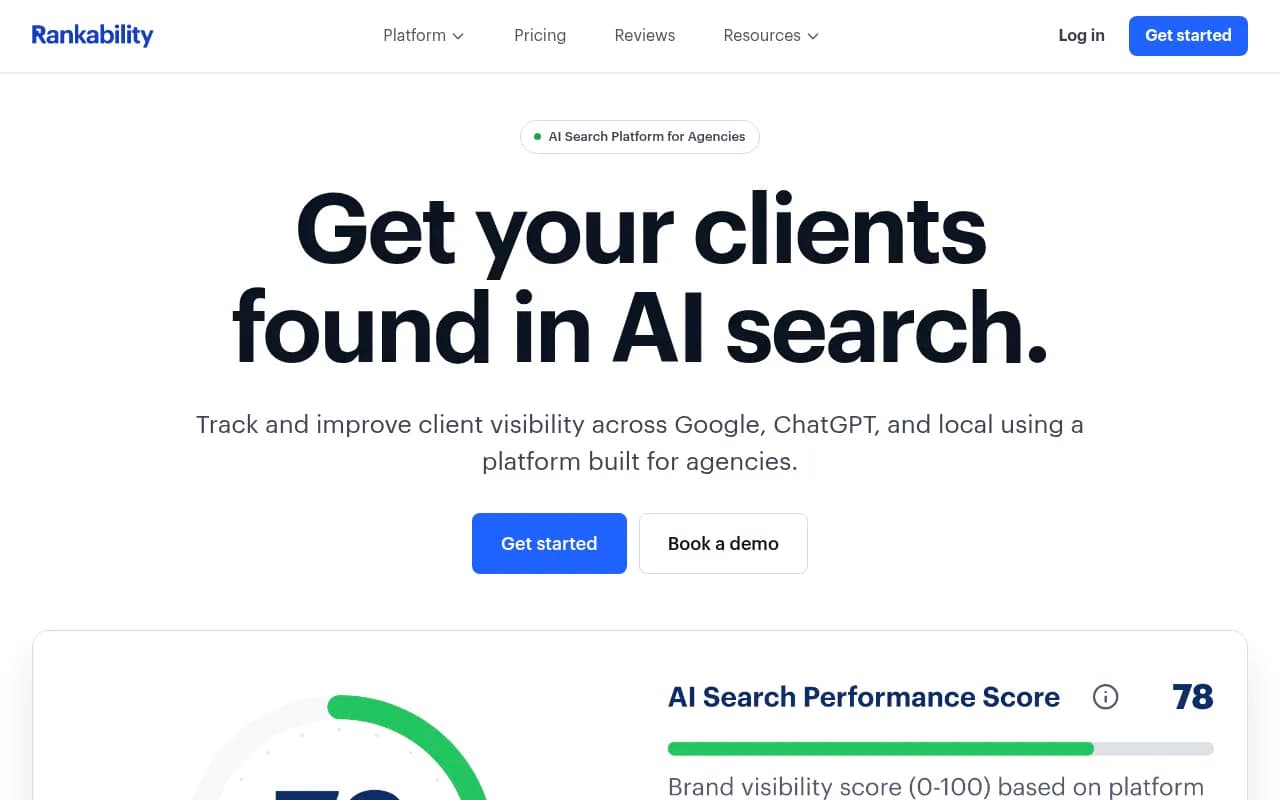
Pricing scales sensibly: Starter at $99/mo (1 brand workspace, 3 platforms), Core at $199/mo (3 workspaces, 5 platforms), Team at $399/mo (10 workspaces, 8 platforms including Grok and Copilot). Every tier includes unlimited seats, client portals, shareable reports, portfolio-level views across all clients, GSC/GA4 integration, and API plus hosted MCP access. An AI assistant (Serena) works across the agency workspace with client-specific context.
If your agency already delivers traditional SEO and is adding GEO as a line item, Rankability is the smoothest way to consolidate both under one roof. If you want deep AI-native diagnostics like crawler logs, pair it with a specialist tool.
Profound — best for enterprise clients, with a pricing model to watch
Profound is one of the most established names in the category, with real-user prompt volume data and an Amazon Rufus shopping module most competitors still lack. For enterprise clients, it's a credible choice.
The agency math is the catch. The Agency Growth plan runs $99/mo base plus $399/mo for each full client workspace, and each client typically needs its own workspace. Independent calculations put a five-client annualized setup around $23,940/year, and around $47,880 at ten clients — before staff time. Multi-region tracking, extra seats, and white-label reporting (Enterprise only) all add cost. Profound is a strong tool; just get a written quote at your real client count before committing.
Ahrefs Brand Radar — best data quality, worst agency economics
Brand Radar's prompt database is built from real search behavior (243M+ prompts drawn from actual query data), which makes its visibility metrics more grounded than tools that fabricate hypothetical prompts. Current Ahrefs users get a genuinely useful add-on.
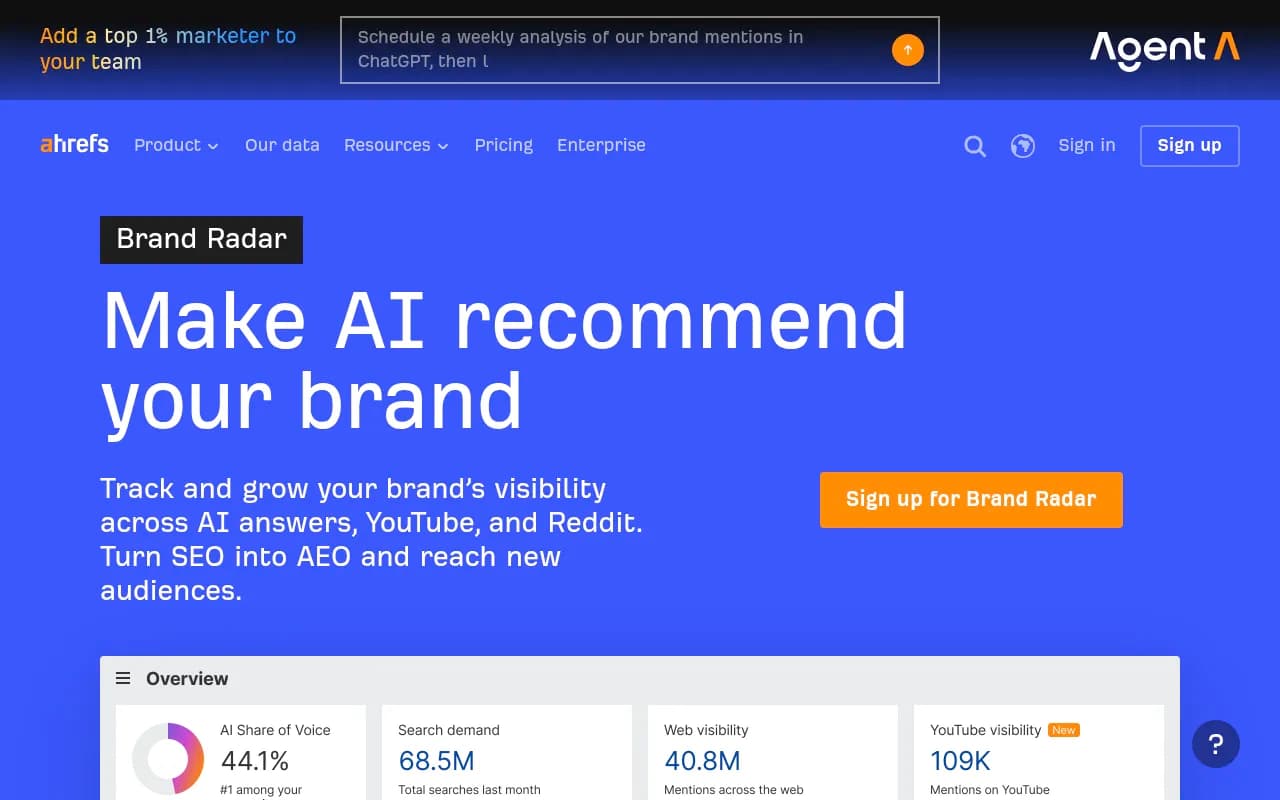
But the pricing structure is rough for agencies. Brand Radar requires a base Ahrefs subscription (from $129/mo) plus $199/mo per AI index or $699/mo for the six-index bundle — per domain. Full visibility for one client domain runs about $828/mo. Multiply by a portfolio and it's brutal. Documented weakness: strong data, thin actionable guidance. Best for agencies with one or two high-value clients already on Ahrefs.
Otterly.AI — best entry price, read the add-on fine print
Otterly is the budget-friendly option: Lite at $29/mo, Standard at $189/mo, Premium at $489/mo, tracking 7 engines across 50+ countries with daily citation tracking, sentiment, and both API and MCP access.
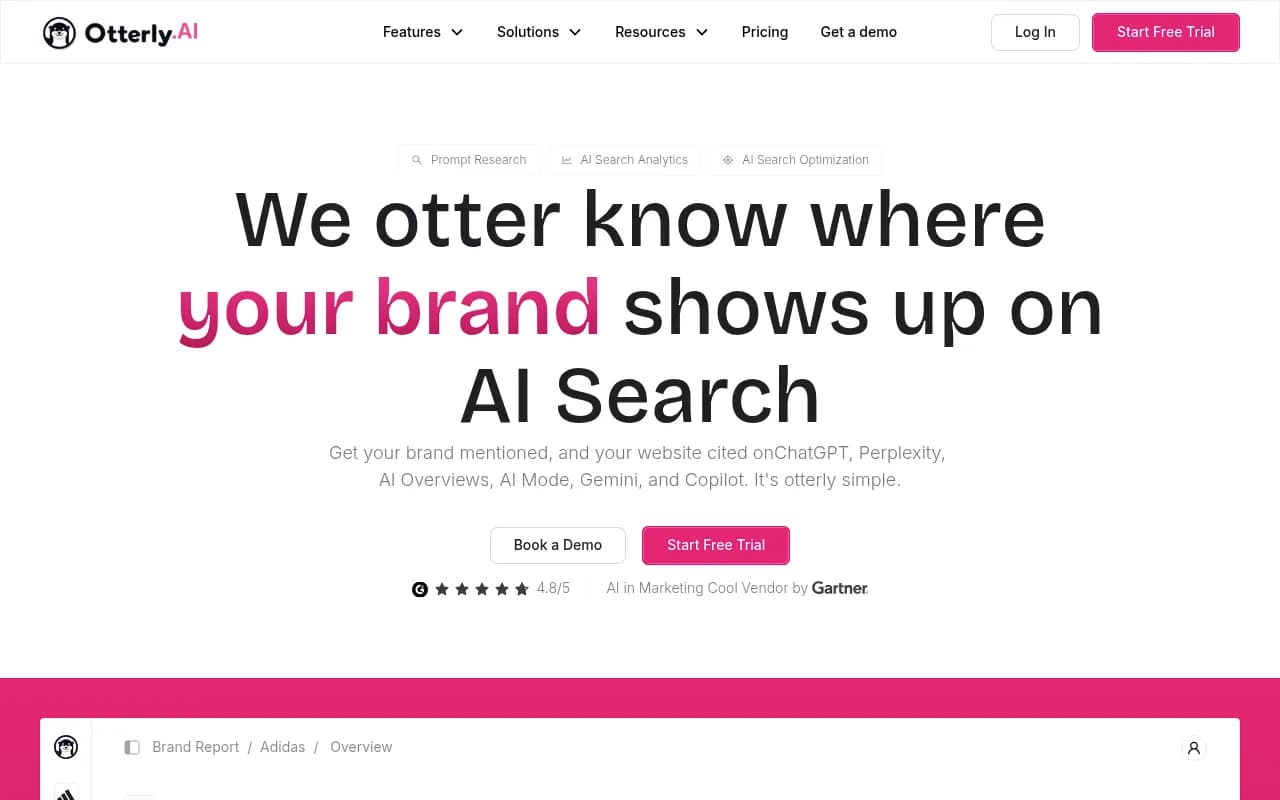
The trap is engine add-ons. Claude, Gemini, and AI Mode are billed separately by tier — the Claude add-on alone runs $29/$109/$439/mo depending on plan. One Reddit user's scenario had the $29/mo plan landing at $638/mo with add-ons. Otterly works well for a focused single-client or small-team setup; price out your full engine list before assuming it's the cheap option.
AthenaHQ — best for agencies reselling AI visibility as a service
AthenaHQ runs $295/mo (Self-Serve, 3,600 credits/month) with custom Enterprise pricing above that. Its Agency Program is the interesting part: discounted resale licenses that let agencies white-label AthenaHQ plus managed services at roughly what a single brand would pay standalone, with centralized client management.
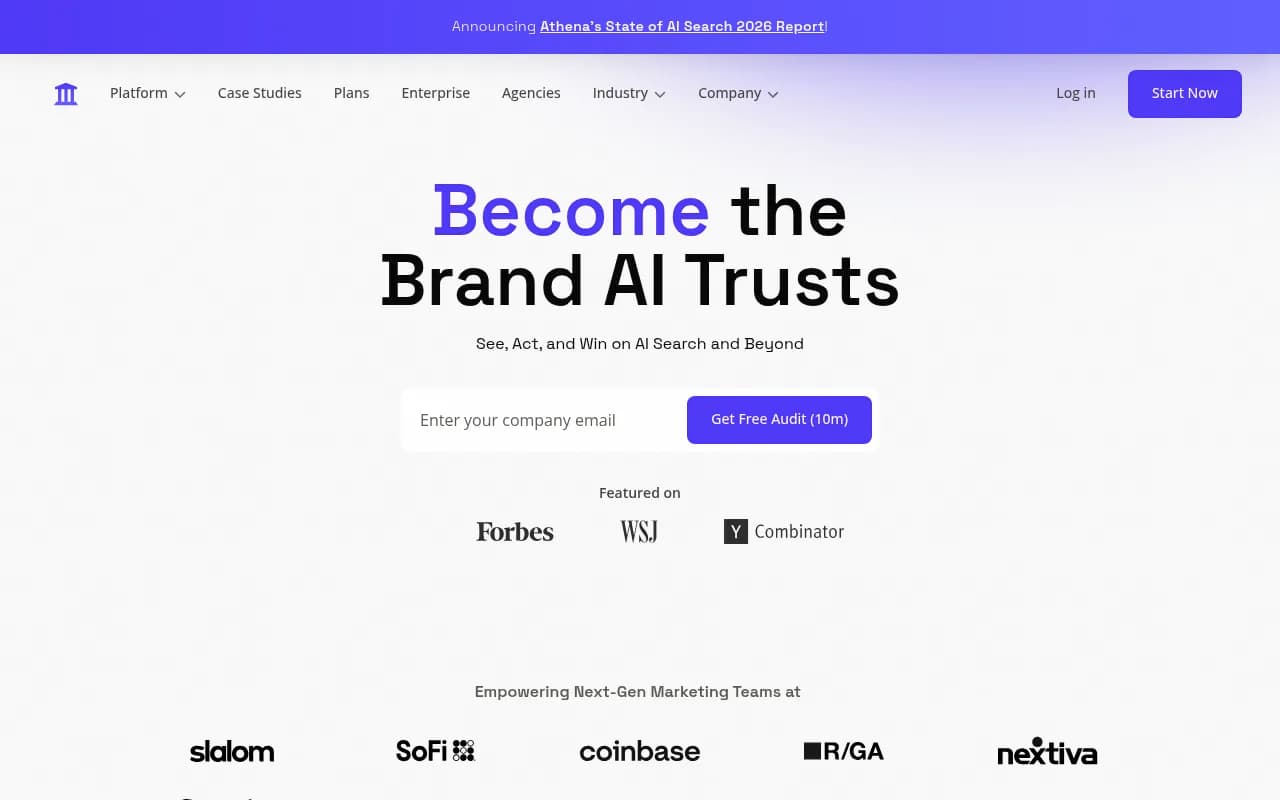
If your agency's model is "we sell AI visibility reporting as a retainer line item" — and agencies reportedly charge $500–$1,500/month per client for exactly that — AthenaHQ's program is built for you. The trade-off is that it's monitoring-focused, so the remediation work stays on your team.
Quick comparison: Scrunch AI vs the alternatives
| Tool | Entry price | Agency tier | White-label | Engines | Execution layer |
|---|---|---|---|---|---|
| Scrunch AI | $250/mo | Agency Core $500/mo, no volume discount | Branded exports only | 7+ | Beta-stage insights |
| Promptwatch | $95/mo | $199–$799/mo, unlimited projects & prompts | Yes, dashboard + client portal | 11+ | Content Agents, CMS publishing, Unified Actions |
| Peec AI | $80/mo | $245–$795/mo, unlimited seats | Not publicly detailed | 3 of 6 (more on Enterprise) | Suggestions, no publishing |
| Rankability | $99/mo | Team $399/mo, 10 workspaces, unlimited seats | Client portals + shareable reports | 3–8 by tier | Integrated SEO workflows, AI assistant |
| Profound | $99/mo | $99/mo + $399/mo per client workspace | Enterprise only | Up to 10 | Content tools, enterprise tier |
| Ahrefs Brand Radar | $199/mo per index | None; per-domain pricing | No | 6 | No |
| Otterly.AI | $29/mo | Enterprise from $1,000/mo | No | 7 (add-ons extra) | GEO audits |
| AthenaHQ | $295/mo | Agency Program (resale licenses) | Yes, via program | Multiple | No |
How to choose: three agency profiles
The consolidated delivery shop (SEO + GEO under one retainer): Rankability if you want both in one platform, or Promptwatch if GEO is the headline service and you want execution automated. Pair either with your existing SEO stack.
The reporting-led agency (sell the audit, deliver the fix): AthenaHQ's Agency Program or Peec AI's agency tiers keep per-client costs flat and reporting clean. Add Promptwatch's crawler logs when a client asks why visibility dropped and you need a defensible answer.
The enterprise shop (few clients, big budgets): Profound or Ahrefs Brand Radar — both are strong tools whose pricing only makes sense when client count is low and contract values are high.
What to tell clients about AI search in 2026 (whoever's tool you use)
A few data points worth building into client education, because they reframe expectations:
- Citation slots are scarce. ChatGPT cites roughly 5 sources per web-search response — about half of Google AI Overviews' ~10 — so each slot is more contested than the average sources per response data suggests at first glance.
- Product pages are the new listicle. In July 2026, product pages were the most-cited content type on ChatGPT Search at 32.8% of citations, nearly double their March share, and the same shift shows up in AI Overviews. Comparison and how-to pages remain lower-competition targets.
- Don't chase one platform's favorite source. Reddit's ChatGPT citation share fell ~40% from May to June 2026 and dropped further in August. Diversify the sources you pursue.
The bottom line
Scrunch AI is a fine monitor. The agencies outgrowing it aren't leaving because the data is wrong — they're leaving because client work needs the part that comes after the dashboard: diagnosis, prioritization, and shipped fixes. Promptwatch covers that full loop at flat agency pricing; Peec AI and Rankability are the strongest budget and consolidation plays respectively; Profound and Ahrefs Brand Radar fit high-value enterprise relationships. Pick based on how many clients you're billing and whether your team wants the tool to do the fixing or just point at the problem.