Key takeaways
- A fan-out is the set of web searches an AI model runs before it answers. Those searches, not the original prompt, decide which pages get retrieved and cited.
- Promptwatch Data shows ChatGPT averaged about 2.15 fan-outs per response in December 2025, about 1.84 by early March 2026, and exactly 1.0 when fan-outs returned in April. Third-party claims of 8 to 10 per prompt are far higher, so treat any single number with suspicion.
- Fan-out behavior changes in steps. On August 8, 2026, site: queries jumped from 0.37% to 16.8% of ChatGPT fan-outs overnight. A content map built from one snapshot goes stale.
- Prompt volume tells you which topics matter. Fan-outs tell you which pages to write for them. You need both.
- Build clusters of focused pages (comparisons, pricing, alternatives, how-tos), write headings that read like search queries, and re-check after every major model change.
Why keyword research alone stops working
I used to build content plans from a keyword export. Sort by volume, filter by difficulty, write. That workflow still works for Google's blue links, but it has a blind spot for AI search, and the blind spot is getting bigger.
When someone asks ChatGPT "which CRM should a ten-person agency use?", the model rarely answers from memory. It rewrites the prompt into a handful of searches, retrieves pages, and synthesizes an answer. The searches might look like "best CRM for small agencies 2026", "CRM pricing comparison", or "HubSpot alternatives agencies". Those are the queries your page has to match. The original prompt barely matters.
Here is the problem. A third-party analysis summarized by 85SIXTY, citing AirOps data on 72,000+ AI-generated queries from 8,700+ prompts, says about 95% of fan-out phrases show zero monthly search volume in keyword tools. I have not verified that figure myself, but it matches what you see when you paste fan-outs into a keyword planner: most come back empty. If you filter by volume, you throw away the phrases that decide whether you get cited.
Two data sets, two different questions
Prompt volume and fan-out data answer different things, and mixing them up leads to bad plans.
Prompt volume and difficulty: what to cover
Prompt volume is an estimate of how often people ask a given question across AI search. Difficulty tells you how entrenched the current cited sources are. Together they work like keyword volume and keyword difficulty, except aimed at the questions people put to chatbots rather than the strings they type into Google.
Use them to pick topics. A high-volume, low-difficulty prompt where nobody has a strong page is an obvious first target.
Query fan-out: how to cover it
Fan-out data shows the exact searches the model ran for a prompt. That is your page-level brief. It tells you which angles to include, which words to put in headings, and whether the model leans on comparisons, pricing, recency or review sources.
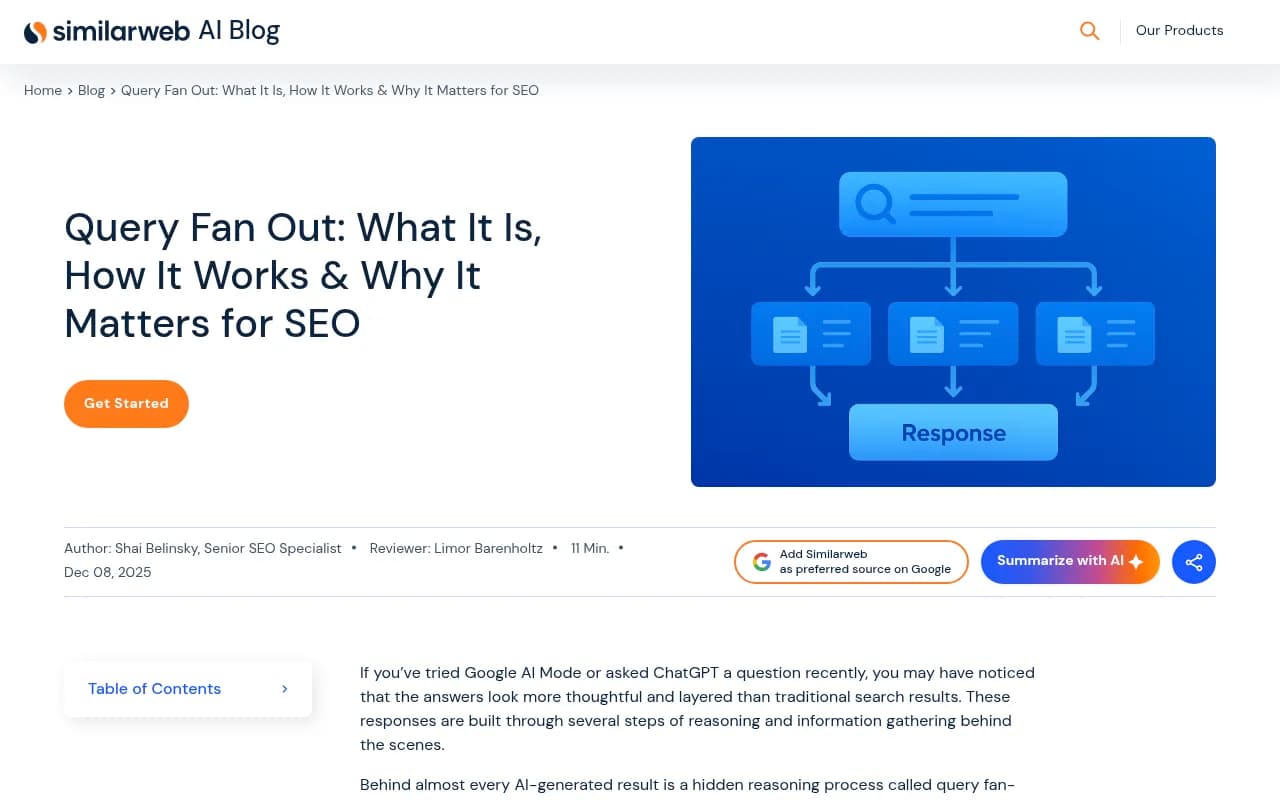
The Similarweb explainer on query fan-out puts the shift well: you are no longer competing for one query, you are competing across every sub-query the system generates.
What the numbers actually look like
You will see wildly different fan-out figures depending on who you read. Be careful here.
85SIXTY reports that a single question to ChatGPT or Gemini routinely triggers 8 to 10 parallel queries. Promptwatch's own measurements for ChatGPT are much lower. In Promptwatch's ChatGPT query fan-out data, average fan-outs per response were 2.15 in early December 2025 and about 1.84 by early March 2026. After a gap, they came back in April at exactly 1.0 per response. The report's intro says a prompt can trigger 3 to 8+ searches, but that is an upper-end description, not the average.
The gap is not necessarily a contradiction. Numbers depend on the platform, the prompt type (a research-heavy comparison fans out more than a simple factual question), and how you count. My advice: do not plan around a headline multiplier. Measure the prompts you care about.
Query length moved too. Average fan-out length fell from about 117 characters in early December to the high 80s through February and March, then to about 53 characters (six to eight words) in April. Shorter fan-outs behave more like classic keyword queries, which is good news for anyone who writes tight, keyword-aligned headings.
| Period | Avg. fan-outs per ChatGPT response | Avg. fan-out length |
|---|---|---|
| Early Dec 2025 | 2.15 | ~117 characters |
| Early Mar 2026 | ~1.84 | High 80s characters |
| April 2026 | 1.0 | ~53 characters |
Source: Promptwatch Data, ChatGPT query fan-outs report, December 2025 to April 2026.
Fan-out behavior is volatile, so plan for that
The most useful lesson from 2026 is that fan-outs are not stable. They shifted in steps between December and April, and then again in August.
Per Promptwatch Data on the site: operator, on August 8, 2026, site:-scoped queries went from 0.37% to 16.8% of all ChatGPT fan-out queries. That is roughly 46x in a single day, about one in six queries. Average fan-out queries per response jumped from about 1.08 to about 1.83 the same day and stayed there. The report reads this as site: searches being added on top of the generic ones, not replacing them.
What that means for content:
- Your own domain is now a retrieval surface. ChatGPT may search inside your site for an answer.
- Thin category pages and broken internal search cost you answers.
- Key pages need to be crawlable and indexed.
- Any keyword-to-heading mapping built before August 8 is stale and worth re-running.
And this is the practical takeaway: do not freeze a content map from one snapshot. Treat fan-out analysis as something you repeat, especially after announced model updates.
A workflow for choosing what to write next
Here is the process I would follow. It is not complicated, but the order matters.
Step 1: Build a prompt set from real demand
Start with the questions your buyers ask. Pull from Search Console queries, People Also Ask, sales call notes, support tickets and your existing pages. Group them into topics and, if it applies, personas (an agency owner asks a different question than an in-house marketer).
Then attach volume and difficulty. If your tool does not provide prompt volumes, you are guessing at priority, which is the main thing a dedicated platform fixes. Promptwatch includes monthly prompt volumes, difficulty scores and fan-outs in one view.

Step 2: Pull the fan-outs for each prompt
For your top prompts, list every sub-query the model ran. Look for patterns rather than one-offs:
- Comparison searches ("X vs Y")
- Pricing and cost words ("free", "pricing", "cost")
- Alternatives
- Year strings. 85SIXTY reports a string like "2024 2025" in about 6% of fan-outs, a hint that models check freshness.
- Risk words ("pros and cons", "complaints", "limitations")
- Domain-scoped lookups using site:
A free way to start: the GEO Inspector Chrome extension from Promptwatch shows fan-outs for ChatGPT responses, and the ChatGPT Query Fan-Out Generator on promptwatch.com gives you a rough expansion of any prompt without an account.
Step 3: Check what you already have
Map each fan-out to an existing URL. You will find three cases:
- A page exists and is cited. Leave it alone, maybe refresh it.
- A page exists but is not cited. This is a content or crawlability problem. Check whether AI crawlers can reach it and whether the heading matches the query.
- No page exists. This is your writing list.
Case 3 is where most new content should come from. Case 2 is where most quick wins hide, and they are cheaper than writing from scratch.
Step 4: Score and rank the gaps
Combine prompt volume, difficulty and how many fan-outs you are missing. A simple scoring table works:
| Signal | What it tells you | How to use it |
|---|---|---|
| High prompt volume | Many people ask this | Raises priority |
| Low difficulty | Weak current sources | Raises priority |
| Many uncovered fan-outs | Large gap on one topic | Write a cluster |
| Page exists, not cited | Crawl or content issue | Fix before writing new |
| Fan-outs with year or freshness terms | Model wants recent info | Schedule refreshes |
Step 5: Write clusters, not mega-pages
Promptwatch's recommendation from its fan-out research is to build a cluster of focused pages for each sub-question rather than one mega-page. I agree, with one caveat: do not split a topic so thin that each page has nothing to say. A comparison page, a pricing page, an alternatives page and a how-to is a reasonable cluster. Four pages that each repeat the same intro is not.
Heading style matters too. Write headings that read like the query. "Best CRM for small agencies 2026" beats "What should you look for when choosing a CRM?" because the first matches what the model actually searches. Put the entity and category near the front of titles and H2s.
Step 6: Measure, then re-run
After publishing, check whether the page gets crawled, cited and clicked. Then re-run the fan-out analysis on the tracked prompts after each major ChatGPT update. If a page underperforms, the fan-out data usually tells you which angle you missed.
Match content type to what gets cited
Fan-outs tell you the angles, but content format matters as well. In Promptwatch's ChatGPT citation share by content type (Sep 28 to Oct 4, 2026), product pages were the most cited type at 22.4%, followed by landing pages and listicles. And from Promptwatch's content half-life data, landing pages and docs stayed cited longest, while news lost half its pages within 36 days.
So if a fan-out is about pricing or a specific product, a solid product or landing page is the right asset. If it is a comparison, a listicle or structured comparison page fits. Time-sensitive news posts are a poor long-term bet unless you refresh them or can publish fast enough to matter.
Tools that help at each stage
You do not need one tool for everything, but you do need fan-out and prompt data from somewhere. Most traditional keyword tools were not built for this.
| Job | Tools to consider | Notes |
|---|---|---|
| Prompt volumes, difficulty, fan-outs and content creation in one place | Promptwatch | Also tracks crawler logs and AI traffic, so you can see whether a new page worked |
| Fan-out viewing for tracked prompts | Profound, Aiso | Profound added a Query Fanouts page in November 2025 |
| Prompt-level monitoring | Gauge, Peec AI, Otterly.AI | Mostly monitoring; check what each does with fan-outs |
| Classic keyword and content scoring | Semrush, Ahrefs, Surfer SEO, Clearscope | Useful for Google, weak on zero-volume fan-outs |
| Content workflows | AirOps, MarketMuse | Better when fed with real prompt and citation data |






Profound's write-up on its Query Fanouts page shows how that product lists every tracked prompt that produced a fan-out. It is worth reading even if you do not use Profound, because it clarifies how fan-outs surface sources.
Where the tools differ most is what happens after the insight. Many stop at showing you the data. Promptwatch also has a content gap analysis, an Action Board of prioritized tasks, and a Content Agent that drafts and publishes pages to WordPress, Webflow or Framer, then tracks whether they get crawled and cited. If you want to compare more options, the GEO software directory lists dozens of them.
Common mistakes
Treating one fan-out sample as truth
AI answers vary run to run. Sample each important prompt multiple times and look for fan-outs that repeat. One odd sub-query is noise.
Ignoring the zero-volume phrases
If you filter fan-outs through a keyword planner and drop anything with no volume, you remove most of the list. Judge them by whether they show up repeatedly in fan-outs for high-volume prompts.
Assuming fan-out count equals opportunity
A prompt with six fan-outs is not automatically better than one with one. Prioritize by prompt volume and your coverage gap, not raw fan-out count.
Writing for one model
ChatGPT, Google AI Mode and Perplexity do not fan out identically. If your buyers use several, check each. Tracking the real user interfaces, rather than API outputs, matters here because the answers can differ.
Forgetting the technical side
An excellent page that AI crawlers cannot fetch will not get cited. With ChatGPT now running site: searches at scale, indexability and clean internal linking are part of content planning, not a separate project.
A quick example
Say you sell project management software for construction firms. Your prompt set includes "best project management software for contractors". The fan-outs show up as:
- best construction project management software 2026
- construction project management software pricing
- Procore alternatives for small contractors
- construction scheduling software reviews
You already have a features page that mentions "construction" in passing. You have nothing on pricing, nothing on alternatives, and no review roundup. That is three pages: a pricing page with real numbers, an alternatives page that names competitors honestly, and a short roundup that shares what customers say. Each gets a heading matching its fan-out. You publish, watch for crawler hits and citations over a few weeks, and re-run the fan-out check next month.
No magic. Just matching your pages to the searches the model actually makes.
Wrapping up
Prompt volume decides which topics deserve effort. Fan-outs decide what the page needs to say and how to head it. Because fan-out behavior moved in December, April and August of 2026, the plan has to be a loop: pull the data, write, measure, and pull it again. Start with your ten most valuable prompts this week, list their fan-outs, and see how many have no matching page. That list is your next month of content.