Key takeaways
- Agentic GEO platforms, where AI agents plan, write, and publish optimization work for you, run from about $95/month up to enterprise deals well into six figures per year.
- Most platforms in this space charge per site, per prompt, or per response volume. Watch response caps and article quotas, because those are what actually drive your bill as you scale.
- Agentic workflows consume 5 to 30 times more tokens per task than a standard chatbot query, per Gartner's March 2026 analysis, which is why flat-rate platforms with included content generation tend to win on cost predictability.
- Promptwatch ($95 to $579/month for brands, $199 to $799/month for agencies) is the only platform in this comparison with a complete end-to-end stack: monitoring, crawler logs, and agentic content generation with CMS publishing.
- If you only need monitoring, cheaper trackers exist. If you want agents doing the actual GEO work, budget $200 to $600/month for a serious platform, or $50,000 to $250,000+ for a fully custom build.
Agentic GEO is the 2026 answer to a problem most marketing teams already feel: you know AI search matters, you can see ChatGPT and Perplexity sending traffic, but the actual work of optimizing for it, researching prompts, writing content, publishing, measuring, is still manual. So a new class of platform has emerged that doesn't just track your AI visibility but sends agents to do the work: plan content, write it, publish it to your CMS, and prioritize what to fix next.
That automation sounds great until you ask the obvious question: what does it cost? The honest answer is that it depends heavily on what you're buying, and the pricing models in this category vary more than almost any corner of marketing software. Let's break it down.
Why agentic GEO pricing is its own category
There's a difference between prompt trackers and agentic GEO platforms, and it matters for your budget. A prompt tracker answers "was my brand mentioned?" An agentic platform answers "how do I grow AI-driven revenue, and can you just handle the work?"
That second promise changes the cost structure. Agents are expensive to run. According to Gartner's March 2026 analysis, agentic models require 5 to 30 times more tokens per task than a standard chatbot query. A Cockroach Labs analysis of agentic AI costs at scale found that enterprise AI inference now represents 85% of total AI budgets, and that runaway retries are the primary driver of unexpected spend.

For you as a buyer, this explains a lot of what you'll see below. Platforms that run real agents have to price in that compute. Platforms that only run scheduled prompts can charge much less. The cheap tools in this space are cheap for a reason.
It also explains why fully custom agentic builds are so expensive. Current 2026 market estimates place production-grade enterprise agents at $50,000 to $250,000, with complex multi-agent implementations running higher. A mid-market build lands between $80,000 and $350,000, and that's before the ongoing operational costs: LLM API spend of $12,000 to $120,000+ per year, vector databases, monitoring, and security reviews.
So when a SaaS platform offers agentic GEO at $245/month, it's not competing with a $15,000 chatbot build. It's competing with a six-figure custom project. Keep that framing in mind.
The 10 platforms compared
Here's the pricing picture across the platforms that actually let agents do GEO work, or that sit close enough to that category that buyers compare them. Where vendors don't publish pricing, I've noted that honestly rather than guessing.
| Platform | Entry price | Top published tier | Agentic execution | What you're really paying for |
|---|---|---|---|---|
| Promptwatch | $95/mo | $579/mo (custom above) | Yes, Content Agents with CMS publishing | Full stack: monitoring plus agents that write and publish |
| AirOps | Custom | Custom | Yes, AI content workflows | Content workflows grounded in your data |
| Profound | Custom | Custom | Monitoring plus analytics | Enterprise-grade visibility analytics |
| Scrunch AI | Custom | Custom | Monitoring focused | AI search monitoring for brands and agencies |
| Writesonic GEO | Custom | Custom | Partial, GEO content generation | Content generation with visibility monitoring |
| Slate | Custom | Custom | Yes, AI-search-first content ops | Content operations built for AI search |
| Outrank | $79/mo | Custom | Yes, automated content plus backlinks | Automated SEO content at low cost |
| GetMint | Custom | Custom | Partial, AI content strategy | AI content strategy and creation |
| Atomic AGI | Custom | Custom | Yes, workflow automation | Workflow automation and content scaling |
| Elmo | Free, self-hosted | Free | No, tracking only | Open-source visibility tracking you host yourself |
A few observations from putting this table together.
First, the agentic end of the market is dominated by custom pricing. That's not vendors being cagey for fun. It's because agent usage varies wildly between a company testing 20 prompts and an enterprise running hundreds of content briefs a month through automated workflows. Per-token and per-workflow costs make flat public pricing risky for vendors.
Second, Promptwatch is the outlier: it publishes its full price ladder and includes agentic content generation in its standard tiers. That's unusual in this category and worth knowing if procurement speed matters to you.
Third, the genuinely cheap options are either monitoring-only or narrow. You get what you pay for, and in this category what you pay for is compute.
Promptwatch: published pricing, end-to-end agents
Promptwatch is the platform I'd point most people to first, mostly because it's the only one where you can see the entire price ladder before you talk to anyone. It's an AI search visibility and GEO platform used by 1,840+ brands and agencies, rated 4.7/5 on G2, and its differentiator is that its agents don't just monitor, they plan, write, publish, and prioritize optimization work for you.
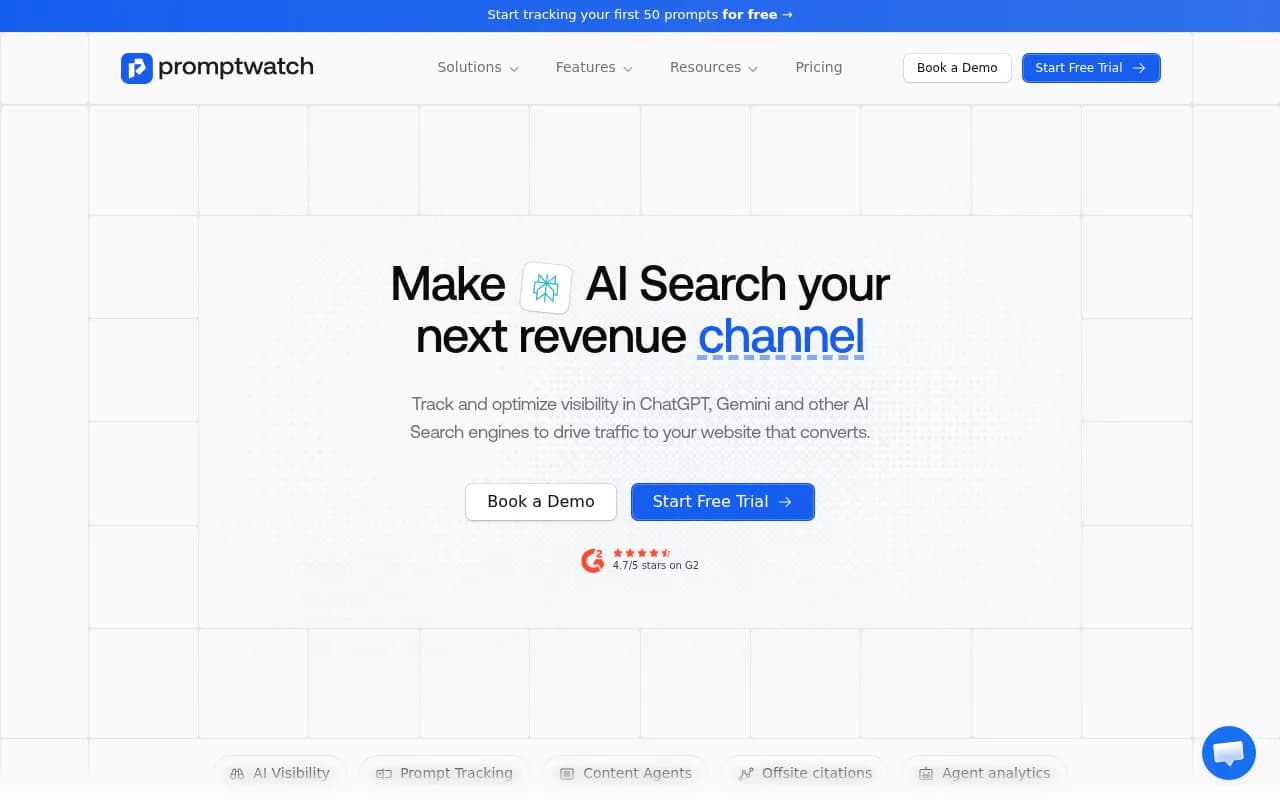
The pricing structure:
- Explore: free, 10 prompts, ChatGPT only, one project. Good for a sanity check before spending anything.
- Essential: $95/month. One site, 50 prompts, 6,000 responses, 5 AEO articles, all LLM tracking, MCP and API access. Seven-day free trial.
- Professional: $245/month. Two sites, 150 prompts, 18,000 responses, 25M crawler logs, 15 AEO articles, state and city tracking, automated content generation, shopping insights, custom reports.
- Business: $579/month. Five sites, 350 prompts, 42,000 responses, 100M crawler logs, 30 AEO articles, dedicated support.
- Agency plans: $199, $399, or $799/month, all with unlimited projects and prompts and 10 seats.
- Enterprise: custom, with SSO, managed content workflows, and white-label.
Annual billing gives you 12 months for the price of 10, which effectively drops Professional to about $204/month.
What makes this pricing defensible rather than just competitive is what's underneath it. The platform tracks ChatGPT, Claude, Gemini, Perplexity, Grok, DeepSeek, Copilot, Mistral, Meta Llama, Google AI Overviews, Google AI Mode, and AI coding assistants, built on a dataset of more than 4.5 billion citations, clicks, and prompts analyzed. The Content Agent plans, writes, and publishes GEO-optimized content to Webflow, Framer, or WordPress on a schedule you control, either through a review inbox or fully automated. And the AI crawler logs show exactly when AI systems visit your pages, what they read, and whether they hit errors, which is the diagnostic layer most competitors simply don't have.
For a straight comparison against the monitoring-only tools below: Promptwatch includes Reddit and YouTube citation tracking, ChatGPT Shopping and Ads Radar, prompt volumes and difficulty scoring, query fan-outs, and visitor analytics that tie AI visibility to actual traffic and conversions. Most trackers stop at mentions.
AirOps: content workflows, enterprise pricing
AirOps sits on the execution side of the category. It's built around AI content workflows: reusable, data-grounded pipelines that plan, generate, and optimize content at scale. Teams use it when they need hundreds of GEO-optimized pages or programmatic content runs, not just a handful of articles a month.
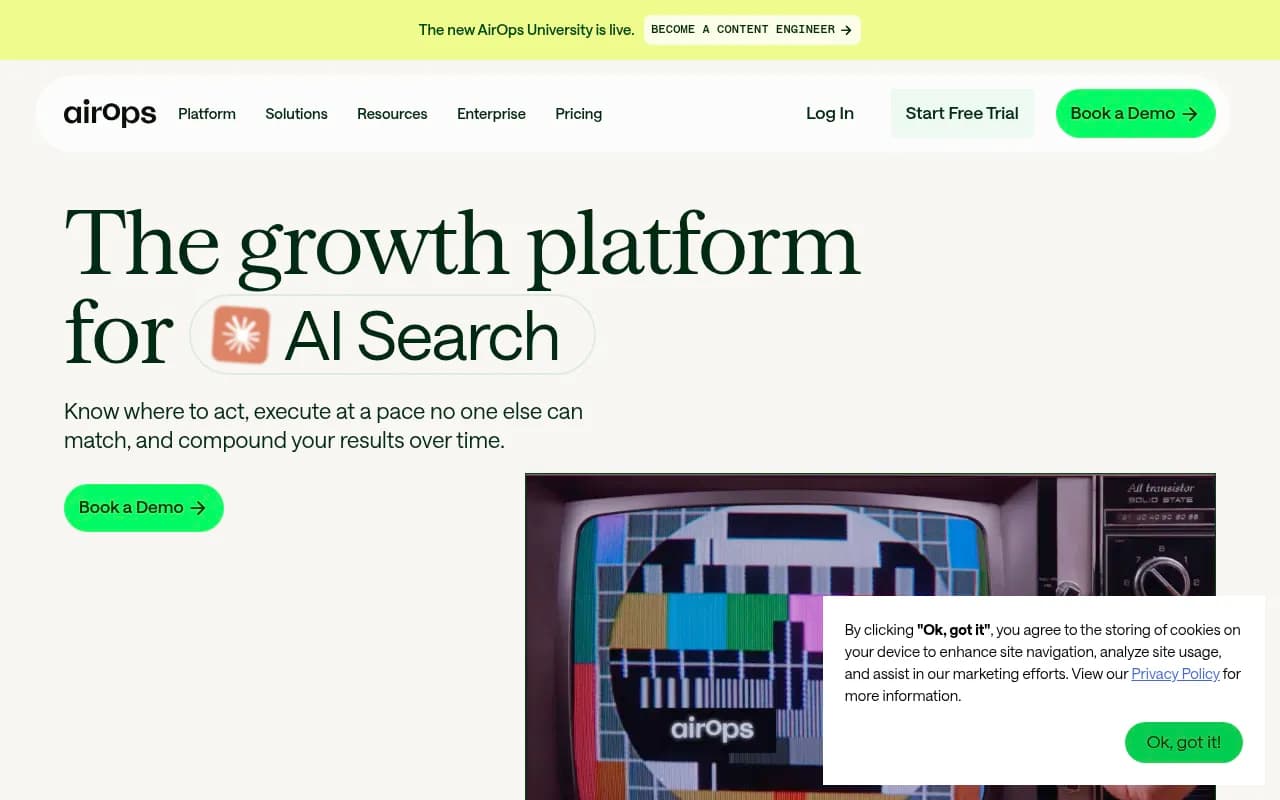
Pricing is custom, and in practice it lands in enterprise territory. If your use case is "we need an agent that writes 500 location pages with our brand voice and live data," AirOps is built for exactly that, and the cost reflects the scale. If your use case is "we want 15 solid articles a month and to know which prompts we're losing," it's more platform than you need.
Profound: the enterprise monitoring benchmark
Profound is the name most enterprise buyers encounter first in AI search visibility, and for good reason. Its analytics are genuinely strong: deep prompt tracking, share of voice, and conversation analytics that large organizations use to understand how AI assistants discuss their category.
Pricing is custom and, by most accounts, sits well above the mid-market platforms in this list. It's a monitoring and analytics platform, not an execution platform, so budget for the fact that the actual content work still happens elsewhere, either in-house or through an agency. For enterprise visibility intelligence, it's a serious option. For agentic execution, it isn't the tool.
Scrunch AI: monitoring for brands and agencies
Scrunch AI focuses on AI search monitoring: how your brand appears across AI assistants, which sources get cited, and where your competitors are winning. It's popular with brands and agencies that want a clean monitoring layer without committing to a full optimization stack.
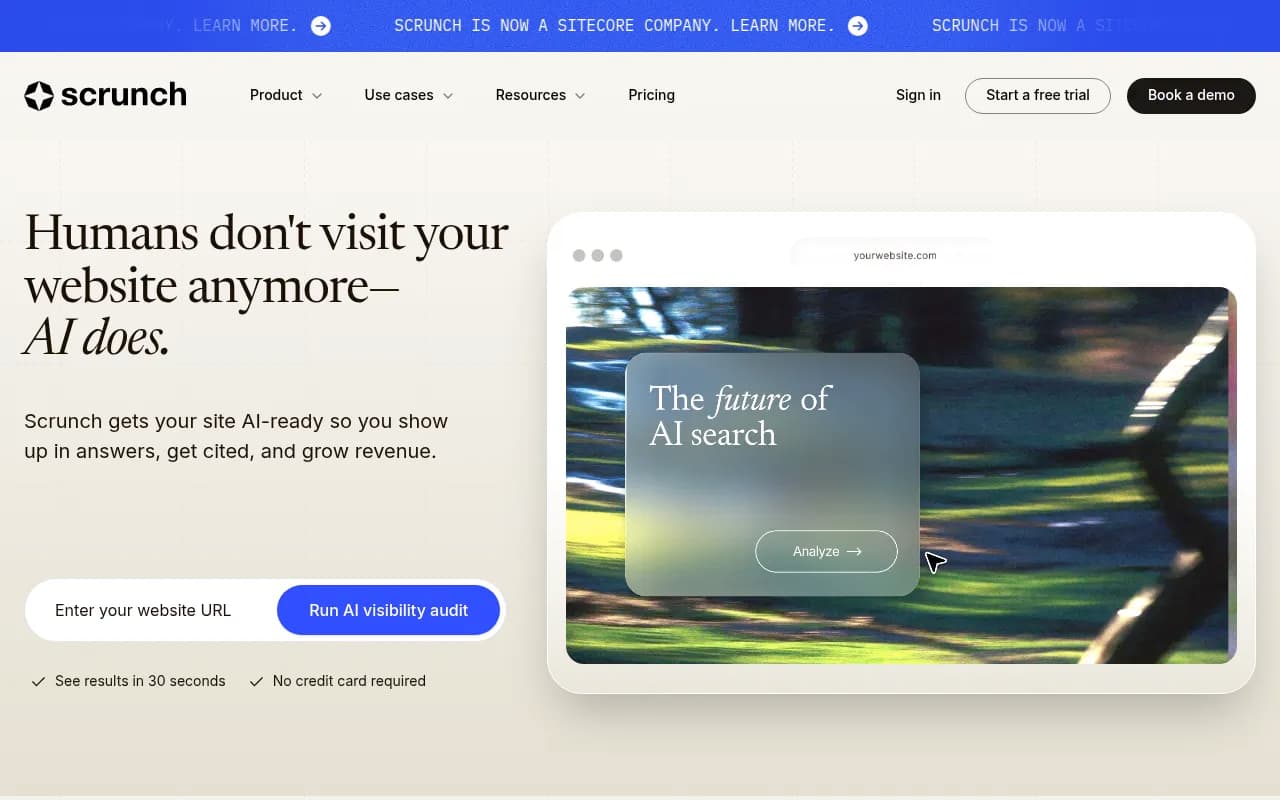
Pricing is custom. Like Profound, it's a monitoring platform rather than an agentic one, so its cost should be compared against other trackers, not against platforms that generate and publish content for you.
Writesonic GEO: generation plus monitoring
Writesonic GEO pairs AI content generation with visibility monitoring. You can track how your brand shows up in AI answers and generate GEO-optimized content in the same tool, which puts it closer to the agentic category than pure trackers.
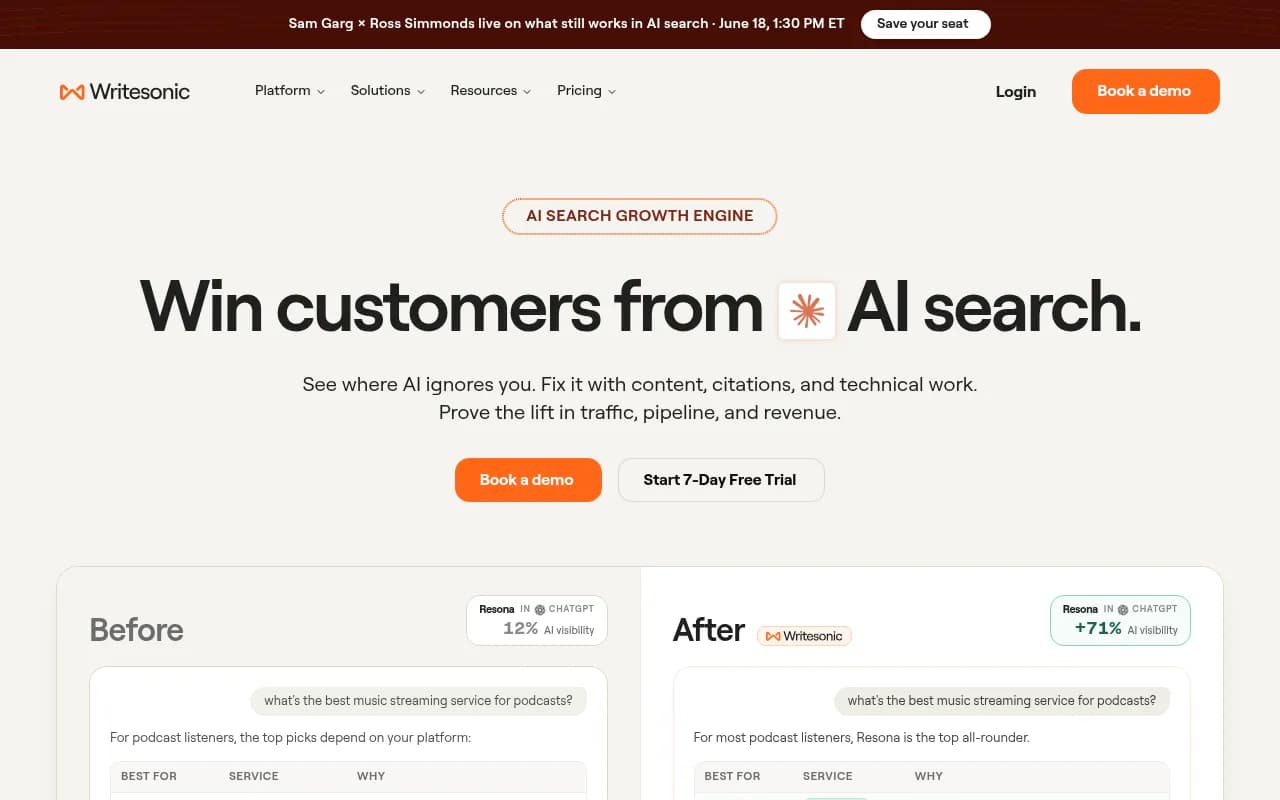
Pricing is custom and typically quoted per use case. The trade-off versus a platform like Promptwatch is depth: the visibility data is thinner, and there's no crawler-log layer explaining why AI systems do or don't cite your pages. But if you're already a Writesonic shop for content, adding GEO monitoring there is a natural move.
Slate: content operations for AI search
Slate is an AI-search-first content operations platform. Think editorial workflow, briefs, and publishing built around how AI search surfaces content, rather than traditional SEO metrics. It's a strong fit for content teams that have writers and editors and want the workflow tooling to aim them at AI search.

Pricing is custom. It's agentic in the sense that it automates planning and optimization, but it assumes humans in the loop for the writing, which changes both the cost and the output quality calculus.
Outrank: budget agentic content
Outrank is the value option in this list, with plans starting around $79/month for automated SEO content and backlinks. It's built around automated content generation aimed at search visibility, including AI search.

At that price, you're not getting crawler logs, citation analytics, or prompt-level difficulty data. But if your budget is under $100/month and you want agents producing content on your behalf, it's one of the few options that fits. Just go in knowing the monitoring layer is thin, so you won't really know whether the content is moving your AI visibility.
GetMint: AI content strategy
GetMint focuses on AI content strategy and creation, with some visibility awareness baked in. Pricing is custom.
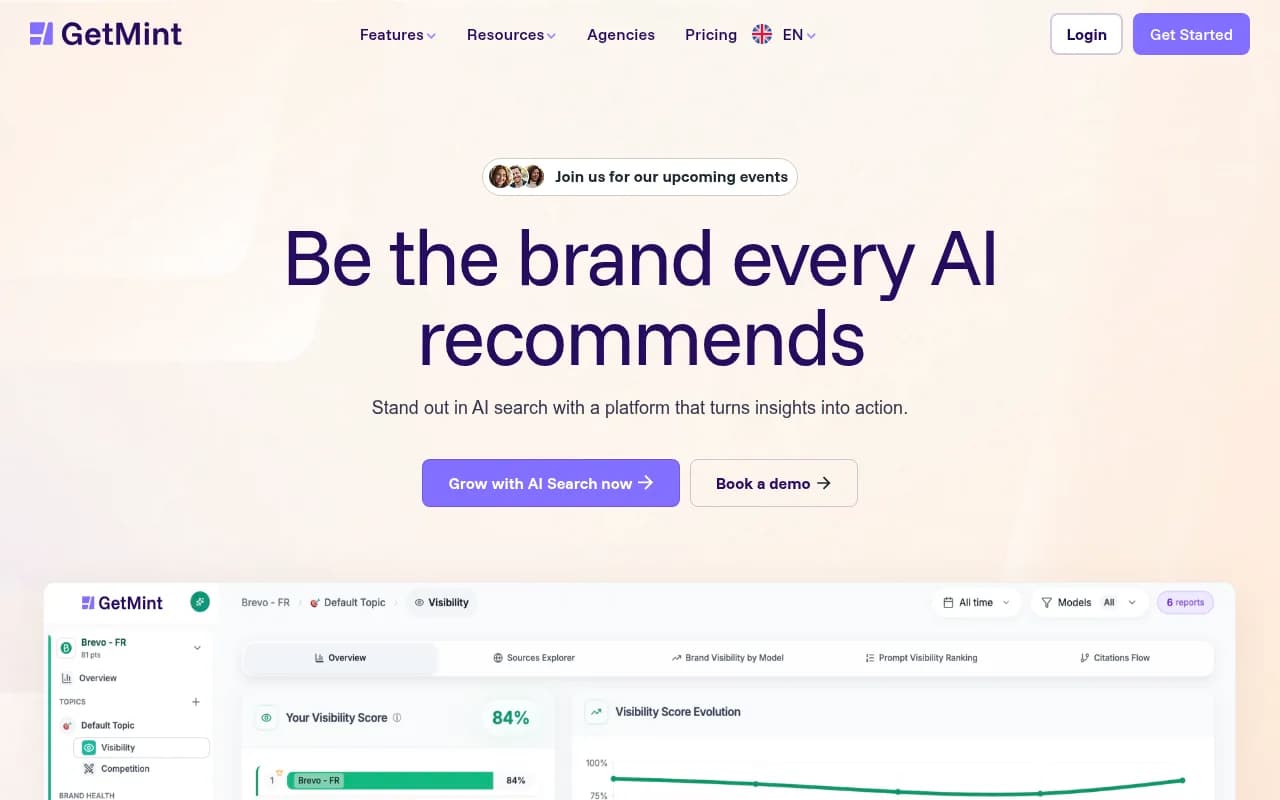
It sits in the generation camp: useful if your bottleneck is content production and you want strategy built in, less useful if your bottleneck is knowing which prompts and citations actually drive revenue.
Atomic AGI: workflow automation and scaling
Atomic AGI offers AI workflow automation and content scaling, aimed at teams that want to industrialize content production. Pricing is custom.
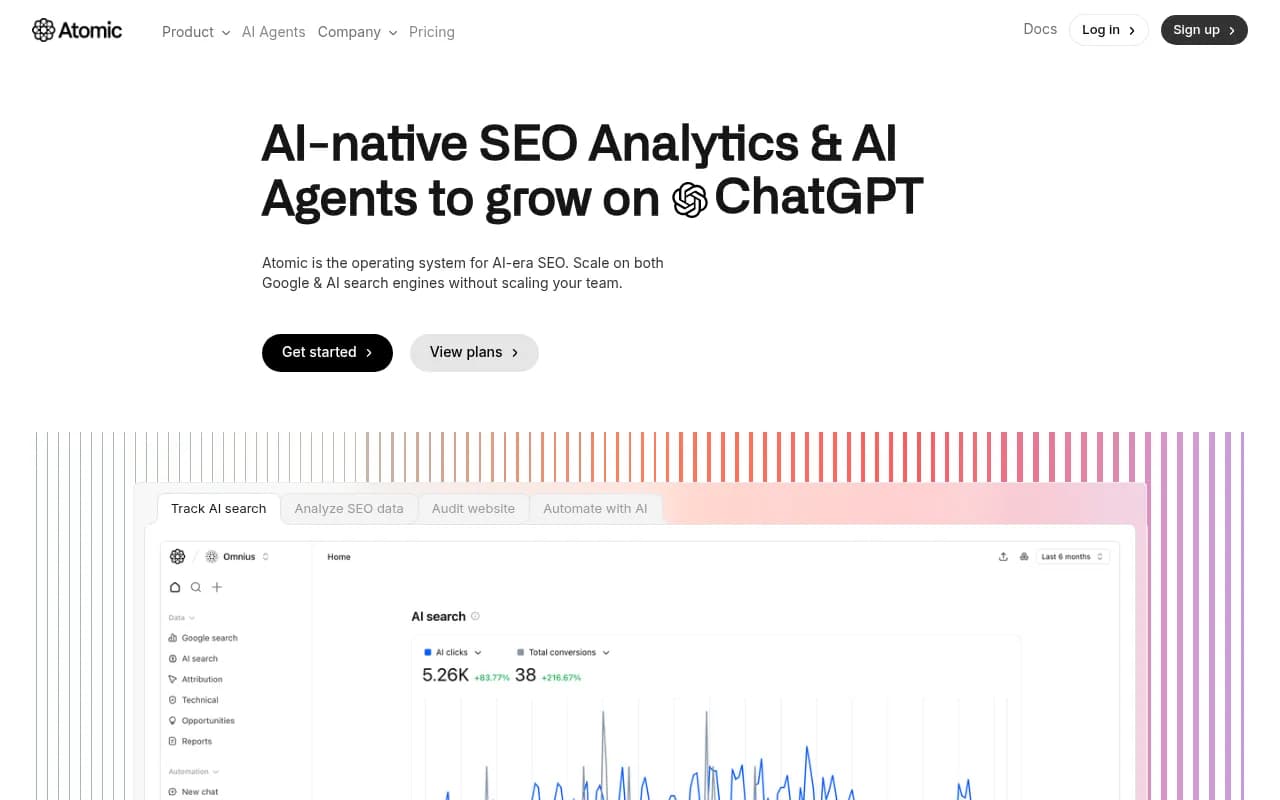
Like AirOps, it's an execution-heavy platform where cost scales with how much you run through it. Worth a conversation if your volume is high and your workflows are repeatable.
Elmo: the free, self-hosted option
Elmo is the open-source counterweight to all of the above: a self-hosted AI visibility tracker that's free to use. You pay in infrastructure and time instead of dollars.

To be clear about what it is and isn't: Elmo is a tracker, not an agentic platform. Nobody's writing or publishing anything. But if you have engineering resources and want visibility data you fully own, it's a legitimate way to spend $0 on software. Your real cost is the hours to set it up, keep it running, and interpret the data, plus the compute for running prompt checks against multiple models.
What agentic GEO costs beyond the subscription
The platform fee is only part of the bill. A few line items catch teams off guard:
- Content review time. Fully automated publishing sounds appealing, but most teams want a human reviewing agent-written content, at least initially. Budget a few hours a week per site.
- CMS and integration work. Connecting a platform to Webflow, Framer, or WordPress is usually straightforward, but larger sites with custom setups should expect some initial configuration effort.
- Your own AI API spend, if you go the custom route. The healthcare example from Cockroach Labs' research is worth remembering: a company running three AI agents saw monthly inference costs jump from $12,000 to $68,000 in six weeks because a retrieval fault was pulling documents eight times larger than needed. Nobody noticed until the invoice arrived.
- Agency or consultant fees, if you outsource strategy. If you'd rather have specialists run your GEO program end to end, 1001 SEO Media offers GEO alongside technical SEO and content production, with transparent monthly reporting and no long-term contracts. Expect agency retainers to run alongside whatever platform fees you're paying.
How to budget for agentic GEO in 2026
Here's the practical decision framework:
- Testing the waters: start free. Promptwatch's Explore tier or Elmo's self-hosted tracker cost nothing and tell you whether you have an AI visibility problem worth solving.
- One site, serious effort: $95 to $245/month gets you real agentic capability. Promptwatch Essential or Professional covers monitoring, crawler logs, and automated content generation for one to two sites.
- Multiple sites or an agency roster: $400 to $800/month. Promptwatch's agency plans ($199 to $799/month, unlimited projects) or Business tier fit here. Custom-quoted platforms like AirOps or Slate enter consideration once your content volume justifies them.
- Enterprise: expect custom contracts and six figures annually for a full stack, whether that's a platform deal or a build. Custom agentic builds run $50,000 to $250,000+ before ongoing operational costs.
One last thing worth knowing: annual billing is your friend in this category. Promptwatch gives 12 months for the price of 10, and most custom-quoted vendors will discount meaningfully for annual commitments. Given that agentic platforms are pricing in volatile token costs, locking in a rate works in your favor.
The bottom line: agentic GEO in 2026 costs anywhere from free to six figures, and the price tells you exactly what you're getting. Cheap tools monitor. Mid-market platforms ($95 to $579/month) monitor, diagnose, and execute. Enterprise builds do whatever you can afford. The mistake to avoid is paying monitoring prices and expecting execution, or paying execution prices for a tracker. Know which one you're buying.