Key takeaways
- Peec AI is a solid AI visibility monitoring tool with clean dashboards, prompt-level tracking, and citation analysis across ChatGPT, Perplexity, Gemini, Copilot, and Google AI Mode.
- It scores well in week one: setup is fast, the data is clear, and stakeholders are impressed by the visibility metrics.
- By month three, most teams hit the same wall: Peec AI shows you where you're invisible but gives you almost no help figuring out what to do about it.
- Prompt and engine caps on cheaper plans push costs up quickly as teams scale, and the pricing can feel punishing for agencies managing multiple clients.
- If your goal is tracking, Peec AI is a reasonable choice. If your goal is improving your AI visibility, you'll need to pair it with other tools -- or switch to a platform that closes the loop.
There's a pattern that keeps showing up in GEO forums and agency Slack channels in 2026. Someone discovers Peec AI, sets it up over a weekend, runs their first prompt reports, and is genuinely impressed. The dashboards are clean. The data makes sense. They share a screenshot with their team or client and everyone nods along.
Then three months pass.
The numbers are still there. The dashboards still look good. But nothing has actually changed. The brand is still invisible for the same prompts it was invisible for in month one. The team has a detailed picture of the problem and no real path to fixing it.
This isn't a knock on Peec AI specifically -- it's a structural issue with monitoring-only tools. But Peec AI is one of the more prominent examples of this pattern right now, so it's worth being specific about what it does well, where it runs out of road, and what you should realistically expect if you sign up today.
What Peec AI actually does
Peec AI is an AI search analytics platform. You set up prompts that mirror real user questions, point it at your brand and your competitors, and it tracks how AI models respond: whether your brand gets mentioned, where it appears in the answer, what the sentiment is, and which sources get cited.
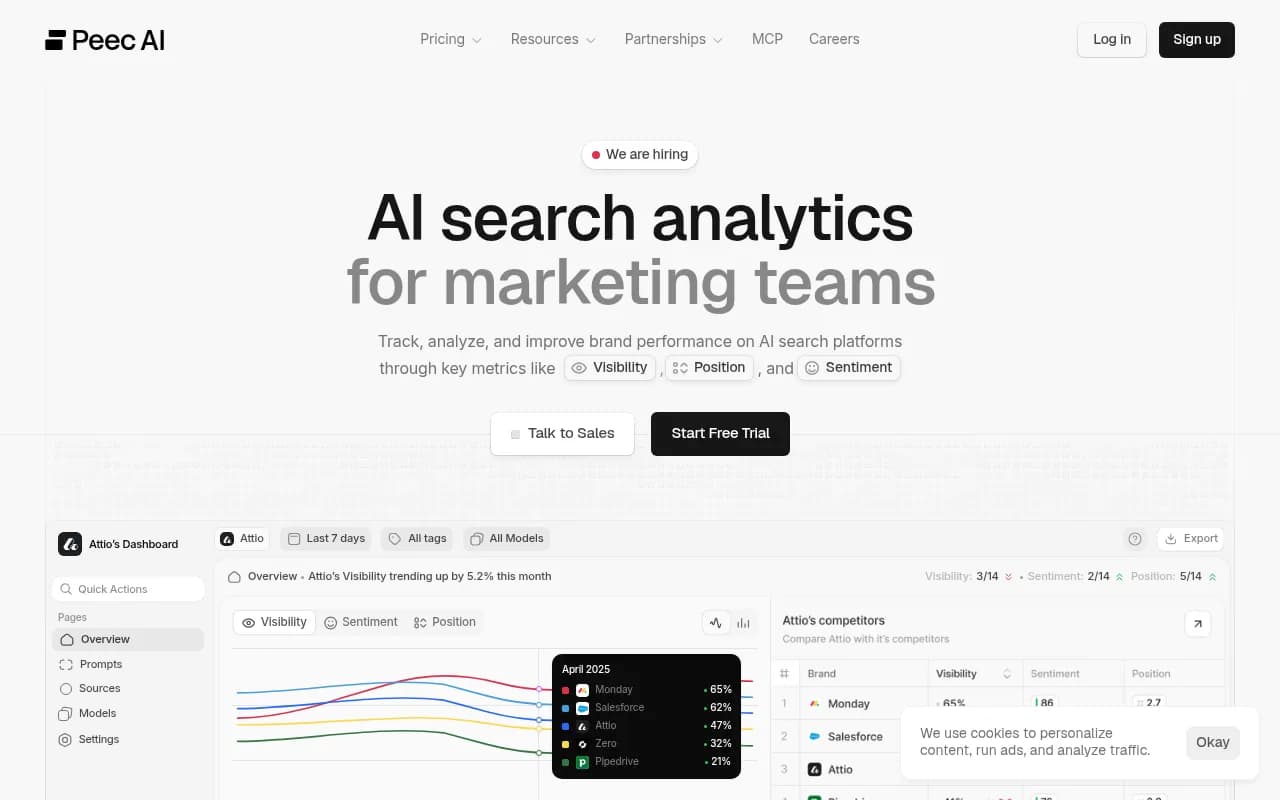
The core metrics are visibility (how often you appear), position (where in the answer), and sentiment (positive, neutral, or negative). You can track across ChatGPT, Perplexity, Gemini, Copilot, and Google AI Mode. There's a Looker Studio integration, CSV exports, and API access on higher tiers. Unlimited team seats across all plans is a genuine differentiator -- most competitors charge per seat.
For what it is, it's well-built. The interface is more polished than a lot of competitors at this price point, and the citation source analysis (seeing exactly which URLs AI models pull from when they answer a prompt) is genuinely useful data.
The first month: why it feels like it's working
Week one with Peec AI is usually a good experience. Here's why.
The setup is fast. You don't need a developer. You pick your prompts, add your competitors, and within a day or two you have a dashboard showing your AI visibility score, where competitors are outranking you, and which sources AI models are citing instead of your own pages.
That data is legitimately valuable. If you've never tracked AI visibility before, seeing it laid out clearly is a real moment of clarity. You learn things like: your brand is mentioned in 12% of relevant prompts, your top competitor is at 34%, and the AI models are consistently citing a three-year-old TechCrunch article and a Reddit thread instead of your own content.
That's actionable intelligence. Or at least, it feels like it.
The problem is what happens next.
Month three: the wall most teams hit
Peec AI's own review summaries (and the complaints that surface consistently in forums) point to the same issue: the platform is strong on diagnosis and weak on prescription.
It tells you what's wrong. It doesn't help you fix it.
One thread on Reddit's r/AISearchLab captures this well. An agency manager described being three months into using Peec AI with a major client, having detailed visibility data, and still being unable to explain to the client why the numbers weren't improving. The data showed the gap. The tool offered no path to closing it. The client started questioning whether the numbers were even real.
That's not a data quality problem. That's a workflow problem. Peec AI gives you a very detailed map of a territory it doesn't help you navigate.
The specific gaps that come up repeatedly:
- No content generation or content brief tools. You can see which prompts you're missing from, but you have to go build the content somewhere else entirely.
- No answer gap analysis that tells you what your content is missing, only that you're missing from the answer.
- No crawler log data. You can't see whether AI models are even visiting your pages, how often, or whether they're hitting errors.
- Limited traffic attribution. You know you're being cited more, but connecting that to actual revenue or conversions requires manual work or separate tooling.
- Prompt and engine caps on lower plans mean that as you scale your tracking, costs climb faster than the value does.
The LinkedIn review by Sanjay Singh puts the overall tool rating at 7.3/10, with "built-in actionable recommendations" scoring 6/10 and "scalability and pricing fairness" also at 6/10. Those two scores tell the story.
Pricing: where it gets complicated
Peec AI starts at $95/month for brands and $245/month for agencies. Unlimited users is a genuine plus. But the usage limits -- prompts, projects, credits, and model access -- mean that most teams doing serious GEO work will outgrow the entry tier within a few months.
Adding more engines, more prompts, or more projects pushes costs up quickly. For agencies managing five or ten clients, the math gets uncomfortable fast. The LinkedIn review flags this directly: "pricing that can climb quickly" is one of the most common complaints.
Compare that to what you're getting: monitoring data, no content tools, no crawler logs, and limited guidance on what to do with the information. At $95/month for a single brand with limited prompts, it's defensible. At $400-500/month for an agency trying to scale, the value proposition gets harder to justify.
What Peec AI does well (genuinely)
To be fair, there are real strengths here.
The citation source analysis is one of the better implementations in this category. Seeing the distinction between brand mentions (where your brand name appears in an AI answer) and source citations (where AI models actually link to your content) is a meaningful data point that some competitors blur together.
The competitor benchmarking is clean. You can see, prompt by prompt, who's winning and by how much. That's useful for prioritization even if the tool doesn't help you act on it.
The Looker Studio integration and API access make it easier to fold Peec AI data into existing reporting workflows. For teams that already have a reporting infrastructure, this reduces friction.
And the multi-engine coverage is solid: six engines is more than most tools at this price point.
| Feature | Peec AI | Otterly.AI | AthenaHQ | Promptwatch |
|---|---|---|---|---|
| AI engines tracked | 6 | 4 | 5 | 10 |
| Prompt-level tracking | Yes | Basic | Yes | Yes |
| Citation source analysis | Yes | No | Limited | Yes |
| Content generation | No | No | No | Yes |
| Answer gap analysis | No | No | No | Yes |
| Crawler logs | No | No | No | Yes |
| Traffic attribution | No | No | No | Yes |
| Reddit/YouTube tracking | No | No | No | Yes |
| Looker Studio integration | Yes | No | No | Yes |
| Unlimited team seats | Yes | No | No | Yes |
| Starting price | $95/mo | $49/mo | Custom | $99/mo |
Who Peec AI actually fits
There's a real use case for Peec AI, and it's worth being specific about it.
It works best for teams that:
- Already have a content strategy and execution process in place, and just need visibility data to inform it
- Are reporting AI visibility metrics to stakeholders who want clean dashboards
- Have an SEO or GEO strategist who can interpret the data and translate it into action independently
- Are tracking a small number of brands or prompts and won't hit the plan limits quickly
It's less suited to:
- Teams that need the tool to tell them what to do, not just what's happening
- Agencies managing multiple clients who need cost-efficient scaling
- Anyone who wants to close the loop between visibility data and content output in one platform
- New websites or brands with low existing AI visibility -- the data is accurate but there's no guidance on where to start
The monitoring-only trap
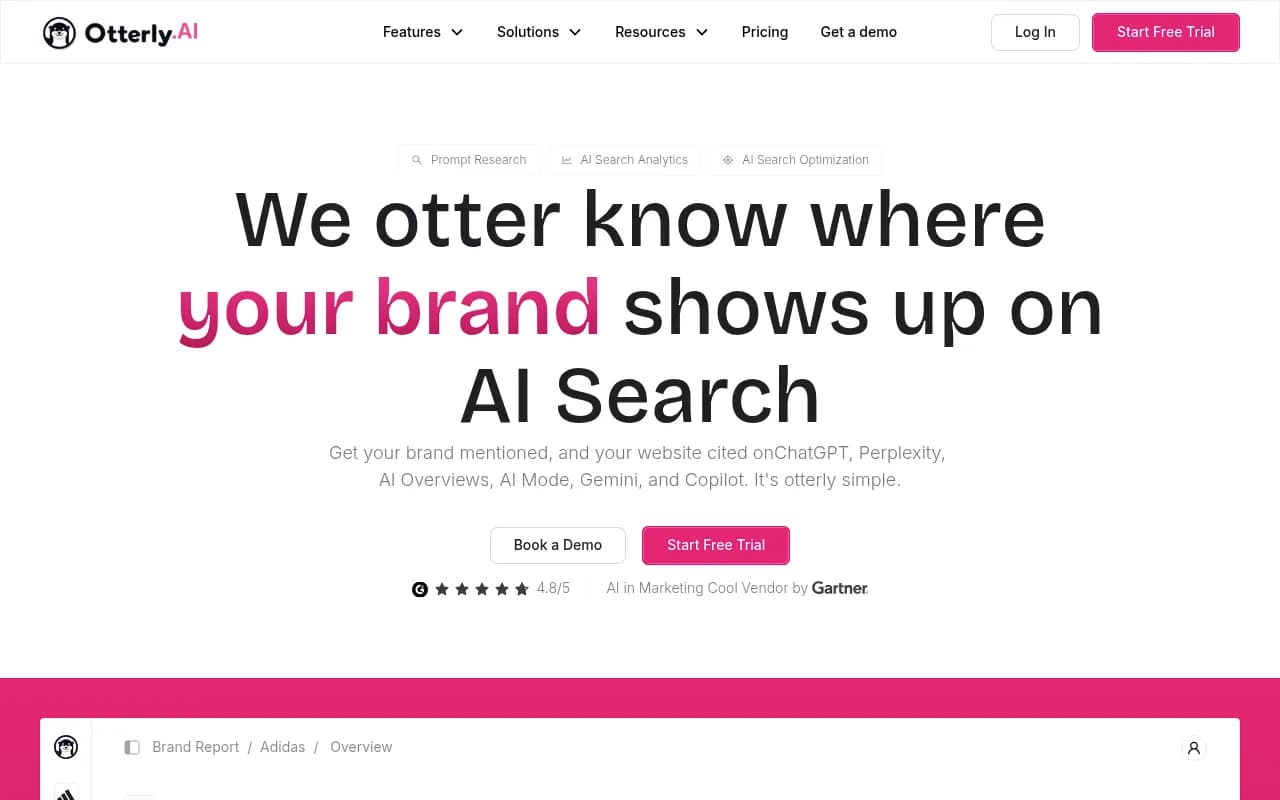
Peec AI isn't alone in this. Otterly.AI, AthenaHQ, and several other tools in this space have the same structural limitation: they're dashboards, not optimization platforms.

The distinction matters more than it sounds. A dashboard tells you your AI visibility score is 12%. An optimization platform tells you your score is 12%, here are the 15 prompts your competitors rank for that you don't, here's what content you're missing, and here's a draft article that addresses the gap.
The monitoring-only model made sense in 2024 when GEO was new and teams just needed to understand what was happening. In 2026, most marketing teams have moved past that. They know AI search matters. They've seen the data. Now they need to improve their numbers, and that requires tools that go beyond tracking.
Promptwatch is the clearest example of a platform built around that full loop. It tracks visibility across 10 AI models, but it also runs answer gap analysis, generates content briefs and articles grounded in real prompt data, and shows you crawler logs so you can see whether AI models are even reading your pages. The cycle -- find gaps, create content, track results -- is what separates an optimization platform from a monitoring dashboard.
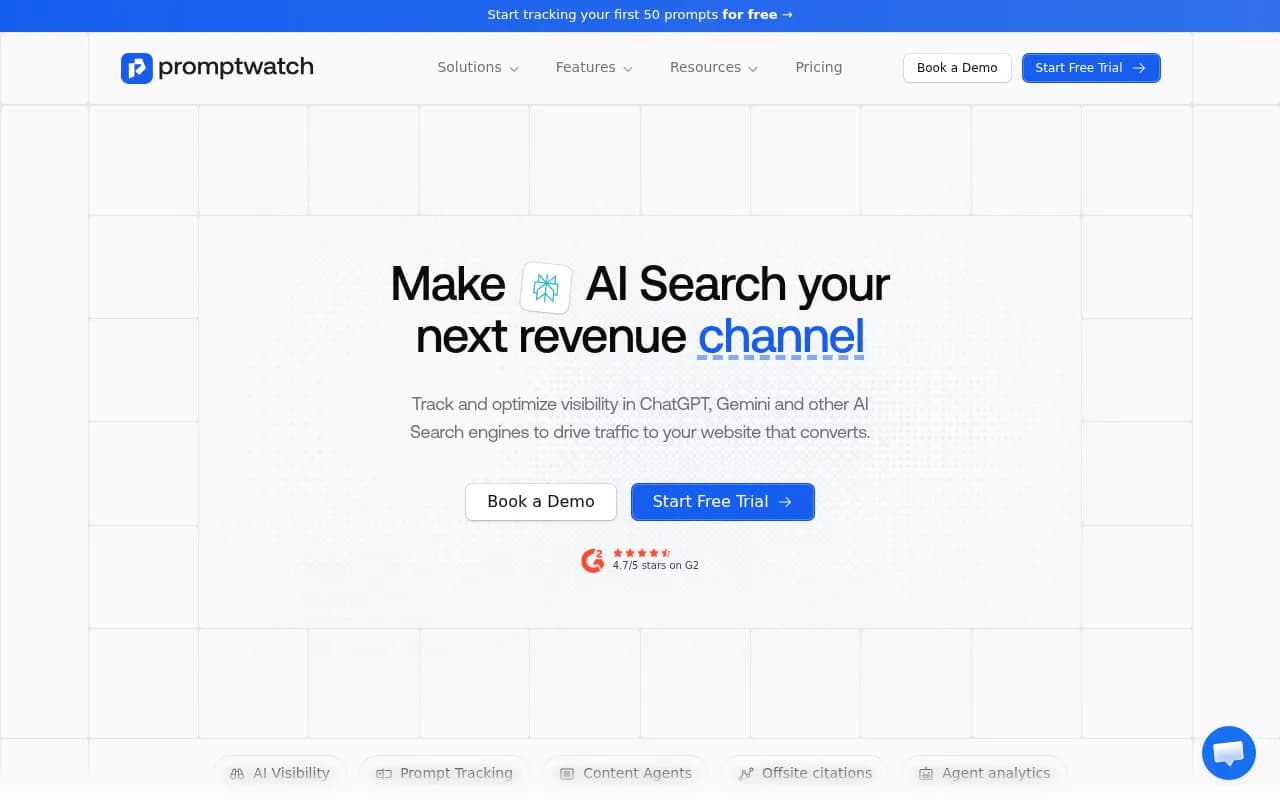
Other tools worth considering depending on your specific needs:
The Reddit problem: when clients stop believing the data
The Reddit thread mentioned earlier is worth dwelling on for a moment, because it's not an isolated case.
When a tool gives you detailed data but no mechanism for improving it, you end up in a difficult position with clients or internal stakeholders. You can show them the visibility score. You can show them the competitor gap. But if three months pass and the numbers haven't moved, the natural question is: what are we paying for?
The answer with a monitoring-only tool is: a very detailed picture of a problem we haven't solved yet.
That's a hard conversation to have. And it's one reason why teams that start with Peec AI often end up either adding content tools alongside it (which increases total cost) or switching to a platform that handles both sides.
Alternatives worth evaluating
If you're reconsidering Peec AI or comparing options before signing up, here are a few tools that approach the problem differently:
For teams that want monitoring with a lower price floor:
For teams that want deeper enterprise analytics:
For teams that want the full optimization loop (tracking + content generation + gap analysis):
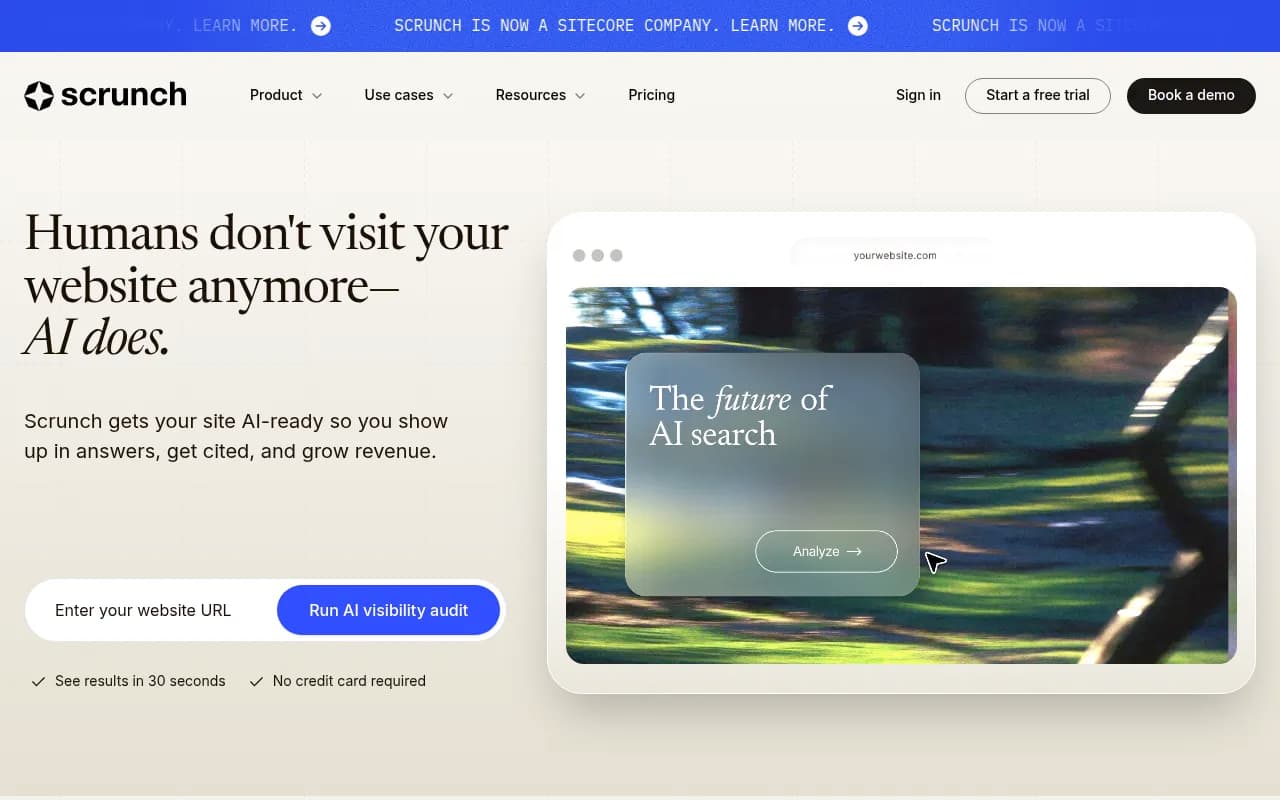
For agencies that need multi-client management with prompt intelligence:
The honest verdict
Peec AI is a well-built monitoring tool. The data is clean, the interface is polished, and the citation analysis is genuinely useful. If you need a dashboard that shows you how your brand appears across AI search engines, it does that job competently.
The problem is that "showing you the problem" and "helping you fix the problem" are two very different things. Peec AI does the first well and the second not at all.
For teams in month one, that's fine. The data is new, the insights feel fresh, and there's plenty to learn just from understanding the landscape. By month three, most teams have absorbed the monitoring data and are ready to act on it -- and that's exactly when Peec AI stops being useful.
If you know going in that you'll need separate tools for content strategy and execution, Peec AI can be a reasonable part of a larger stack. If you're hoping the platform will guide you from diagnosis to improvement, you'll be disappointed.
The 7.3/10 rating in the LinkedIn review feels about right. It's a good tool for what it is. The question is whether what it is matches what you actually need.