Key takeaways
- Pages with FAQPage schema are 3.2x more likely to appear in Google AI Overviews than pages without structured data
- 44.2% of ChatGPT citations come from the first 30% of a page -- so front-loading your answers matters enormously
- AI-referred sessions grew 527% between January and May 2025, and FAQ content is one of the primary formats AI engines pull citations from
- 65% of AI bot hits target content published within the past year -- outdated FAQs lose ground even when the answers are still accurate
- Only 12.4% of sites currently use structured data, which means this is still a wide-open opportunity for most brands
Here's a scenario that plays out constantly right now: a marketing team spends months producing long-form pillar content, detailed case studies, and polished landing pages. Meanwhile, their FAQ page -- last updated in 2022, buried in the footer -- is quietly getting cited by ChatGPT, Perplexity, and Google AI Overviews every single day.
FAQ pages have always been treated as an afterthought. A place to dump customer support questions. Something you build once and forget. That perception is costing brands real AI search visibility in 2026.
The data tells a different story. FAQ-structured content is one of the formats AI engines are most likely to extract and cite. The question is whether your FAQ pages are actually built to take advantage of that, or whether they're just sitting there.
Why AI engines love the FAQ format
AI search engines are, at their core, answer machines. A user types a question, the engine finds the best available answer, and it surfaces that answer with a citation. The whole pipeline is built around matching questions to answers.
An FAQ page is already structured exactly that way. Each entry is a discrete question paired with a self-contained answer. When an AI engine scans your page looking for something to cite, an FAQ block is easy to extract cleanly -- no interpretation required, no need to pull a paragraph out of context and hope it makes sense on its own.
That structural match is why FAQ content punches above its weight in AI citations. A well-built FAQ entry can be lifted verbatim and presented as a complete response. A dense paragraph from a whitepaper requires the model to do a lot more work, and the result is often a paraphrase rather than a citation.
There's also a query-matching advantage. People searching through AI assistants use longer, more conversational queries than traditional keyword searches. "What's the difference between X and Y?" or "How long does it take to do Z?" -- these are natural language questions, and an FAQ written in that same voice creates near-exact phrase matches. That's a real advantage when the engine is deciding which source to cite.

The numbers behind the opportunity
The case for FAQ content in 2026 isn't just theoretical. A few data points worth knowing:
- Pages with FAQPage schema markup are 3.2x more likely to appear in Google AI Overviews than pages without structured data, according to analysis from Launchcodex
- 25.11% of Google searches triggered an AI Overview in Q1 2026 -- question-shaped content now reaches a massive and growing surface
- 44.2% of ChatGPT citations come from the first 30% of a page, a pattern researchers call the "ski ramp" attention effect
- 65% of AI bot hits target content published within the past year -- freshness matters more than most teams realize
- AI-referred sessions grew 527% between January and May 2025, and FAQ content is one of the primary formats driving that traffic
- Only 12.4% of sites currently use structured data -- which means most of your competitors haven't figured this out yet
That last number is the one I keep coming back to. Structured data adoption is still surprisingly low, which means there's a real first-mover advantage available to teams that act now.
What Google's FAQ rich result removal actually means
In May 2026, Google officially removed FAQ rich results -- those expandable question-and-answer drop-downs that used to appear beneath organic listings. A lot of teams saw that news and concluded that FAQ schema was dead.
That's the wrong takeaway.
Google had already restricted FAQ rich results to government and health websites back in 2023. SISTRIX tracked the decline from mid-2023 onward, and by August of that year, more than half had already disappeared. For most businesses, the May 2026 announcement changed nothing visible in the SERPs -- those snippets were already gone.
What Google didn't do is tell you to remove FAQPage markup. The schema can stay, and there's a clear reason why: AI Overviews are still using FAQ structured data heavily. The markup signals to AI systems that the content is structured, verified, and extractable. That signal matters more now than the rich snippet ever did.
If your developer wants to strip FAQ schema off your site, push back. The rich result is gone; the citation advantage is not.
How to write FAQ content that actually gets cited
Knowing that FAQs get cited is one thing. Building FAQ content that consistently earns citations is another. There's a pattern to what works.

Write questions the way users actually ask them
The question line carries most of the citation weight. "How much does enterprise content marketing cost?" earns matches that "Content marketing pricing overview" never will. Phrase questions as a real user would type or speak them -- not as internal marketing labels or category headers.
Pull exact phrasing from autocomplete suggestions, "People Also Ask" boxes, and AI assistant follow-up prompts. These sources show the literal words your audience uses, and matching them raises the odds that an engine treats your entry as the answer.
Specificity matters too. A page that answers eight precise questions outperforms one that answers two broad ones, because every entry is another citation opportunity. Cover the full question cluster around a topic: cost, timeline, requirements, comparisons, risks. Each variant is a separate match.
Answer the question in the first sentence
The first sentence of every answer must resolve the question completely. Don't build up to the answer -- lead with it. Given that 44.2% of citations come from the first 30% of a page, and that same front-loading logic applies inside each answer block, burying your conclusion at the end of a paragraph is a real liability.
Lead with the conclusion, then add context. "Yes, FAQPage schema still matters for AI search -- pages with the markup are 3.2x more likely to appear in AI Overviews" is a better opening than three sentences of preamble before you get to the point.
Keep answers self-contained. Each FAQ entry should make sense on its own, without requiring the reader (or the AI engine) to have read the surrounding content.
Put your most important FAQ content early on the page
The "ski ramp" attention effect is real. Research on LLM citation behavior consistently shows that citations skew heavily toward the first portion of a document. Putting your most valuable FAQ section in the first third of the page isn't just good UX -- it's directly tied to citation probability.
This doesn't mean you should cram everything into the top of the page. It means you should be deliberate about which questions you lead with. Start with the highest-value, most-searched questions rather than working through topics in whatever order feels logical internally.
Keep FAQs current
AI crawlers favor fresh content. 65% of AI bot hits target content published within the past year, so an FAQ page left untouched for two years quietly loses ground even if the answers are still accurate. The crawlers don't know your answers are still correct -- they see a stale timestamp and move on.
Build a review cadence into your FAQ strategy. Quarterly is a reasonable minimum for most topics; monthly for anything in a fast-moving space. Update dates, refresh examples, and add new questions as your audience's language evolves.
Add FAQPage schema markup
This is non-negotiable. FAQPage schema tells AI engines explicitly that this content is structured as questions and answers. Without it, the engine has to infer that structure from the HTML -- and it may or may not get it right.
The markup is straightforward JSON-LD that you add to the page's <head>. Here's a minimal example:
{
  "@context": "https://schema.org",
  "@type": "FAQPage",
  "mainEntity": [
    {
      "@type": "Question",
      "name": "How much does enterprise content marketing cost?",
      "acceptedAnswer": {
        "@type": "Answer",
        "text": "Enterprise content marketing typically costs between $5,000 and $50,000 per month depending on scope, team size, and content volume."
      }
    }
  ]
}
Keep the text field in acceptedAnswer clean and direct. This is often what AI engines pull verbatim.
The two types of FAQ pages (and why most brands only do one)
Most brands have one kind of FAQ page: the customer support FAQ. "What are your shipping times?" "How do I cancel my subscription?" These are useful, but they're not where the AI search opportunity lives.
The second type is the topical FAQ -- content built around the questions your audience asks when they're researching a problem, evaluating options, or trying to understand a category. "What's the difference between GEO and SEO?" "How do AI search engines decide what to cite?" "Is FAQ schema still worth implementing?"
These topical FAQs are the ones that earn citations in AI search. They match the conversational queries people send to ChatGPT and Perplexity. They sit at the intersection of your expertise and your audience's actual questions. And most brands don't have them, because they've been thinking about FAQ pages as a support tool rather than a content strategy.
The brands winning in AI search right now have both. They've kept their support FAQs, and they've built out topical FAQ content across every major topic cluster in their space.
Where to publish FAQ content
Your main FAQ page isn't the only place this works. FAQ sections embedded in product pages, blog posts, and landing pages can all earn citations -- and they have the added advantage of appearing in context, which can improve the relevance signal for specific queries.
A few places worth adding FAQ sections if you haven't:
- Product and service pages (questions about that specific offering)
- Comparison pages (questions buyers ask when evaluating options)
- Category or topic hub pages (broad questions about the subject area)
- Blog posts (a FAQ section at the bottom answering related questions)
Each of these is a separate citation opportunity. AI engines pull citations from many sources and rarely overlap, so the same answer can earn picks across different platforms when it's structured cleanly. A modular FAQ format travels well, fitting an AI Overview snippet, a ChatGPT response, and a Perplexity card without rewriting.
Tracking which FAQs are actually getting cited
Building FAQ content is step one. Knowing which entries are earning citations -- and which aren't -- is how you improve over time.
This is harder than it sounds. AI engines don't send referral traffic the way traditional search does. A citation in a ChatGPT response might drive zero clicks but still influence a purchase decision. You need visibility into which pages AI engines are actually reading and citing, not just which ones are getting traffic.
Promptwatch tracks exactly this -- which pages are being cited by which AI models, how often, and what prompts are triggering those citations. It also surfaces answer gaps: the questions your competitors are getting cited for that your content doesn't currently answer. For FAQ strategy specifically, that gap analysis is invaluable. You can see the exact questions AI engines are already answering from competitor content and build FAQ entries to compete directly.
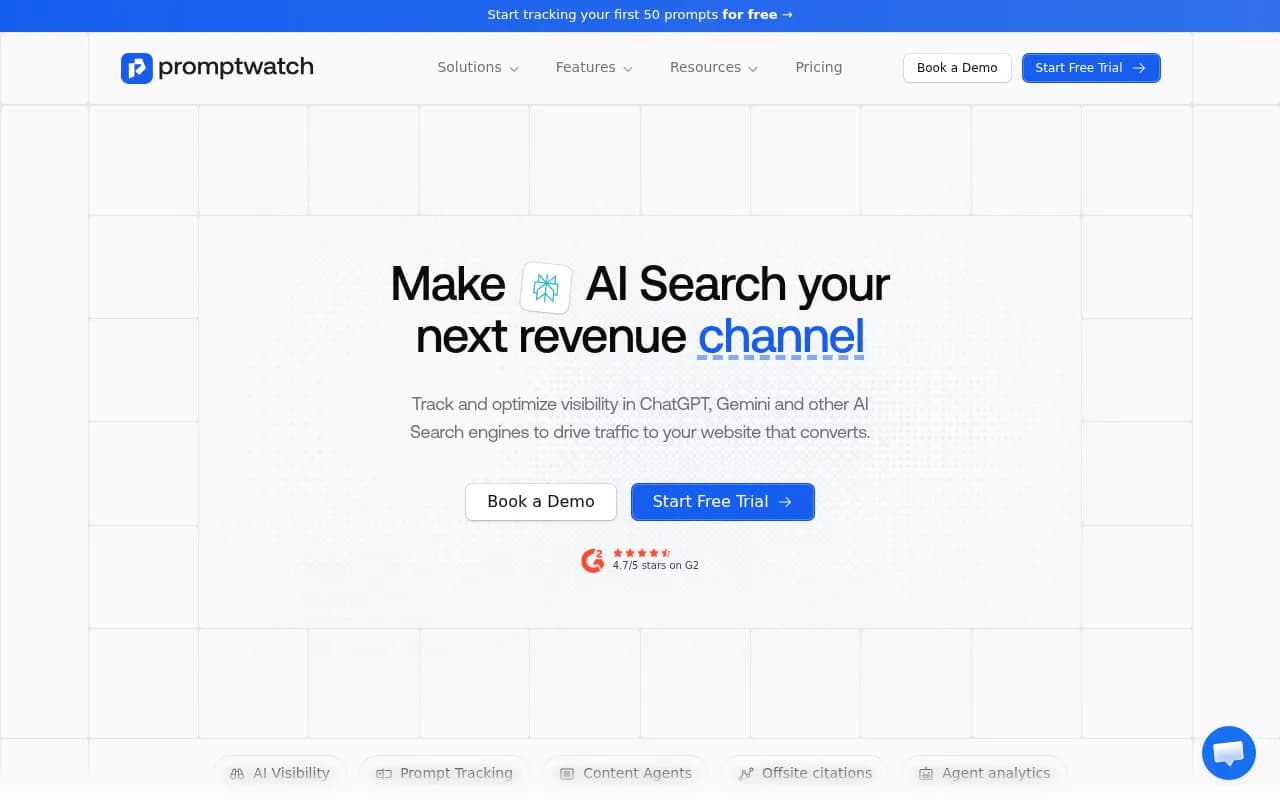
A comparison of tools for FAQ and AI search optimization
Different tools help with different parts of the FAQ-to-citation workflow. Here's how the main options break down:
| Tool | FAQ/content optimization | AI citation tracking | Answer gap analysis | Schema guidance |
|---|---|---|---|---|
| Promptwatch | Yes (Content Agents) | Yes (page-level) | Yes | Yes |
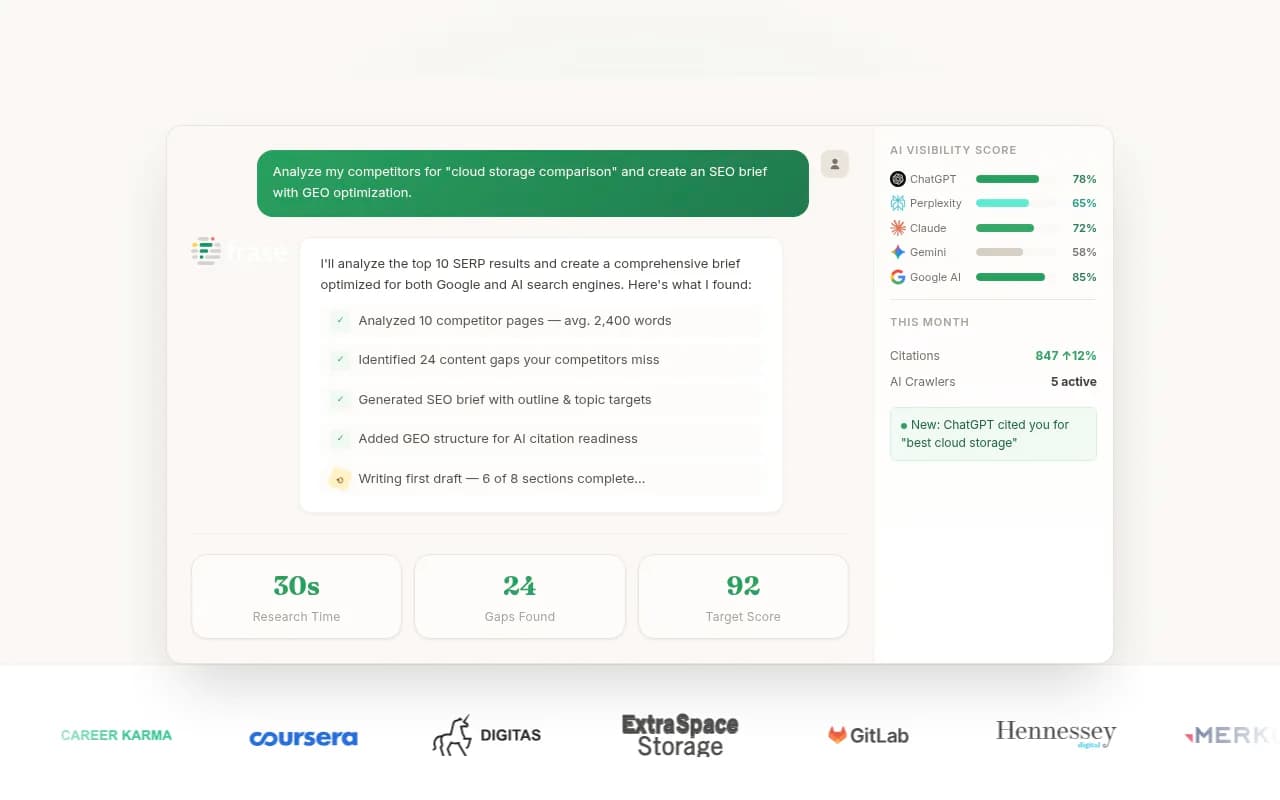
| Frase | Yes | Limited | Limited | Yes |
| Clearscope | Yes | No | No | No |
| Surfer SEO | Yes | No | No | No |
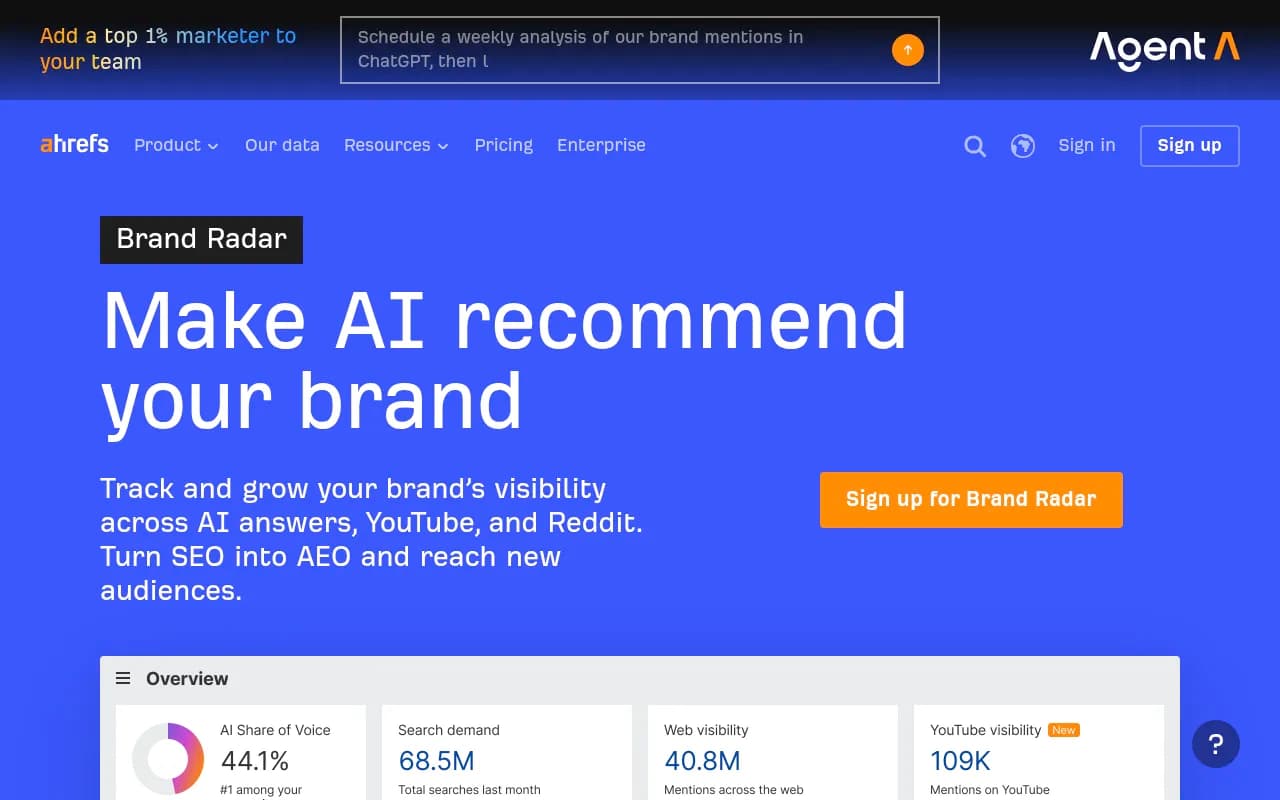
| Ahrefs Brand Radar | No | Yes | No | No |
| Semrush AI Visibility | No | Yes | Limited | No |
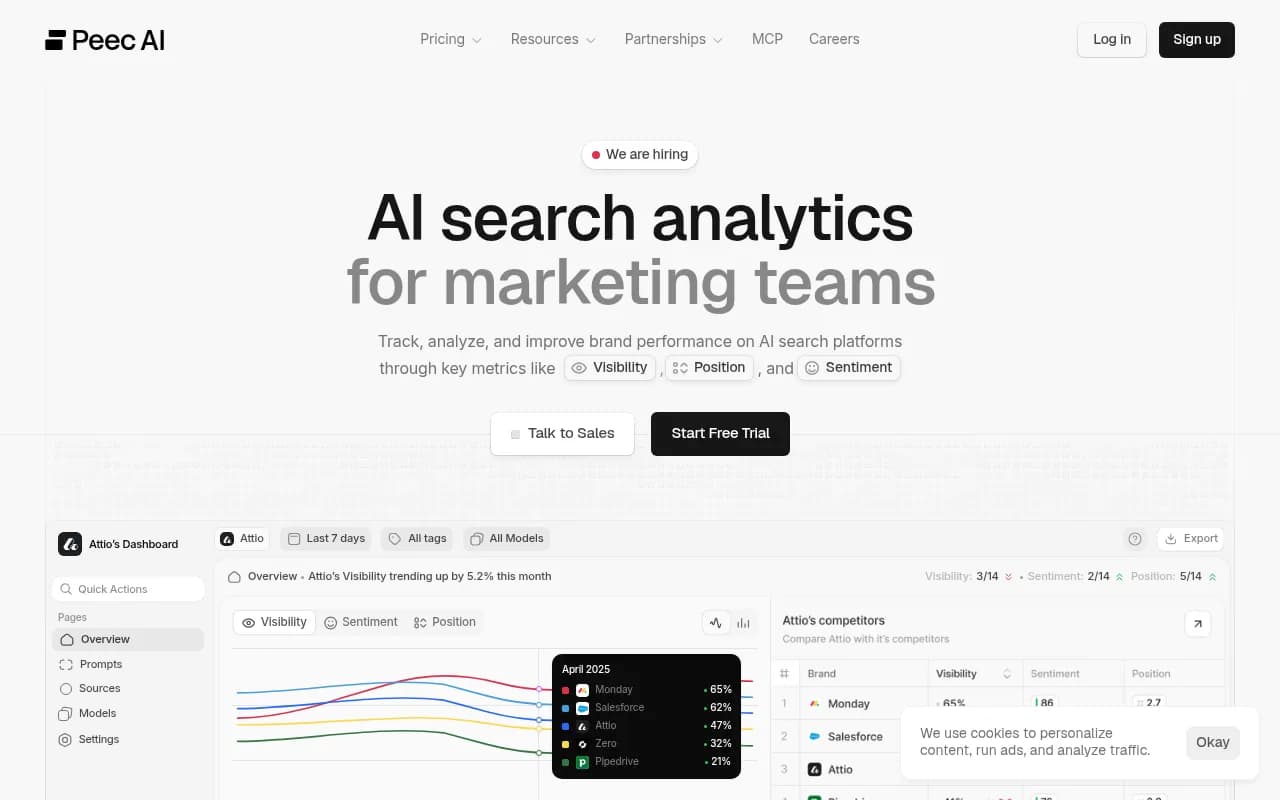
| Peec AI | No | Yes | No | No |
For pure content optimization -- making sure your FAQ answers are comprehensive and well-structured -- tools like Frase, Clearscope, and Surfer SEO are solid.
For tracking whether your FAQs are actually earning citations and finding the gaps you need to fill, you need something built for AI search visibility specifically.
The practical starting point
If you're looking at your current FAQ pages and wondering where to begin, here's a straightforward sequence:
-
Audit what you have. List every FAQ page and section on your site. Note when each was last updated and whether FAQPage schema is implemented.
-
Check your schema. Use Google's Rich Results Test to verify your FAQPage markup is valid. Fix any errors.
-
Identify your topical gaps. What questions do people ask when researching your category? Use autocomplete, People Also Ask, and AI assistant prompts to build a list. Compare that list against what you currently cover.
-
Prioritize by search volume and competition. Not all questions are equal. Focus first on questions with real search demand where your competitors don't have strong FAQ content.
-
Rewrite existing answers to front-load the conclusion. Go through your current FAQ entries and make sure the first sentence answers the question completely.
-
Set a review schedule. Pick a cadence -- quarterly at minimum -- and stick to it.
-
Add FAQ sections to high-traffic pages that don't have them yet.
The brands treating FAQ strategy as an AI SEO asset today are building citation visibility in a channel growing at 527% year-on-year, against a competitive backdrop where only 12.4% of sites use structured data. The window for easy wins won't stay open indefinitely.
Your FAQ pages are probably already your most cited asset. The question is whether you're building them to deserve it.