Key takeaways
- AirOps is built primarily for content production at scale -- think AI-assisted workflows for writing, refreshing, and publishing large volumes of SEO content.
- It has added AEO/AI search features, but its monitoring capabilities are limited compared to dedicated AI visibility platforms.
- The pricing model is task-based, which can get expensive fast if you're running high-volume workflows.
- The UI is powerful but has a steep learning curve -- this is not a tool you'll be productive in on day one.
- Best suited for content marketing teams with an existing SEO strategy who need to scale output without scaling headcount.
AirOps has had an interesting few years. It started as a general-purpose AI workflow builder, went through a rebrand or two, and has landed in 2026 as a tool specifically targeting content marketing teams who want to win in both traditional SEO and AI search. That's a reasonable place to be. The question is whether it actually delivers on both fronts -- or whether it does one well and the other just adequately.
After digging through hands-on reviews, G2 feedback, and community discussions, here's an honest take on what AirOps gets right, where it strains, and who should actually be using it.
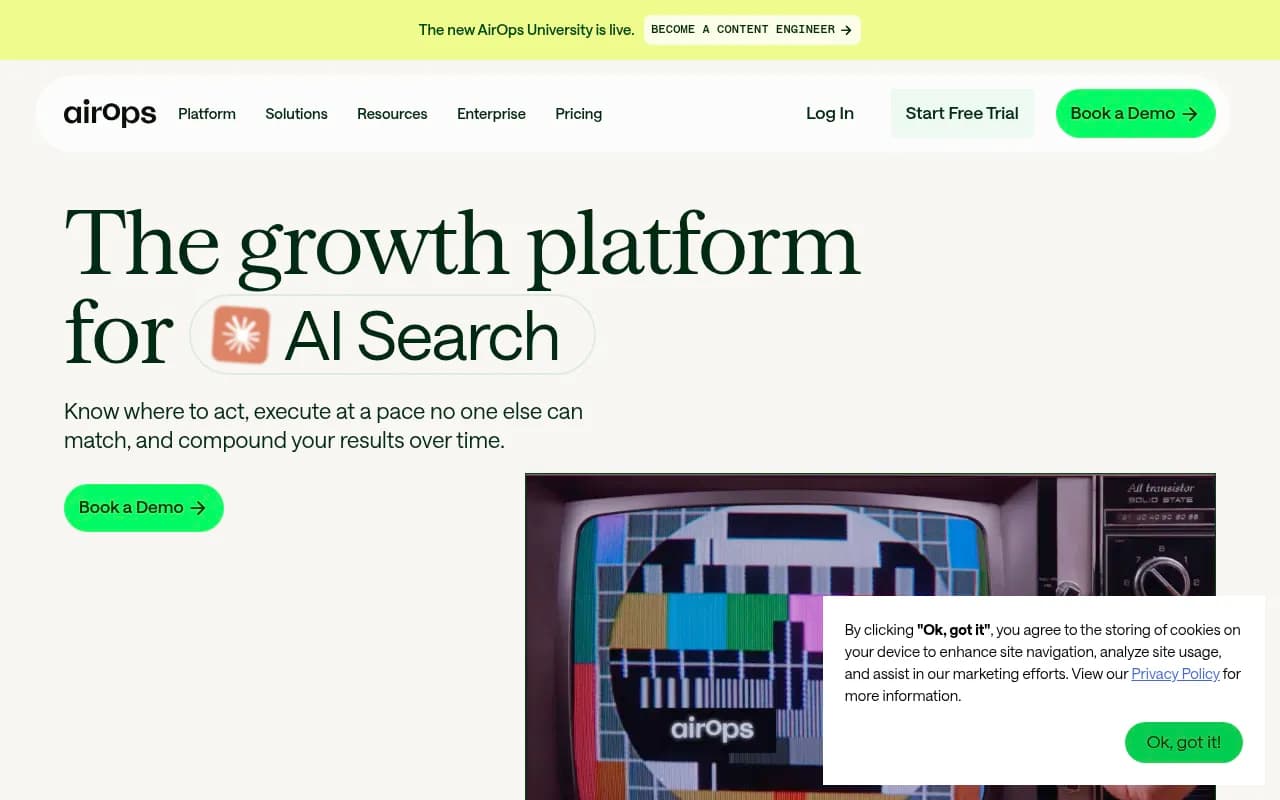
What AirOps actually does
At its core, AirOps is a content operations platform. You build workflows -- sequences of AI-powered steps -- that can research a topic, draft content, run it through a review step, optimize it for search, and push it somewhere useful. The platform is built around the idea of "content engineering": treating content production as a repeatable, scalable process rather than a one-off creative task.
In practice, this means you can set up workflows to:
- Generate first drafts of articles, listicles, or comparison pages at scale
- Refresh existing content with updated information
- Optimize pages for AI search citations (AEO)
- Run content through human review checkpoints before publishing
- Pull in data from external sources to ground content in real information
The workflow builder is genuinely powerful. You can chain together multiple AI models, add conditional logic, include human-in-the-loop review steps, and connect to external data sources. For teams producing hundreds of pages a month, this kind of infrastructure matters.
Where AirOps genuinely shines
Content production at scale
This is the thing AirOps does better than most. If your team needs to produce a lot of content -- and produce it consistently -- the workflow system gives you real leverage. You're not just prompting ChatGPT and copy-pasting. You're building repeatable processes with quality controls baked in.
The review steps are worth calling out specifically. Unlike most AI writing tools that just generate and move on, AirOps lets you insert human checkpoints into the workflow. A writer can review a draft before it goes to the next stage. That matters for teams that care about quality, not just volume.
G2 reviewers consistently mention this: "AirOps is helping us scale our AEO and SEO content strategy without scaling headcount." That's a real use case, and the tool delivers on it.
AEO content optimization
AirOps has leaned into Answer Engine Optimization in 2026, and it shows. You can build workflows specifically designed to optimize content for AI citations -- structuring answers, adding FAQ sections, targeting the kinds of questions that AI models pull from when generating responses. For teams that want to improve their visibility in ChatGPT, Perplexity, and similar tools, this is a legitimate capability.
Structured onboarding and support
Multiple reviewers mention that AirOps has solid customer support and structured onboarding. Given that the platform has a real learning curve (more on that below), this matters. You're not just handed a complex tool and left to figure it out.
Integrations with your existing stack
AirOps connects with CMS platforms, Google Search Console, and various data sources. For teams that want to pull in real search data to inform their content workflows, this is useful. It's not a standalone island -- it's designed to plug into what you're already doing.
Where AirOps falls short
The UI is genuinely overwhelming at first
This comes up in nearly every honest review. The workflow builder is powerful, but it's not intuitive. One Reddit user who spent four weeks with the tool put it plainly: "The UI is powerful but kinda overwhelming at first." That's a polite way of saying there's a real ramp-up period before you're productive.
For small teams or individuals without technical backgrounds, this is a meaningful barrier. AirOps is not plug-and-play. You'll need to invest time in setup, and the payoff only comes after you've built out your workflows properly.
Task-based pricing adds up fast
The pricing model is one of the most common complaints. AirOps charges based on tasks or runs, which sounds reasonable until you're running high-volume workflows and the bill starts climbing. The free tier exists but is limited enough that it's more of a demo than a real working environment.
One detailed cost analysis found that what looks affordable at small scale can become expensive quickly once you're running the kind of volume that makes the tool worthwhile in the first place. You need to model out your actual usage before committing -- don't just look at the headline price.
AI visibility monitoring is shallow
This is the biggest gap, and it's worth being direct about it. AirOps is built for content production. Its monitoring capabilities -- tracking how your brand appears in AI search engines, seeing which prompts you're visible for, understanding why competitors are getting cited and you're not -- are limited.
If you want to understand your AI search visibility in depth, you need a dedicated monitoring platform alongside AirOps, not instead of it. Tools like Promptwatch are built specifically for this: tracking citations across ChatGPT, Perplexity, Claude, Gemini, and other AI engines, identifying the exact prompts where you're invisible, and showing you which content gaps are costing you citations.
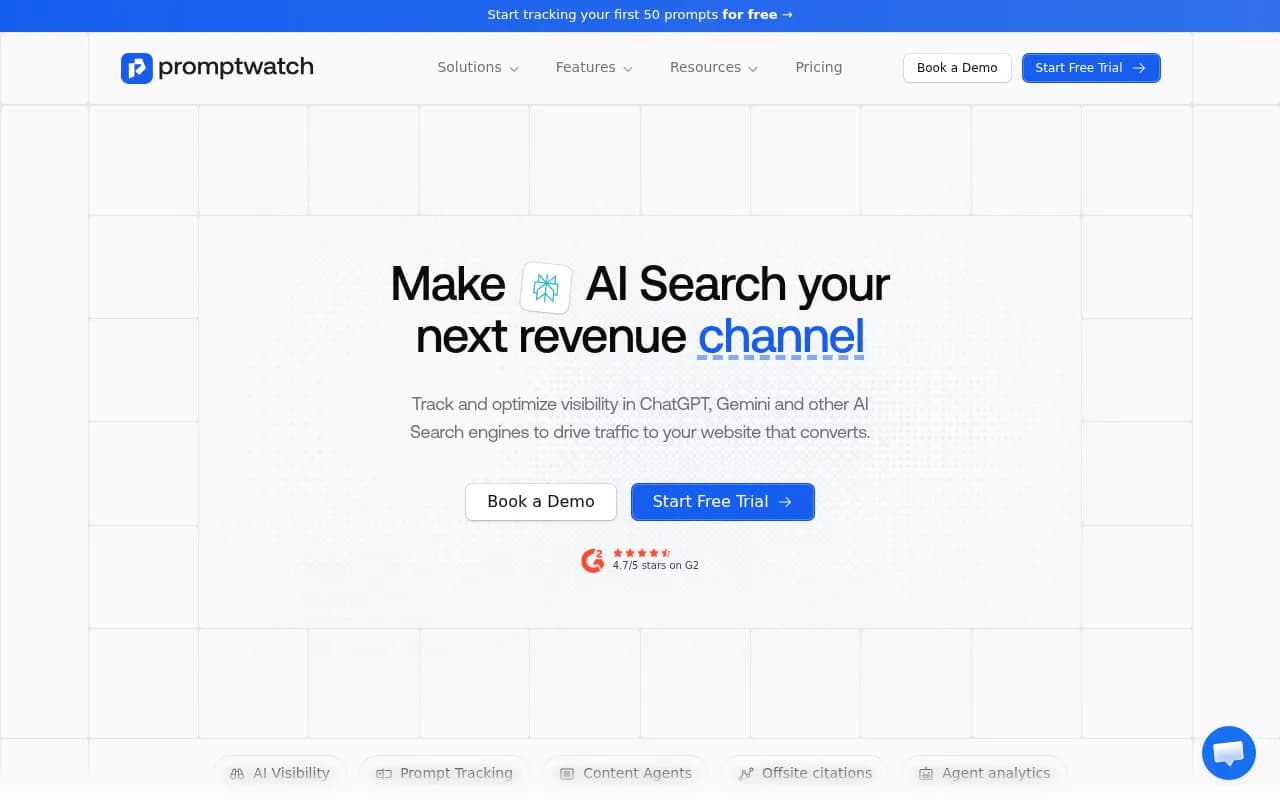
The distinction matters. AirOps helps you create content that should rank in AI search. Promptwatch tells you whether it actually is ranking, which prompts you're winning and losing, and what to fix next. These are complementary tools, not substitutes.
Not designed for broader GTM work
AirOps is focused on content. If your team needs AI assistance for broader go-to-market work -- competitive intelligence, sales enablement, product marketing -- you'll hit the edges of what it can do. As one review from Octave HQ noted: "AirOps is excellent at what it does -- content operations and AI search optimization. It is not designed for broader GTM work where structured data and ICP context matter."
That's not a knock on AirOps specifically -- it's just a scope issue. Know what you're buying.
AirOps pricing: what it actually costs
AirOps uses a combination of seat-based and task-based pricing. The free tier gives you limited runs per month -- enough to test workflows but not enough to run a real content operation. Paid plans scale up based on the number of workflow runs, seats, and features.
The honest answer is that pricing is opaque until you talk to sales for higher-volume needs. For smaller teams, the self-serve plans are accessible. For enterprise teams running thousands of content pieces a month, you'll want to model out costs carefully before signing anything.
The task-based model is the main thing to watch. Each workflow run consumes credits, and complex multi-step workflows consume more. If you're not careful about workflow design, you can burn through credits faster than expected.
How AirOps compares to alternatives
AirOps occupies a specific niche: AI-powered content workflows with AEO optimization built in. It's not trying to be a pure SEO platform, a pure AI writing tool, or a pure monitoring platform. That positioning makes comparisons a bit tricky, but here's how it stacks up against the tools most people consider alongside it.
| Tool | Primary focus | Content generation | AI visibility monitoring | Learning curve | Best for |
|---|---|---|---|---|---|
| AirOps | Content workflows + AEO | Yes (workflow-based) | Basic | High | Content teams scaling production |
| Promptwatch | AI visibility + GEO | Yes (Content Agents) | Deep (10 AI models) | Medium | Teams tracking + improving AI citations |
| Jasper | AI writing | Yes (template-based) | No | Low | Fast content drafting |
| Surfer SEO | Content optimization | Yes (with AI) | No | Medium | On-page SEO optimization |
| Clearscope | Content optimization | No | No | Low | Content grading and briefs |
| MarketMuse | Content strategy | Yes | No | Medium | Content planning and strategy |
| Frase | Content optimization | Yes | No | Low | Brief creation and optimization |



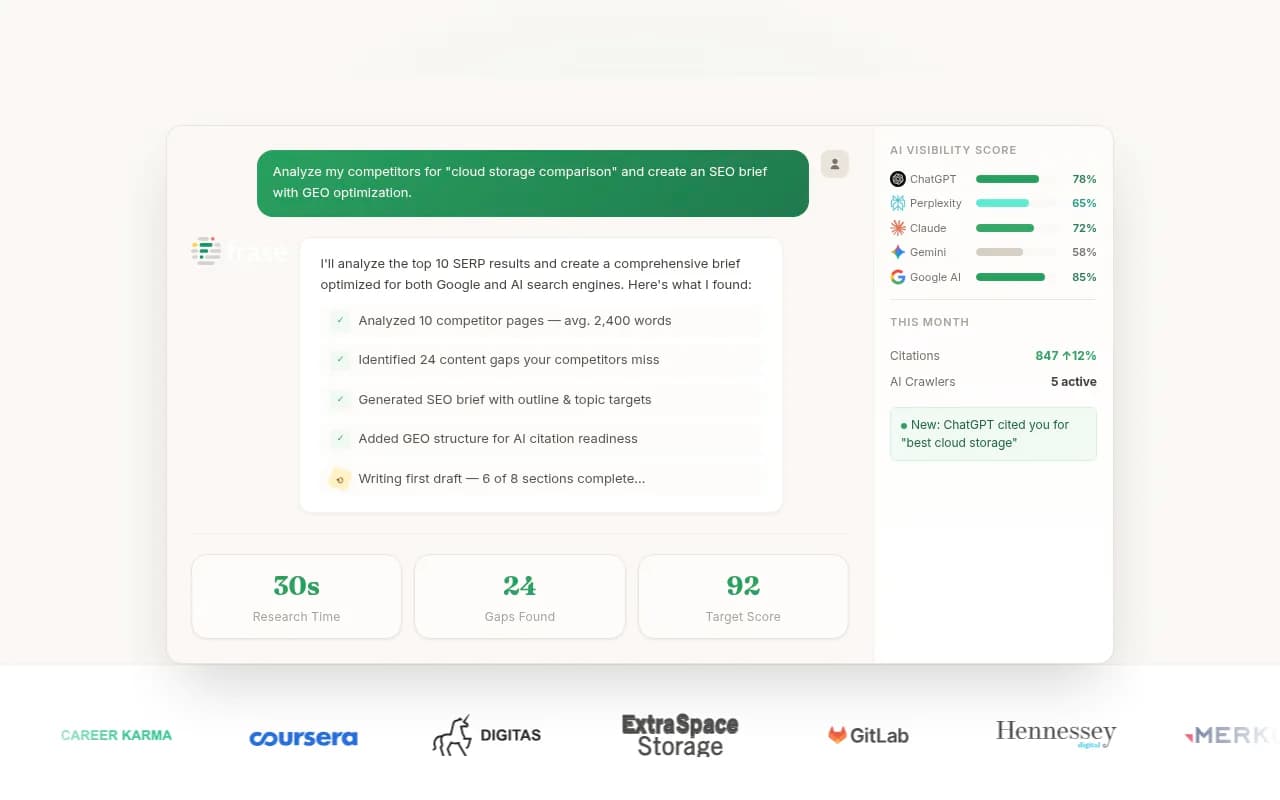
A few things stand out from this comparison. AirOps is the only tool in this list that combines workflow automation with AEO optimization in a single platform. That's genuinely differentiated. But it's also the only one with a high learning curve, and its monitoring capabilities are the weakest of any tool that claims to help with AI search visibility.
If content production volume is your primary constraint, AirOps is worth serious consideration. If understanding and improving your AI search visibility is the priority, you need something purpose-built for that.
Who should use AirOps
AirOps makes the most sense for a specific kind of team:
- Content marketing teams at mid-size to large companies who need to produce a high volume of SEO and AEO content
- Teams with at least one technically comfortable person who can build and maintain workflows
- Organizations that already have an SEO strategy and need to execute it faster
- Teams willing to invest in setup time for long-term efficiency gains
It's less suited for:
- Small teams or solo operators who need something they can use immediately
- Teams whose primary goal is monitoring AI search visibility (rather than creating content)
- Companies looking for a broad GTM platform beyond content
The honest verdict
AirOps is a real tool that solves a real problem. If you're a content team drowning in production demands and trying to keep up with both traditional SEO and AI search, the workflow system genuinely helps. The ability to build repeatable, quality-controlled content pipelines is valuable, and the AEO optimization features are more developed than most pure writing tools offer.
But it's not a complete AI search solution. The monitoring side is thin. The pricing model rewards careful planning. And the learning curve means you'll spend meaningful time before you see returns.
The teams getting the most out of AirOps are using it alongside dedicated visibility tools -- building content with AirOps, then tracking whether that content is actually getting cited in AI search engines with something like Promptwatch. That combination covers both sides: production and measurement.
If you go in expecting a full AI visibility platform, you'll be disappointed. If you go in expecting a powerful content operations tool with AEO capabilities, you'll probably be satisfied.