Key takeaways
- MarketMuse is a research and planning tool -- it helps you figure out what to write and how to structure it, but stops before execution
- AirOps is an operational platform -- it connects opportunity discovery, content creation, refresh workflows, and CMS publishing in one system
- If your bottleneck is editorial planning and brief quality, MarketMuse is the stronger fit
- If your bottleneck is producing and maintaining content at scale, AirOps is more likely to solve it
- Neither tool covers AI search visibility (how you appear in ChatGPT, Perplexity, etc.) -- that's a separate category worth knowing about
Content teams in 2026 have no shortage of tools claiming to solve their problems. The harder question is whether a given tool solves your problem -- the specific place where your content operation actually gets stuck.
AirOps and MarketMuse are both serious platforms with real user bases. But they're solving different problems, and picking the wrong one wastes time, budget, and a lot of onboarding effort. This guide breaks down what each platform actually does, where each one wins, and which team type fits which tool.
What AirOps actually does
AirOps started as a template-based AI content generation tool and has grown into something closer to a full content operations platform. The core idea is that content teams shouldn't have to manage five separate tools to go from "we need more content" to "content is live."
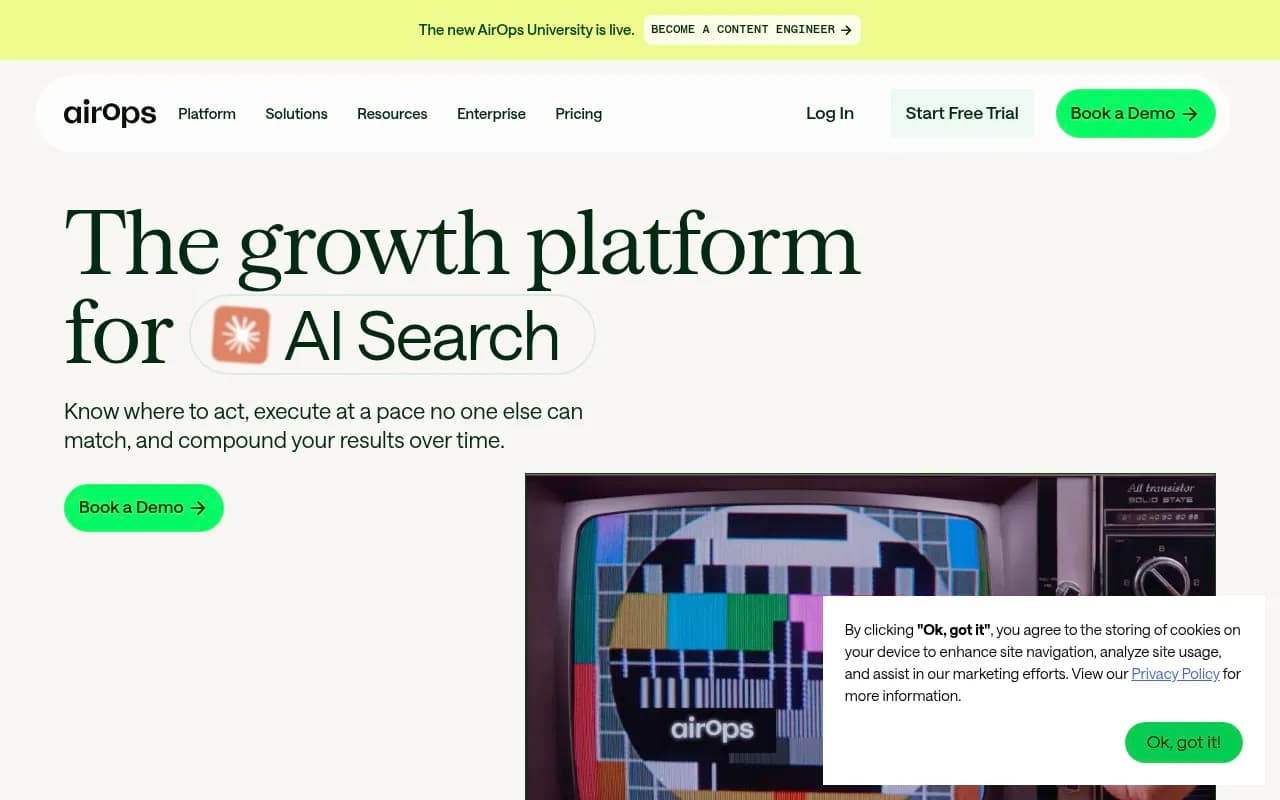
The platform covers several stages of the content pipeline:
- Keyword research and clustering to identify what to target
- AI-assisted content drafting and rewriting
- Content refresh workflows for existing pages that are losing traffic
- CMS publishing integrations so you're not copy-pasting into WordPress or Webflow
- Performance tracking to see which pages are gaining or losing ground
The template-based approach is both AirOps' strength and its most common complaint. For teams producing high volumes of similar content -- location pages, product descriptions, data-driven articles -- templates let you move fast. For teams with more editorial complexity or strict brand voice requirements, the rigidity starts to show.
AirOps works best when you have a large content library to manage and need to produce updates at a pace that manual workflows can't match.
What MarketMuse actually does
MarketMuse is primarily a research and planning platform. It's built around the idea that most content fails not because it's badly written, but because it's strategically thin -- it doesn't cover the right topics, doesn't answer the right questions, and doesn't establish topical authority in a meaningful way.
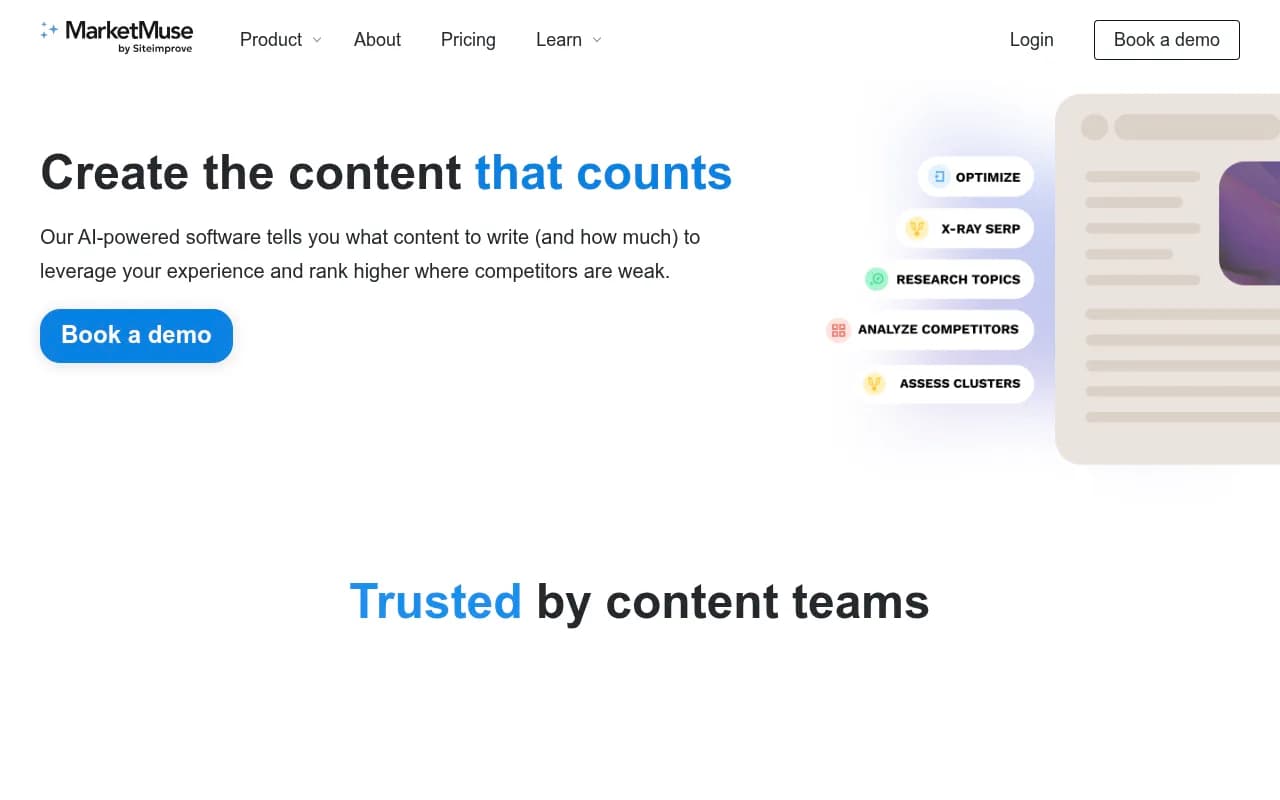
The platform's main capabilities:
- Topic modeling that maps out what a given subject area requires for comprehensive coverage
- Content scoring that shows how well existing pages cover a topic relative to competitors
- Brief generation with recommended questions, subtopics, and word counts
- Competitive content analysis to see where gaps exist in your coverage
- Inventory analysis of your existing content to find what's underperforming
MarketMuse's strength is depth of research. The briefs it generates are genuinely detailed -- they're not just keyword lists, they're structured guides to what a piece of content needs to cover to be competitive. Teams that take editorial quality seriously tend to find real value here.
The limitation is that MarketMuse stops at the planning stage. Writing, editing, publishing, and tracking what happens after -- that's all on you.
Head-to-head comparison
Here's how the two platforms stack up across the dimensions that matter most to content teams:
| Capability | AirOps | MarketMuse |
|---|---|---|
| Keyword research | Yes | Limited |
| Topic modeling / topical authority | Limited | Strong |
| Content brief generation | Basic | Detailed |
| AI content drafting | Yes | No |
| Content refresh workflows | Yes | No |
| CMS publishing integration | Yes | No |
| Content scoring | Basic | Strong |
| Performance tracking | Yes | Limited |
| Brand voice controls | Limited | No |
| Pricing transparency | Mid-market | Higher end |
| Best for | Scale and execution | Research and planning |
The table makes the core difference clear: MarketMuse goes deep on the "what to write" question. AirOps goes broad on the "how to get it done" question. They're not really competing for the same use case -- which is why some teams use both.
Where MarketMuse wins
Brief quality. If you're briefing writers (in-house or freelance), MarketMuse briefs are genuinely better than what most teams produce manually. The topic modeling pulls in related questions, subtopics, and competitive context that a human researcher would take hours to compile. Writers who work from MarketMuse briefs tend to produce more comprehensive first drafts.
Topical authority planning. MarketMuse's approach to content strategy is built around covering a topic area thoroughly rather than chasing individual keywords. For teams trying to build authority in a specific niche, the topic cluster maps are useful for planning a six-month editorial calendar.
Content auditing. The content scoring feature is one of the more honest tools in the market -- it tells you where your existing pages are weak relative to what's ranking, without sugarcoating it. Teams that haven't done a proper content audit in a while often find MarketMuse's inventory analysis eye-opening.
Where AirOps wins
Execution speed. AirOps is faster to move from "we identified an opportunity" to "content is live." The CMS integrations remove a friction point that sounds small but compounds across hundreds of pages.
Content refresh programs. This is probably AirOps' most differentiated capability. Most content teams know they should be refreshing old content -- it's one of the highest-ROI activities in SEO -- but the workflow is tedious enough that it rarely happens consistently. AirOps automates enough of that workflow to make refresh programs actually sustainable.
Scale. If you're managing a content library of thousands of pages, AirOps' operational approach fits better. MarketMuse can analyze large inventories, but it doesn't help you act on that analysis at scale.
Programmatic content. For location pages, product category pages, or any content that follows a consistent structure across many variations, AirOps' template system is genuinely good.
The use case that neither covers well
Here's something worth knowing before you commit to either platform: both AirOps and MarketMuse are built around traditional search -- Google rankings, keyword positions, organic traffic. Neither has strong capabilities for AI search visibility.
AI search visibility is a different problem. When someone asks ChatGPT, Perplexity, or Google's AI Mode a question in your category, does your brand get mentioned? Which pages get cited? Which competitors are showing up instead of you?
This matters because AI search is now a meaningful traffic source for many categories, and the signals that drive AI citations are different from the signals that drive Google rankings. A page that ranks #3 on Google might never get cited by Perplexity. A page that barely ranks organically might get cited constantly because it answers a specific question clearly.
If AI search visibility is on your radar (and in 2026, it probably should be), tools like Promptwatch are built specifically for this -- tracking how your brand appears across ChatGPT, Perplexity, Claude, Gemini, and others, identifying which prompts competitors are winning that you're not, and generating content designed to close those gaps.

It's a different layer from what AirOps and MarketMuse do, not a replacement for either.
Alternatives worth considering
If you're evaluating AirOps and MarketMuse, you're probably also looking at a few other tools. Here are some worth knowing:
For content optimization grounded in search data:

Clearscope is the closest thing to a MarketMuse alternative for teams that want content scoring and optimization without the full topic modeling system. It's simpler, faster to onboard, and tends to work well for teams that already have a research process and just want better optimization guidance.
For AI-assisted SEO content creation:

Surfer SEO combines content optimization with an AI writing assistant. It's not as deep as MarketMuse on research, but it covers more of the creation workflow than MarketMuse does. Teams that want a single tool for both planning and writing often land here.
For NLP-based content optimization:
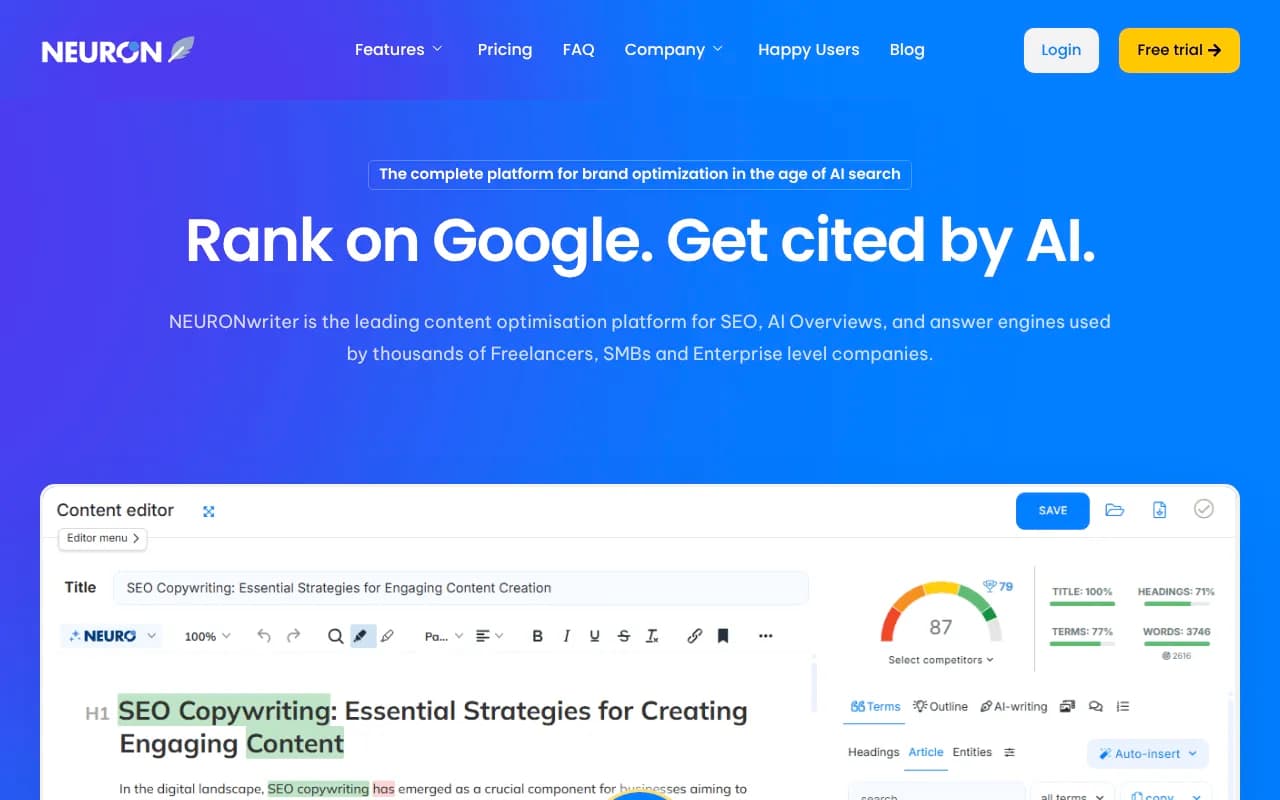
NeuronWriter uses NLP analysis to recommend terms and topics to cover, similar to Clearscope and Surfer but at a lower price point. Worth considering for smaller teams or agencies managing multiple client sites.
For AI content workflows at scale:
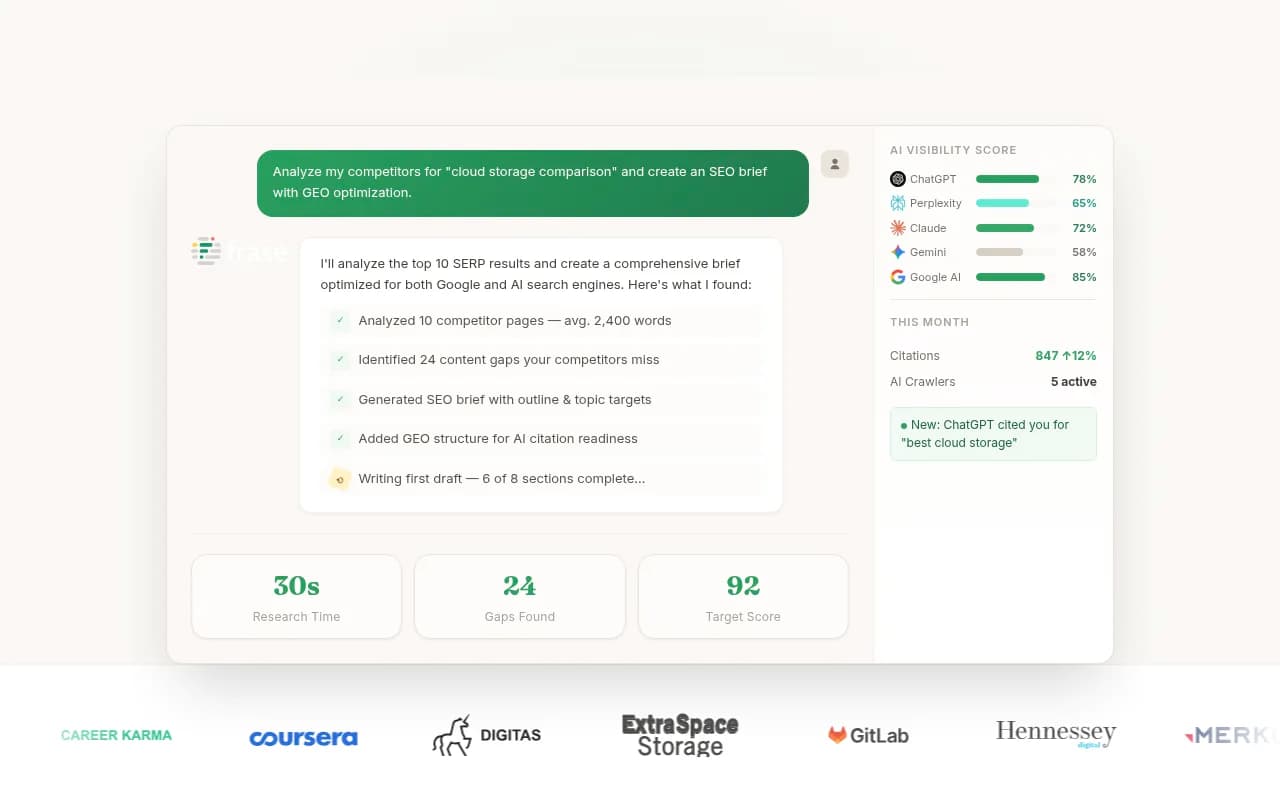
Frase sits in a similar space to AirOps -- it combines research, brief generation, and AI writing in one workflow. It's generally considered easier to onboard than AirOps and works well for teams that don't need heavy programmatic content capabilities.
For all-in-one SEO with content tools:
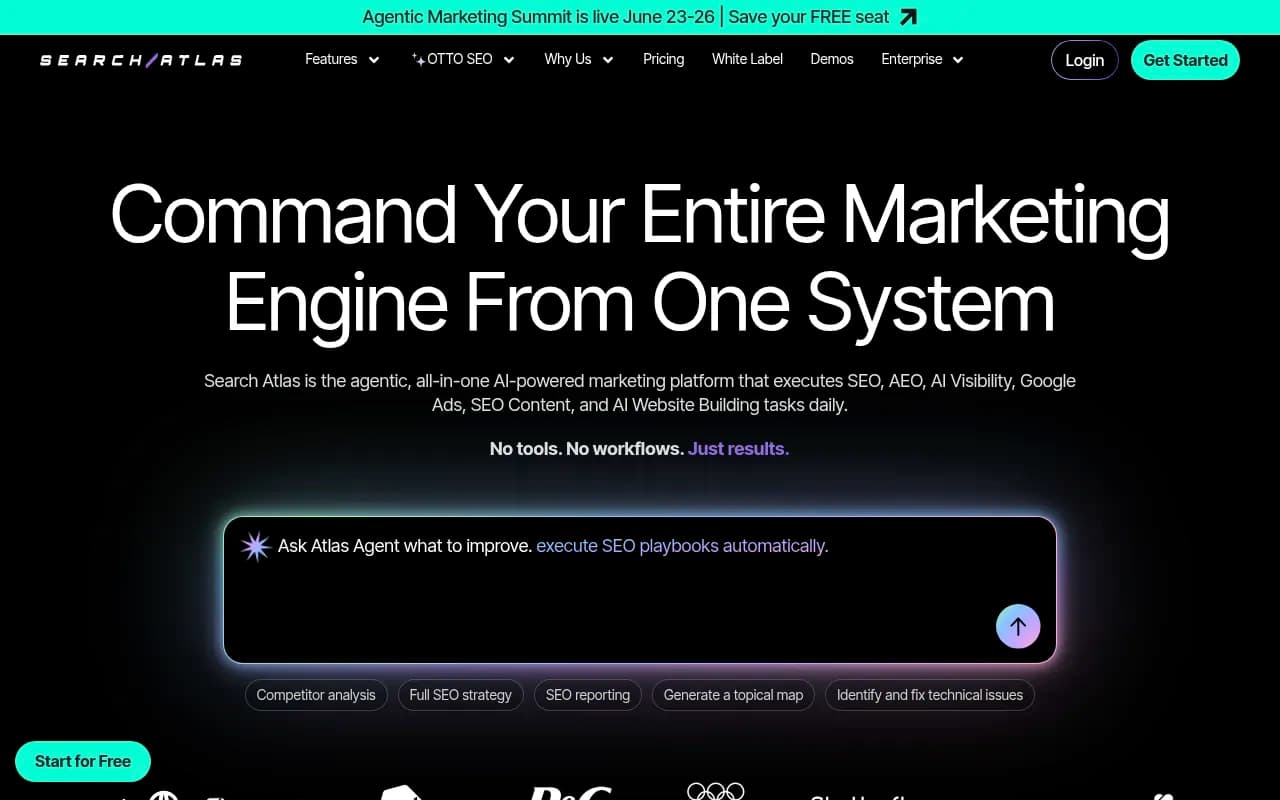
Search Atlas covers keyword research, content optimization, and some AI writing features in one platform. It's a reasonable option for teams that want to consolidate tools rather than running separate platforms for research and execution.
How to decide
The honest answer is that the right choice depends on where your content operation is actually breaking down.
Choose MarketMuse if:
- Your content quality is inconsistent and you think better briefs would fix it
- You're trying to build topical authority in a specific niche and need a systematic approach
- You have writers who can execute well once they have good direction
- You're doing a content audit and need a rigorous way to score what you have
Choose AirOps if:
- You have a large content library that needs regular refreshing
- You're producing high volumes of similar content (location pages, product pages, etc.)
- Your bottleneck is execution speed, not research quality
- You need CMS publishing integrations to reduce manual work
Consider both if:
- You have a large enough team to use each tool for what it's good at
- Your content operation has both a planning problem and an execution problem
- Budget allows for it (neither is cheap)
Consider neither if:
- You're a small team that needs a simpler, more affordable starting point
- Your primary concern is AI search visibility rather than traditional SEO content
A note on the broader content tool landscape
The content tool market in 2026 is genuinely fragmented. There's no single platform that does research, planning, writing, optimization, publishing, traditional SEO tracking, and AI search visibility all well. Most teams end up running two or three tools.
The mistake to avoid is buying tools that overlap heavily without covering the gaps that actually matter to you. If you already have a solid research process, you probably don't need MarketMuse. If you're already publishing at scale with a workflow that works, you probably don't need AirOps.
Start with your actual bottleneck. That's the only question that matters when evaluating tools like these.
Both platforms have free trials. The fastest way to know which one fits is to run your actual content workflow through each one for a week -- not a demo, not a sales call, but your real work with your real content. The gaps become obvious quickly.