Key takeaways
- AirOps is a workflow automation platform for content teams -- it excels at scaling content production but is not a dedicated GEO tracking tool.
- Scalenut is a budget-friendly SEO content platform with basic AI visibility features bolted on -- good for startups, limited for serious GEO work.
- Promptwatch is built specifically for AI search visibility: it tracks citations across 10 AI models, identifies content gaps, generates GEO-optimized content, and connects visibility to revenue.
- If your primary goal is understanding and improving how AI engines cite your brand, Promptwatch is the only one of the three designed for that end-to-end.
- These tools are not really competitors -- they solve different problems, and many teams use more than one.
The AI search landscape has gotten complicated fast. Brands that used to worry about Google rankings now have to think about whether ChatGPT, Perplexity, Claude, and Gemini are citing them at all. And the tooling market has responded with a flood of platforms, each claiming to solve "AI visibility."
AirOps, Scalenut, and Promptwatch are three tools that come up regularly in this conversation -- but they're solving meaningfully different problems. Grouping them together as "AI content tools" misses the point. One is a content workflow engine. One is an SEO writing assistant with some GEO features. One is a purpose-built GEO platform. Understanding which is which will save you a lot of time and money.
This guide breaks down each tool honestly, then helps you figure out which one (or which combination) makes sense for your situation.
What AirOps actually does
AirOps started as an AI workflow builder -- a way for content teams to automate repetitive tasks like brief generation, content drafts, metadata creation, and internal linking at scale. In 2026, it has expanded into AI search visibility with its Quill agent (launched May 2026) and a research report on AI search signals.
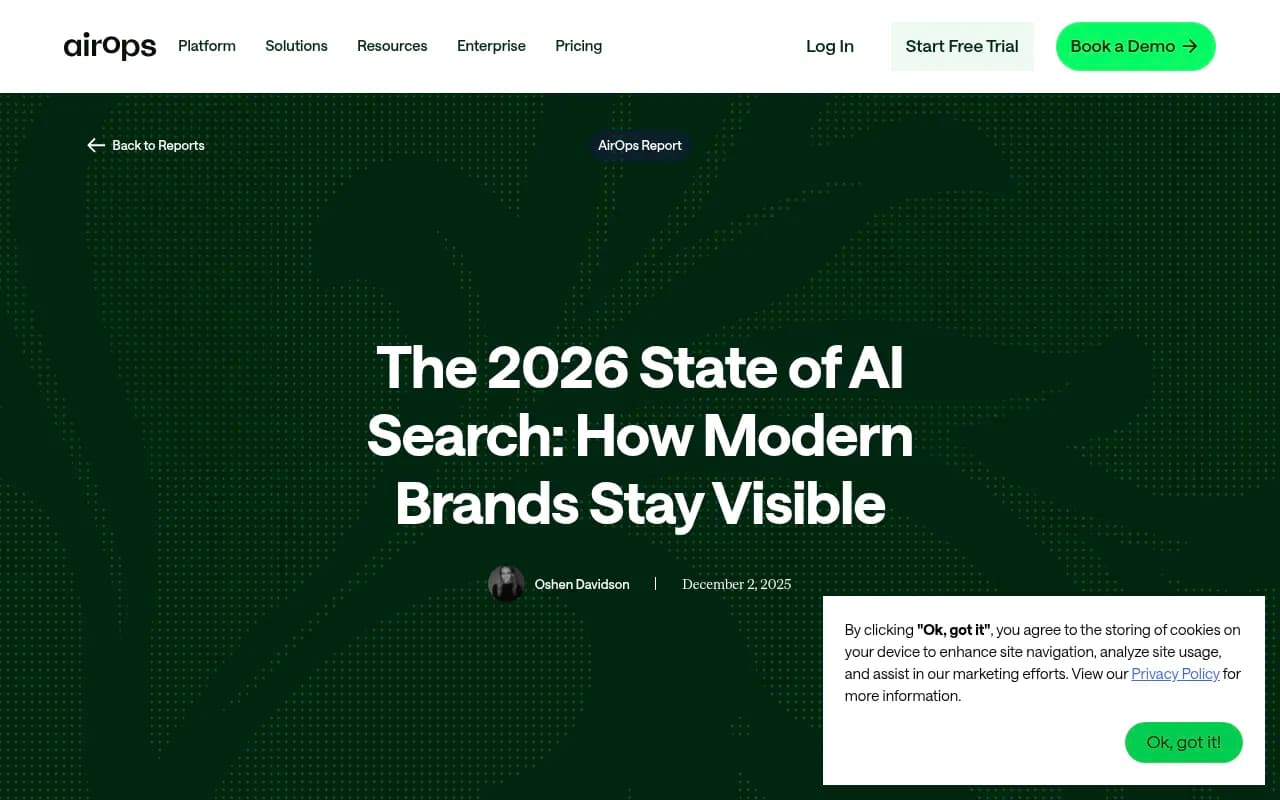
The AirOps 2026 State of AI Search report is worth reading. Key findings: only 30% of brands stay visible from one AI answer to the next, pages not updated quarterly are 3x more likely to lose citations, and roughly 60% of AI Overview citations come from URLs not in the top 20 organic results. That last stat alone should make any SEO team rethink their strategy.
But AirOps the product is primarily a content production platform. Its strength is workflow automation -- you can build pipelines that take a keyword list and produce dozens of structured articles, briefs, or metadata entries. Teams that need to publish at scale without proportionally scaling headcount find it genuinely useful.
Where it falls short for GEO work:
- It doesn't track how your brand appears in AI search responses. You can produce content with it, but you have no visibility into whether that content is being cited.
- There's no prompt-level monitoring. You can't ask "for the query 'best project management software', does ChatGPT mention us?" and get a reliable answer.
- Citation analytics, crawler logs, and traffic attribution from AI sources are not core features.
AirOps is a content production tool that has added some AI search awareness. It's not a GEO platform.
What Scalenut actually does
Scalenut positions itself as an AI-powered SEO content lifecycle platform. It covers keyword research, content briefs, AI writing, and on-page optimization. In 2026, it added basic AI visibility tracking -- you can monitor brand mentions across some AI engines and get recommendations for improving your content's AI-readiness.
The pricing is genuinely accessible. Scalenut targets budget-conscious teams and startups, and independent reviews consistently note it as a reasonable entry point for teams that can't justify the cost of more specialized platforms.
The limitations are real, though. Scalenut's AI visibility features feel like an add-on rather than a core capability. You get surface-level monitoring -- whether your brand appears in responses to a handful of prompts -- but not the depth you'd need to actually diagnose and fix visibility problems. There's no crawler log analysis, no page-level citation tracking, no prompt volume data to help you prioritize, and no content generation that's grounded in actual citation data from AI engines.
For a startup that wants basic AI visibility awareness alongside content writing tools, Scalenut is fine. For a brand that's serious about GEO, it's a starting point at best.

What Promptwatch actually does
Promptwatch is built specifically for AI search visibility and GEO. It's not an SEO writing tool with GEO features bolted on, and it's not a content workflow engine. It tracks how your brand appears across 10 AI models (ChatGPT, Perplexity, Claude, Gemini, Google AI Overviews, Google AI Mode, Grok, DeepSeek, Meta AI, Copilot, Mistral), identifies the gaps between your visibility and your competitors', generates content designed to close those gaps, and tracks the results.
The core loop works like this: you define the prompts your target customers are likely to ask, Promptwatch runs them across AI engines and shows you who's getting cited, you see exactly which competitors are appearing where you're not, and then you use the content generation tools to create pages that address those gaps. Then you watch whether AI engines start citing those new pages.

What makes it different from monitoring-only tools is the action layer. Most platforms stop at showing you a dashboard. Promptwatch's Content Agents generate articles, comparisons, and listicles grounded in real prompt data, citation patterns, and competitor analysis. The AI Crawler Logs show you when ChatGPT or Perplexity's crawlers visit your site, which pages they read, and when a crawled page starts getting cited. That's a level of transparency most tools don't offer.
A few specific capabilities worth knowing about:
- Answer Gap Analysis shows which prompts your competitors rank for that you don't, with the specific content your site is missing
- Page-level tracking shows which of your existing pages are being cited, by which AI models, and how often
- Reddit and YouTube insights surface third-party discussions that influence AI recommendations -- relevant because AirOps' own research found that 48% of AI citations come from community platforms
- ChatGPT Shopping tracking monitors when your brand appears in product recommendations
- Traffic attribution connects AI visibility to actual website visits and revenue
Pricing starts at $99/month for the Essential plan (1 site, 50 prompts, 5 articles), $249/month for Professional (2 sites, 150 prompts, 15 articles, crawler logs), and $579/month for Business (5 sites, 350 prompts, 30 articles). There's a free trial.
Side-by-side comparison
| Feature | AirOps | Scalenut | Promptwatch |
|---|---|---|---|
| Primary purpose | Content workflow automation | SEO content writing | AI search visibility + GEO |
| AI model tracking | Limited (Quill agent) | Basic | 10 AI models |
| Prompt-level monitoring | No | Basic | Yes |
| Citation analytics | No | No | Yes |
| AI crawler logs | No | No | Yes |
| Content generation | Yes (core feature) | Yes (core feature) | Yes (GEO-grounded) |
| Answer gap analysis | No | No | Yes |
| Page-level citation tracking | No | No | Yes |
| Traffic attribution from AI | No | No | Yes |
| Reddit/YouTube insights | No | No | Yes |
| ChatGPT Shopping tracking | No | No | Yes |
| Pricing (entry) | Custom | ~$39/mo | $99/mo |
| Best for | Content teams scaling production | Budget-conscious SEO writing | Brands serious about GEO |
How to think about which one you need
These tools serve different stages of the same problem, and the right answer depends on where you are.
If you're a content team that needs to scale production
AirOps makes sense. If your bottleneck is writing speed -- you have a clear content strategy, you know what you want to publish, and you need to produce more of it faster -- AirOps' workflow automation is genuinely useful. Just don't expect it to tell you whether that content is getting cited in AI search.
If you're a startup with a limited budget and basic SEO needs
Scalenut is a reasonable starting point. You get AI writing assistance, keyword research, and enough AI visibility awareness to know whether you're completely invisible. When you're ready to go deeper on GEO, you'll outgrow it.
If AI visibility is a real business priority
Promptwatch is the right tool. The distinction between "monitoring" and "optimization" matters here. Knowing that your brand appears in 12% of relevant AI responses is interesting. Knowing exactly which prompts you're missing, why, what content would fix it, and whether that content is being crawled and cited -- that's actionable. That's the difference between a dashboard and a platform.
Can you use more than one?
Yes, and many teams do. AirOps for content production volume, Promptwatch for GEO strategy and tracking, is a reasonable combination. The content Promptwatch recommends you create can be produced through AirOps' workflows. They're not mutually exclusive.
The broader context: why this matters in 2026
AirOps' own research puts the stakes clearly: only 20% of brands remain visible across five consecutive runs of the same AI query. Pages not updated quarterly are 3x more likely to lose citations. And 85% of brand mentions in AI responses come from third-party pages, not your own domain.
That last point is worth sitting with. You can publish excellent content on your own site and still lose AI visibility because Reddit threads, YouTube reviews, and third-party listicles are what AI models actually cite. A tool that only monitors your own domain is missing most of the picture.
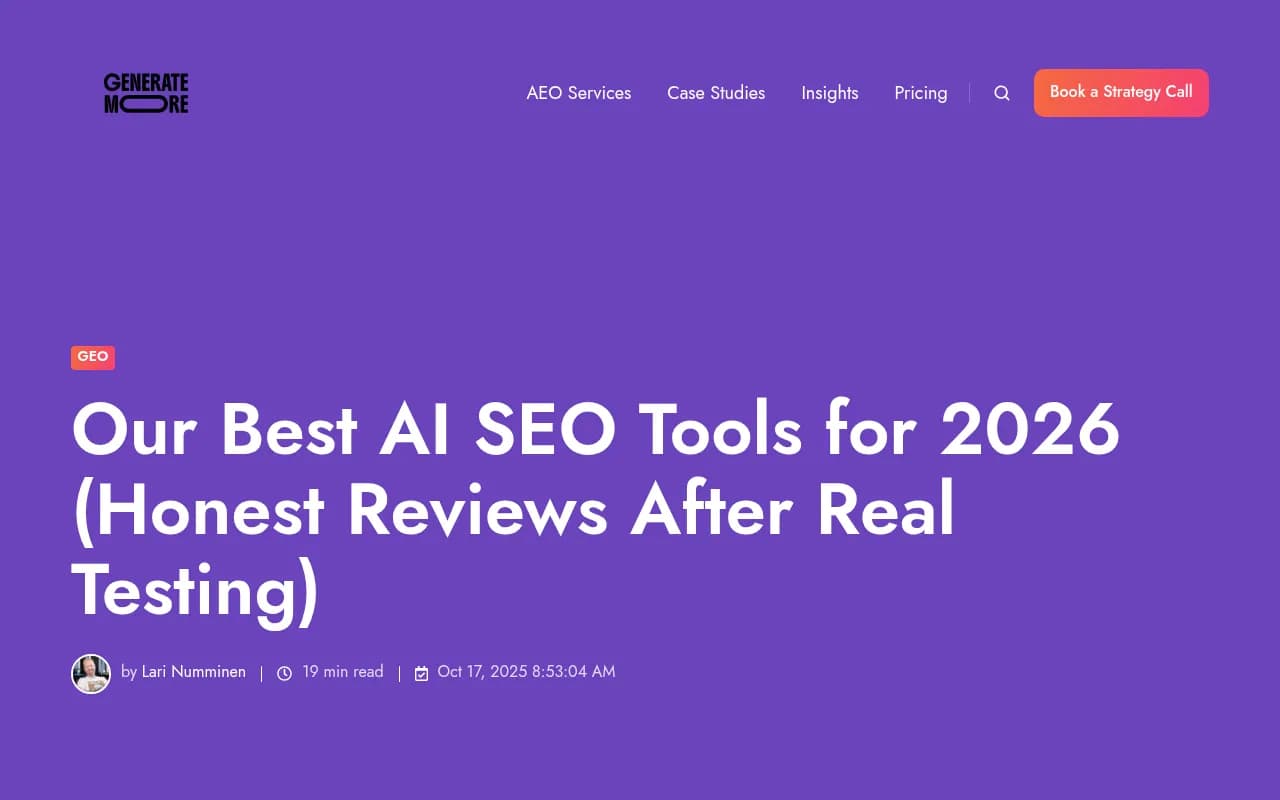
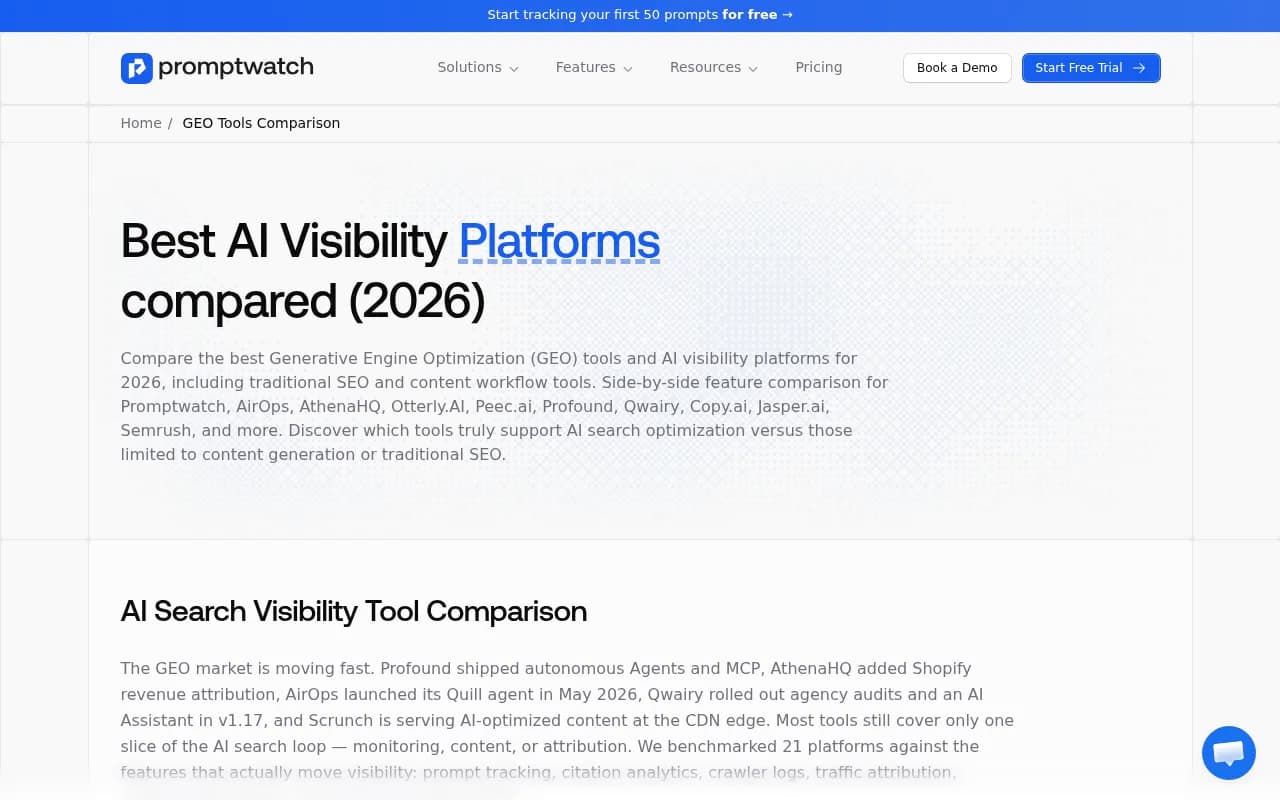
Independent reviews from Generate More (which spent 120+ hours testing AI visibility platforms) rated Promptwatch as the top pick for B2B SaaS companies needing daily tracking and attribution. Scalenut was noted as suitable for budget-conscious startups needing basic AI visibility tracking. AirOps wasn't primarily evaluated as a GEO tool.
The GEO market is still young enough that many brands haven't made a serious investment yet. That's actually an opportunity -- early movers are securing citations before competitors establish themselves in AI responses. But "early mover" means picking the right tool for the job, not just the cheapest one or the one with the most familiar brand.
Other tools worth knowing about
If none of these three feels like the right fit, a few other platforms are worth evaluating depending on your situation:
For enterprise-scale monitoring with strong multi-engine coverage, Profound and AthenaHQ are worth a look.


For agencies managing multiple client brands, Search Party has a workflow designed around that use case.
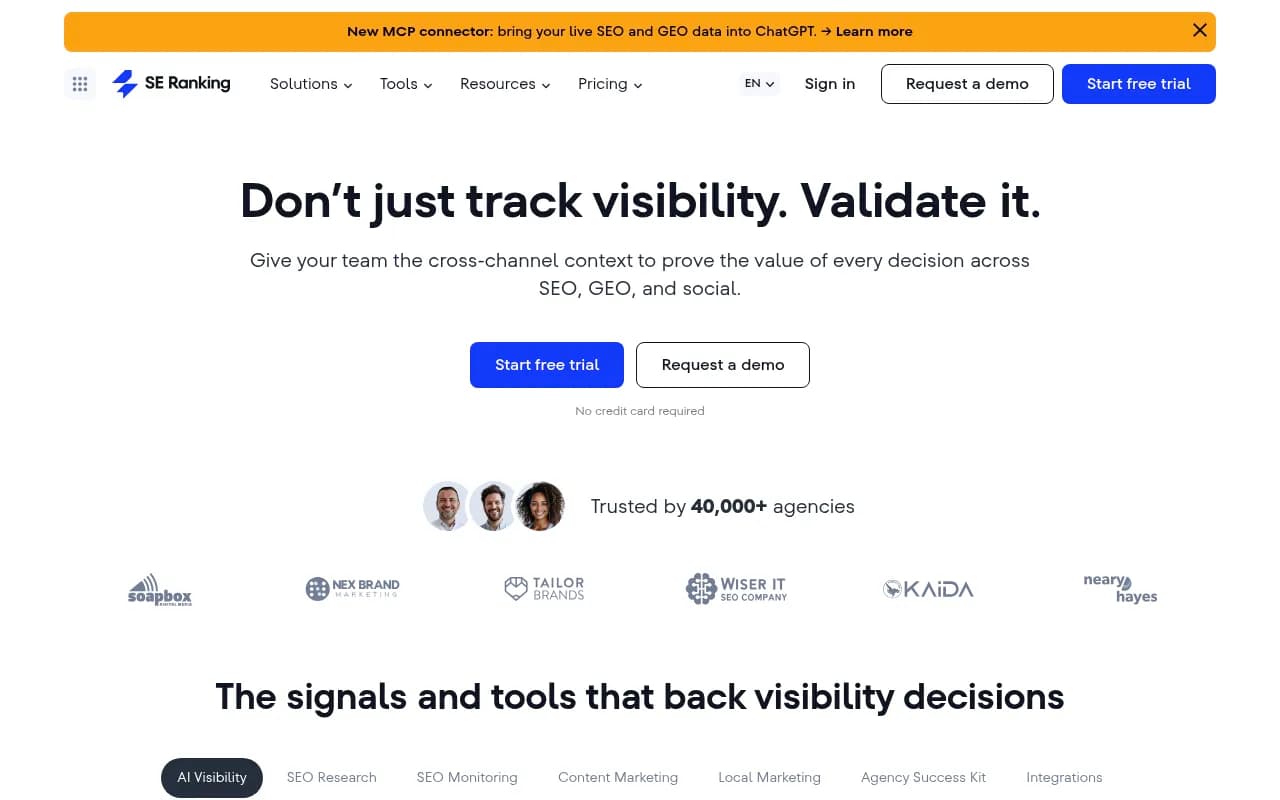
For teams that want AI visibility alongside traditional SEO in a single platform, SE Ranking has added meaningful GEO features.
For budget-conscious teams that want basic monitoring without committing to a full platform, Otterly.AI and Peec AI are accessible entry points.


The bottom line
AirOps, Scalenut, and Promptwatch are three different tools solving three different problems. Calling them competitors is a bit like calling a hammer and a tape measure competitors because they're both used in construction.
If you're trying to understand and improve how AI engines cite your brand -- which is what GEO actually means -- Promptwatch is the only one of the three built for that purpose. AirOps helps you produce content at scale. Scalenut helps you write SEO content affordably. Neither tells you whether that content is getting cited, by which AI models, for which queries, or what you'd need to change to improve.
The question isn't which of these three tools is "best." It's which problem you're actually trying to solve. Get clear on that first, and the right choice becomes obvious.