Key takeaways
- AirOps is a workflow automation and content generation platform -- it excels at building repeatable, scalable content pipelines for SEO and AEO, but it's not a traditional SEO suite.
- Search Atlas is an all-in-one SEO platform covering keyword research, rank tracking, link building, and content optimization under one roof.
- The choice isn't really "which is better" -- it's about what your team actually needs: execution speed and workflow control, or a unified SEO data layer.
- Many teams end up using both, or pairing one with a dedicated AI visibility tracker to cover the gaps neither tool fully addresses.
- If AI search visibility (ChatGPT, Perplexity, Google AI Overviews) is a priority, neither tool is purpose-built for it -- you'll want a dedicated GEO platform alongside whichever you choose.
These two tools get compared a lot, and honestly, it's a slightly odd comparison. AirOps and Search Atlas are solving different problems for different types of teams. But the confusion is understandable -- both live in the SEO and content space, both lean into AI, and both claim to help you rank. So let's actually work through what each one does, where each one falls short, and how to make the call.
What AirOps actually is
AirOps is a workflow automation platform for content and SEO teams. The core idea is that most SEO work is a series of repeatable tasks -- SERP analysis, gap identification, briefing, drafting, optimization, publishing -- and those tasks can be broken into atomic steps, automated with AI, and chained together into pipelines.
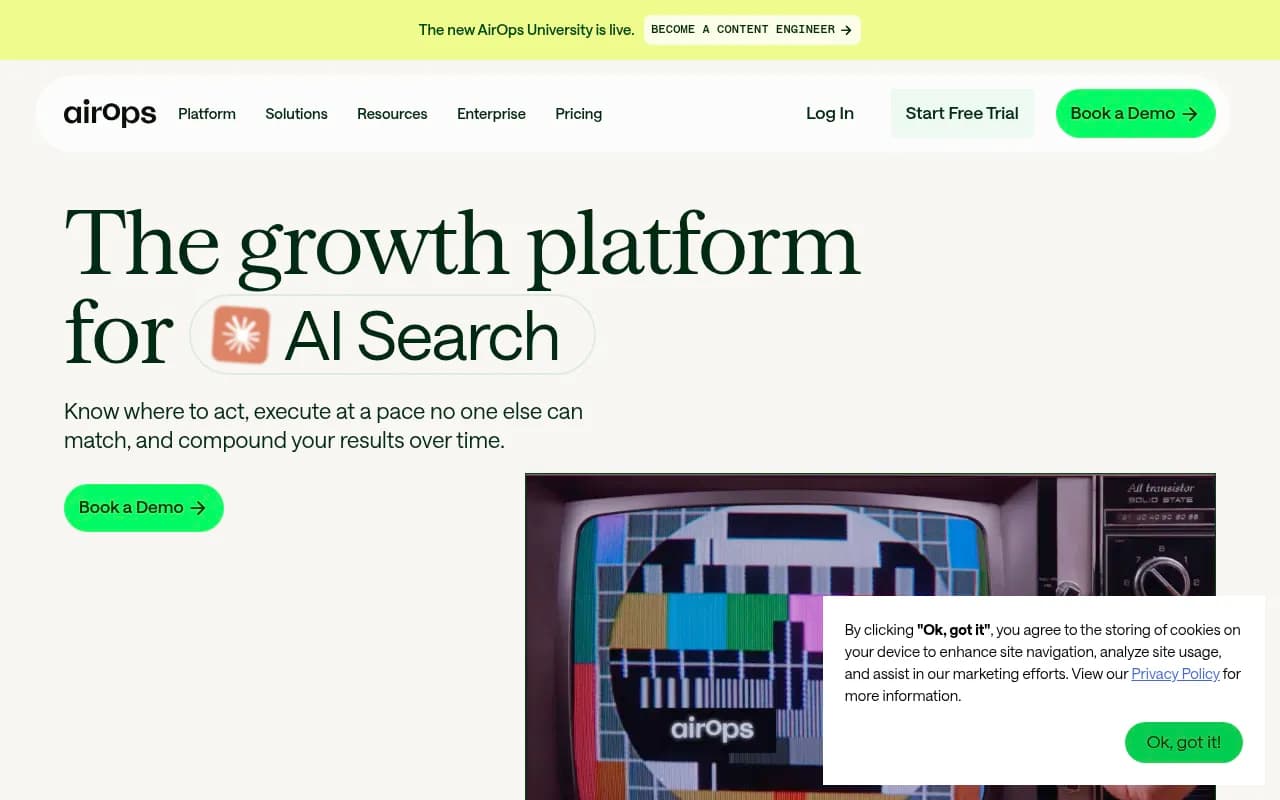
The flagship product is AirOps Studio, a drag-and-drop builder where you construct custom AI workflows. You can pull in live data, add human review checkpoints, connect to tools like HubSpot or Zendesk, and run the whole thing at scale. One Reddit user who tested it for SEO and AEO workflows put it well: "AirOps forces you to break SEO and AEO into atomic tasks... that alone changed how I think about content operations."
That's the real value proposition. It's not that AirOps writes better content than a human -- it's that it lets a small team operate like a much larger one by systematizing the work.
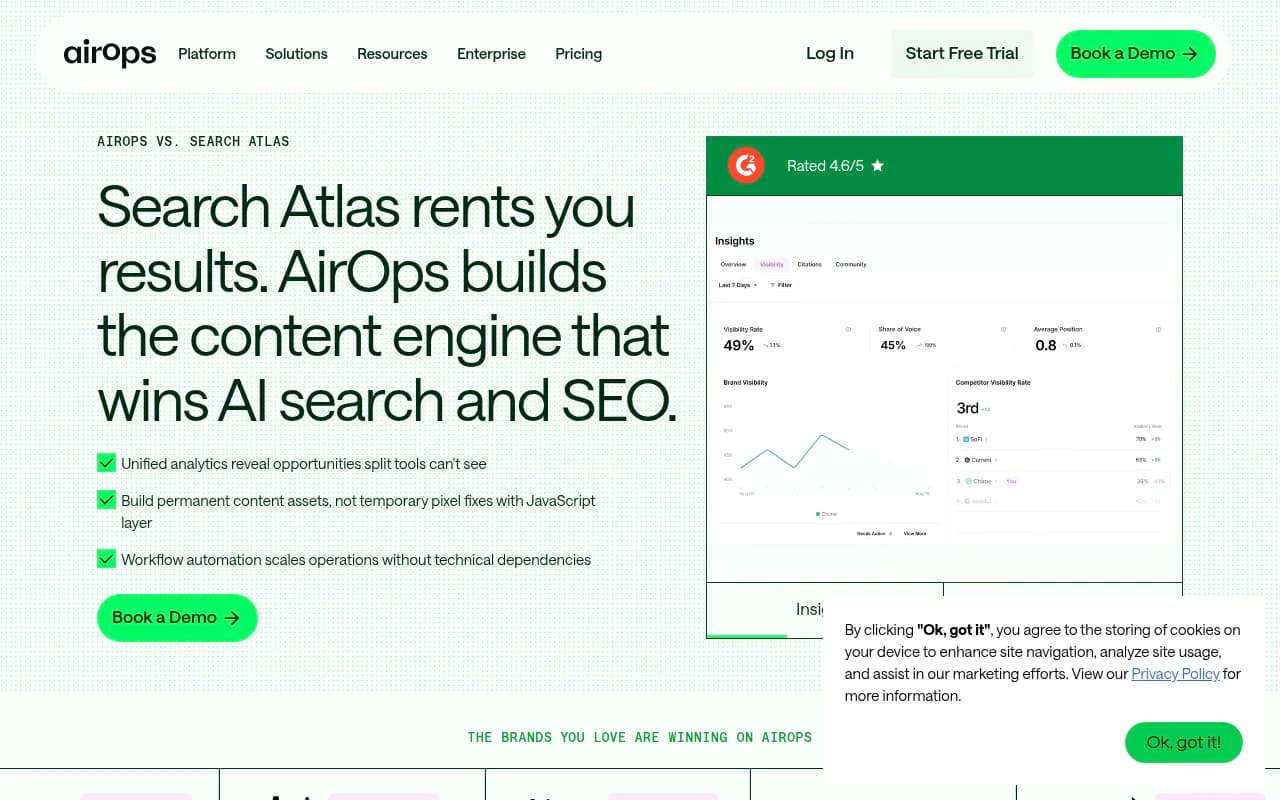
Where AirOps has earned real credibility is programmatic SEO. Angi reportedly saw up to 79% better conversion rates on longtail pages created with AirOps. Webflow used it to 5x their content refresh velocity. Chime went from being cited in 24 to 68 priority AI search questions after building content workflows on the platform. These aren't made-up metrics -- they're the kind of results that come from systematically filling content gaps at scale.
What AirOps is not: a keyword research tool, a rank tracker, a backlink analyzer, or a technical SEO auditor. If you need those things, you're adding other tools to your stack.
What Search Atlas actually is
Search Atlas is positioned as an all-in-one SEO platform -- the kind of tool that wants to replace Ahrefs or Semrush rather than complement them. It covers keyword research, rank tracking, site auditing, backlink analysis, content optimization, and increasingly, AI-assisted content creation.
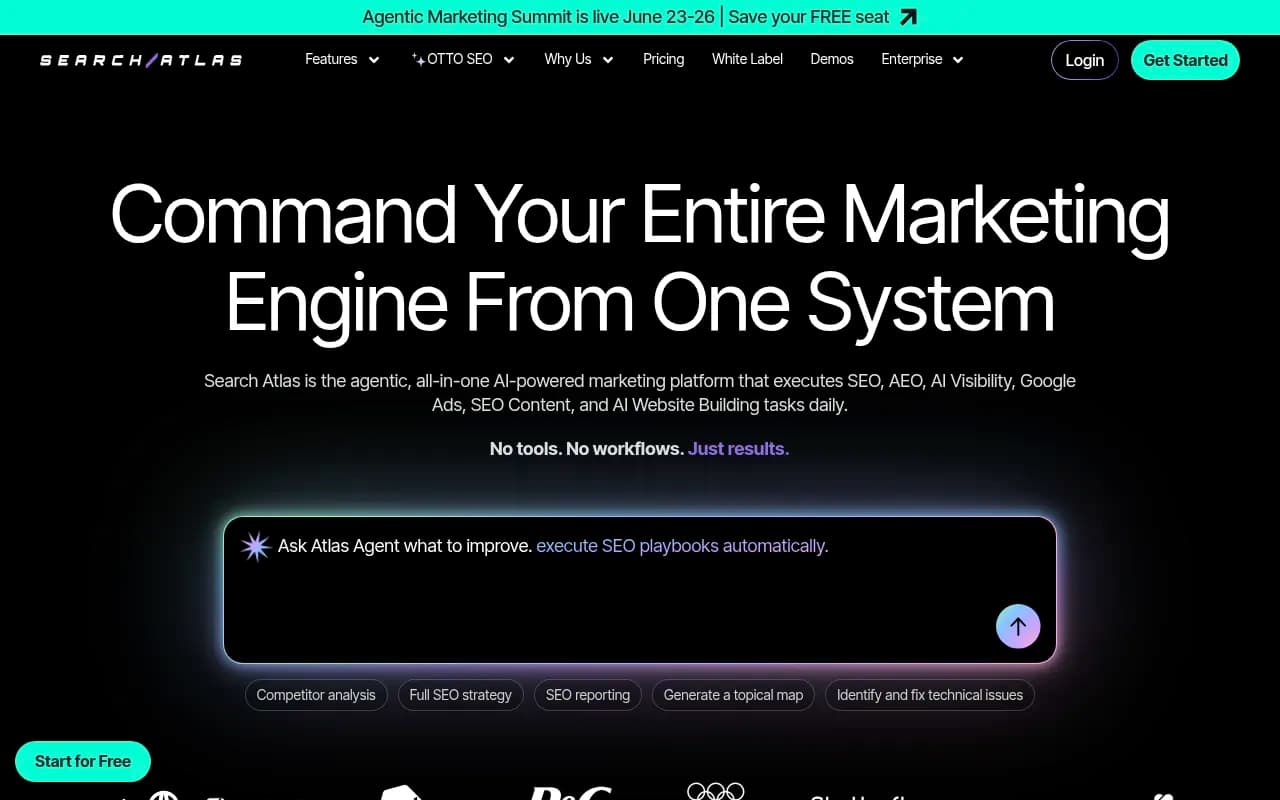
The appeal is consolidation. Instead of paying for four separate tools and trying to make them talk to each other, you get one dashboard. For smaller teams or agencies managing multiple clients, that's genuinely attractive. The pricing tends to be more accessible than enterprise SEO suites, and the feature breadth is real.
The tradeoff is depth. All-in-one platforms almost always sacrifice some depth in individual features to cover more ground. Search Atlas's keyword data and backlink index aren't as comprehensive as Ahrefs or Semrush. Its content optimization features are solid but not as workflow-oriented as AirOps. You're trading specialization for convenience.
That said, Search Atlas has been adding AI features aggressively. Its OTTO AI assistant handles some content generation and optimization tasks, which is where the overlap with AirOps starts to appear -- though the two tools approach content creation from very different angles.
Where they actually overlap (and where they don't)
The Venn diagram here is smaller than the marketing suggests.
Both tools touch content creation and optimization. Both claim to help with AI search visibility. Both are used by SEO teams. That's roughly where the overlap ends.
| Capability | AirOps | Search Atlas |
|---|---|---|
| Workflow automation | Strong -- core product | Limited |
| Programmatic content at scale | Strong | Basic |
| Keyword research | None | Strong |
| Rank tracking | None | Strong |
| Backlink analysis | None | Moderate |
| Technical SEO audit | None | Moderate |
| Content optimization | Via workflows | Built-in |
| AI content generation | Core feature | Via OTTO AI |
| AEO / AI search visibility | Workflow-based | Limited |
| Pricing model | Usage/workflow-based | Subscription tiers |
| Learning curve | High (workflow builder) | Moderate |
| Best for | Content-heavy teams scaling operations | Teams wanting one SEO dashboard |
The honest summary: if you need SEO data (keywords, rankings, backlinks, audits), Search Atlas gives you that in one place. If you need to turn SEO insights into content at scale, AirOps is the execution layer. They're more complementary than competitive.
The workflow question
Here's the thing that most comparisons miss: the real decision isn't about features, it's about where your bottleneck actually is.
If your team is drowning in manual content tasks -- briefing writers, optimizing drafts, refreshing old pages, building out programmatic content -- AirOps addresses that directly. The workflow builder has a steep learning curve, but once you've built a pipeline, it runs. You stop doing the same tasks over and over.
If your team is making decisions without enough data -- you don't know which keywords to target, you can't see how competitors are ranking, you're guessing at what to build -- Search Atlas addresses that. You get the intelligence layer that tells you where to focus.
A lot of teams need both. Which is fine, but it means your budget needs to accommodate two tools, and someone needs to own the integration between them.
The AEO angle
Both tools claim to help with Answer Engine Optimization -- getting your content cited by AI models like ChatGPT, Perplexity, and Google AI Overviews. This is worth examining carefully because neither tool was purpose-built for it.
AirOps approaches AEO through content structure. The idea is that if you build content workflows that produce well-structured, comprehensive answers to specific questions, those answers are more likely to get cited by AI models. There's real logic here -- AI models do tend to cite content that cleanly answers a question without burying the answer in filler. The workflow approach also lets you systematically target the specific questions AI models are answering, which is essentially the AEO playbook.
Search Atlas has added some AI visibility features, but they're more monitoring-oriented than optimization-oriented. You can see some data about AI search performance, but the tooling for actually improving it is limited.
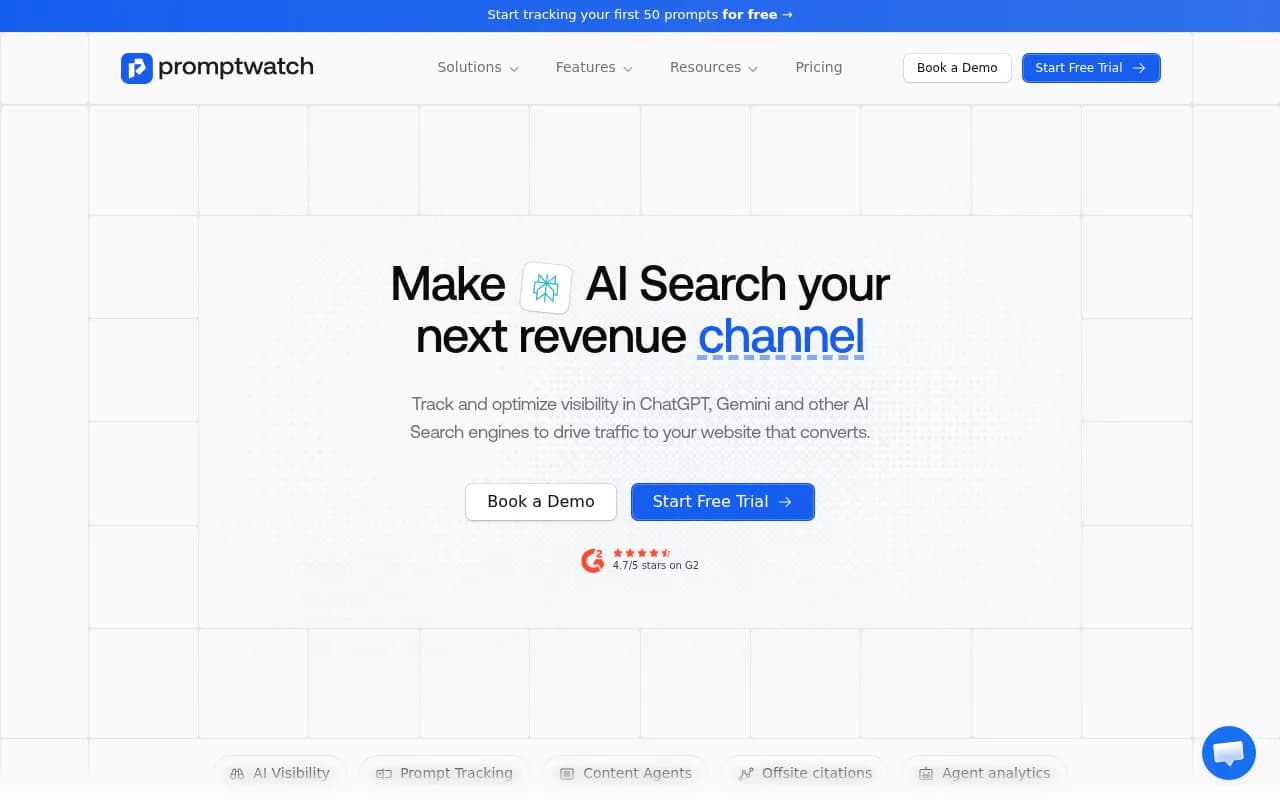
Neither tool gives you the full picture of how AI models are actually citing your content across ChatGPT, Perplexity, Claude, Gemini, and Google AI Overviews. For that level of visibility, you'd want a dedicated AI search monitoring platform. Promptwatch is worth looking at here -- it tracks citations across 10+ AI models, shows you exactly which prompts competitors are visible for that you're not, and has content generation built around that gap data.
The point isn't that AirOps or Search Atlas are bad at AEO -- it's that AEO tracking is a specialized problem that neither tool was designed to solve comprehensively.
Who should use AirOps
AirOps makes the most sense for teams where content production is the primary constraint. Specifically:
- Teams running programmatic SEO at scale (location pages, product descriptions, data-driven articles)
- Content operations teams that have the SEO strategy figured out but need to execute faster
- Teams with existing SEO data (from Ahrefs, Semrush, or Search Atlas) who need a better execution layer
- Organizations where content quality consistency is a problem -- AirOps workflows enforce standards automatically
It's a harder sell for smaller teams or solo operators. The workflow builder takes real time to set up, and the value compounds over time and volume. If you're publishing 10 articles a month, the overhead probably isn't worth it. If you're publishing 100+, or refreshing thousands of pages, the math changes.
Who should use Search Atlas
Search Atlas makes sense as a primary SEO platform for:
- Small to mid-sized teams that want one dashboard instead of four separate subscriptions
- Agencies managing multiple client accounts who need breadth over depth
- Teams that are earlier in their SEO maturity and need the full toolkit before specializing
- Businesses where budget is a real constraint and Ahrefs/Semrush pricing is hard to justify
The caveat: if you're a serious SEO team where data accuracy matters a lot, you'll eventually feel the limitations of Search Atlas's index compared to the larger players. It's a reasonable starting point, not necessarily a forever tool.
The tools that fill the gaps
Neither AirOps nor Search Atlas covers everything. Depending on what you're missing, here are some tools worth considering alongside either one.
For content optimization specifically, Clearscope and Surfer SEO are the most established options. Both give you detailed content briefs grounded in SERP data.


For AI content generation with strong brand governance, Writer is worth a look -- particularly for enterprise teams where compliance and brand consistency are non-negotiable.

For content strategy and planning, MarketMuse has been doing AI-assisted content intelligence longer than most and has real depth in topic modeling.
For AI search visibility tracking specifically -- monitoring how you appear in ChatGPT, Perplexity, Google AI Overviews, and other AI models -- the options above don't really cut it. Dedicated platforms like Promptwatch, Profound, or AthenaHQ are built for this.

Making the actual decision
Here's a simple framework. Answer these questions honestly:
What's your primary bottleneck right now?
- "We don't know what to target or how we're performing" -- start with Search Atlas (or Ahrefs/Semrush if budget allows)
- "We know what to do but can't produce content fast enough" -- look at AirOps
- "We're producing content but it's not getting cited by AI models" -- you need a GEO platform
What's your team size and technical capacity?
- Solo or small team, limited technical resources -- Search Atlas is easier to get running
- Mid-size team with someone who can own workflow setup -- AirOps pays off more at this scale
What's your content volume?
- Under 20 pieces/month -- AirOps overhead probably isn't worth it
- 50+ pieces/month, or programmatic content -- AirOps starts making real sense
Do you already have an SEO data tool?
- Yes (Ahrefs, Semrush) -- you don't need Search Atlas, consider AirOps as the execution layer
- No -- Search Atlas gives you the data foundation first
The comparison framing of "AirOps vs Search Atlas" implies you have to pick one. In practice, the teams getting the most out of both are using Search Atlas (or a similar tool) for intelligence and AirOps for execution. They're not really competing -- they're different layers of the same stack.
What they share is a gap: neither is built to tell you how AI models are actually discovering, reading, and citing your content in real time. As AI search continues to eat into traditional search traffic, that gap matters more. Building your content operations on AirOps and your SEO intelligence on Search Atlas is a reasonable 2026 stack -- just know you'll likely want to add dedicated AI visibility tracking before long.