Key takeaways
- AirOps is a content operations platform built around workflow automation -- it helps teams produce and publish content at scale, with AI search visibility as a secondary signal.
- Writesonic started as an AI writing tool and added GEO/AI visibility tracking later -- the monitoring features are real but narrower than dedicated GEO platforms.
- Neither tool is a pure GEO platform. If your primary goal is improving AI search visibility, you'll likely want something purpose-built for that.
- AirOps suits enterprise teams that need to orchestrate large content programs; Writesonic suits smaller teams that want a single tool for writing and basic AI monitoring.
- For teams serious about GEO, a dedicated platform like Promptwatch covers the full loop: tracking, gap analysis, content generation, and crawler logs.
The GEO tool market in 2026 is genuinely confusing. You've got traditional SEO platforms bolting on AI tracking, AI writing tools adding visibility dashboards, and a handful of purpose-built GEO platforms. AirOps and Writesonic fall into the first two categories respectively -- and understanding that distinction is more useful than any feature-by-feature comparison.
Let's get into what each tool actually does, where it falls short, and how to decide which (if either) belongs in your stack.
What AirOps actually is
AirOps is fundamentally a content workflow automation platform. It raised a $40M Series B, which tells you something about the scale it's targeting. The core product lets marketing and SEO teams build automated pipelines: pull a keyword list, generate briefs, draft articles, push to CMS, repeat. It integrates with 30+ AI models and connects to tools like HubSpot, Webflow, and Notion.
The AI search visibility angle came later. AirOps added features to track how brands appear in AI-generated answers, positioning itself as a "closed-loop" platform that connects visibility signals to content execution. The pitch is compelling: see where you're missing from AI answers, then use the same platform to create content that fills those gaps.
In practice, AirOps is strongest on the execution side. Teams using it report significant content velocity gains -- the platform is genuinely good at automating repetitive content production tasks. The visibility tracking is more of a supporting signal than a deep analytics layer.
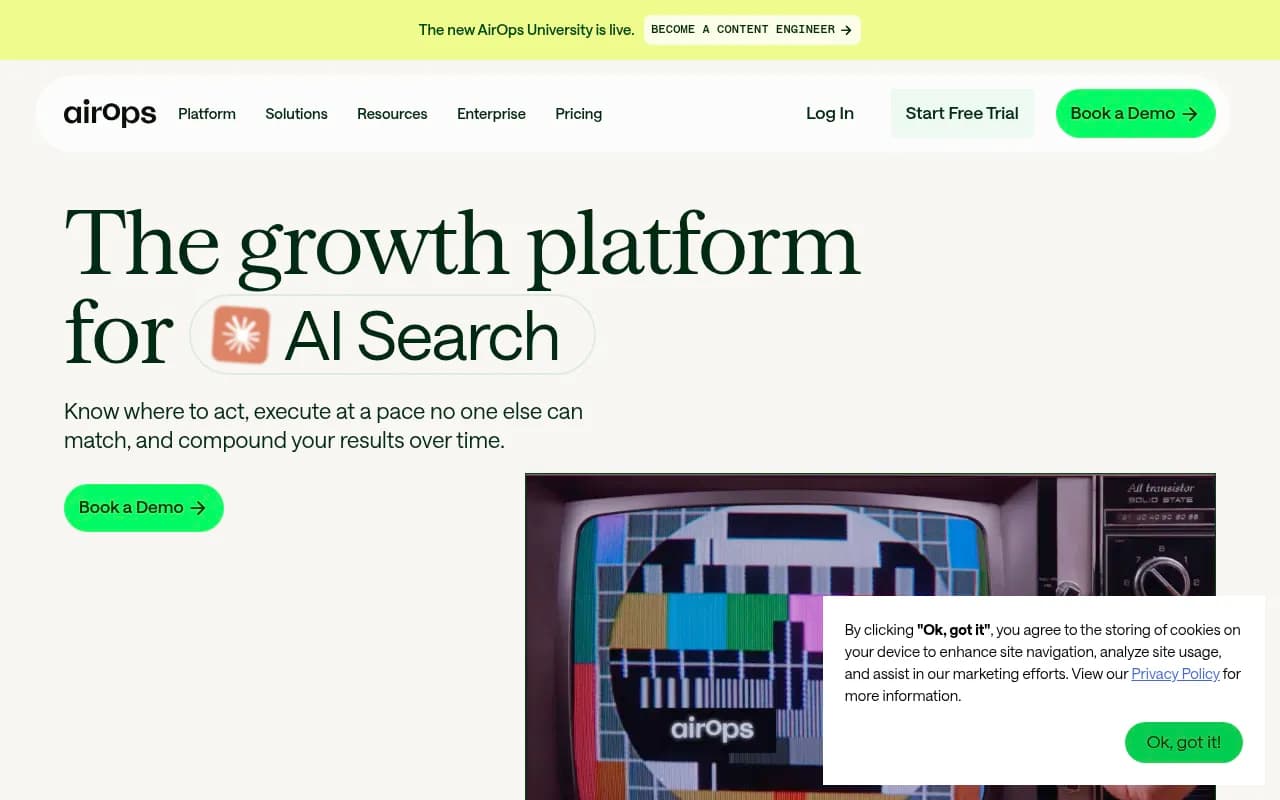
One thing worth knowing: AirOps doesn't publish pricing. You need to contact sales, which means it's effectively enterprise-only. If you're a team of two or a startup with a modest budget, this probably isn't your tool.
What Writesonic actually is
Writesonic started as an AI writing assistant -- one of the earlier entrants in that space -- and has since expanded into what it calls an AI search visibility platform. The GEO features include brand monitoring across several AI engines, an AI article writer, and some basic citation tracking.
The honest take from independent reviews: the writing features are solid, the GEO tracking is real but limited. One review noted that Writesonic's AI visibility tracking covers fewer engines than dedicated GEO platforms, and some of the deeper analytics features are gated behind higher-tier plans (the full suite runs around $249/month).
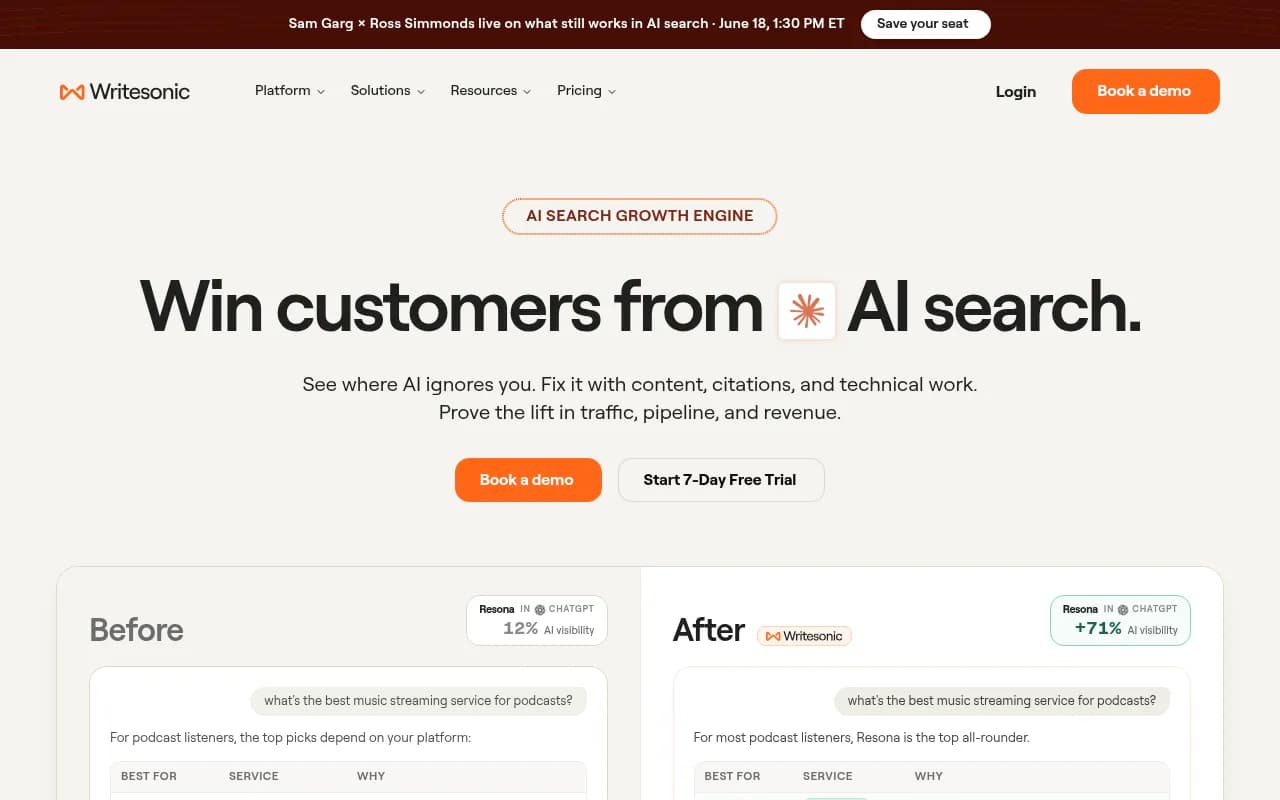
Writesonic's strength is flexibility. It handles a lot of content formats -- blog posts, social copy, product descriptions, landing pages -- and the interface is approachable for teams that aren't deeply technical. If you need an AI writing tool that also gives you a basic read on AI search visibility, it covers both without requiring two separate subscriptions.
The weakness is depth. Compared to platforms built specifically for GEO, Writesonic's visibility features feel like an add-on rather than a core product. You get a dashboard, you get some monitoring, but the gap analysis and content optimization loop isn't as developed.
Head-to-head: what each tool does well
| Capability | AirOps | Writesonic |
|---|---|---|
| Content generation | Strong -- workflow automation at scale | Strong -- flexible formats, good quality |
| AI visibility monitoring | Moderate -- added feature, not core | Moderate -- real but limited engine coverage |
| Content gap analysis | Present, tied to workflow | Basic |
| CMS integration | Yes -- Webflow, HubSpot, Notion, etc. | Limited |
| Pricing transparency | No -- enterprise sales required | Yes -- published tiers |
| Best for | Enterprise content teams | SMBs and solo marketers |
| AI engines tracked | Not primary focus | Several, but fewer than dedicated tools |
| Crawler/indexing insights | No | No |
| Reddit/YouTube tracking | No | No |
| Prompt volume data | No | No |
The table makes the gap obvious: both tools are primarily content creation platforms that have added AI visibility features. Neither was built from the ground up to answer the question "why isn't my brand appearing in AI answers, and what do I do about it?"
The GEO gap both tools share
Here's the thing that doesn't show up in feature lists: GEO (Generative Engine Optimization) as a discipline requires a specific kind of data. You need to know which prompts users are actually typing into ChatGPT or Perplexity. You need to see which sources those engines are citing and why. You need to understand what content is missing from your site that would make AI models more likely to reference you.
AirOps and Writesonic can generate content and track some visibility signals. But neither gives you:
- Prompt volume and difficulty data (so you can prioritize which gaps to fill)
- Real crawler logs showing when AI bots visit your pages and what they index
- Query fan-outs that show how a single prompt branches into sub-queries
- Reddit and YouTube citation tracking (these platforms heavily influence AI answers)
- Page-level citation tracking tied to specific AI models
This isn't a knock on either tool -- they're just solving different problems. AirOps is solving "how do I produce content at scale." Writesonic is solving "how do I write content faster and monitor my brand." Neither is primarily solving "how do I systematically improve my visibility in AI search."
Who should use AirOps
AirOps makes sense if:
- You're running a large content operation (think: hundreds of pages per month)
- You have a dedicated SEO or content team that can configure and manage workflows
- You're already using tools like HubSpot or Webflow and want tighter integration
- Budget isn't a constraint -- you're comfortable with enterprise pricing
The platform is genuinely impressive for content at scale. If you need to refresh 500 product pages or generate localized content across multiple markets, AirOps is built for that. The AI visibility features are a bonus, not the reason to buy it.
Who should use Writesonic
Writesonic makes sense if:
- You're a small team or solo marketer who needs one tool for writing and basic monitoring
- You want AI-assisted content generation without a steep learning curve
- You're just starting to think about AI search visibility and want a low-commitment entry point
- You're on a tighter budget and can't justify separate tools for writing and GEO
The $249/month tier gives you both the writing suite and the GEO monitoring features. For teams that aren't ready to invest in a dedicated GEO platform, that's a reasonable starting point.
What a dedicated GEO platform looks like by comparison
If you're reading this because you want to actually improve your AI search visibility -- not just monitor it, not just produce more content -- it's worth understanding what purpose-built GEO tools offer that AirOps and Writesonic don't.
Platforms like Promptwatch are built specifically around the optimization loop: find where you're invisible in AI answers, understand why, create content that fills those gaps, then track whether it worked. That's a different product philosophy than either AirOps or Writesonic.
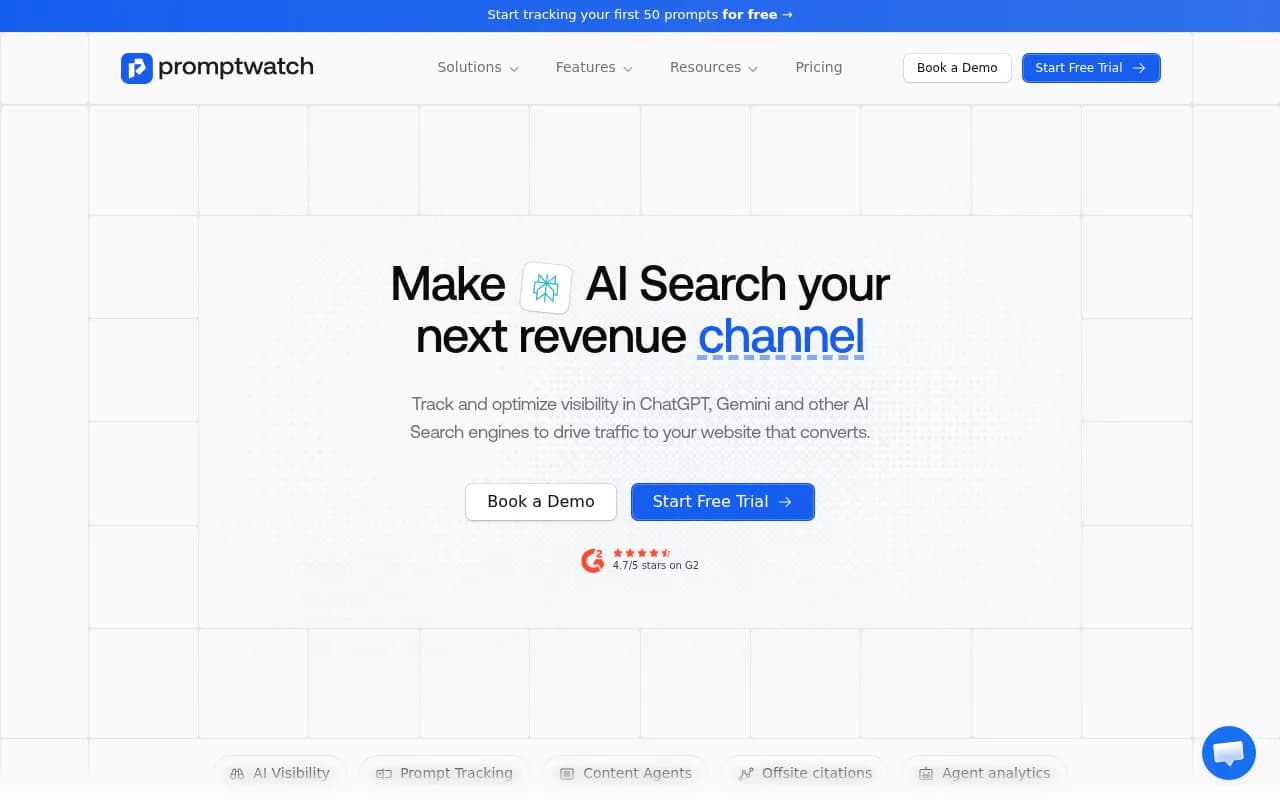
The specific capabilities that matter for GEO and that dedicated platforms cover more deeply:
- Answer gap analysis that shows exactly which prompts competitors rank for but you don't
- Prompt volume estimates so you can prioritize high-traffic gaps
- AI crawler logs that show when ChatGPT, Claude, or Perplexity actually crawl your pages
- Page-level citation tracking tied to specific models and prompts
- Reddit and YouTube monitoring, since these sources heavily influence AI recommendations
- Content briefs grounded in real prompt data, not just keyword research
Neither AirOps nor Writesonic covers all of these. That's not a flaw -- it's just a different product category.
Other tools worth knowing about
If you're evaluating AirOps and Writesonic for GEO specifically, a few other tools are worth a look depending on what you need:
For monitoring-focused teams that want solid AI visibility tracking without the content generation layer:


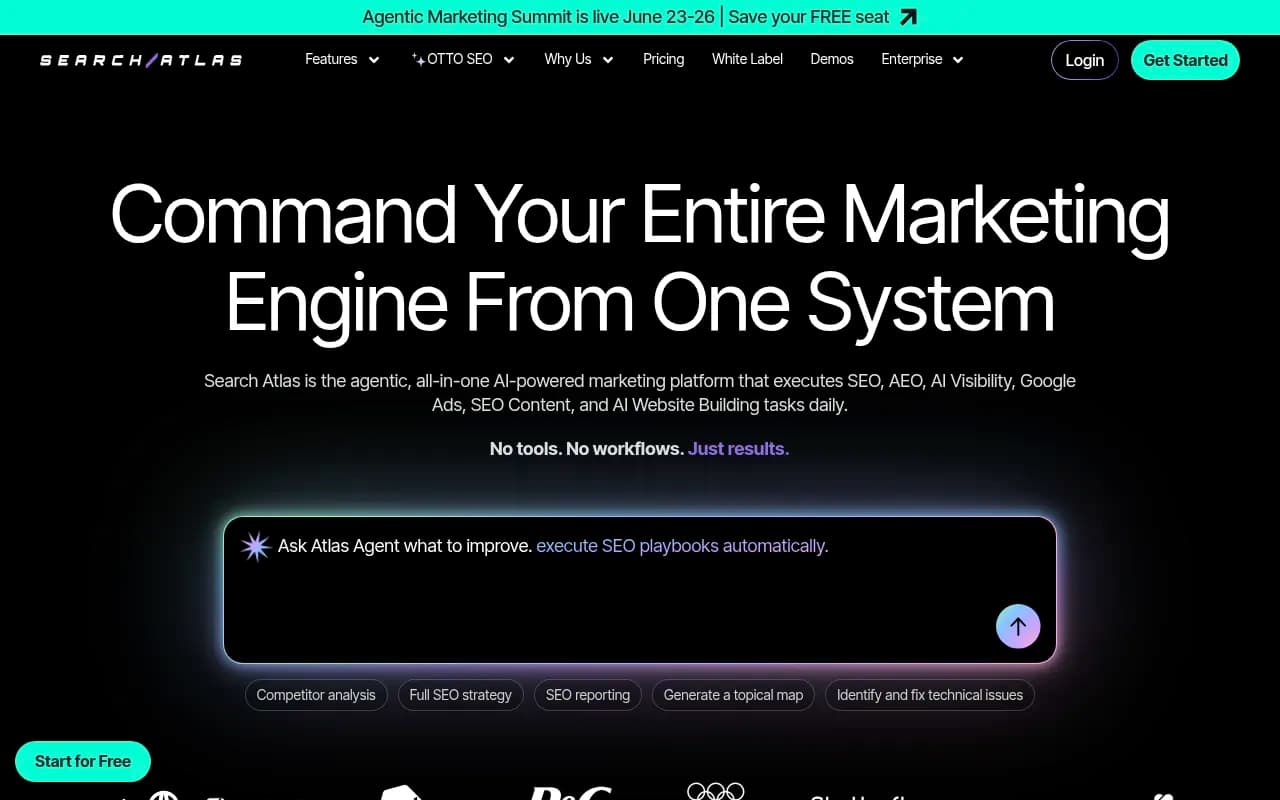
For teams that want SEO and GEO in one platform:
For lighter-weight monitoring at lower price points:


How to choose
The decision between AirOps and Writesonic isn't really about which is "better" -- it's about which problem you're actually trying to solve.
If your bottleneck is content production velocity and you need to publish at scale with AI assistance, AirOps is the stronger platform. The workflow automation is genuinely powerful, and the AI visibility features give you enough signal to inform your content strategy.
If your bottleneck is having a single flexible tool for writing and basic AI monitoring without a large budget or technical setup, Writesonic is the more accessible choice.
If your bottleneck is actually improving how your brand appears in AI search results -- understanding why you're not being cited, what content would change that, and whether your changes are working -- then neither tool is the right primary choice. You'd want a dedicated GEO platform, potentially alongside one of these for content production.
The honest framing: AirOps and Writesonic are both good at what they were originally built for. The GEO features in both cases are real but secondary. For teams where AI search visibility is a strategic priority in 2026, that distinction matters.
Quick reference comparison
| Factor | AirOps | Writesonic | Dedicated GEO platform |
|---|---|---|---|
| Primary purpose | Content workflow automation | AI writing + basic monitoring | AI search visibility optimization |
| Pricing | Enterprise (contact sales) | ~$249/mo for full features | Varies ($99-$579/mo typical range) |
| Content generation | Core feature | Core feature | Varies -- some include it |
| AI visibility depth | Moderate | Moderate | High |
| Crawler/indexing data | No | No | Yes (in leading platforms) |
| Prompt volume data | No | No | Yes |
| Best for | Large content teams | SMBs, solo marketers | Teams prioritizing AI search ROI |
The right answer depends on where your team is right now. If you're just starting to think about AI search, Writesonic's all-in-one approach is a reasonable first step. If you're running a large content operation, AirOps is worth the investment. And if AI visibility is genuinely a business priority, it's worth looking at what purpose-built platforms offer before committing to a tool that treats GEO as a secondary feature.