Key takeaways
- Entity recognition in LLMs determines whether AI search engines like ChatGPT, Gemini, and Perplexity know your brand exists and recommend it in responses.
- Most traditional SEO tools don't track this at all -- you need specialized AI visibility platforms.
- The best tools go beyond monitoring: they show you why you're missing from AI responses and help you fix it.
- Monitoring-only tools (Otterly.AI, Peec.ai, AthenaHQ) are useful for tracking but won't help you close the gaps.
- Platforms like Promptwatch combine entity tracking with content gap analysis and AI content generation, making them more actionable than pure dashboards.
Why entity recognition in LLMs matters now
There's a specific way AI search engines decide whether to mention your brand. It's not a keyword match. It's not a backlink count. It's whether the model has built a coherent internal representation of your brand as an entity -- what you do, who you serve, what makes you credible, and which topics you're associated with.
When ChatGPT answers "what's the best project management tool for remote teams," it's not crawling the web in real time. It's drawing on its training data, retrieval-augmented generation (RAG) layers, and citation sources to construct an answer. If your brand isn't clearly established as an entity across those layers, you simply don't exist in that response.
This is the core of what's now called Generative Engine Optimization (GEO) or Answer Engine Optimization (AEO). And it's why a whole category of tools has emerged specifically to track entity recognition and AI visibility -- separate from traditional rank trackers.
The challenge is that not all tools are equal. Some show you a dashboard of citations and call it done. Others actually help you understand why you're not being recognized and what to do about it. The difference matters a lot when you're trying to move the needle.
What to look for in an entity tracking tool
Before diving into specific platforms, it's worth being clear about what "entity recognition tracking" actually requires from a tool:
- Which models are covered: ChatGPT, Gemini, Claude, Perplexity, Google AI Overviews, Grok, DeepSeek, Copilot -- ideally all of them, not just one or two.
- Prompt-level granularity: You need to see which specific prompts trigger your brand mention and which don't. Aggregate scores hide too much.
- Citation source visibility: Which pages, Reddit threads, or third-party sites are being cited when your brand appears (or doesn't)?
- Competitor comparison: Are competitors being recognized as entities where you aren't? That gap is your opportunity.
- Content gap analysis: Does the tool tell you what content is missing from your site that would help AI models recognize you for specific topics?
- Crawler/indexing data: Are AI crawlers even visiting your pages? If not, entity recognition is impossible regardless of content quality.
Most tools handle some of these. Very few handle all of them.
The best tools for tracking entity recognition in LLMs
Promptwatch
Promptwatch is the most complete platform for entity recognition tracking in 2026, and the only one in a recent 12-platform comparison rated as a "Leader" across all evaluation categories.

What makes it relevant specifically to entity tracking: Promptwatch doesn't just show you whether your brand appears in AI responses. It shows you the structure of why it does or doesn't. The Answer Gap Analysis surfaces the exact prompts where competitors are being recognized as entities but you aren't. You can see the specific topics and angles where AI models have a coherent picture of your competitors but a blank where your brand should be.
The AI Crawler Logs are particularly useful here. They show in real time which AI crawlers (ChatGPT's GPTBot, Perplexity's PerplexityBot, etc.) are visiting your pages, which pages they're reading, and whether those pages are moving from "crawled" to "cited." If a model can't crawl your content, it can't build an entity representation from it. Most tools don't surface this at all.
Promptwatch also tracks entity mentions across 10 AI models: ChatGPT, Perplexity, Google AI Overviews, Google AI Mode, Claude, Gemini, Meta/Llama, DeepSeek, Grok, and Copilot. Page-level tracking shows exactly which of your pages are being cited, by which models, and how often.
For teams that want to act on what they find, Promptwatch's Content Agents generate articles and briefs grounded in real prompt data and citation analysis -- content designed to fill the entity recognition gaps the platform identifies.
Pricing starts at $99/month for the Essential plan (1 site, 50 prompts). The Professional plan at $249/month adds crawler logs and multi-location tracking.
Peec.ai
Peec.ai is often described as "Google Search Console for AI" -- a fair comparison. It tracks citations, brand mentions, and recall accuracy across ChatGPT, Claude, Perplexity, and others.
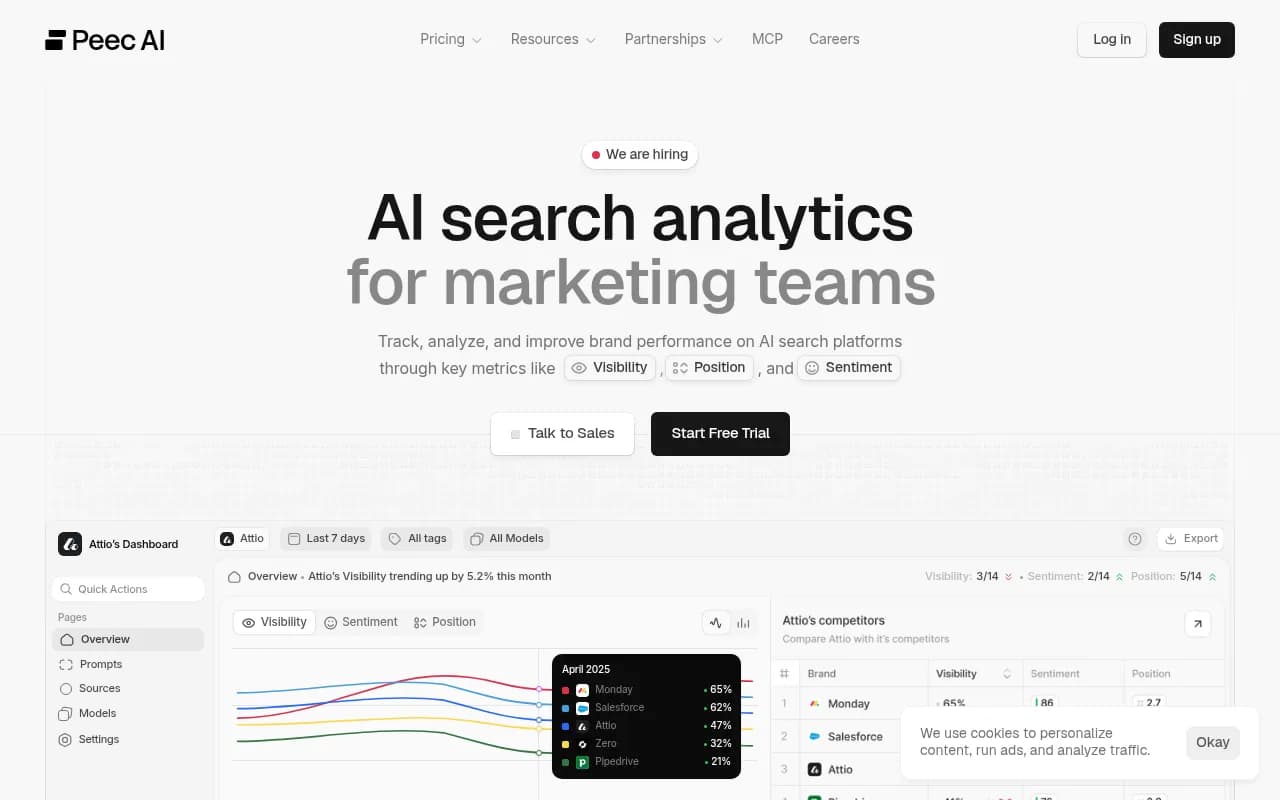
For entity recognition specifically, Peec.ai is useful for understanding how consistently your brand is recalled across different models and prompt types. It surfaces hallucination rates (when a model mentions your brand but gets details wrong), which is a real problem for entity integrity.
The limitation is that Peec.ai is primarily a monitoring tool. It shows you the data but doesn't have content generation or gap analysis features to help you act on it. Good for tracking; less useful for fixing.
Otterly.AI
Otterly.AI sits at the more accessible end of the market. It monitors brand mentions and sentiment across major LLMs and is often the first tool teams adopt when they start paying attention to AI visibility.
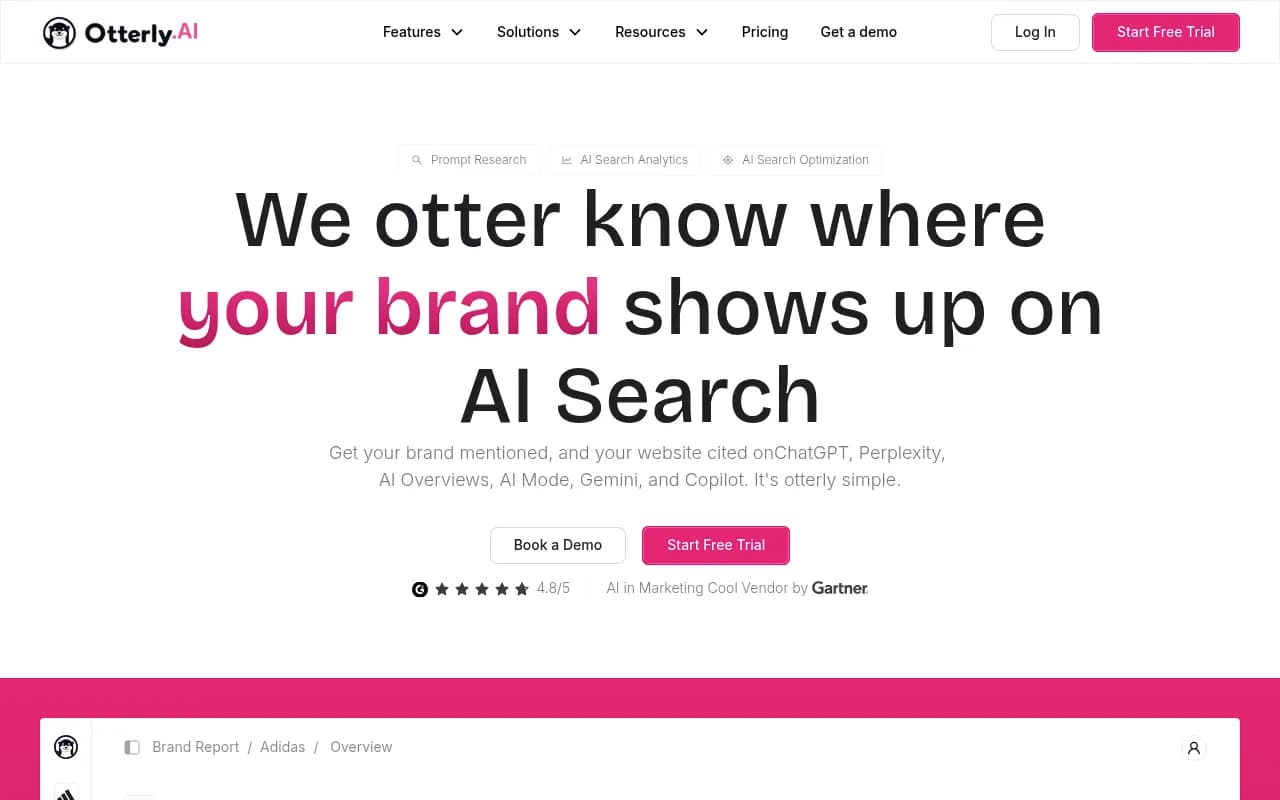
It's genuinely useful for basic entity monitoring -- tracking whether your brand is being mentioned, how it's described, and how that changes over time. The interface is clean and the pricing is reasonable.
Where it falls short for serious entity tracking: no crawler logs, no content gap analysis, no prompt volume data, and no content generation. It's a monitoring dashboard, not an optimization platform. For teams just getting started, that's fine. For teams trying to systematically improve entity recognition, you'll outgrow it quickly.
AthenaHQ
AthenaHQ focuses on AI search monitoring with a clean interface and solid coverage of major LLMs. It's particularly popular with enterprise marketing teams that want structured reporting on AI visibility.
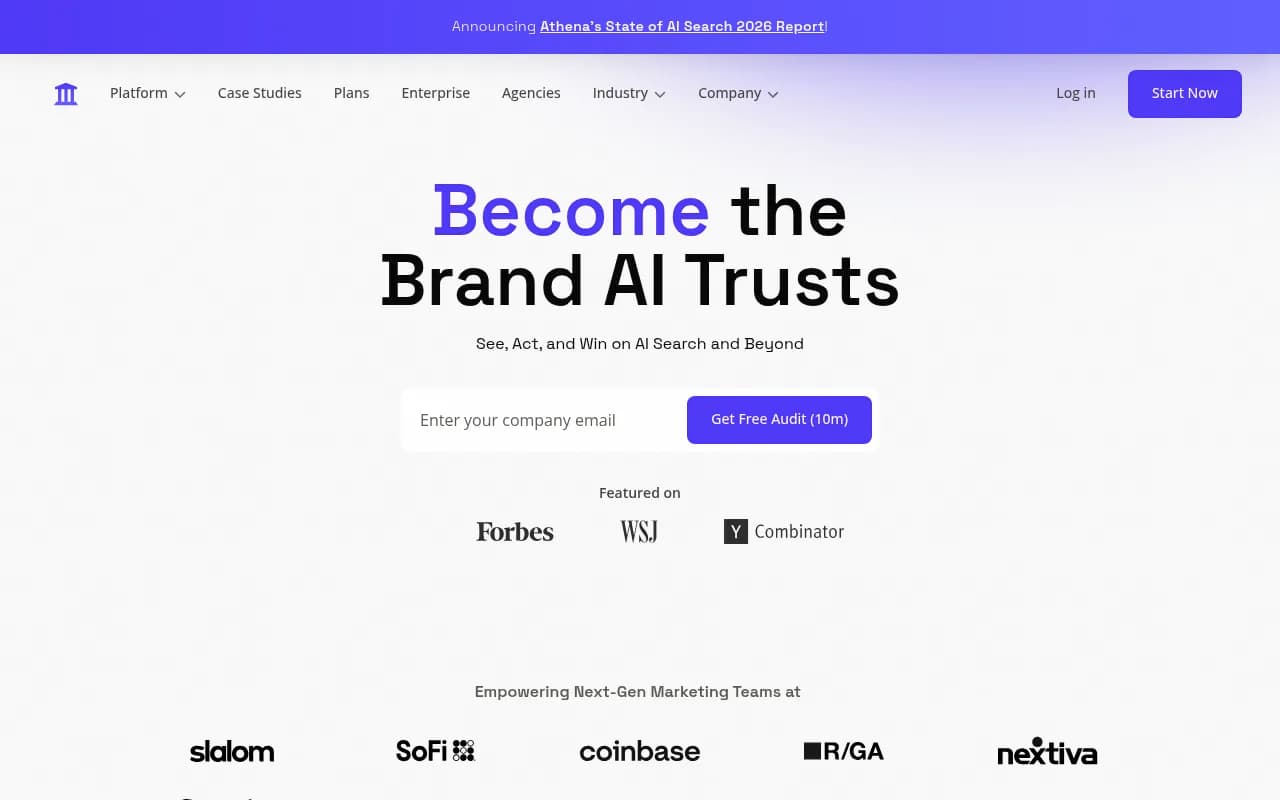
The entity tracking features include brand mention monitoring, competitor comparison, and share-of-voice metrics across models. The reporting is good, and the platform integrates reasonably well into existing marketing workflows.
Like Otterly.AI, though, AthenaHQ is monitoring-oriented. There's no content optimization layer, no crawler log access, and no content generation. You get a clear picture of where you stand; you don't get a clear path to improving it.
Profound
Profound is aimed at enterprise teams and has strong prompt analysis capabilities. It's particularly good at tracking how prompts branch into sub-queries -- useful for understanding the full scope of entity recognition across related topics.
The platform covers major LLMs and provides detailed analytics on citation patterns and brand sentiment. For large organizations with complex brand portfolios, Profound's depth of analysis is genuinely useful.
The tradeoff is cost and complexity. Profound is one of the more expensive options in this space, and it lacks Reddit tracking and ChatGPT Shopping monitoring. For teams focused specifically on entity recognition at scale, it's worth evaluating -- but it's not the most actionable platform.
SE Ranking
SE Ranking has built AI visibility tracking into its broader SEO platform, which is a smart approach for teams that don't want to manage separate tools. The AI Results Tracker monitors brand citations across Google AI Overviews, AI Mode, Gemini, ChatGPT, and Perplexity.
The entity tracking is solid for a hybrid tool. You can see which URLs are being cited in generative answers, track citation trends over time, and get a reasonable view of how your brand is recognized across models. The Looker Studio integration is a nice touch for teams that do custom reporting.
It's not as deep as dedicated GEO platforms on the entity recognition side -- no crawler logs, no content gap analysis -- but if you're already using SE Ranking for traditional SEO, the AI tracking layer adds meaningful value without adding another tool to your stack.
Scrunch AI
Scrunch AI is a monitoring platform built specifically for brands and agencies tracking AI search visibility. It covers the major LLMs and provides brand mention tracking, sentiment analysis, and competitor comparison.
For entity recognition tracking, Scrunch AI is useful for understanding how your brand is described across different models and how that description compares to competitors. The agency-focused features make it a reasonable choice for teams managing multiple clients.
The gap, similar to other monitoring-only tools, is that Scrunch AI doesn't help you close the entity recognition gaps it surfaces. You get the diagnosis without the treatment.
Semrush AI Visibility Toolkit
Semrush has added AI visibility features to its platform, and for teams already deep in the Semrush ecosystem, it's worth knowing what's there.
The AI Visibility Toolkit tracks brand mentions in AI-generated responses and provides some prompt-level data. The limitation is that Semrush uses fixed prompt sets rather than custom prompts, which means you're tracking your entity recognition against a predetermined list of queries rather than the specific prompts relevant to your business. For entity tracking, that's a meaningful constraint.
Ahrefs Brand Radar
Ahrefs Brand Radar is the AI visibility feature within the Ahrefs platform. It tracks brand mentions across AI search engines and provides citation data.
Like Semrush, the main limitation for entity recognition tracking is the fixed prompt approach -- you can't customize the prompts to match your specific brand and competitive landscape. There's also no AI traffic attribution, so you can't connect entity recognition to actual business outcomes. Useful as a starting point, but not a dedicated entity tracking solution.
Rankscale
Rankscale is a newer entrant focused specifically on AI search rank tracking and monitoring. It covers the major models and provides clean visibility data.
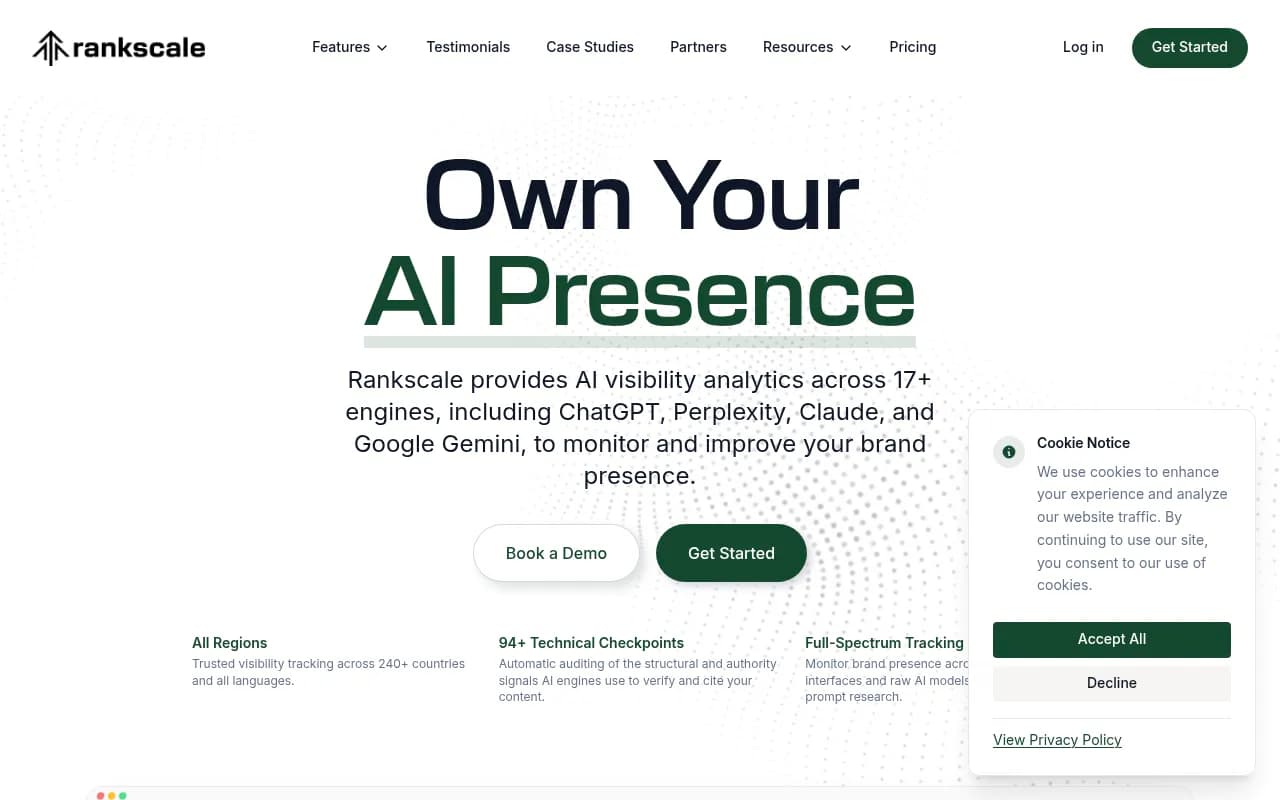
For teams that want a lightweight, focused tool for tracking entity recognition without a lot of additional features, Rankscale is worth considering. It's not as feature-rich as Promptwatch or Profound, but it's more accessible and easier to get started with.
How these tools compare
| Tool | Models covered | Custom prompts | Crawler logs | Content gap analysis | Content generation | Pricing starts |
|---|---|---|---|---|---|---|
| Promptwatch | 10 | Yes | Yes | Yes | Yes | $99/mo |
| Peec.ai | 5+ | Yes | No | No | No | Varies |
| Otterly.AI | 5+ | Yes | No | No | No | ~$49/mo |
| AthenaHQ | 5+ | Yes | No | No | No | Varies |
| Profound | 5+ | Yes | No | Limited | No | Higher |
| SE Ranking | 5 | Limited | No | No | No | ~$65/mo |
| Scrunch AI | 5+ | Yes | No | No | No | Varies |
| Semrush AI | 5+ | Fixed only | No | No | No | ~$139/mo |
| Ahrefs Brand Radar | 5+ | Fixed only | No | No | No | ~$129/mo |
| Rankscale | 5+ | Yes | No | No | No | Varies |
The entity recognition gap most tools miss
Here's something worth being direct about: most AI visibility tools are built around the question "is my brand being mentioned?" That's a reasonable starting point, but it's not the same as entity recognition.
Entity recognition is about whether AI models have a coherent, accurate, and comprehensive understanding of your brand -- what category you're in, what problems you solve, who your customers are, and why you're credible. A brand can be "mentioned" in an AI response while still being poorly recognized as an entity (wrong descriptions, missing context, confused with competitors).
The tools that get closest to tracking actual entity recognition are the ones that show you:
- Which specific prompts trigger your brand mention vs. which don't
- How your brand is described when it does appear (sentiment, accuracy, completeness)
- Which pages AI crawlers are reading and whether those pages are being cited
- What content gaps exist between your site and what AI models need to build a complete entity picture
That last point is where most monitoring-only tools fall short. Knowing you're invisible in a category is useful. Knowing exactly what content would make you visible is what actually moves the needle.
A practical approach to improving entity recognition
Tracking is the starting point, not the goal. Once you have visibility data, the work is:
- Identify the prompts where competitors are recognized as entities but you aren't. These are your highest-priority gaps.
- Audit which pages AI crawlers are visiting. If key pages aren't being crawled, no amount of content optimization will help.
- Check how your brand is described when it does appear. Inaccurate or thin descriptions suggest the model doesn't have enough quality content to work with.
- Create content that directly addresses the gaps -- not generic SEO content, but content that answers the specific questions AI models are trying to answer when they construct responses in your category.
- Track the results over time. Entity recognition doesn't change overnight, but with the right tools you can see the progression from crawl to citation.
Tools like Promptwatch make this loop explicit -- find gaps, create content, track results. That's a more useful frame than "monitor and report."
Which tool should you use?
It depends on where you are and what you need.
If you're just starting to understand your AI visibility, Otterly.AI or Peec.ai are low-friction ways to get a baseline. They're affordable, easy to set up, and give you a reasonable first picture of how your brand is recognized across major LLMs.
If you're past the monitoring stage and want to actually improve entity recognition, Promptwatch is the most complete option. The combination of crawler logs, content gap analysis, prompt volume data, and content generation is genuinely differentiated -- no other platform in this space has all of those in one place.
If you're an enterprise team with complex needs and budget flexibility, Profound is worth evaluating alongside Promptwatch.
If you're already using SE Ranking or Semrush for traditional SEO, their AI visibility features are worth turning on as a complement to your existing workflow -- just don't expect them to replace a dedicated entity tracking platform.
The category is moving fast. Tools that were monitoring-only a year ago are adding optimization features. The gap between "we track this" and "we help you fix this" is closing, but it's still real -- and it's the most important thing to evaluate when choosing a platform in 2026.