Key takeaways
- Brand-level and product-level citation tracking solve different problems -- most tools only do one well
- AI-referred traffic to ecommerce sites grew 393% year over year in Q1 2026 (Adobe), and those visitors convert 42% better than paid search traffic
- Monitoring-only tools show you where you're invisible but don't help you fix it; a smaller number of platforms close that loop with content generation and optimization
- For ecommerce brands tracking individual SKUs, look for tools with product-level mention tracking, sentiment scoring, and rendering quality data (images, pricing, ratings)
- Promptwatch is the only platform in 2026 rated as a "Leader" across all GEO categories, covering both brand and product tracking with a full content optimization loop
Why brand-level and product-level tracking are different problems
Most conversations about AI visibility treat "brand mentions" as the whole story. Your brand name appears in a ChatGPT response -- great, you're visible. But for ecommerce companies, B2B software vendors, and anyone with a product catalog, that framing misses the actual question: which products is the AI recommending, and what is it saying about them?
Brand-level tracking answers: "Does AI mention us?"
Product-level tracking answers: "Does AI recommend this specific product, in what context, with what sentiment, and alongside which competitors?"
Those are genuinely different questions requiring different data. A tool that tells you "Acme Co. was mentioned in 34% of relevant prompts" is useful. A tool that tells you "your $149 running shoe was recommended in 12% of prompts about trail running but 0% of prompts about marathon training, where competitor X dominates" is actionable.
The gap between those two things is where most AI visibility tools fall short in 2026.
What AI search engines actually do with product queries
When someone asks Perplexity "best noise-cancelling headphones under $300" or ChatGPT "which CRM is best for a 10-person sales team," the AI doesn't return a list of links. It synthesizes a recommendation, often naming specific products or brands by name, sometimes with prices and ratings pulled from third-party sources.
This matters for a few reasons:
- There's no "page 2." You're either in the answer or you're not.
- The AI may describe your product positively, neutrally, or with caveats -- and that sentiment affects purchase intent.
- The sources the AI cites (review sites, Reddit threads, YouTube videos) are often more influential than your own website.
- Rendering quality varies: some products appear with images and pricing; others get a bare text mention.
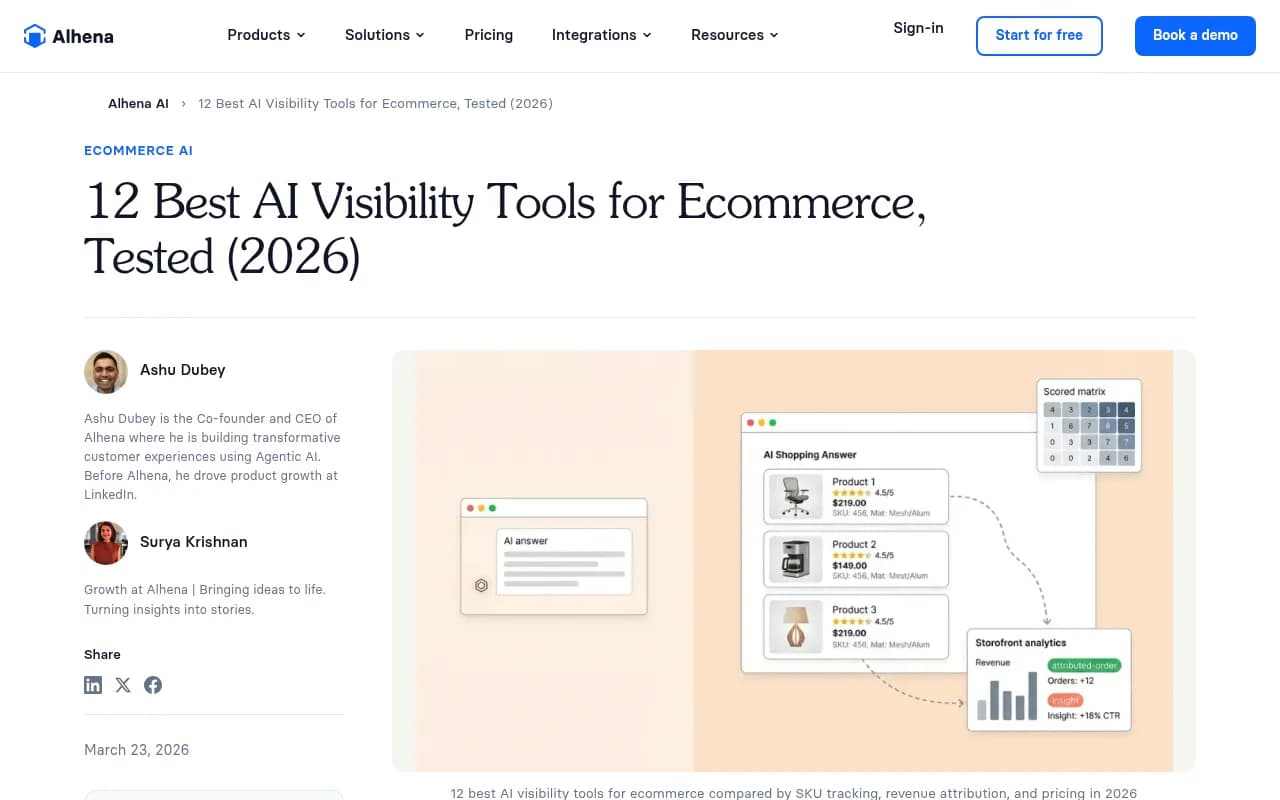
Adobe's Q1 2026 data showed AI-referred ecommerce traffic converting 42% better than paid search. That number makes the stakes concrete. If your product catalog isn't showing up in AI answers, you're not just missing impressions -- you're missing high-intent buyers.
The core metrics to track at each level
Before comparing tools, it helps to know what you're actually trying to measure.
Brand-level metrics
- Share of voice: how often your brand appears vs. competitors across a set of prompts
- Mention frequency: raw count of appearances across AI models
- Sentiment: whether mentions are positive, neutral, or negative
- Model coverage: which AI engines (ChatGPT, Perplexity, Gemini, Claude, etc.) are citing you
- Citation sources: which external pages are driving your brand mentions
Product-level metrics
- SKU-level mention rate: which specific products appear, and how often
- Category share of voice: your product's position within a specific category (e.g., "trail running shoes under $150")
- Rendering quality: does the product appear with image, price, and rating, or just a text mention?
- Competitive displacement: which competitor products are appearing instead of yours for specific prompts
- Sentiment by product: a product can have different sentiment profiles across different use-case prompts
- Source attribution: which review sites, Reddit threads, or YouTube videos are influencing product-level citations
Most tools in 2026 handle brand-level metrics reasonably well. Product-level tracking is where the field thins out quickly.
How tools in 2026 approach this differently
The AI visibility tool market has split into roughly three tiers:
Monitoring-only tools send prompts to AI engines, record whether your brand appears, and report the data. They're useful for awareness but leave you to figure out what to do next. Most tools in this category are priced under $200/month.
Monitoring plus content briefs go one step further -- they identify gaps and generate a brief or outline for content that might close them. The quality of the brief varies a lot.
Full optimization platforms close the loop entirely: find gaps, generate content grounded in real prompt and citation data, track whether that content gets crawled and cited, and connect visibility to traffic and revenue. This is a much smaller group.
For product-level tracking specifically, you also need to ask whether the tool supports SKU-level prompt configuration, category-level share of voice, and rendering quality data -- features that not every platform has built out.
Tools worth knowing for brand-level tracking
Otterly.AI
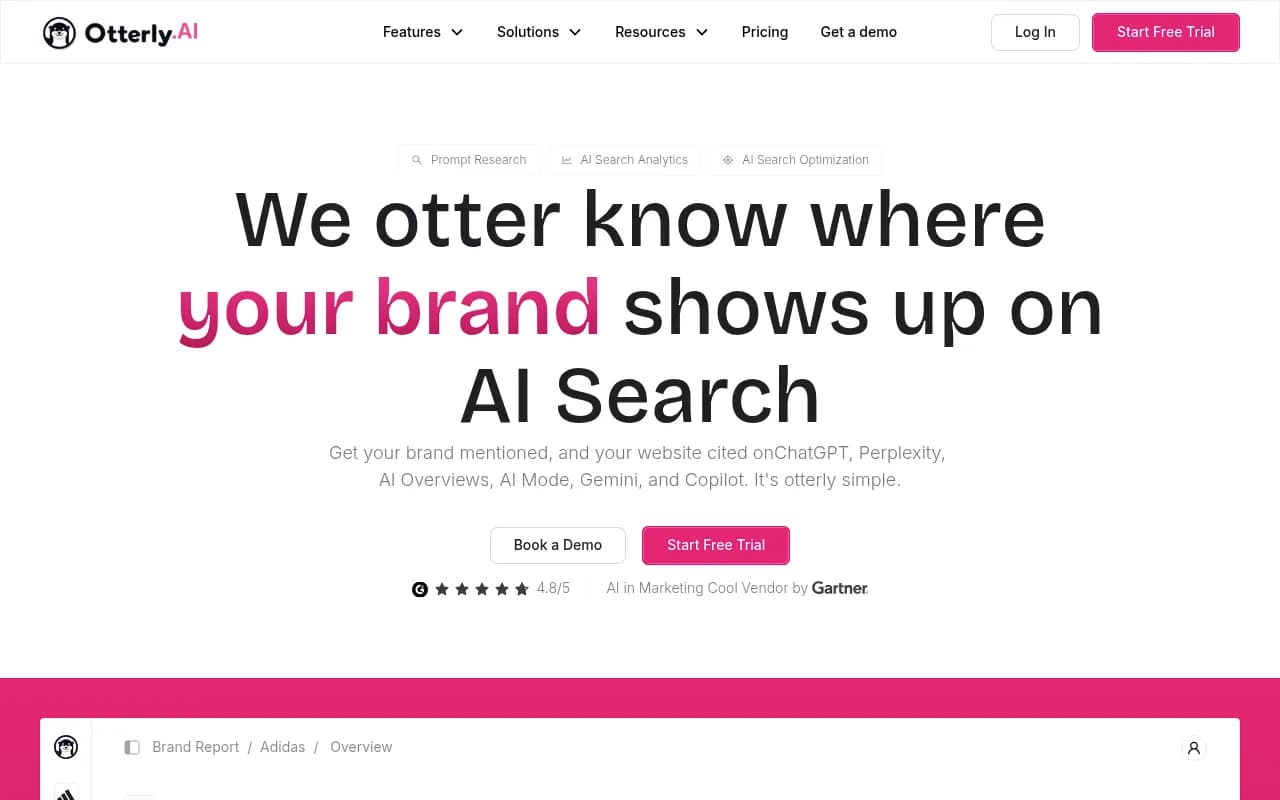
Otterly.AI is a solid entry point for brand monitoring. It tracks mentions across major AI models, reports share of voice, and is priced accessibly for smaller teams. The tradeoff is that it's monitoring-only -- you get the data, but the platform doesn't help you act on it.
Peec AI
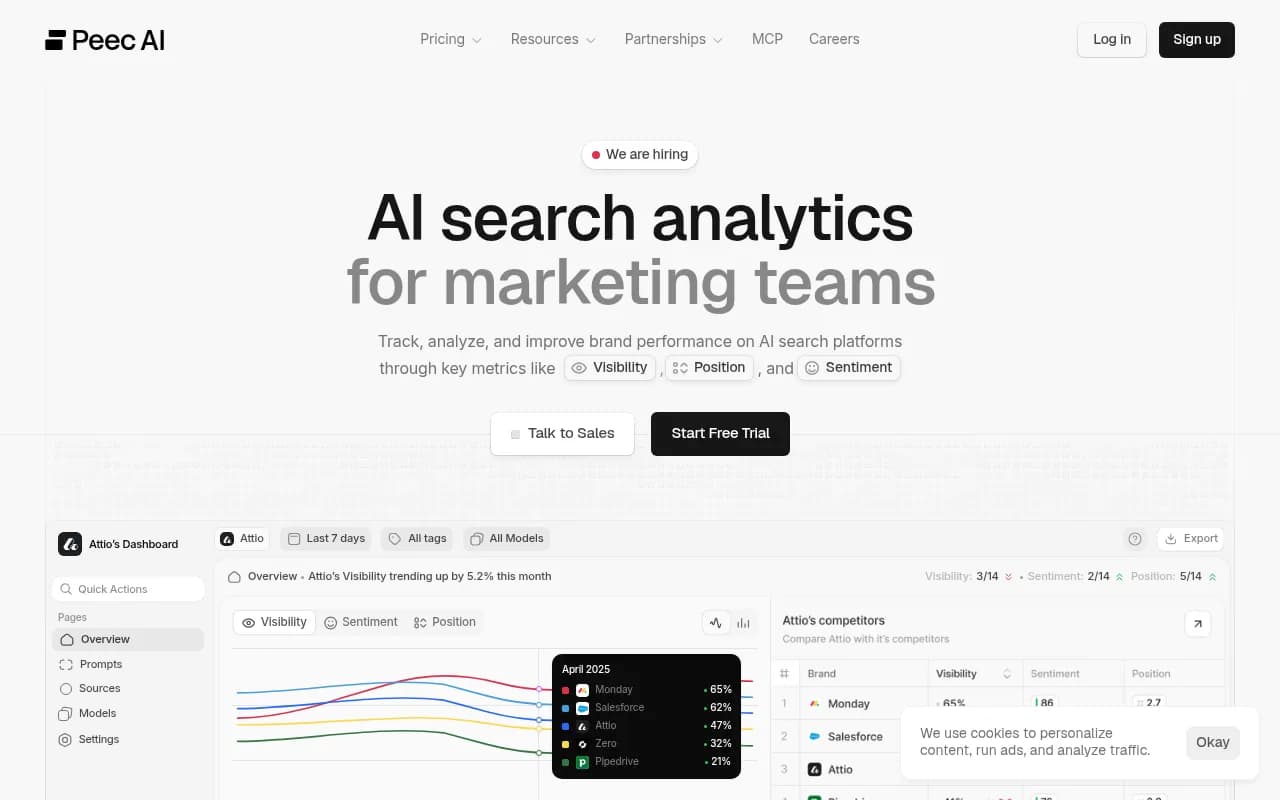
Peec AI focuses on AI visibility tracking with prompt-level reporting. It's a reasonable choice for teams that want clean dashboards and don't need content generation built in.
AthenaHQ
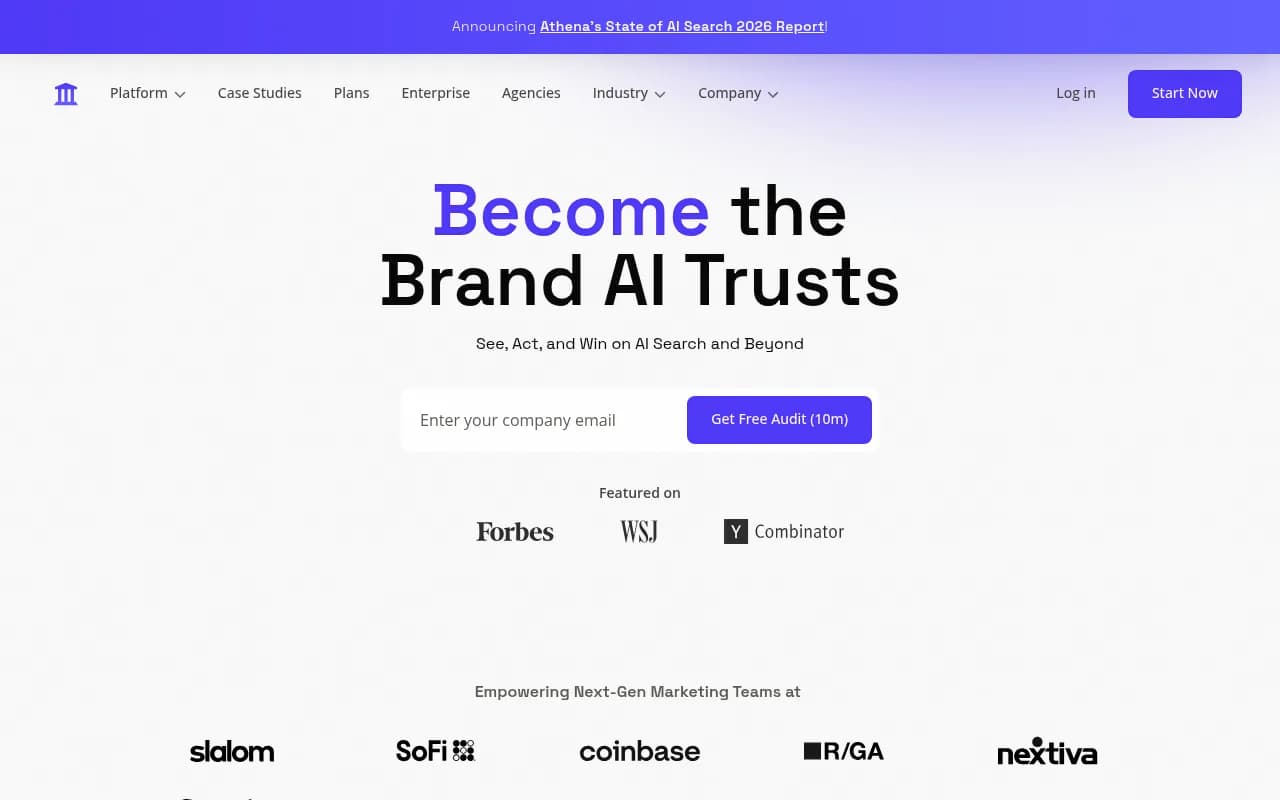
AthenaHQ has built a strong monitoring product with good model coverage. Like most monitoring-focused tools, though, it doesn't extend into content optimization or generation.
Profound
Profound is one of the more capable enterprise monitoring platforms. It covers 10+ AI engines, has deep prompt analytics, and is well-suited for large brands that need reporting infrastructure. It's on the expensive side and doesn't include content generation.
Semrush AI Visibility Toolkit
For teams already living in Semrush, the AI Visibility Toolkit is a natural add-on. It integrates AI monitoring with the broader Semrush data set. The limitation is that it uses fixed prompts rather than custom prompt sets, which makes it less useful for product-level tracking where you need to configure specific category queries.
Ahrefs Brand Radar
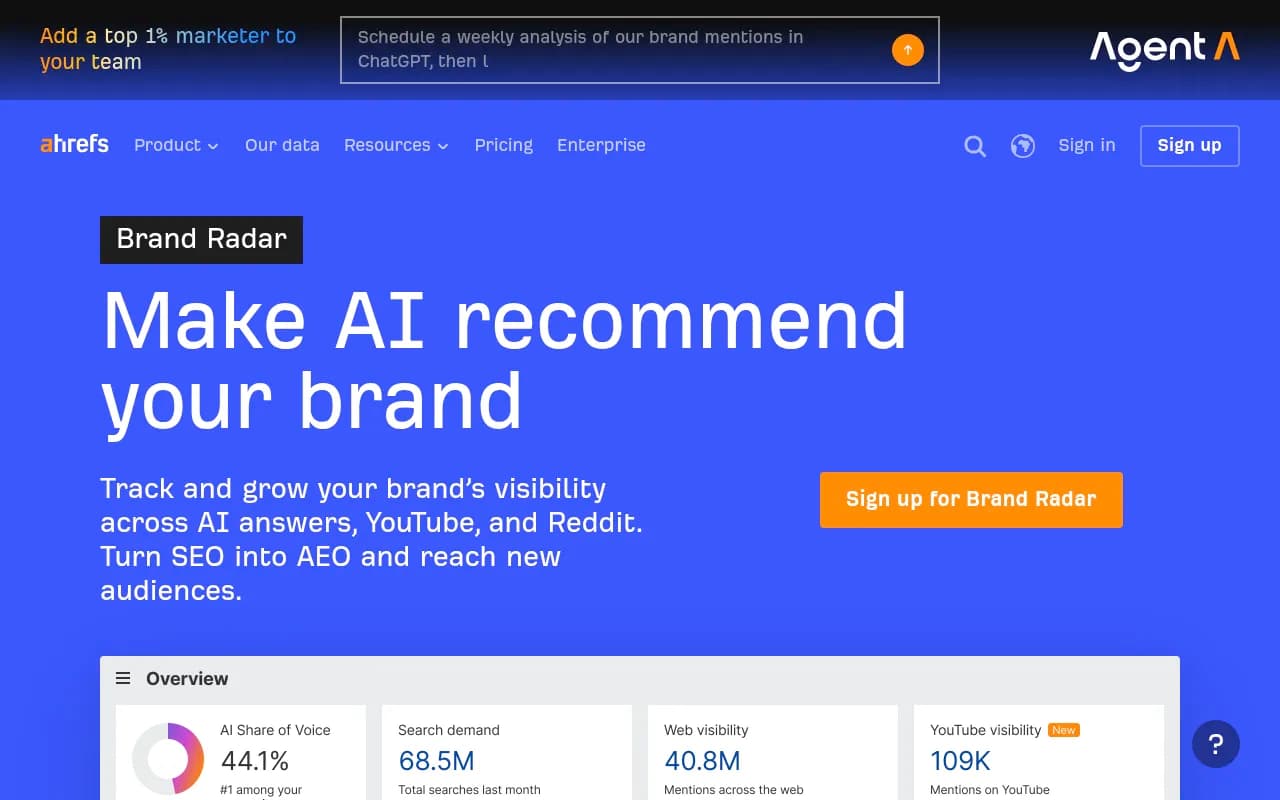
Ahrefs Brand Radar tracks brand mentions across AI search engines and fits naturally into an existing Ahrefs workflow. Like Semrush, it uses fixed prompts and doesn't include AI traffic attribution, which limits its usefulness for product-level analysis.
Tools worth knowing for product-level tracking
Product-level tracking requires more configuration -- you need to define the specific prompts that match your product categories, track individual SKUs or product lines, and ideally connect that data to traffic and revenue.
Scrunch AI
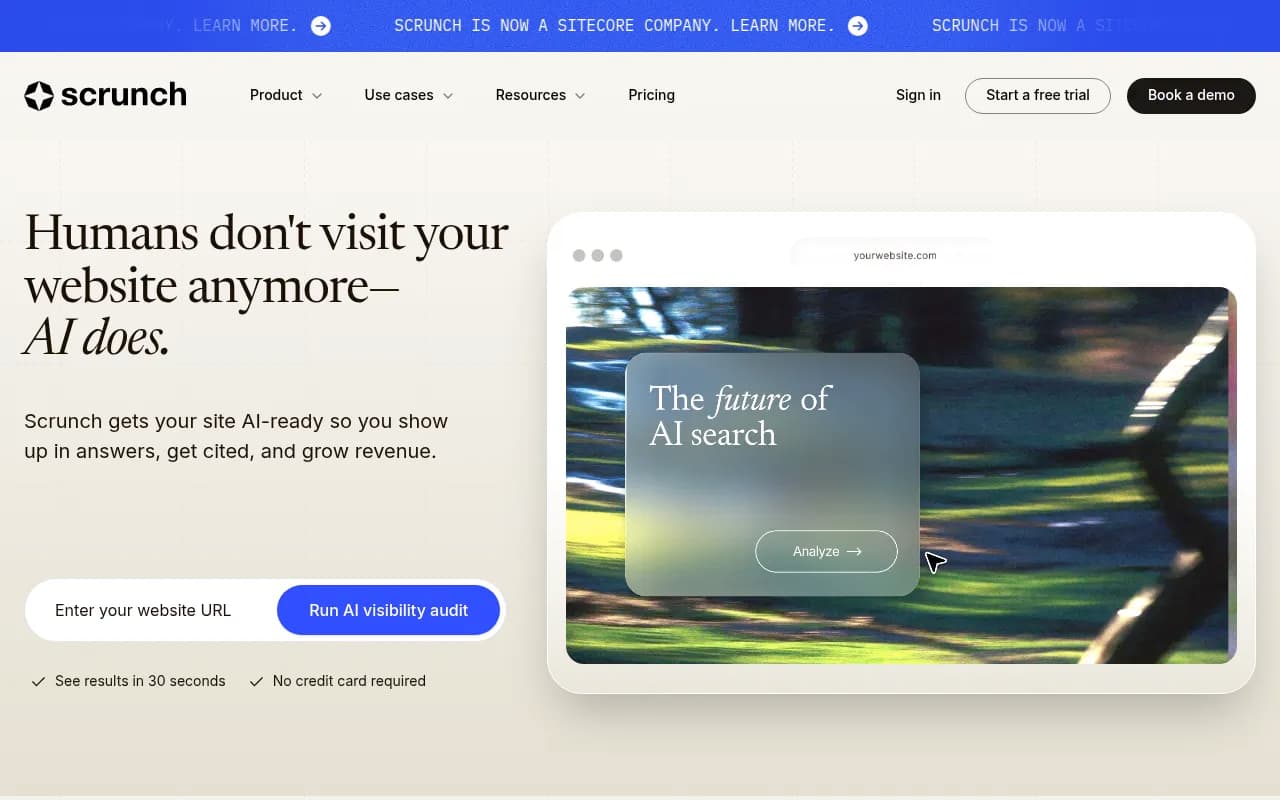
Scrunch AI has built out ecommerce-oriented features including product mention tracking and category share of voice. It's a reasonable option for brands that need more granularity than pure brand monitoring.
SE Ranking (Visible)
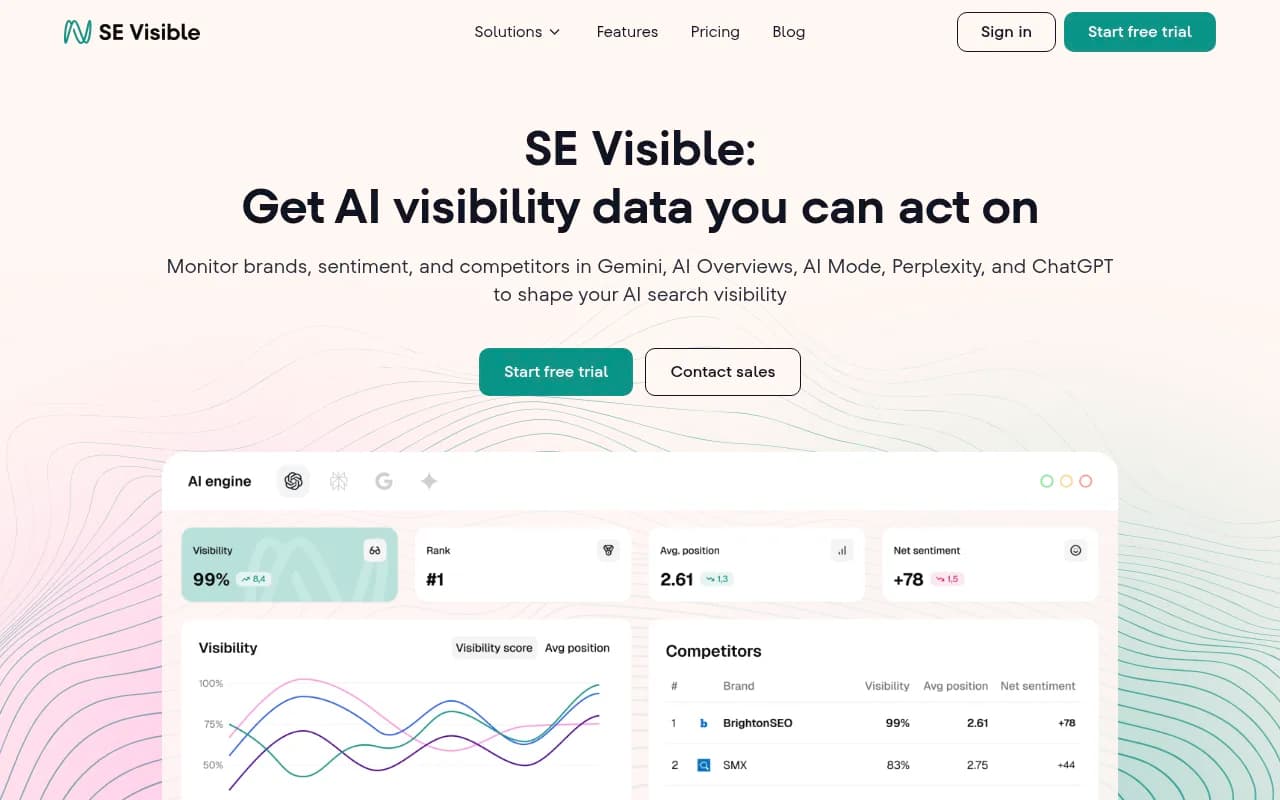
SE Ranking's AI visibility module, branded as Visible, extends the platform's traditional rank tracking into AI search. It supports custom prompt sets, which is important for product-level work.
Rankscale
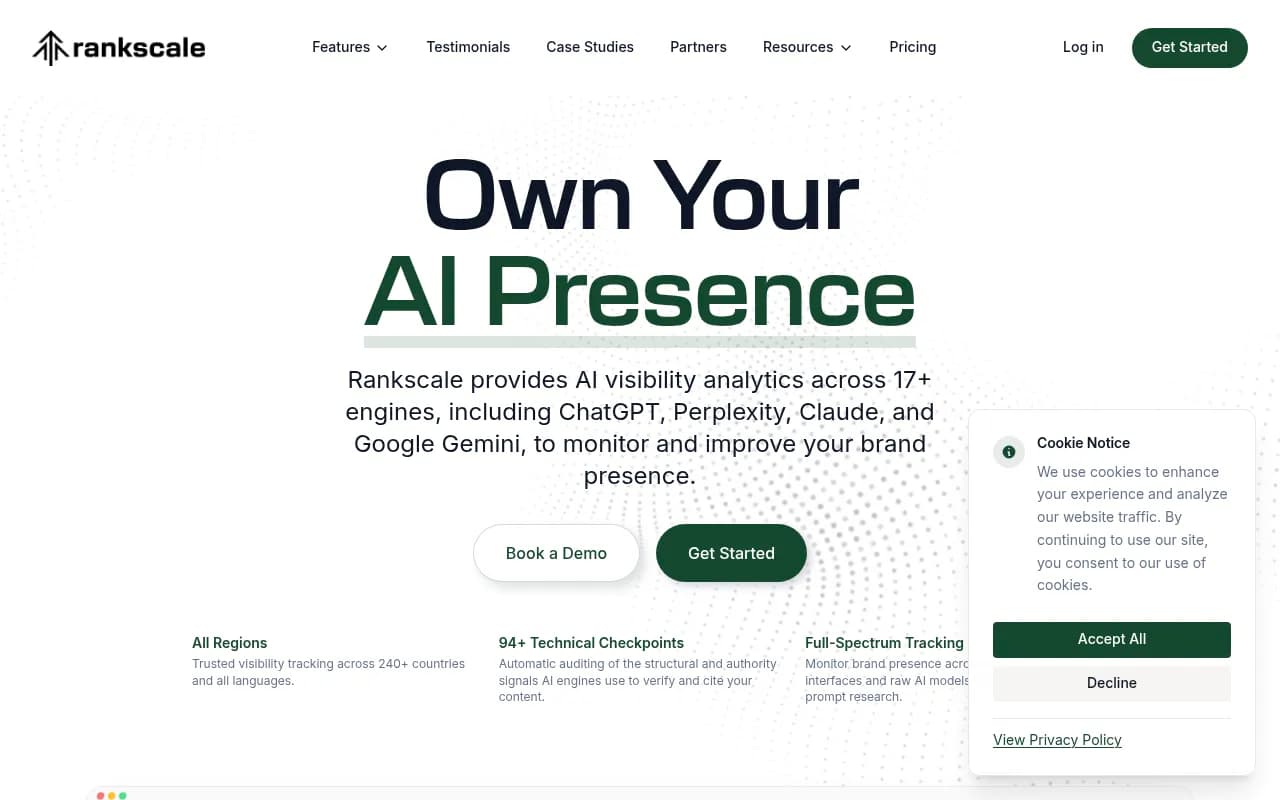
Rankscale is focused on AI search rank tracking and supports more granular prompt configuration than most entry-level tools.
ZipTie
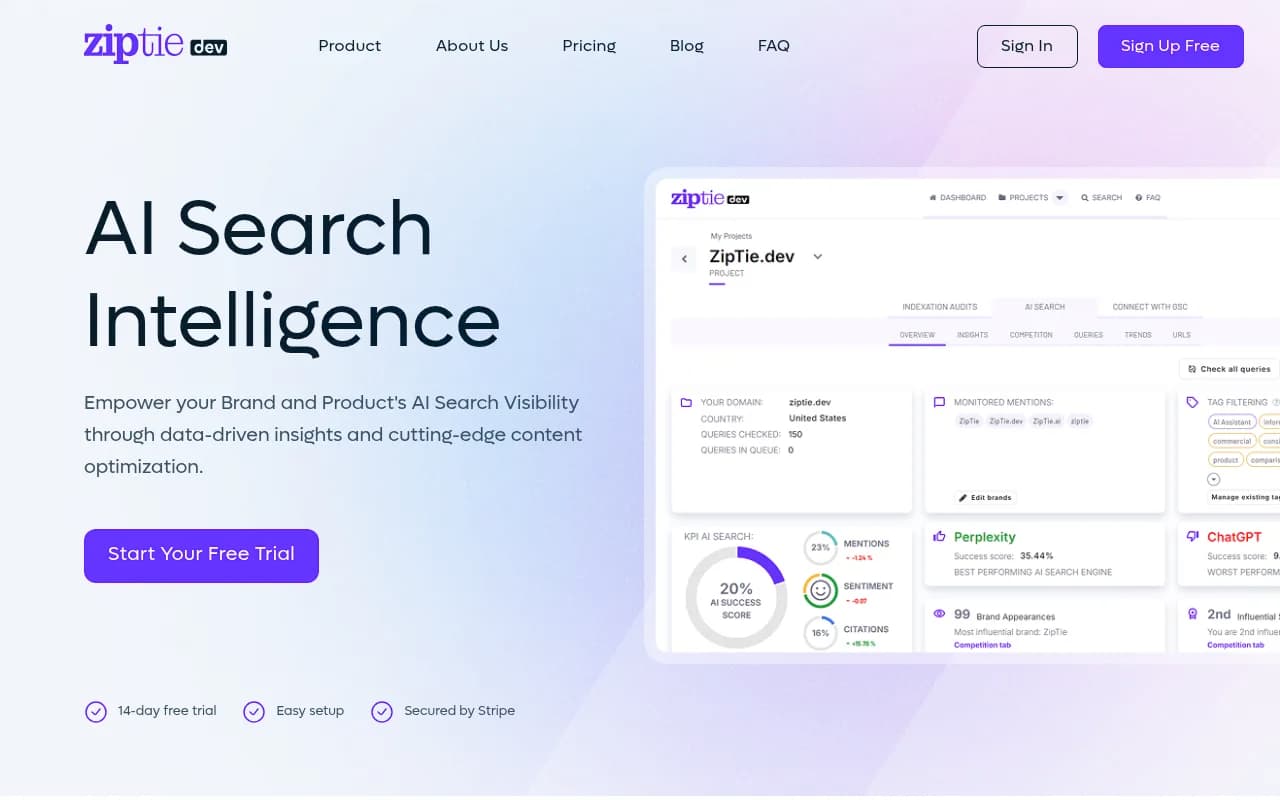
ZipTie is a focused AI search visibility tool with clean reporting. It's worth evaluating for teams that want a lightweight product-level monitor without a lot of overhead.
The full-loop option: Promptwatch
Most tools described above handle one part of the problem. Promptwatch is built to handle all of it -- and it's the only platform in a 2026 comparison of 12 GEO tools rated as a "Leader" across every category.
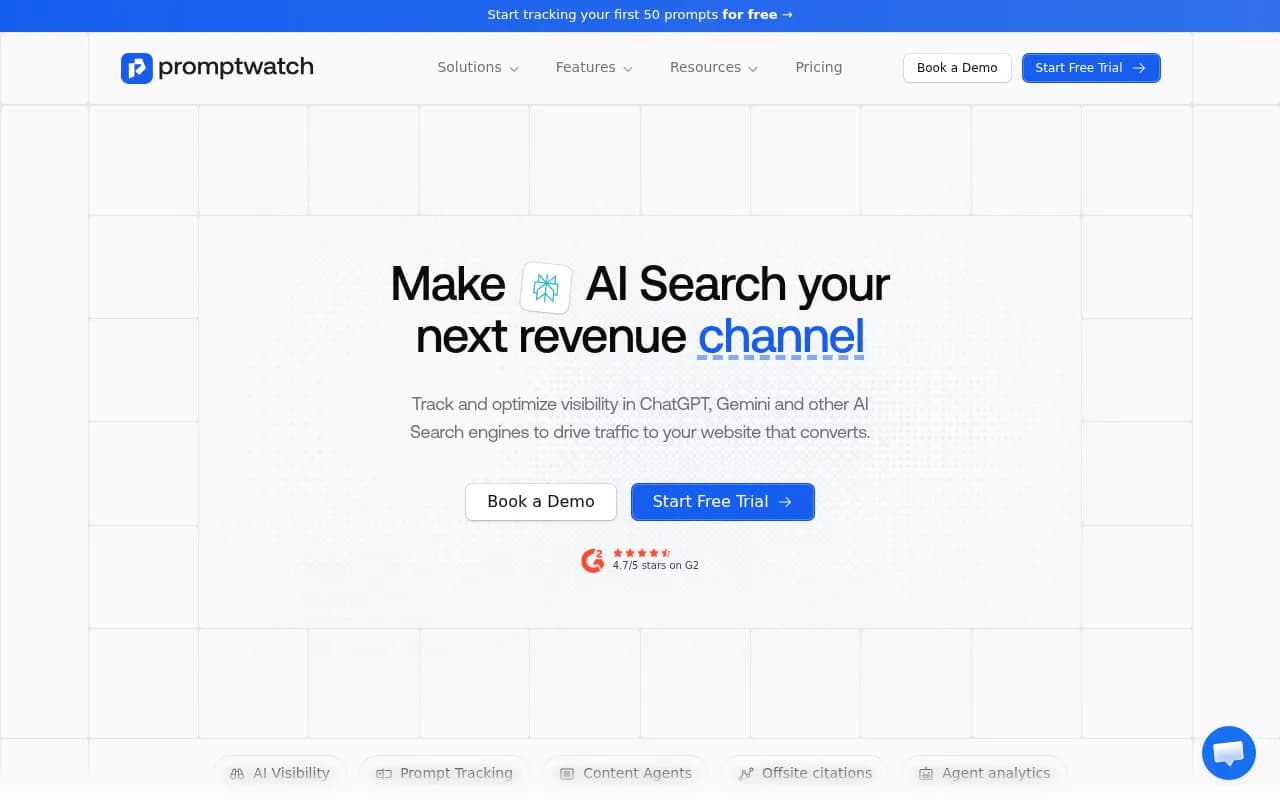
The difference is what happens after you find a gap. Monitoring tools show you that a competitor is appearing for "best project management software for remote teams" and you're not. Promptwatch shows you that gap, then helps you close it: Content Agents generate articles and comparisons grounded in real prompt data, citation data, and competitor analysis. AI Crawler Logs show you when AI engines crawl your new content and when it moves from crawl to citation. Page-level tracking connects the whole thing to actual traffic.
For product-level tracking specifically, Promptwatch supports:
- Custom prompt sets configured around your specific product categories
- ChatGPT Shopping tracking, which monitors when your products appear in ChatGPT's product recommendation carousels
- Entity tracking for brand and product mentions across models
- Offsite citation analysis showing which Reddit threads, YouTube videos, and review pages are driving product-level citations
- Multi-language and multi-region monitoring, useful for brands selling across markets
The pricing starts at $99/month for a single site with 50 prompts, which is competitive for what the platform covers. The Professional tier at $249/month adds crawler logs and state/city-level tracking, which matters for product availability queries that vary by location.
Comparison table: brand-level vs product-level capabilities
| Tool | Brand monitoring | Product/SKU tracking | Content generation | Crawler logs | ChatGPT Shopping | Starting price |
|---|---|---|---|---|---|---|
| Promptwatch | Yes | Yes | Yes | Yes | Yes | $99/mo |
| Profound | Yes | Limited | No | No | No | ~$500/mo+ |
| Scrunch AI | Yes | Yes | No | No | No | Custom |
| AthenaHQ | Yes | Limited | No | No | No | Custom |
| Otterly.AI | Yes | No | No | No | No | ~$49/mo |
| Peec AI | Yes | No | No | No | No | ~$49/mo |
| Semrush AI Toolkit | Yes | No (fixed prompts) | No | No | No | Add-on |
| Ahrefs Brand Radar | Yes | No (fixed prompts) | No | No | No | Add-on |
| SE Ranking Visible | Yes | Partial | No | No | No | ~$65/mo |
| ZipTie | Yes | Partial | No | No | No | Custom |
How to decide which type of tracking you actually need
The right answer depends on what you're selling and how AI search affects your funnel.
If you're a B2B SaaS or services company, brand-level tracking is usually the right starting point. The prompts that matter are category-level ("best CRM for startups") and comparison-level ("HubSpot vs Salesforce"). You want to know your share of voice in those conversations and whether the sentiment is working for or against you. Tools like Otterly.AI or Peec AI can handle this at a low cost. If you want to act on what you find, Promptwatch's content generation loop is worth the step up.
If you're an ecommerce brand with a product catalog, you need product-level tracking. Brand mentions matter, but what really moves revenue is whether your specific products appear in category queries. Look for tools that support SKU-level prompt configuration, rendering quality tracking, and ideally ChatGPT Shopping monitoring. Promptwatch and Scrunch AI are the strongest options here.
If you're an agency managing multiple brands, you need multi-site support, white-label reporting, and enough prompt volume to cover diverse client categories. Promptwatch has agency and enterprise pricing with custom configurations. Search Party is another agency-oriented option worth evaluating.
If you're an enterprise with complex reporting needs, Profound has the strongest dedicated monitoring infrastructure. The tradeoff is that it doesn't help you act on what it finds -- you'll need a separate content workflow.
The offsite citation problem most brands ignore
One thing that doesn't get enough attention in the brand vs. product tracking conversation: a significant portion of AI citations don't come from your own website at all.
AI engines pull from Reddit threads, YouTube reviews, third-party comparison sites, and industry publications. If a Reddit thread from 2024 describes your product negatively, that thread may be influencing AI recommendations today -- and you'd never know it from monitoring your own site's citations.
This is why offsite citation analysis matters. Knowing which external sources are driving your AI visibility (or hurting it) is often more actionable than knowing your own citation rate. A negative Reddit thread can be addressed. A missing product review on a high-authority site can be created.
Promptwatch tracks offsite citations including Reddit and YouTube, which most monitoring-only tools don't cover. It's one of the more underrated features in the platform.
A note on prompt configuration
The quality of your tracking is only as good as the prompts you're monitoring. This sounds obvious but it's where a lot of teams go wrong.
Generic prompts like "best CRM software" will show you category-level share of voice. But if you're trying to understand product-level visibility, you need prompts that match how real buyers actually ask: "best CRM for a 10-person sales team that uses Slack," "HubSpot vs Pipedrive for B2B outbound," "cheapest CRM with email automation."
Tools that use fixed prompt sets (Semrush, Ahrefs Brand Radar) can't capture this nuance. Tools that let you configure custom prompts -- and ideally show you prompt volume and difficulty data so you can prioritize -- give you a much more accurate picture.
Promptwatch's Prompt Intelligence feature includes volume estimates and difficulty scores for each prompt, plus query fan-outs that show how one prompt branches into related sub-queries. That's the kind of data that separates strategic tracking from box-checking.
Putting it together: a practical framework
Here's a simple way to think about building your AI visibility tracking program in 2026:
Step 1: Define your prompt universe. What are the actual questions your buyers ask AI engines? Start with category queries, comparison queries, and use-case queries. For ecommerce, add product-specific queries.
Step 2: Separate brand from product tracking. Set up brand-level monitoring to track share of voice and sentiment. Set up product-level monitoring with SKU-specific prompts for your top 20-30 products.
Step 3: Map your citation sources. Find out which pages (yours and others') are being cited in relevant AI responses. This tells you where to invest -- whether that's improving your own content or getting mentioned on high-authority external sites.
Step 4: Close the gaps. Identify prompts where competitors appear and you don't. Create content specifically designed to answer those prompts. Track whether AI engines crawl and cite the new content.
Step 5: Connect to revenue. Traffic attribution matters. AI visibility that doesn't connect to actual visits and conversions is interesting but not actionable.
Most tools in 2026 handle steps 1-3 reasonably well. Steps 4 and 5 are where the field narrows considerably. If you want a single platform that covers all five steps for both brand and product tracking, Promptwatch is the strongest option available right now.
The monitoring-only tools are fine for awareness. But awareness without action is just a more expensive way to watch competitors win.