Key takeaways
- Most AI visibility tools are monitoring dashboards. They show you a snapshot of where you stand today, but very few are built to track what changes after you publish something new.
- The before/after problem is real: without baseline data captured before publishing, you can't attribute visibility gains to specific content.
- A handful of platforms, including Promptwatch, Profound, and Rankscale, have features specifically designed to connect content publishing events to visibility changes.
- Page-level tracking and agent/crawler analytics are the two capabilities that separate "before/after" platforms from generic monitors.
- If you're publishing content to rank in AI search, you need a platform that logs crawl events, tracks citation timelines, and shows you which specific pages are being cited.
Why "before/after" tracking matters more than you think
Most teams treat AI visibility like a quarterly audit. They check in, see their share of voice, maybe compare it to a competitor, and move on. That's fine if your goal is brand awareness monitoring. But if you're actively publishing content to improve your AI visibility, that approach tells you almost nothing useful.
Here's the problem: AI models don't update in real time. There's a lag between when you publish a page, when an AI crawler indexes it, and when the model starts citing it. That lag can be anywhere from a few days to several weeks. If you're not capturing a baseline before you publish, and tracking the crawl-to-citation timeline after, you have no way to know whether your content actually worked.
This is a surprisingly common gap. Teams publish a GEO-optimized article, wait a month, check their visibility score, and see it went up 3 points. Did the article cause that? Was it something else? Did a competitor lose ground? Without before/after data tied to specific pages and publish dates, you're just guessing.
The platforms that solve this problem share a few traits: they track visibility at the page level (not just the domain), they log when AI crawlers visit specific URLs, and they let you set a baseline or "snapshot" before a content change goes live. Not many tools do all three.
What to look for in a before/after tracking platform
Before comparing specific tools, it helps to know what capabilities actually matter for this use case.
Page-level citation tracking. Domain-level scores are useful for executive reporting, but they're useless for content attribution. You need to see which specific URLs are being cited, by which AI models, and how often. If a tool only shows you aggregate visibility, you can't connect a citation gain to a specific piece of content.
AI crawler logs. This is the most underrated feature in the category. When an AI crawler (like GPTBot or ClaudeBot) visits your site, it leaves a trace. Platforms that capture these logs can show you exactly when a page was crawled, how often the crawler returns, and when it transitions from "crawled" to "cited." That timeline is the core of any meaningful before/after analysis.
Baseline snapshots or historical data. Some platforms let you manually set a benchmark before publishing. Others maintain rolling historical data so you can look back at any point. Either approach works, but you need one of them. If a tool only shows you current visibility with no historical comparison, it's not built for this use case.
Prompt-level granularity. Visibility scores are aggregates. What you really want to know is: for the specific prompts this content was designed to answer, did my ranking improve? That requires tracking visibility at the prompt level, not just the brand level.
Publish event tagging or content integration. A few platforms let you tag a content publish event directly in the dashboard, which creates a clear before/after marker on your visibility charts. This is rare but extremely useful.
The platforms worth considering
Promptwatch
Promptwatch is the platform most directly built around the before/after use case, even if it doesn't market itself that way. The combination of page-level citation tracking, AI crawler logs, and content gap analysis creates a natural before/after workflow.
Here's how it works in practice: you identify a gap using Answer Gap Analysis (which shows you which prompts competitors are visible for but you aren't), you publish content targeting those gaps, and then you watch the crawler logs to see when AI models visit the new page. The Agent Analytics feature shows you the full timeline from publish to crawl to citation. When the visibility score for a specific prompt improves, you can trace it back to the exact page that got cited.
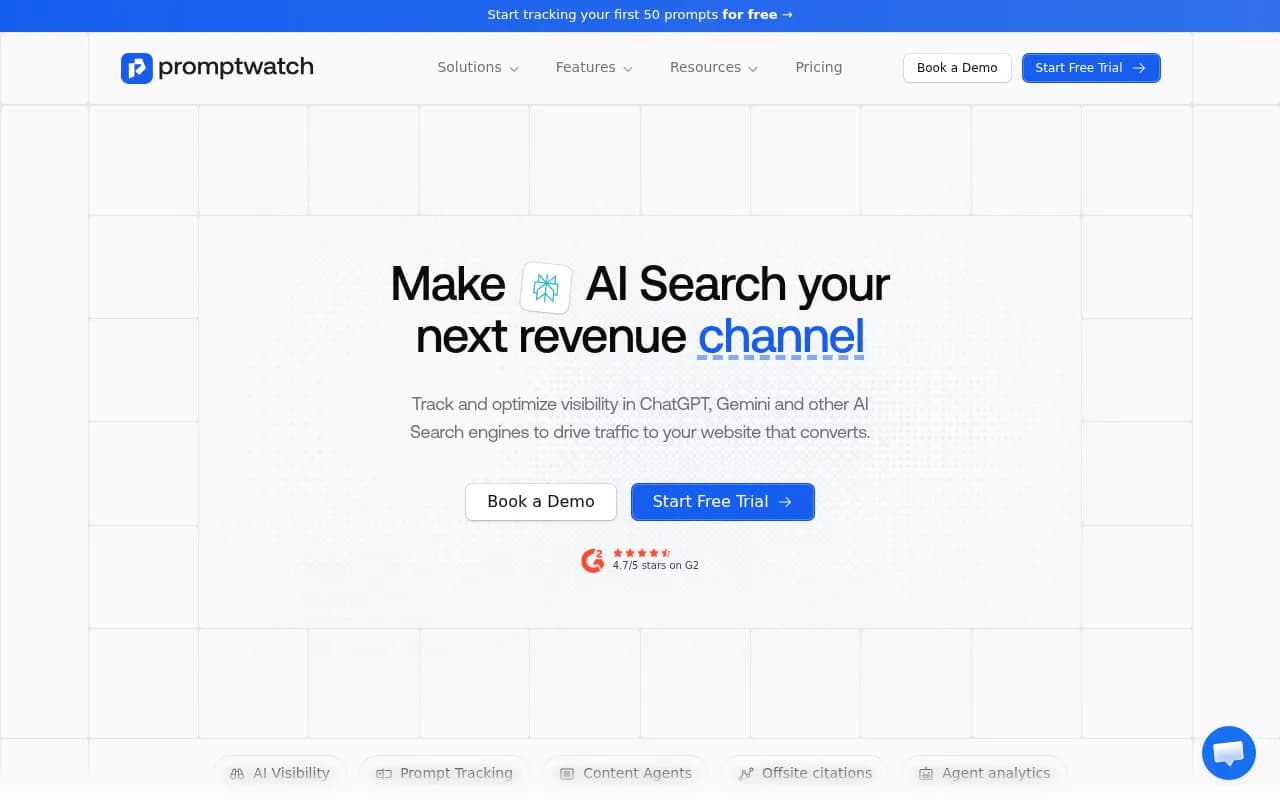
The platform tracks 10 AI models including ChatGPT, Perplexity, Claude, Gemini, Google AI Overviews, and Google AI Mode. Page-level tracking is available on the Professional plan ($249/mo) and above, which also includes crawler logs. The Essential plan ($99/mo) covers 50 prompts and 5 articles but doesn't include crawler logs, so if before/after attribution is your primary goal, Professional is the right tier.
What makes Promptwatch different from most competitors is that it's built around action, not just observation. Most tools show you where you're invisible. Promptwatch shows you what to publish, helps you publish it (via Content Agents), and then tracks whether it worked. That full loop is what makes before/after analysis possible in the first place.
Profound
Profound is an enterprise-grade AI visibility platform with strong historical tracking capabilities. It maintains rolling visibility data across a wide range of prompts, which means you can look back at any point and see what your visibility looked like before a specific content change.
Where Profound excels is in depth of data and prompt coverage. It's particularly strong for enterprise teams that need to report visibility trends over time to leadership. The before/after story is there, but you have to construct it yourself by comparing historical snapshots rather than having the platform surface it automatically.
The tradeoff is price. Profound sits at a higher price point than most mid-market tools, and it doesn't have the content generation capabilities that would complete the action loop. You'll get excellent monitoring and historical data, but you'll need separate tools to act on what you find.
Rankscale
Rankscale takes a different angle on the visibility problem. It focuses on "referenceability" -- whether AI models can actually use your content to generate confident answers, not just whether they mention your brand.
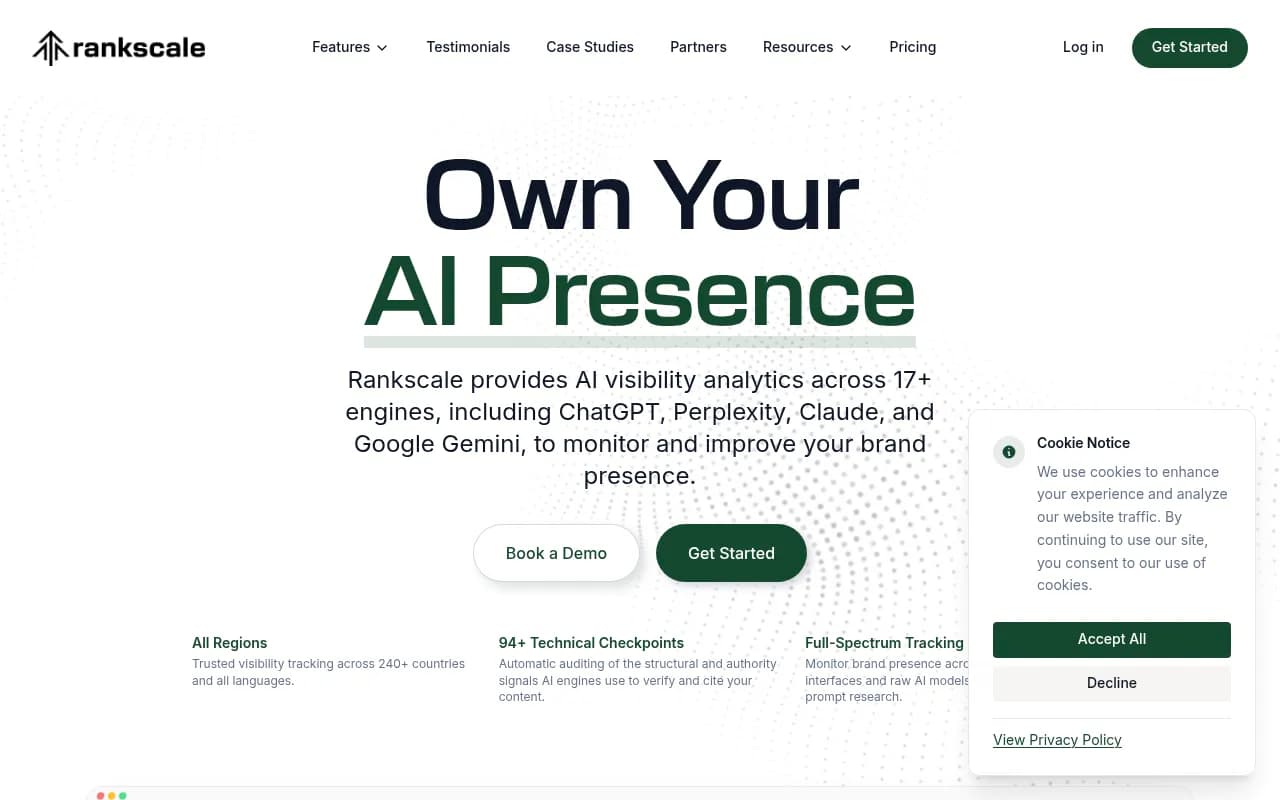
This framing is useful for before/after tracking because it gives you a more actionable metric than share of voice. If your content scores low on referenceability before publishing an optimized version, and high after, that's a clear signal the content change worked. The platform diagnoses specific issues that prevent AI models from citing your content, which makes it easier to know what to fix.
Rankscale is a good fit for teams that want to understand the "why" behind their visibility, not just the "what."
Peec AI
Peec AI is a solid mid-market monitoring tool with prompt-level tracking and competitor comparison. It's not specifically designed for before/after content attribution, but it maintains enough historical data that you can reconstruct a before/after picture if you're disciplined about capturing baselines manually.
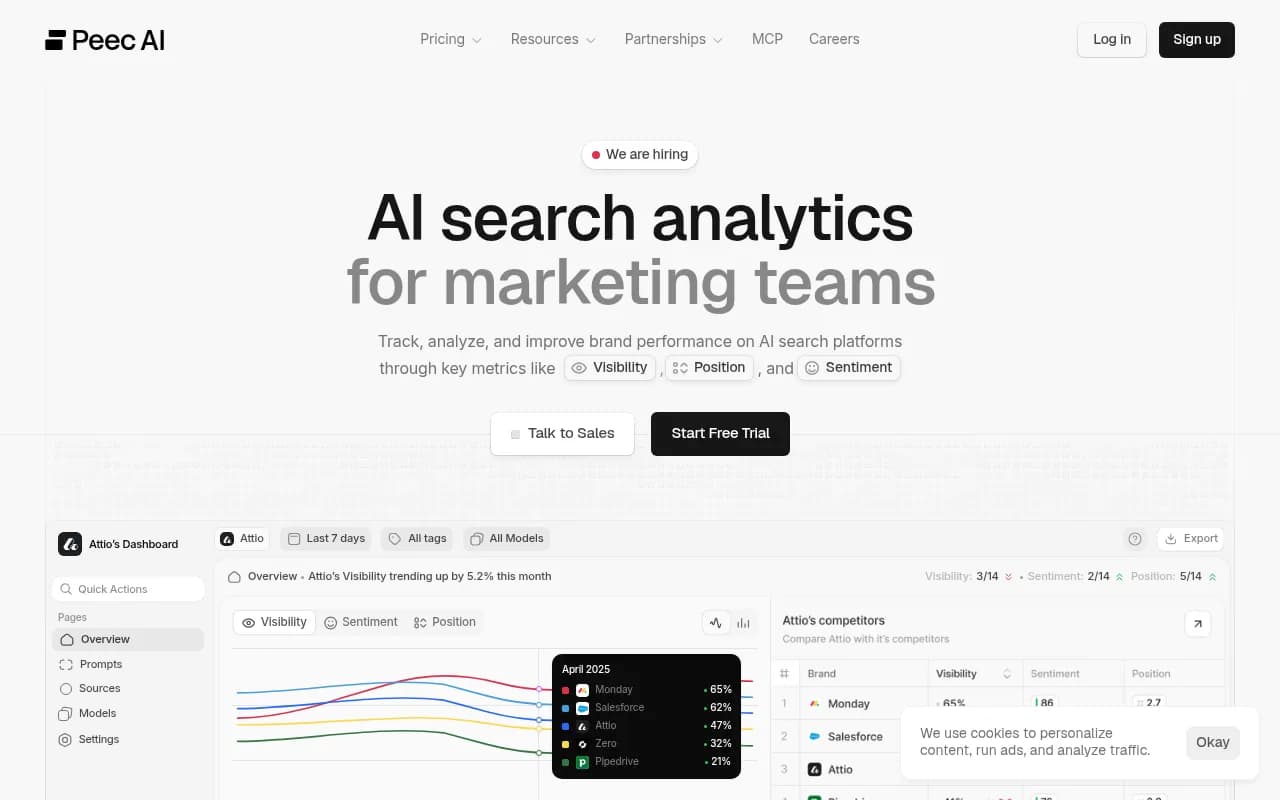
The platform is more affordable than Profound and covers the major AI models. The main limitation for before/after use cases is the absence of crawler logs and page-level citation data. You'll see visibility scores move, but connecting those movements to specific pages requires manual correlation.
Otterly.AI
Otterly.AI is one of the more affordable options in the category, and it's genuinely good at what it does: monitoring brand mentions across AI platforms. The interface is clean, setup is fast, and it covers the main models.
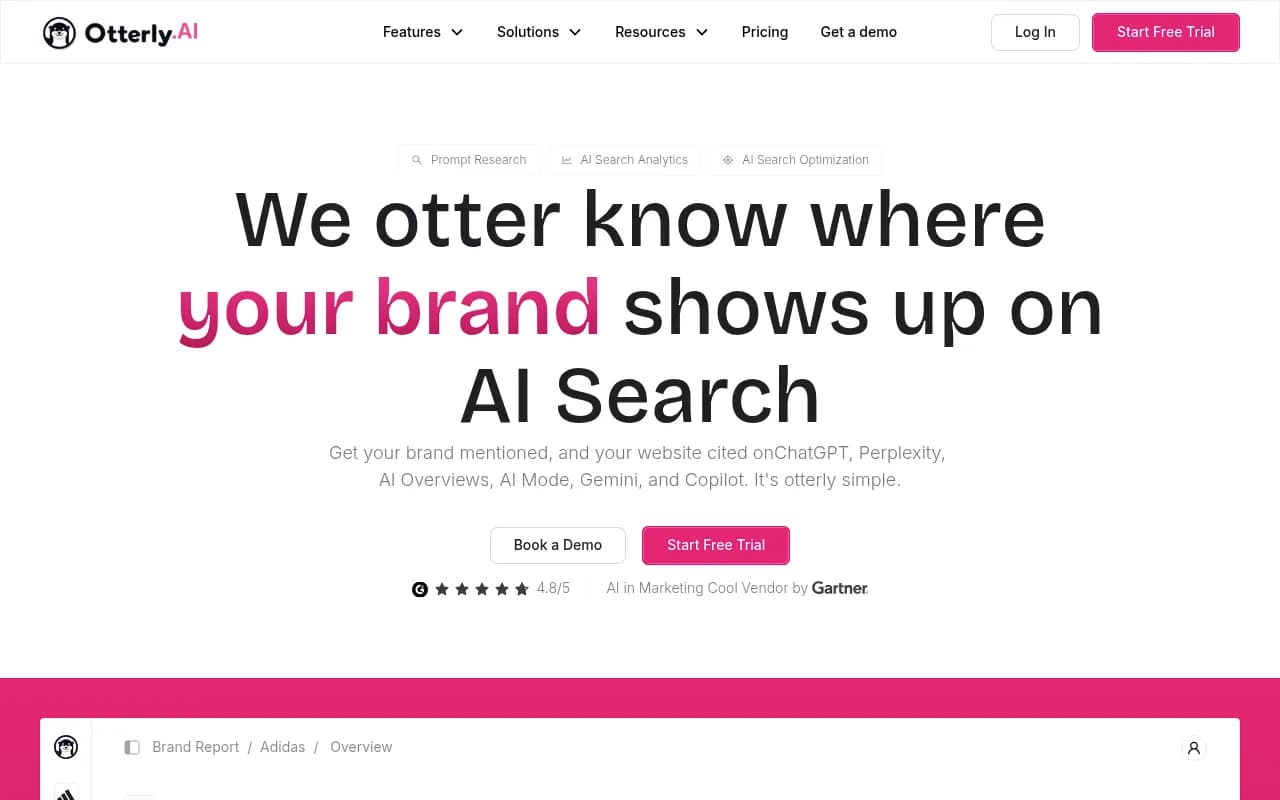
For before/after tracking specifically, Otterly.AI has real limitations. It's a monitoring tool, not an optimization platform. There are no crawler logs, no page-level citation tracking, and no content generation features. If you publish a new article and want to know whether it moved the needle on a specific prompt, Otterly.AI won't give you that answer directly. It's better suited for teams that want brand monitoring without the complexity of a full GEO platform.
AthenaHQ
AthenaHQ is a monitoring-focused platform with good coverage across AI models and clean competitive reporting. Like Otterly.AI, it's built primarily for tracking rather than optimization.
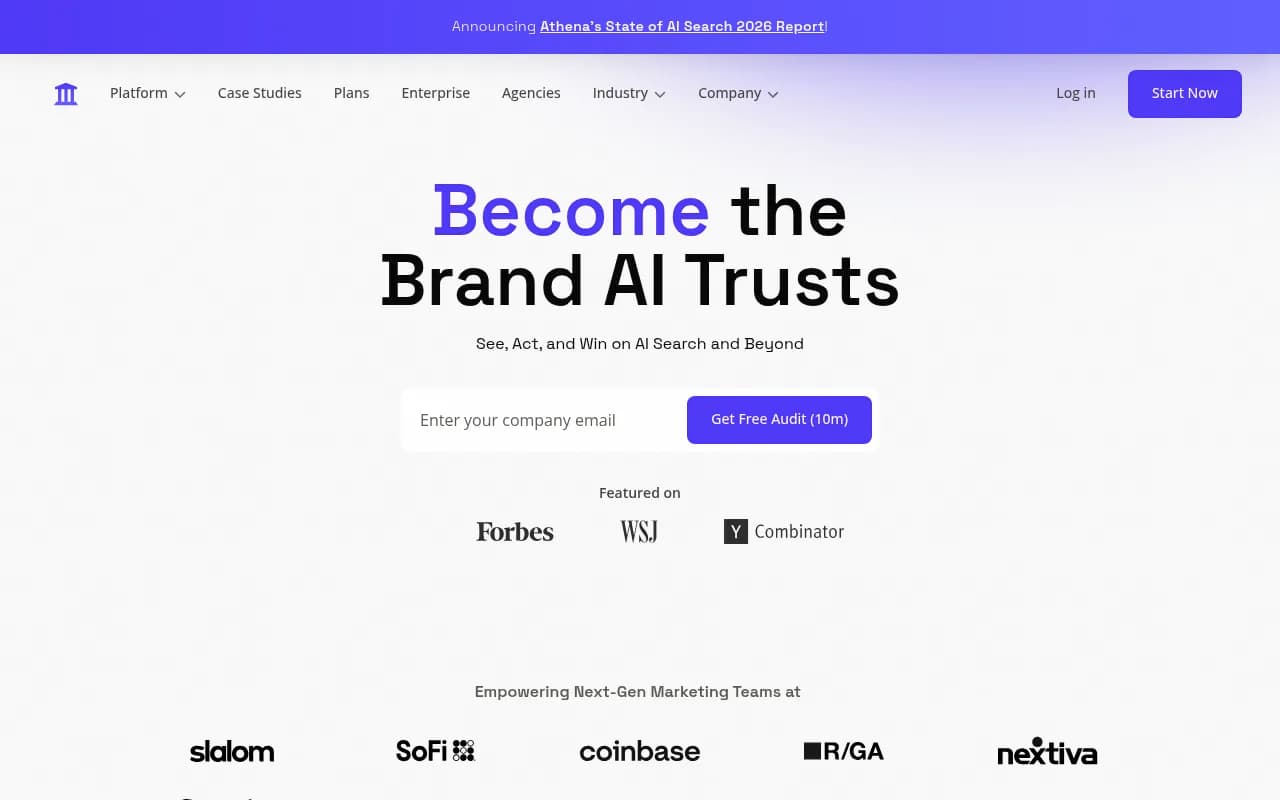
The platform doesn't have crawler logs or page-level citation tracking, which limits its usefulness for before/after content attribution. It's a reasonable choice for teams that want to understand their AI visibility landscape but aren't yet in a phase of active content publishing for GEO.
Scrunch AI
Scrunch AI positions itself toward brands and agencies that need to analyze and optimize AI search performance. It has more analytical depth than basic monitoring tools and includes some optimization guidance.
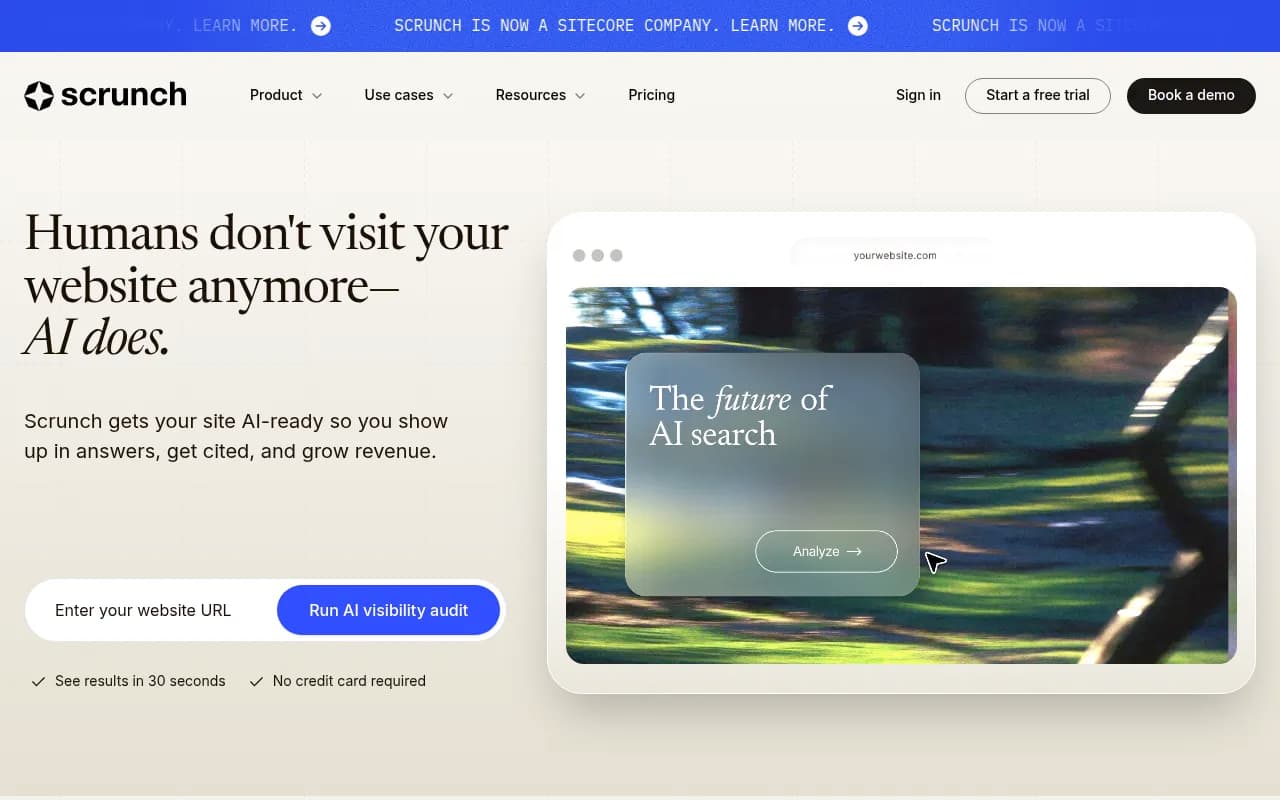
For before/after tracking, Scrunch AI offers historical visibility data that lets you compare performance across time periods. It's not as granular as Promptwatch's crawler logs, but it's more capable than pure monitoring tools when it comes to connecting content changes to visibility outcomes.
SE Ranking
SE Ranking has expanded its platform to include AI visibility tracking alongside its traditional SEO capabilities. For teams that already use SE Ranking for keyword tracking, the AI visibility module is a natural extension.
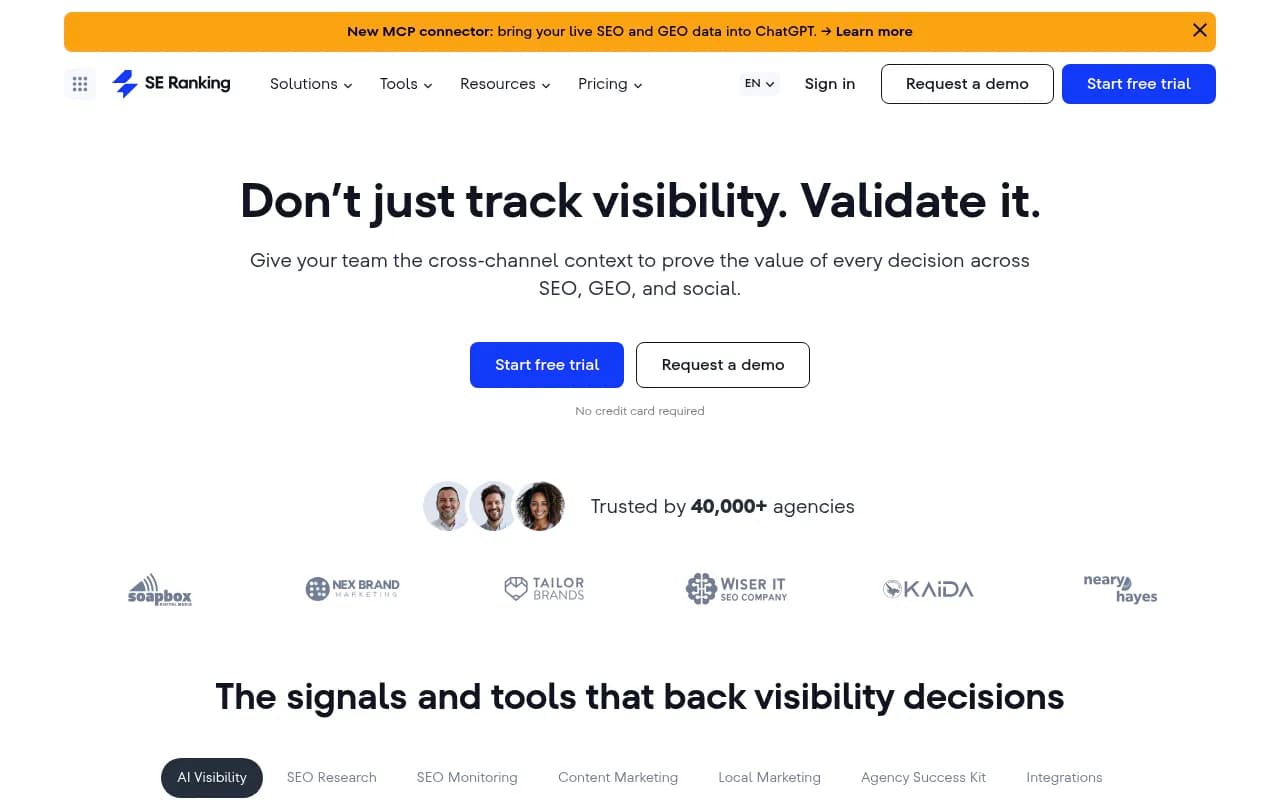
The before/after story here is built around combining traditional rank tracking with AI visibility data. If you publish content and want to see how it affects both Google rankings and AI citations simultaneously, SE Ranking gives you that in one place. The AI visibility features are less deep than dedicated GEO platforms, but the integration with traditional SEO data is genuinely useful.
Semrush AI Visibility Toolkit
Semrush has added AI visibility tracking to its existing platform, which is useful for teams that are already deep in the Semrush ecosystem.
The limitation worth knowing: Semrush uses fixed prompts rather than custom ones, which means you're tracking visibility for a predefined set of questions rather than the specific prompts your audience actually uses. For before/after tracking tied to specific content, this is a meaningful constraint. You can see overall visibility trends, but attributing them to specific content changes is harder.
Ahrefs Brand Radar
Ahrefs Brand Radar tracks brand mentions across AI search engines and integrates with Ahrefs' existing backlink and keyword data.
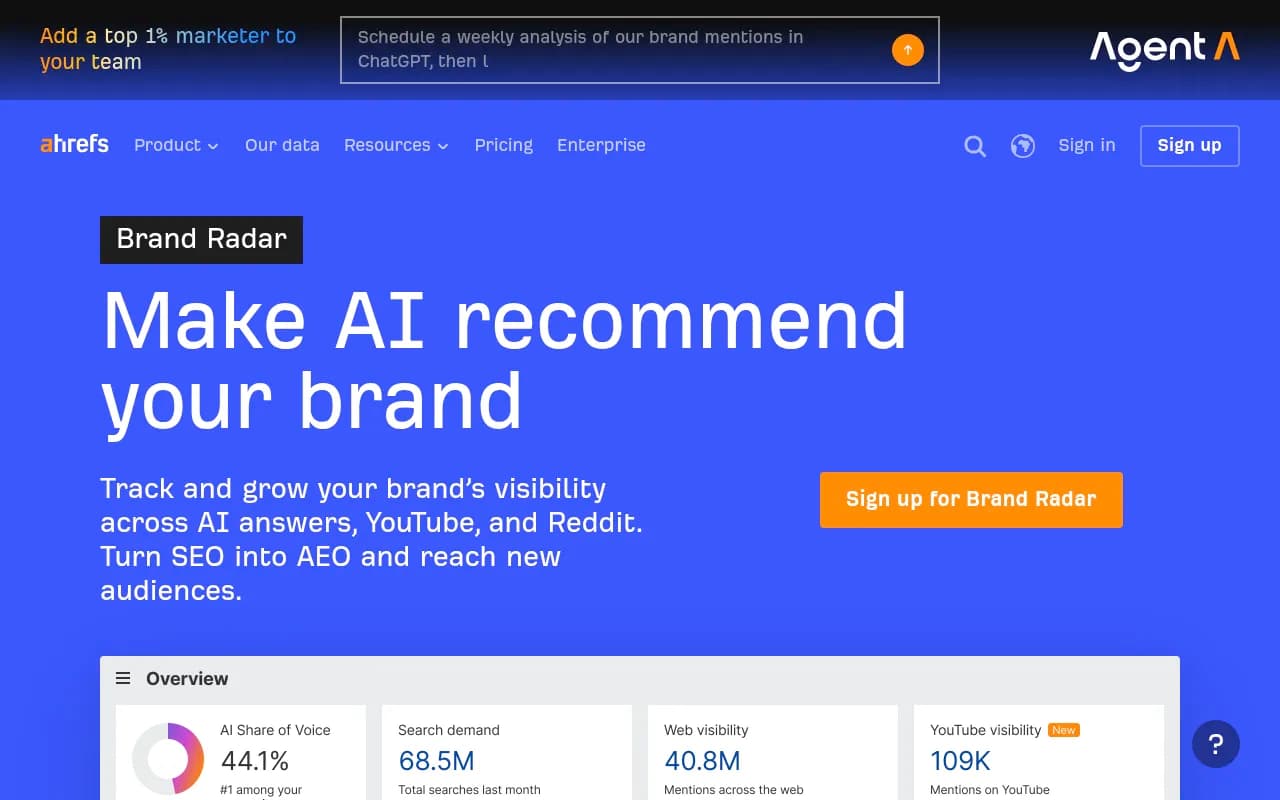
Similar to Semrush, the prompts are fixed rather than customizable, and there's no AI traffic attribution. For before/after content tracking, you'd need to rely on Ahrefs' other tools (like Site Audit and rank tracking) to correlate content changes with visibility movements. Useful as part of a broader Ahrefs workflow, but not a standalone solution for GEO attribution.
How the platforms compare
| Platform | Page-level tracking | Crawler logs | Historical baselines | Custom prompts | Content generation | Best for |
|---|---|---|---|---|---|---|
| Promptwatch | Yes | Yes | Yes | Yes | Yes | Full before/after attribution loop |
| Profound | Partial | No | Yes | Yes | No | Enterprise historical reporting |
| Rankscale | Yes | No | Yes | Yes | No | Referenceability diagnostics |
| Peec AI | No | No | Yes | Yes | No | Mid-market monitoring |
| Otterly.AI | No | No | Limited | Yes | No | Affordable brand monitoring |
| AthenaHQ | No | No | Limited | Yes | No | Monitoring-focused teams |
| Scrunch AI | Partial | No | Yes | Yes | No | Agency analysis |
| SE Ranking | No | No | Yes | Yes | No | Traditional SEO + AI combo |
| Semrush AI | No | No | Yes | No (fixed) | No | Existing Semrush users |
| Ahrefs Brand Radar | No | No | Yes | No (fixed) | No | Existing Ahrefs users |
The before/after workflow that actually works
If you're serious about connecting content publishing to AI visibility outcomes, here's a practical workflow regardless of which platform you use.
Step 1: Capture a baseline before you publish. Before a new article goes live, record your current visibility score for the target prompts. Screenshot it, export it, or use a platform that lets you tag a baseline event. This is the step most teams skip, and it's the most important one.
Step 2: Tag the publish event. Note the exact date and URL of the published content. Some platforms (like Promptwatch) let you track this within the dashboard. Others require you to maintain this log externally.
Step 3: Monitor crawler activity. If your platform has crawler logs, watch for GPTBot, ClaudeBot, PerplexityBot, and similar crawlers visiting the new URL. The first crawl is a signal that the content has been discovered. Repeated crawls suggest the model is actively using it.
Step 4: Track prompt-level visibility changes. After 2-4 weeks, compare your visibility for the target prompts against the baseline you captured in Step 1. Look for movements in citation frequency, share of voice, and position within AI responses.
Step 5: Attribute and iterate. If visibility improved, you have evidence the content worked. If it didn't, you have data to diagnose why. Maybe the content was crawled but not cited, which points to a referenceability issue. Maybe it wasn't crawled at all, which points to a technical indexing problem.
This workflow sounds simple, but most teams never complete it because their tools don't support Steps 1, 2, and 3. That's the real gap in the market.
Which platform should you choose?
The honest answer depends on what phase you're in.
If you're just starting to understand your AI visibility and don't yet have a content publishing program, a monitoring tool like Otterly.AI or Peec AI is fine. You'll get a sense of where you stand without overcomplicating things.
If you're actively publishing content to improve AI visibility and want to know whether it's working, you need a platform with page-level tracking and crawler logs. Promptwatch is the most complete option here because it closes the full loop: find gaps, publish content, track results. The crawler logs and Agent Analytics are features most competitors simply don't have.
If you're at an enterprise scale and need deep historical data for executive reporting, Profound is worth the investment despite the higher price.
If you're already embedded in the Semrush or Ahrefs ecosystem and want to add AI visibility without switching platforms, their respective tools are reasonable starting points, with the understanding that custom prompt tracking and content attribution will be limited.
The before/after question is ultimately a product question: does the platform treat content publishing as an event worth tracking, or does it just take periodic snapshots and call it monitoring? Most tools do the latter. The ones that do the former are worth paying more for.