Key takeaways
- Hall AI is a solid brand monitoring tool, but it wasn't built specifically for e-commerce product discovery tracking -- SKU-level visibility, shopping carousels, and revenue attribution are gaps most brands eventually hit.
- AI-referred traffic to e-commerce sites grew 393% year over year in Q1 2026 (Adobe), and those visitors convert 42% better than paid search traffic. The stakes for product-level AI visibility are real.
- The best Hall alternatives for e-commerce in 2026 range from end-to-end GEO platforms (Promptwatch, Profound) to e-commerce-native trackers and affordable monitoring tools.
- What separates useful tools from dashboards: answer gap analysis, content generation tied to real prompt data, crawler logs, and the ability to track which specific pages get cited.
- Most tools stop at monitoring. A smaller number actually help you fix what's broken.
Why e-commerce brands outgrow Hall AI
Hall AI does what it says on the tin: it monitors how your brand appears across AI search engines. For a B2B SaaS company or a media brand, that's often enough. You want to know if ChatGPT is recommending you, what it says, and how you stack up against competitors.
E-commerce is a different problem. When a shopper asks Perplexity "best moisturizer for dry skin under $40," the AI doesn't just mention brand names. It recommends specific products, sometimes with prices, ratings, and links. If your SKU isn't in that answer, you're not on page two -- you simply don't exist for that buyer. There's no fallback.
That's the gap Hall AI wasn't designed to close. It tracks mentions, but it doesn't track which products are being recommended, which prompts are driving product discovery, or whether your product feed is structured in a way that AI agents can actually parse. For brands running large catalogs, that missing layer matters a lot.
Adobe's Q1 2026 data makes the business case blunt: AI-referred visitors spend 37% more per visit than traffic from paid search or email. Losing that channel to competitors who've optimized for it isn't a minor SEO problem -- it's a revenue problem.
So what should e-commerce teams use instead? Here's a breakdown of the strongest alternatives, organized by what they're actually good at.
The e-commerce AI visibility landscape in 2026
Before getting into specific tools, it's worth understanding what the category actually looks like right now. The market has fragmented into a few distinct tiers:
- General brand monitoring tools (Hall, Otterly.AI, Peec AI) -- track mentions and share of voice across AI engines
- GEO/optimization platforms (Promptwatch, Profound, AthenaHQ) -- monitor plus content gap analysis and some form of optimization
- E-commerce-native trackers -- built specifically for product-level and SKU-level visibility
- Enterprise SEO platforms with AI add-ons (Semrush, Ahrefs, BrightEdge) -- broad toolsets with AI visibility bolted on
The right choice depends on whether you need monitoring, optimization, or both -- and whether you're tracking brand-level or product-level queries.
The best Hall AI alternatives for e-commerce brands
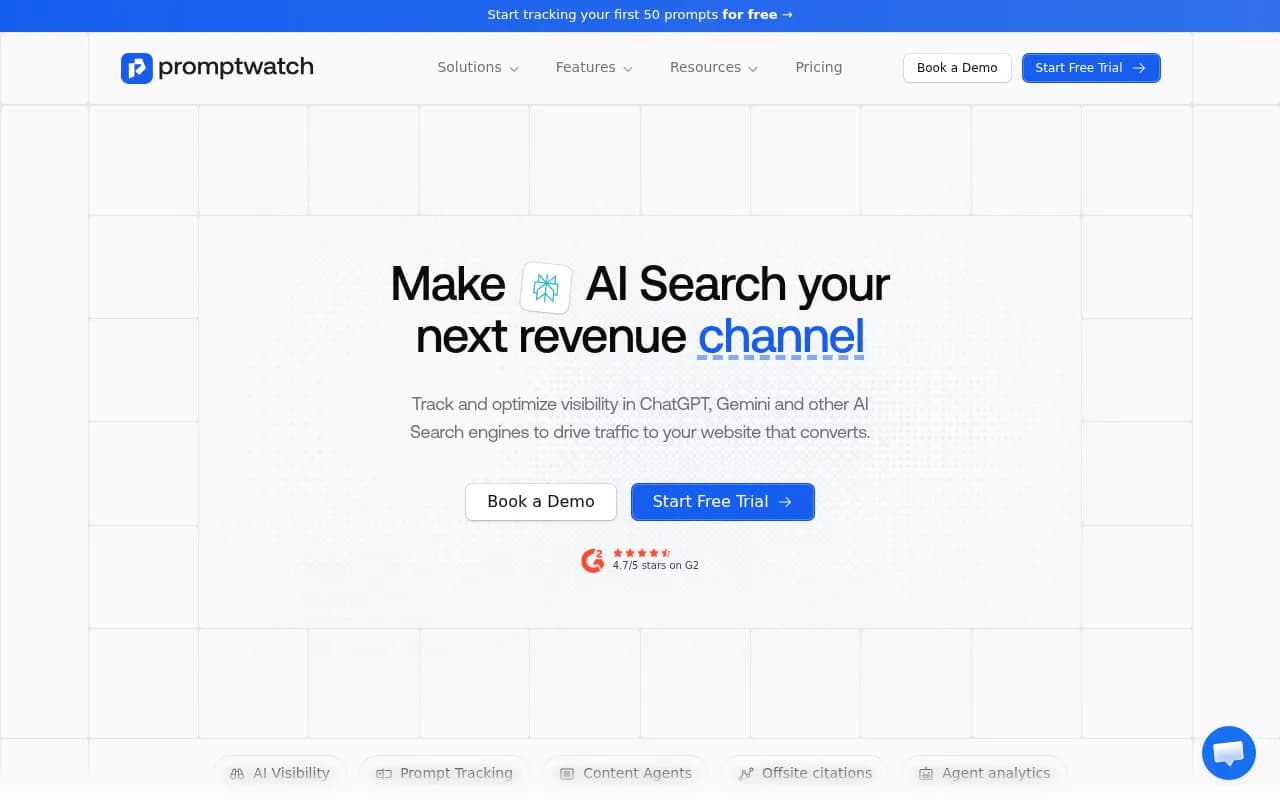
Promptwatch -- best for closing the gap between visibility and content
Promptwatch is the platform that most directly addresses the "monitoring isn't enough" problem. Where Hall shows you that you're invisible, Promptwatch shows you why and then helps you do something about it.
The core workflow is an answer gap analysis: you see exactly which prompts competitors are appearing for that you're not. For e-commerce, this means you can identify product discovery queries ("best running shoes under $150," "top moisturizer for sensitive skin") where rivals are getting cited and you're absent. From there, Content Agents generate articles, comparison pages, and product briefs grounded in that real prompt data -- not generic SEO filler.
For e-commerce specifically, the ChatGPT Shopping tracking is worth calling out. Promptwatch monitors when your brand appears in ChatGPT's product recommendations and shopping carousels, which is a channel most other tools ignore entirely. The AI crawler logs also show which of your product pages AI engines are actually reading, how often they return, and whether they're encountering errors -- useful when you're trying to figure out why a product category isn't getting cited.
Pricing starts at $99/month (Essential), with the Professional plan at $249/month adding crawler logs and more prompt capacity.
Profound -- best for enterprise e-commerce teams
Profound is one of the more mature platforms in this space, and it shows. The analytics are deep, the AI model coverage is broad, and the reporting is built for teams that need to present data to stakeholders.
For e-commerce, Profound's strength is its share-of-voice tracking across a large prompt set. You can map your category, define the product discovery queries that matter to your business, and see how your brand performs against competitors over time. The leaderboard feature (which tracks visibility by sector) is genuinely useful for benchmarking.
Where Profound is less strong: content optimization and generation. It's primarily a monitoring and analytics platform. You'll get excellent data on where you're losing, but the path from that data to fixing it runs through your own content team. That's fine for large enterprises with dedicated SEO resources, but smaller e-commerce teams may find themselves with great dashboards and no clear next step.
AthenaHQ -- best for tracking answer-share by category
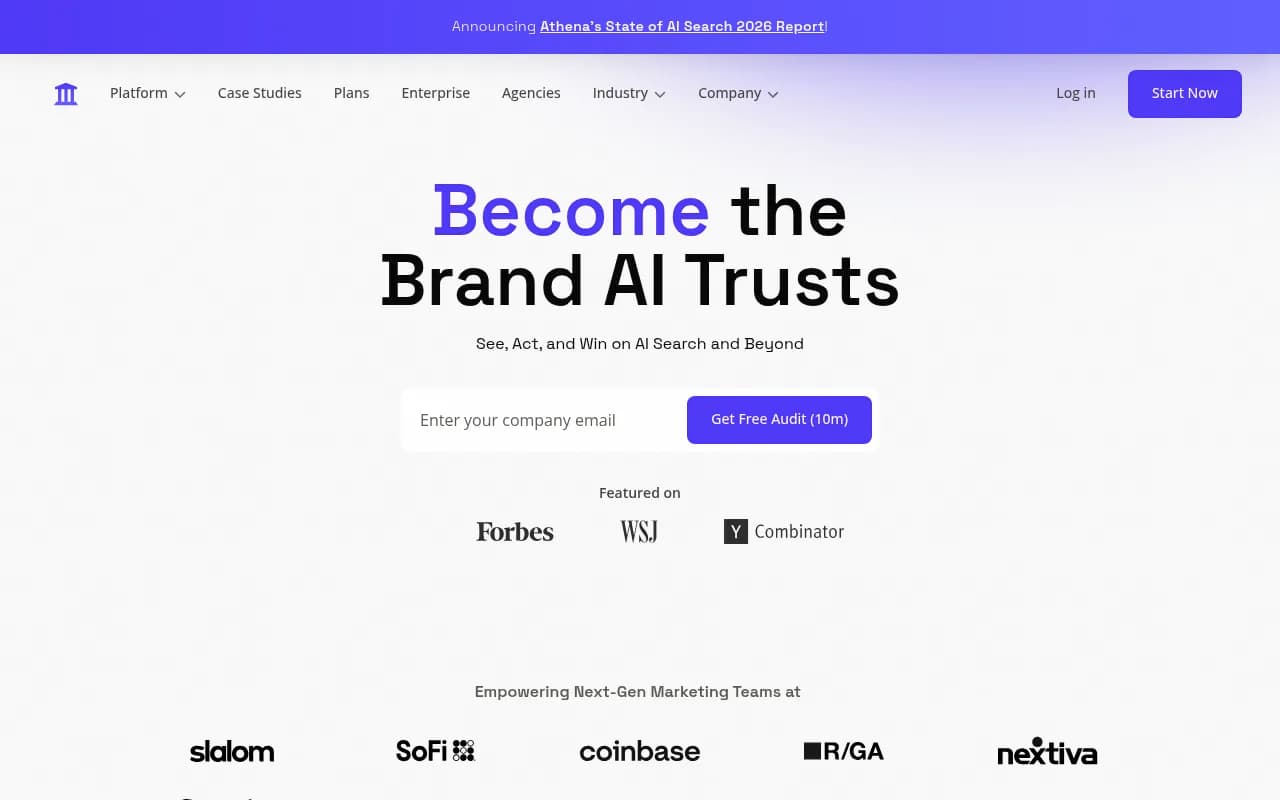
AthenaHQ published the "State of AI Search 2026" report that introduced "answer-share" as a metric -- the percentage of AI-generated answers in your category that mention your brand. That framing is useful for e-commerce, where category-level visibility often matters as much as brand-level visibility.
The platform is monitoring-focused, with solid competitor heatmaps and category tracking. It doesn't have content generation capabilities, but the data layer is strong enough that content teams can use it to prioritize what to write.
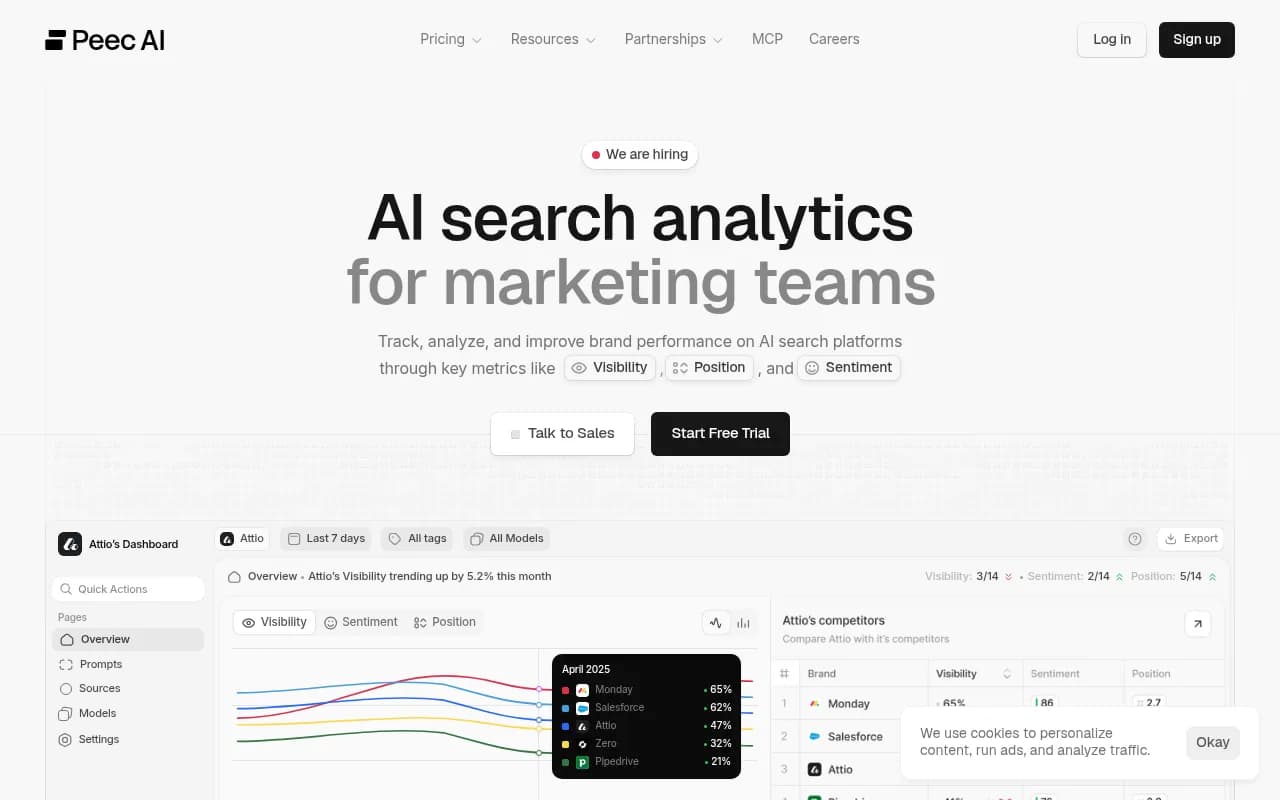
Peec AI -- best affordable option for smaller e-commerce brands
If budget is a constraint, Peec AI is worth a look. It covers the major AI engines, tracks brand mentions and share of voice, and surfaces some basic suggestions for improving visibility. It won't give you SKU-level tracking or crawler logs, but for a smaller brand that just needs to know whether it's showing up in AI search at all, it's a reasonable starting point.
The interface is clean and the onboarding is fast -- you can have data within a few hours of signing up.
Otterly.AI -- best for quick competitive monitoring
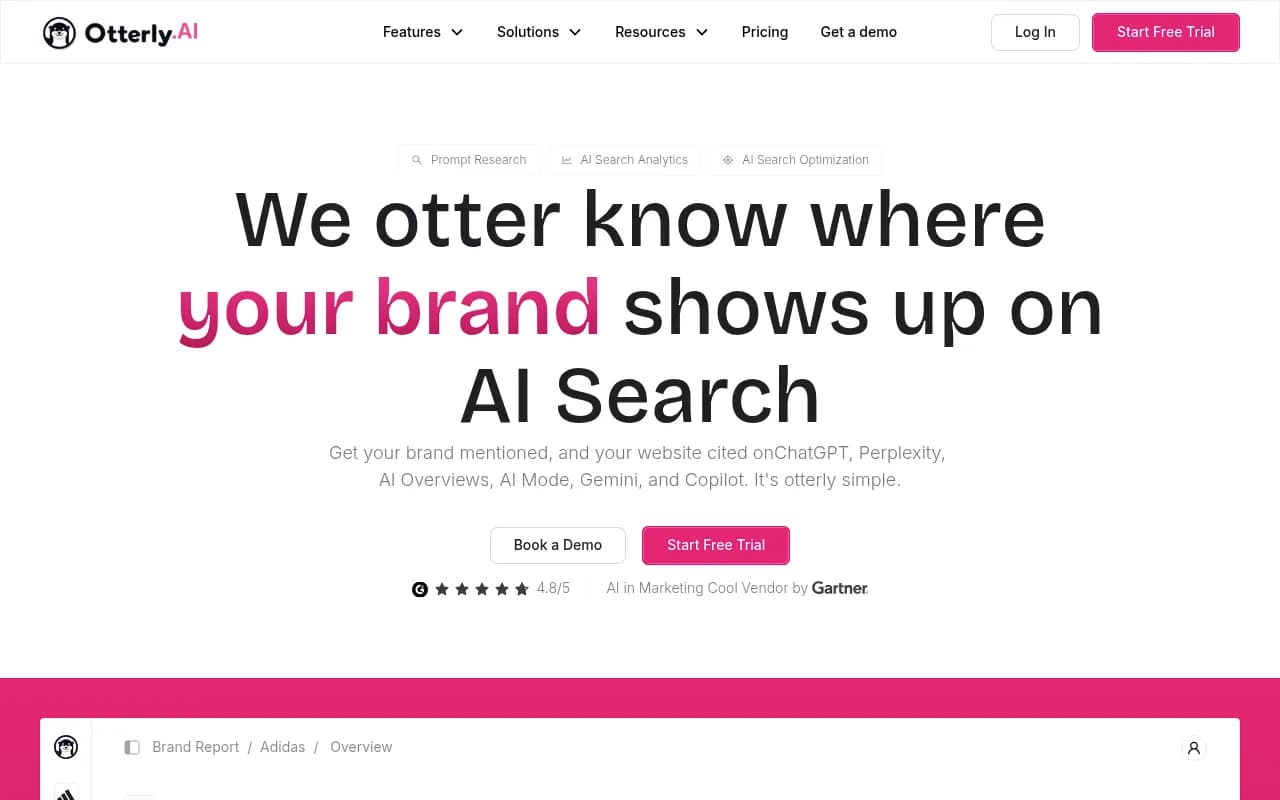
Otterly.AI sits in a similar tier to Hall AI: it's a monitoring tool that tracks brand mentions across AI engines and gives you a competitive overview. The advantage over Hall for some teams is the interface and the prompt customization -- you can define your own queries rather than relying on a preset list.
For e-commerce, the limitation is the same as Hall's: it tracks mentions, not products. If you need to know whether your specific SKUs are being recommended, Otterly.AI won't tell you that.
Scrunch AI -- best for agencies managing multiple e-commerce clients
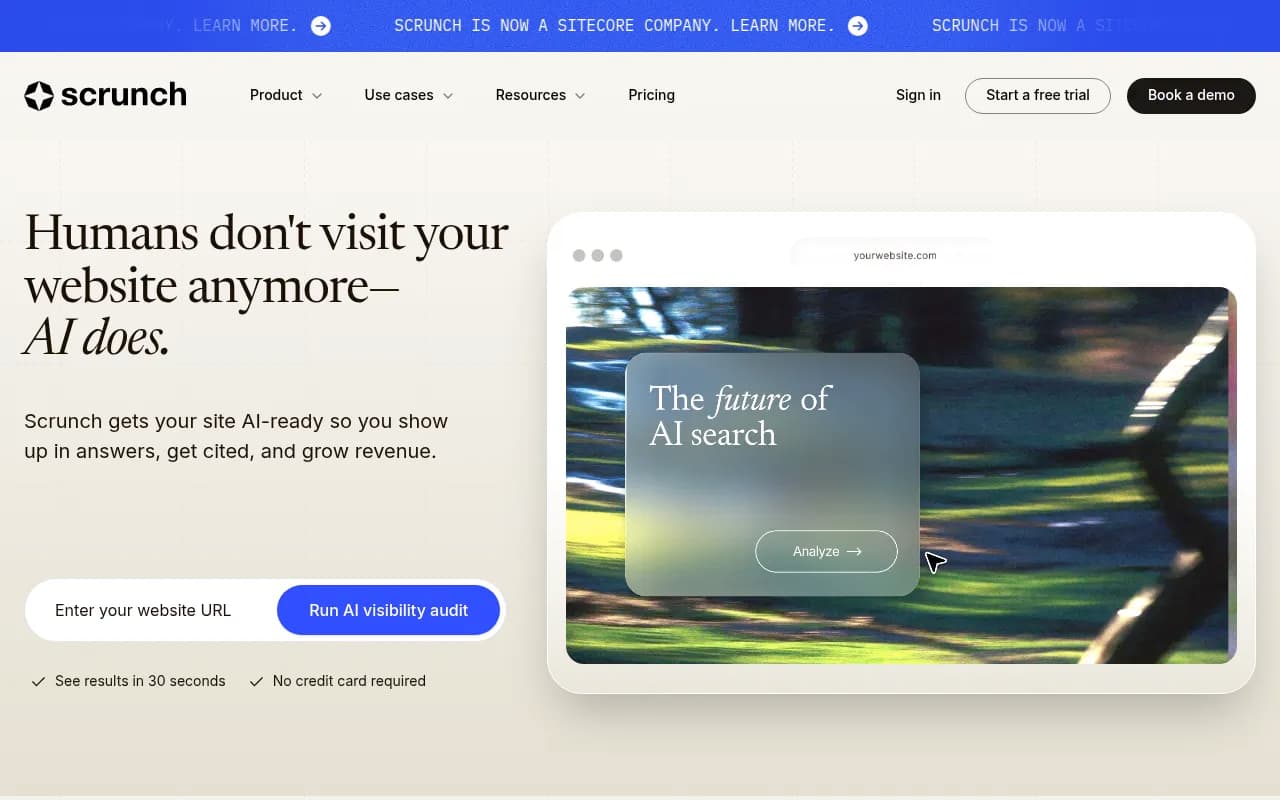
Scrunch AI is built with agencies in mind. Multi-client dashboards, white-label reporting, and broad AI engine coverage make it practical for teams managing visibility across several brands at once. For an agency with a roster of e-commerce clients, it's one of the cleaner options for consolidating monitoring data.
The content optimization features are lighter than Promptwatch's, but the monitoring layer is solid.
Semrush AI Visibility Toolkit -- best if you're already in the Semrush ecosystem
If your team already uses Semrush for traditional SEO, the AI Visibility Toolkit is the path of least resistance for adding AI search monitoring. The integration with existing keyword data and site auditing tools is genuinely useful -- you can see how your AI visibility correlates with your traditional search performance.
The limitation is that Semrush uses fixed prompts rather than letting you define custom product discovery queries. For e-commerce brands with niche categories or specific product types, that rigidity can be frustrating. You may find yourself tracking prompts that don't reflect how your actual customers search.
Ahrefs Brand Radar -- best for brands already using Ahrefs
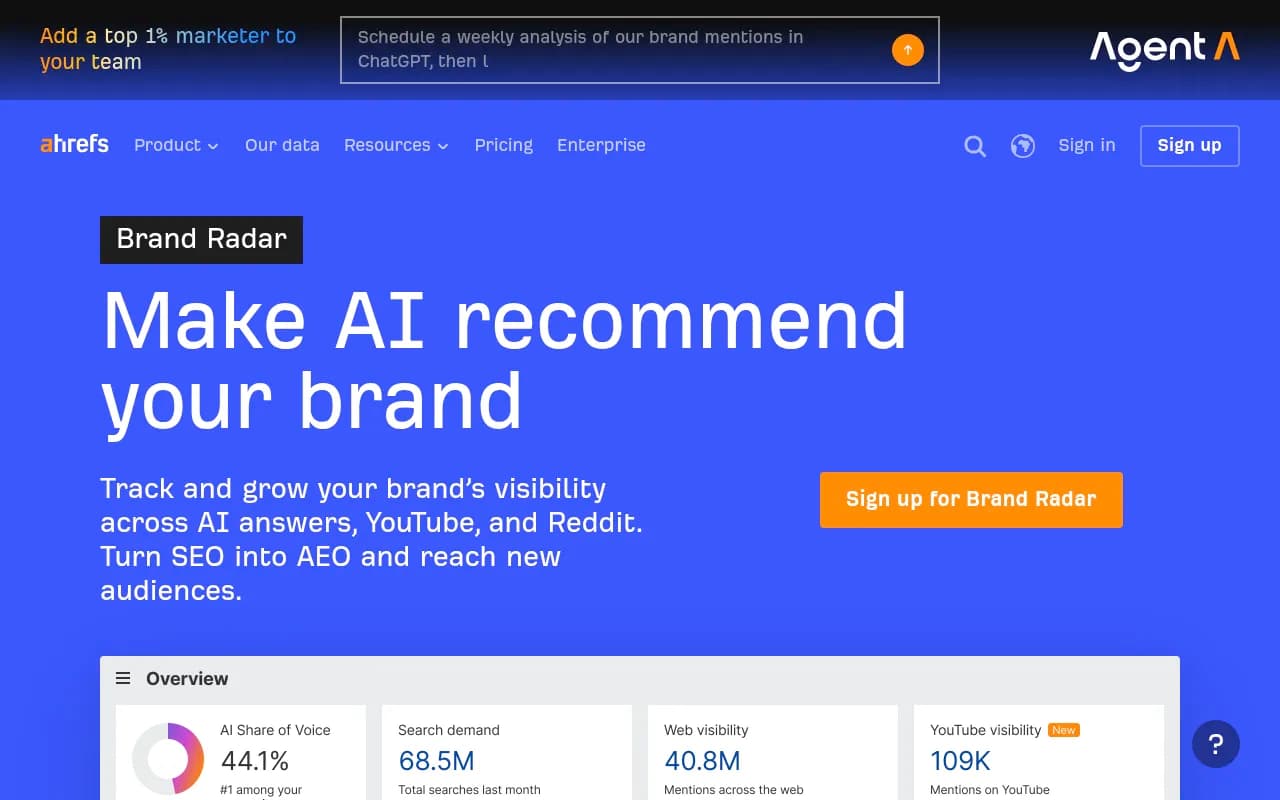
Similar story to Semrush: if you're already paying for Ahrefs, Brand Radar gives you AI visibility data without adding another vendor. The brand mention tracking is competent, and the integration with Ahrefs' backlink and content data is useful for understanding which pages are getting cited.
Fixed prompts and no AI traffic attribution are the main gaps. You can see that you're being cited, but connecting that to actual traffic or revenue requires manual work.
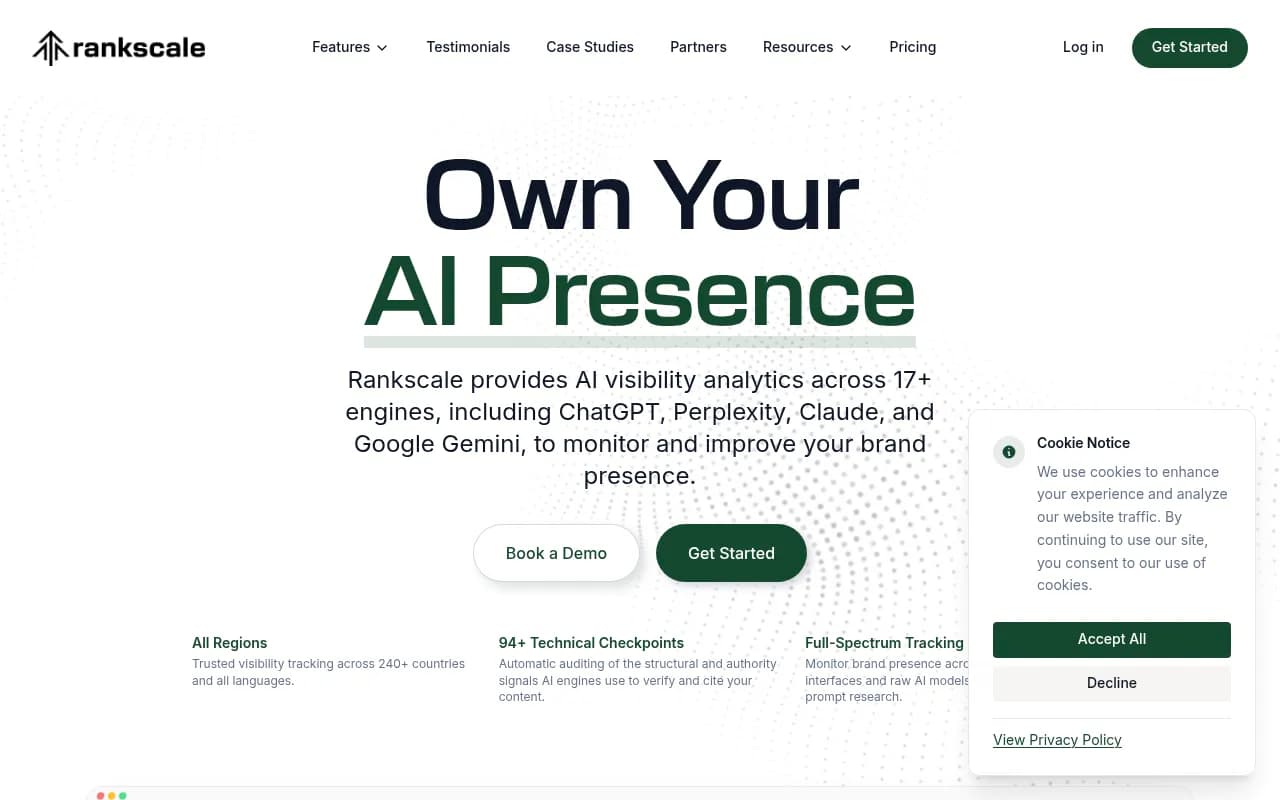
Rankscale -- best for tracking prompt-level performance
Rankscale focuses specifically on tracking how brands rank for individual prompts across AI engines. For e-commerce teams that have identified their key product discovery queries and want to track performance on those specific prompts over time, it's a focused tool that does that job well.
It's narrower in scope than the full-platform options, which makes it either a good fit or a poor one depending on what you need.
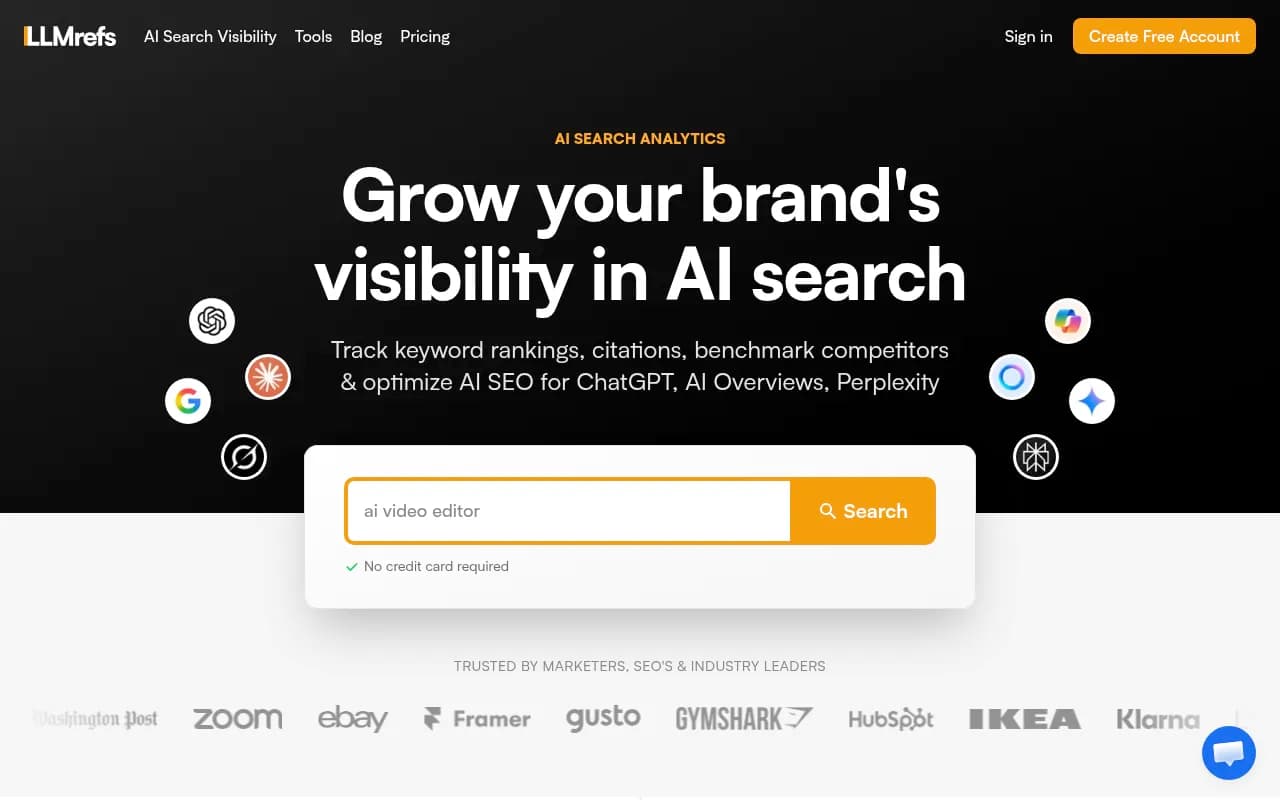
LLMrefs -- best for understanding citation sources
LLMrefs is a lighter tool focused on which sources AI engines are citing when they mention brands in a category. For e-commerce teams trying to understand why a competitor is getting cited (and which pages or external sources are driving that), it's a useful research tool.
It's not a full monitoring platform, but it fills a specific analytical gap that the bigger tools sometimes gloss over.
Feature comparison: Hall AI vs. the alternatives
| Tool | Product/SKU tracking | Content generation | Crawler logs | ChatGPT Shopping | Custom prompts | Price starts |
|---|---|---|---|---|---|---|
| Hall AI | No | No | No | No | Yes | ~$49/mo |
| Promptwatch | Partial (Shopping) | Yes | Yes | Yes | Yes | $99/mo |
| Profound | No | No | No | No | Yes | ~$200/mo |
| AthenaHQ | No | No | No | No | Yes | Custom |
| Peec AI | No | No | No | No | Limited | ~$49/mo |
| Otterly.AI | No | No | No | No | Yes | ~$49/mo |
| Scrunch AI | No | Limited | No | No | Yes | Custom |
| Semrush AI Toolkit | No | No | No | No | No (fixed) | Bundled |
| Ahrefs Brand Radar | No | No | No | No | No (fixed) | Bundled |
| Rankscale | No | No | No | No | Yes | ~$79/mo |
What to actually look for when evaluating these tools
Prompt customization vs. fixed prompt sets
This is a bigger deal for e-commerce than it sounds. Generic AI visibility tools often ship with preset prompts like "best [category] brands." But product discovery queries are specific: "best waterproof hiking boots for wide feet," "affordable standing desk under $400," "moisturizer safe for pregnancy." If a tool can't track the prompts your actual customers are using, the data is only loosely connected to your business.
Look for tools that let you define your own prompt library, ideally with volume estimates so you can prioritize high-traffic queries.
Citation and source tracking
When an AI engine recommends your product, it's pulling from somewhere -- your product page, a review site, a Reddit thread, a YouTube video. Understanding which sources are driving (or blocking) your citations tells you where to focus. Some tools surface this clearly; others just show you the mention count.
The gap between monitoring and optimization
Most tools in this category are dashboards. They show you data. The harder question is: what do you do with it? A few platforms (Promptwatch being the clearest example) close that loop by connecting gap data to content creation. For e-commerce teams with limited SEO bandwidth, that matters. A tool that shows you 47 prompts where competitors are visible and you're not is only useful if you can act on that list.
AI crawler logs
This is underrated for e-commerce. AI engines crawl your site before they cite it. If they're hitting errors on your product pages, encountering slow load times, or not returning frequently, your citation rate will reflect that. Crawler logs let you diagnose and fix those issues directly. Most tools don't offer this at all.
Revenue attribution
The gold standard for e-commerce is connecting AI visibility to actual revenue: which AI-referred sessions converted, what they bought, and what the average order value was. Very few tools do this well yet, but it's worth asking about when evaluating platforms. Without it, you're optimizing for a metric (citations) that may or may not correlate with what you actually care about (sales).
How to choose the right tool for your situation
The honest answer is that the right tool depends on where you are in the AI visibility journey.
If you're just starting out and want to know whether you're showing up at all, Peec AI or Otterly.AI give you that baseline data cheaply and quickly. Hall AI itself is fine for this stage too.
If you've confirmed you have a visibility problem and need to understand it deeply and fix it, Promptwatch is the most complete option -- the combination of gap analysis, content generation, crawler logs, and ChatGPT Shopping tracking covers most of what e-commerce teams need in one platform.
If you're an enterprise with dedicated SEO and analytics resources and need deep reporting for stakeholders, Profound or AthenaHQ give you the data depth to support that.
If you're an agency managing multiple e-commerce clients, Scrunch AI's multi-client setup is worth the tradeoff on optimization features.
And if you're already paying for Semrush or Ahrefs, start there before adding another vendor -- the bundled AI visibility features may be enough for your current needs, and you can always upgrade later.
The product discovery query problem, specifically
One thing worth naming directly: most AI visibility tools were built to answer "is my brand mentioned?" E-commerce brands need to answer "is my product recommended when someone is ready to buy?"
Those are different questions. Brand mentions happen across informational queries, comparison queries, and navigational queries. Product discovery queries are the ones that happen right before a purchase decision: "what's the best [product type] for [use case] under [price]?"
Tracking those queries specifically requires a few things most tools don't have:
- The ability to define prompts that mirror real purchase-intent language
- Tracking at the product level, not just the brand level
- Understanding of how AI engines render product recommendations (with images, prices, and ratings vs. plain text mentions)
- Connection to conversion data so you know which cited products actually drove sales
This is the frontier of the category in 2026. A handful of platforms are starting to address it seriously. Most are still catching up.
For e-commerce teams serious about this, the practical approach right now is to combine a platform with strong custom prompt tracking and gap analysis (Promptwatch fits here) with your own analytics setup to connect AI-referred sessions to revenue. It's not a perfect solution, but it's workable.
Bottom line
Hall AI is a reasonable tool for brand monitoring. For e-commerce brands trying to track and improve product discovery in AI search, it's not enough -- and the gap becomes more expensive as AI-referred traffic grows.
The alternatives above cover a range of use cases and budgets. If you're picking one platform to build around in 2026, Promptwatch's combination of gap analysis, content generation, crawler logs, and ChatGPT Shopping tracking makes it the most complete option for teams that want to move from monitoring to actually improving their AI visibility. For pure monitoring on a budget, Peec AI and Otterly.AI are solid. For enterprise reporting depth, Profound and AthenaHQ are worth evaluating.
The underlying point is the same regardless of which tool you choose: AI search is already a commercial channel, and the brands investing in product-level visibility now are building an advantage that will compound as the channel grows.