Key takeaways
- Hall is useful for basic, server-level AI bot visibility, but it doesn't tell you what to do with the data
- Crawler log monitoring is only valuable if it connects to citation tracking, content gaps, and optimization -- most tools stop at the log
- Promptwatch is the only platform in this space that closes the loop: crawler logs, citation tracking, content gap analysis, and AI content generation in one place
- Profound and Conductor are solid enterprise alternatives with dedicated agent analytics, but at higher price points
- Free options exist (Cloudflare AI Crawl Control, raw server log analysis) but require significant manual work to interpret
Why crawler log monitoring suddenly matters
A year ago, most marketing teams didn't think twice about which bots were crawling their site. Googlebot, sure. Maybe Bingbot. But the list has exploded. GPTBot, ClaudeBot, PerplexityBot, GoogleOther (used for AI Overviews), Meta-ExternalAgent, Applebot-Extended -- these crawlers are now reading your content and deciding whether to cite you in AI-generated answers.
The problem is that most website owners have no idea this is happening. They see traffic from ChatGPT or Perplexity in their analytics (if they're lucky), but they can't tell which pages those AI systems actually read, how often they return, or whether they're hitting errors that prevent them from indexing content properly.
That's the gap crawler log monitoring fills. And it's why tools like Hall have gotten attention -- they give you a server-level view of which AI agents are visiting your site.
But here's the thing: seeing a log entry that says "GPTBot visited /blog/post-123 at 14:32" is only the first step. The real question is what happens next. Did that page end up being cited? If not, why? What would need to change for it to get cited? Most crawler monitoring tools don't answer any of that.
This guide looks at Hall and its alternatives through that lens -- not just "can it show me bot traffic?" but "can it help me do something useful with that information?"
What Hall actually does
Hall is a lightweight AI search monitoring tool focused on giving you visibility into how AI agents interact with your site at the server level. It's often described as simpler to deploy and interpret than enterprise alternatives, which is genuinely useful if you want a quick read on bot activity without a complex setup.
The appeal is real. Hall surfaces which AI crawlers are hitting your site, which pages they're reading, and some basic frequency data. For teams that just want to confirm AI bots are actually visiting (or diagnose why they're not), it's a reasonable starting point.
The limitations show up when you want to go further. Hall doesn't connect crawler activity to citation outcomes. It doesn't tell you which pages are being cited in AI responses, or why some pages get crawled repeatedly but never cited. There's no content gap analysis, no prompt tracking, no way to understand what AI models are actually saying about your brand. It's a log viewer, not an optimization platform.
That's not a knock on Hall specifically -- it's just the nature of monitoring-only tools. The question is whether monitoring alone is enough for your use case.
The tools worth considering in 2026
Promptwatch: crawler logs plus the full optimization loop
Promptwatch is the most complete option in this space, and the one most directly relevant if you care about crawler logs as part of a broader AI visibility strategy.
The crawler log feature (available on Professional and Business plans) does what you'd expect: it shows real-time logs of AI crawlers hitting your site, which pages they read, any errors they encounter, and how often they return. But what makes it different is what comes after the log.
Promptwatch connects crawler data to citation outcomes. You can see which pages moved from "crawled" to "cited" and how long that took. If a page is getting crawled repeatedly but not cited, that's a signal -- and Promptwatch's Answer Gap Analysis can show you exactly what content is missing that would make AI models more likely to cite it.
From there, Content Agents can generate articles, comparisons, or briefs grounded in real prompt data to fill those gaps. The cycle is: crawler logs show you what AI bots are reading, citation tracking shows you what's getting cited, gap analysis shows you what's missing, and content generation helps you fix it.
For teams that want to understand AI crawler behavior and act on it, this is the most direct path. Pricing starts at $249/month for the Professional plan (which includes crawler logs).
Profound: enterprise-grade agent analytics
Profound has built dedicated "Agent Analytics" specifically to show which AI bots access your content and where they get stuck. It's one of the more serious enterprise options in this space.
The framing Profound uses -- "what AI agents see vs. what they miss" -- is genuinely useful. It goes beyond raw log data to help you understand discoverability gaps from an AI crawler perspective. The trade-off is price: Profound sits at a higher price point than most alternatives, and it's primarily a monitoring tool. It doesn't generate content or close the loop from gap to fix.
If you're at an enterprise with a dedicated content team that can act on the data independently, Profound is worth evaluating. If you need the full cycle in one platform, it falls short.
Conductor: enterprise monitoring with AI discoverability focus
Conductor takes a similar enterprise approach, with monitoring focused on AI crawler activity and what it calls "AI discoverability." The "what they see vs. what they miss" framing appears here too, which suggests the market is converging on this as the right way to think about crawler data.
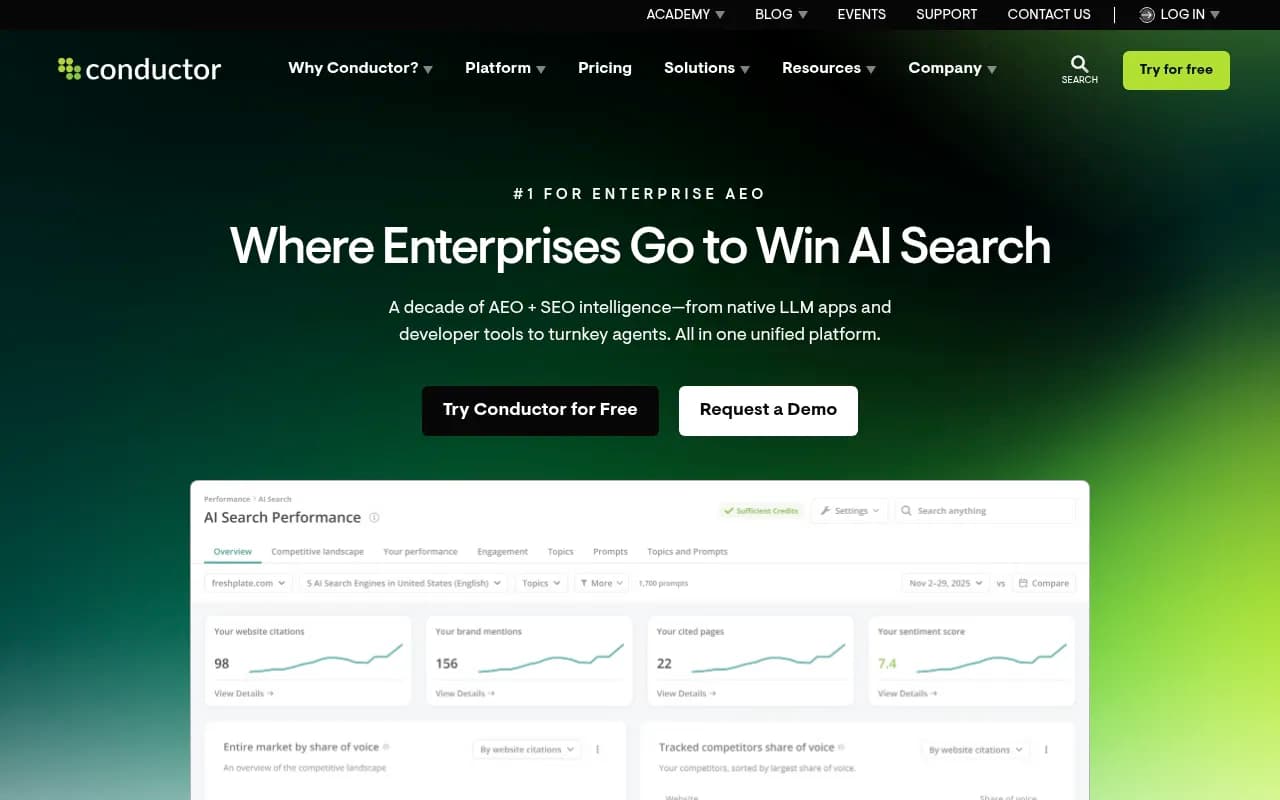
Conductor is strong for large organizations that already use it for organic marketing and want to extend that into AI search. The AI crawler monitoring layer adds useful context to existing workflows. Like Profound, it's monitoring-focused -- the analysis is solid but the path from insight to action requires your own team to execute.
AthenaHQ: monitoring-focused with solid prompt tracking
AthenaHQ is a monitoring platform that tracks AI search visibility across multiple models. It doesn't have dedicated crawler log monitoring in the same way Hall or Promptwatch does, but it does track prompt-level visibility and brand mentions across AI engines.
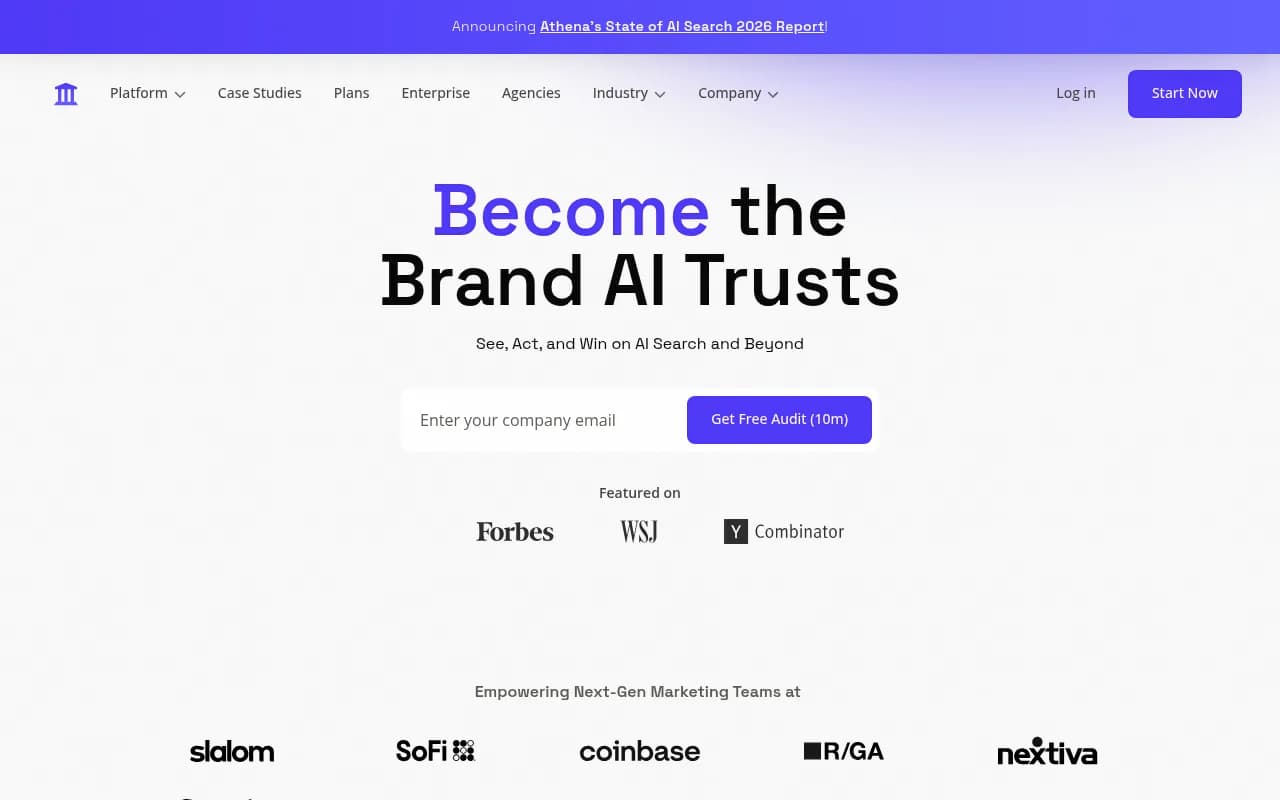
Worth considering if your primary need is understanding how your brand appears in AI responses rather than diagnosing crawler-level issues. The lack of content generation or gap analysis means you'll need separate tools to act on what you find.
Peec AI: lightweight monitoring for smaller teams
Peec AI sits in a similar space to Hall -- lightweight, accessible, focused on AI visibility tracking without the complexity of enterprise platforms.
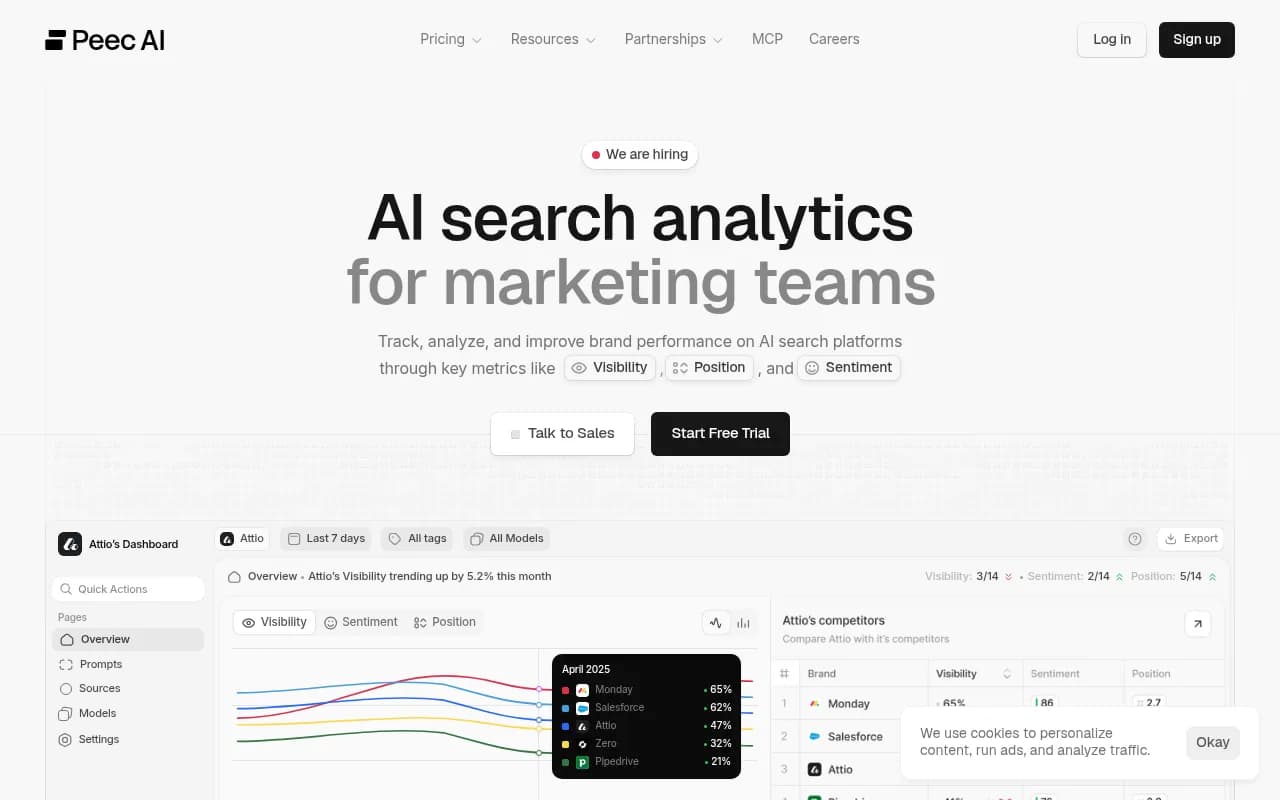
It doesn't have crawler log monitoring in any meaningful depth, but it does surface brand mentions and citation data across AI models. Good for teams that want basic visibility without a large budget or setup overhead. Not the right choice if crawler logs are a core requirement.
Otterly.AI: affordable entry point
Otterly.AI is one of the more affordable options for AI brand visibility monitoring. Like Peec AI, it's primarily a monitoring dashboard -- you can see where your brand appears in AI responses, but there's no crawler log data and no content generation.
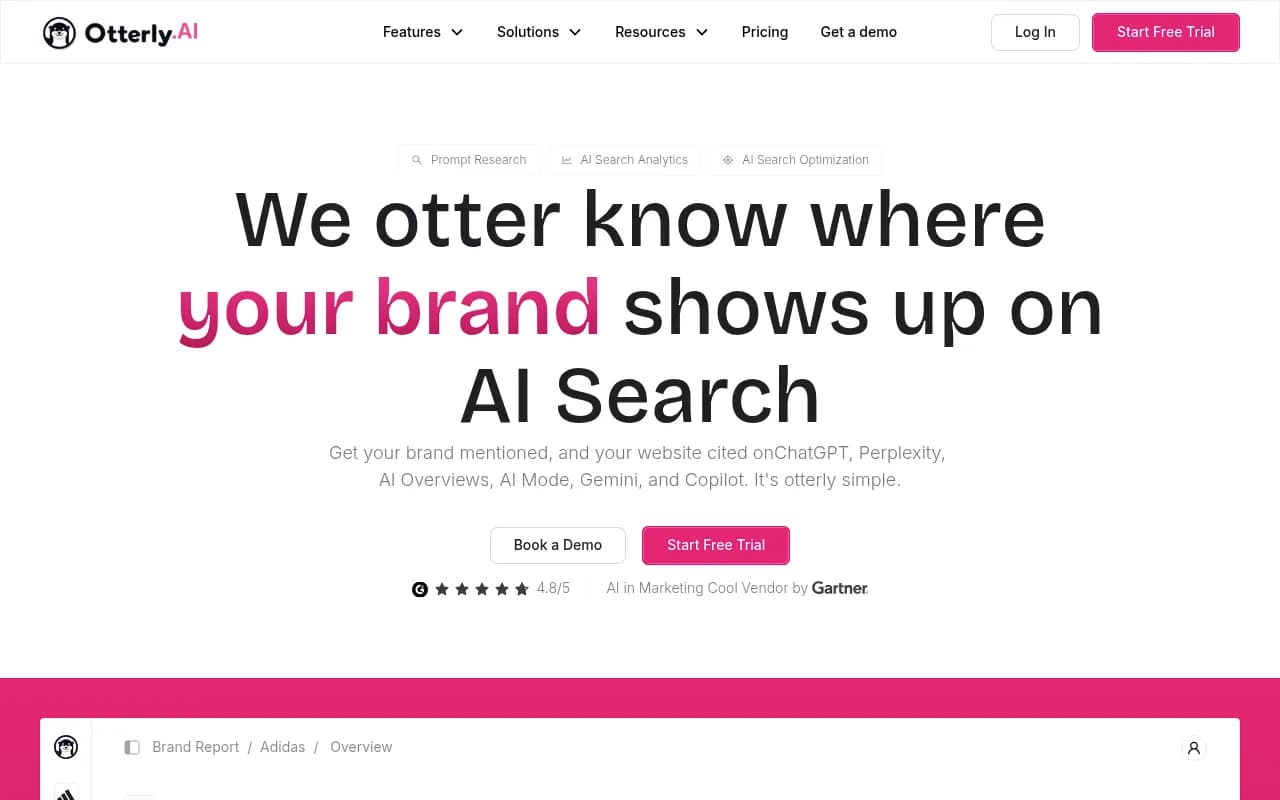
The value proposition is price and simplicity. If you're just starting to think about AI visibility and want to understand the basics before investing in a more complete platform, Otterly.AI is a reasonable starting point.
Scrunch AI: agencies and brands
Scrunch AI targets brands and agencies that want AI search monitoring without the full enterprise price tag. It covers multiple AI models and gives you brand visibility data, but crawler log monitoring isn't a core feature.
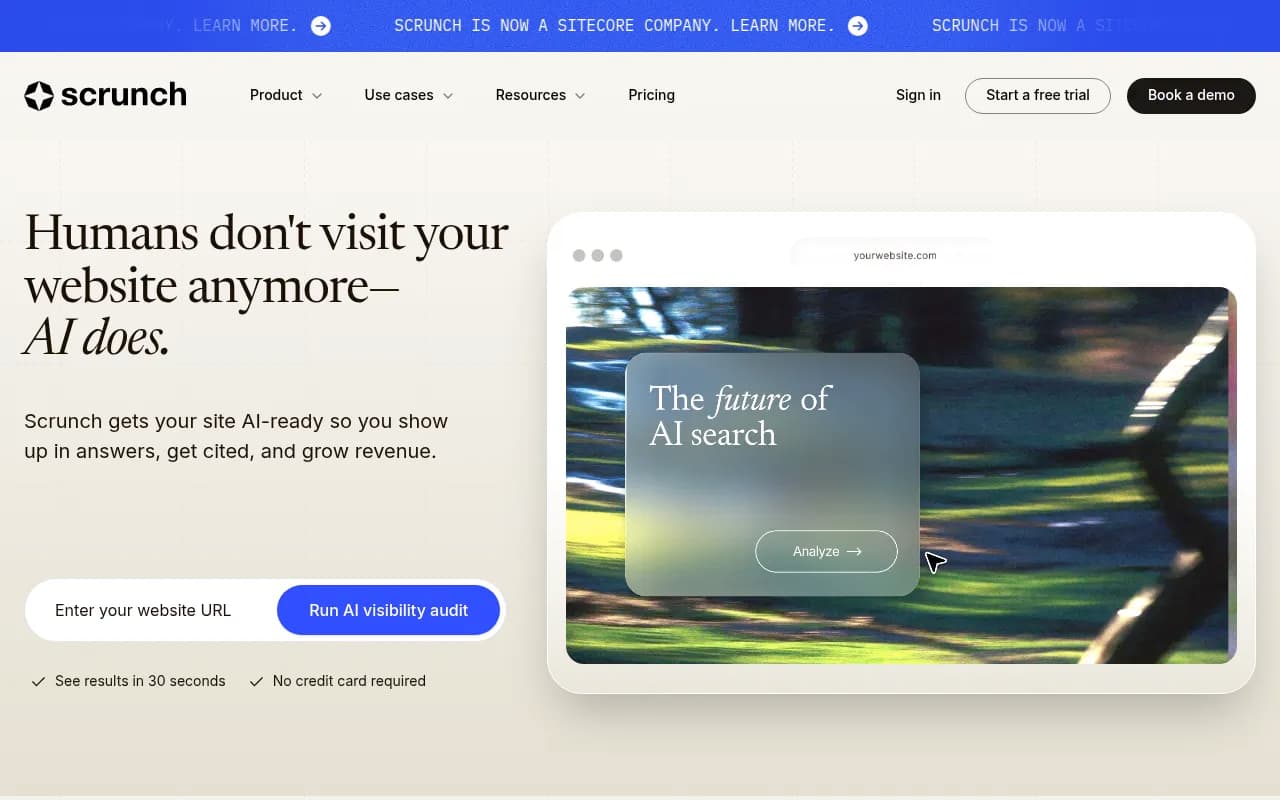
Useful for agencies managing multiple clients who need a consolidated view of AI visibility. Less useful if your specific need is understanding AI bot behavior at the server level.
Search Party: agency-oriented monitoring
Search Party is built for agencies and focuses on AI search visibility tracking. It has solid multi-client management features but limited prompt metrics and no content gap analysis.
The crawler analytics coverage is limited compared to Promptwatch or Profound. Worth considering for agencies that prioritize client reporting over deep technical analysis.
Free and DIY options
If budget is a constraint or you want to start with raw data before investing in a platform, there are a few approaches worth knowing about.
Cloudflare's AI Crawl Control (free tier) lets you see which AI crawlers are hitting your site and gives you basic controls over which ones you allow. It's not a full analytics platform, but it's a reasonable starting point for understanding bot traffic patterns.
Raw server log analysis is the most technical option. If you have access to your server logs (Apache, Nginx, etc.), you can filter by known AI bot user agents -- GPTBot, ClaudeBot, PerplexityBot, and so on -- and build your own analysis. Tools like Webalizer can help parse logs, though you'll need a curated user-agent list and some patience. xSeek maintains a useful reference list of AI bot user agents for this purpose.
The honest limitation of both free approaches: they give you raw data with no context. You'll see that GPTBot visited 47 pages last week, but you won't know whether any of those pages ended up being cited, or what you'd need to change to improve your chances.
How these tools compare
| Tool | Crawler log monitoring | Citation tracking | Content gap analysis | Content generation | Price range |
|---|---|---|---|---|---|
| Promptwatch | Yes (Pro+) | Yes | Yes | Yes | $249-$579/mo |
| Hall | Yes (lightweight) | No | No | No | Lower |
| Profound | Yes (dedicated) | Partial | No | No | Enterprise |
| Conductor | Yes | Partial | No | No | Enterprise |
| AthenaHQ | No | Yes | No | No | Mid-range |
| Peec AI | No | Basic | No | No | Low |
| Otterly.AI | No | Basic | No | No | Low |
| Scrunch AI | No | Yes | No | No | Mid-range |
| Search Party | Limited | Yes | No | No | Mid-range |
| Cloudflare (free) | Basic | No | No | No | Free |
| Raw server logs | Yes (manual) | No | No | No | Free |
The pattern is pretty clear. Most tools in this space are monitoring dashboards. They show you data. The question of what to do with that data is left to you.
What to actually look for when evaluating these tools
Does it connect crawler activity to citation outcomes?
This is the most important question. A log that says "GPTBot visited your page" is interesting. A log that says "GPTBot visited your page, and here's whether it ended up being cited, and here's what similar pages that did get cited look like" is actually useful.
Very few tools make this connection. Promptwatch does. Most others don't.
Which AI crawlers does it track?
The list of AI crawlers has grown significantly. You want coverage of at least: GPTBot (OpenAI), ClaudeBot (Anthropic), PerplexityBot, GoogleOther (used for AI Overviews), Meta-ExternalAgent, and Applebot-Extended. Some tools only track a subset of these, which means you're getting an incomplete picture.
How does it integrate with your infrastructure?
Server log analysis requires access to raw logs, which not every hosting setup makes easy. Cloudflare integration is often simpler. Some platforms (like Promptwatch) support multiple integration methods -- Cloudflare, Fastly, Vercel, server logs, or a tracking snippet -- which matters if your infrastructure is non-standard.
Does it surface errors and crawl issues?
Knowing that a bot visited your site is one thing. Knowing that it hit a 404, got blocked by robots.txt, or encountered a redirect loop is more valuable. Good crawler log monitoring should surface these issues so you can fix them.
Can you act on the data within the same platform?
This is where most tools fall short. If your crawler monitoring tool shows you a gap, you should be able to do something about it without switching to three other tools. Content gap analysis and content generation within the same platform dramatically shortens the time from insight to action.
The right tool for your situation
If you want the simplest possible view of which AI bots are hitting your site and nothing else, Hall or Cloudflare's free tier will do the job. Deploy quickly, get basic data, move on.
If you want to understand crawler activity as part of a broader AI visibility strategy -- connecting bot behavior to citation outcomes, identifying content gaps, and generating content to fill them -- Promptwatch is the most complete option available. The Professional plan at $249/month includes crawler logs alongside everything else.
If you're at an enterprise with a dedicated team and need deep agent analytics without the content generation layer, Profound or Conductor are worth evaluating, though you'll pay more and need to handle the "what do we do about this?" question separately.
The broader point is that crawler log monitoring is a means to an end. The end is getting cited in AI-generated answers. Any tool that shows you bot traffic but doesn't help you improve your citation rate is giving you half the picture. In 2026, with AI search eating into traditional organic traffic, half the picture isn't enough.