Key takeaways
- Peec AI is a clean monitoring tool, but it doesn't track offsite citation sources like Reddit, YouTube, or third-party mentions -- the exact places LLMs pull from most.
- Most GEO tools share this blind spot. Tracking only your own website gives you an incomplete picture of why AI models cite (or don't cite) your brand.
- A handful of alternatives go further: Ahrefs Brand Radar explicitly tracks Reddit, YouTube, and TikTok alongside AI engine responses.
- The strongest platforms don't just show you where you're missing -- they help you do something about it, with content generation, gap analysis, and crawler-level data.
- If offsite citation tracking is your priority, the tool choice matters a lot. Most dashboards won't get you there.
Why offsite citations are the blind spot most GEO tools ignore
Here's something worth sitting with: when ChatGPT recommends a product, cites a source, or describes a brand, it's often pulling from Reddit discussions, YouTube transcripts, listicles on third-party review sites, and forum threads -- not just the brand's own website.
This is how LLMs work. They're trained on the web, and the web includes a lot more than your homepage and blog. A Reddit thread from 18 months ago where someone praised your product might be doing more for your AI visibility than your entire content library.
Most GEO tools don't track this. They monitor AI engine outputs -- they run prompts through ChatGPT or Perplexity, scrape the responses, and tell you whether your brand appeared. That's useful. But it tells you what happened, not why, and it gives you no visibility into the offsite ecosystem that's actually shaping those responses.
Peec AI falls into this category. It's a well-designed tool. The interface is clean, the prompt tracking works, and the multi-language support is a genuine differentiator. But the Pro plan (€199/mo) caps you at 100 prompts and 9,000 AI answers per month, covers four base AI engines (Claude, Gemini, and Google AI Mode are Enterprise add-ons), and has no offsite citation tracking, no content creation tools, and no Reddit or YouTube monitoring.
For teams that need to understand the full citation ecosystem -- not just whether they appeared in an AI answer, but why, and what's driving competitors' visibility -- that's a meaningful gap.
What "offsite citation tracking" actually means
Before getting into tools, it's worth being specific about what we're talking about.
When an LLM generates a response, it draws on its training data and (in the case of tools like Perplexity or ChatGPT with browsing) real-time web retrieval. The sources it cites or implicitly draws from include:
- Your own website (pages, blog posts, product descriptions)
- Reddit threads and community discussions
- YouTube video transcripts and descriptions
- Third-party review sites, comparison pages, and listicles
- News articles and industry publications
- Wikipedia and reference sources
Offsite citation tracking means monitoring these external sources -- seeing which Reddit posts are influencing AI responses in your category, which YouTube videos get cited, which third-party articles are driving competitor visibility. It's the difference between watching the scoreboard and understanding the game.
Most tools only watch the scoreboard.
The alternatives worth considering
Ahrefs Brand Radar
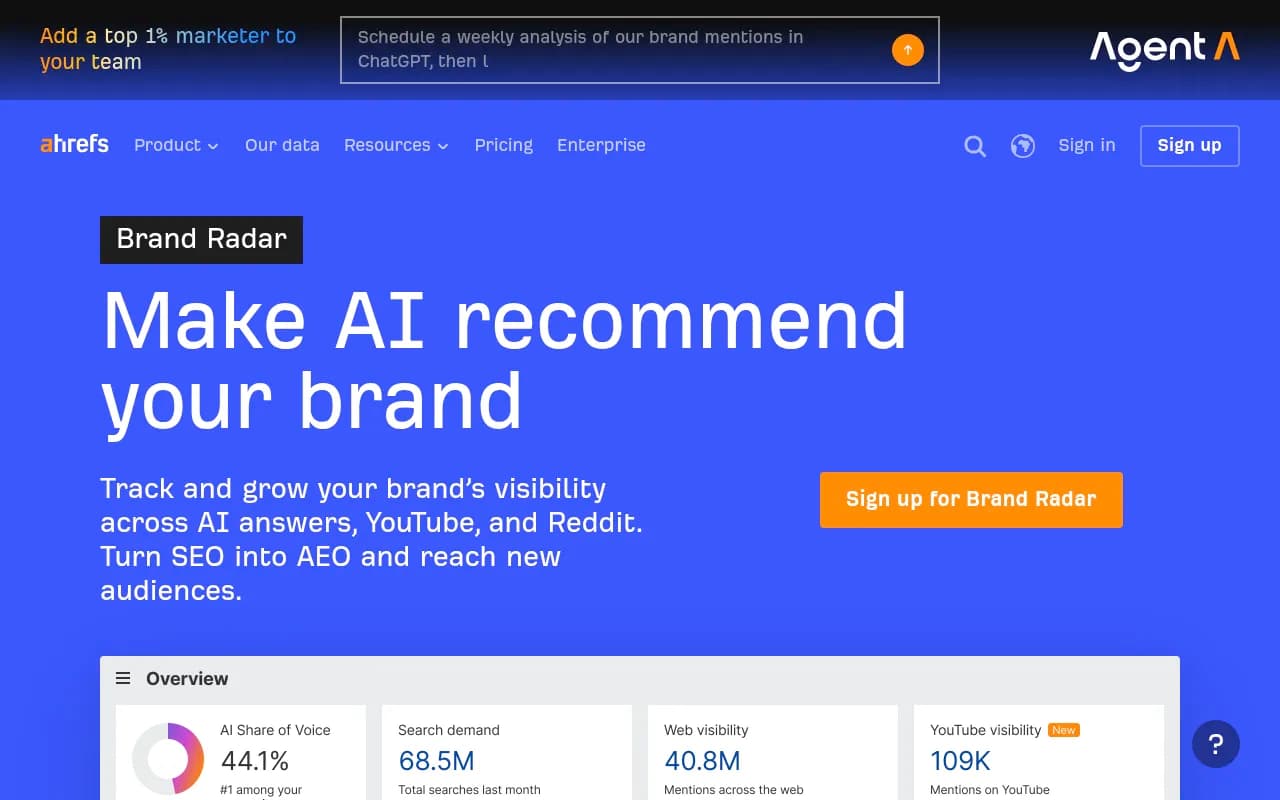
This is the most direct answer to the offsite tracking question. Ahrefs Brand Radar explicitly monitors Reddit, YouTube, and TikTok alongside six AI engines: ChatGPT, Perplexity, Gemini, Copilot, Google AI Overviews, and Google AI Mode.
The architectural difference is also worth noting. Most GEO tools construct their own prompts -- they guess what users might ask and run those synthetic queries. Brand Radar's 243M+ prompts come from real search data, specifically "People Also Ask" questions with actual search volume behind them. That means the visibility scores reflect real user behavior, not fabricated scenarios.
Pricing runs from $50/mo (2,500 checks) up to $699/mo for all six AI indexes plus custom prompt checks. For teams where Reddit and YouTube tracking is a genuine priority, this is the most purpose-built option available.
Promptwatch
Promptwatch takes a different approach -- it's built around the full optimization loop, not just monitoring. Where most tools show you data and leave you to figure out what to do with it, Promptwatch connects the dots between finding gaps, creating content, and tracking results.
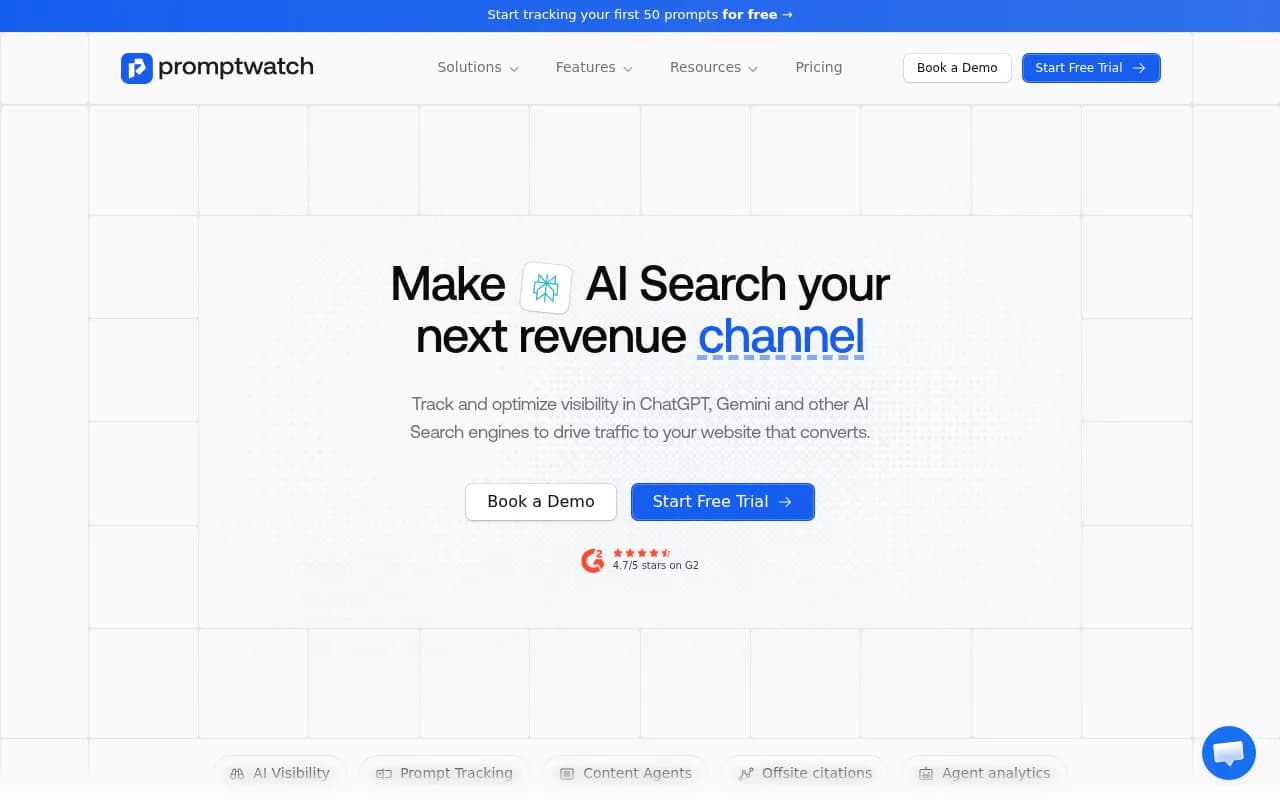
The offsite tracking piece is part of a broader citation analysis layer: you can see which external pages, Reddit threads, YouTube videos, and third-party domains are driving AI visibility in your category -- not just for your brand, but for competitors too. That context is what makes the gap analysis actionable. You're not just seeing that a competitor ranks higher; you're seeing which Reddit thread or YouTube video is helping them get there.
It also tracks AI crawler behavior at the page level -- which pages AI agents are reading, how often they return, and when a crawled page moves to an actual citation. That's a level of detail most tools don't offer.
For teams that want to track offsite citations and then do something about it (generate content, close gaps, monitor results), Promptwatch is the more complete option.
Scrunch AI
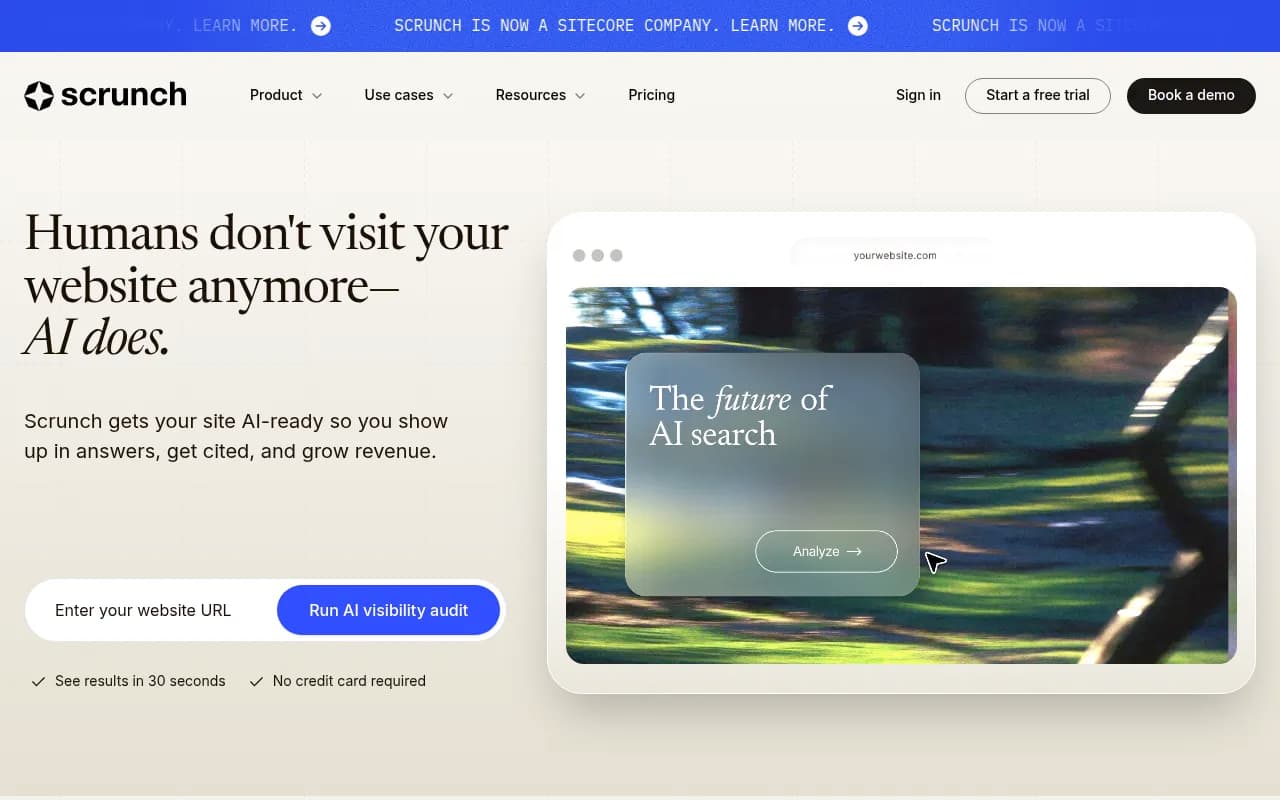
Scrunch is positioned toward brands and agencies that need structured monitoring across multiple LLMs. It covers citation tracking and competitive analysis, though its offsite coverage is more limited than Ahrefs Brand Radar. Worth evaluating if you need multi-client reporting with clean dashboards.
Profound
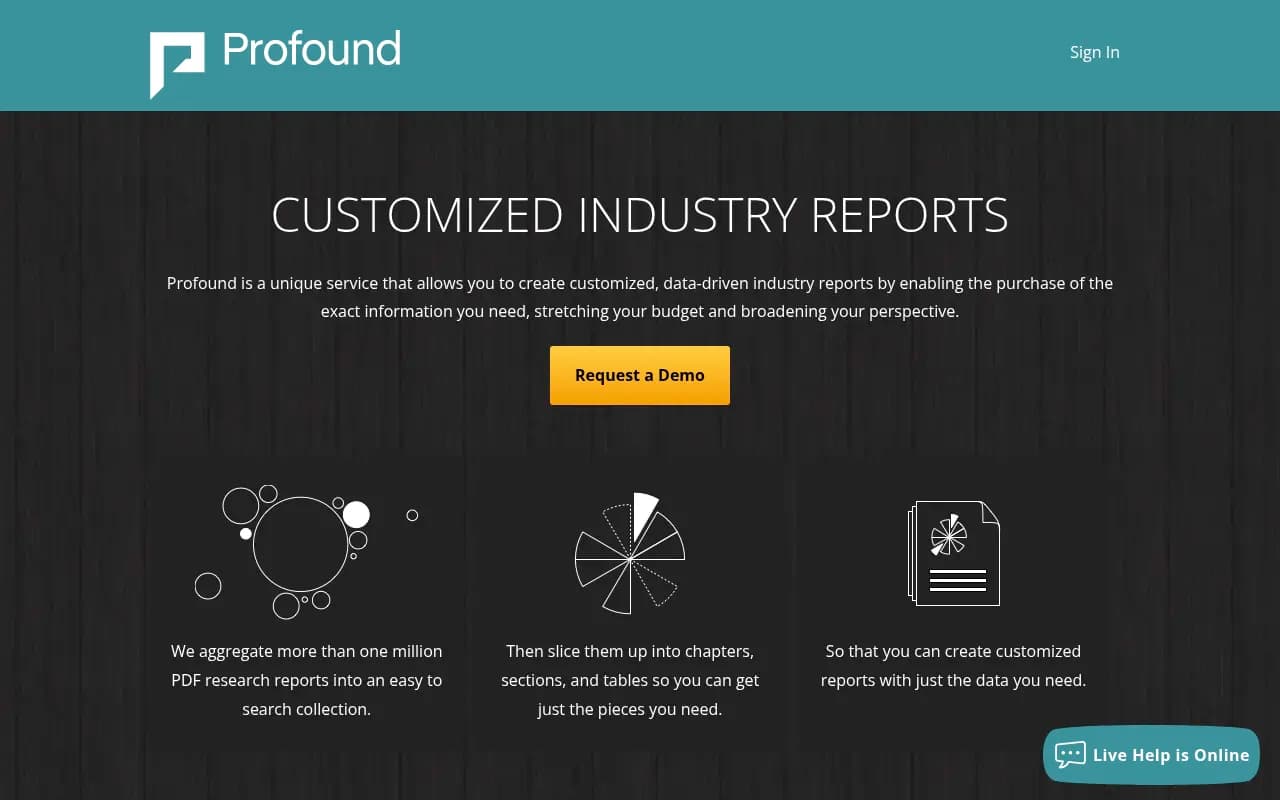
Profound is one of the more established enterprise-grade options. It has solid recommendation features and daily tracking, which matters if you're running frequent experiments. The price point is higher, and it doesn't cover Reddit or YouTube tracking, but the depth of AI engine monitoring is strong for large teams.
Otterly.AI
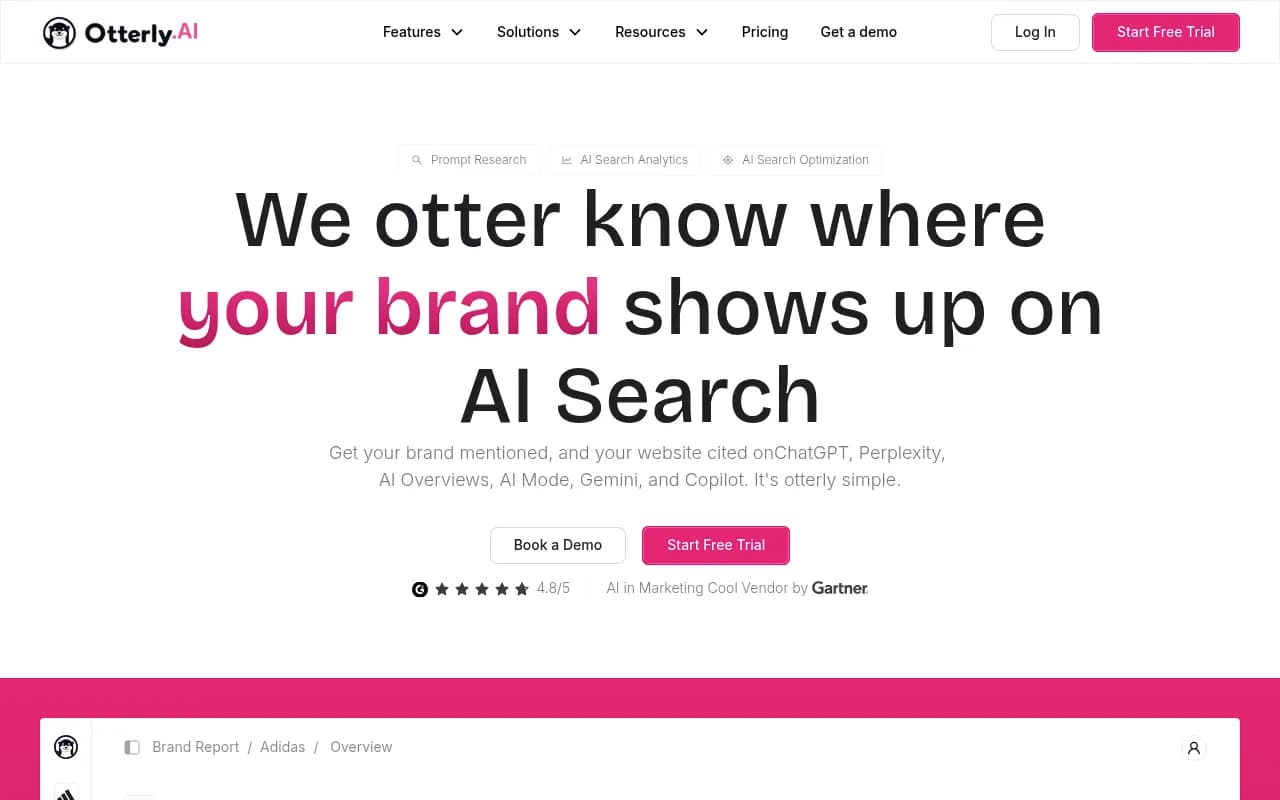
Otterly is the budget-friendly end of the spectrum. It does basic brand monitoring across AI engines and is genuinely affordable for smaller teams. The tradeoff is that it's monitoring-only -- no content tools, no offsite tracking, no crawler data. If you just need to know whether your brand is appearing and you're not ready to invest in a full platform, it's a reasonable starting point.
AthenaHQ
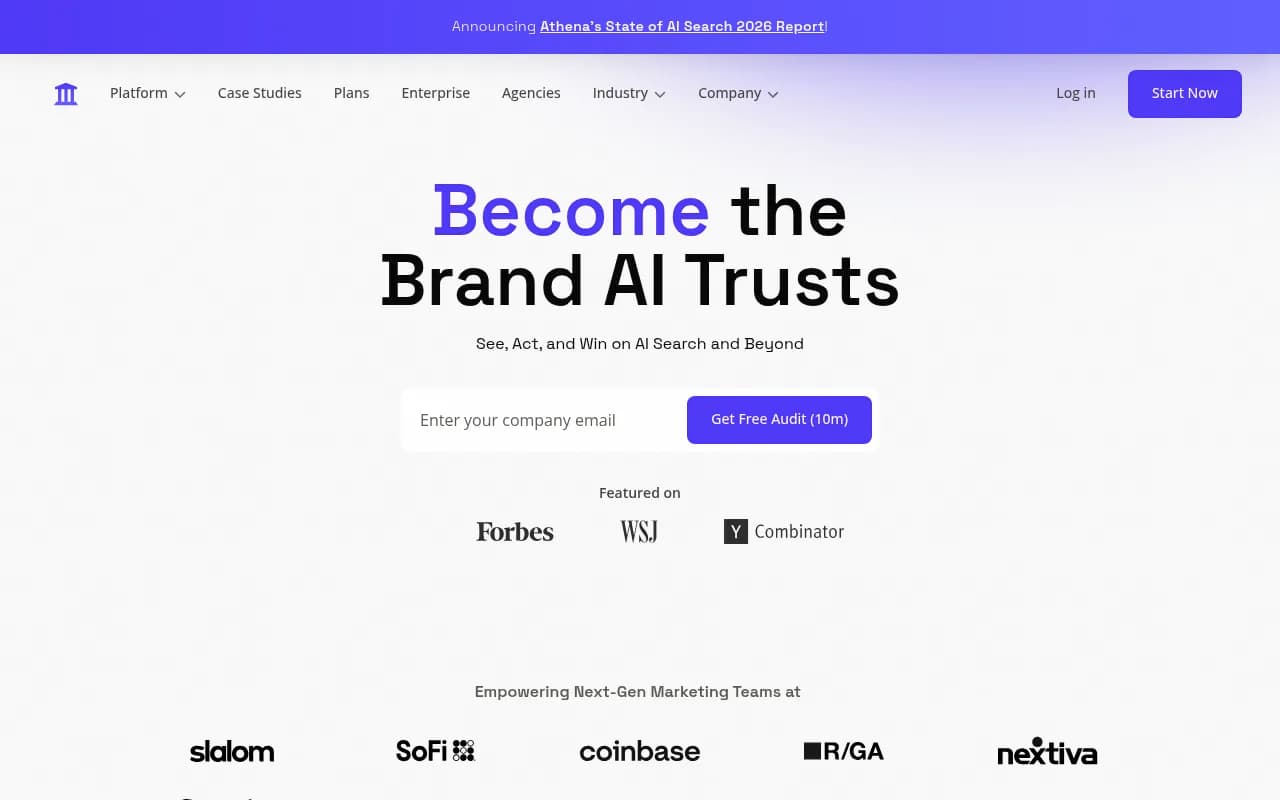
AthenaHQ focuses on AI search monitoring with a clean interface. It's monitoring-first, which means it shows you where you stand but doesn't help you change it. No Reddit or YouTube tracking, no content generation. Solid for teams that want a dedicated monitoring dashboard without the complexity of a full platform.
SE Ranking
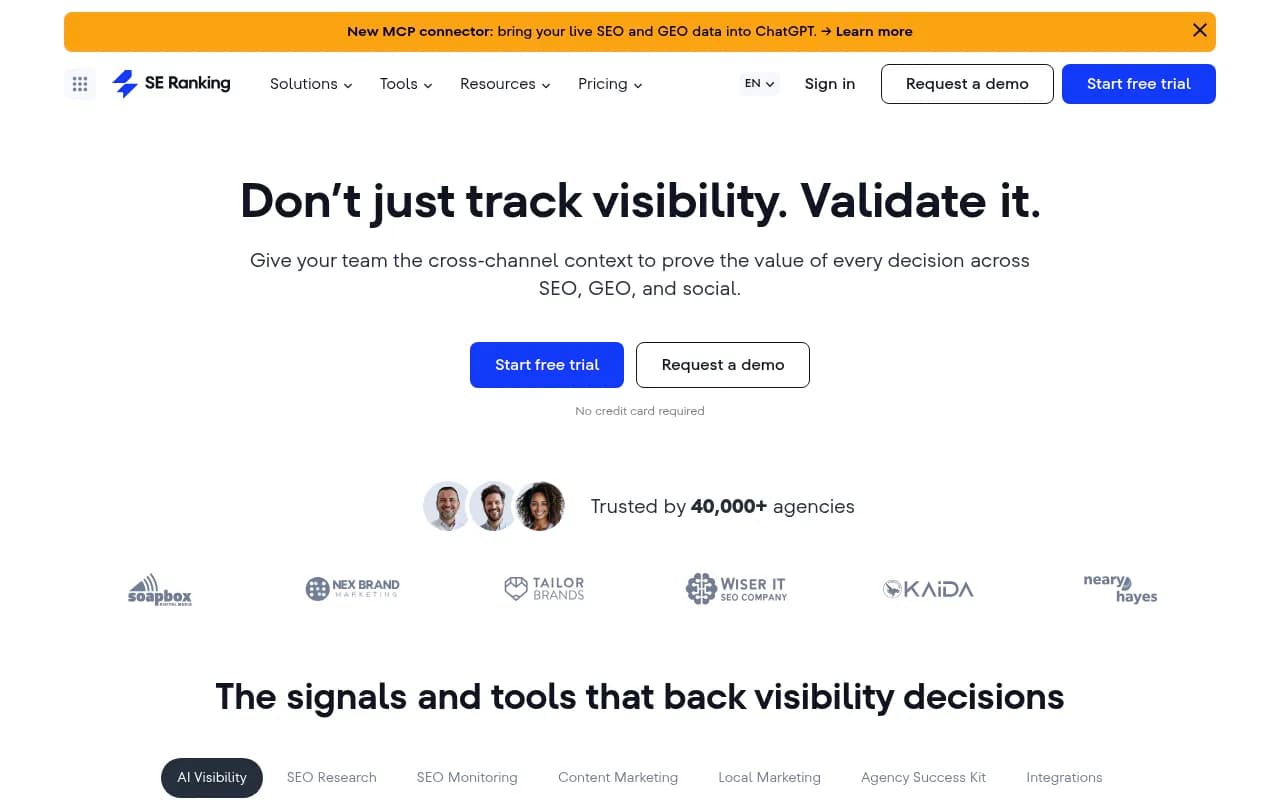
SE Ranking has expanded into GEO territory with its AI visibility features. It's a good option if you're already using it for traditional SEO and want to add AI monitoring without switching platforms. The AI visibility features are less deep than dedicated GEO tools, and offsite tracking isn't a focus, but the price-to-feature ratio is reasonable.
Semrush AI Visibility Toolkit
Semrush's AI visibility features are built into a much larger platform. The advantage is integration -- you get AI monitoring alongside keyword research, backlink analysis, and content tools in one place. The limitation is that the AI prompts are fixed rather than customizable, and there's no AI traffic attribution. For teams already deep in the Semrush ecosystem, it's worth exploring. For teams whose primary need is AI visibility, a dedicated tool will go deeper.
Rankscale
Rankscale covers AI search rank tracking across multiple models. It's a focused tool that does what it says without a lot of extras. No offsite tracking, but if your main need is clean rank monitoring across LLMs at a reasonable price, it's worth a look.
Writesonic GEO
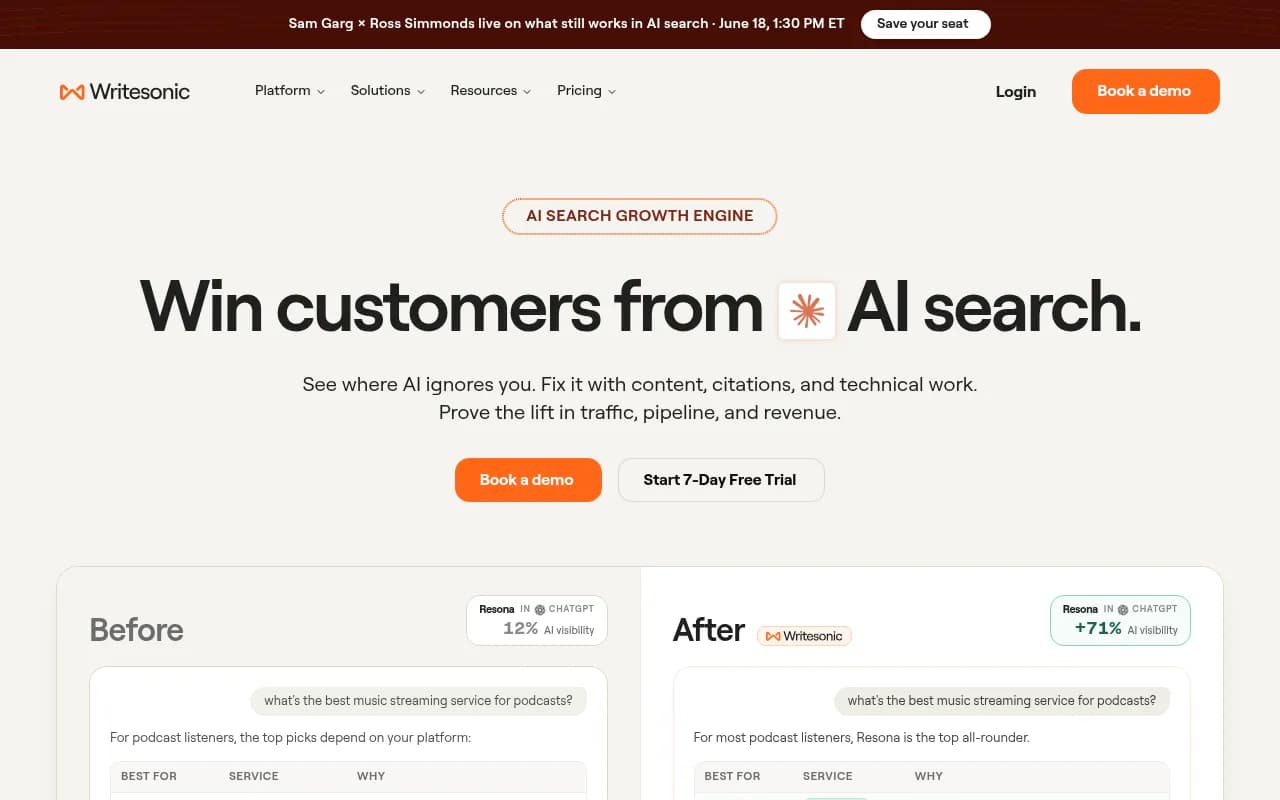
Writesonic added GEO monitoring to its existing content platform. The appeal is the combination: you can monitor AI visibility and generate content in the same tool. The monitoring side is less deep than dedicated platforms, but for teams that want content creation and basic AI visibility in one place, it's a practical option.
How the tools compare on offsite citation tracking
This is the core question, so here's a direct comparison:
| Tool | Reddit tracking | YouTube tracking | Third-party citation analysis | Content generation | AI engines covered |
|---|---|---|---|---|---|
| Ahrefs Brand Radar | Yes | Yes | Partial | No | 6 |
| Promptwatch | Yes | Yes | Yes | Yes | 10 |
| Peec AI | No | No | No | No | 4 (base) |
| Profound | No | No | Partial | No | Multiple |
| Scrunch AI | No | No | Partial | No | Multiple |
| Otterly.AI | No | No | No | No | Multiple |
| AthenaHQ | No | No | No | No | Multiple |
| Semrush AI Toolkit | No | No | No | Partial | Multiple (fixed prompts) |
| SE Ranking | No | No | No | No | Multiple |
| Writesonic GEO | No | No | No | Yes | Multiple |
The pattern is clear: most tools don't track offsite sources at all. Ahrefs Brand Radar is the most explicit about Reddit and YouTube coverage. Promptwatch covers the full offsite picture including third-party citations, and pairs it with content tools to act on what you find.
What to actually look for when evaluating these tools
A few things that matter more than they might seem:
Where the prompts come from. Synthetic prompts (made up by the tool) produce visibility scores that may not reflect real user behavior. Tools anchored in real search data give you metrics that mean something.
Which AI engines are covered. ChatGPT and Perplexity are the obvious ones, but Google AI Overviews and Google AI Mode are increasingly important for organic traffic. Claude and Gemini matter for certain audiences. Check whether the engines you care about are included in the base plan or locked behind enterprise pricing.
Whether you can act on the data. A dashboard that shows you're invisible in 60% of relevant AI responses is only useful if you can do something about it. Tools that combine monitoring with content gap analysis and content generation close the loop. Tools that only monitor leave you staring at a problem with no path forward.
Crawler and indexing data. Some platforms now track AI crawler activity at the page level -- which pages ChatGPT's crawler read, when they returned, whether errors are blocking indexing. This is genuinely useful for diagnosing why content isn't getting cited, and most tools don't offer it.
Offsite source tracking. If you're serious about understanding why competitors are getting cited, you need to see the Reddit threads, YouTube videos, and third-party pages that are influencing AI responses. Without this, you're working with incomplete information.
The monitoring-only trap
There's a pattern worth naming. Most GEO tools are monitoring dashboards. They show you data. They tell you that your brand appeared in 23% of relevant AI responses last month, that a competitor appeared in 41%, and that you're losing ground in the "best project management software" category.
Then they stop.
You're left to figure out why the competitor is winning, what content you're missing, and what to actually publish. That's a lot of work, and it requires skills and context the tool doesn't provide.
The more useful framing is: monitoring is step one. The question is what happens after. Do you have data on which offsite sources are driving competitor citations? Do you have a content gap analysis that shows exactly which prompts you're not appearing for? Can you generate content grounded in that data and then track whether it moves the needle?
That's the difference between a tracker and an optimization platform. Most Peec AI alternatives are trackers. A few are starting to be something more.
Which tool fits which situation
If your main need is Reddit and YouTube tracking specifically, Ahrefs Brand Radar is the most direct answer. It's built for that, the data quality is strong, and the prompt methodology is more rigorous than most competitors.
If you want offsite citation tracking as part of a broader optimization workflow -- find gaps, create content, track results -- Promptwatch covers more ground. The offsite analysis, crawler logs, content generation, and page-level tracking work together in a way that individual monitoring tools don't match.
If you're on a tight budget and just need basic AI monitoring to start, Otterly.AI gets you in the door without a large commitment.
If you're already in the Semrush or SE Ranking ecosystem and want to add AI visibility without switching tools, the native features in those platforms are a reasonable starting point, with the understanding that you'll hit their limits if AI visibility becomes a serious priority.
Peec AI itself isn't a bad tool. The interface is clean, the multi-language support is real, and for straightforward brand monitoring it does the job. But if offsite citations are on your radar -- and they should be, given how LLMs actually work -- it's the wrong tool for that specific need.
The web that AI models learned from includes Reddit, YouTube, and thousands of third-party pages. Tracking only your own website is like monitoring one lane of a highway and wondering why you keep getting passed.