Key takeaways
- Morningscore is a gamified SEO platform aimed at small teams and solo marketers, with AI visibility scoring added in early 2026 -- useful for getting started, but limited in depth.
- Searchable is a niche player focused on AI search presence, with lighter traditional SEO coverage than established platforms.
- Neither tool covers the full picture on its own: Morningscore leans toward classic SEO with AI features bolted on, while Searchable leans toward AI monitoring with basic SEO.
- If AI search visibility is your primary concern in 2026, dedicated GEO platforms like Promptwatch go much further than either -- tracking citations across 10 AI models, diagnosing crawler issues, and generating content to close the gaps.
- For teams that need both traditional SEO depth and AI tracking, tools like Semrush, SE Ranking, or Ahrefs are worth considering alongside a dedicated AI visibility layer.
The SEO tool market in 2026 looks nothing like it did three years ago. Every platform now has some version of "AI visibility" on its feature list -- but what that actually means varies wildly. Some tools track a handful of prompts across two or three AI engines. Others have built entire workflows around it.
Searchable and Morningscore both sit in an interesting middle ground: they're pitched as all-in-one SEO tools that also handle AI search visibility. The question is whether either one actually delivers on both sides of that promise, or whether you end up with a tool that's mediocre at everything.
This guide breaks down what each tool does well, where each one falls short, and when you'd actually choose one over the other.
What Morningscore is
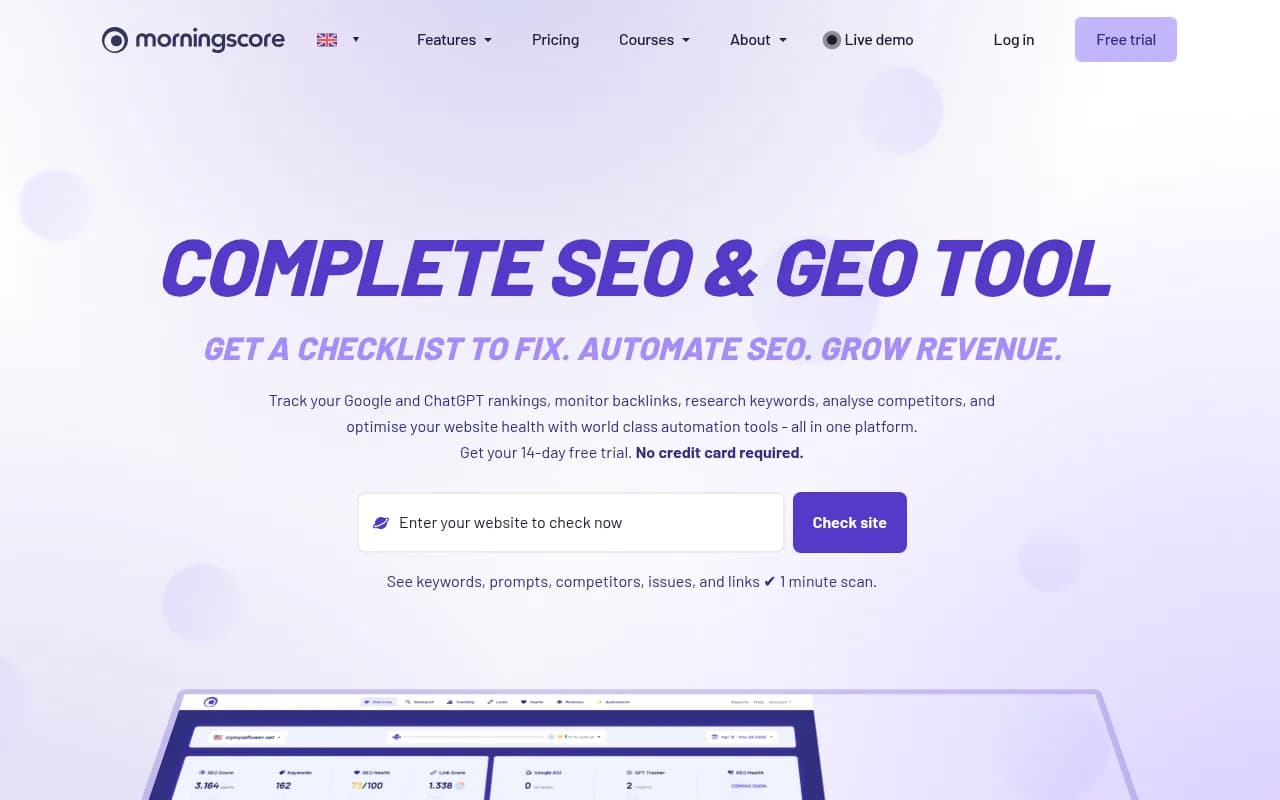
Morningscore is a Danish SEO platform that's been around for several years. Its defining feature is gamification: you earn points and level up as you complete SEO tasks, which sounds gimmicky but genuinely helps smaller teams stay consistent with SEO hygiene work. It covers keyword tracking, backlink monitoring, site health audits, and basic competitor analysis.
In early 2026, Morningscore added AI visibility scoring -- a feature that tracks how often your brand appears in AI-generated answers. It's a meaningful addition, but it arrived late relative to dedicated GEO platforms, and the depth reflects that.
What Morningscore does well:
- Clean, approachable interface that doesn't require SEO expertise to navigate
- Gamified task system that keeps teams accountable for ongoing SEO work
- Solid keyword rank tracking for traditional Google search
- Backlink monitoring with a straightforward health score
- Reasonable pricing for small businesses and freelancers
Where it falls short:
- AI visibility coverage is limited compared to dedicated platforms -- fewer AI models tracked, fewer prompts, less granular data
- No content generation or gap analysis tied to AI search results
- Doesn't track AI crawler activity on your site
- Limited competitor intelligence for AI search specifically
- The gamification layer, while fun, can feel like a distraction for teams that want raw data
What Searchable is
Searchable is a newer entrant focused on helping brands understand and improve their presence in AI search engines. It's lighter on traditional SEO features than Morningscore -- you won't find the same depth of keyword database or backlink tooling -- but it's more focused on the AI search side of things.
The platform tracks brand mentions and citations across AI engines, surfaces content gaps, and provides recommendations for improving AI search presence. Think of it as a monitoring-first tool with some optimization guidance layered on top.
Where Searchable does well:
- More focused on AI search than Morningscore, so the AI monitoring features tend to be more developed
- Cleaner prompt-level tracking than many all-in-one tools
- Useful for brands that are primarily worried about AI search presence rather than traditional rankings
Where it falls short:
- Traditional SEO features are thin -- if you need keyword research, backlink analysis, or technical site auditing, you'll need another tool
- Smaller dataset than established platforms means less reliable citation and prompt data
- No content generation capabilities
- Limited integrations compared to more mature platforms
Feature comparison
Here's how the two tools stack up across the features that matter most in 2026:
| Feature | Morningscore | Searchable |
|---|---|---|
| Traditional keyword tracking | Yes, solid | Basic |
| Backlink monitoring | Yes | Limited |
| Technical site audit | Yes | No |
| AI visibility monitoring | Added 2026, limited | Core feature |
| AI models tracked | Few (exact number unclear) | Multiple |
| Prompt-level tracking | Basic | Yes |
| Content gap analysis | No | Partial |
| AI content generation | No | No |
| Crawler log analysis | No | No |
| Competitor AI heatmaps | No | Limited |
| Reddit/YouTube tracking | No | No |
| ChatGPT Shopping tracking | No | No |
| Gamification | Yes (unique) | No |
| Pricing transparency | Clear, affordable | Less transparent |
| Best for | Small teams, traditional SEO + light AI | AI-first brands with limited SEO needs |
The table tells a clear story: these tools are almost mirror images of each other. Morningscore is stronger on traditional SEO and weaker on AI visibility. Searchable is the reverse. Neither covers both sides comprehensively.
The real problem with both tools in 2026
Here's the honest assessment: both Morningscore and Searchable are monitoring tools at their core. They show you data. They tell you where you're visible and where you're not. But they don't help you do much about it.
That gap matters more than it used to. According to SparkToro's analysis of Similarweb data, around 68% of Google searches ended without a click in early 2026. ChatGPT reached roughly 900 million weekly active users by February 2026. When AI engines are the destination, knowing you're not being cited is only half the problem. The other half is figuring out what to create, and then creating it.
Neither Morningscore nor Searchable has a credible answer to that second half. There's no content generation tied to real prompt data, no answer gap analysis that shows you exactly which prompts competitors rank for that you don't, and no page-level tracking that connects a piece of content you published to a citation you earned three weeks later.
This is the broader problem with the "all-in-one" positioning in 2026. Most tools that claim to do everything end up doing AI visibility as an afterthought. The research from TECHSY's test of 12 SEO tools found that only 4 actually track AI search in a meaningful way -- and the tools that do it well tend to be either dedicated AI visibility platforms or large established players with the resources to build it properly.
Who should use Morningscore
Morningscore makes sense if:
- You're a small business or solo marketer who needs a simple, affordable way to manage traditional SEO
- You want the gamification layer to help keep SEO tasks from slipping through the cracks
- AI visibility is a "nice to have" rather than a core priority -- you want to see the numbers but aren't building a program around them
- You're not ready to invest in a dedicated GEO platform and want something that covers the basics in one place
It's a good starter tool. The AI visibility features give you a sense of where you stand without overwhelming you with data you don't know what to do with.
Who should use Searchable
Searchable makes sense if:
- Your primary concern is AI search presence and you're willing to use a separate tool for traditional SEO
- You're an early-stage brand that wants to establish AI search visibility before competitors do
- You don't need deep backlink analysis or keyword research and just want to monitor AI citations
The caveat: because Searchable is a newer, smaller platform, the data reliability and model coverage are harder to verify independently. Before committing, it's worth testing whether the prompts it tracks actually reflect how your customers search in AI engines.
What to consider instead
If you're evaluating Morningscore and Searchable, you're probably looking for a tool that handles both traditional SEO and AI visibility without requiring you to stitch together multiple subscriptions. That's a reasonable goal. Here are the tools worth considering depending on your priorities:
For traditional SEO with some AI visibility
Semrush and SE Ranking are the most complete options. Semrush has a massive keyword database and a growing AI toolkit. SE Ranking has added LLM result tracking alongside traditional rank tracking and integrates with GA4 for traffic context.
For AI visibility as a primary focus
This is where dedicated GEO platforms pull ahead. Promptwatch tracks citations across 10 AI models (ChatGPT, Perplexity, Claude, Gemini, Grok, DeepSeek, Copilot, Meta AI, Google AI Overviews, and Google AI Mode), logs AI crawler activity on your site, and -- critically -- helps you close the gaps it finds through content generation and answer gap analysis. It's the difference between a dashboard that shows you a problem and a platform that helps you solve it.
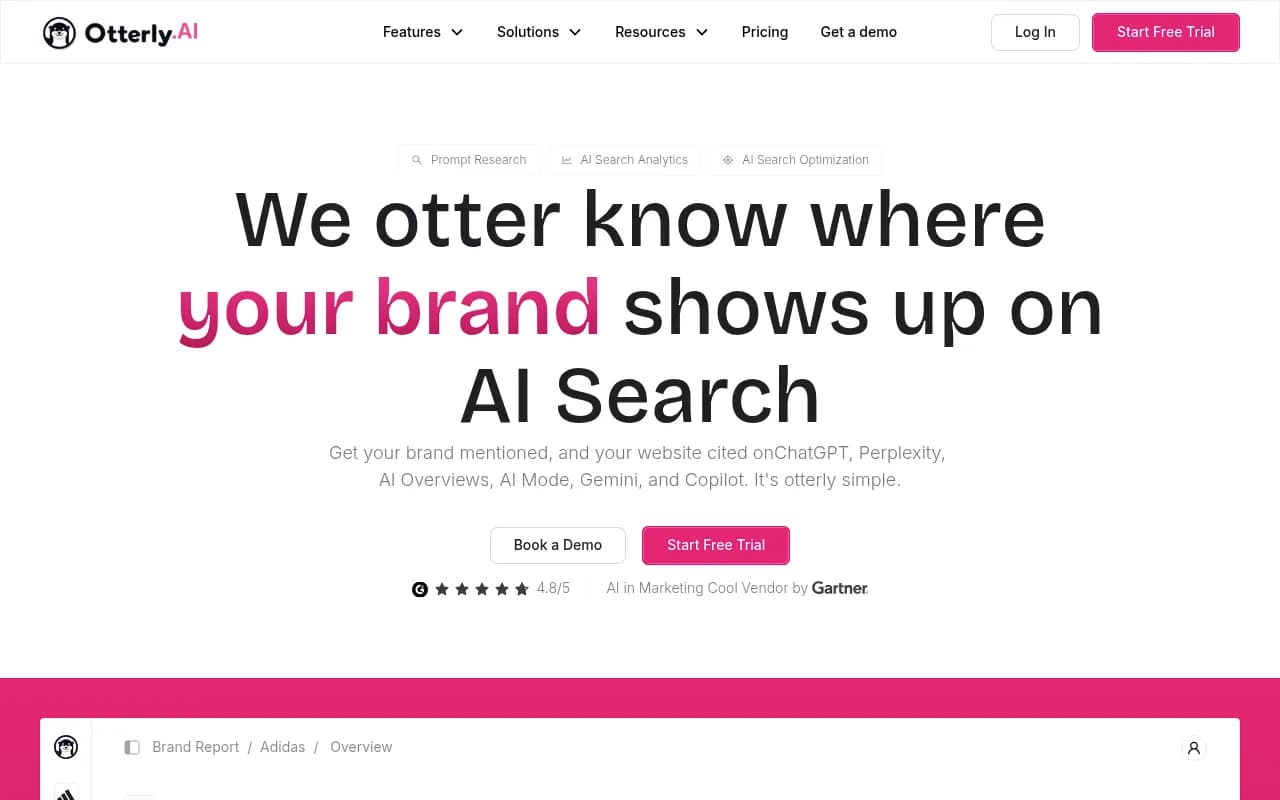
Otterly.AI is a more affordable entry point for AI brand monitoring if you're budget-constrained and primarily need to track mentions rather than act on them.
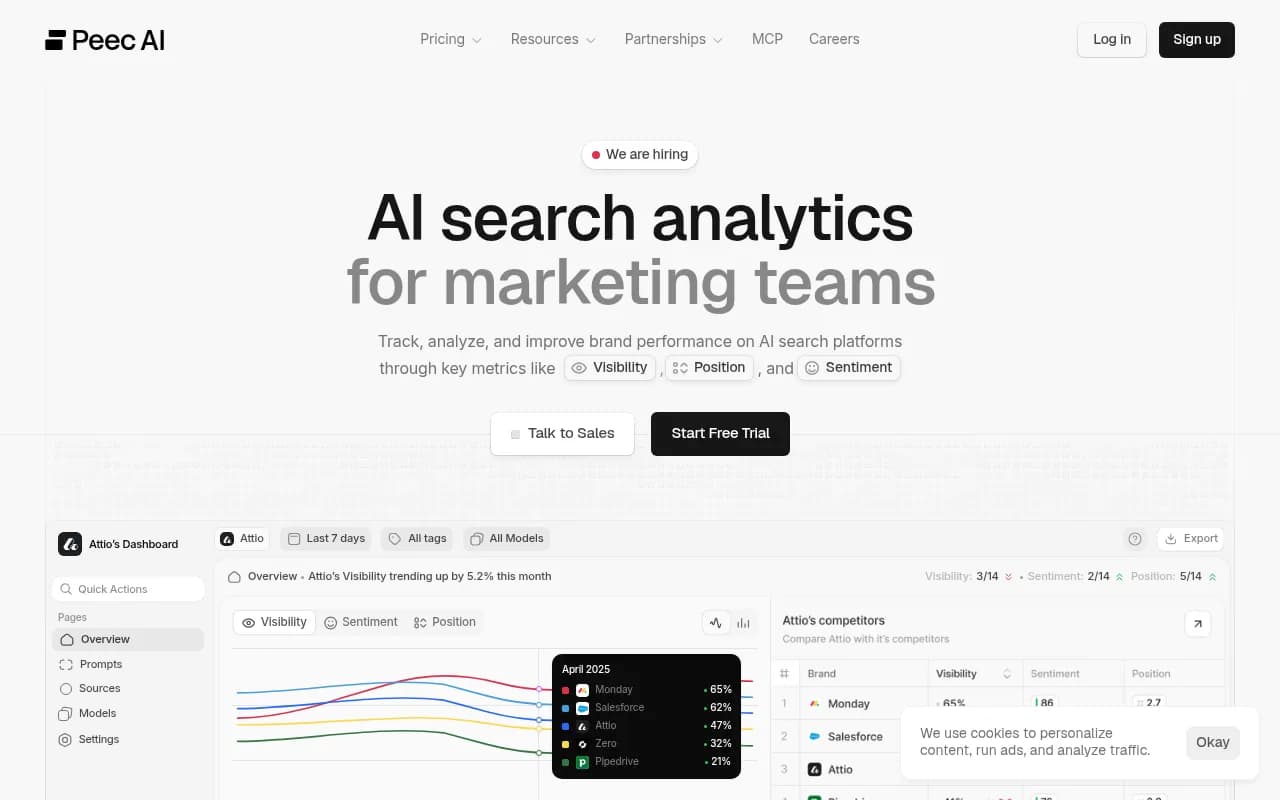
Peec AI is another option in the monitoring space with a clean interface and useful suggestions.
For content optimization alongside AI tracking
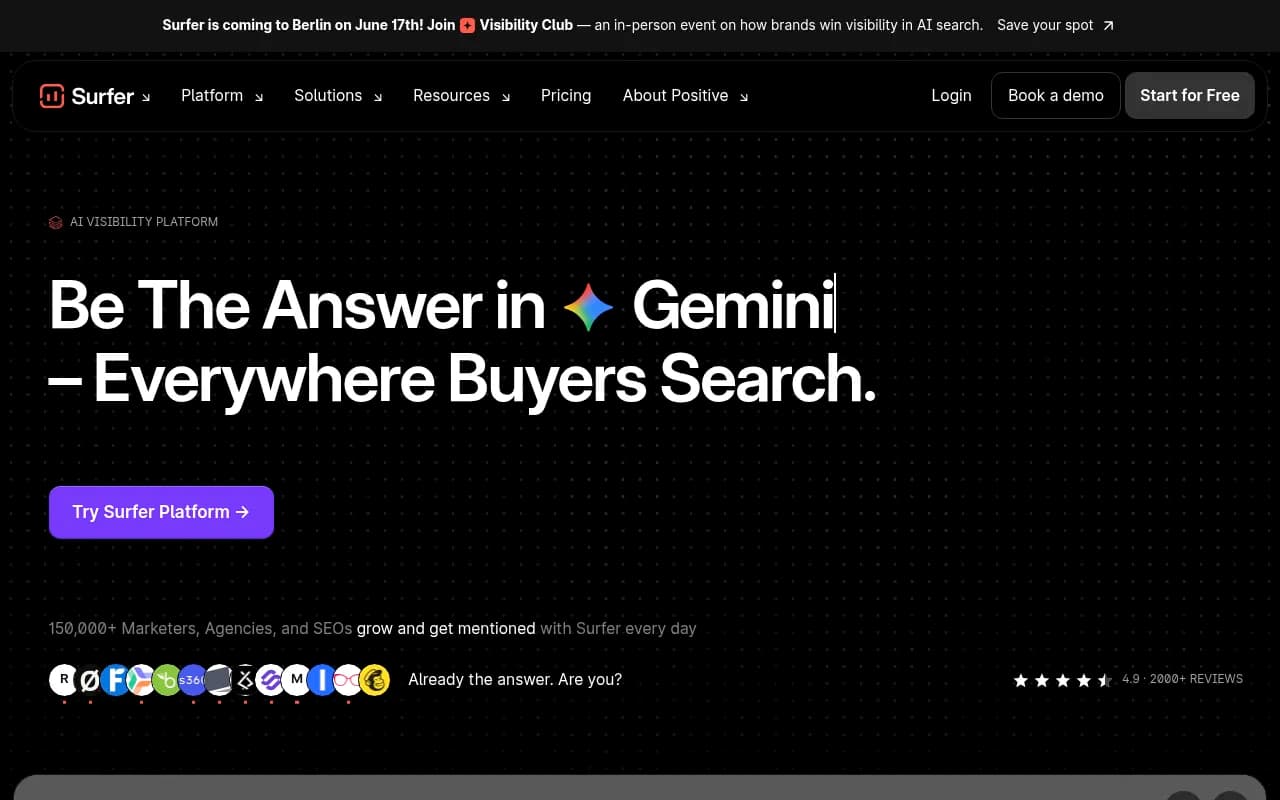
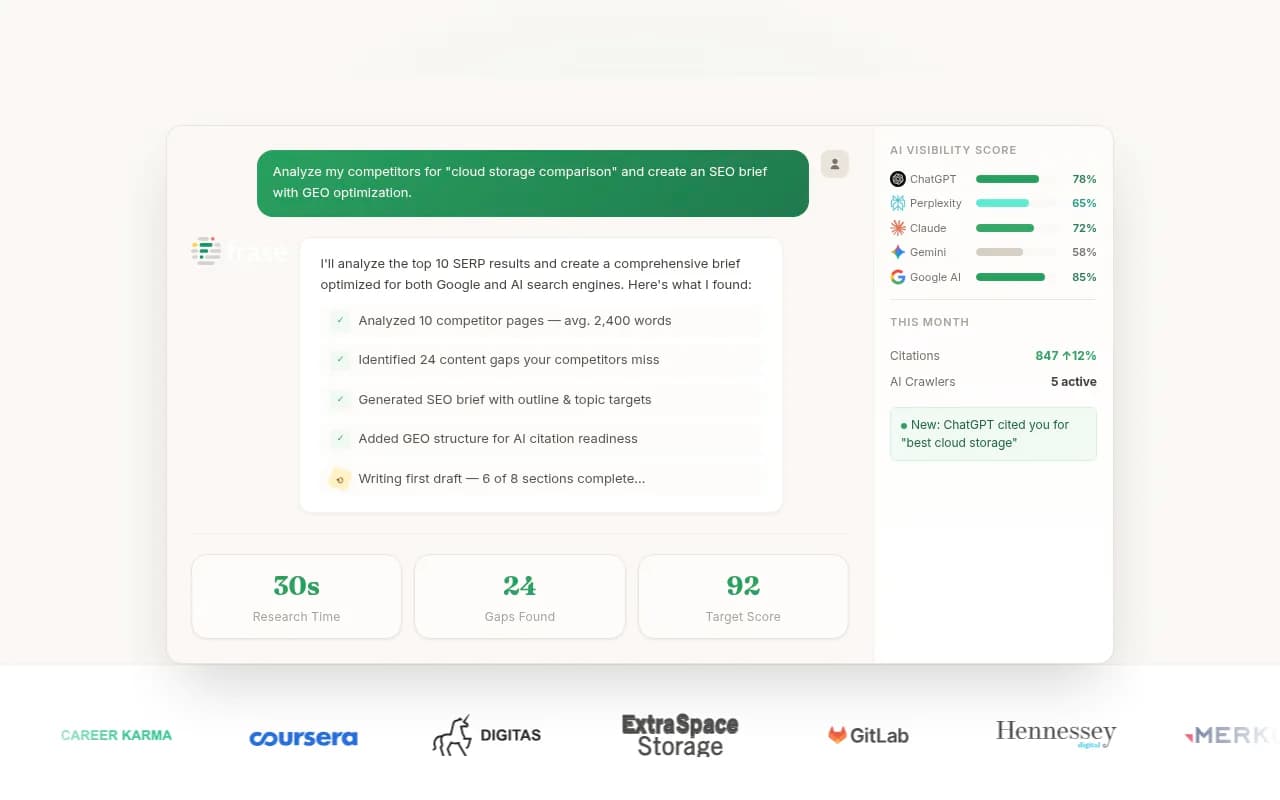
Surfer SEO handles content optimization well for traditional search. Frase pairs content research and writing with AI visibility tracking, which makes it one of the more complete workflows for teams that want to create content and see it perform in AI answers.
For agencies managing multiple clients
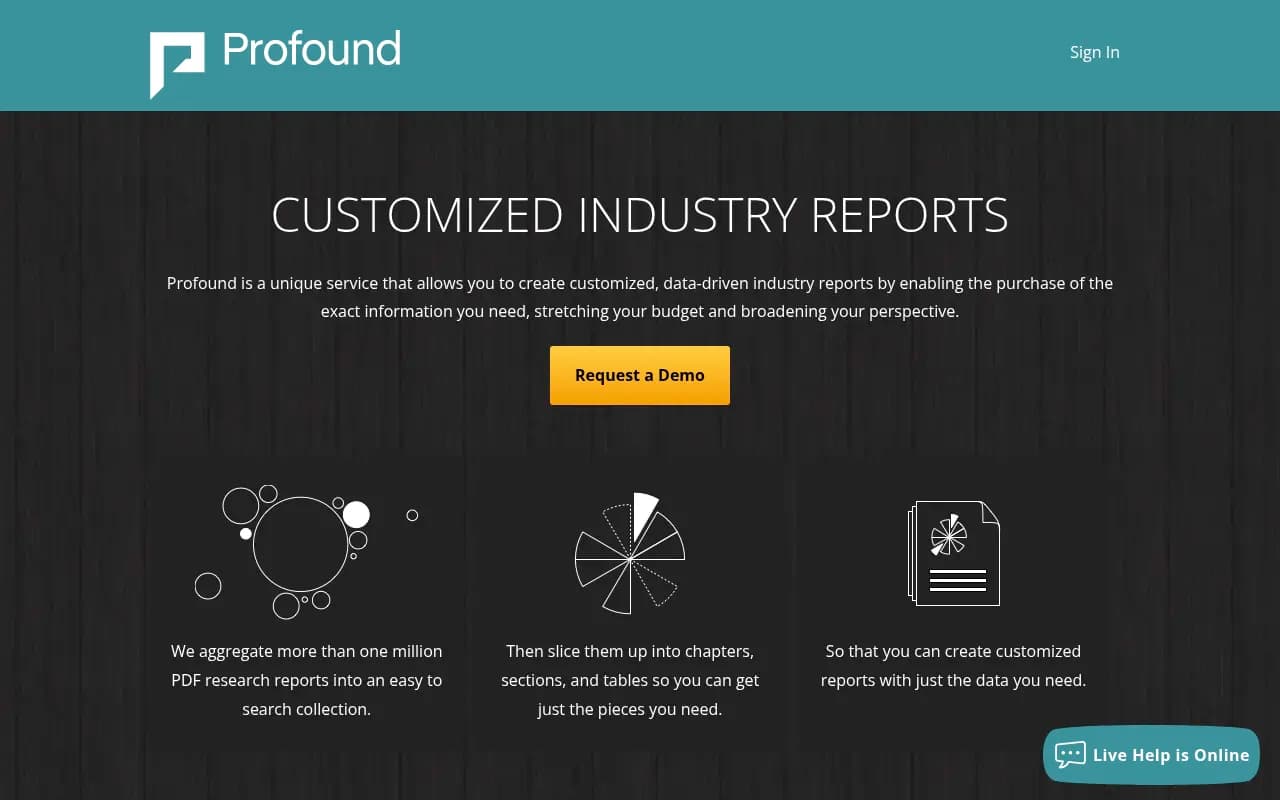
Search Party is built specifically for agency workflows. Profound is the strongest option for enterprise-grade AI search monitoring with deep reporting.
The action gap: why monitoring alone isn't enough
One pattern worth naming explicitly: most tools in this category -- including both Morningscore and Searchable -- are built around showing you data. They're good at answering "where am I visible?" They're much weaker at answering "what do I do about it?"
In 2026, that distinction matters. AI engines like ChatGPT and Perplexity pull from a relatively small pool of sources for any given topic. If your content isn't in that pool, you're invisible -- and no amount of rank tracking tells you how to get in. You need to know which prompts are driving traffic to competitors, which topics your site doesn't cover, and what kind of content AI models actually want to cite.
That requires answer gap analysis, prompt volume data, and content generation tied to real citation patterns. Morningscore doesn't have it. Searchable has pieces of it. Platforms built specifically around this workflow -- like Promptwatch, which has processed over 4.5 billion citations and prompts -- are meaningfully ahead.
The practical implication: if AI search visibility is a real priority for your business in 2026, using Morningscore or Searchable as your primary AI tool is likely to leave you with a lot of data and not much direction. They're fine as supplementary tools or starting points, but they're not built for the full optimization workflow.
Final verdict
Morningscore and Searchable are genuinely useful tools for specific situations, but neither is a complete answer to the AI visibility problem in 2026.
Choose Morningscore if you're a small team that needs affordable, accessible SEO management with a light AI visibility layer on top. The gamification is legitimately helpful for staying consistent, and the traditional SEO features are solid for the price.
Choose Searchable if AI search is your primary focus and you're comfortable using a separate tool for traditional SEO. Just go in with realistic expectations about data depth and model coverage.
If you're serious about AI search visibility -- tracking citations, diagnosing why AI engines aren't citing you, and actually creating content that fixes the gaps -- you'll outgrow both tools quickly. That's when a dedicated GEO platform becomes worth the investment.