Key takeaways
- AI search engines (ChatGPT, Perplexity, Google AI Mode, Gemini) are now a primary research channel for buyers, not a novelty. 80% of consumers say AI tools influence at least half of their purchasing decisions.
- Google's #1 ranked page now loses roughly 58% of its clicks when an AI Overview appears, up from 35% a year ago. Traditional rank tracking is no longer enough.
- Visibility in AI search requires a different strategy than Google SEO: structured, authoritative, citation-worthy content beats keyword-stuffed pages.
- The brands winning in AI search are the ones being cited, not just ranked. That means tracking citations across models, identifying gaps, and creating content that fills them.
- Tools now exist specifically for this: from basic AI monitoring to full optimization platforms that find gaps and generate content to close them.
The shift that already happened
Here's the uncomfortable truth for anyone still running a purely Google-first strategy: the buyer journey changed, and most marketing teams haven't caught up.
According to research cited by Exposure Ninja, 80% of people now say AI tools influence at least half of their purchasing decisions. That's not a prediction. That's the current state of how people shop, research, and decide.
Think about how a purchase decision actually unfolds in 2026. Someone asks ChatGPT "what's the best project management tool for a 10-person agency?" They get a synthesized answer with three or four named tools. They might follow up with Perplexity for a comparison. Then they check Reddit for real user opinions. Then they watch a YouTube review. By the time they land on your website, they've already formed an opinion, and that opinion was shaped by AI responses you may have had zero visibility into.
Jim Lecinski, a Northwestern marketing professor, described this shift well: mobile AI has become an "indispensable shopping companion" for consumers. That's not hyperbole. It's what the data shows.
The problem is that most marketing teams are still measuring success by Google rankings. That metric is increasingly disconnected from actual buyer behavior.

What's actually changed in search
Google is no longer just Google
Google AI Overviews launched at scale in 2024, and Google AI Mode followed. Both fundamentally change what happens after someone types a query. Instead of a list of blue links, users get a synthesized answer. The source pages may be cited, but they're buried below the fold.
The click-loss data is stark. When AI Overviews appear, the top-ranked organic result now loses around 58% of its clicks, up from roughly 35% when AI Overviews first rolled out. That's not a gradual erosion. It's a structural change to how organic traffic flows.
For marketers, this means ranking #1 on Google is worth less than it used to be, and being cited inside an AI Overview is worth more. Those are two different goals that require two different strategies.
The rise of non-Google AI search
ChatGPT now processes over a billion queries per week. Perplexity has become the go-to research tool for a growing segment of knowledge workers. Gemini is embedded in Google Workspace. Claude is used heavily in professional contexts. Grok is integrated into X. Copilot is in Windows and Microsoft 365.
Each of these models has its own citation logic, its own training data, and its own way of deciding which brands and sources to surface. A brand that's well-cited in ChatGPT might be invisible in Perplexity. A page that ranks well in Google might never get mentioned in Gemini.
This fragmentation is the core challenge of AI search in 2026. You're not optimizing for one algorithm anymore. You're trying to be visible across a dozen different models, each behaving slightly differently.
Agentic search is emerging
The next wave is already visible. AI agents, tools that can browse the web, compare products, and make recommendations autonomously, are starting to handle research tasks end-to-end. When someone's AI agent is doing the research instead of the person themselves, the stakes for being cited go up dramatically. If your brand isn't in the agent's answer, you don't exist for that buyer.
This is why Semrush's AI search trend data shows adoption accelerating most sharply among Gen Z and younger millennials. These users are comfortable delegating research to AI entirely. They're not cross-checking with Google. They're trusting the model's answer.
Why traditional SEO isn't enough anymore
Traditional SEO optimizes for crawlability, keyword density, backlinks, and page speed. Those things still matter, but they're table stakes now, not differentiators.
AI models don't rank pages the way Google does. They synthesize information from multiple sources and decide which sources to cite based on factors like:
- How clearly and directly the content answers a specific question
- Whether the source is cited elsewhere on the web (Reddit, YouTube, third-party reviews, news articles)
- Whether the brand has a coherent entity presence across the web
- Whether the content is structured in a way that's easy for a model to extract and attribute
A page that ranks #3 on Google might be cited constantly in ChatGPT if it's the clearest, most direct answer to a specific question. A page that ranks #1 might never appear in an AI response if it's written for keywords rather than for actual questions.
This is the core of what's now called Generative Engine Optimization (GEO) or Answer Engine Optimization (AEO): writing content that AI models want to cite, not just content that Google wants to rank.
What AI search visibility actually requires
Content that answers real questions directly
AI models are trained on human conversations. They're good at recognizing when a piece of content directly answers a question versus when it dances around a topic. The content that gets cited tends to be specific, direct, and structured around actual questions buyers ask.
This means moving away from broad, keyword-stuffed pillar pages and toward content that answers discrete questions clearly. FAQ sections, comparison articles, "best for X" content, and specific how-to guides tend to perform well in AI citations.
A presence beyond your own website
AI models don't just read your website. They read Reddit threads, YouTube transcripts, review sites, news articles, and third-party listicles. If your brand is only present on your own domain, you're invisible to a large chunk of what AI models use to form their answers.
This is why offsite presence matters more than ever. Being mentioned in a well-trafficked Reddit thread, featured in a YouTube comparison video, or listed in a "best tools for X" article on a credible site can directly influence whether AI models cite you.
Tracking what you can't see
Here's the practical problem: you can't optimize what you can't measure. Most web analytics tools show you traffic from Google. They don't show you whether ChatGPT is citing your pages, which prompts are driving AI-referred traffic, or which competitors are being mentioned when you're not.
This is where dedicated AI visibility tools come in. The category has grown significantly in 2025 and 2026, ranging from simple monitoring dashboards to full optimization platforms.
The tools marketers are using in 2026
The AI visibility tool landscape has matured quickly. Here's a practical breakdown of what's available and what each type is good for.
Full optimization platforms
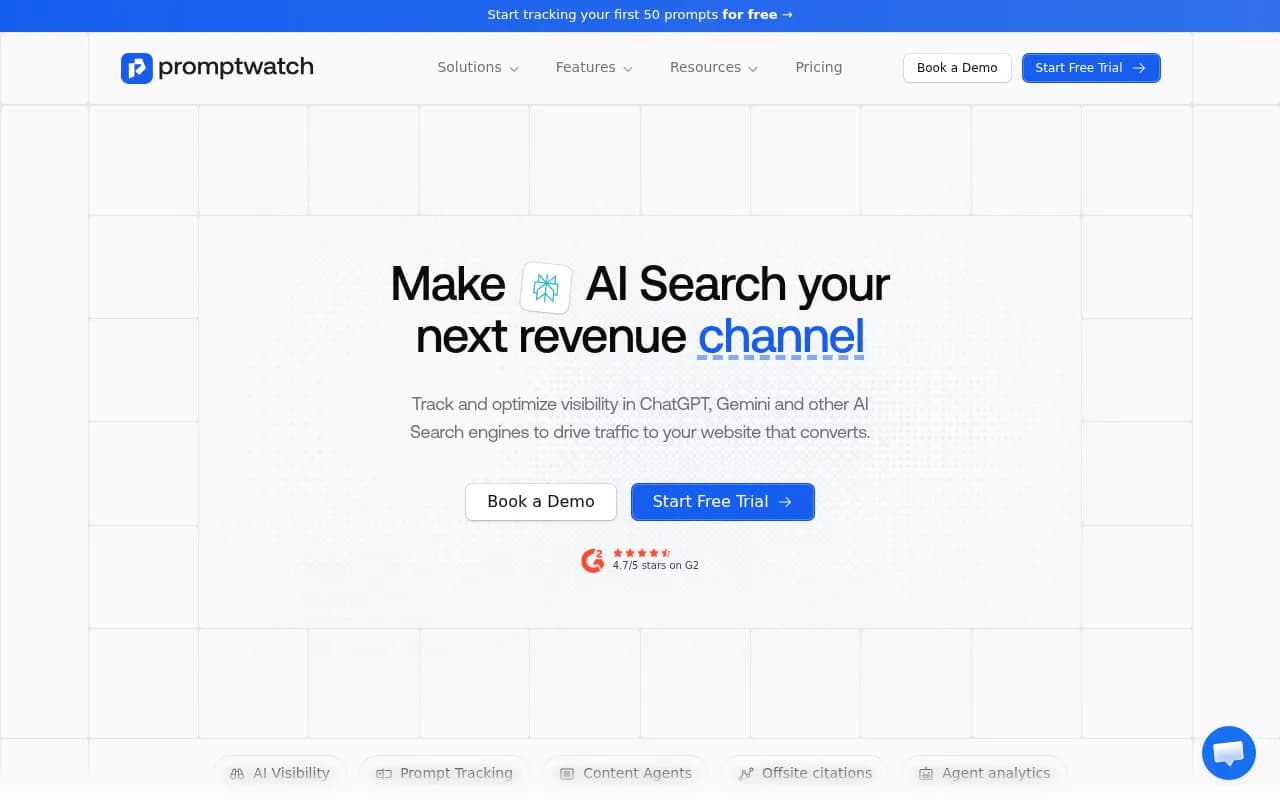
These go beyond monitoring to help you find gaps and create content to fill them. The most capable option in this category is Promptwatch, which tracks citations across 10 AI models (ChatGPT, Perplexity, Google AI Overviews, Google AI Mode, Claude, Gemini, Grok, DeepSeek, Copilot, and Mistral), identifies which prompts your competitors are visible for that you're not, and generates content briefs and articles grounded in real prompt data. It's the only platform in a recent 12-tool comparison rated as a "Leader" across all categories, largely because it closes the loop from monitoring to action.
Monitoring-focused tools
These are useful for tracking your brand's presence in AI responses without the content generation layer.
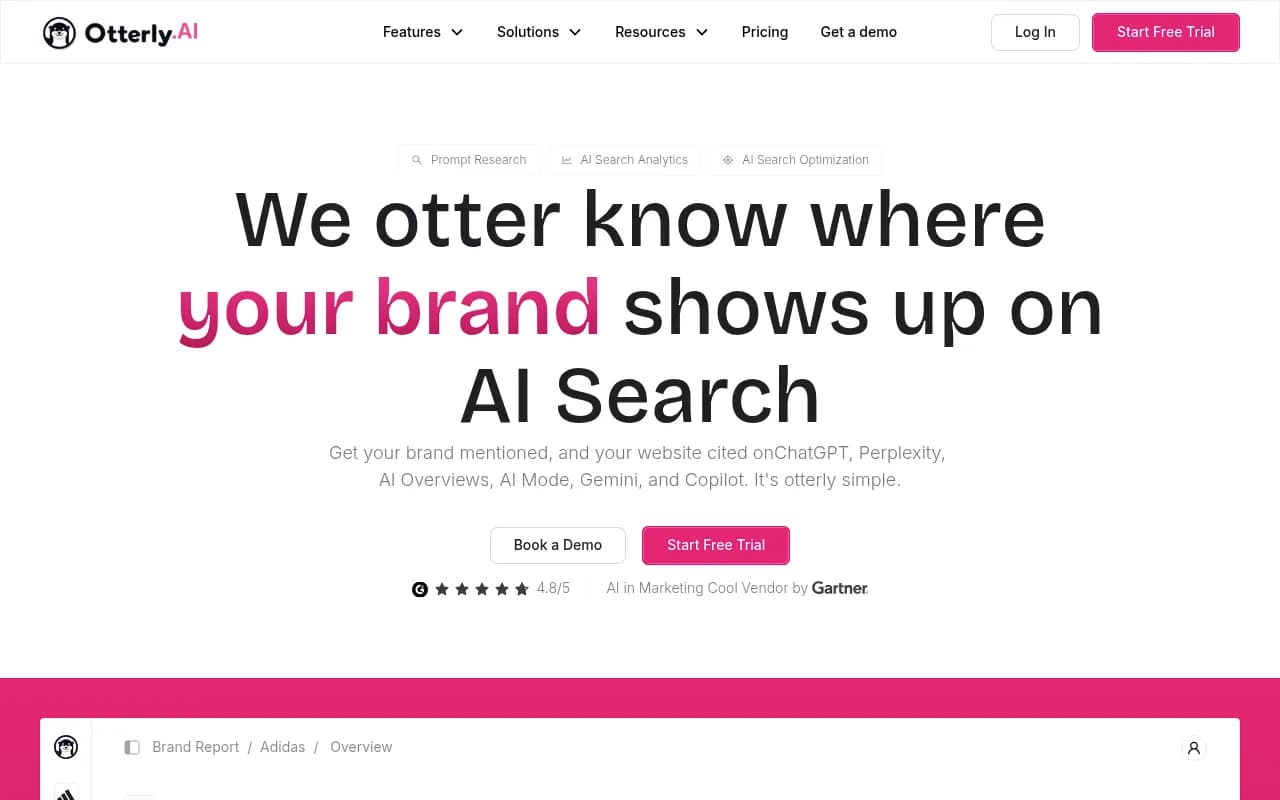
Otterly.AI is one of the more accessible options for teams that want basic AI brand monitoring without a large budget.
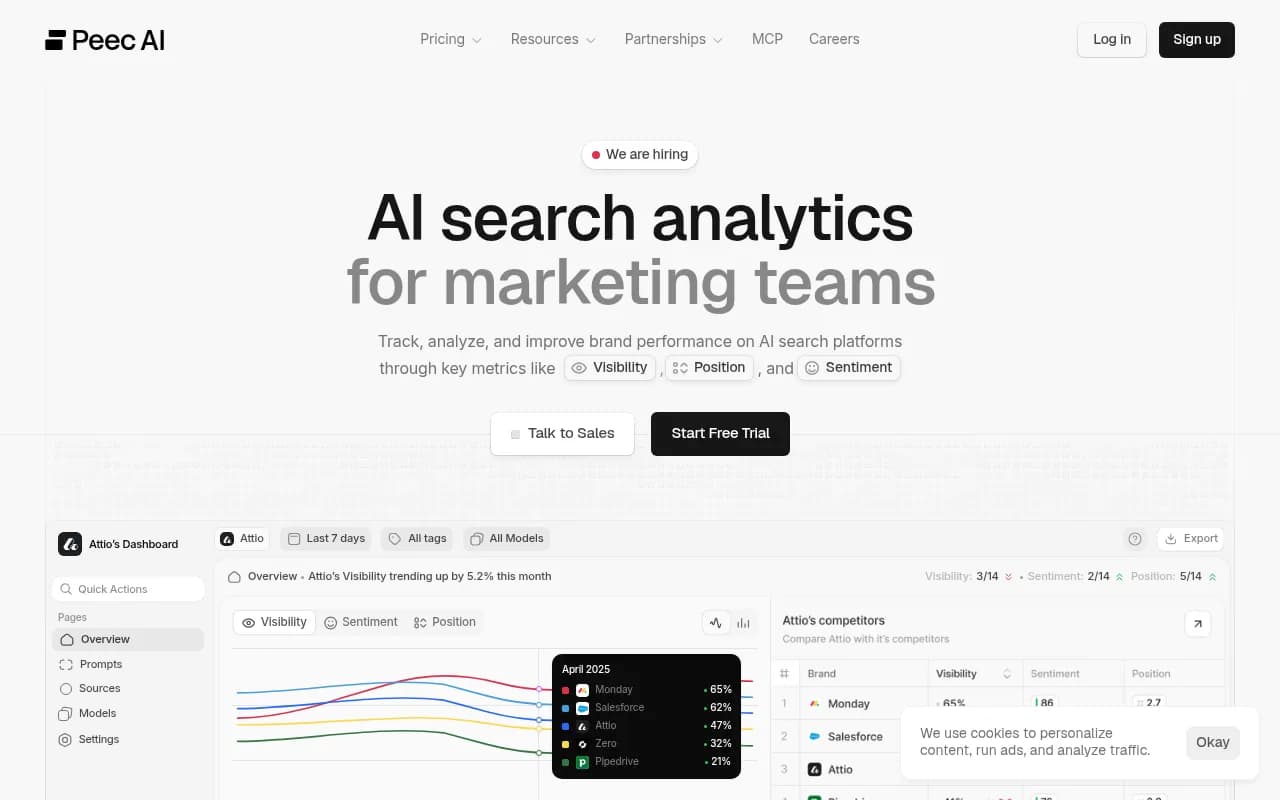
Peec AI tracks AI visibility with smart suggestions for improvement, sitting between pure monitoring and full optimization.
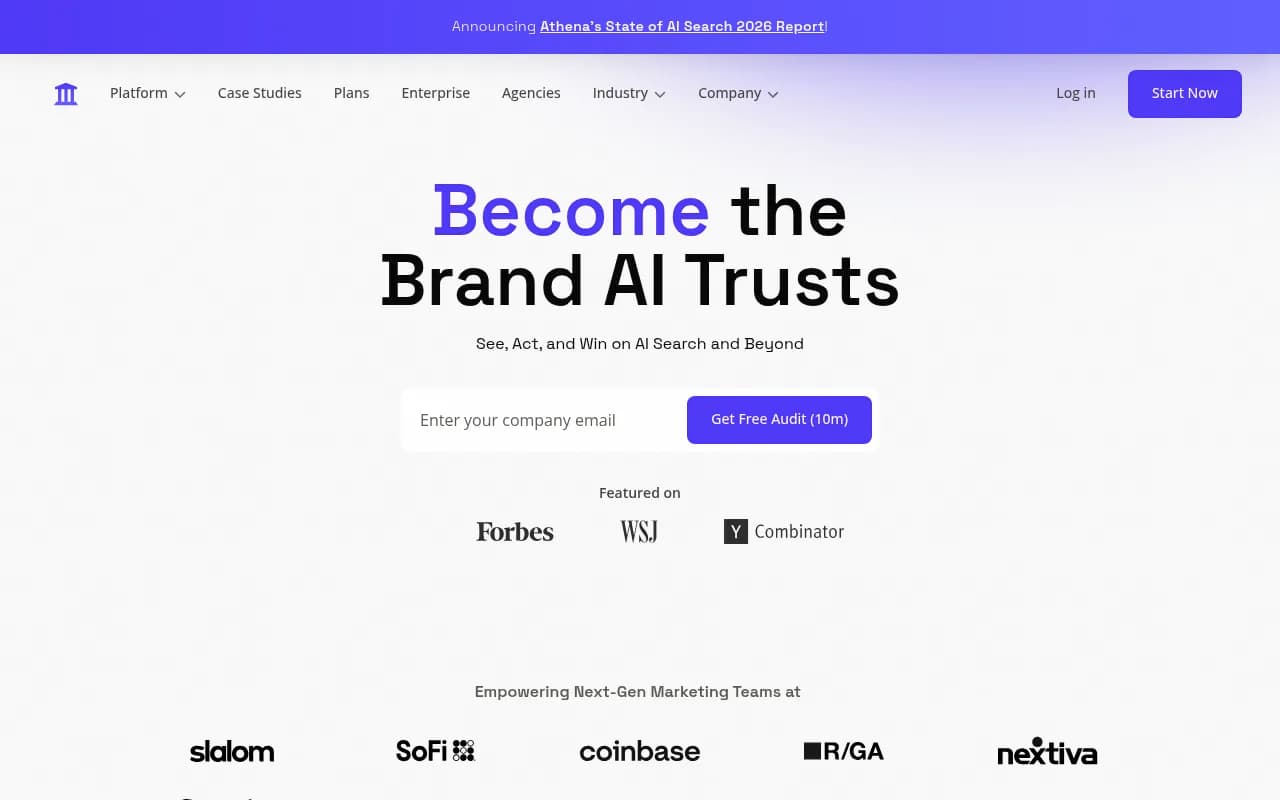
AthenaHQ is monitoring-focused with a clean interface, though it lacks content optimization capabilities.
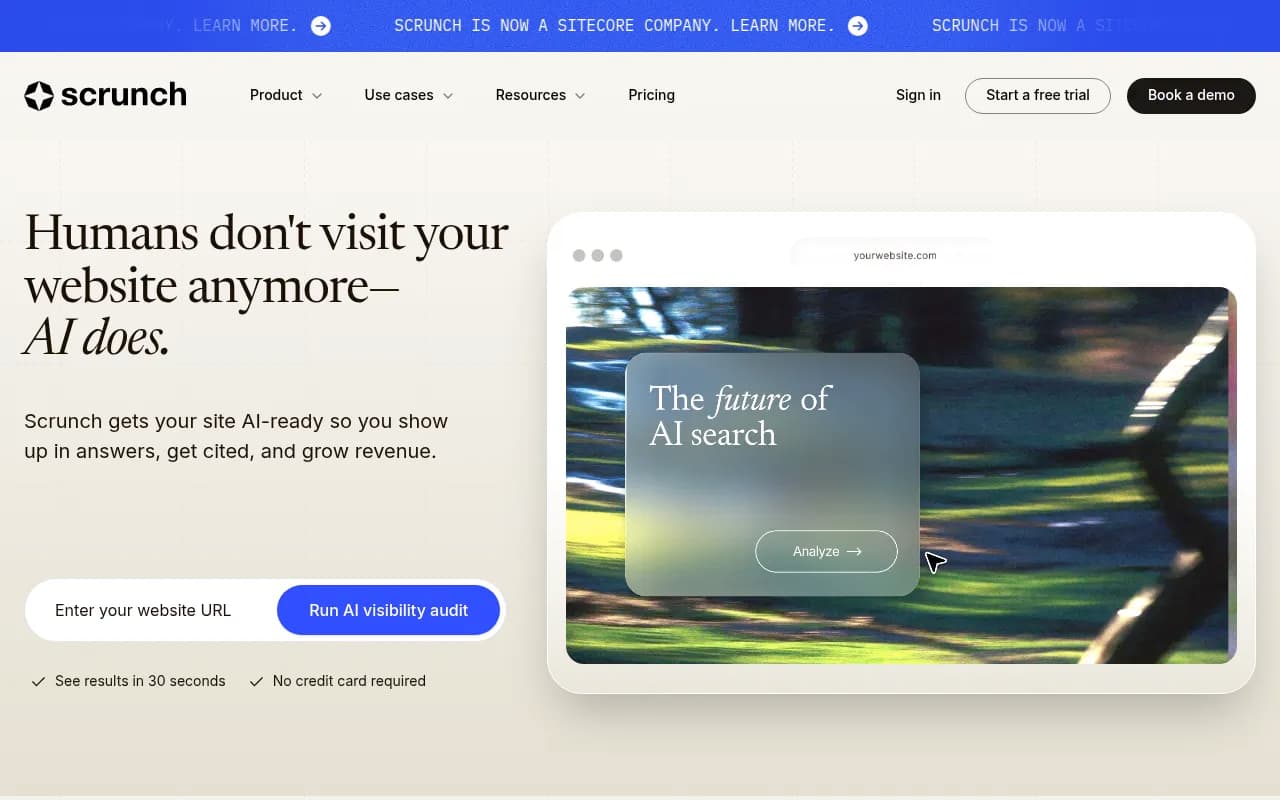
Scrunch AI is worth considering for agencies managing multiple brands.
Enterprise and agency tools
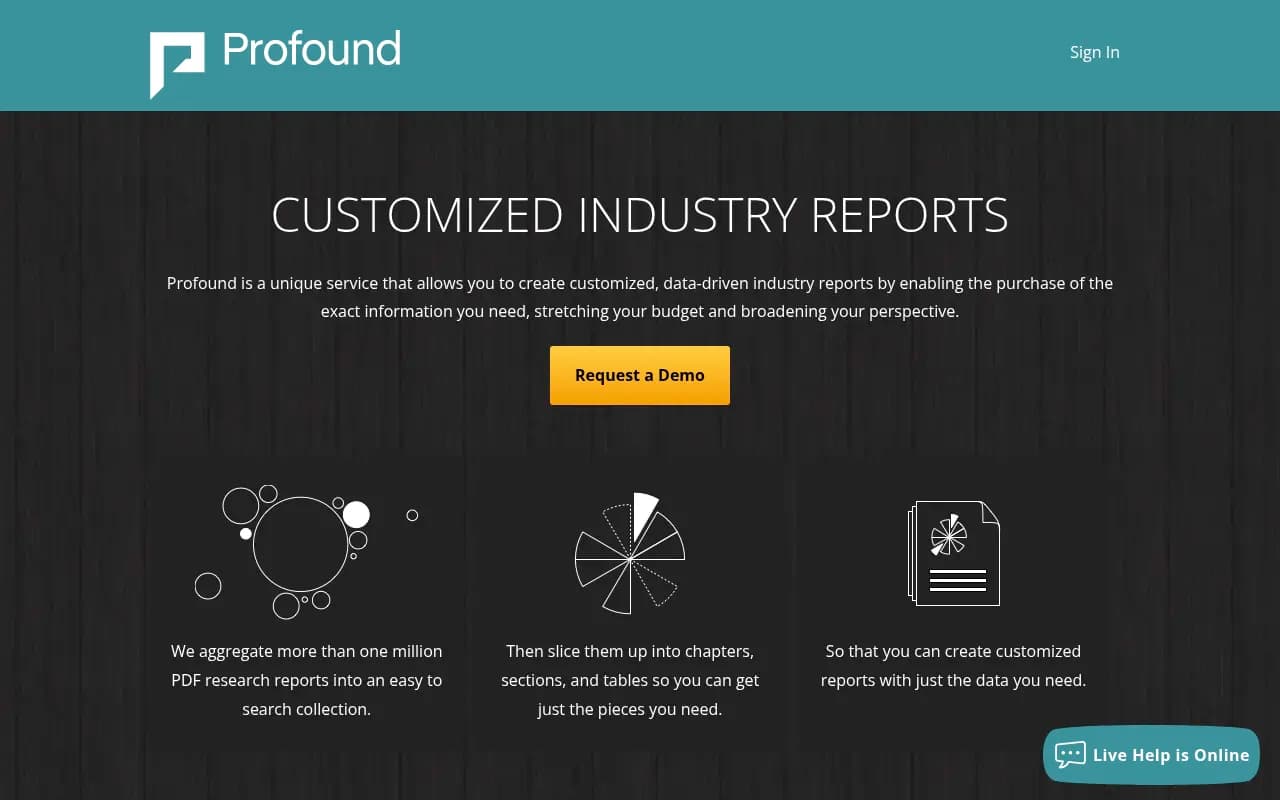
Profound has strong analytics for enterprise teams, though it comes at a higher price point.
Search Party is built with agencies in mind and handles multi-client workflows well.
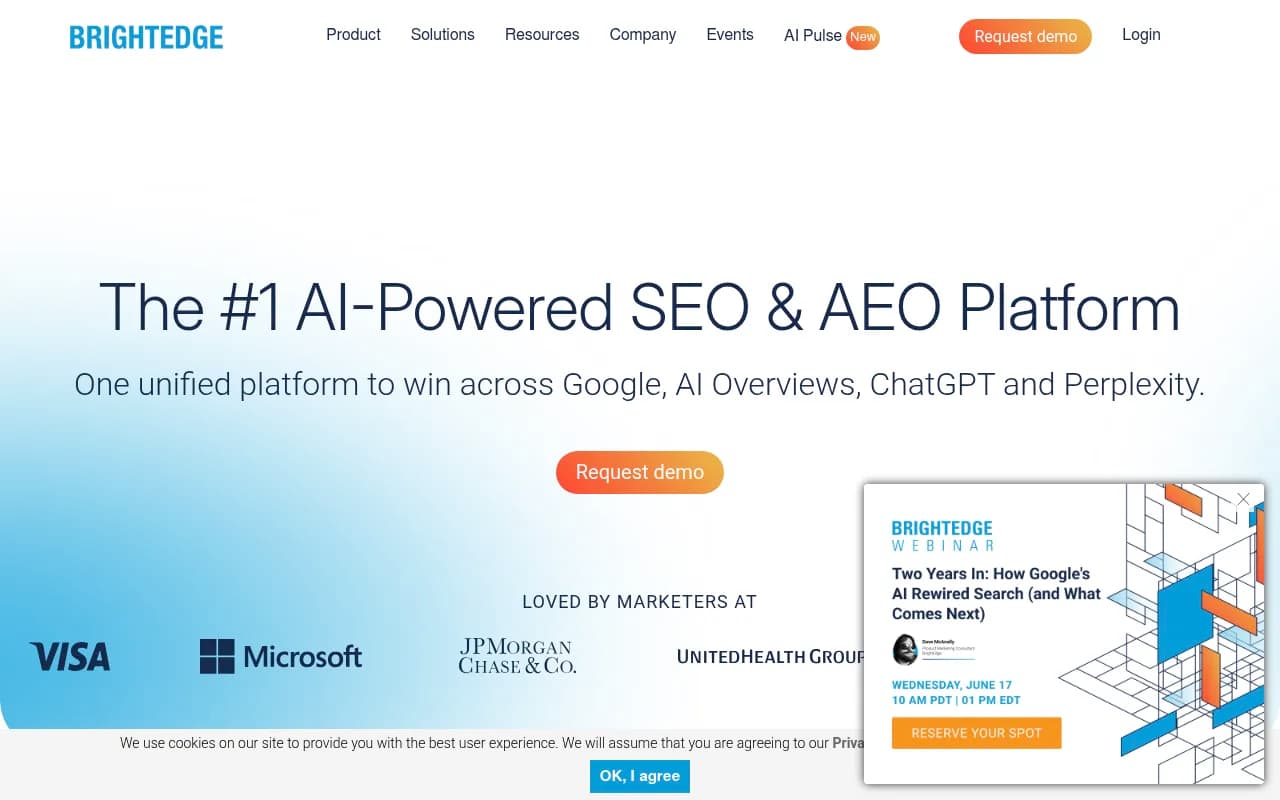
BrightEdge integrates AI search tracking into its broader enterprise SEO platform.
Traditional SEO tools adding AI features
Semrush has added AI visibility tracking to its platform, though it uses fixed prompts rather than dynamic prompt monitoring.
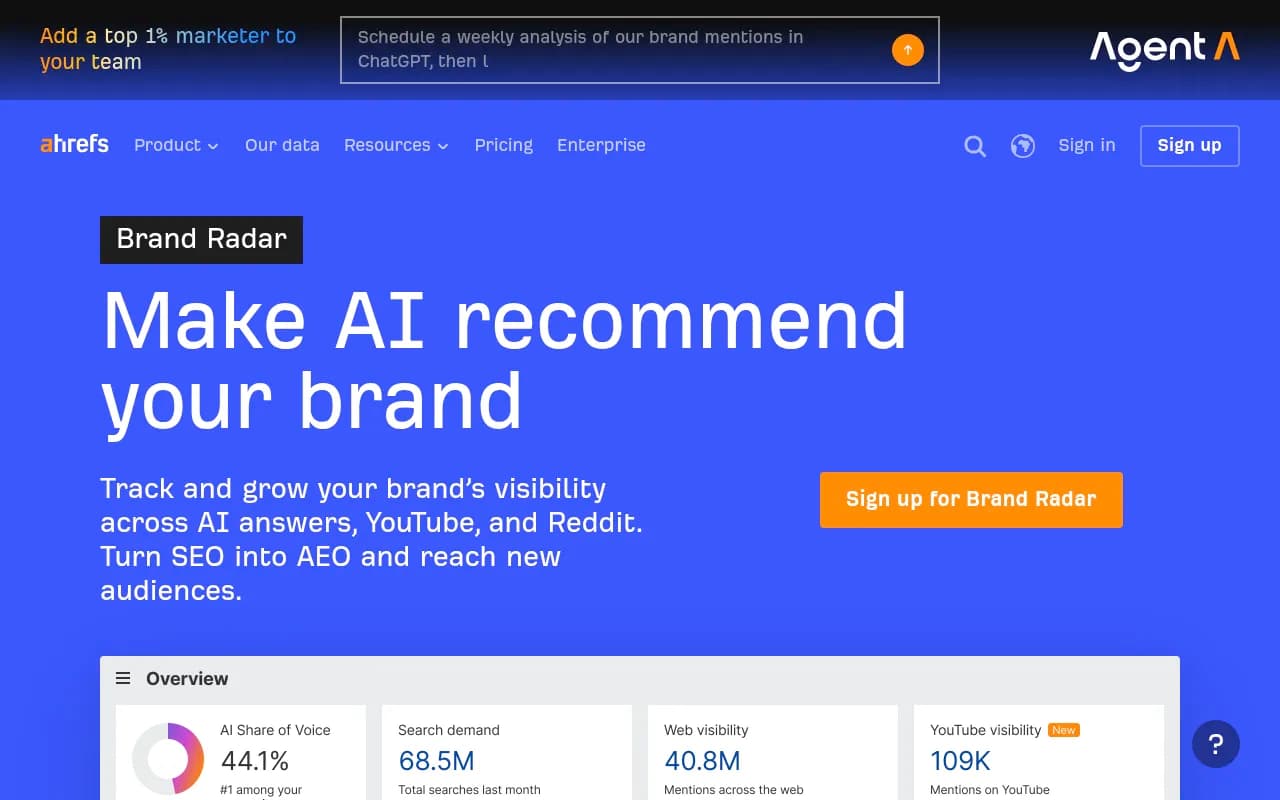
Ahrefs Brand Radar tracks brand mentions across AI search engines, though without AI traffic attribution.
Comparison at a glance
| Tool | AI models tracked | Content generation | Crawler logs | Best for |
|---|---|---|---|---|
| Promptwatch | 10 | Yes (full articles) | Yes | Teams that want to monitor AND optimize |
| Otterly.AI | Multiple | No | No | Budget-conscious monitoring |
| Peec AI | Multiple | Suggestions only | No | Mid-market monitoring |
| AthenaHQ | Multiple | No | No | Clean monitoring dashboard |
| Profound | Multiple | No | No | Enterprise analytics |
| Scrunch AI | Multiple | No | No | Agency brand monitoring |
| Semrush | Multiple | No | No | Teams already on Semrush |
| Ahrefs Brand Radar | Multiple | No | No | Teams already on Ahrefs |
The main dividing line is between tools that show you data and tools that help you act on it. Most of the market is still in the "show you data" camp. If you're serious about improving your AI visibility rather than just tracking it, the platform you choose matters.
Practical steps to take right now
1. Audit your current AI visibility
Before you can improve anything, you need to know where you stand. Run your brand name through ChatGPT, Perplexity, and Google AI Mode with the kinds of questions your buyers actually ask. Are you being cited? Are competitors being cited instead? What's the framing when you do appear?
This manual audit takes an hour and will tell you more about your AI visibility than months of Google rank tracking.
2. Map the prompts that matter to your buyers
Think about the questions your ideal customer asks at each stage of their research. "What's the best [category] tool for [use case]?" "How does [your brand] compare to [competitor]?" "What are the pros and cons of [your product category]?"
These are the prompts you need to be visible for. Tools like Promptwatch can track these systematically and show you prompt volumes and difficulty scores, but you can start mapping them manually.
3. Create content that answers those questions directly
For each prompt you want to be visible for, check whether your website has a page that directly and clearly answers it. If not, that's a gap. The content you create to fill it should be specific, structured, and written for the question, not for a keyword.
4. Build your offsite presence
Identify the Reddit communities, YouTube channels, review sites, and industry publications that AI models frequently cite in your category. Getting your brand mentioned in those places, through genuine participation, PR, or content partnerships, directly influences your AI citations.
5. Track citations, not just rankings
Set up some form of AI visibility monitoring. Even a basic tool that alerts you when your brand is cited (or not cited) in AI responses is better than flying blind. As your strategy matures, you'll want more granular data: which pages are being cited, by which models, for which prompts.
The bigger picture
The brands that will win in AI search over the next two to three years are the ones that treat AI visibility as a first-class marketing metric, not an afterthought.
That means having someone accountable for it, measuring it consistently, and connecting it to revenue. It means creating content with AI citation in mind, not just Google ranking. And it means building a presence across the web, not just on your own domain.
The good news is that most of your competitors haven't fully made this shift yet. The window to get ahead is still open, but it's narrowing. AI search adoption is accelerating, buyer behavior is already changing, and the tools to act on this are mature enough to use today.
The marketers who treat 2026 as the year to get serious about AI visibility will have a meaningful head start on everyone who waits until it becomes impossible to ignore.