Key takeaways
- Yext Scout is strong for multi-location brands already on the Yext listings and Knowledge Graph stack. It is sales-led, with no public pricing.
- The best alternative depends on what you need: location-level tracking (Birdeye Search AI, RadarKit), enterprise brand-level analytics (Profound, Brandlight), or an end-to-end platform that fixes problems and not just reports them (Promptwatch).
- Most "Yext Scout alternatives" listicles are written by the vendors they rank first, including Birdeye, Dageno, and Yext itself. Read them as positioning, not neutral reviews.
- Track each AI engine separately. ChatGPT cites roughly 5 sources per answer, while Google AI Overviews and Perplexity cite about 10.
- Check how a tool handles crawler data, citations, and execution. Monitoring-only dashboards stop short of the work that moves the numbers.
What Yext Scout actually does
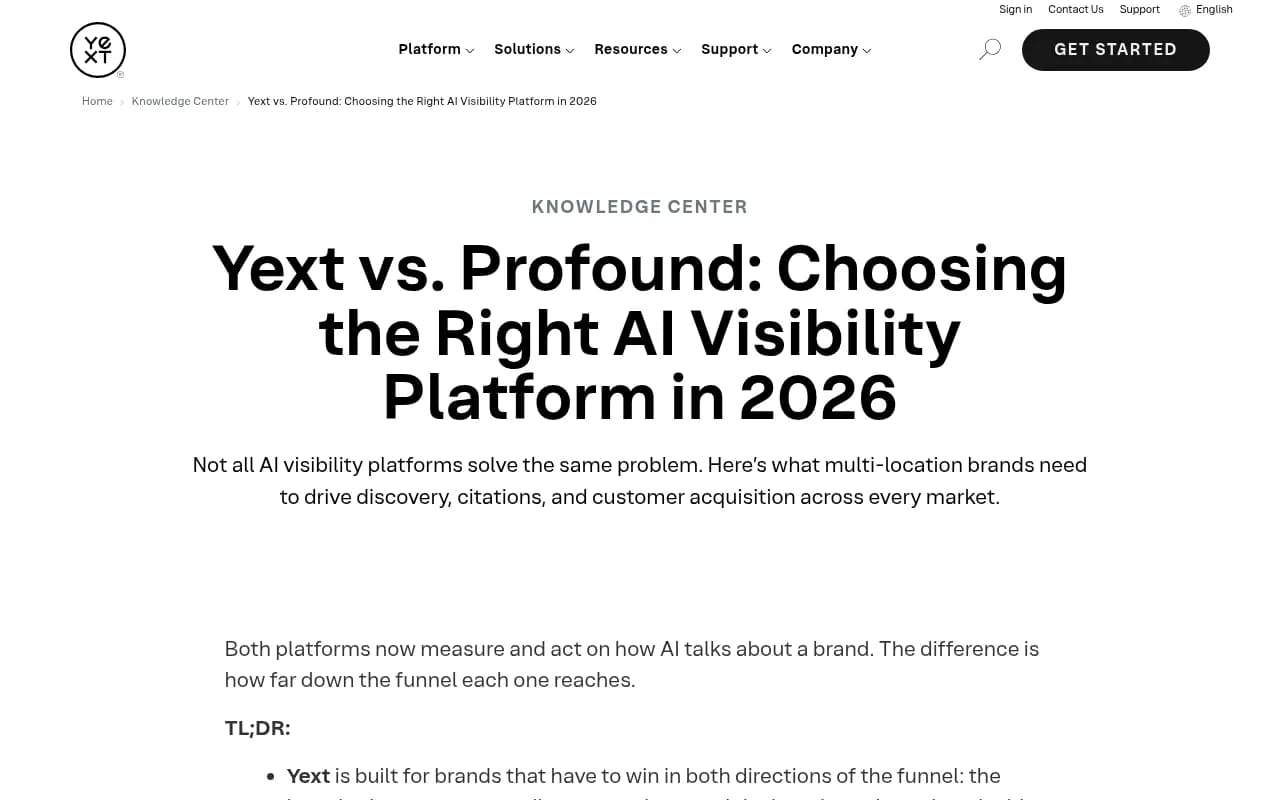
Scout is Yext's AI search visibility agent. Per the official Scout page, it advertises 10B signals, 5 AI models, 12M+ locations, 150 visibility metrics, and 20 competitors per scan. It covers Google Search, Maps, and AI Overviews, plus ChatGPT, Gemini, Claude, and Perplexity. Third-party comparisons also list Grok.
Yext Scout
The feature set is genuinely useful if you run a franchise or a chain:
- Brand-level and location-level visibility in one view
- Win rate against up to 20 named competitors
- Sentiment themes, such as recurring complaints about wait times
- Citation tracking
- An Action Center where agents update listings, fix business info, and respond to reviews
- A mobile app showing win rate by location
Customers named by Yext include MidFirst Bank, Beltone, and Sorbet. I couldn't find public pricing anywhere. It is a "get a demo" product.
Why teams look elsewhere
None of these are dealbreakers for everyone, but they come up repeatedly:
- Scout mixes traditional Google rankings with AI results. If you want a purely AI-first workflow, that hybrid view can feel noisy.
- The strongest value is tied to the Yext ecosystem (listings, reviews, pages, structured data). If you aren't on Yext, you are paying for plumbing you don't use.
- No public pricing makes budgeting and comparison slow.
- Teams that want server-level evidence of how AI bots read their pages need a tool with crawler logs.
- Some teams want content creation and publishing tied directly to the visibility data.
A fair counterpoint: Yext argues that brand-only tools lack a location layer, listings distribution, and structured data foundation. That is true of many trackers, and for a business with hundreds of physical locations it matters. It is also vendor-authored, so weigh it accordingly.
How to judge any alternative
Before comparing names, decide what job the tool has to do. Here is the checklist I would use.
Per-engine reporting
Promptwatch Data shows how different the engines are. ChatGPT cites about 5 sources per web-search answer. Google AI Overviews cites about 10, and Perplexity sits almost exactly at 10 every day. Copilot's average swung from under 2 to nearly 17 within a few weeks before settling low. With only about 5 ChatGPT slots, a blended "AI visibility score" hides what is happening. Pick a tool that breaks results out per engine.
Real interface data
User-facing answers can differ from API outputs. Tools that scrape the actual ChatGPT or AI Overviews interface in the right country give you results closer to what customers see.
Location depth
If you have physical locations, ask whether the tool tracks at city or state level, and whether it can tie to listings and reviews. If you are mostly a brand with a national audience, you may not need this at all.
Evidence and execution
Can the tool show you which pages AI crawlers read, which get cited, and what to fix? And does it help you do the fixing?
Comparison table
| Platform | Best for | Location-level tracking | Crawler or traffic data | Execution |
|---|---|---|---|---|
| Yext Scout | Franchises on the Yext stack | Yes, core strength | Limited public detail | Action Center for listings and reviews |
| Promptwatch | End-to-end AI visibility and optimization | Country on all paid plans, state/city from Business | IP-verified crawler logs and visitor analytics | Content Agent, Action Board, CMS publishing |
| Profound | Large enterprise brand analytics | Described inconsistently, verify with vendor | Agent Analytics reported | Agents publish content to owned properties |
| Birdeye Search AI | Multi-location review and local teams | Yes | Not a focus | Review and reputation workflows |
| RadarKit | Local GEO on a small budget | Residential IPs across 50+ countries | Citation and position tracking | Plan, content, outreach, and Reddit agents |
| Peec AI | Agencies needing citation-gap work | Limited | No | Reporting-oriented |
| Otterly.AI | Affordable monitoring and audits | Limited | No | Light |
| Brandlight | Enterprise brand teams | Not a focus | Limited | Platform workflows |
I have deliberately left competitor pricing out. I couldn't verify it, and listicle prices go stale fast. Check each vendor's pricing page.
The alternatives
Promptwatch
Promptwatch is the option I'd look at first if your problem is "we can see we're invisible, now what?" Where Scout leans on the listings network, Promptwatch leans on evidence from your own site and the AI engines. IP-verified crawler logs show which AI bots (GPTBot, ClaudeBot, PerplexityBot and others) visit which pages and hit which errors. Citation analytics show where you are cited, including Reddit, YouTube, and LinkedIn. Visitor analytics connect that to real traffic.
Then it acts. The Action Board produces a prioritized GEO to-do list, content gap analysis finds the prompts you lose, and the Content Agent writes and publishes to WordPress, Webflow, or Framer, after which the new pages are tracked for crawls, citations, and clicks. It tracks the real interfaces of ChatGPT, AI Overviews, AI Mode, Gemini, Perplexity, Copilot, and others, with country tracking on every paid plan and state and city tracking from the Business tier.
Where it differs from Scout: it is not built around a listings network, so if managing Google Business Profiles and review replies at scale is your main need, you would pair it with a listings tool or stay on Yext. Pricing is public, starting with a free Explore tier and paid plans from $95/month. Confirm on promptwatch.com/pricing.

Profound
Profound is the most direct enterprise rival. It tracks how a brand is described across AI answer engines, grades accuracy, and runs agents that publish to owned web properties. One YouTube listicle credits it with regional intelligence and Agent Analytics. Yext says it has no location layer. Those claims conflict, so verify on Profound's own site against your location requirements. Expect custom enterprise pricing.

Birdeye Search AI
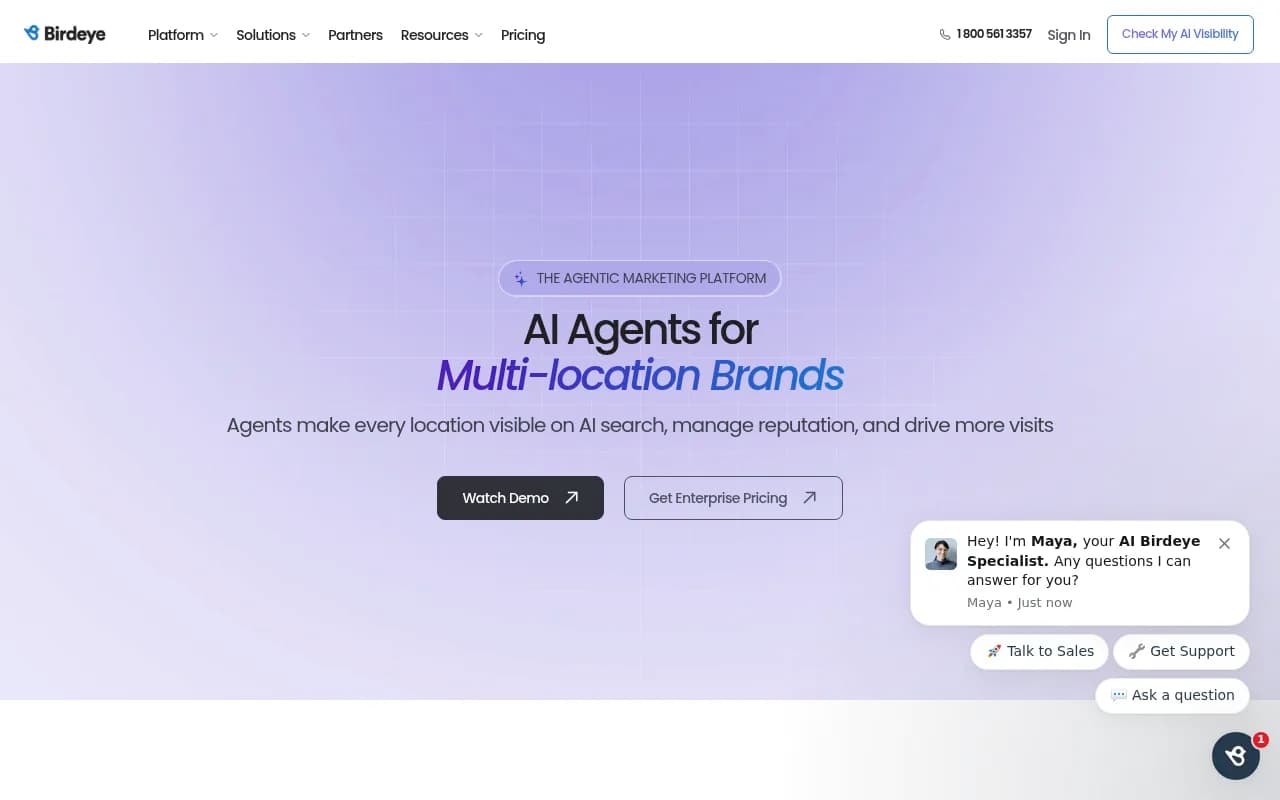
Birdeye is the natural pick if reviews and local reputation are central. It tracks at location level and plugs into Birdeye's review and messaging products. Its own comparison page ranks itself first and argues Scout lacks deep Share of Answer and citation tracking, which is a sales argument, though not an unreasonable one.
RadarKit
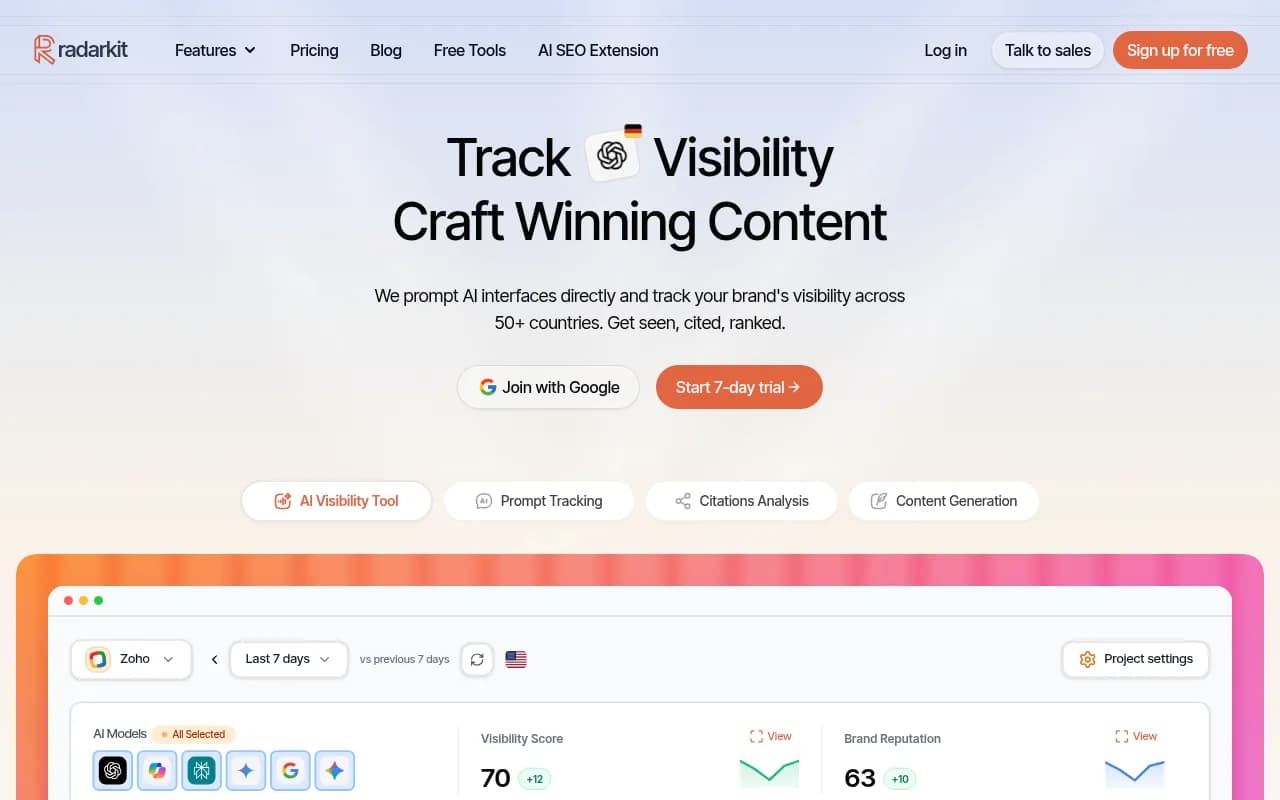
RadarKit is aimed at local GEO with a low entry price. Local tracking uses residential IPs in 50+ countries to see how AI recommends a business in a specific city, and it deploys agents for planning, content, outreach, and Reddit. It also exposes an MCP integration. It is younger than the enterprise names, so test it on a pilot location set first.
Peec AI and Otterly.AI
Both are prompt trackers. Peec AI separates plain brand mentions from explicit URL citations, which makes citation-gap analysis against local competitors easy, and agencies like it. Otterly.AI is an accessible entry point with GEO audits. Neither gives you crawler logs or content execution, so treat them as monitoring layers.


Brandlight, Scrunch AI, and Search Atlas
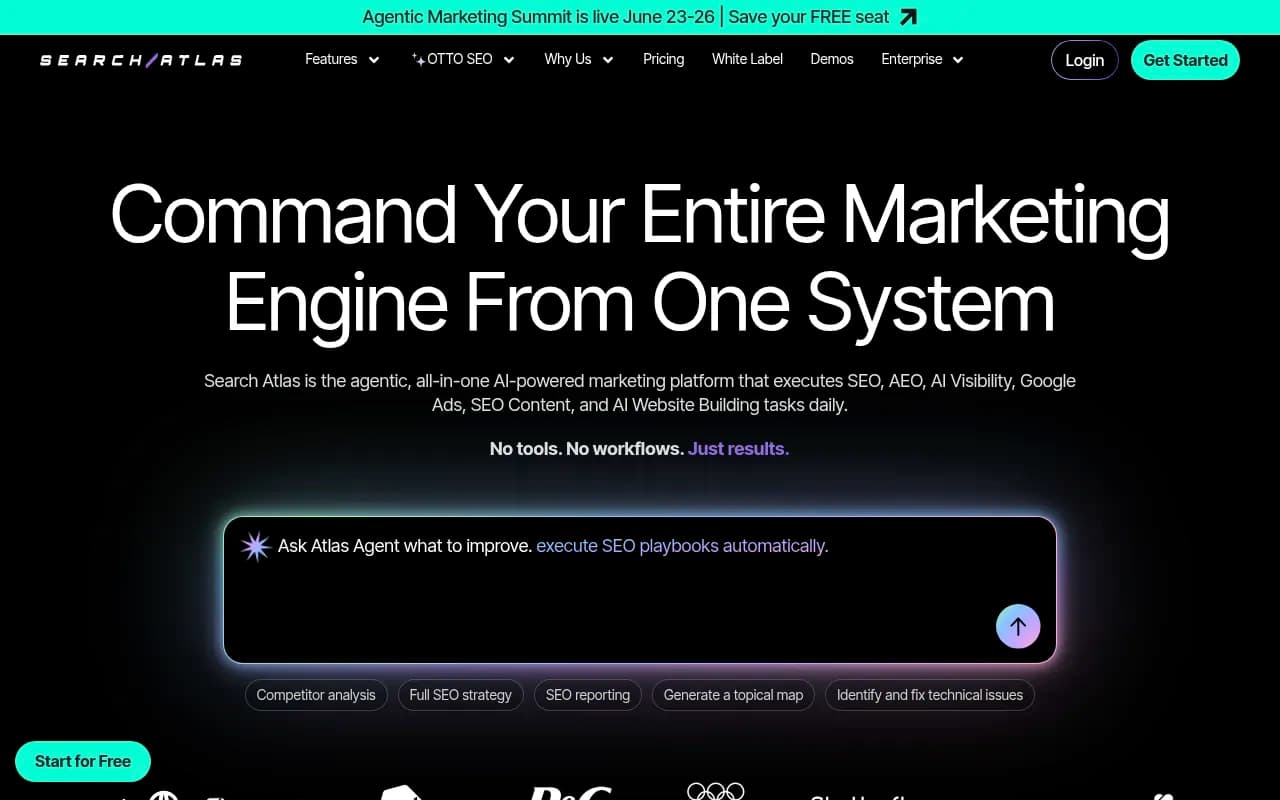
Brandlight pitches itself as an enterprise AI visibility operating system. Scrunch AI covers monitoring for brands and agencies. Search Atlas bundles traditional SEO and AI visibility if you want one login.


Traditional SEO suites
Semrush and Ahrefs Brand Radar add AI tracking to platforms you may already pay for. The tradeoff is that prompt sets tend to be fixed and AI-specific depth is shallower. They are handy for a first look, less so for running a program.

For more options, the GEO software directory at bestgeosoftware.com lists dozens of platforms by category.
Which one should you pick?
Match the tool to your actual problem:
- You run 500 franchise locations and live in Google Business Profiles: stay with Yext Scout, or look at Birdeye Search AI.
- You want to know why you are or aren't cited and have content fixed and published: Promptwatch.
- You need enterprise brand-level analytics and have budget for a sales process: Profound.
- You are a small local business or agency with a tight budget: RadarKit, Otterly.AI, or Peec AI.
- You already pay for Semrush or Ahrefs: try their AI modules first, then upgrade if they run out of depth.
A sensible pilot
Pick 20 to 30 prompts, a handful of locations, and two or three tools. Run them for four weeks. Compare whether the tools agree on your visibility per engine, whether they tell you what to change, and whether you can trace any traffic back to AI. Disagreement between tools is normal. What matters is which one gives you a next action you can defend.
Questions to ask in every demo
- Do you collect data from the real consumer interface or the API?
- Can I see results per engine and per country or city?
- Can I see which AI crawlers visit my pages and what errors they hit?
- How do you attribute traffic and conversions from AI?
- What happens after you find a gap? Who writes and publishes the fix?
- What is the real price at my prompt and location volume?
The last one matters most with sales-led tools like Scout and Profound. Get a written quote before you compare.
Bottom line
Scout is a good fit for brands whose visibility problem is really a listings and reviews problem across many locations. If your problem is understanding why AI doesn't cite you and getting content out that changes it, a platform with crawler logs, citation analytics, and execution will go further. Run a pilot with per-engine tracking before you sign anything.